How Unmanned AI Stores Turn Late-Night Cravings into Instant Campus Solutions

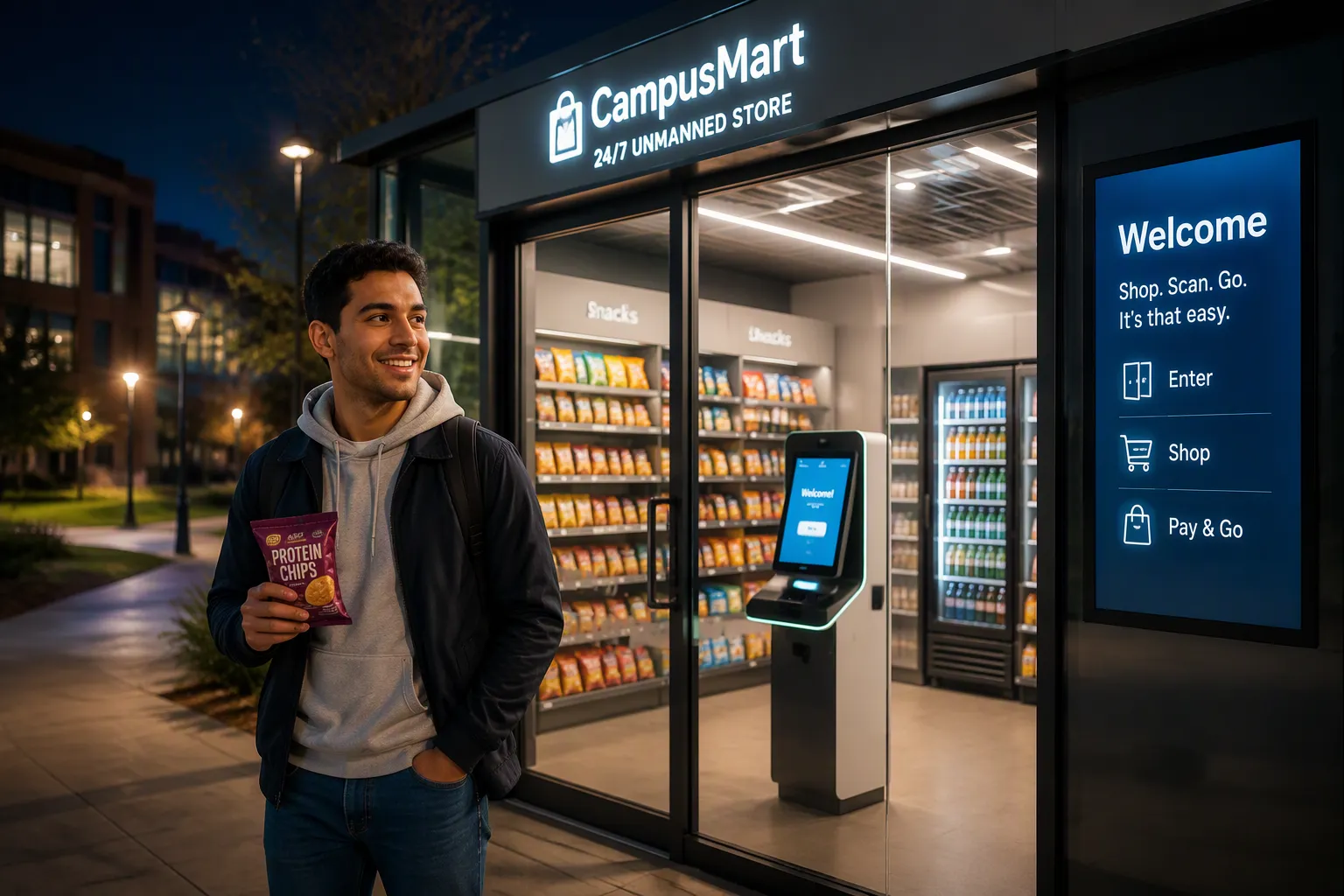
It's 1 a.m. You're deep in a study session, and suddenly you'd trade anything for a cold drink and a snack. Every door around you is locked. Then you remember the purple storefront downstairs.
AI convenience stores like Alldays at NYU Shanghai never close. These unmanned stores turn a late-night craving into a thirty-second fix, right inside your building. And you're not alone: studies show 32.5%–72.8% of college students often or always eat evening snacks.
So how do these unmanned store concepts actually work? Stick around. You'll see the AI behind the grab-and-go experience, what it means for campus life, and why planners love this model.
Key Takeaways
AI stores with no workers stay open all day and night. That means you can grab snacks at any time, even at 1 a.m.
Facial recognition and automatic billing make shopping quick and simple—no lines or cashiers.
Smart shelves keep track of what is in stock. They warn workers before items run out, so stores stay full.
These stores fit perfectly on campus, turning quick stops into a handy habit.
Cloudpick's technology runs these stores, and it has worked well on campuses around the world.
The Late-Night Craving Problem
When Traditional Stores Close
Picture the scene. You finish a club meeting at 11 p.m. Your dorm floor is buzzing. Then your stomach growls. You check the campus store hours, and the answer is grim.
Day | Store A Hours | Store B Hours |
|---|---|---|
Monday–Thursday | 12:00 AM - 2:00 AM; 11:00 AM - 11:59 PM | 9:00 AM - 6:00 PM |
Friday | 12:00 AM - 2:00 AM; 11:00 AM - 11:59 PM | 9:00 AM - 5:00 PM |
Saturday | 12:00 AM - 2:00 AM; 12:00 PM - 11:59 PM | 10:00 AM - 2:00 PM |
Sunday | 12:00 AM - 1:00 AM; 2:00 PM - 11:59 PM | Closed |
Store B shuts its doors before dinner. Store A leaves gaps in the middle of the day. Neither one covers the moment you actually need it. A scoping review of college student food access names available hours of programming as an organizational barrier. It also flags limited time and schedules as an individual barrier. You feel both at once.
Fragmented Schedules Need 24/7 Access
Your day rarely follows a straight line. Class, work shift, group project, gym, then a paper due at midnight. A store that opens at 9 a.m. and closes at 6 p.m. simply misses you.
This is why round-the-clock access is a real need, not a luxury. On-site markets remove the friction of leaving dorms at night. Students grab food quickly between classes and during late-night study sessions when cafeterias are closed. Fast checkout frees up time for meals, rest, and studying. Open coolers with fresh salads, sandwiches, and fruit beat stale vending-machine snacks. Digital-native students also prefer quick, autonomous transactions. Meeting these needs on-site makes students feel supported and valued.
That gap is exactly where ai convenience stores step in. Unmanned stores, unmanned grocery stores, and other unmanned store concepts keep the lights on around the clock. The next section opens the door on how the ai makes that possible.
Inside the AI Convenience Store
Facial Recognition and Grab-and-Go
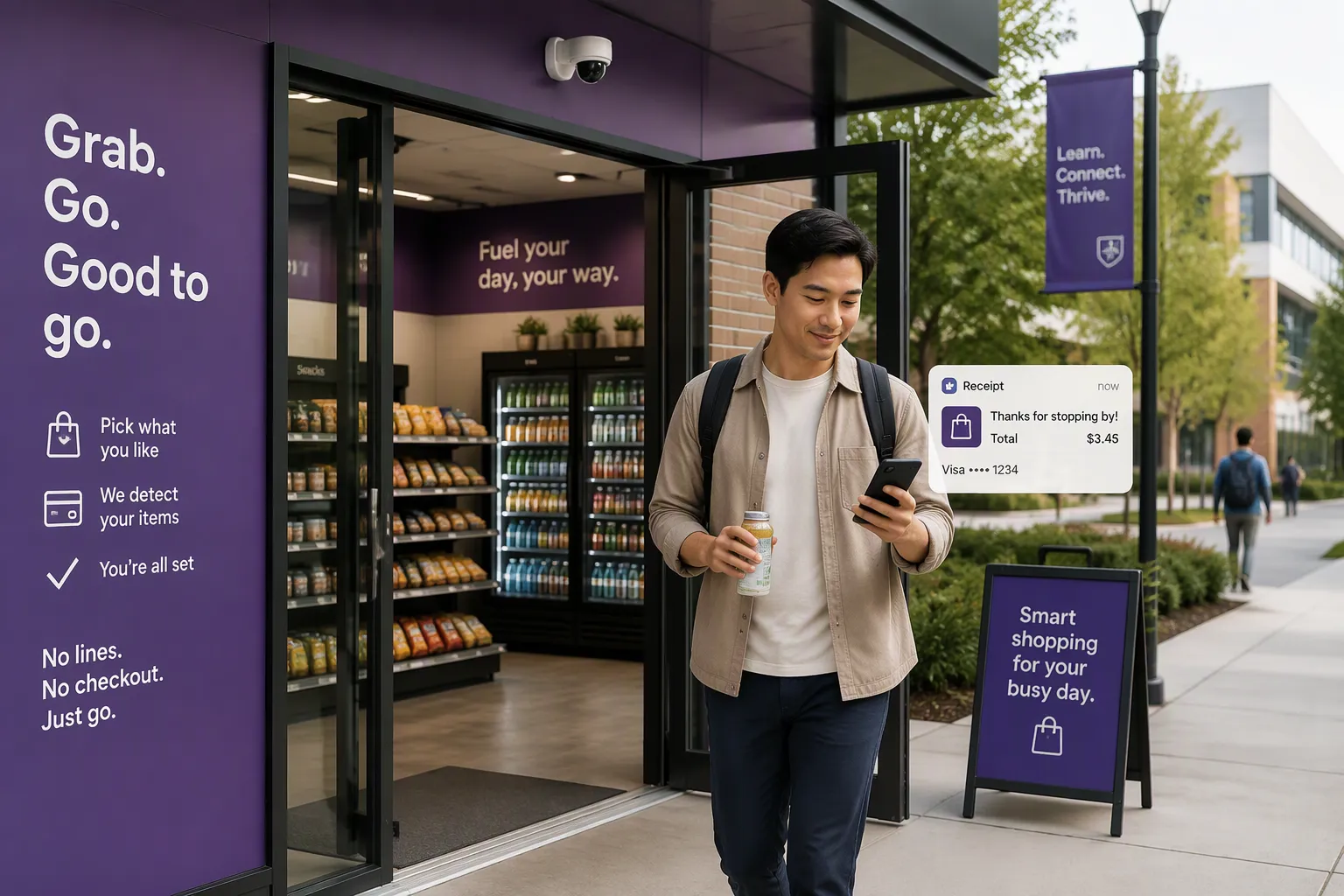
Walk up to the purple storefront at NYU Shanghai, and the door knows who you are. Snacks and packaged food fill the shelves. Cold drinks glow in the back. This is Alldays, an ai convenience store made for people in a hurry.
Here is how you get in. You sign up once, add a payment method, and let the system scan your face. A camera matches your face to your account in about a second. Then the door opens. No card, no phone, no cashier. That is all it takes for a cashier-less store.
Inside, you shop the way you always do. Grab a drink. Pick up a snack. The shelves are open, so you can look around freely. Cameras and computer vision track what leaves the shelf and what stays. You do not scan anything. You do not wait in line. You just walk out.
The best part is speed. Normal checkout means waiting in line, talking to a person, and scanning every item. A frictionless checkout experience gets rid of all three. Payment happens on its own. Your receipt shows up on your phone, often within minutes after you leave. For a student rushing between classes, that difference matters.
Automatic Billing and Smart Inventory
Billing uses ai convenience store technology that most shoppers never notice. Sensors and cameras record each item you take. When you leave, the system adds up your basket and charges your card. The purchase record appears on your phone as you go. No line. No paper receipt. Just a quiet confirmation.
Behind the scenes, ai-operated cameras watch the shelves. They track stock levels in real time and replace manual counts that are easy to get wrong. Image recognition checks amounts and flags items that are missing, misplaced, or damaged. The system then sends updates to the warehouse management system and alerts staff when someone needs to step in. Restock alerts reach operations teams before a shelf runs empty.
AI systems give real-time insight into inventory, helping managers avoid costly stockouts or overstocking by continuously updating stock levels and prioritizing reorders based on predictive demand patterns.
The same data shows which products students love. Popular items get better spots. Slow movers get flagged. Recommendations follow real demand, not guesswork.
Cloudpick provides the technology behind these unmanned stores. Its platform combines computer vision, shelf sensors, and automation to run the whole flow. Some setups also use rfid tags or iot sensors for extra accuracy. Together, these tools power ai convenience store systems that stay accurate around the clock.
Convenience for Campus Life
A Quick Stop Between Classes
You have ten minutes before your next lecture. You need a coffee and something to eat. You do not need a trip across campus.
That is the whole point of putting an ai convenience store inside the building. The store sits where you already walk. You pass it on the way to class, on the way back to your dorm, and on the way to the library. Essentials stay within easy reach, so a snack run costs you a minute instead of a walk.
The store fits into your day in small ways. You grab a cold drink before a study session. You pick up a sandwich during a club event. You stop in after the gym. Each visit is short, and each one ends without a line. That is what unmanned stores do well. They remove the wait, and they remove the detour.
Campus planners notice the difference too. A small footprint near where people already gather turns dead space into a service. Unmanned grocery stores and other unmanned store concepts work best when they sit close to the people they serve. Distance kills convenience. Proximity creates it.
Design That Feels Familiar
Step inside, and nothing feels strange. The layout looks like a normal shop. That is deliberate.
The store carries NYU Shanghai signage and campus colors. The space is compact, yet the assortment stays visible from the entrance. Open shelves invite you to browse the way you always do. You can see the drinks, the snacks, and the packaged food without hunting.
Good design does quiet work here. Strategic layout and branding guide your path and help you find products fast. Color schemes and decor should match the audience and the brand. Shelving and displays should use space well and still look appealing. Energy-efficient lighting, placed with care, lifts the whole experience.
Small-format stores reward precision. In stores of 1,000–2,500 sq ft, every square inch counts. In a microstore of about 500 sq ft, there is no room for error. Taller perimeter shelving adds capacity. Low center fixtures keep sightlines open. The checkout counter becomes a prime spot for impulse items.
Consistency builds trust. Matching sign holders, aligned shelf labels, and coordinated poster sizes make the store look professional. Clear shelf-edge pricing supports confidence. Organized displays help you decide, and messy ones create doubt. Comfortable aisles keep you browsing a little longer.
That familiarity matters for unmanned stores. A shopper who feels at home tries the store once and comes back. Repeat visits turn a novelty into a habit. For campus stores, that habit is the goal.
AI Convenience Store Operations and Campus Planning
Meeting Student Needs with Smart Space
Where you put an ai convenience store decides if it becomes part of your day. Place it on a path you already walk, and going there feels normal. Keep it stocked with what you want, and you no longer plan around store hours.
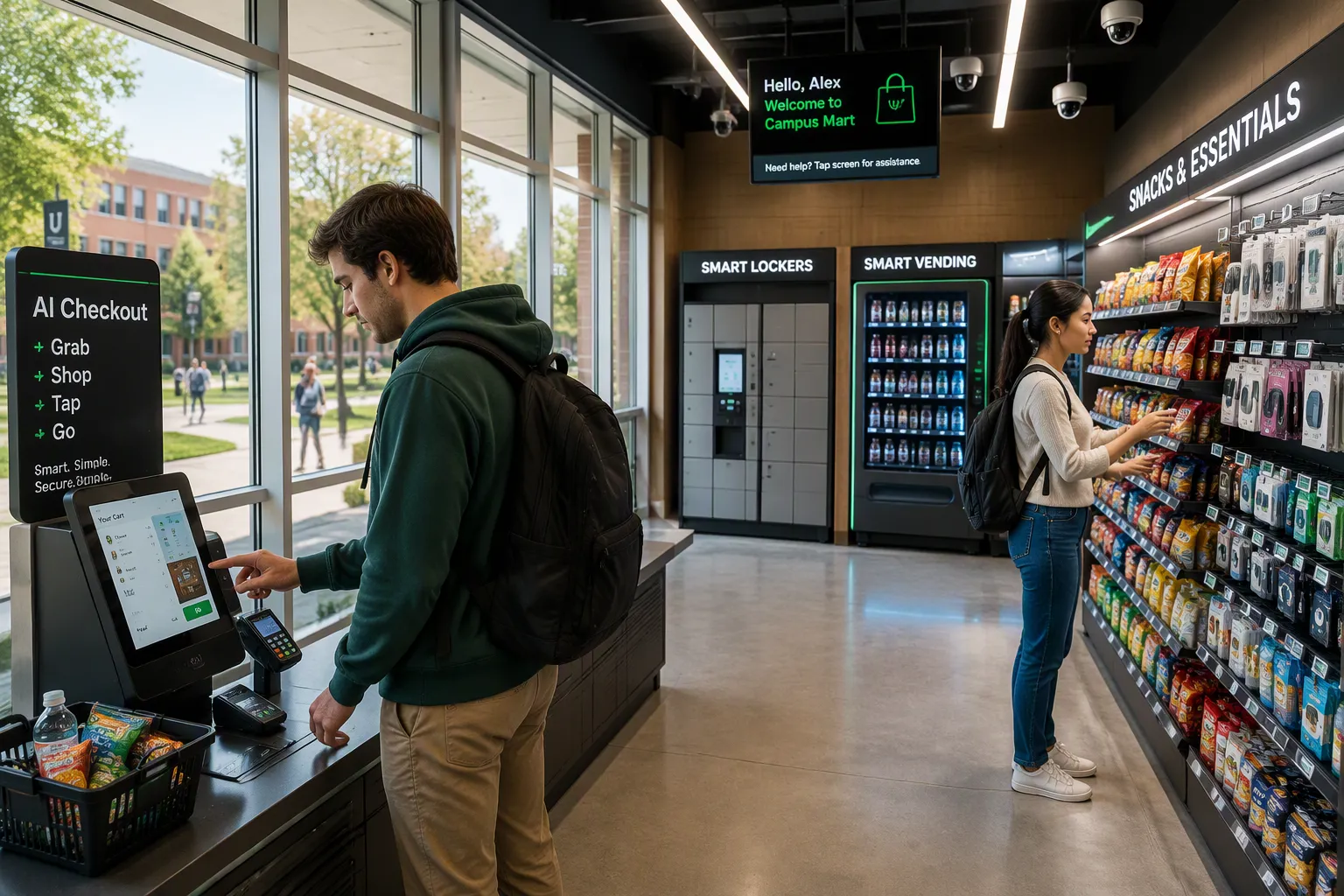
Smart space design does that work. You shape the layout around shopper types, and for students that means snacks, drinks, and tech accessories come first. A mixed layout serves both the quick-stop trip and the browsing trip. You make aisles wider near drink fridges and checkout so people keep moving.
The same idea goes beyond the store. Smart lockers in academic buildings give you a safe spot for your things. Smart vending in libraries can hold pens and calculators for late-night studiers. These pieces work together as smart campus integration, and they make a campus feel like it listens.
A Model for Operators and Retailers
Campus-service operators like Compass Group, Sodexo, and Aramark see a real path forward. Unattended outlets cut staffing at checkout and free workers for jobs that need a human touch. Automated units run all day and night and reach places where staffed stations don't make sense. Aramark's Quick Eats Close Convenience concept, built on computer vision and sensors, won an FM Best Concept Award in 2020.
Behind the scenes, ai does the hard work. Automation handles entry, billing, and restock alerts. Many setups add rfid tags and iot sensors for accuracy. With rfid and shelf sensors, ai convenience store systems keep counts correct. Staff watch the store from afar, so one team can cover several unmanned sites. Unmanned stores, unmanned grocery stores, and other unmanned store concepts all share one idea: automation takes the place of the counter.
Retailers adapt the same idea to a specific community. FamilyMart built a store one-third normal size, adding a meeting space, a small library, and rental cars. Lawson set up a store with a community space in Kanagawa Prefecture. FamilyMart also opened a store in a shrinking community of about 1,800 people in Fukui Prefecture.
Retailer | Community Context | Small-Store Adaptation |
|---|---|---|
FamilyMart | Local community | One-third normal size, meeting space, library, rental cars |
FamilyMart | Elderly and families | Counseling counters with elderly care providers |
Lawson | Suburban Kanagawa | Community space with volunteer events |
FamilyMart | Fukui Prefecture (~1,800 people) | Collaboration with regional cooperative and municipality |
Each model fits a different setting. A corporate campus wants speed and coverage. A small town wants a place to gather. Both show how unmanned store business models bend around the people they serve.
Cloudpick and the Future of Unmanned Stores
From Campus Insight to AI Retail
Cloudpick began in 2017 with one aim: bring AI into daily retail. Its patented Cloudpick++ engine uses computer vision and machine learning to spot products and shopping habits. That engine runs the grab-and-go, cashless payment flow you just read about. Today more than 190 self-run stores use the platform around the world. The record includes a first unmanned campus store in 2019, a store at the National University of Singapore, and the Auchan Go store at EDHEC Business School, which serves over 4,000 students and staff. So when you plan a store for your own campus, you build on lessons from real sites, not theory.
A campus project starts with people, space, and shopping needs. Ask who walks past the spot at 1 a.m. Ask what they want in their hand thirty seconds later. Then match the store format to that answer. Cloudpick helps teams explore AI retail for everyday campus moments, from a quick break between classes to a late-night study session. The store can even serve as a learning setting. Sales, footfall, and purchasing data give student clubs real material for operations and product selection. Ready to plan your own? Book a call through the calendar link, email jefffeng@cloudpick.me, or visit www.cloudpick.ai.
Think back to that 1 a.m. craving. The locked doors are gone. You have your cold drink in seconds. That is what ai convenience stores bring to campus life.
Students get speed. Campus planners get a model that uses data and space well. Unmanned stores serve all night. Unmanned stores track demand live. Unmanned stores flag restocks. Unmanned stores fit campuses. Unmanned stores sit close by. Unmanned stores cut the line. Unmanned stores build habits. Unmanned stores save time. Unmanned stores start with one conversation.
An ai convenience store proves it. Convenience stores can run without a night shift. Unmanned store concepts reach dorms and labs. Want unmanned stores on your campus? Talk to Cloudpick at jefffeng@cloudpick.me or www.cloudpick.ai.
FAQ
How Do You Get Into an Unmanned Store?
You sign up once, add a payment method, and let a camera match your face. The door opens in about a second. No card, no phone, no cashier. That is how unmanned stores work.
Do Unmanned Stores Need Staff on Site?
Not at the counter. Staff watch from afar and step in for restocks or fixes. One team can cover several unmanned sites. That setup lets unmanned stores stay open around the clock without a night shift.
How Do Unmanned Stores Keep Shelves Stocked?
Cameras track stock in real time. The system flags missing or misplaced items. It also sends restock alerts before a shelf runs empty. Smart alerts keep unmanned stores from going bare overnight.
What Do You Pay, and When?
Sensors record each item you take. The system adds up your basket and charges your card as you leave. Your receipt lands on your phone. No line, no scanning, no waiting. That quiet flow makes unmanned stores feel effortless.
Where Do Unmanned Stores Fit Best on Campus?
Put them where you already walk: dorm lobbies, academic buildings, library entrances. ai convenience stores work best close to people. Distance kills convenience. Unmanned stores on a busy path turn a quick stop into a habit.
See Also
Why Stores Powered By Artificial Intelligence Will Shape Tomorrow
Exploring How 24-Hour Vending Machine Cafes Combine Convenience With Innovation
The Growth Of AI-Powered Corner Stores: Essential Knowledge For Retailers
How Smart Fridge Vending Machines Are Transforming Round-The-Clock Fresh Food Access
AI-Powered Combo Vending Machines: Key Features And Benefits For Today's Retail
