The Rise of Unmanned Self-Service Warehouses Powered by Artificial Intelligence

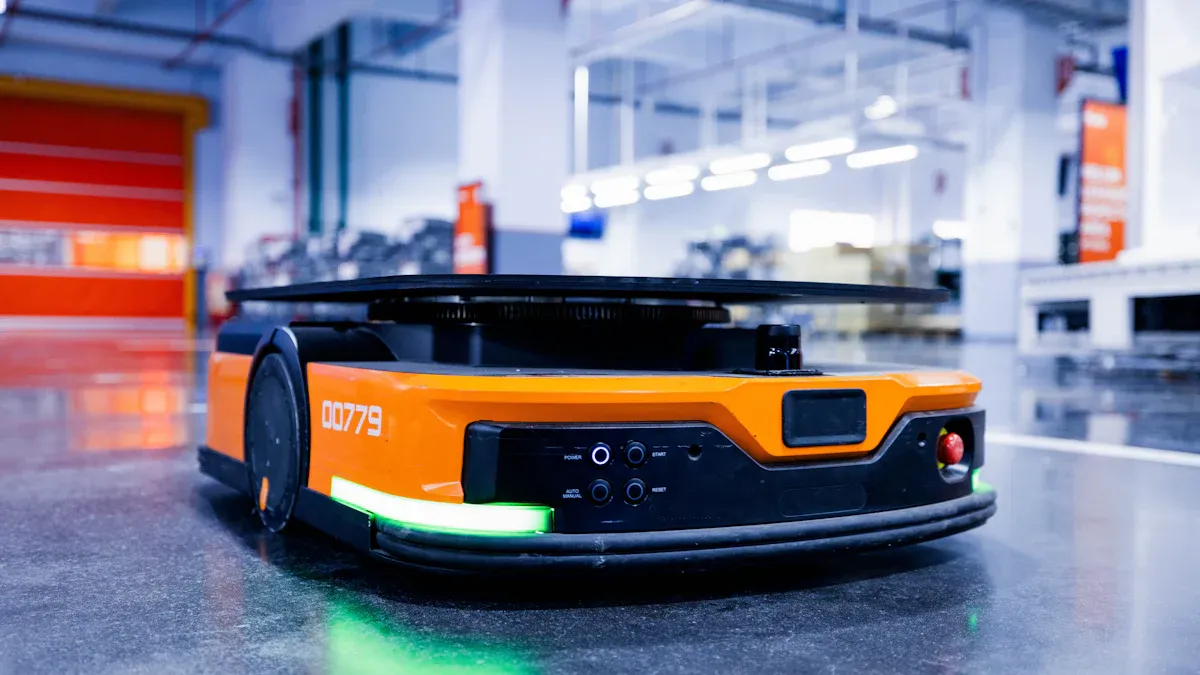
In a traditional warehouse, you rely on manual inventory checks and handwritten logs. Human errors cause about 80% of inventory mistakes. You deal with long approval cycles and costly errors daily. These problems slow down your operations and increase costs. What if you could track every item in real time, remove paperwork, and cut costs automatically? AI-enabled unmanned self-service warehouses provide the proven solution. They use computer vision to see and track items on their own in real time. This eliminates paperwork and blind spots. Amazon saved $4 billion annually in fulfillment costs with this technology. You will learn how it works, who uses it, and how to adopt it.
Key Takeaways
Running a warehouse by hand often leads to mistakes and high costs. AI systems remove these problems.
AI vision systems watch inventory as it moves, and they are right almost all the time—up to 99.9%. This means workers no longer have to count items by hand.
Automated warehouses run all day and night without stopping. They lower labor costs and make order fulfillment faster.
Big companies such as Amazon and Walmart use this tech. They cut costs by billions and boost precision.
You can bring AI into your warehouse little by little. Begin by checking how your work flows and picking a partner you can trust.
The True Cost of Manual Warehouse Management
Inefficiency and Frequent Errors
Manual inventory checks take 15 to 25 hours each month for every worker. That time adds up fast. Daily jobs need 2–3 hours per person. Quarterly counts use 2–5 full staff days. You lose precious hours that could go to useful work.
Paper tracking causes a 30% error rate in weekly reports. Bad handwriting, missing forms, and typing mistakes cause these errors. Typing data by hand shows a 1-3% error rate per entry. Barcode scanning drops that rate to almost zero. For a business selling 100 items daily with 3 each, you face 300 manual entries every day. Each entry takes 45 seconds versus 2 seconds with scanning. That wastes 215 minutes daily, or about 3.5 hours. At $15 per hour, you lose $52.50 each day. Monthly, that equals $1,575 in avoidable labor costs.
Errors also create money problems beyond wasted time. Keeping too much stock ties up cash and raises storage costs. Keeping too little causes lost sales and lower cash flow. Wrong inventory values lead to poor choices. Duplicate orders increase operating costs. Unrecorded damaged goods cut profit margins. These mistakes directly hurt your supply chain.
Rising Labor Expenses and Slow Operations
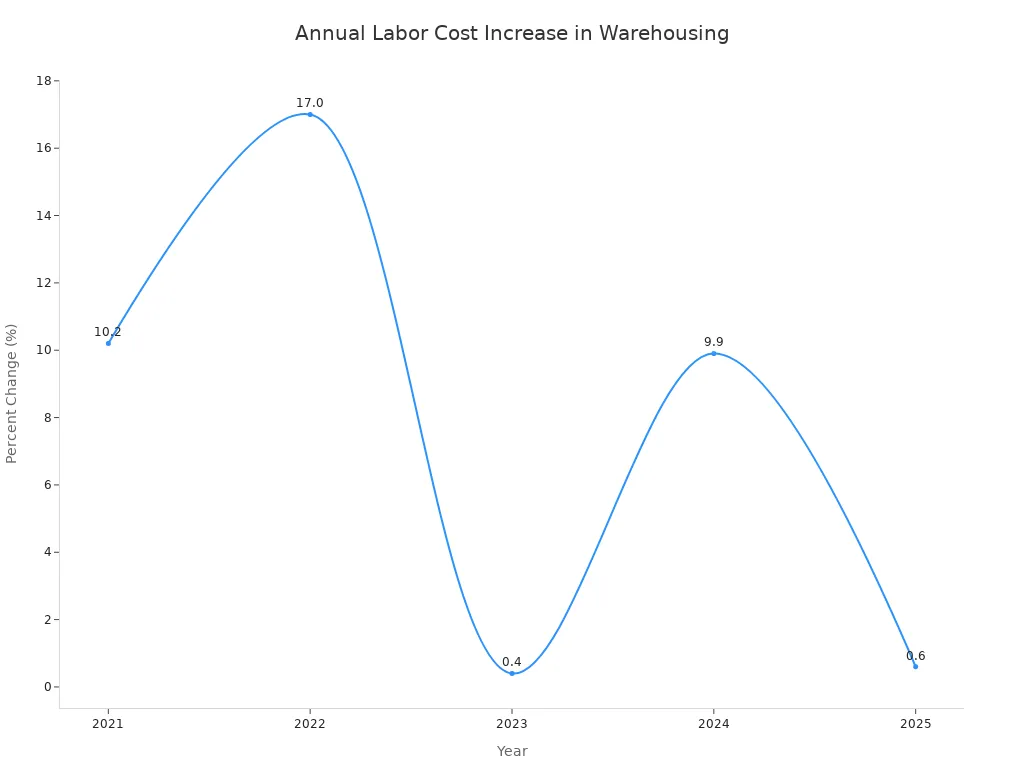
Warehouse labor costs keep going up. Unit labor costs for warehousing rose 10.2% in 2021, 17.0% in 2022, and 9.9% in 2024. The average yearly increase over five years is about 7.6%. You pay more each year for the same manual work.
Manual work also moves slowly. Handling one document takes 12–15 minutes by hand. Automation finishes the same job in under 5 minutes. Total cycle time is 8–12 hours manually but only 15–30 minutes with automation. A worker handles about 5 documents per hour. Automated systems manage over 10,000. This gap shows why warehouse management systems matter. They cut processing time by 80–90%.
The money impact of poor inventory management is serious. Companies lose 10–30% of yearly profit due to bad practices. Extra stock carries costs equal to 15–30% of product value. Asset-heavy industries lose $480 million yearly from unplanned downtime. MRO inventory issues cause $24 million of that loss. One inventory error at BHP Billiton caused a $200 million mine delay.
Manual warehouse management creates a loop of errors, delays, and rising costs. You need a better way. AI and automation offer a path forward. The next part explains how unmanned self-service warehouses fix these problems.
How AI-Enabled Unmanned Self-Service Warehouses Operate
Smart Entry and Autonomous Item Recognition
You swipe your ID card to enter the warehouse. AI cameras and sensors start tracking right away. The system knows items by shape, size, label, and position. It identifies them in less than one second. Even stacked items do not confuse it. The whole checkout takes under 10 seconds. You do not need a scanner or staff help. Your ID card records who you are and your department. The system logs when you arrive. It keeps a full record of every visit. The system handles thousands of products. It tells similar items apart by reading labels and checking surface details.
Physical AI lets drones understand what they see instantly — spotting pallets, reading labels, and grasping space. This tech gives real-time stock visibility with up to 99.9% accuracy and pays back within six months.
AI vision systems run this whole process. They capture every item you touch without any manual work. These AI vision systems never get tired. They work 24 hours a day without stopping.
Metric | Autonomous AI Recognition | Manual Scanning |
|---|---|---|
Item identification time | Not given, but likely slower | |
Total checkout time | Under 10 seconds | Not given, but likely slower |
The results show this method works well. AI unmanned warehouses remove manual counting. They take paperwork out of daily tasks. Your team focuses on important work instead of scanning items.
Real-Time Tracking and Instant Cost Settlement
The system updates stock counts the second you take an item. It figures costs using your current prices. It adds any discounts on its own. You get instant payment without waiting for approvals. Backend data updates automatically. Managers see everything from anywhere. This gives you live stock information across your whole operation. Finance teams see charges without manual matching. Costs go to each department or project automatically. Past data shows usage patterns over weeks and months.
Removes regular cycle counts — stock accuracy stays at 99.5%+
Accuracy stays at 99.5% or higher all the time. You never pause work for manual counts. The system keeps accuracy every second without help. Several key technologies cut human work in your warehouse:
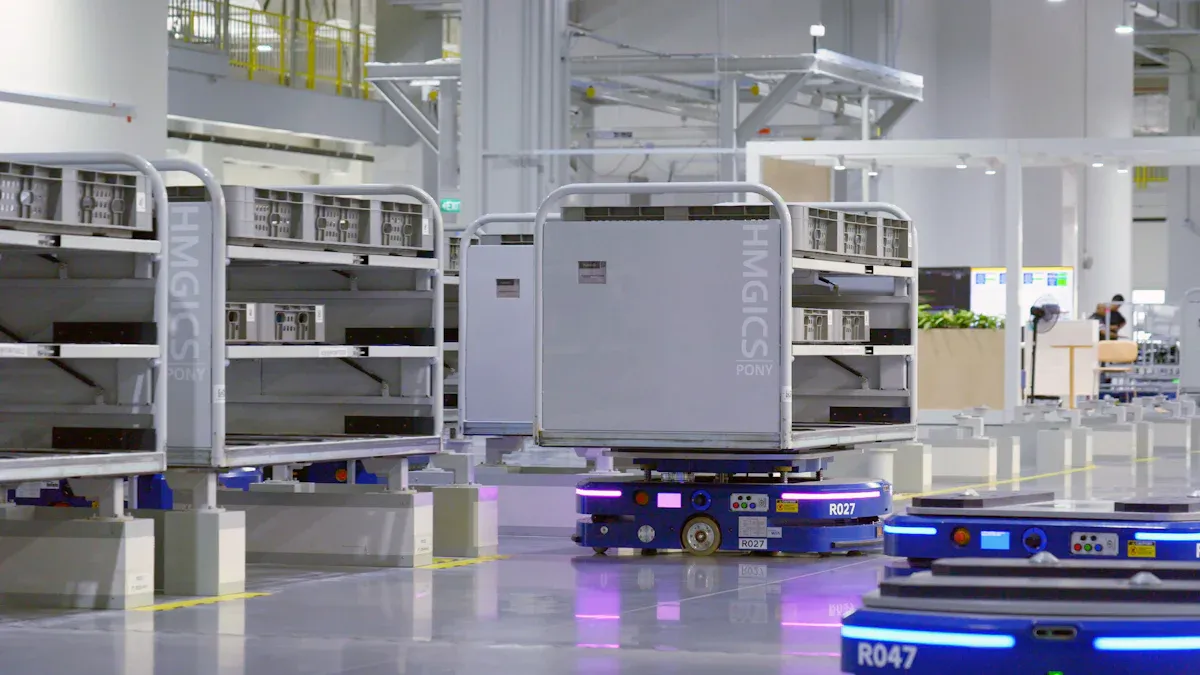
Autonomous Mobile Robots (AMRs) use SLAM tech and machine learning. They move through warehouse layouts on their own. They carry goods and avoid traffic without people. These robots learn better routes over time based on traffic.
Automated inspection systems check quality faster than humans can. They spot package damage, check labels, and confirm product specs. Error rates drop by over 99% in busy operations. These systems check every item without getting tired.
Predictive maintenance finds problems before they break. It allows fixes during planned downtime. Emergency repair costs fall by 60-70%.
Guided picking checks catch errors before packing. It removes manual checking steps.
Another set of AI vision systems manages stock movement. They track where every item is in real time. These AI vision systems offer full transparency. Your whole operation stays visible at all times.
Robotic picking systems move materials on their own. They adjust to changing spaces and improve their paths. Autonomous robots handle complex layouts without help. Automated restocking keeps stock at the right levels. You cut waste and speed up fulfillment. The system connects with your current inventory software. It works with standard warehouse gear and layouts.
Your supply chain gains from this full visibility. You see stock at every location. Warehouse management improves without extra labor costs. Fulfillment speeds up because picking errors disappear. Accuracy beats old manual methods. Your customers get the right items every time.
Monitoring runs nonstop through these systems. AI vision systems watch movement, stock, and equipment status across the facility.
Key Benefits of an AI-Powered Warehouse
Eliminating Paperwork and Blind Spots
Paper forms disappear when you adopt AI-enabled unmanned self-service warehouses. Your team stops filling manual logs. They stop walking documents between departments. The system records everything automatically. You eliminate the 30% error rate that comes with paper tracking. You remove the typing mistakes and lost forms that plague manual systems.
Traditional inventory audits happen periodically. They require heavy labor. They create blind spots in your warehouse visibility. AI-enabled vision systems change this completely. They combine object detection, barcode reading, and OCR recognition. They track every item through multiple cameras. The system detects missing items instantly. It spots misplaced products in real time. It flags unauthorized movements the moment they happen. This continuous monitoring replaces manual audits completely. You receive instant alerts when discrepancies appear. You gain real-time operational visibility across your entire facility.
A financial institution deployed an AI system to extract key fields from invoices. Most invoices followed predictable layouts, so the system performed well in evaluation. However, a supplier submitted an invoice where the total was handwritten, the vendor identifier was in a footer image, and the currency format differed. The AI extracted: Vendor: Unknown, Amount: $1000, Currency: USD. The actual total was $1800 CAD. Because the document passed basic validation, the automated workflow approved the payment without triggering an alert. This illustrates how blind spots emerge when systems encounter conditions not learned during training—at enterprise scale, even rare edge cases accumulate into meaningful operational risk, such as persistent stock inaccuracies or incorrect payments.
AI eliminates these blind spots through constant learning. The system adapts to new scenarios. It recognizes unusual patterns. Your inventory records stay accurate and reliable.
Inventory Blind Spot (Traditional Problem) | How AI Eliminates It (AI Solution) |
|---|---|
Unpredictable demand: Spare parts follow failure patterns, not consumption patterns; a motor bearing might last three years or three months depending on operating conditions. | Predictive modeling: AI analyzes operating conditions, maintenance history, and failure data to assign failure probabilities to components, dynamically adjusting stock based on the likelihood of need within defined time windows. |
Data disconnect: Purchasing teams set stock levels based on historical consumption while maintenance teams collect vibration, temperature, and performance data that could predict failures—leading to discovering a need only after failure. | Data integration: AI bridges the gap by coordinating failure predictions with inventory positioning, ensuring parts are in stock before scheduled maintenance work begins. |
Isolated part-level optimization: Organizations optimize at the individual part level, missing cascading failure patterns where a primary component failure stresses related parts. | System-level view: AI considers equipment systems and failure correlations, recommending stock for secondary components needed to complete repairs, not just the failed part. |
Static rules: Fixed safety stock levels and reorder points cannot handle seasonal variations, equipment aging, or changing operating conditions. | Dynamic optimization: AI continuously recalculates optimal stock levels as new data becomes available, adjusting for peak season production intensity and network-level positioning across multi-site operations. |
24/7 Efficiency and Data-Driven Decisions
Your warehouse never sleeps with automation. AI-enabled vision systems work around the clock. They perceive, record, and analyze without breaks. They do not need rest shifts. They do not take lunch breaks. Your operation runs continuously at full capacity.
The accuracy gains are remarkable. A case study using the StorTRACK system reported a 99.9% accuracy rate in stock data. Automated cycle counting systems deliver nearly 100% inventory accuracy. AI-powered warehouse management systems report a 40% improvement in inventory accuracy through real-time updates. These numbers show the power of autonomous tracking.
You reduce labor costs significantly. Workers no longer spend hours counting stock. They no longer type data into spreadsheets. They focus on valuable tasks instead. Your fulfillment speeds improve because picking errors disappear. Your supply chain becomes more responsive. Your customers receive correct orders every time.
Data-driven decisions transform your management approach. Historical data reveals trends and seasonal shifts. You spot process bottlenecks before they become problems. You review a year of order volume data. You notice certain products face delays during peak seasons. You adjust staffing to match actual demand. You optimize slotting based on pick frequency. You rework replenishment practices to reduce stockouts.
This data-driven approach extends across your entire operation. You see usage patterns over weeks and months. You understand which items move quickly. You know which items sit idle. You make smarter purchasing decisions. You position inventory where it serves you best.
The vision systems monitor everything continuously. They watch movement patterns. They track stock levels. They check equipment status. They alert you to problems immediately. You avoid costly surprises. You maintain smooth operations at all times.
Your modern warehouse becomes an intelligent fulfillment hub. Smart warehousing principles guide every decision. Robotics handles repetitive tasks. Autonomous systems manage complex layouts. Self-learning fulfillment networks improve over time. Autonomous fulfillment networks adapt to changing conditions. Your efficiency grows daily. Your optimization never stops.
The results speak clearly. You eliminate paperwork completely. You remove blind spots from your operations. You achieve accuracy levels that manual systems cannot match. You make decisions based on facts, not guesses. Your warehouse runs efficiently at all hours. Your costs decrease while your service improves.
Implementing AI-Powered Warehousing Today
Proven Adoption by Global Industry Leaders
Your competitors already use this technology. Global leaders have adopted AI-powered warehousing at scale. Foxconn, Bosch, Siemens, and ABB deploy autonomous systems in their facilities. Toyota, Honda, and BYD leverage intelligent systems for operations. Walmart relies on Geek+ and Symbiotic robotics for faster fulfillment. Nike follows a similar approach. The Coca-Cola Company, Nestlé, and Unilever use AI-enabled vision systems for inventory tracking. Procter & Gamble and Mars do the same.
These companies prove AI works at scale. They overcome real challenges like high costs, data quality issues, and staff resistance. The return on investment arrives within 18 to 24 months. Lower labor costs and fewer errors drive that payback. You need centralized data for accurate results. Show employees how intelligent systems help rather than replace their work. Other companies see AI as essential for growth. Your business can follow this proven path. Your warehouse management needs a clear direction for the future.
Steps to Transform Your Warehouse Operations
You need a structured plan for transformation. First, assess your current warehouse processes. Identify bottlenecks in your workflow. Measure your error rates and labor expenses. Your supply decisions improve with accurate data.
Second, choose a trusted solution provider. Cloudpick delivers proven systems for unmanned facilities. Third, install cameras and sensors throughout your space. These AI-enabled vision systems capture every movement and item automatically. Fourth, integrate with your existing warehouse management systems. AI integration with legacy software requires careful planning.
Fifth, train your team effectively. Offer hands-on training in sandbox environments. Let workers experiment without affecting production. Assign technology champions to help peers. Use microlearning sessions of 5 to 10 minutes. Connect new skills to career advancement. Position training as help rather than surveillance. Successful management of this transition requires patience.
Sixth, launch and track results. Monitor your inventory accuracy and fulfillment speed daily. Track your fulfillment rates every week. Compare your error rates before and after implementation. Scale gradually as you gain confidence. This transformation requires commitment. It delivers lasting improvements for your supply chain. Your long-term vision becomes reality with each step. Maintain a clear vision for your operations.
Manual warehouse management costs too much. It creates errors and delays. You now see why this approach fails. AI-enabled unmanned self-service warehouses solve these problems through autonomous perception and real-time tracking. They operate 24/7 without human breaks. Global industry leaders already prove this model works. They cut costs and improve fulfillment accuracy. You can follow their lead today. Evaluate your warehouse operations now. Find bottlenecks and error patterns in your current system. Partner with a proven solution provider like Cloudpick. Start your digital transformation journey today. AI powers your path forward. Build a smarter, more efficient operation.
FAQ
How quickly can I see a return on investment?
Most companies get their money back within 18 to 24 months. Lower labor costs and fewer mistakes make this happen. You stop spending hours on manual counting. You cut down on expensive errors. Your work runs better from the very first day.
Will this technology replace my warehouse staff?
No. AI handles boring tasks like tracking and counting items. Your workers move to more important jobs instead. They do quality checks, fix problems, and make processes better. You give your team new roles rather than letting them go.
How accurate is the AI vision system?
AI vision systems can be up to 99.9% accurate with stock data. They watch every item all the time without getting tired. You get rid of the 30% error rate that comes with paper tracking. Your inventory records stay correct at all times.
Can this system integrate with my existing warehouse software?
Yes. The technology connects with the warehouse systems you already use. It works with normal equipment and layouts. You do not need to replace everything you have. The AI layer adds smart features to what you already run.
What happens during a power outage or system failure?
The system saves all transactions as they happen. Your data stays safe and can be recovered. You keep seeing what is going on through backup plans. The system goes back to normal once power comes back.
See Also
The Future of Retail Belongs to AI-Powered Stores
Retailers Must Understand the Growth of AI Corner Stores
AI Tools Revolutionize Managing Online Stores in E-Commerce
Automated Fast Food Is the Future via Vending Machines
Modern Retail Benefits from AI Combo Vending Machine Features
