The Rise of AI-Driven Supply Rooms for Real-Time Warehouse Inventory Control


Manual counting costs you real money. Inventory mistakes can cost between $40,000 and over $150,000 each year. You need constant, real-time tracking instead of checking every so often.
Cost Category | Annual Low | Annual High |
|---|---|---|
Direct counting labor | $12,000 | $40,000 |
Error-driven rework | $20,000 | $60,000 |
Shrinkage | 0.5% of value | 2% of value |
Stale-data decisions | $10,000 | $50,000 |
Total | $40,000 | Over $150,000 |
Autonomous supply rooms use facial recognition, AI vision, and smart shelves. This warehouse automation solution tracks every item on its own. This tech gives accurate inventory management without manual work.
How does this system work? What benefits can you expect? This guide covers how it runs, key features, and clear gains of AI-powered warehouse inventory management. You will see how real-time data speeds up order filling and boosts efficiency. The future of warehouse tracking starts here.
Key Takeaways
AI-driven supply rooms use facial recognition and smart shelves to track inventory as it happens, removing the need for manual counting and cutting down on mistakes.
This technology raises inventory accuracy to over 98%, which lowers costs and stops shortages or extra stock.
Features like lights and buzzers help workers find items faster, and full tracking makes it easier to see who did what and keep quality high.
Businesses can see a return on their investment within 6 to 12 months by cutting labor costs and reducing shrinkage.
The system works with software you already have and needs very little training, so it's easy to use and grow with.
How AI-Powered Warehouse Inventory Management Works
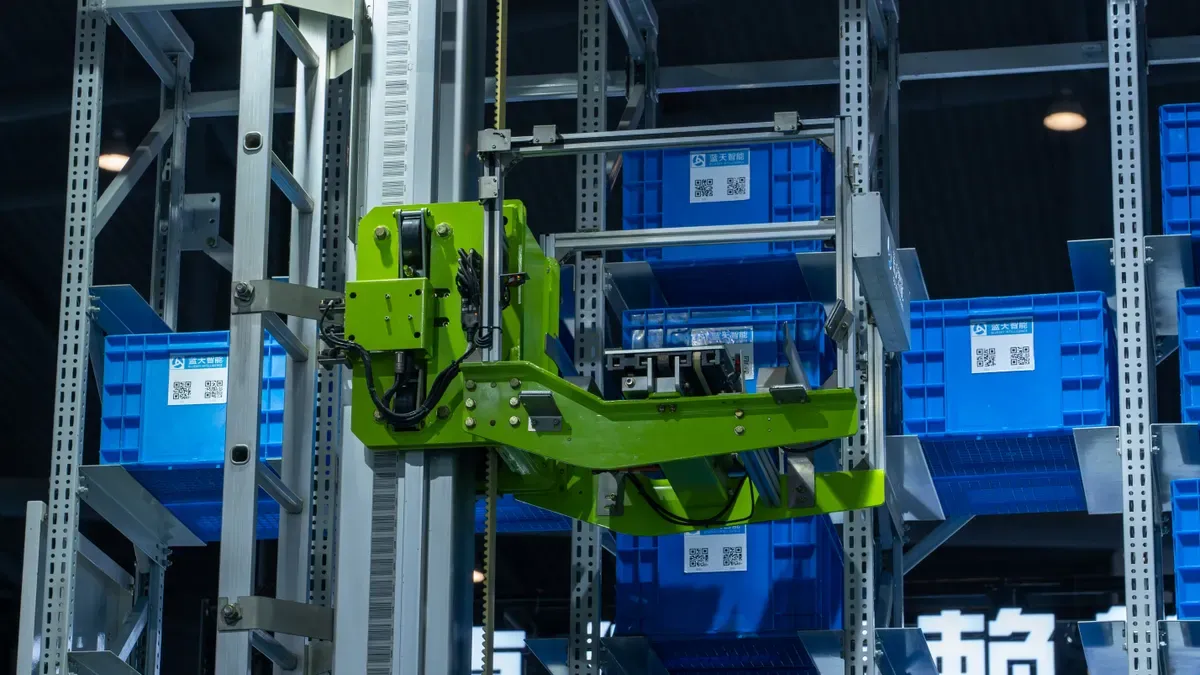
Facial Recognition and AI Vision for Inventory Tracking
You walk into the supply room. The system scans your face with facial recognition. It checks who you are right away. You grab the items you need. Then you leave. AI vision cameras on the shelves watch every item you take. The system spots each item and updates your stock levels instantly. This removes manual data entry and human mistakes. This tech works great for manufacturers and car part suppliers. Companies like Toyota and Bosch need exact, constant tracking to avoid stopping production. AI vision systems hit 99.5% accuracy or better. Manual tracking only gets about 63% accuracy. That gap is huge. For example, one electronics company cut inbound registration time from six minutes to under two minutes per pallet. Manual barcode errors dropped by 90%. Another company reached 99.8% accuracy for steel parts, even when serial numbers were hidden. Facial recognition adds extra security. It only lets approved staff in. It records every move. Cargo theft drops a lot. Buddy punching—where one worker clocks in for another—is now impossible. Payroll accuracy gets much better. The system pays for itself in months through recovered losses. This mix of ai-powered warehouse inventory management and automated inventory tracking gives you full control over your stock. The ai-driven warehouse automation makes sure every pick is logged without effort. You no longer need periodic counts. The warehouse management system gets real-time updates. This cuts stock carrying costs by up to 30% in some studies. Service levels go up by 20%. The return on investment ranges from 150% to 250%. Old methods leave 20-30% more stock on the books than needed. This ai-powered approach removes that waste. The ai-powered warehouse inventory management system also gives real-time visibility across your whole facility. With ai-powered warehouse inventory management, you get exact stock levels and faster order filling.
Real-Time Updates via Intelligent Shelves
Intelligent shelves are the core of real-time stock updates. These shelves have weight sensors, RFID readers, and IoT connectivity. Here is how they work:
A product is placed on or taken off the shelf.
Sensors detect the weight change, RFID tag, barcode, or image.
The system finds the product and its exact spot.
Stock records update automatically in real time.
A replenishment alert goes off when stock runs low.
This happens in seconds. You no longer need manual stock checks. The weight sensors catch even tiny changes. For example, if a shelf drops by 50 pounds, the system figures out that 10 units were removed. This real-time data goes into your warehouse management system. The system can then place automatic replenishment orders. This lowers the risk of stockouts and overstocking. Toyota used this method with AI-driven demand forecasting. They cut excess stock by up to 20% in some plants. BMW's Leipzig plant improved on-time delivery by 25% with real-time dashboards. These benefits show why ai-driven warehouse automation and warehouse automation are key for modern operations. The automated storage and retrieval systems work with autonomous mobile robots to move materials well. The result is a smooth, ai-powered automation system that cuts labor costs and boosts accuracy. You get full traceability for every item. Every move becomes useful data. This changes your facility from a reactive cost center into a proactive, smart operation. The mix of robotics and ai-driven robotics makes order fulfillment faster. Efficiency improves everywhere. Automated systems like these are the future of facility management. Warehouse automation helps you reach near-zero discrepancies and real-time visibility. The automated storage and retrieval systems are vital for high-volume fulfillment centers. Autonomous robots work with your staff to improve picking speed. Tracking every item becomes automatic with these solutions.
Key Features of Warehouse Automation
Light and Buzzer Picking Guidance
Smart shelves use bright lights and buzzer sounds to help your workers. These signals point right to the item's spot. Workers no longer have to guess. They see the light and hear the buzzer. Then they walk straight to the correct place. No searching. No waiting.
The system lets you set up different light colors. You can tell apart warehouse zones, item types, or picking priorities at a glance. Blue lights might mean urgent orders. Green lights show normal picks. Red lights flag items that are restricted. This visual system works well even in loud or crowded areas where voice commands fail.
Pick-to-Light technology cuts down walking and searching time a lot. Workers spend less time moving between shelves. They spend more time actually picking products. Mistakes go down because workers no longer pick the wrong shelf. The light shows them exactly where to go. This warehouse automation feature directly boosts order fulfillment speed and accuracy.
Lights and buzzers together create a strong guidance system. Workers get instant signals that grab their attention. They cannot miss the right spot. This technology changes picking from a memory-based job into a visual, guided process. Your team works faster with fewer errors. The result is higher picking accuracy and faster order fulfillment across your whole facility.
Full Traceability and Accountability
Full traceability gives you complete visibility over every item in your supply chain. You can track products forward from raw materials to shipment. You can also track backward from shipment to raw material receipt. This two-way tracking supports quality control at every step.
Supplier traceability helps you handle returns easily. You can flag original purchase orders in your ERP system. You can trace product history and update accounting records automatically. Quarantining returned goods becomes simple and documented. Process traceability lets you verify where and how items are used in production. You can isolate defective stock with one click. This includes spoiled, damaged, hazardous, or low-quality items.
Customer traceability keeps accurate records of complaints and service interactions. Your quality control team can review and escalate product defects. You stop problems from happening again through systematic analysis. Recall management systems give you access to key lifecycle information. You can identify, isolate, and act on affected products within a set recall time. Mock recalls test your traceability systems on a regular basis.
The measurable benefits are big. Inventory accuracy improves by up to 30%. Warehousing costs drop by 20–25%. Order processing speeds up by 15–20%. Manual processes create error rates up to 4%. WMS-directed environments achieve only 0.04% errors. That is a 100x difference. Best-in-class operations achieve 99% pick accuracy. Laggards achieve only 91%. These numbers show how full traceability improves accountability. Your ai-driven warehouse automation becomes a smart warehouse automation tool. The automated storage and retrieval systems work alongside these features. Automated systems provide precision and scalability. This technology turns your warehouse into a data-driven operation. You gain complete control over every item. Every movement becomes useful data. Your fulfillment operations become more reliable. Your customers get better service. Your bottom line improves. This is the power of modern warehouse automation solutions.
Benefits of Real-Time Inventory Management
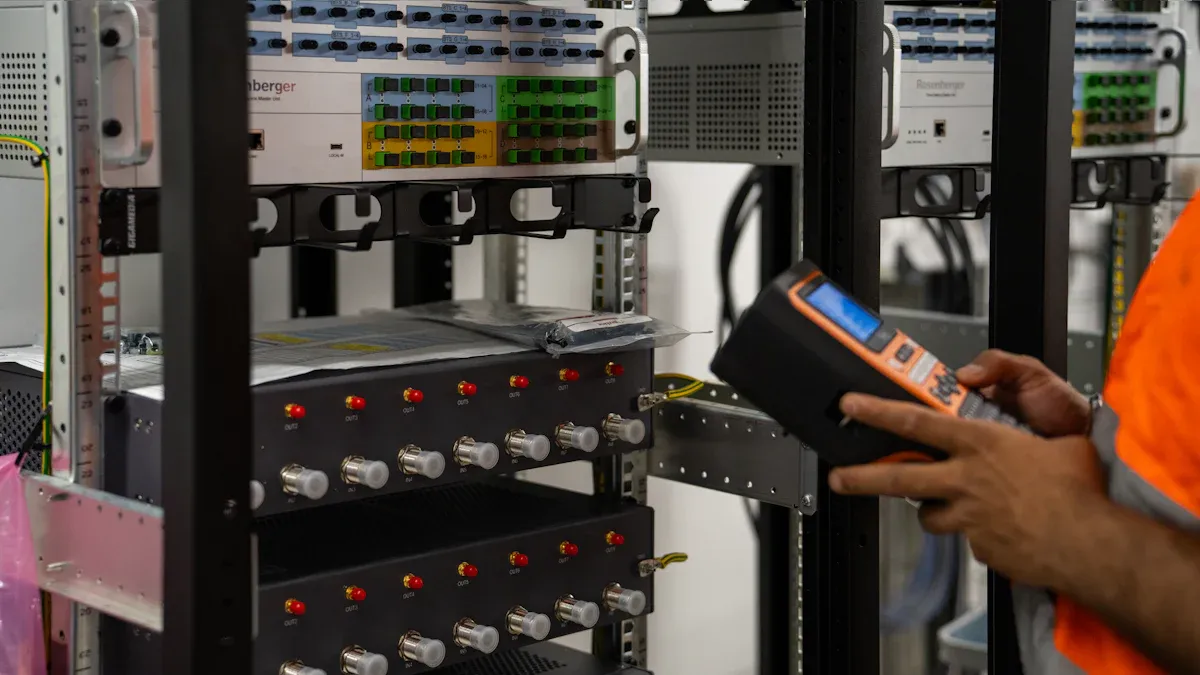
Near-Zero Discrepancies and Real-Time Visibility
Real-time stock tracking changes how you manage stock. You no longer wait for nightly batch updates. Every movement updates your records instantly. This shift drives inventory accuracy from a baseline of 85–92% to 98% or higher. That is a potential improvement of 6 to 13 percentage points. Near-zero discrepancies become the new normal.
RFID systems play a key role here. Studies show RFID can increase inventory accuracy from 70% to over 95%. With this confidence, you make smart purchasing and fulfillment decisions. An online retailer saw a 60% decrease in missing packages after implementing a real-time IoT-based system. The system provided visibility into over 80% of previously missing packages. This saved over $58 million in value. This is ai-powered warehouse inventory management in action.
Elena Rodriguez, Global SIOP Director at Flowserve, emphasizes the power of daily updates. "Having the opportunity to see daily updates and make decisions on a daily basis is very powerful." This is the core of real-time visibility. You see problems before they grow. You act on disruptions immediately. Real-time data becomes your most valuable asset.
45% of supply chain executives call this stock visibility a significant issue. 93% of companies face higher costs from marketplace selling. Without real-time visibility, you either hold excess safety stock or hold too little. Better data fixes that problem. You improve demand forecasting. You avoid costly stockouts and overstocks. Your inventory accuracy stays high. You make better decisions with confidence.
Faster Picking and Smarter Operations
This warehouse management system changes how you pick and fulfill orders. Companies report up to a 40% increase in picking efficiency without hiring extra staff. Order cycle times shrink noticeably. Warehouses maintain over 99% order accuracy by minimizing manual entry.
A mid-sized distributor cut holding costs by 25% within the first year. They used automated stock systems. This frees up capital for other investments. The savings add up quickly. Saving 2 hours per week per employee for a team of 26 at $50/hour means over $130,000 per year saved in labor efficiency alone. This operational efficiency directly improves your bottom line.
The platform adjusts storage assignments dynamically. You place frequently picked items in accessible locations. You reduce wasted space. You improve storage efficiency. This is warehouse automation at work. You use robotics to make better decisions.
The measurable benefits are clear. Veeco Instruments achieved a 50% reduction in critical shortages. A leading equipment manufacturer saw a 20% increase in production. Caterpillar MS Reman Site saved 70 hours per week. Qarbon Aerospace improved supplier delivery scores by 44%. These are real results from real-time inventory solutions.
UPS's AI-Powered Delivery Defense system shows how smart decisions work. It uses a real-time risk scoring engine. It evaluates address confidence. It flags risky deliveries before they occur. This shifts decision-making from stale batch reports to live behavioral data.
Real-time visibility enables proactive operations. You reduce stockouts and overstock risks through advanced demand forecasting. You lower holding costs by identifying slow-moving products. You improve supplier coordination. You optimize labor, space, and equipment utilization. You enhance end-customer experience through better product availability and faster order fulfillment. Automated systems help you manage replenishment automatically.
This is warehouse automation at its peak. You transform from reactive to proactive. You use automation and ai-powered warehouse inventory management to make smarter decisions. The technology pays for itself through improved efficiency and accuracy. You get full control over your stock. You make every move count. Your operational efficiency reaches new levels. Your fulfillment operations run smoothly. These solutions deliver real, measurable results.
AI-driven supply rooms replace periodic audits with continuous, intelligent tracking. Every movement becomes actionable data. You eliminate guesswork and reduce losses. This warehouse automation solution delivers near-zero discrepancies. You gain real-time visibility across your entire facility.
Consider piloting an autonomous supply room. You will experience concrete benefits firsthand. Your fulfillment operations become faster. Your inventory accuracy improves dramatically. This technology transforms reactive processes into proactive systems. Autonomous mobile robots and robotics work alongside your team. They boost efficiency and order fulfillment speed.
The future of warehouse management is autonomous, real-time, and data-driven. These solutions offer complete control. You make smarter decisions with confidence. Your operations run smoother every day. Embrace this change now.
FAQ
How long does it take to deploy an AI-driven supply room?
Most facilities finish setup in four to six weeks. The time depends on your warehouse size and how many smart shelves you need. Your team can keep working as usual during setup. The system turns on step by step, so there is no big disruption.
What return on investment can you expect?
Companies usually get their money back in six to twelve months. The savings come from lower labor costs, fewer mistakes, and less shrinkage. One facility cut holding costs by 25% in the first year. Your automation pays for itself through recovered losses.
Can this system integrate with your existing software?
Yes. The platform links directly to your current warehouse management system. It uses standard APIs and IoT protocols. Your inventory records update on their own without manual entry. This works with most major ERP systems. You keep your current workflows while gaining real-time visibility.
What training do your employees need?
Most workers learn the system in under an hour. The light and buzzer guidance removes guesswork. Facial recognition handles access automatically. Your staff just walks in, picks items, and leaves. The technology does the tracking. This simplicity helps workers accept the change.
How does the system handle returns and damaged goods?
The AI vision cameras spot returned items as they go back on the shelf. The system updates your inventory accuracy right away. You can flag damaged products for quarantine with one click. Full traceability records every move. This supports quality control and recall management without extra paperwork.
See Also
The Future Of Retail Lies In AI Powered Stores
Retailers Guide To The Rise Of AI Powered Corner Stores
AI E Commerce Tools Revolutionize Online Store Management
Modern Retail Benefits From AI Powered Combo Vending Machines
Launching An AI Corner Store With Minimal Investment Required
