The New Face of Retail: AI-Driven Brick-and-Mortar Strategies

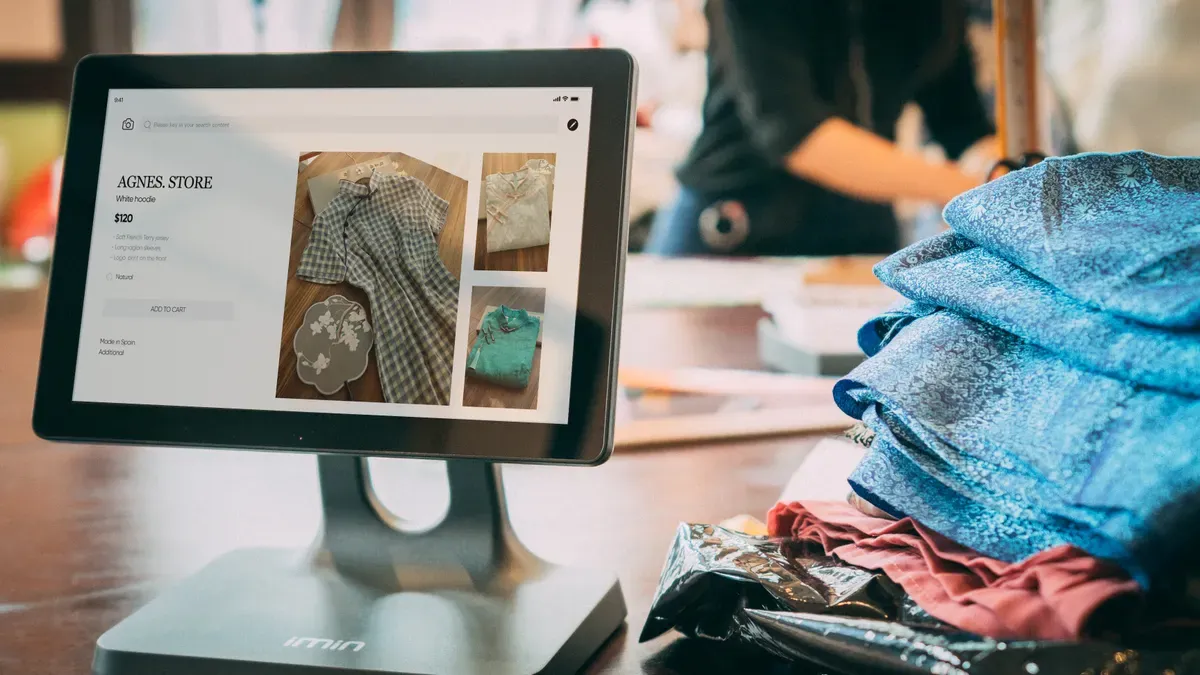
You've heard the bad news. You might think physical stores are dying out. Here's the truth: they aren't. They're being reborn with artificial intelligence. AI trends in retail show the market is set to jump from $11.61 billion in 2024 to $40.74 billion by 2030. Early users already see the benefits. They see 79% faster store sales growth and 34% better BOPIS performance. Here's the real question. How can AI fix your biggest operational problems? Think about risky site choices, broken equipment, and high worker turnover. Can AI really make your stores earn real profits now?
Key Takeaways
Stores that use AI grow their sales 79% faster than stores that don't use it.
Predictive tools help choose better store spots and cut down on equipment breakdowns.
AI helpers reduce training time by 38% and make customer service better.
Personalized suggestions and quick checkout help increase sales and keep customers coming back.
Begin with clean data and a small test project to show it works within 90 days.
Key AI Trends in Retail Driving the Store Renaissance
From E-Commerce Threat to Physical Comeback
Remember when experts said physical stores would die? They were wrong. Target's August 2018 earnings showed a different story. Comparable sales rose 6.5%, online growth hit 41%, and more foot traffic in stores drove those gains. That was Target's biggest growth in 13 years.
You see the same trend across the industry. Digital-native brands now hurry to open physical locations. JLL Retail reports plans for 850 more stores in the next five years. David Bray, CEO of Briz Media Group, says it clearly: "We are starting to see a resurgence of physical retail as the market is correcting itself and digital leaders make significant investments in physical retail."
Why the change? Consumers want real experiences. The Salesforce Connected Shoppers Report from March 2024 notes people want to touch and try products. Adyen research shows almost three-quarters of Gen Z shop in person at least weekly. They see it as an experience, not a task. Square's US Future of Retail Report 2025 finds 78% of retail leaders believe in-store experiences are key for future growth. And 83% of consumers report positive brick-and-mortar experiences.
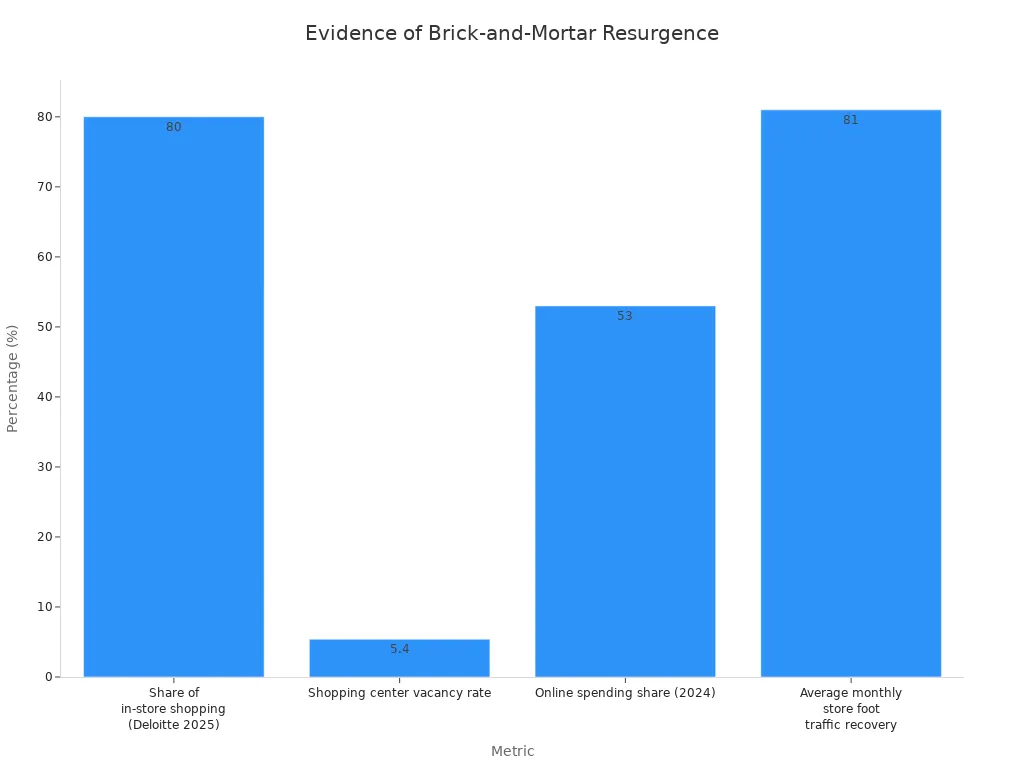
The numbers support this. Deloitte's 2025 data shows 80% of shopping still happens in-store. Shopping center vacancy sits at 5.4%, the lowest in two decades. Online spending share dropped to 53% in 2024, down from 58% in 2023. Monthly store foot traffic recovers to 81% of pre-pandemic levels.
Market Growth and Early Evidence
These AI trends in retail point to one conclusion: physical stores are back, and AI makes them stronger. The global AI in retail market is projected to grow from $11.61 billion in 2024 to $40.74 billion by 2030. That means a compound annual growth rate near 18% through the mid-2030s.
Early users already see real results. Stores using AI report 79% faster sales growth. They also perform 34% better on buy-online-pick-up-in-store operations. The National Retail Federation projects 4-6% sales growth for 2023, reaching $5.13 trillion to $5.23 trillion. Physical stores still capture 75% of purchases. And 56% of consumers prefer having both online and in-store options. Another 24% say they're less likely to buy from a business without a physical storefront.
These AI trends in retail show a clear pattern. AI acts as the helper that lets physical stores compete with e-commerce. It gives you the tools to match online convenience while offering something digital can't: real human connection.
The Operational Pains That Demand AI Intervention
You can't fix what you can't see. That's the real problem with physical retail today. Your biggest operational headaches hide in plain sight. They quietly drain your profits. Let's look at three of them.
Site Selection Gambles and Asset Failures
You pick a store location. You sign a lease. You hope foot traffic shows up. That's a gamble, not a plan. The risks keep growing. Rent costs rise in prime areas. Lease terms get shorter. Your time to make money shrinks every month.
Think about what a bad location costs you. A poor site can lose $5,000 per week in sales. That's $260,000 gone in one year. Over four years, the total loss tops $1,000,000. One weak store can hurt your whole business, even when other locations do well.
Opening late hurts too. A two-week delay on a three-year lease in a busy mall isn't a small problem. It's a real financial loss. Every day you're closed, you're not selling. Moving fast becomes a money issue, not just a preference.
Then there's your equipment. Refrigeration breaks. HVAC fails. You find out when a customer complains or food goes bad. Unexpected downtime hits your profits twice: lost products and costly emergency repairs.
Associate Churn and the Knowledge Gap
Your staff knows your products. They know the store layout. They know how to deal with tough customers. When they quit, that knowledge leaves with them.
The numbers tell a hard story. Average yearly retail turnover is about 60%, according to the Bureau of Labor Statistics. Some areas, like clothing stores, hit up to 81%. Each worker who leaves costs about $10,000 when you count hiring, training, and lost work.
Metric | Value |
|---|---|
Average annual retail turnover rate (BLS) | ~60% |
Turnover rate in some subsectors (e.g., clothing stores) | Up to 81% |
Cost per turnover event | $10,000 |
Annual cost for a 100-employee retailer at 60% turnover | $600,000 |
Time for new hires to reach performance benchmarks | ~2 months |
For a store with 100 workers, that's $600,000 each year. And new hires need about two months to get up to speed. During that time, your customers get poor service. Your sales drop. Your reputation suffers.
The knowledge gap makes things worse. Your best workers hold key knowledge. They know which products go together. They know how to read customer signals. When they leave, new hires start from nothing. They can't answer simple questions. They can't give good advice. Your customer experience gets worse, and you might not see it until sales fall.
These three problems share one thing: they're predictable. And what's predictable, AI can handle.
AI Solutions for Smarter Operations and Asset Management

You now see the problems clearly. The next step is fixing them. AI gives you tools that turn guesswork into precision. These AI trends in retail point to one direction: smarter stores that waste less and earn more.
Predictive Site Selection and Portfolio Optimization
You no longer need to gamble on locations. AI-powered site selection changes the game completely. Traditional methods rely on fragmented data from PDFs and spreadsheets. You get incomplete insights and human bias. Your evaluation cycles take weeks or months. By the time you decide, the market moves on.
AI flips that process. It integrates data from multiple sources into one dashboard. Machine learning and geospatial analytics drive decisions based on facts, not gut feelings. Your research cycles speed up by 70%. You evaluate locations in minutes, not months. Predictive feasibility forecasting interprets regulations and local patterns before you sign anything. You spot compliance surprises early. You lower land acquisition costs by 20%.
Traditional Site Selection | AI-Powered Site Selection |
|---|---|
Fragmented data from multiple sources | Integrated data in one dashboard |
Human bias and assumptions | Data-driven machine learning decisions |
Slow evaluation (weeks to months) | Fast evaluation in minutes |
Missed market opportunities | Predictive feasibility forecasting |
Compliance surprises and overlooked constraints | Reduced risk and 20% lower land costs |
The technology stack behind this is worth understanding. Machine learning identifies patterns in demographic data. Big data analytics processes diverse sources like traffic counts and competitor locations. Natural language processing reads zoning regulations automatically. Each tool plays a role in your final decision.
Predictive Maintenance and Real-Time Asset Intelligence
Your refrigeration units and HVAC systems no longer need to fail silently. IoT sensors connect your equipment and stream real-time data. Computer vision adds another layer by spotting visual wear that sensors miss. Deep learning analyzes those images to catch problems early.
The results speak for themselves. One retail case study optimized refrigeration systems and achieved 12% energy savings through IoT-based monitoring. The same implementation reduced alarms by 87%. Your team stops chasing false alerts. They focus on real issues that matter.
IoT-driven asset intelligence also cuts your utility bills directly. Smart meters and equipment sensors feed usage data into an analytics engine. When the system detects unusual energy consumption, it triggers alerts or automated adjustments. You stop wasting power without lifting a finger.
Dynamic environmental controls: IoT-enabled HVAC and lighting adjust automatically based on occupancy, time of day, or weather. You cut energy consumption without sacrificing comfort.
Data-driven optimization: IoT devices collect usage data to identify wasteful patterns. You target cost-saving measures with confidence.
Illustrative example: In a mall with large skylights, IoT-connected LED lighting and thermostats automatically lower lighting levels during bright daylight. You cut energy costs while maintaining efficiency.
Robotic process automation handles repetitive tasks like inventory updates and returns management. Your staff focuses on customers instead of paperwork. The combination of these technologies creates a store that runs itself. You watch the metrics, and the metrics tell you what needs attention.
These AI trends in retail are not distant possibilities. They are working today in stores like yours. The question is whether you will adopt them before your competitors do.
AI Solutions for Smarter Associates and Personalized Experiences

Your workers are the face of your brand. If they struggle, customers notice. If they do well, sales go up. AI trends in retail now help give your team extra power. They also make each shopper feel special. These tools matter more as we get closer to 2026.
AI Assistants for Training and Customer Engagement
Teaching new workers takes too much time. Old ways keep them off the floor for days. AI coaching changes this. It cuts training time by up to 38%. New workers learn faster and feel more sure of themselves.
Think about what that means for your store. Instead of long training away from the floor, workers take 10-15 minute AI mini-lessons right on the sales floor. They practice hard situations with AI avatars. Dealing with a tough customer or helping a VIP becomes safe practice, not a scary first try.
Your operations team can upload sales guides. The AI then makes interactive practice scenes in minutes. Your whole team can learn new scripts for a seasonal launch by the next day. No more waiting for trainers to visit each store.
The benefits add up fast:
15 minutes saved per worker, per shift by giving quick answers
60% fewer help requests sent from stores to head office
30+ minutes per day saved for store managers freed from help desk tasks
A worker helping a customer with a policy question can ask the AI Assistant and get an answer in seconds. No searching through binders. No bothering a busy coworker. The customer gets help, the sale goes through, and your team spends less time on non-selling tasks.
AI shopping assistants also change how customers interact. They help shoppers find items in big catalogs without getting tired. They make it easier to compare choices across different types of products. They answer questions that build trust and lower return rates. Real-time data lets you give personal experiences that keep customers in the store longer and build real brand loyalty.
Hyper-Personalization and Frictionless Checkout
General suggestions no longer work. Customers expect you to know them. Hyper-personalization does exactly that. A 2024 industry study shows that personal product suggestions can raise average order value by up to 369% compared to generic ones. Even careful estimates show gains around 32% from suggestion engines.
Walgreens shows this in action. The pharmacy chain uses AI personalization to sort customers at the counter automatically. By the time a customer pays, the pharmacist has all the needed info to tailor the experience. No repeated questions. No wasted time.
Metric | Improvement |
|---|---|
Conversion Rate | 106% increase |
Add-to-Cart Conversion Rate | 22% increase |
Those numbers come from a BSH Group case study using AI-powered personalization. The clothing brand UNTUCKit reports a 17.28% higher average order value from customers reached through clienteling compared to their store average.
Line management and automatic checkout remove the last annoyances. Long lines chase customers away. AI stops that.
Automatic checkout can cut wait times by up to 75%.
The effect goes beyond speed. One system stopped lines and saved an average of 2.25 hours in total customer wait time per day per store. Service times drop by 35%. Sales per month increase by 10%. Line abandonment decreases by 18%. Customers also see a 40% drop in average wait times with a 25% improvement in overall service speed.
Conversational intelligence tools study customer behavior and interaction data. They create insights that help you guess needs before customers say them. Smart Response understands what customers say and writes personal replies based on context. Customer experience orchestration uses insights from past talks to suggest the best next actions in real time.
These AI trends in retail point to stores that feel easy. Your workers become helpers, not checkout clerks. Your customers feel known, not processed. That mix builds loyalty no online competitor can match.
Building Your Roadmap for AI Maturity
You now see the problems and the solutions. The next step is building your own AI roadmap. Most retailers jump straight to buying tools without fixing the foundation. That path leads to wasted money and broken promises. Here's a better approach.
Start with a Unified Data Foundation
Your AI models need clean data to work. Garbage in, garbage out. That's especially true in retail. According to Gartner, only 10% of companies that experiment with AI are considered mature in their approach. And 33% struggle with data quality, which blocks successful AI adoption.
You need one source of truth. Pull data from your point-of-sale systems, inventory management tools, customer loyalty programs, and IoT sensors. Bring everything into one place. A unified data platform delivers several proven benefits:
Benefit | What It Means for Your Store |
|---|---|
Better AI model performance | Clean, rich data helps models predict accurately |
Smarter inventory management | Fewer stockouts and less waste |
Faster operations | Reduced reporting time and guesswork |
Lower IT costs | Save $1.2 to $3.4 million on infrastructure |
Improved personalization |
Without a solid data foundation, every pilot you run will struggle to deliver results. Start here.
Prioritize High-Impact Pilots and Scale Responsibly
Don't try to fix every problem at once. Pick one pain point and solve it well. Poor data quality is the primary reason retail AI pilots fail to reach production.
Start with high-impact, low-risk use cases. Think automating repetitive back-office tasks or using chatbots for customer service. Save complex projects like fully autonomous pricing for later stages.
Evaluate each potential pilot against seven criteria:
Strategic alignment – Does it support your core retail strategy?
Measurable impact – Can you define the business value clearly?
Feasibility – Do you have the right infrastructure and talent?
Data readiness – Is your data available and clean enough?
Risk management – What operational or reputational risks exist?
ROI clarity – Can you measure returns quickly?
Competitive edge – Does it give you a unique advantage over rivals?
Run a three-month pilot. Measure the results. Then scale what works. These AI trends in retail show that early adopters already outperform competitors. Your stores can be next. The path starts with clean data and one smart pilot. Take that first step today.
Here's the bottom line for you. AI isn't here to kill your physical stores. It makes them smarter. It makes them more profitable. And it makes them more focused on people. Early adopters already prove this. They see 79% faster sales growth. They handle BOPIS orders 34% better. You can join them today.
The renaissance of brick-and-mortar is real. The question is not whether to adopt AI—it's where to begin. Pick one pain point from this article. Start a small pilot. Prove the ROI within 90 days. Your store's future depends on it.
FAQ
How fast can I see results from AI in my store?
Early adopters see 79% faster store sales growth and 34% better BOPIS performance. You can prove ROI within 90 days by starting a small pilot on one pain point.
What's the first step to adopting AI?
Start with a unified data foundation. Pull data from your POS, inventory, loyalty systems, and IoT sensors into one place. Without clean data, your AI pilots will struggle to deliver results.
Can AI really help with employee turnover?
Yes. AI coaching cuts training time by 38%. New workers learn faster with 10-15 minute mini-lessons on the sales floor. You save $10,000 per turnover event and reduce the 60% annual turnover rate.
Is AI only for big retailers with huge budgets?
No. Start with high-impact, low-risk pilots like queue management or demand forecasting. Pick one problem, run a three-month test, and scale what works. Every store can begin today.
See Also
Artificial Intelligence Retail Shops Represent Tomorrow's Shopping Experience
Essential Insights For Merchants On Automated Neighborhood Store Growth
Artificial Intelligence Software Revolutionizes Online Retail Operations Management
Global Automated Convenience Retail: Comparing Micromarkets And Smart Shops
Launching A Low-Cost Automated Neighborhood Shop Using Artificial Intelligence
