Unlocking Significant Savings with Autonomous Checkout Technology

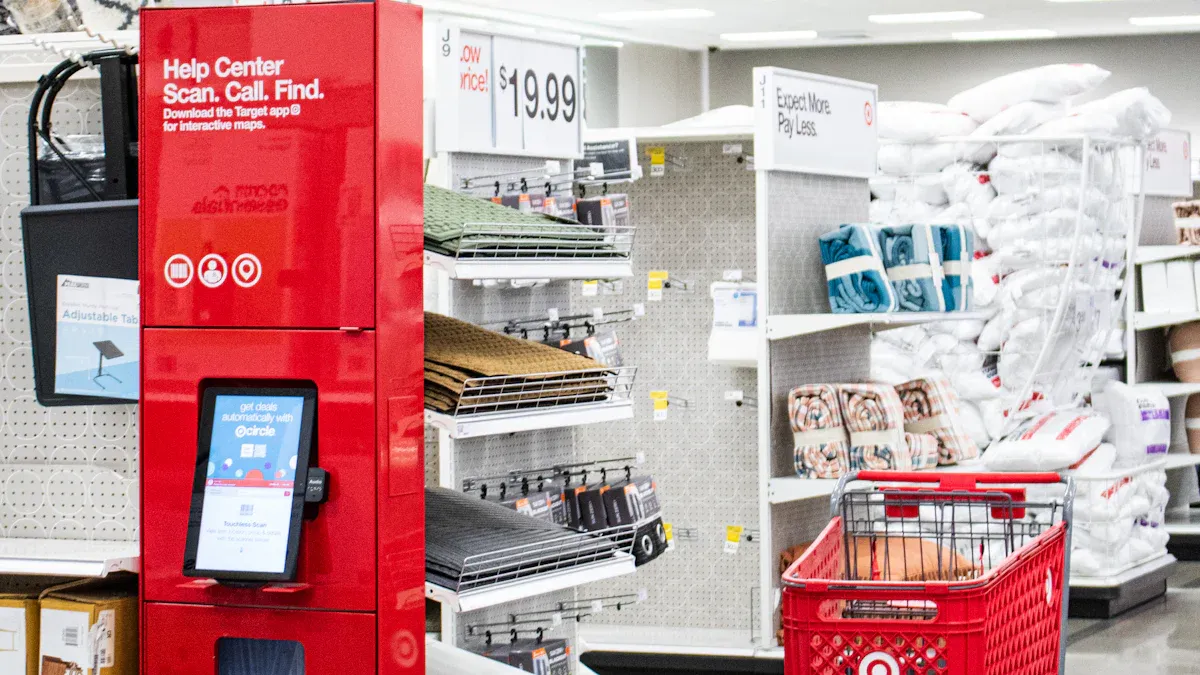
Retail shrink cost U.S. stores $112.1 billion in 2022, according to the National Retail Federation. That huge number is up from $93.9 billion the year before. Your labor costs add more pressure, using up 8-20% of revenue.
Retail labor cost benchmark: 8-20% of revenue, marked by high sales volume, many part-time workers, and thin profit margins.
Autonomous checkout targets both money drains directly. This tech removes old checkout delays while giving exact tracking. You get three clear benefits with autonomous checkout: less need for labor, smoother operations, and better inventory control. These gains build up into fast return on investment.
Cashierless checkout changes your store's money picture. The payback time often shocks retailers. This guide maps the money path, showing you exactly where autonomous checkout cost savings show up in your budget. You'll see how each improvement area helps your bottom line.
Key Takeaways
Autonomous checkout reduces labor costs by up to 20%, letting staff focus on more important jobs.
Faster checkout means shorter waits, which makes customers happier and helps stores sell more.
Automated tracking cuts theft and inventory loss by as much as 70%.
Most stores get back what they spent within 14 months by saving money and earning more.
Autonomous checkout helps keep track of stock more accurately and cuts down on training costs.
Achieving Autonomous Checkout Cost Savings

Labor is one of the biggest costs a store can control. Autonomous checkout tech goes right after this cost. At Aldi, a real test using Grabango's AI checkout cut checkout labor costs by 20%. That drop means real dollar savings you can see. The tech needs fewer workers while also speeding up customer flow. The money saved was enough to pay for the tech and help Aldi keep prices low. This win led to AI checkout being added in more stores.
Cutting Labor Costs with Automation
Old checkout needs a cashier at all times. Each lane needs one worker. Autonomous checkout changes this completely. One worker can now watch five or six self-service stations instead of sitting at one register. Think about the average US cashier pay of $14.77 per hour. Multiply that across many shifts and many lanes. The costs pile up fast.
The money picture gets clearer when you look at yearly numbers. The average US cashier makes $30,710 per year. In the UK, the average yearly pay is £24,500. When you use autonomous checkout, you need fewer cashiers for each shift. You also avoid hiring extra staff for busy times. This saving on labor shows up right on your bottom line without losing any sales.
Automation often brings new kinds of human work needed to build and run so-called autonomous — or semi-autonomous — systems, like self-checkout. This 'heteromation' lowers the value of the human work that keeps the system going, often hidden as 'ghost work' done by low-paid workers.
You should get ready for this. The tech needs upkeep and watching. Set aside money for software updates and some staff help. These costs stay far below the cost of full-time cashier coverage.
Optimizing Staff Allocation
Cashierless checkout frees your workers for better tasks. Employees no longer stand behind a checkout counter. They move into the store where shoppers need help. Five Below pushes staff to talk with customers around the store. Dollar General tries self-checkout in all lanes so workers spend more time helping shoppers.
The chances to move staff go beyond talking with customers. Your team can stock shelves more often. Better product availability leads to more sales. Staff can focus on stocking, filling orders, and keeping the store clean. These jobs often get skipped during busy times when everyone is at the registers.
The gains in staff efficiency are big. Instead of hiring five workers to run five checkout lanes, one worker handles many self-service stations. This lower staffing need means you keep service levels with fewer people. Your remaining team works on tasks that bring in money rather than just ringing up items.
Autonomous checkout savings build up through this shift. You cut labor costs without hurting the customer experience. In fact, shoppers are often happier. They get help finding items. Shelves stay full. The store looks cleaner and more put together.
The live data from autonomous checkout also helps you make better staffing choices. You see exactly when busy times hit. You know which hours need more floor staff versus checkout staff. This live view lets you match workers to demand exactly. No more having too many staff in slow times or too few in rush times.
The overall effect changes your labor budget. You move payroll dollars from ringing up sales to activities that make money. Your team gets more done. Your customers get better service. Your store runs smoother. These gains build over time, creating lasting savings that make you stronger against competitors.
Enhancing Operational Efficiency
Streamlining the Checkout Experience
Long lines at checkout make shoppers unhappy. Autonomous checkout fixes this issue. The system gets rid of the old checkout process. Customers pick up items and leave. No lines form. No delays happen.
The numbers show it works. At San Jose State University, Standard AI's autonomous checkout made wait times over 50% shorter. The ExCeL London convention center cut customer journey time by 53% with Just Walk Out technology. These changes make shopping much better.
Customers see the difference and like it. 57% of shoppers prefer autonomous checkout systems because they wait less. Sam's Club saw a 27% increase in basket size among Scan & Go users. Kroger reported a 30% boost in customer satisfaction with smart carts. The 2025 American Customer Satisfaction Index shows that a 1% improvement in checkout speed can boost satisfaction scores for general merchandise retailers.
Faster checkout lets you help more customers without adding workers. Your store handles more traffic during busy times. Faster checkout also means happier customers. Your customer experience gets better. This smoother checkout process brings real gains in how well your store runs.
Reducing Overhead Expenses
Old checkout lanes take up valuable floor space. Autonomous checkout swaps bulky registers for compact systems. You open up room for product displays and customer movement. This directly lowers your overhead expenses.
The savings are big. Autonomous checkout can reduce overhead costs. Sensors automatically adjust lighting and heating when no customers are present. This cuts electricity bills. You also spend less on maintenance with fewer mechanical terminals.
A McKinsey study confirms that automation can lower labor costs by up to 20% in retail. You can move those workers to higher-value tasks like inventory management or customer assistance. This boosts operational efficiency across your entire store. Retailers using AI-enhanced checkout have seen up to 15% less inventory loss. This protects your profit margins and makes stock management easier.
Seamless payment integration makes the system work smoothly. You get real-time data on every transaction. This real-time visibility helps you make smarter choices about staffing and inventory. Cashierless checkout is not just about removing registers. It is about rebuilding your store for maximum efficiency.
Preventing Loss with Autonomous Checkout
Inventory loss eats into your profits. Autonomous checkout directly targets this problem through automated tracking and live monitoring. You get two clear benefits: better inventory accuracy and less theft.
Improving Inventory Accuracy
Manual inventory tracking creates errors. Staff miss items during counts. Data entry mistakes happen. Autonomous checkout solves this with multi-modal sensing. The system uses computer vision and AI-based monitoring to identify items. This approach overcomes occlusion and similarity issues that confuse other systems. The result is highly accurate inventory tracking.
With autonomous checkout, every item removed from the shelf updates your inventory instantly. You get restock alerts the moment stock runs low. You see exactly where each product sits in your store. This real-time visibility helps you make smarter buying decisions. You avoid overstocking slow-moving items. You never run out of popular products on busy days.
Automated tracking also eliminates manual data entry errors. The system extracts inventory data from multiple sources automatically. It processes emails, documents, and voice inputs. No one needs to type numbers into a spreadsheet. The database updates itself in real-time. Your inventory records stay current and correct.
Minimizing Theft and Errors
Theft hurts your bottom line. Autonomous checkout cuts both external theft and internal fraud. The results are impressive. AI-enhanced checkout can reduce inventory loss by up to 15%. This includes losses from sweethearting and scan avoidance.
The technology works through multiple methods. Robust user identification creates accountability. Random checks catch missed scans. Each method serves a dual purpose. It catches unintentional errors and deters intentional theft. Employees only step in when risk increases.
The impact is measurable. Cashierless checkout also reduces employee fraud. The system tracks every item and every interaction. Sweethearting becomes nearly impossible. Staff cannot give away items to friends without detection. You get full visibility into every transaction.
Calculating the Cost Savings ROI
The savings from labor, operations, and inventory add up to a strong financial picture. Cloudpick's analysis shows that most stores get back their first autonomous checkout investment within a reasonable payback period. This payback period comes from lower operating costs and higher revenue. Your store can do the same by using this technology in a smart way.
Reducing Training and Onboarding Costs
Traditional checkout needs a lot of training. New cashiers spend hours learning register operations, payment processing, and store policies. Autonomous checkout gets rid of this task completely. You no longer need special cashier training programs.
Cost Category | Savings Mechanism |
|---|---|
Training | Fewer workers need register training. Staff can learn other skills. This cuts spending on training materials and classes |
Turnover | Fewer front-of-store staff needed. This lowers hiring and retraining costs each time a worker leaves |
The savings go beyond the first training. Retail has high turnover rates among cashiers. Each time a worker leaves, you pay for new hiring and more training. With fewer front-of-store staff, you cut these repeated costs. Your remaining team works on more valuable tasks like stocking shelves and helping customers.
Operational efficiency and cost reduction: Retailers can cut the labor costs tied to traditional checkout. Staff are still needed for stocking, customer service, and store upkeep, but you no longer need dedicated cashiers. This lets existing staff focus on higher-value tasks, boosting overall store productivity.
Product onboarding also gets faster. Smart retailers can quickly add new products to the system. This speed keeps inventory fresh and up to date. Quick onboarding cuts the time between product arrival and when customers can buy it. You react to market trends faster without manual system updates or shelf tagging.
Rapid product onboarding: Smart retailers can quickly onboard new products. This speed helps keep inventory fresh and relevant. Quick onboarding cuts the time between product arrival and when customers can get it. Retailers can respond to market trends faster.
Faster checkout can lead to increased sales, as many shoppers prefer autonomous checkout for its speed.
Quantified impact of reduced wait times: Faster checkout reduces wait times, encouraging more purchases.
Boosting Customer Retention and Sales
Autonomous checkout helps keep customers coming back through ease and personal service. Strong loyalty programs show clear gains. The data shows what you can expect.
Metric | Value |
|---|---|
12-month repeat visit rate improvement (strong programs) | 8-15% increase |
12-month repeat visit rate decline (weak programs) | 5-12% decrease |
Potential lifetime value captured via loyalty integration at self-checkout | 40-60% |
The role of trained associates matters more than retailers often realize. Specialist retail workers who know the brand and the technology turn self-checkout from a cost-cutting tool into a brand experience that stands out.
AI-driven autonomous checkout systems give personalized shopping experiences by using customer data to show custom offers. This makes shopping better, boosts sales, and keeps customers coming back.
The convenience factor leads to big revenue gains. Places using autonomous checkout report double-digit sales growth.
The payback becomes real when you add labor savings, operational efficiency, and these sales increases. Your autonomous checkout cost savings grow with each transaction.
The freed-up resources let you invest in other areas. You can improve store layouts, add more products, or boost marketing. Each reinvestment leads to more growth. The cycle goes on, building lasting advantage over competitors.
Your customer experience gets better with each visit. Shoppers enjoy faster checkout and custom offers. They come back more often and spend more each time. The lower training costs and fewer turnover expenses add to your savings. Every part of your operation runs more smoothly.
The financial picture is clear. Autonomous checkout gives measurable returns in many areas. The first investment pays for itself through recurring savings. After that, the savings go straight to your bottom line.
The three pillars — labor, operations, and inventory — create a powerful financial impact. You unlock cost savings across your entire store. The initial investment pays for itself through recurring savings. This makes it a strategic financial decision, not just an expense.
Autonomous checkout gives you a competitive advantage. You scale your business without adding proportional costs. Your customer experience improves, driving repeat visits and higher sales.
These gains lead to long-term cost savings that compound over time. Autonomous checkout transforms your operations. The numbers speak clearly. You lower labor costs, reduce shrinkage, and boost efficiency.
Now is the time to act. Evaluate your specific store format. Run a cost-benefit analysis for your operations. See how autonomous checkout changes your financial picture.
FAQ
How quickly will you see a return on your investment?
Most stores find that autonomous checkout pays for itself through recurring savings. Your exact timeline depends on your store size, current labor costs, and how much you lose to theft.
What happens during peak shopping hours?
Autonomous checkout handles lots of traffic without extra staff. The system processes many customers at once. You get rid of checkout lines. Your store serves more people during busy times without spending more on payroll.
How does the technology handle new products?
You add new products to the system quickly. The setup takes minutes, not hours. You skip manual shelf tags and system updates. Your inventory stays up to date, and customers can buy new items right away.
Does autonomous checkout work for all store formats?
Yes. The technology works for convenience stores, supermarkets, and large retail spaces. You can use it in full stores or mixed setups. The system changes to fit your store layout and product mix.
How secure is the payment process?
The system uses computer vision and AI-based monitoring to watch every item. These methods together cut theft and catch mistakes on their own.
See Also
How Self-Checkout Systems Have Transformed Over Time
Walmart Self-Checkout Policies And Updates For 2025
Walgreens Self-Checkout Balances Retail Ease And Hurdles
Fixing Self-Checkout Cash Mistakes For Seamless Customer Payments
Cloudpick Checkout Computers Boost Speed Access And User Satisfaction
