Using autonomous stores as an amenity to attract users in Corporate offices & tech parks.

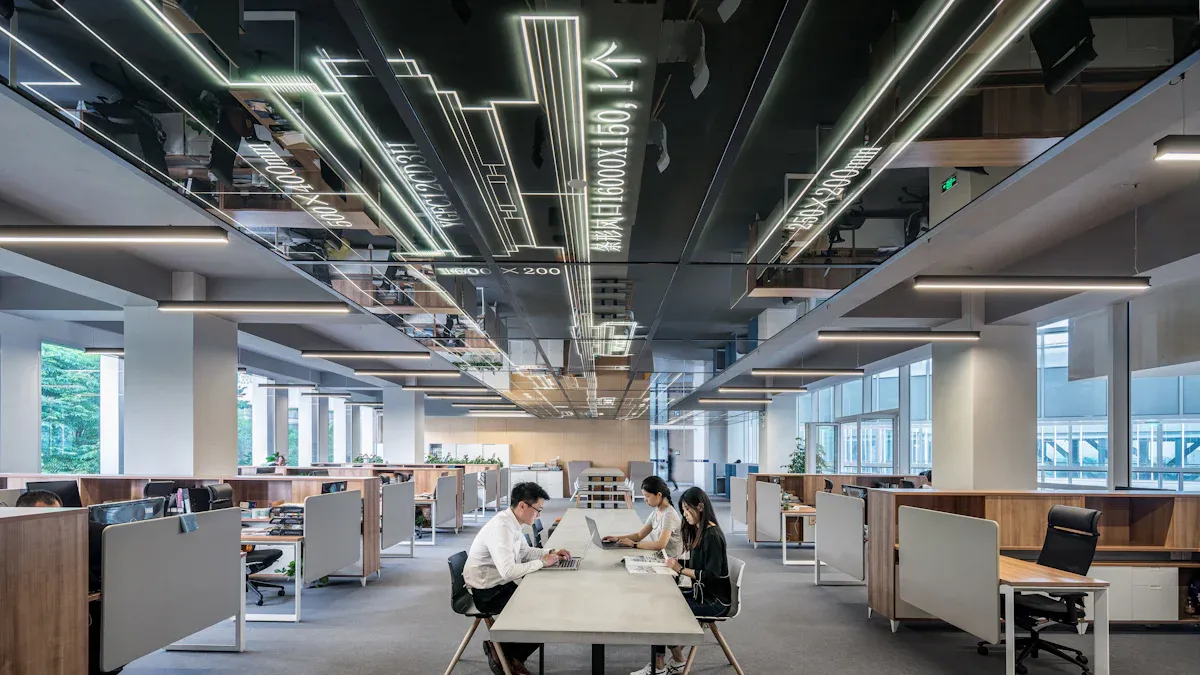
You see an opportunity to transform your workspace with autonomous stores as office amenities. These stores deliver convenience and a seamless experience for customers. Employees value autonomy and supportive environments, often leading to higher satisfaction and retention. Companies that offer modern amenities, such as autonomous stores, align with the expectations of a tech-savvy workforce. When you provide innovative office amenities, you differentiate your space and attract top talent.
Autonomous stores empower employees by offering quick access to essentials, enhancing daily routines and productivity.
Key Takeaways
Autonomous stores enhance employee satisfaction by providing quick access to essentials, improving daily routines.
These stores operate 24/7, allowing employees to shop anytime without waiting in lines, boosting productivity.
Implementing autonomous stores can differentiate your workspace, attracting top talent and fostering a supportive environment.
Companies can reduce operational costs by using autonomous stores, leading to significant savings and improved efficiency.
Investing in smart amenities like autonomous stores helps create a modern workplace that meets the needs of a tech-savvy workforce.
Autonomous Stores and Smart Amenities
What Are Autonomous Stores?
You encounter autonomous stores as a new kind of amenity in modern office spaces and tech parks. These stores use just walk out technology to let you enter, pick up what you need, and leave without stopping at a checkout counter. You do not need to scan items or wait in line. Payments happen automatically through an app or your card. This frictionless shopping experience saves you time and fits your busy schedule. Autonomous stores appear in many nontraditional locations, from small office kiosks to large supermarkets. Companies like Microsoft and Verizon have already added these amenities to their headquarters, showing how important autonomous solutions have become for employee satisfaction.
Autonomous stores use advanced technology to create efficient shopping environments.
You get the convenience of online shopping with the ability to see and touch products.
These amenities help you manage your shopping habits during the workday.
You can find autonomous stores in nontraditional locations, such as tech parks and corporate offices.
Technology Behind Autonomous Stores
Just walk out technology powers autonomous stores. You see a mix of AI-driven systems, computer vision, sensor fusion, and machine learning working together. Smart shelves track what you pick up. Cameras and sensors follow your movements. The system creates a virtual shopping cart for you. When you leave, the store charges your account automatically. Some stores use facial recognition or QR codes for entry. Mobile payments make the process even faster. Autonomous delivery robots, guided by AI, restock shelves and move products safely in busy areas. These amenities make your shopping quick, secure, and reliable.
Autonomous Stores vs. Traditional Retail
You notice big differences between autonomous stores and traditional retail. The table below shows how these amenities compare:
Feature | Autonomous Stores | Traditional Retail |
|---|---|---|
Staffing Needs | Minimal, mostly autonomous | High, requires cashiers |
Checkout Process | Just walk out technology, no lines | Manual, often slow |
Resource Allocation | Technology-driven, efficient | Labor-intensive |
Customer Satisfaction | High, fast, and convenient | Varies, often slower |
Access | 24/7 in many cases | Limited by store hours |
You benefit from faster shopping, no checkout lines, and round-the-clock access. These amenities help companies use resources better and improve your daily experience.
Convenience and Grab-n-Go Stores
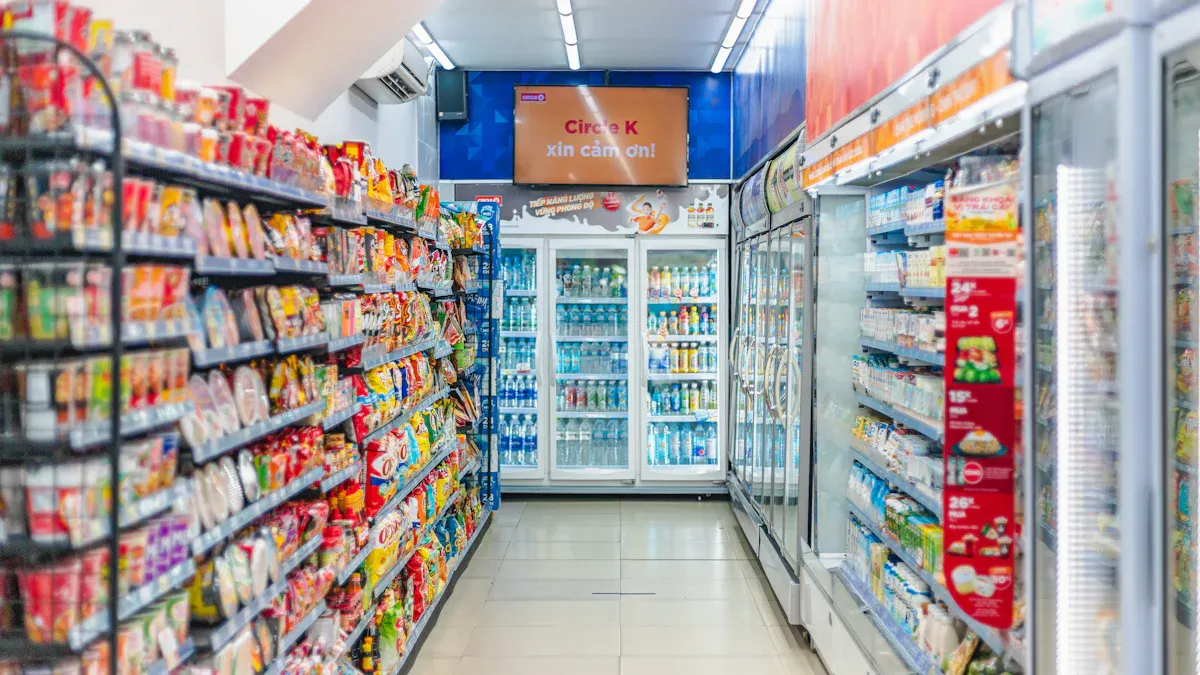
Enhancing Daily Routines
You want your workday to run smoothly. Autonomous stores help you achieve this by offering unmatched convenience. You can access products at any time, day or night. This 24/7 availability means you do not need to wait in lines or leave the building to get what you need. You can grab a snack, a drink, or even a forgotten office supply in seconds. This level of convenience supports your busy schedule and helps you stay focused on important tasks.
You gain 24/7 access to products, so you can shop anytime without waiting in lines.
You save about 3.5 hours per request, which lets you focus on your work.
The convenience of on-site shopping reduces time away from your desk and boosts your productivity.
Research shows that more than half of employees use these stores, and this access reduces stress and improves your work-life balance.
Grab-n-go stores are often placed in high-traffic areas like lobbies. You benefit from quick access to snacks and beverages, especially during short breaks. This setup eliminates long wait times and allows you to return to your tasks without interruption. You experience a convenience premium that traditional convenience stores cannot match.
Streamlining Employee Experience
You expect office amenities to make your day easier. Autonomous stores deliver on this promise by providing a seamless shopping experience. You do not need to interact with cashiers or handle cash. The automated system ensures fewer errors and faster service. You enjoy a higher level of satisfaction because you can shop whenever you need, without leaving your workplace.
You experience faster checkout, which reduces waiting times.
You appreciate the convenience of 24/7 access, allowing you to shop at your own pace.
You report higher satisfaction due to improved service and fewer mistakes from automated systems.
These amenities transform your daily routine. You spend less time worrying about errands and more time focusing on your goals. Customers value the convenience and efficiency that autonomous stores bring to the workplace. You see a direct impact on your productivity and overall experience. When you have quick access to essentials, you feel supported and valued as a customer. Autonomous solutions set a new standard for office amenities, making your workday more enjoyable and efficient.
Office Amenities for Talent Attraction

Differentiating Corporate Spaces
You see a growing opportunity to set your workspace apart in a competitive market. Office amenities now play a key role in attracting top talent and building long-term loyalty. Autonomous stores offer a unique amenity that transforms amenity spaces into hubs of convenience and collaboration. When you add autonomous solutions, you create an environment where employees feel valued and supported. This approach leads to improved amenities that foster wellness, growth, and community connection.
IONNA’s plan to launch thousands of EV charging stations with autonomous stores shows how you can use technology to create a customer-centric experience. These stations give you the opportunity to recharge both your vehicle and yourself. You notice that workplaces with these office amenities attract a loyal customer base, especially when they offer premium products and a seamless experience. Healthcare facilities also use autonomous stores to serve diverse groups, showing the strategic opportunities for improved amenities in various settings.
When you invest in office amenities that focus on wellness and collaboration, you build a workspace that stands out and supports hybrid work models.
Meeting Workforce Expectations
You expect your workplace to provide more than just a desk. Modern office amenities must support hybrid work, wellness, and collaboration. Autonomous stores meet these expectations by offering quick access to essentials and creating spaces for informal meetings. You find that improved amenities encourage collaboration and make hybrid workplaces more attractive.
Hybrid work models require flexible office amenities that adapt to changing schedules. You value the opportunity to connect with colleagues in amenity spaces designed for wellness and collaboration. These features help you build long-term loyalty and foster a sense of belonging. As you look for workplaces that support your lifestyle, you see that office amenities drive satisfaction and retention.
You benefit from improved amenities that support hybrid work and wellness.
You experience more collaboration and community connection in your workspace.
You develop loyalty when your employer invests in office amenities that match your needs.
You recognize that the right office amenities create strategic opportunities for growth and collaboration. By focusing on wellness, hybrid work, and community, you help your organization attract and retain top talent.
Real-World Success Stories
Case Studies in Corporate Offices
You see leading companies transform their office environments by adding autonomous stores as amenities. These stores create a new standard for convenience and efficiency. For example, a major tech company installed an autonomous store in its headquarters. Employees now enjoy instant access to snacks, drinks, and office supplies. You notice that the store operates without staff, so it stays open around the clock. This setup supports workplaces with extended hours and helps you manage your daily routine. You experience fewer interruptions and spend less time away from your desk. Customers appreciate the seamless shopping process and the ability to grab essentials during short breaks.
You observe that autonomous stores in corporate offices improve the overall experience for employees and visitors. The stores become a central part of the workplace, making daily tasks easier and more enjoyable.
Impact on User Engagement
You recognize a clear shift in user engagement after the introduction of autonomous amenities. Employees gain instant access to food and essentials, which enhances convenience during work breaks. You focus more on creative tasks and customer interactions because you do not need to handle transactional duties. The autonomous model creates a more engaging workplace environment. You see that stores operate continuously, so you can shop at any time. This feature proves effective in offices with 24-hour operations. You feel supported and valued, which leads to higher satisfaction and loyalty.
Employees enjoy instant access to essentials.
You spend more time on creative work and less on errands.
Stores operate without staffing limits, supporting all schedules.
You find that autonomous stores drive engagement and productivity. The shopping experience becomes frictionless, and you benefit from improved amenities that support your workday.
Operational Benefits for Property Managers
Cost Savings and Efficiency
You gain a clear advantage when you choose autonomous stores as amenities in your property. These solutions reduce your need for administrative staff and lower your management overhead. You see fewer errors and less financial leakage because the autonomous system handles transactions and inventory. You also improve maintenance dispatch, which means you solve problems faster and keep your property running smoothly.
Here is a comparison of property management overhead before and after adopting an agentic AI managed model:
Operational Metric | Legacy Management Model | Agentic AI Managed Model |
|---|---|---|
Property Management Overhead | 100% (High administrative staffing requirements) | Up to 40% Reduction (Via autonomous system execution) |
You notice that this reduction in overhead leads to significant cost savings. You can use your resources more efficiently and focus on improving the overall experience for your tenants and employees. You also eliminate many manual tasks, which gives you more time to plan for future growth.
You reduce property management overhead by up to 40%.
You improve efficiency in maintenance dispatch.
You eliminate financial leakage.
Data and Analytics
You benefit from the data and analytics that autonomous stores provide. AI-powered predictive analytics help you make better decisions about your property. You can anticipate resident needs and adjust rental rates based on real-time data. This approach helps you optimize your workflow and streamline your processes.
You use property data analytics to assess conditions and predict maintenance needs. This method gives you a faster and more cost-effective way to gather information about your property. You can respond quickly to issues and keep your amenities in top condition. The convenience of having accurate data at your fingertips helps you create a better experience for everyone who uses your space.
AI-powered analytics inform your property management decisions.
Data-driven insights help you anticipate needs and optimize rental rates.
Workflow optimization streamlines your property management functions.
Property data analytics assess conditions and anticipate maintenance needs.
Challenges and Solutions
Security and Privacy
You want to trust the technology you use every day. Security and privacy stand as top concerns when you consider autonomous stores in your workplace. These stores use cameras, sensors, and AI to track products and customer actions. You may worry about how your data gets collected and stored. Companies must protect your information and follow strict privacy laws. They use encrypted networks and limit access to sensitive data. Regular audits and updates help keep the system safe from threats. You can feel confident when you see clear privacy policies and transparent communication from your employer.
Tip: Always review privacy notices and ask questions if you have concerns about data use in your workplace.
Integration and Adoption
You may face challenges when your company introduces new technology. Integration and adoption of autonomous stores require careful planning and support. You need reliable systems that work with your existing infrastructure. Staff and users must feel comfortable with the new process.
You can see the most effective solutions in the table below:
Solution Type | Description |
|---|---|
Continuous AI Model Training | Feeding the system with new data to improve product recognition and customer action tracking. |
Customer Education | Clear communication, in-store support, and easy-to-understand guides to alleviate customer concerns. |
Robust Infrastructure | Investment in redundant networks and regular hardware checks to ensure system reliability. |
Phased Rollouts | Starting with smaller locations to manage costs and demonstrate ROI before scaling up. |
You can also follow these steps to boost adoption:
Prepare your team for new technology.
Educate and empower staff to achieve high adoption rates.
Create change champions to support others.
Provide ongoing training for staff to manage the system.
You will see better results when you combine technical solutions with strong communication and training. This approach helps you overcome barriers and ensures a smooth transition to autonomous amenities.
Implementing Autonomous Stores
Steps for Integration
You can bring autonomous stores to your office by following a clear process. Start with careful planning and vendor selection. Define your needs, research available vendors, and request proposals. Set the scope for a pilot project. Next, prepare your infrastructure. Assess the store location, install hardware, deploy software, and connect systems. After setup, focus on calibration and training. Calibrate the technology, train your staff, and run internal tests to ensure everything works smoothly. Finally, launch the store. Begin with a soft launch, then move to a public launch. Monitor the system and optimize it based on feedback.
Planning and vendor selection
Infrastructure setup and integration
Calibration, training, and testing
Launch and optimization
You should also consider best practices for your space. Place the store in high-traffic areas or near breakrooms. Make sure everyone can access it, including those with mobility needs. For large offices, put stores on busy floors near elevators or stairs. Start small to control costs and focus on automation. Choose popular snacks and daily essentials to test what users like. Set a clear timeline for your pilot, including planning, setup, testing, and review.
Tip: Include both new and experienced users in your pilot. Aim for diversity in age, job roles, and comfort with technology.
Measuring Success
You can measure the success of your autonomous store by tracking key metrics. Use the table below to guide your evaluation:
Metric | Description |
|---|---|
ROI of time spent in meetings | Less time in meetings means more productivity and higher ROI. |
Reduced inventory carrying costs | Lower inventory levels free up capital and improve sales. |
Increased sales associated with stores | Better product placement and timing can boost sales and ROI. |
Less confusion over data responsibility | Streamlined data tracking lets teams focus on valuable work, improving efficiency. |
Track these metrics regularly. Look for increased sales, lower costs, and higher employee satisfaction. Use feedback from users to make improvements. When you see positive trends, you know your autonomous solution delivers value to your workplace.
You can attract and retain top talent by adding autonomous stores as amenities in your workspace. These solutions improve daily routines and boost satisfaction. To maximize value, focus on seamless integration and ongoing support. The table below shows how autonomous technology drives long-term innovation and sustainability for employers and property managers:
Benefit | Description |
|---|---|
Operational Efficiency | Autonomous systems reduce costs and improve tenant satisfaction. |
Error Rate Reduction | AI agents lower error rates to less than 1%, compared to 8–12% traditionally. |
Predictive Maintenance | IoT sensors enable proactive repairs, preventing costly issues. |
Cost Savings | Smart technology increases Net Operating Income (NOI). |
Tip: Invest in smart amenities to future-proof your property and support a thriving workplace.
FAQ
How do you access an autonomous store in your office?
You usually enter by scanning a QR code or using your employee badge. Some stores use facial recognition. You do not need to interact with staff. The process is quick and secure.
What items can you buy in an autonomous store?
You find snacks, drinks, and daily essentials. Some stores offer office supplies or personal care products. The selection depends on your workplace needs and user preferences.
Is your payment information safe in autonomous stores?
You can trust that your payment data stays secure. These stores use encrypted networks and follow strict privacy rules. You should always check your employer’s privacy policy for details.
What happens if you pick up the wrong item by mistake?
You can put the item back on the shelf. The system updates your virtual cart automatically. You only pay for what you take with you when you leave.
Tip: If you have questions about the store, look for posted instructions or ask your office manager.
See Also
The Future of Retail: Embracing AI-Driven Stores
Comparing Micromarkets and Smart Stores in Global Retail
Enhancing Small Office Efficiency with Smart Vending Machines
Reimagining Spaces: The PARC at Tysons as a Community Center
Modern Retail Advantages of AI-Enhanced Combo Vending Machines
