Best locations to deploy micro autonomous stores in Hospitals & healthcare facilities

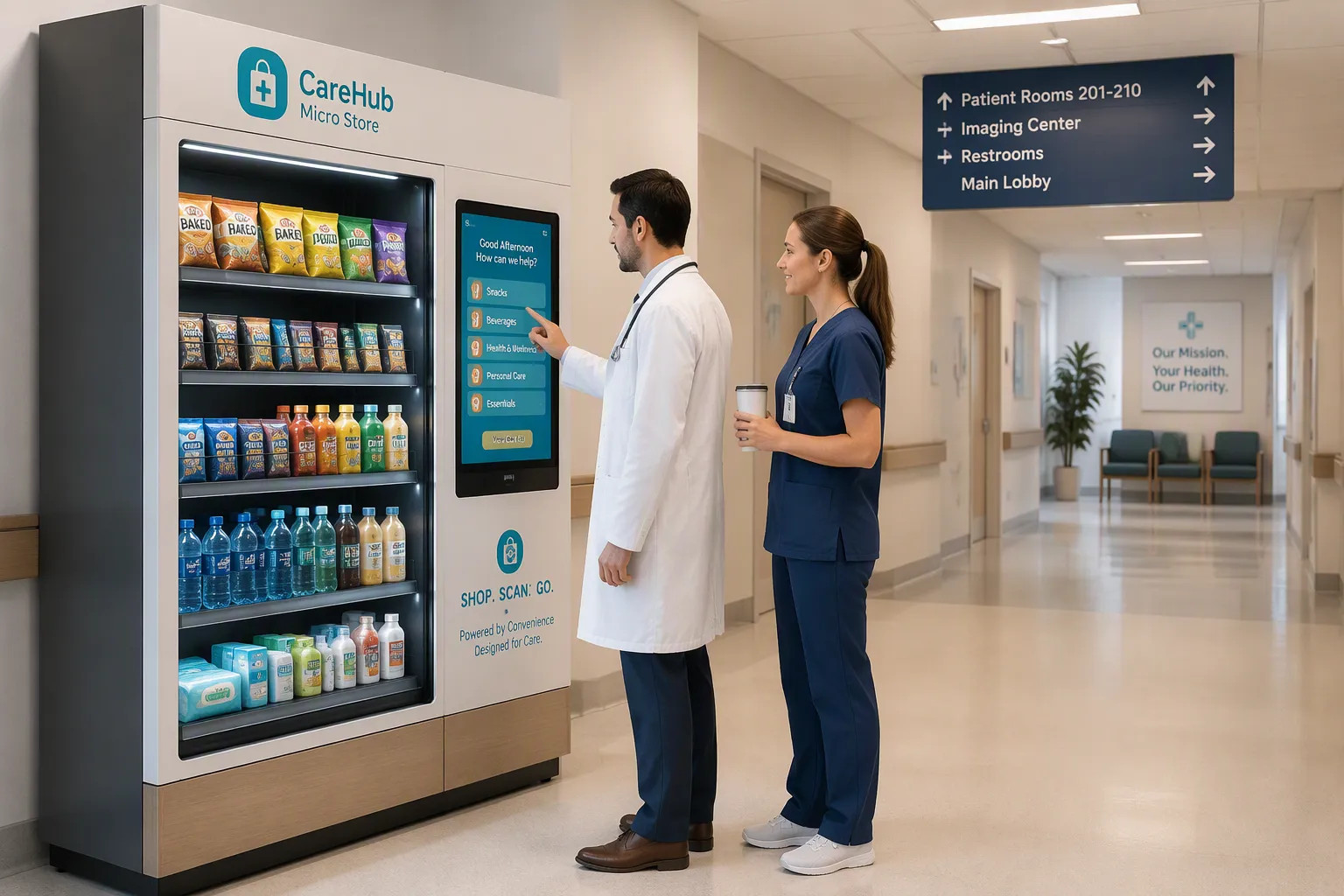
The best locations for micro autonomous stores are high-traffic, 24/7 accessible areas like main lobbies, emergency department waiting rooms, and staff break zones. These spots win because they have high foot traffic, long dwell times, and predictable demand. You can evaluate each location using three key criteria: traffic volume, accessibility, and integration. Traffic measures the number of people and their waiting time. Accessibility ensures round-the-clock entry and convenience. Integration connects payment with hospital ID systems. Long wait times create more sales opportunities. This post ranks each spot by ROI and practicality. You will discover which locations deliver the highest return. It helps you make a clear, data-driven decision.
Key Takeaways
Choose high-traffic areas with 24/7 access like main lobbies and ER waiting rooms.
Integrate your store with employee ID systems for seamless payment and repeat visits.
Use autonomous stores to reduce cafeteria lines and offer faster service.
Start with a pilot in one location and measure sales data for 90 days.
Select spots with long dwell times to increase purchase opportunities.
Key criteria for selecting best locations
Before you evaluate any spot, you need a clear framework. Three criteria determine success: foot traffic, dwell time, and 24/7 access. Foot traffic measures how many people pass by each hour. Dwell time captures how long they wait or linger in that area. Together, these two metrics predict sales volume better than any other factor. A location with moderate traffic but long wait times often outperforms a busy corridor where people rush past.
Foot traffic, dwell time, and 24/7 access
You can measure foot traffic and dwell time with indoor location technologies. Hospitals increasingly deploy Real-Time Location Systems (RTLS) using Bluetooth Low Energy (BLE) beacons or Ultra-Wideband (UWB) sensors. These systems generate heat maps that show patient flow and staff movement patterns throughout the facility. Wi-Fi-based positioning and ZigBee networks also work, though with lower precision than BLE or UWB. You can analyze trajectory playback to see exactly which corridors see the most activity during each shift.
The data reveals surprising patterns. A quiet hallway near the pharmacy might see heavy traffic during medication rounds. A lobby might surge at visiting hours. You want a location that maintains steady traffic across all three shifts, not just peaks. Dwell time matters just as much. Emergency department waiting rooms create natural dwell time because families sit for hours. Staff break rooms generate shorter but more frequent visits. Both patterns support consistent sales.
24/7 access is non-negotiable. Hospitals never close, and neither should your store. Night shifts need snacks at 3 AM. Visitors need drinks during overnight emergencies. Choose locations that remain accessible when security locks certain entrances. A store behind a locked door after hours loses most of its value.
Integration with hospital systems and security
The second criterion involves integration with hospital operations. Your micro store should connect with existing employee ID systems. Hospital staff already carry badges for door access and meal plans. You can link those same badges to your store's payment system. Apriva's platform supports payroll deduction and preloaded declining balances across hospital services. ViaTouch Media integrated its Vicki smart stores with the M.M. Hayes Quickcharge platform at New York Presbyterian hospital. Physician residents use their monthly stipend accounts to purchase food. Other employees charge purchases to payroll deduction accounts. This integration removes friction and encourages repeat visits.
Security and compliance also shape your location choice. The store must not interfere with patient flow or emergency response routes. Infection control standards require easy-to-clean surfaces and minimal touchpoints. Noise levels must stay low, especially near patient rooms. You also need reliable power, strong Wi-Fi, and planned restocking routes that avoid disrupting care. These practical requirements narrow your options. The best locations balance high traffic with operational feasibility.
Main lobbies and entrances – top best locations
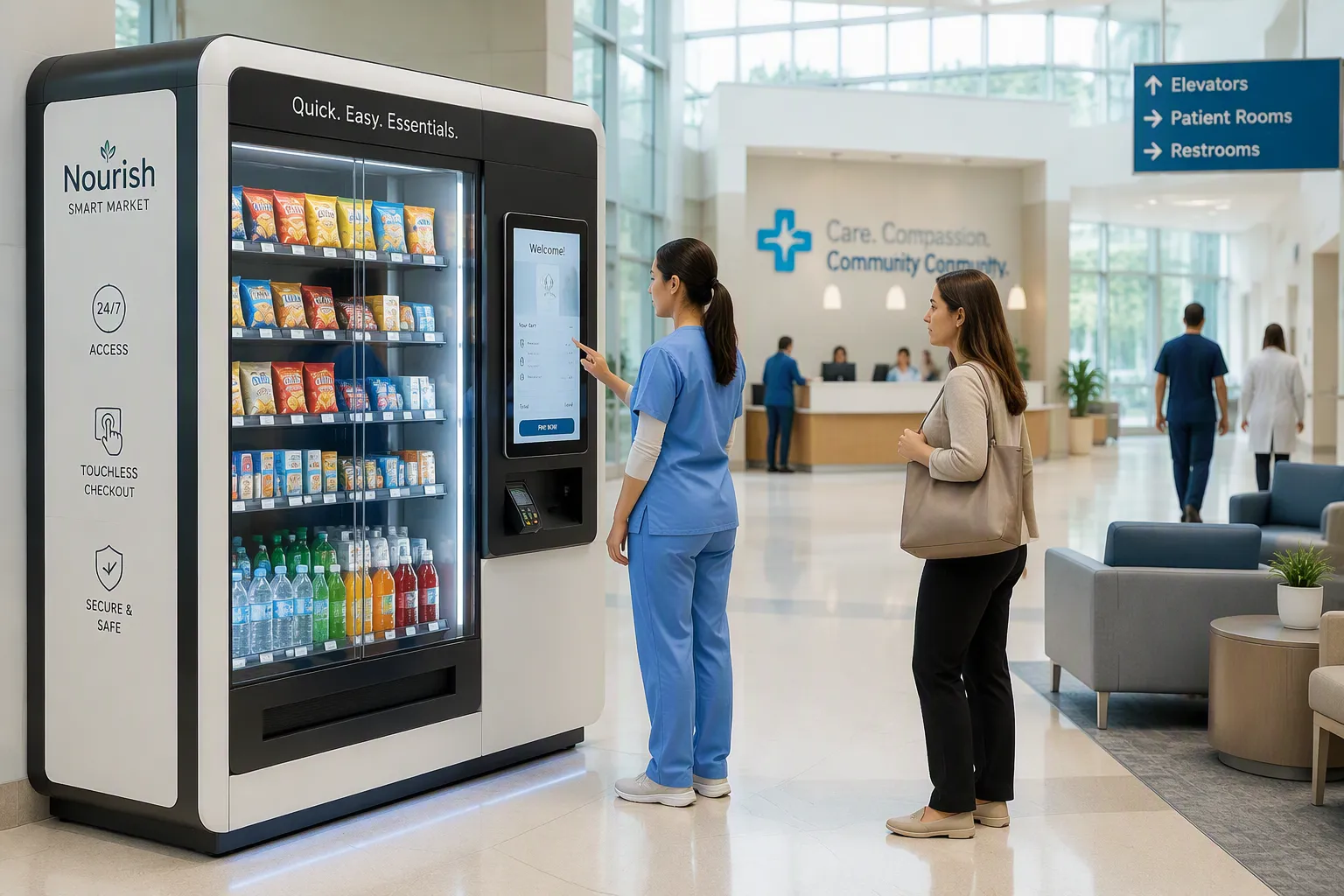
The main lobby stands as the highest-traffic zone in any hospital. Visitors arrive with questions. Staff pass through on their way to shifts. Outpatients check in for appointments. This mixed audience creates a constant stream of potential customers from early morning until late evening. You will find no other area in the facility that sees such diverse foot traffic.
High visibility and mixed audience
Your store becomes a landmark in the lobby. People notice it immediately when they enter. They remember it when they leave. This visibility drives impulse purchases. A visitor stopping for flowers or a card can also grab a snack. A family arriving for a scheduled procedure can pick up water bottles before heading to the unit. Staff members can grab a quick coffee without detouring to the cafeteria.
The audience mix matters for product selection. Visitors often need convenience items like phone chargers, magazines, or over-the-counter pain relievers. Outpatients appreciate healthy snacks before or after appointments. Staff members want quick energy boosts between tasks. You can tailor your inventory to serve all three groups. The lobby location also benefits from predictable surges. Morning hours bring staff and outpatients. Afternoon hours bring visitors. Evening hours bring families checking on patients. Each surge creates distinct purchasing patterns you can analyze and serve.
Reducing congestion with frictionless checkout
The lobby store solves a critical problem: cafeteria congestion. Many hospitals report long lines during meal times. Staff members have limited breaks. Visitors do not want to wait. Your autonomous store offers a frictionless alternative. Customers walk in, grab items, and leave without scanning or waiting. This speed matters in a hospital environment where every minute counts.
Real-world deployments prove this concept works. Amazon Just Walk Out technology has appeared in hospital settings, allowing shoppers to skip traditional checkout entirely. AiFi has deployed similar autonomous solutions in healthcare facilities. These systems use ceiling-mounted cameras and computer vision to track what shoppers pick up. The system charges their account automatically when they leave. No lines. No waiting. No friction.
Food service partnerships strengthen the value proposition. Aramark Healthcare+ has collaborated with autonomous retail providers to tailor product selection for hospital environments. These partnerships ensure your store complements existing food services rather than competing with them. You can stock grab-and-go meals that the cafeteria does not offer. You can provide healthier beverage options that align with hospital wellness initiatives. The goal focuses on reducing pressure on the main cafeteria while expanding choices for everyone.
Placement within the lobby requires careful thought. Position your store near the main entrance but away from the reception desk. This placement captures foot traffic without blocking patient flow. Ensure clear sightlines from security stations. Keep the store visible but unobtrusive. The best locations balance accessibility with operational efficiency. You want customers to find you easily without creating obstacles for stretchers or wheelchairs.
The lobby also offers practical advantages. Power and network infrastructure already exist in most hospital entrances. Security personnel monitor these areas around the clock. Cleaning crews maintain them regularly. These factors reduce your implementation costs and simplify ongoing operations. You can deploy faster in the lobby than in remote corridors or specialized units.
Start your hospital micro-store program in the lobby. Measure sales data for ninety days. Analyze which products move fastest during each shift. Use those insights to refine your inventory and plan future expansions. The lobby provides the perfect testing ground for your autonomous retail strategy.
Emergency department waiting rooms
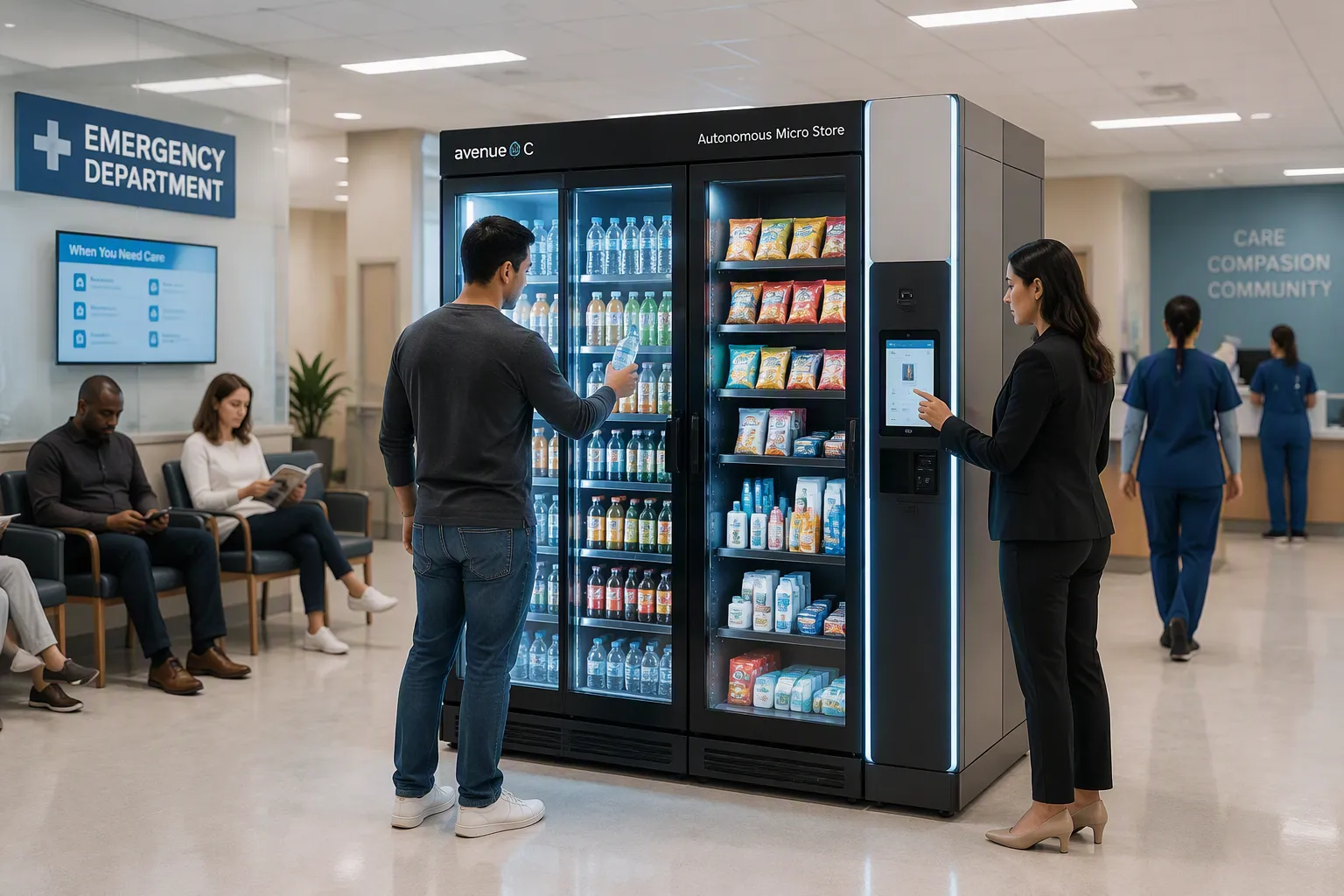
The emergency department waiting room presents a unique retail opportunity. You will find high traffic combined with exceptionally long dwell times. Families sit for hours while loved ones receive treatment. Patients wait for test results or bed assignments. This combination creates sustained demand for snacks, drinks, and personal care items.
High urgency and long dwell times
Consider the emotional state of people in an ER waiting room. They feel anxious, tired, and often unprepared for a long stay. A family member rushed from home without essentials. They need water, coffee, or a granola bar. They might need a phone charger, headphones, or basic toiletries. Your micro store answers these immediate needs without requiring anyone to leave the area.
Dwell time in the ER waiting room often exceeds two hours. Compare that to the main lobby, where most people pass through in minutes. Longer dwell time translates directly to more purchase opportunities. Someone waiting two hours will likely visit your store multiple times. They might buy coffee first, then a snack later, then a magazine to pass the time. Each visit generates revenue without additional foot traffic.
The urgency factor also drives sales. People in stressful situations make quick decisions. They do not comparison shop or hesitate. They see a need and fulfill it immediately. Your autonomous store offers exactly this speed. No lines, no checkout delays, no waiting. Someone can grab a bottle of water and return to their seat within thirty seconds.
Serving visitors and on-call staff
The ER waiting room serves two distinct customer groups. Visitors and patients form the first group. They need comfort items, snacks, and distractions during long waits. Staff members form the second group. Nurses and doctors working twelve-hour shifts need quick access to caffeine and energy bars during brief breaks. They cannot walk to the main cafeteria, which might sit several floors away.
The 24/7 nature of the emergency department makes this location essential for night shifts. The cafeteria closes at 7 PM. The gift shop locks its doors at 9 PM. Your micro store remains open around the clock. A nurse finishing a 3 AM break finds fresh coffee and a protein bar waiting. A family member keeping vigil overnight can purchase a warm drink without leaving the building.
Security and hygiene demand careful placement. Position your store away from direct patient flow. Keep it visible from the security desk or nurse station. This placement deters theft and provides reassurance to customers. The store must not block stretcher routes or emergency response paths. You also need surfaces that meet infection control standards. Choose materials that withstand frequent cleaning with hospital-grade disinfectants.
Product selection should reflect the unique needs of this environment. Stock more beverages than you would in other locations. Include electrolyte drinks, bottled water, and caffeinated options. Add personal care items like hand sanitizer, tissues, and lip balm. Consider small comfort items such as earplugs or eye masks for families spending the night. These products address the specific pain points of ER waiting.
One of the best locations for this deployment sits near the entrance to the waiting area, adjacent to the registration desk. This spot captures people as they arrive and again when they settle in. You might also consider a second unit near the exit corridor, serving families leaving after receiving news. Each placement serves different moments in the ER experience.
The ER waiting room delivers strong return on investment because demand never stops. You serve urgent needs at all hours. You capture customers who cannot easily leave the area. You provide genuine comfort during stressful moments. These factors make this location a top contender for your autonomous store program.
Staff break rooms and lounges
Staff break rooms offer the highest repeat usage rate of any location in a hospital. Employees visit these spaces multiple times per shift. A nurse might stop by three or four times during a twelve-hour shift. Each visit creates a potential sale. This pattern makes break rooms one of the best locations for steady, predictable revenue. You can forecast demand with remarkable accuracy because staff follow consistent schedules.
High repeat usage and predictable demand
Your store becomes part of the daily routine. Staff members know exactly where to find it. They do not need to search or ask questions. They walk in, grab what they need, and return to their duties. This efficiency matters during busy shifts when every minute counts.
Integration with employee ID cards becomes essential here. Staff already carry badges for door access and meal plans. You can link those same badges to your store's payment system. This connection removes friction completely. No phones to pull out. No wallets to find. Just tap the badge and go. Many hospitals already use platforms like Apriva for payroll deduction. Your store can plug into that existing infrastructure.
The predictable nature of break room traffic helps you manage inventory. You will learn exactly when the morning rush hits. You will know when the afternoon lull occurs. You can schedule restocking during quiet periods. This precision reduces waste and ensures popular items stay available.
Supporting night shifts with healthy options
Night shift workers face unique challenges. The cafeteria closes. Vending machines offer limited choices. Most options contain high sugar and low fiber, which cause energy crashes. You can change that pattern by stocking smarter alternatives.
Consider the typical choices available to a night nurse. A candy bar contains 25-30 grams of sugar and only 1 gram of fiber. A bag of chips offers almost no nutritional value. A sugary soda delivers 39 grams of sugar with zero fiber. These options provide a quick spike followed by a sudden crash. That crash hits hardest during the 3 AM slump.
Your micro store can offer better choices. Rip Van Wafel provides only 3 grams of sugar with 6 grams of fiber. Air-popped popcorn delivers 3-4 grams of fiber with less than 1 gram of sugar. Greek yogurt contains just 6 grams of sugar. Water infused with berries offers hydration with minimal sugar. These options sustain energy without the crash.
Many hospitals partner with food service providers to offer subsidized meals. Your store complements this arrangement by providing 24/7 access. Staff members can use their meal plan balances even when the cafeteria closes. This integration makes your store a valued employee benefit rather than just another retail outlet.
Placement matters within the break room. Position your store near the entrance or along the main walkway. Keep it visible from the seating area. Ensure it does not block access to sinks, microwaves, or refrigerators. The store should feel like a natural extension of the break room, not an obstacle.
Outpatient clinics and inpatient units
Outpatient clinic corridors deliver steady daytime traffic throughout the week. Patients arrive early for check-in appointments. Others wait between scheduled procedures. These natural waiting periods create strong purchasing opportunities. Best locations for micro autonomous stores include these areas when placed correctly.
Steady daytime flow in clinic corridors
Consistent foot traffic fills these corridors from 7 AM to 5 PM. Patients and family members need quick refreshments during wait times. Stock water bottles, light snacks, and grab-and-go coffee. Patients often skip heavy meals before procedures. Healthy options like granola bars and fruit cups appeal strongly to this group. Consider adding magazines or small electronics accessories.
Place your store near the waiting area entrance. Keep it visible without blocking hallway traffic. Clinic corridors run narrower than main lobbies. A compact footprint helps you fit these spaces. Wall-mounted or alcove installations work better. The daytime schedule means lower operating costs. You can focus restocking on peak hours between 9 AM and 2 PM.
Hyper-local access for inpatient units
Inpatient units house patients who stay overnight. Families sit with loved ones for extended periods. Nurses work twelve-hour shifts with limited breaks. The key advantage is hyper-local access. Family members do not leave the floor for food. Nurses grab items during short breaks. This convenience drives repeat purchases throughout the day.
Space constraints require careful planning. Place your store in an alcove near the nurse station. This keeps it visible without blocking patient routes. Noise regulations also matter. Your store must operate silently. Choose equipment designed for healthcare settings.
Stock comfort items for overnight visitors. Include pillows, toiletries, phone chargers, and entertainment items. Nurses need caffeine and protein options. Add earplugs or eye masks for rest. Position the store near the family waiting area. Clear sightlines from the nurse station allow security monitoring. One of the best locations sits near this family waiting area. This captures both visitors and staff passing on meal breaks. These small additions make long hospital stays more comfortable for everyone.
Near cafeteria and food service areas
Placing a micro store near the cafeteria captures overflow traffic from the main dining area. You serve people who want a quick snack without waiting in line. The store provides 24/7 access when the cafeteria closes. This combination makes it one of the best locations for your autonomous retail program.
Complementing food services after hours
The hospital cafeteria operates on a fixed schedule. It opens at 7 AM and closes at 7 PM. Your micro store stays open around the clock. A night shift nurse can grab a meal replacement shake at 2 AM. A visiting family member can purchase a sandwich during late hours. These needs go unmet when only the cafeteria exists.
Work closely with your food service partner. Providers like Aramark Healthcare+ can help you choose products that complement cafeteria offerings. Do not stock the same items. Offer grab-and-go meals the cafeteria does not carry. Stock specialty beverages like kombucha or cold brew. Add healthy snack options that appeal to staff and visitors. This strategy expands total food service capacity without direct competition. The partnership also supports meal plan integration. Staff can use their employee balance at both locations during overnight hours.
Reducing wait times and overcrowding
Cafeteria lines grow long during peak meal times. Staff members have limited break windows. They cannot wait 15 minutes for food.
Unlike cafeterias, micro markets allow customers to grab what they need instantly without waiting in line. This eliminates the queue-based friction inherent to traditional cafeteria service, directly addressing the wait-time problem.
You eliminate the bottleneck entirely. Your customers walk in, select items, and leave without waiting. Real results prove this approach works.
Institution | Metric | Before (Traditional Cafeteria) | After (Micro Store) |
|---|---|---|---|
BayCare St. Joseph's Hospital | Average shopping time | 25 minutes | 3 minutes (88% reduction) |
UC San Diego | Peak wait time | Not specified | Reduced by 15–20 minutes |
A 25-minute cafeteria trip shrinks to a 3-minute store visit. That 22-minute savings matters during a busy shift. The store also draws traffic away from cafeteria lines. This reduces wait times for everyone, including those who still prefer the cafeteria.
Place your store near the cafeteria entrance. This captures people heading to the cafeteria who change their mind when they see the line. The proximity reinforces the message that your store provides a faster alternative. You serve urgent needs while keeping the main cafeteria running smoothly.
Implementation logistics for each location
Every micro store location brings practical requirements. You need reliable power, strong Wi-Fi, and careful restocking plans. You also must align with hospital operations and security rules. These logistics determine whether your store succeeds or fails.
Power, Wi-Fi, and restocking routes
Your store needs a dedicated power outlet for refrigeration and payment systems. Check that the location has a nearby circuit that can handle the load. You also need strong Wi-Fi for payment processing and inventory tracking. A weak connection causes transaction failures and stock management errors. Test the signal strength before you install any equipment.
Restocking your store must not disrupt patient care. Plan your routes around hospital schedules. Follow proven practices. Restock during low-traffic periods like early morning before shift change. Use predictive AI inventory systems to anticipate demand and schedule restocking proactively. Let the vendor handle all restocking so the hospital facilities team has zero involvement. Deliver fresh meals weekly on a consistent schedule. Restock high-turnover items more frequently based on usage data. Keep service visits quick to avoid interfering with clinical workflows. Your restocking team learns the facility layout over time. They know which elevators to use and which corridors to avoid during peak hours.
Aligning with hospital operations and security
Hospitals enforce strict regulations around infection control, noise, and patient privacy. Your store must meet every standard. Choose materials that withstand frequent cleaning with hospital-grade disinfectants. Keep noise levels low, especially near patient rooms. Design the store to avoid obstructing emergency response routes.
Security also demands attention. Place the store within sight of security cameras or staffed stations. Vendors need 24/7 access for restocking. Coordinate with hospital security to issue badges and establish protocols. Vendor staff must follow the same rules as hospital employees. They need to know restricted areas and proper conduct.
Your micro store must also meet patient privacy standards. Do not place cameras that capture patient faces or medical information. Follow HIPAA guidelines for any data you collect. Meeting these requirements upfront prevents problems later.
The main lobby, ER waiting room, and staff break rooms deliver the highest return. You gain high traffic, long dwell times, and seamless integration. These factors make them the best locations for your program.
Start with one pilot in a high-traffic zone. Measure sales and foot traffic for 90 days. Use those insights to refine your approach then expand to other areas.
Align every decision with hospital operations. Work with security on access. Coordinate with maintenance on cleaning schedules. Protect the patient experience at every step.
Map your facility's traffic patterns. Talk to your facility manager. Pick a spot that serves your bottom line and the hospital's mission.
FAQ
How much does a micro autonomous store cost to deploy?
Deployment costs vary widely based on location complexity and store size. You need power, Wi-Fi infrastructure, refrigeration units, and camera systems. Start with a small footprint in a high-traffic area. This approach minimizes upfront investment while you validate demand.
How do you prevent theft in an autonomous store?
Computer vision systems track every item you pick up. Cameras monitor the entire shopping experience. The system charges your account automatically when you leave. Hospital security personnel monitor the store through existing surveillance networks. This layered approach deters theft effectively.
What products should you stock first?
Start with high-turnover essentials. Bottled water, coffee, energy bars, and fresh sandwiches sell consistently. Analyze your hospital's specific traffic patterns. Adjust your inventory based on sales data from the first thirty days. Let customer behavior guide your product mix.
Can you start with one store and expand later?
Yes. Launch a single pilot unit in your main lobby or staff break room. Measure sales and foot traffic for ninety days. Use that data to refine your approach. Then expand to additional locations with confidence.
See Also
Global Automated Retail: Comparing Micromarkets and Smart Stores
Unconventional Vending Machine Placements: Exploring New Venues
Space-Efficient Tabletop Snack Dispensers for Contemporary Environments
The Future of Retail: The Rise of AI-Driven Stores
Boosting Office Efficiency Through Smart Vending Options for Small Workplaces
