Comparing vending machines vs. autonomous micro stores in Hospitals & healthcare facilities

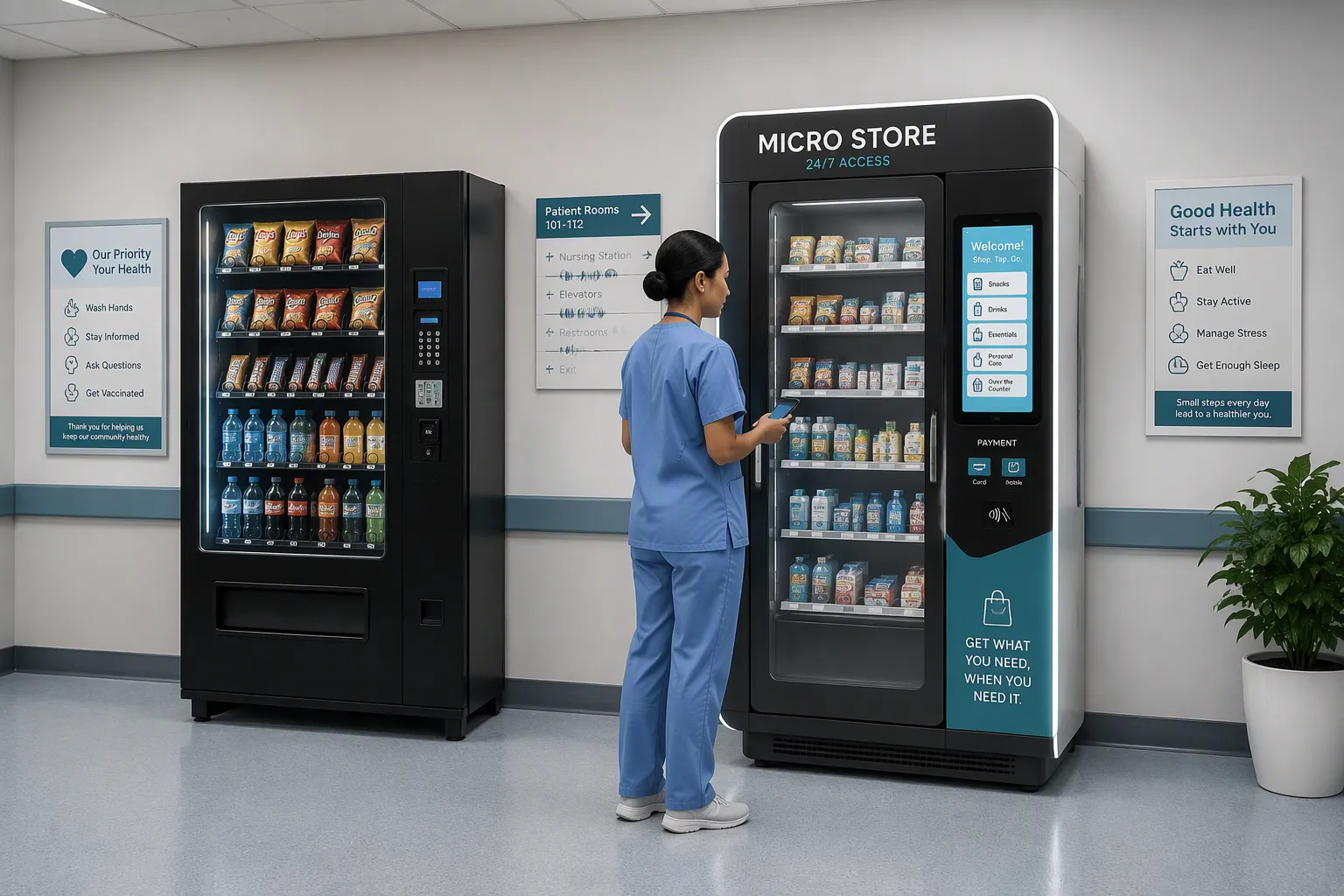
A night-shift nurse wants a fresh salad at 3 AM. A worried visitor needs a phone charger. Which option—vending machines or autonomous micro stores—can meet these needs without adding work for hospital staff? Unattended retail is growing in healthcare. Staff shortages and the need for 24/7 service push this trend. This article compares the two technologies on product variety, user experience, cost, and healthcare compliance. Is the higher upfront cost of autonomous micro stores worth it for better revenue and user satisfaction, or do modern vending machines stay the practical choice? The article first explains both ideas, then compares them on key points, and offers a decision guide made for hospital settings.
Key Takeaways
Autonomous micro stores give you more choices and fresh food than vending machines do.
Micro stores make checkout easier, letting customers pay once for all their items at once.
Micro stores bring in more money from each customer ($20 per month) than vending machines do ($7 per month).
Vending machines cost less at first and fit into small spaces, so they work well in areas with few people.
The best plan is to mix both: put micro stores where lots of people are, and vending machines in quieter places.
Defining Vending Machines and Autonomous Micro Stores
Knowing what each technology is helps facility managers see how they are different. Both options meet the same need for after-hours shopping. However, they work in very different ways.
Traditional Vending Machines: Compact and Familiar
A traditional vending machine is a single-unit kiosk. The number of different products it can hold is limited by its slots and the spiral that pushes items out. Spirals only work for cheap items with low profits. Most machines stock chips, candy bars, and canned drinks. The selling model is simple. A person picks an item using buttons or a screen, pays, and gets one product at a time. This way of selling one item limits how much each customer spends. Industry data shows traditional vending machines serve about 90 customers each day, with each spending around $3.80 on average. Monthly sales reach roughly $10,260. The machine is closed and locked, so it stays clean and safe. Its small size fits in tight spots like hallways or tiny waiting rooms. These machines only need staff to refill them every so often.
Autonomous Micro Stores: The Mini One-Stop Shop
Autonomous micro stores work in a completely different way. They are open areas with several shelves and smart fridges. They use smart technology to track items and let customers pay without waiting in line. Customers can look at products freely. They take what they want from coolers or shelves and pay all at once. This open setup allows many more product choices. Workers can stock better-quality salads, sandwiches, healthy drinks, and non-food items like chargers or soap. In a hospital, the micro store gives 24/7 access to fresh food, drinks, and essentials for everyone. It works like a small store that has what people need, without needing a full cafeteria. This selling model makes more money. About 150 customers come each day, spending around $9.20 per visit, which leads to monthly sales of about $41,400. That number is nearly four times what a vending machine makes. But this model needs more room and more often refilling.
Operational Dimension | Traditional Vending Machine | Autonomous Micro Store |
|---|---|---|
SKU Capacity | Limited by slots and coil restrictions | Wide selection including fresh food, drinks, specialty items |
Retail Model | Single machine; refilled by hand; user picks by buttons or screen | Open shelves; uses AI, sensors, and cloud to track items and let customers check out easily |
These definitions set the stage for comparing product choice, user experience, costs, and healthcare-specific issues in the coming sections.
Product Variety and Freshness: A Key Differentiator
Vending Machine Limitations on Stock and Freshness
Traditional vending machines cannot meet many different dietary needs. Their design uses slots and spirals, which limits the size and shape of products. This means most machines only hold snacks, chips, and canned drinks that last a long time. People looking for gluten-free, vegan, or diabetes-friendly items find very few options. Those who care about healthy eating often skip the machine completely.
Where the machine sits also hurts fresh food options. If a machine with perishable items is placed in a quiet corner, few people pass by. Slow sales make fresh stock not worth the cost.
Poor machine placement limits access. Even a well-stocked machine with fresh items will be ignored if placed in low-visibility corners. Without high-traffic placement, the turnover of perishable stock becomes too slow, making fresh food stocking economically unviable.
Older machines do not alert staff when items run out. Slots stay empty for hours, which hurts dependability. Traditional machines also focus on profit over nutrition, using most slots for cheap, mass-made snacks. This leaves little space for fresh or healthy choices.
Micro Store Flexibility for Healthy and Fresh Options
Autonomous micro stores fix these issues with an open layout. They carry a bigger range of snacks, drinks, and ready-to-eat meals. Shoppers can look at products freely, grab items, and check them before buying. This hands-on experience builds trust, especially with fresh food.
Unlike traditional vending machines, micro markets allow individuals to pick up, feel, and examine each item before they purchase it. Consumers snack daily, but 91 percent of them consider nutritional content before buying and 88 percent are willing to pay more for healthier options.
The flexible setup of a micro store supports healthy salads, protein wraps, soups, and fruit. Facility managers can match product choices with workplace wellness goals. Fresh and local ingredients satisfy people who want better options. Customers pay for multiple items in one easy step. This approach leads to bigger purchases and more return visits. It also answers the need for healthier, fresher food in hospitals.
User Experience and Checkout Friction
Vending Machines: Quick but Limited Interaction
A vending machine is fast for one simple buy. You put in money, pick an item, and get it in seconds. That works well for a quick snack or drink. Then the process stops.
Issues arise when you want more than one thing. Every product needs its own payment. Someone buying a sandwich, a drink, and a snack must pay three separate times. This takes extra time and annoys people. Hospital visitors often carry bags or hold kids. Dealing with repeated payments adds stress.
The machine's screen also limits browsing. You see items through glass or on a small display. You cannot touch products or read full nutrition facts. This lack of exploring cuts down on impulse buys. People stick with familiar picks instead of trying new ones.
Autonomous Micro Stores: Frictionless and Seamless Transactions
Autonomous micro stores remove these barriers completely. Customers walk in, look at open shelves, and grab items freely. They check products, compare brands, and read labels without pressure. This natural shopping feel matches what people expect from a normal store.
Checkout tech makes the difference. AI systems track every item a customer picks. Cameras with computer vision spot products as people put them in bags. When the customer leaves, the system charges their account automatically. No lines form. No scanning happens. The whole process takes seconds.
Industry leaders see this change. A survey found that 89% of retail executives think frictionless store experiences boost success over three years. These leaders focus on specific tech to cut friction:
Data analytics (63%)
Artificial intelligence and machine learning (54%)
Alternative payments (41%)
Self-service options including self-checkout (41%)
These systems work together smoothly. IoT devices watch inventory while cameras track customer movement. The result gives a smooth experience for busy hospital staff and visitors.
Buying multiple items takes just one payment. A nurse grabbing a salad, yogurt, and coffee pays once. This ease encourages bigger purchases. It also cuts missed sales when busy people leave long checkout lines. Autonomous micro stores handle more transactions per square foot and run 24/7 without extra workers.
Financial Comparison: Costs and Revenue Potential
Upfront Investment and Operating Expenses
The starting price gap between these two choices creates a big decision for hospital leaders. Traditional vending machines have a low entry cost. Smart vending machines cost between $4,995 and $18,995 or more, based on the model and its features. Large M-Series machines made for hospitals need a custom price from the maker. This price range makes vending machines a good fit for places with tight budgets or unclear demand.
Autonomous micro stores need a much larger starting investment. The open-floor setup requires many shelves, refrigerated coolers, and self-checkout stations. Each piece adds to the total price. Setup also needs more planning. The space needs good lighting, clear signs, and maybe electrical upgrades to run the equipment. These factors push the starting cost far past what one vending machine costs.
Running costs follow a similar pattern. Vending machines only need occasional refills and basic cleaning. Staff can check stock during normal rounds. The closed design keeps products safe from dust and handling damage. Repair costs stay steady because the machine works as one single unit.
Micro stores create higher ongoing costs. Open shelves need daily refills to keep them looking full and neat. Fresh food items need regular rotation to stop spoilage. Cleaning teams must wipe down shelves, coolers, and checkout areas often to keep hygiene high. The store's technology—cameras, sensors, and inventory software—also needs watching and occasional fixes. These daily needs require dedicated staff time or a third-party service contract.
Revenue Per Customer and Shrinkage Rates
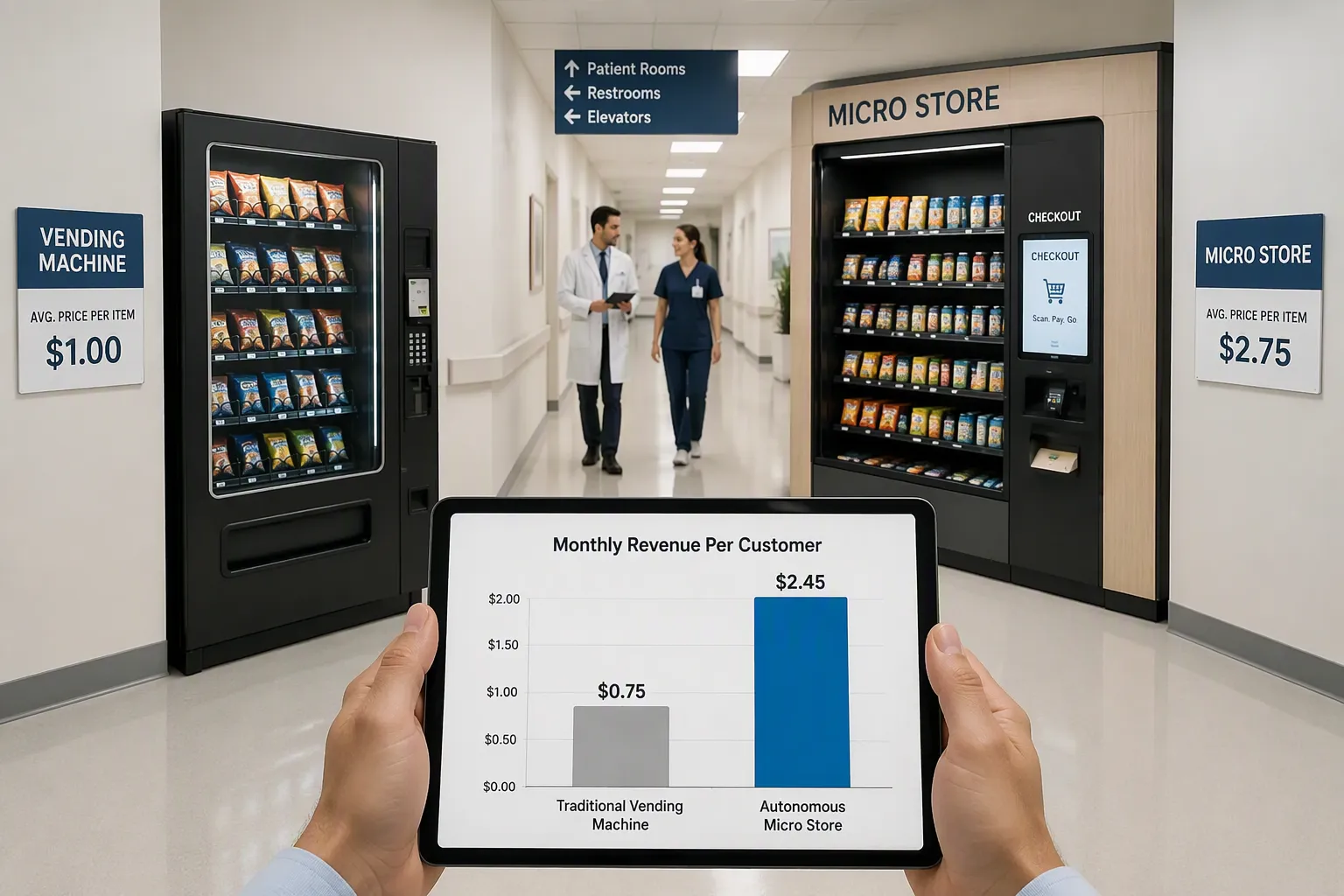
The revenue picture tells a different story. Industry data shows a clear gap in what customers spend at each format. A vending machine customer spends about $7 per month on average. A micro market customer spends roughly $20 per month. That gap comes from the wider product choice and the ease of buying several items in one trip.
Setting | Average Monthly Spend per Customer |
|---|---|
Micro Market | $20 |
Vending Machine | $7 |
The higher spending at autonomous micro stores comes from several reasons. Customers can look at open shelves and find new products. They can compare brands and read nutrition labels before picking. The ability to grab a meal, a drink, and a snack in one visit leads to bigger purchases. Hospital staff who work long shifts often buy more than one item at a time.
Shrinkage rates bring a balancing worry. Open displays make products easier to steal than locked vending machine compartments. Vending machines keep inventory behind glass and metal, cutting theft to almost zero. Micro stores must rely on security cameras and checkout tracking to keep losses low. Good systems keep shrinkage small, but the risk stays higher than with closed machines.
The final cost picture depends on foot traffic. A quiet hospital wing with few people passing by may never make enough sales to cover a micro store's higher costs. A busy main lobby or staff break room, however, can bring in revenue that far beats what a vending machine could make. Facility managers should estimate monthly sales based on expected customer numbers before picking a format.
Healthcare-Specific Challenges and Compliance
Hospitals must follow strict cleanliness rules. Any unattended retail option must meet these standards. Facility managers also need to offer 24/7 access for night-shift staff, overnight visitors, and patients with special diet needs.
Infection Control and Hygiene Standards
Vending machines keep products sealed behind glass. This protects items from dust and handling. Cleaning crews wipe down screens and payment pads on a regular schedule. Contactless payment lowers the number of touchpoints. Vendors run background checks and health screenings on staff before they service machines. Cashless payment only reduces the risk of spreading germs through money.
Autonomous micro stores face bigger cleaning challenges. Customers touch open shelves, pick up products, and open cooler doors often. Staff must clean these areas more frequently to meet hospital standards. Temperature checks on cold items help prevent spoilage. Regular inspections and expiration tracking keep food safe for vulnerable people. Automated systems send alerts when products are close to expiring. Keeping records of checks satisfies food safety rules at all government levels. Servicing usually happens three to five times each week.
The closed design gives vending machines an edge in sterile areas. Micro stores fit better in open spaces like main lobbies or staff break rooms. Cleaning teams there follow daily schedules.
Meeting 24/7 Needs of Staff, Patients, and Visitors
Hospitals never shut down. Night-shift nurses, overnight visitors, and patients need food and supplies at any hour. Regular cafeterias close after dinner.
Autonomous micro stores fill this gap well. The Smart N Go model offers service around the clock. Customers use a payment method to open locked glass doors. They look at products without help. The system charges them automatically for what they take when the door closes. No workers need to be present. The store works as a late-night add-on to an existing cafeteria. It can also serve as a separate location in another building on a medical campus. This setup keeps food available without adding work for hospital staff.
Vending machines also run all day and night but carry fewer choices. They cannot keep fresh salads or hot meals ready for overnight workers. Micro stores hold more fresh and packaged items for different diet needs.
Both options meet ADA rules with easy-to-use interfaces and clear paths. Smart vending systems offer safe payments and live inventory tracking for better stock control. The micro store cuts operating costs because it needs no staff on site. Local operators handle setup and full management. Hospitals only provide space, power, and internet access.
Space, Scalability, and Placement Strategy
The space you have often decides which option works for a hospital. Facility managers need to measure the floor space first. That helps them compare product variety and revenue potential. Each type works in a different space situation.
Compact Vending Machines for Tight Spaces
Vending machines work well in tight spots. One unit takes up about the same space as a big refrigerator. This small size lets you put them in narrow hallways, small waiting rooms, or spots near elevators. Hospitals with little floor space can set up machines without big changes to the building.
The small space need also makes getting approval easier. Most machines only need a regular electrical outlet. They do not need special lights, signs, or air changes. Setting them up takes hours, not days. This speed helps when a facility manager needs quick fixes for areas that lack service.
Low-traffic areas gain the most from vending machines. A quiet outpatient clinic or a small reception area may not have enough daily visitors to need a bigger store. A vending machine gives basic snacks and drinks without taking up a lot of floor space. Staff can move these machines easily if how patients move through the building changes.
Scalability of Autonomous Micro Stores for High-Traffic Zones
Autonomous micro stores need a lot more room. A typical setup needs space for open shelves, several refrigerated coolers, and a self-checkout station. The total area is often more than 150 square feet. This space need limits where you can put them, like main lobbies, staff cafeterias, or wide hallway crossings.
The larger size gives good reasons for its use. Operators can move shelves and coolers to match what people want in different seasons. They can add a cold case for fresh salads in summer or grow snack displays during holiday shifts. This flexible design lets the store change as what people like changes.
High-traffic areas make the space investment worth it. A main lobby that serves thousands of daily visitors brings in enough sales to cover the higher costs. Staff break rooms with many shift changes also create steady demand. These spots get the most out of the wider product choice and the one-payment checkout model.
The ability to grow goes beyond physical layout. Operators can change product mixes based on live sales data. They can add new items quickly without waiting to change vending machine slots. This quick response keeps the offering fresh and in line with hospital health goals.
Facility managers should map their available spaces before they decide. A mix of both often works best: micro stores anchor busy hubs while vending machines serve other spots around the building.
Decision Framework for Hospital Settings
Assessing Traffic Volume and Available Square Footage
Facility managers must first check two things: how many people walk by each day and how much floor space they have. These numbers show which option makes sense financially. A quiet outpatient wing with few daily visitors cannot support a large retail setup. A busy main lobby serving thousands of people each day offers a different chance. The gap between these situations explains why no single solution fits every hospital area.
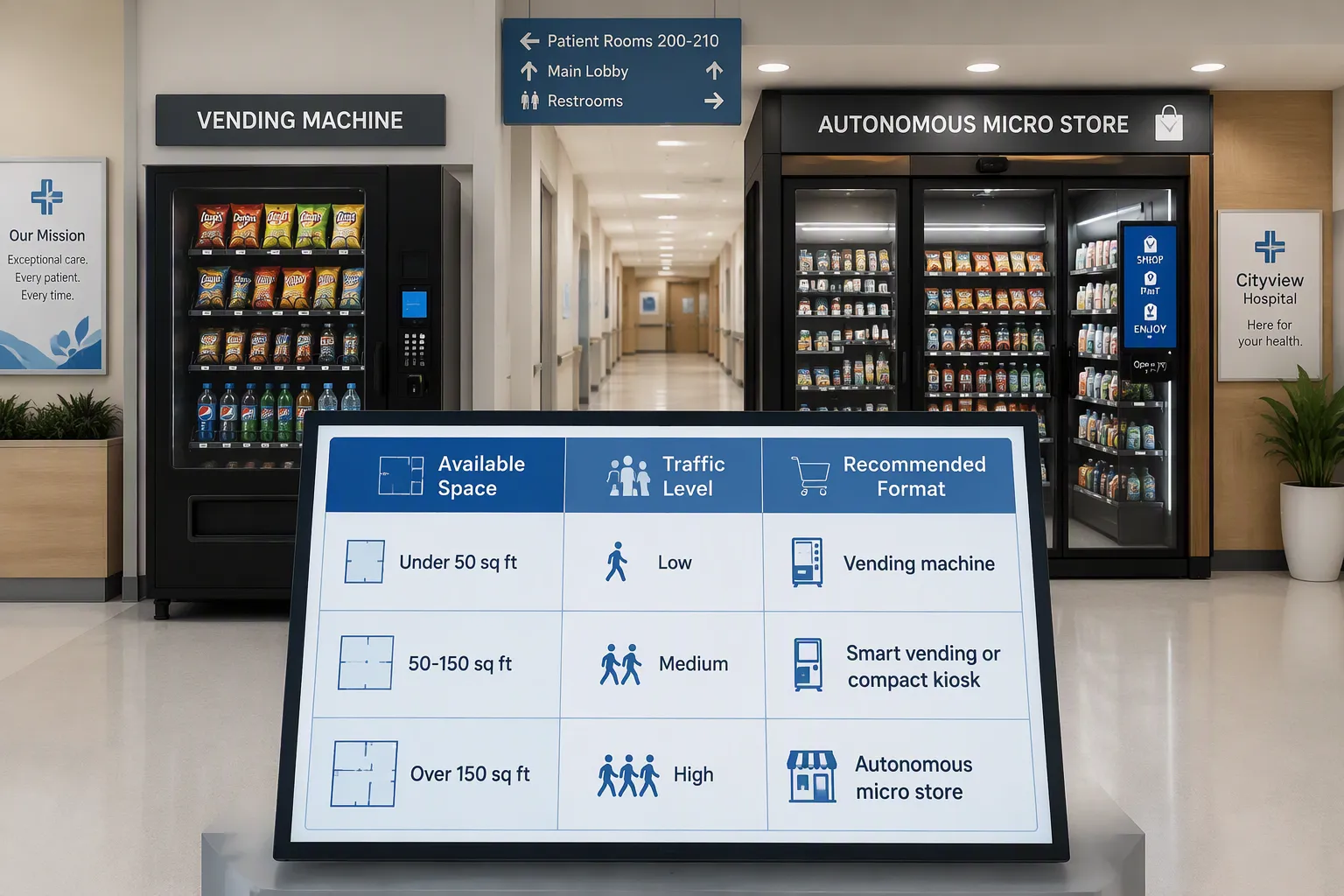
The decision matrix below gives a practical starting point for review.
Available Space | Traffic Level | Recommended Format |
|---|---|---|
Under 50 sq ft | Low to moderate | Vending machine |
50–150 sq ft | Moderate | Smart vending or compact kiosk |
Over 150 sq ft | High | Autonomous micro store |
Space alone does not tell the whole story. Managers must study traffic patterns across all 24 hours. A spot busy during day shifts may empty out at night. Micro stores need steady demand throughout the day to cover their running costs. Vending machines handle slower periods better because their overhead stays low. Night-shift demand matters especially in hospitals, where patient care never stops.
Traffic quality matters as much as quantity. Staff break rooms create repeat visits from the same people. Visitor lobbies bring new customers who may not come back. Repeat customers at micro stores build higher monthly spending. The average micro market customer spends $20 monthly, compared to $7 at a vending machine. Staff areas tend to create loyal customers who visit daily.
Aligning Budget, Goals, and Vendor Partnerships
Budget limits often drive the first decision. Vending machines need modest capital. Smart vending units range from $4,995 to $18,995. Micro stores demand much more upfront investment. Facility managers must weigh these costs against revenue projections and institutional goals.
Hospitals focused on staff wellness may put fresh food access first. Those goals favor micro stores despite higher costs. Facilities with tight capital budgets may start with vending machines and upgrade later. The choice should match strategic priorities, not just immediate cost.
Vendor partnerships change the financial picture. Some operators offer asset-light models that remove upfront capital needs. The table below shows one such partnership structure.
Partnership Attribute | Specific Term from Vendor |
|---|---|
Hospital Investment | Zero upfront investment |
Space Requirement | 30 sq ft only |
Setup Time | 3–4 weeks |
Operations Management | Fully managed by vendor |
Revenue Model | Transparent revenue sharing |
Vendor Expertise | LVPEI-trained optical staff |
This model lets hospitals launch a micro store without spending capital. The vendor handles staffing, inventory, and marketing. The hospital provides space and utilities. Revenue sharing creates aligned incentives between both parties.
Piloting offers a low-risk path forward. Facility managers can test a micro store in one high-traffic location while keeping vending machines in satellite spots. This approach generates real sales data without committing the whole facility. A 90-day pilot in a main lobby reveals actual customer behavior, popular products, and maintenance needs. Managers can then make data-driven decisions about broader deployment. The pilot period also gives time to evaluate vendor responsiveness and service quality before signing a long-term contract.
Vendor selection deserves careful attention. Managers should ask for proposals from operators who offer both formats. A vendor with experience in healthcare settings understands compliance requirements. They know how to handle infection control, ADA accessibility, and 24/7 service demands. The right partner brings operational expertise that goes beyond equipment installation.
Vending machines offer lower upfront costs and compact placement. Autonomous micro stores deliver higher revenue per customer ($20 vs. $7 monthly) and greater product flexibility, though they demand more operational attention. No universal winner exists. The right choice depends on hospital zones, traffic patterns, and budget constraints.
A hybrid approach works best. Deploy micro stores in high-traffic areas like main lobbies or staff cafeterias. Use vending machines for smaller, low-traffic waiting rooms.
Technology continues evolving. Smart vending now supports expanded product categories, AI-driven personalization, and interactive displays. These advances blur the line between formats.
Facility managers should assess foot traffic, space, and staff feedback before purchasing. Consult vendors offering both solutions for tailored proposals.
FAQ
How much does each option cost to install and operate?
Smart vending machines cost between about $5,000 and $19,000. Autonomous micro stores cost a lot more to set up. Running costs are also different. Vending machines only need refills now and then. Micro stores need daily restocking, cleaning, and tech upkeep. The higher costs can lead to more money earned.
Which format works better for infection control in hospitals?
Vending machines keep products behind glass. This keeps them safe from dust and touching. Micro stores have open shelves. Customers can pick up items. Cleaning staff have to clean surfaces more often. Both options need to follow hospital cleaning rules. The closed design helps vending machines work better in clean rooms.
How much space does each retail option require?
Vending machines can go in small spaces under 50 square feet. They just need a regular power outlet. Micro stores need more than 150 square feet. They need room for shelves, coolers, and checkout counters. The bigger size means fewer places to put them. Facility managers should measure the space they have before deciding.
Which solution generates more revenue per customer?
Customers at micro stores spend about $20 a month. Vending machine customers spend about $7 a month. More product choices and one-time payment make people spend more at micro stores. The number of customers each day is also different. Micro stores get about 150 customers a day. Vending machines get about 90. More visitors makes the bigger cost worth it.
How should a facility manager decide between the two formats?
Facility managers should first look at how many people walk by and how much space they have. Quiet spots under 50 square feet are good for vending machines. Busy lobbies over 150 square feet are better for micro stores. Using both works well. Managers can try a micro store in one busy area while keeping vending machines in other spots around the building.
See Also
Global Automated Retail: Comparing Micromarkets And Smart Stores
Grocery Vending Machines Transforming Retail Access For Everyone
Smart Combo Vending Machines: Key Features And Retail Benefits
24-Hour Vending Cafes: Where Convenience And Innovation Converge
