How computer vision enables accurate checkout in Hospitals & healthcare facilities

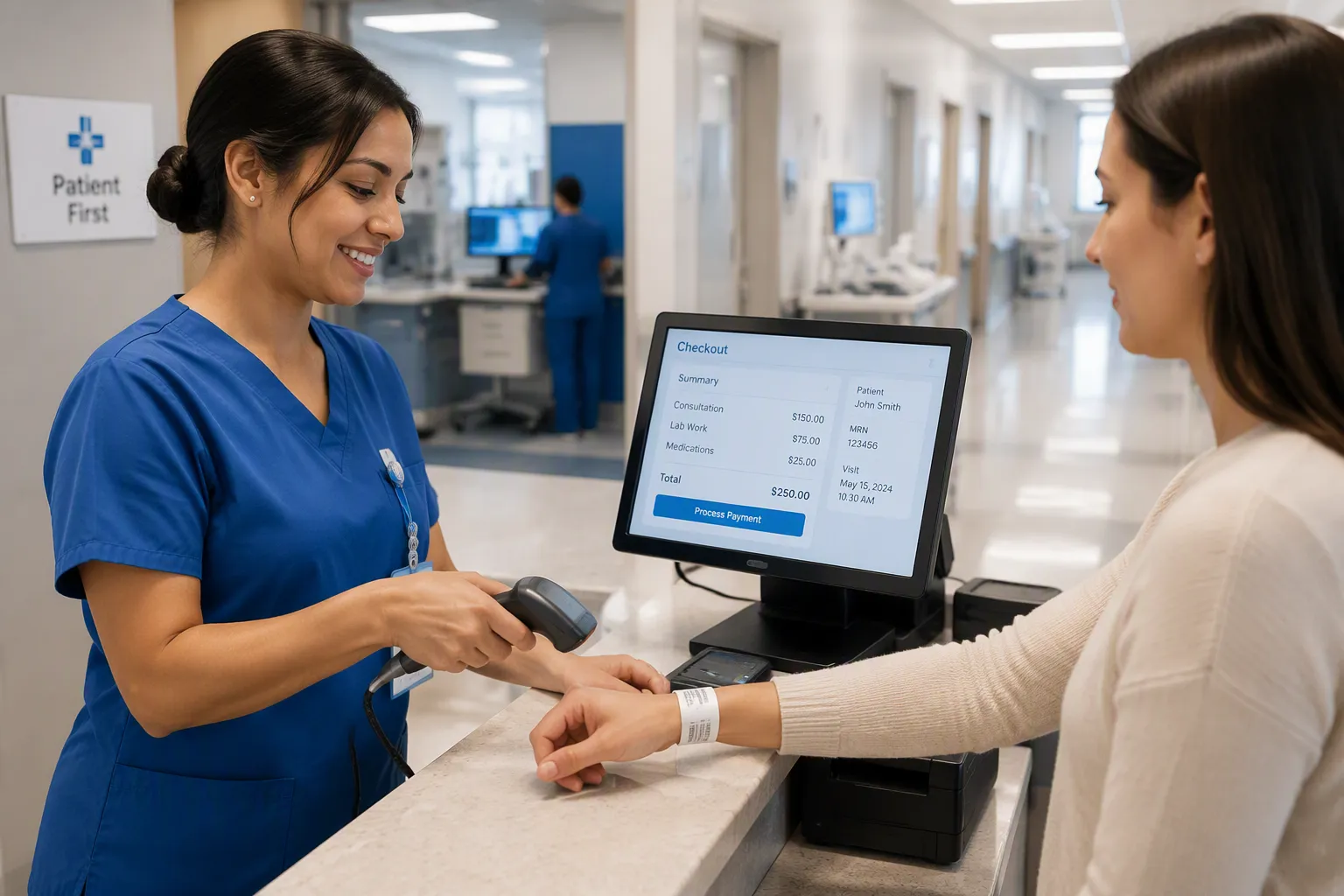
Missing a charge on one surgical kit may not seem like a big deal. But if that mistake happens again and again during many daily procedures, you could lose thousands of dollars every month. This loss of money comes from checking out supplies by hand. Your staff spends precious hours writing down what is used instead of taking care of patients. Late bills and rule-breaking problems follow, which slows down patient care and hurts your profits.
Computer vision enables accurate checkout by automatically recognizing supplies. Cameras spot items as doctors and nurses use them, so charges are recorded right away. This technology also sees patient lines and open spots in discharge areas, making the whole checkout process smoother. For managers and IT leaders, this means exact data without extra work. You stop paperwork mistakes at the start, keeping both your money and your staff's time safe.
Key Takeaways
When people check out by hand, they can miss charges and lose money. Computer vision tracks supplies on its own.
Cameras and AI spot supplies as they are used. This cuts mistakes and makes billing faster.
Computer vision watches supplies in operating rooms. It also keeps an eye on patient lines in discharge areas.
Using computer vision can reduce claim denials by 30%. It also raises net patient revenue by about 0.5%.
Snap&Go is a working system. It records every charge with pictures as proof.
The Problem of Inaccurate Checkout
Revenue Leakage and Documentation Errors
Manual checkout quietly drains your hospital's income. Staff write down supplies after procedures, often from memory. This slow process causes missed charges. Think about one orthopedic case. Real-time tracking found 127% more billable value than the hospital's EHR records. Nearly $1,800 in bill-only implants were absent from the EHR. That amount was almost 60% of the case's total billable value.
Documentation errors also bring compliance risks. Billing systems get incomplete data. Denials go up. Staff must redo claims. The issue starts with manual checkout. You cannot solve it by pushing staff to work harder. You need a new method.
The Need for Real-Time Accuracy
Real-time accuracy changes the whole checkout process. You track supplies where they are used. You record every charge right away. Your billing systems receive full data. This cuts missed charges and human errors a lot. Faster payments follow. Denials drop. Your records stay ready for audits.
Real-time supply tracking at the point of use ensures 100% of supplies and implants are documented accurately. This data flows directly into billing systems, dramatically reducing missed charges and human errors, which leads to faster reimbursement, fewer denials, and audit-ready records.
Hospitals using real-time tracking see about a 0.5% boost in net patient revenue from less leakage and fewer denials.
This is where computer vision enables accurate checkout. Cameras spot supplies as your team uses them. The system logs charges on its own. Nobody stops to scan barcodes or jot notes. The data goes straight into your billing system. You get real-time accuracy without extra effort. Your staff stays focused on patients. Your revenue stays safe. Your compliance risks go down.
How Computer Vision Works in Healthcare
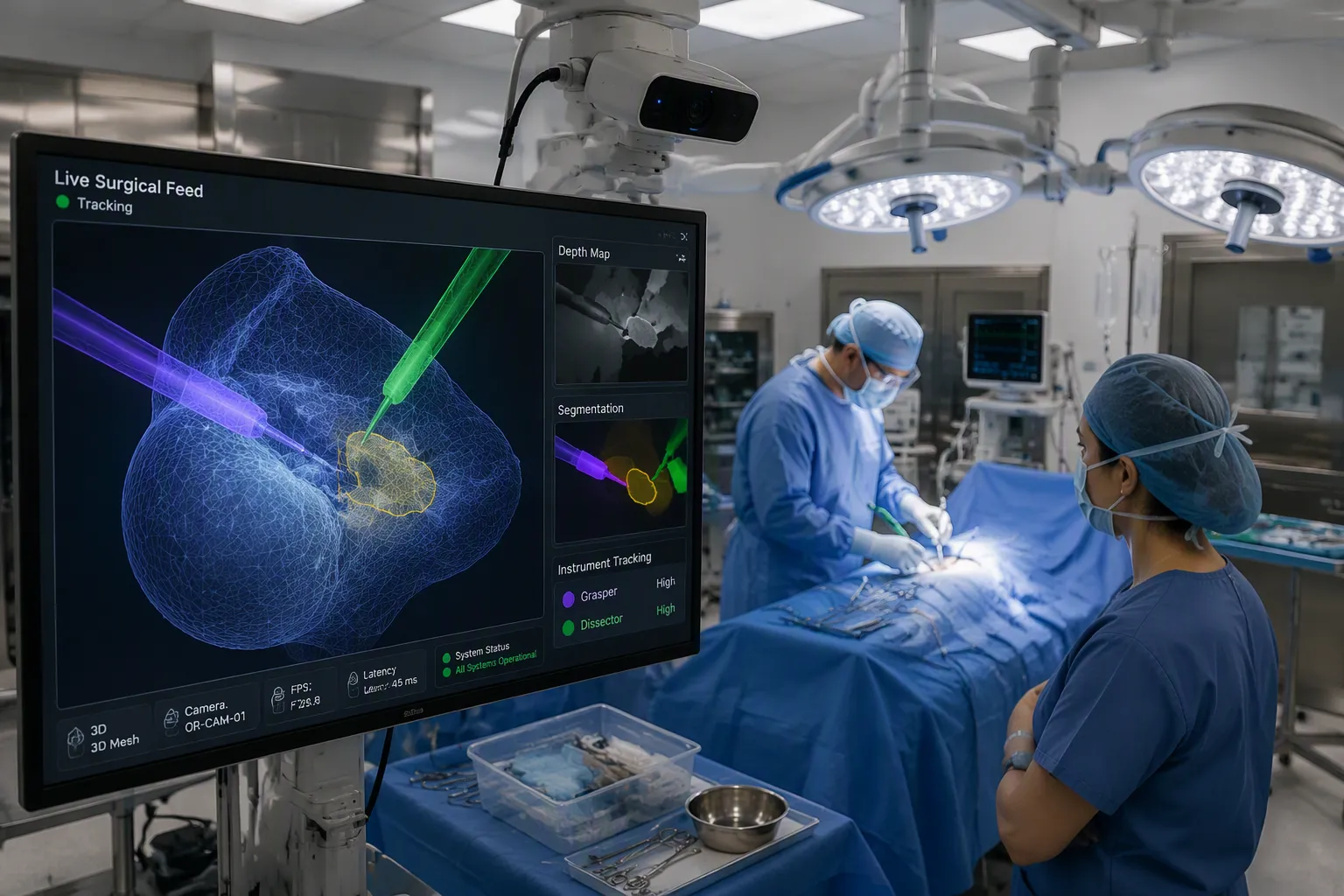
Computer vision systems for healthcare checkout rely on cameras, artificial intelligence, and structured data pipelines. These parts work together to spot supplies, follow movements, and record charges on their own. Knowing how this works helps you see why computer vision enables accurate checkout better than manual methods can.
Cameras, AI, and Vision Pipelines
The vision pipeline starts with cameras already in your facility. Operating room cameras record live video during procedures. Discharge area cameras watch patient flow. The system processes this live video through several steps:
The system captures live video frames and pulls up relevant patient data at the same time.
Three neural networks process each frame in real-time. A stereo depth estimation network creates spatial depth data. An optical flow network measures pixel shifts between frames. A segmentation model finds surgical tools and target tissue.
The depth and optical flow data join with segmentation output to track a 3D surface mesh onto live anatomical structures.
The fused view renders and shows to the surgeon with a median frame rate of about 13.5 Hz and end-to-end delay below 75 ms.
This processing speed matters. The system spots supplies as they appear, not seconds later. Real-time identification means accurate charge capture without slowing down your clinical team.
Another method uses high-resolution 4K surgical video for training. The system pulls random frames to build a dataset. A fine-tuned YOLOv11 Nano segmentation model finds and sorts 11 distinct types of surgical instruments. For each detected tool, the model creates a precise pixel-level segmentation mask that outlines the exact shape. This mask tells one instrument apart from visually similar metallic tools. The masks apply to every frame in real-time, reaching 96.5% precision.
These technical details turn into practical benefits. Your staff does not scan barcodes. They do not type supply codes. The cameras and AI handle recognition automatically.
Integration with Existing Systems
A vision system only delivers value when it links to your existing setup. Modern computer vision platforms connect directly with hospital systems without disrupting clinical workflows:
The system links with EHRs, ERPs, MMISs, and vendor portals, automatically syncing structured product data into current workflows.
Nurses and technicians no longer stop during procedures to type in supply details, preventing workflow disruption at the point of care.
A dedicated back-office team handles quality checks and data completeness when manual review is needed, removing documentation burden from clinical staff.
This approach leads to fewer documentation delays, more complete procedural records, smoother surgical workflows, and more time for direct patient care.
The integration happens behind the scenes. Your clinical team continues their normal routines. The vision system captures data, syncs records, and validates charges without requiring anyone to switch platforms or learn new software.
This smooth connection between cameras, AI, and existing systems makes computer vision enables accurate checkout practical for real hospitals. The technology does not ask your staff to change how they work. It simply removes the documentation burden they currently carry. Your billing systems receive complete data automatically. Your compliance records stay audit-ready. Your clinicians focus on patients instead of paperwork.
Computer Vision Applications for Accurate Checkout
Computer Vision Enables Accurate Checkout in Operating Rooms
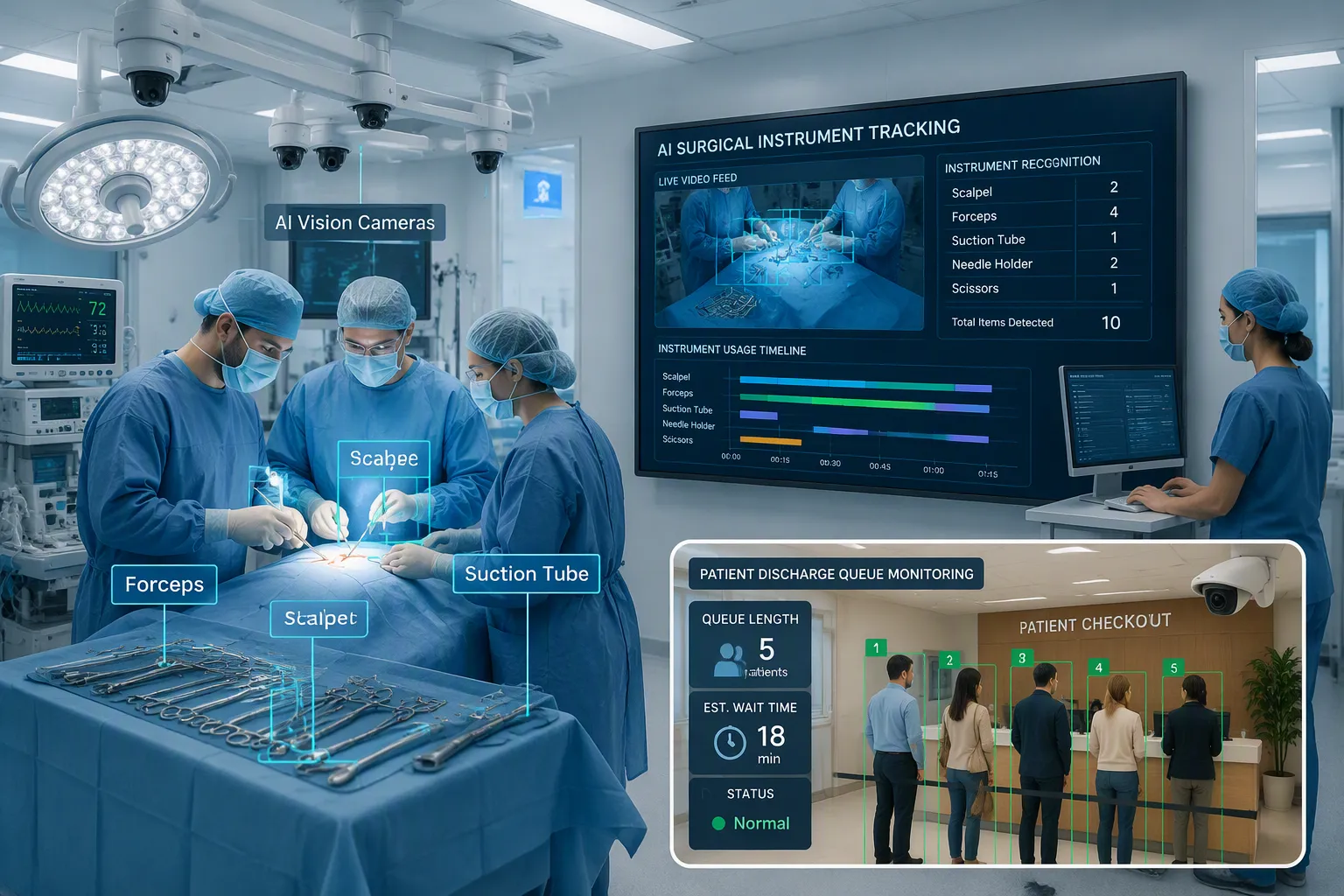
Your operating room brings in a lot of money with each surgery. But writing things down by hand often misses supplies, implants, and tools used during the operation. Computer vision changes this completely. Cameras placed in the OR watch every part of the surgery. Smart AI models look at each frame to find surgical tools as they show up.
The tech behind this uses two types of neural networks. Convolutional neural networks pull out spatial details from each image frame. Recurrent neural networks add time-based context across nearby frames. This mix gets an average area under the ROC curve above 0.99. That score means almost perfect accuracy in telling which surgical tool is there. A bi-directional long short-term memory network, or Bi-LSTM, follows the order of tool use. This time data lets the system figure out which part of the surgery is happening.
The real-world gains for your checkout process are big:
AI-powered automation records every charge correctly, cutting claim denials and lost income.
Automating supply logs at the point of use stops missing or double charges.
A quick 3-second image capture logs all implants and supplies used, removing slow manual entry.
AI image recognition tracks every supply during a surgery, sending data straight to billing systems with little delay.
Your nurses no longer stop mid-surgery to type supply codes. Your surgeons do not wait for paperwork. The system records everything on its own. This direct link between visual recognition and billing means computer vision enables accurate checkout without adding steps to your clinical routine.
Queue Detection for Streamlined Checkout
Checkout does not stop when the surgery ends. Patients still need to go through discharge areas, waiting rooms, and registration desks. Long lines create delays that slow checkout and upset patients. Computer vision watches these spaces to keep patient flow moving well.
Cameras in waiting areas and discharge zones track heads, bodies, and movement patterns. The system estimates queue length at each counter with up to 95% accuracy. It also tells people apart from carts to avoid wrong counts. This near real-time data gives your staff a clear view of crowding across your facility.
Metric | What Computer Vision Measures |
|---|---|
Wait time | Core KPI; AI-driven queue analytics can cut wait times by up to 30% during peak windows. |
Throughput | Real deployments report up to 20% improvement in transaction speeds when prompted to open new lanes. |
Queue length | Models detect heads, bodies, and movement patterns, achieving up to 95% accuracy per counter. |
People count | Classification of people versus carts provides near real-time counts. |
Transaction speed | Improved by up to 20% during spikes due to proactive alerts. |
Queue detection also starts targeted actions. The system can suggest sending idle drivers to ER transfers. It flags soon-to-leave patients to bed management. It queues urgent medications for admitted patients. It recommends float staff to busy areas. One health system cut average discharge time from 4.2 hours to 1.8 hours by automating medication checks and linking discharge orders directly to pharmacy and transport systems. Real-time queue monitoring with these agents led to 33% shorter queue peaks and zero full capacity events over six weeks.
These queue insights directly support accurate checkout. When patients move through discharge faster, their final charges get processed sooner. When staff know where lines build, they can fix delays before they grow. This mix of OR supply recognition and queue monitoring shows how computer vision enables accurate checkout across your whole facility.
Manual Methods vs. Computer Vision
Speed and Accuracy Comparison
Manual checkout relies on barcode scanning and paper logs. Your staff must find each item, scan it, and enter the right code. This takes a few seconds for each item. During a busy surgery, those seconds pile up. Nurses stop their work again and again. Each stop creates a chance for mistakes. A missed scan means a missed charge. A wrong code means an incorrect charge. Both issues cost your hospital money.
Computer vision removes these steps completely. Cameras spot supplies on their own as they show up. The system records each item without any human action. No scanning. No typing. No waiting. The recognition happens instantly, keeping pace with your clinical work.
Comparison Point | Manual Barcode Scanning | Computer Vision Recognition |
|---|---|---|
Data entry method | Staff scan each item one by one | Cameras capture items automatically |
Error rate | Human mistakes from missed or double scans | AI models reach 96.5% precision |
Documentation timing | After the procedure, often later | Real-time during the procedure |
Audit readiness | Paper logs need manual review | Digital records ready right away |
Revenue impact | Missed charges cause lost income | Full capture boosts net patient revenue by about 0.5% |
The difference matters most during complex procedures. A single surgery can use dozens of supplies. Manual tracking struggles to keep up. Computer vision tracks every item without getting tired. Your billing data becomes complete and correct from the start.
Impact on Staff Workload
Your clinical team carries a heavy paperwork load. They must pause patient care to scan items and fill out forms. This work pulls them away from their main jobs. It also causes frustration. Nurses did not train for years to become data entry workers.
Computer vision changes this situation. The system handles documentation on its own. Your nurses stay focused on patients. Your surgeons continue their work without stops. The technology works quietly in the background.
When clinicians no longer pause to document, they gain time for direct patient care. This change improves both staff satisfaction and patient outcomes.
The back-office team also benefits. They receive complete, organized data without chasing missing details. They spend less time fixing errors and more time on useful work. This reduction in rework lowers operating costs across your facility.
This mix of speed, accuracy, and lighter workload shows why computer vision enables accurate checkout in modern hospitals. Your staff gains freedom from paperwork. Your revenue stays protected. Your patients receive better care.
Real-World Case Study: Snap&Go
Automating Supply Recognition
Snap&Go shows how computer vision makes checkout accurate in a real hospital. This system uses image recognition to record supplies right in the operating room. Your staff no longer writes down each item by hand. The technology handles the whole process.
The process uses five clear steps. First, your staff takes a picture of the product package or label in three seconds. Second, the system reads the full packaging. It pulls out all product data even when no barcode exists or the barcode is damaged. Third, machine learning algorithms fill in any missing data. This allows identification of items even when someone removes them from the packet before surgery. Fourth, the system checks a global SKU database with over a million listed items. This lookup ensures correct identification every time. Fifth, product usage data flows into your EHR, ERP, and MMIS systems. Records update in real time with platforms like Cerner and Epic.
This automation changes your checkout process completely. Your OR staff captures every supply used. They record bill-only, off-contract, and consignment supplies in a standard format. No extra manual work is needed. The system ensures 100% reporting and charge capture without adding tasks for your clinicians.
Measurable Outcomes
The results from Snap&Go give you clear data to review. Hospitals using this system see fewer claim denials. This decrease comes from a simple reason. The system provides clear visual proof of implant usage. Each charge has an attached image. Payers cannot dispute charges when they see the visual evidence.
Snap&Go lowers hospital claim denials by offering clear visual proof for every charge, automating real-time implant tracking, and stopping trailer claims. This ensures charges are sent with confidence, leading to fewer payer disputes and faster reimbursements.
The financial impact goes beyond fewer denials. Your chargemaster lag decreases because charges flow into billing systems right away. Your discharge times improve because documentation finishes during the procedure rather than after. Your back-office staff spends less time hunting for missing data.
These results connect directly to accurate checkout. You capture every charge. You reduce errors. You speed up reimbursement. Snap&Go proves that computer vision delivers real results in real hospitals.
Inaccurate checkout quietly drains your revenue and burdens your staff. Computer vision solves this costly problem. The technology automatically recognizes supplies in the operating room. It detects patient queues in discharge areas. It documents every charge in real time without manual work.
This technology already works in real hospitals using Snap&Go. Those facilities capture more revenue. They process claims faster with fewer denials. Their clinicians focus on patients instead of paperwork. You gain both financial and operational benefits.
Now you can take the next step. Evaluate your own checkout process honestly. Identify gaps in your current workflow. Request a Snap&Go demo. Schedule a pilot in your facility. See how computer vision enables accurate checkout for your hospital.
FAQ
How do cameras capture supply charges automatically?
Cameras watch your surgery live. AI spots tools and supplies when they show up. The system records each charge right away. You don't need to scan barcodes. Your billing data updates instantly.
Which supplies can the system recognize?
The system finds surgical tools, implants, and packaged supplies. It reads labels even when barcodes are missing. A global database checks each item. You also capture bill-only and consignment supplies.
Does the technology integrate with your current systems?
Yes. The platform links with EHRs, ERPs, and MMIS systems. Data flows into Cerner or Epic on its own. Your clinical staff keep their normal routines. No new software training is required.
How does queue detection improve your checkout process?
Cameras watch waiting areas and discharge spaces. The system tracks lines and wait times. It tells staff when to open new lanes. Patients move through discharge faster. Their final charges get processed sooner.
What measurable outcomes should you expect?
Hospitals using Snap&Go cut claim denials. Net patient revenue goes up about 0.5%. Discharge time falls from 4.2 hours to 1.8 hours. Your staff gets more time for patient care.
See Also
Transforming Retail: The Journey of Self-Service Checkout
Cloudpick's Smart Checkout Systems Boost Efficiency and Customer Satisfaction
Walgreens Self-Checkout: Balancing Convenience with Retail Hurdles
Walmart's 2025 Self-Checkout Updates: What Shoppers Should Expect
Cloudpick Delivers Frictionless Cashierless Shopping for Your Business
