RFID vs Computer Vision: Which Technology Drives Retail Profitability?


What if your inventory technology is silently eroding profits? In the computer vision vs RFID debate, two contenders dominate. The point is clear: one technology offers better long-term profits through lower total cost of ownership, richer data, and greater scalability. RFID remains valuable for high-volume tagging; the other is future-proof. IHL Group says RFID sales winners beat peers by 6.5x. However, by 2027, 40% of yard and warehouse management will use vision-AI instead of RFID, cutting search time by 90% and improving asset use by 25%. Amazon Go provides a checkout-free experience. Amazon Go proves product detection. Retail leaders must consider the shift.
Key Takeaways
Computer vision costs less over time than RFID because it removes the need for tags and the work of putting them on.
Vision systems give retailers more data and can grow with them, so they are a smart choice for the future.
RFID still works well for tagging many items, but computer vision is better at being precise and running operations smoothly.
Amazon Go shows that shopping without a checkout line works well on a large scale using computer vision.
Retailers should use a mix of both tools. RFID tracks where items are, and computer vision checks what they look like.
RFID in Retail: How It Works
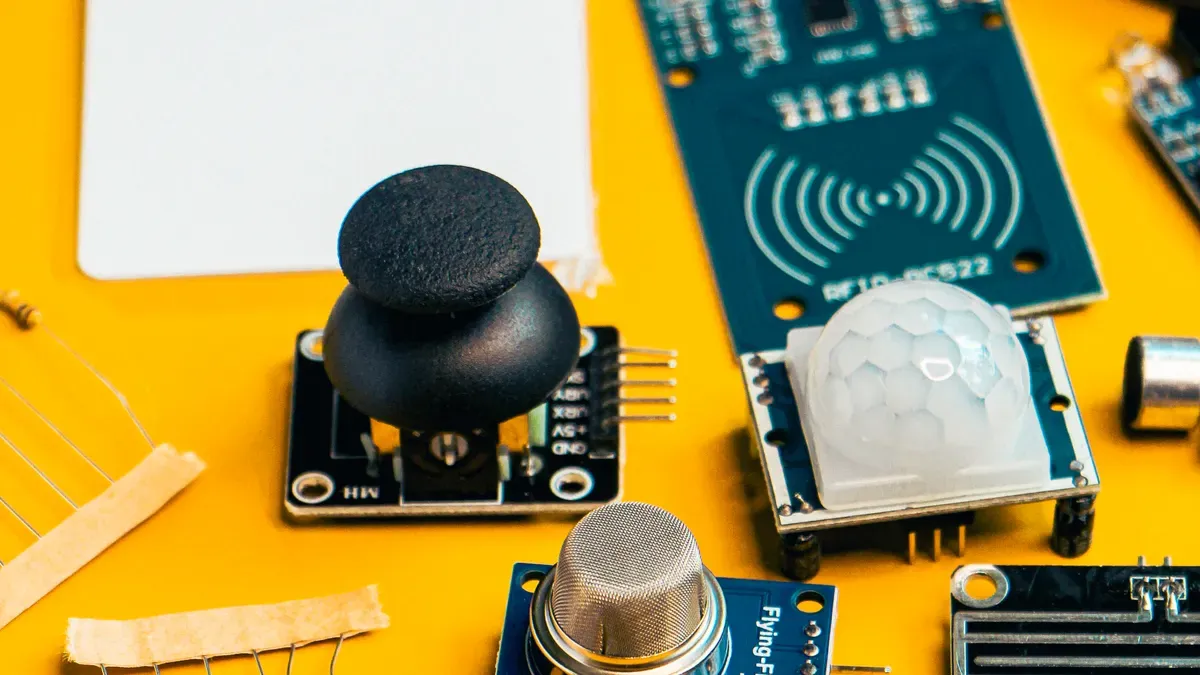
Radio frequency identification (RFID) uses tags and readers for inventory control. Unlike barcodes, the technology does not require line of sight. Readers capture hundreds of tags per second. This automated process saves companies time and money. According to IHL Group, industry leaders that adopt RFID or computer vision achieve up to 57% higher profits than peers. However, adoption of the technology has been slower than expected, partly due to cost and labor demands.
Core Benefits and Use Cases
The technology delivers measurable financial gains. The University of Parma's Barometer in Retail study identifies 18 distinct use cases. Optimizing stock accuracy with the technology improves accuracy to 98–99%, significantly reducing out-of-stock moments and boosting sales. In North America, 93% of retailers have adopted the technology. Fully deployed systems yield a return on investment exceeding 10%. Key benefits include:
5–10% sales lift
75–90% reduction in manual stock effort
15–25% shrink reduction
15–25% higher conversion in fitting rooms
10–15% higher basket size in self-checkout
1–3.5% higher full-price sell-through
96% omnichannel readiness
Walmart, a pioneer in adoption of the technology, used it to enhance supply chain operations. By tagging merchandise, Walmart reduced out-of-stock issues, improved demand forecasting, and minimized losses. This real-time visibility optimized logistics. RFID technology also supports inventory management by eliminating manual data entry errors. Highly automated warehouses achieve near-perfect precision under optimal conditions, shipping orders 99% on time. Product tracking becomes effortless, as the technology enables sub-second pallet audits.
Key Limitations: Tag Costs and Labor
Despite these advantages, the technology faces significant barriers. Tag costs vary by format. Standard dry inlays cost $0.04–$0.08, wet inlays or smart labels for stock items cost $0.06–$0.15, and on-metal or hard tags cost $0.50–$2.00 or more. Low-volume purchases (under 10,000 units) can push prices to $0.15–$0.30 per tag. Only bulk orders of 100,000+ units achieve the $0.05–$0.08 range. For a mid-sized retailer processing 50,000 items daily, tagging labor requires 8 full-time equivalents (FTE). Each FTE costs $45,000 annually, totaling $1.8 million over five years. While this is better than barcode systems requiring 20 FTE, the ongoing expense of applying tags remains substantial. Additionally, the technology requires tagging each item, which adds labor and material costs that reduce overall profitability. These limitations explain why some retailers hesitate to go all-in on the technology. Amazon, for example, has invested heavily in computer vision as an alternative, though it also uses RFID in warehouses. The need for constant tagging and the cost per unit make the technology less attractive for low-margin items.
Computer Vision in Retail: How It Works

Computer vision uses cameras and artificial intelligence to turn visual data into real-time information. Unlike RFID, this technology does not need physical tags. The system watches shelves, products, and shoppers all the time. It spots items and follows movements on its own.
Real-Time Analytics and No-Tag Tracking
Computer vision gives very accurate inventory data without manual counting. Published numbers show 99.5%+ accuracy, an 80% drop in mis-picks, a 90% cut in cycle count labor, and a 50% decrease in shrinkage. The system builds a digital twin of the retail space. Staff can view stitched photographic records right from their warehouse management system.
Many commercial platforms show these abilities. Trigo uses ceiling cameras and shelf sensors to create digital twins of stores. Trax Retail provides real-time on-shelf analytics. Link Retail turns CCTV footage into operational data. Dayta AI's Cyclops solution tracks footfall, dwell time, and customer emotions through existing cameras.
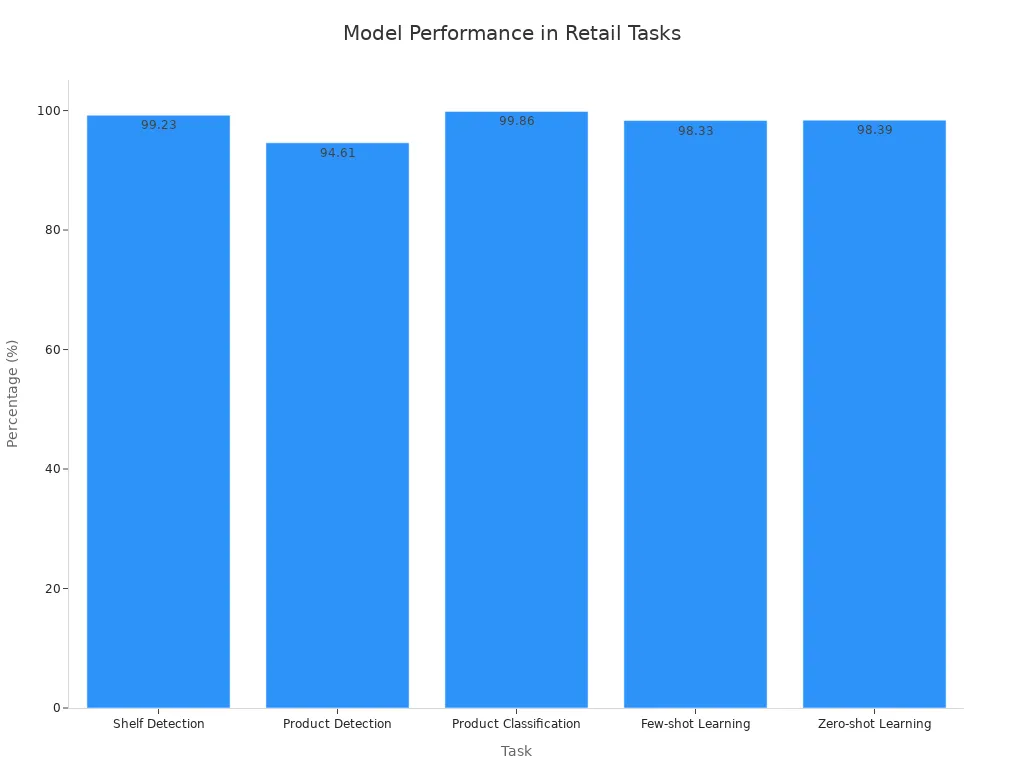
A real-time planogram compliance system used in 7,000+ 7-Eleven stores in Taiwan shows the technology's precision. Product detection hits 94.61% precision, while classification reaches 99.86% accuracy. This product detection performance proves readiness for busy environments.
Amazon Go led the way in checkout-free shopping using computer vision from self-driving cars. Shoppers grab items and walk out. The system tracks every product automatically. This smooth experience removes queues. Amazon Go shows that item recognition works reliably at scale. The recognition system needs no physical tags. Amazon's investment confirms the approach.
Key Limitations: Upfront Costs and Compute
Computer vision needs a large initial investment. Retailers must buy cameras, servers, and specialized software. The compute needs are heavy. CPUs alone cannot handle real-time video analysis at scale. GPU acceleration becomes necessary for processing multiple camera feeds at once.
Edge computing offers a useful solution. Processing data near the source lowers bandwidth needs and supports offline use. On-premises deployment stays popular for data privacy and low latency. The Scale Computing Platform provides GPU options for retail environments. These infrastructure choices affect total cost.
The upfront expense stops some retailers. But the lack of recurring tag costs changes the long-term picture. Amazon's continued investment shows confidence. The future of retail operations points toward camera-based intelligence. Amazon Go proves the model works. Retailers should move past old methods and adopt this technology.
Computer Vision vs RFID: Cost Analysis
The cost question drives every retail technology decision. Retailers must weigh upfront investment against long-term expenses. The computer vision vs rfid debate reveals clear differences in cost structure. Each technology carries distinct financial implications that affect profitability.
Upfront Investment vs. Long-Term ROI
RFID demands a significant initial investment in tags and readers. A mid-sized retailer processing 50,000 items daily faces tag costs of $0.04 to $0.08 per unit for standard dry inlays. Bulk orders of 100,000+ units achieve the lower price point. The true cost appears in labor. Tagging requires eight full-time employees, each costing $45,000 annually. The five-year labor cost reaches $1.8 million. This expense never disappears. The hardware investment in readers and antennas adds another layer of upfront cost. Installation and integration expenses for the tag-based system further increase the initial outlay.
Vision-based technology requires a different upfront investment. Retailers must purchase cameras, servers, and software licenses. GPU acceleration becomes necessary for real-time video analysis. Edge computing solutions reduce bandwidth needs. These infrastructure costs create a higher initial barrier. The system scales efficiently across multiple locations without additional per-item costs. One camera installation serves thousands of products simultaneously.
The long-term picture changes dramatically. The system tracks products without physical tags. No consumable items need replenishment. No labor team must apply tags to every item. The initial investment in cameras and servers spreads across many years of use. This structure eliminates the recurring cost burden that tag-based systems carry.
RFID requires ongoing expenses that compound over time. Software subscriptions run on monthly or annual billing cycles. Service contracts renew every one, three, or five years. Tags must be replenished as stock runs low. These recurring costs reduce the return on investment. The labor requirement for tag application remains constant. Each new shipment of merchandise requires the same tagging process. The cost per item never decreases.
Total Cost of Ownership Over Time
Total cost of ownership reveals the true financial picture. The tag-based system requires regular maintenance to ensure optimal performance. Passive systems stay relatively low maintenance. Active tags need battery replacements. Support fees add to the operational burden. Monthly, semi-annual, and annual support fees accumulate. Every new product requires a new tag. These costs continue indefinitely.
Vision-based systems also carry maintenance costs. Cameras need cleaning and occasional replacement. Storage systems expand as data grows. Software subscriptions require ongoing payment. Yet these costs remain predictable and stable. The system requires no consumables. No physical tags need ordering or application. The maintenance burden does not increase with inventory volume. Camera infrastructure supports thousands of SKUs without additional hardware.
The efficiency gains from computer vision offset the upfront investment. The technology eliminates the labor cost of tagging. It provides continuous inventory visibility without human intervention. The data flows automatically into the management system. No manual scanning occurs. The system captures information about every product in the camera frame.
Amazon continues to invest in vision-based solutions. The company's experience with Amazon Go validates the approach. The checkout-free experience relies entirely on vision-based technology. No tags appear in the store. The system tracks every item through cameras and AI. This model proves that product detection works at scale without tags. Amazon's confidence in the technology signals its long-term viability.
Retailers evaluating the technology decision must consider the five-year horizon. The tag-based system starts with lower upfront costs but accumulates ongoing expenses. Vision-based technology requires a larger initial investment but avoids recurring consumable costs. The total cost of ownership favors vision-based solutions for most retail environments. The lack of recurring tag costs and labor expenses creates a clear financial advantage over time.
Operational Efficiency and Accuracy
Retailers measure success by how fast they move products and how well they track them. The computer vision vs rfid choice affects both areas. Each technology works differently, and the results show in the numbers.
Inventory Accuracy and Speed
Inventory accuracy is the base of profitable retail. Without good data, managers cannot make smart choices about buying, staffing, or displays. The gap between these two technologies shows up right away in accuracy numbers.
Research from the Auburn University RFID Lab shows that stores using RFID often hit 95 percent or better inventory accuracy, while the industry average is near 65 percent without it.
Computer vision systems can reach over 98% accuracy in finding and counting products on shelves. Object detection models can identify thousands of SKUs with proven accuracy above 98%.
RFID brings the visibility back. With 99%+ accuracy, you can trust what’s in your system, sell what you truly have, and avoid wasting good stock.
Speed matters too. RFID readers grab hundreds of tags per second, so cycle counts that took days now happen fast. Computer vision systems watch whole shelf sections in real time, spotting gaps and misplaced items right away. Both tools remove manual counting, but they do it in different ways. RFID needs tagged items; computer vision only needs a camera view.
The proven gains show the profit potential:
Metric | Quantified Improvement |
|---|---|
Profit increase | 57% higher profit for retail leaders using RFID/computer vision |
Return on Investment | 3x ROI within 90 days for Simbe's customers (BJs, Carrefour, SpartanNash) |
These numbers show that operational efficiency turns directly into financial results. Retailers who use either technology gain a clear edge over competitors.
Labor Optimization and Automation
Labor is the biggest controllable cost in retail. Both technologies cut manual work, but they do it in different ways. RFID needs ongoing tagging labor for every new shipment. Computer vision needs no per-item handling.
Mixing RFID with continuous computer vision creates the strongest workflow. This combo spots inventory gaps before missed sales happen, giving verified visibility and faster decisions. The process follows a clear order:
RFID instantly checks inbound shipment accuracy (like piece count, color, size totals) against the invoice.
Machine vision at the same time checks pallet condition (like crushed or wet boxes) and labeling compliance.
The receiving manager uses both data streams to set aside damaged pallets right away, without manual counting.
During fulfillment, robots grab items while onboard machine vision confirms the correct SKU and order completeness.
RFID automatically matches every movement with the WMS, keeping real-time inventory accuracy and location visibility.
This closed-loop system allows continuous validation, end-to-end traceability, and faster discrepancy resolution.
The mix works because RFID gives real-time identification and location, while machine vision checks condition and compliance. Together, they form a closed-loop system that keeps validating inventory and capturing chain-of-custody data. This removes manual reconciliation steps, so managers can spot damaged goods, picking errors, or shipment issues right away and act without delay. The result is faster decisions because the system flags exceptions automatically and gives full traceability, cutting time spent on manual checks and boosting overall throughput and labor productivity.
Amazon shows this approach at scale. The company uses computer vision in its Amazon Go stores for checkout-free shopping, while also using RFID in warehouses. This dual strategy shows how retailers can use both technologies where each works best. The Amazon Go experience relies fully on camera-based recognition, proving that product detection works reliably without tags.
The gains from automation go beyond inventory management. Computer vision watches shopper behavior, shelf conditions, and store traffic patterns at the same time. This data feeds directly into merchandising choices, staffing schedules, and promotional plans. RFID gives location data but cannot capture visual context. The richer dataset from computer vision enables deeper operational insights.
Retailers seeking maximum operational efficiency should look at their specific pain points. High-volume tagging environments may benefit from RFID's speed. Stores needing visual verification and behavioral analytics will find computer vision better. The most advanced operations combine both, using each technology where it gives the greatest return. This hybrid approach maximizes accuracy, minimizes labor, and drives profitability across the whole retail enterprise.
Scalability and Future-Proofing
Retailers that grow to many stores need to choose a technology that can grow with them. The choice between computer vision and RFID shows big differences in how well they grow. RFID systems need to put tags on every new product shipment. This creates a problem that gets worse with each new store. Computer vision gets rid of this problem completely. Cameras put in place once can handle thousands of products without extra work for each item. This key difference affects how well each solution works over time.
Scaling Across Omnichannel Operations
The first hurdle for vision systems is adding new products. Stores must take many high-quality pictures of each product from different angles and in different light. This needs special gear and a lot of time. But zero-shot models change this a lot. These solutions can add a new product with just one picture and no extra training. The choice of technology directly affects how easy it is to grow.
As stores increase, the computer needs grow too. IT systems must handle a lot more data and storage. Strong cloud-based solutions become a must. Connecting computer vision to existing systems across many stores also gets harder. Smaller brands feel the money pinch the most. Following privacy rules adds another layer of trouble when tracking products and customers in different places.
Real-world examples show that scaling works. Amazon's Just Walk Out technology uses cameras and sensors to track what shoppers pick up in real time. This cut checkout time and let more customers move through. Swiggy Instamart used machine vision to track stock in dark stores, getting orders out faster with fewer mistakes. Decathlon added camera-based checkout with AI product recognition alongside RFID, making checkout smoother for many categories and improving staff use.
AI and IoT Integration for Growth
The future of retail depends on smart systems that learn and change. Computer vision fits naturally with AI and IoT, giving real-time data and insights for new retail models. RFID gives location data but cannot see what things look like. Vision systems give richer details that help with product placement, staffing, and promotions.
Measured benefits prove the value of this mix. Virtual try-ons using augmented reality in retail computer vision can boost conversion rates by up to 30 percent. Product returns drop by 20 percent. These gains turn directly into higher profits.
Retailers that use computer vision with AI and IoT can expect to see clear returns on their investment in 12 to 18 months, even if they start small.
Amazon keeps putting money into vision-based solutions. Its Just Walk Out stores show that product detection works well without tags. This trust signals that the technology is here to stay. Retailers that choose vision systems put themselves in a good spot for the future of shopping. Those that wait risk falling behind rivals who use camera-based intelligence today.
Customer Experience and Examples
Amazon Go: Checkout-Free Shopping
Amazon Go changes how people shop. The store uses computer vision so customers do not need to check out. Shoppers walk in, pick up items, and leave. The system watches every move and product pick-up on its own. Customers go from the door to the exit without stopping at a register. This is the just walk out model.
The technology behind Amazon Go uses several smart parts. Person detection sees each shopper as a separate person when they enter. Item recognition finds specific products on shelves, even items that look almost the same. Hand and arm tracking sees when a hand reaches for a shelf and which product it touches. Action classification decides if the shopper took the item or put it back. The system updates the virtual cart in under 500 milliseconds after a product is touched. Sensor fusion mixes camera data with shelf weight sensors to charge correctly.
The shopping experience changes completely. Regular stores lose between 1.4% and 2% of yearly revenue to theft and inventory mistakes. Amazon Go's shelf sensors send live inventory data straight to the store system without any manual entry. This fixes shrinkage and inventory blind spots. The just walk out experience removes lines entirely. This checkout experience takes away friction. No checkout lines exist. The system handles payment on its own. Amazon Go keeps growing in more locations.
Personalization and Shopper Insights
Computer vision gives retailers deep knowledge about how shoppers behave. Unlike RFID, which only tracks where items are, vision systems capture visual details. This data allows a personalized customer experience at scale. The table below shows key uses:
Application | Customer Experience Improvement |
|---|---|
Foot traffic analysis & heat maps | Better store layouts, less crowding, and smarter staff placement |
Cashierless checkout & smart self-checkout | Shorter waits, fewer abandoned baskets, and easy payment |
Virtual try-on | More buying confidence, higher conversion, and fewer returns |
Personalized marketing & behavior analytics | In-store content and deals that match shopper interests |
Just-in-time assistance | Staff help right when customers look confused or unsure |
Vision systems track foot traffic patterns and create heat maps. These insights help retailers improve store layouts, cut crowding, and place staff well. The result is a smoother shopping trip for every customer. Cashierless checkout and smart self-checkout cut wait times and lower abandoned baskets. Virtual try-on boosts buying confidence, leading to higher conversion and fewer product returns. Personalized marketing triggers in-store content and deals that fit shopper interests. Just-in-time assistance alerts staff when customers look confused or hesitant, allowing quick help.
The measurable impact of these tools shows up in key performance indicators. Promo conversion rates get better. Basket uplift increases. Revenue per promoted area grows. Shoppers get useful recommendations based on real-time product engagement. The checkout experience becomes smooth. The whole shopping trip becomes more natural and responsive. Shoppers move through the store with confidence. Retailers who use these systems gain an edge through better customer experience and smoother operations. Amazon shows this vision-driven approach at scale.
RFID excels in tag-intensive environments like apparel and warehouse operations. Computer vision delivers broader, more scalable profitability gains across the entire retail enterprise. The computer vision vs rfid analysis shows vision-based systems eliminate recurring tag costs and labor burdens. Amazon Go demonstrates checkout-free success at scale, proving product detection works reliably without tags. Amazon's continued investment signals confidence in this approach. Retail leaders should evaluate their current pain points honestly. A hybrid approach may serve immediate needs, but vision-based solutions position operations for the future. The IHL data confirms that leaders using these technologies achieve 57% higher profits. Retailers who prioritize computer vision today build resilient, data-rich operations ready for tomorrow's demands.
FAQ
Which technology costs less over five years?
Computer vision avoids ongoing tag costs and the labor needed to apply tags. RFID requires buying tags again and again, plus staff time to put them on items. Vision systems need more money upfront but skip the costs of consumables. For most stores, the total cost of ownership favors computer vision.
How accurate is each technology for inventory tracking?
RFID systems reach 95 percent or better inventory accuracy. Computer vision hits over 98 percent accuracy when finding and counting products. Both do better than the industry average of 65 percent without either technology. Vision systems also add visual checks that RFID cannot provide.
Can retailers combine RFID and computer vision?
Yes. A hybrid approach works well. RFID gives real-time identification and location data. Computer vision checks product condition and compliance. Together, they form a closed-loop system that keeps validating inventory. Amazon uses both technologies across its operations, using computer vision in Amazon Go stores and RFID in warehouses.
How quickly can retailers see a return on investment?
Retailers using computer vision with AI and IoT can expect returns within 12 to 18 months, even with small initial deployments. RFID systems typically show ROI after full deployment. The exact timeline depends on store size, product volume, and existing infrastructure.
See Also
Smart Vending Machines Transforming Retail Through Advanced Technology
Modern Retail Benefits From AI-Enhanced Combo Vending Machines
Global Automated Retail: Comparing Micromarkets And Smart Stores
Retailers Must Understand The Growth Of AI-Driven Corner Stores
Walgreens Self-Checkout: Retail Convenience And Its Challenges
