Smart Retail Edge AI Architecture for Autonomous Store Experiences

A shopper opens a vending cabinet, takes a drink, and walks away. Cameras inside the cabinet run computer vision on a small edge device. The system recognizes the item and charges the shopper's account. There is no cashier, no scan, and no wait.
Edge AI turns these unattended assets into smart points of sale. This retail edge ai architecture runs inference locally, so it skips the network round trip that adds delay. You get response times from sub-millisecond to low-millisecond. Cloud-only processing cannot reliably match that speed.
This article explains an edge ai architecture that balances edge inference with cloud training. You will learn how to deliver real-time insights and protect privacy in checkout-free stores.
Key Takeaways
Edge AI helps make checkout quick and private by handling data right on the device.
You need special hardware, like NPUs or TPUs, to get real-time speed.
Keep video and payment data on the device to protect privacy and follow laws.
Begin with a small test to check speed and accuracy before you grow.
Use secure updates and modular design to work in many stores.
Edge AI Architecture Components

A good edge ai architecture has two main parts. The first part is the hardware inside the cabinet or gateway. The second part is the software that trains models in the cloud and sends them to the edge. Both parts must work together to run smart store automation.
Edge Nodes and AI Hardware
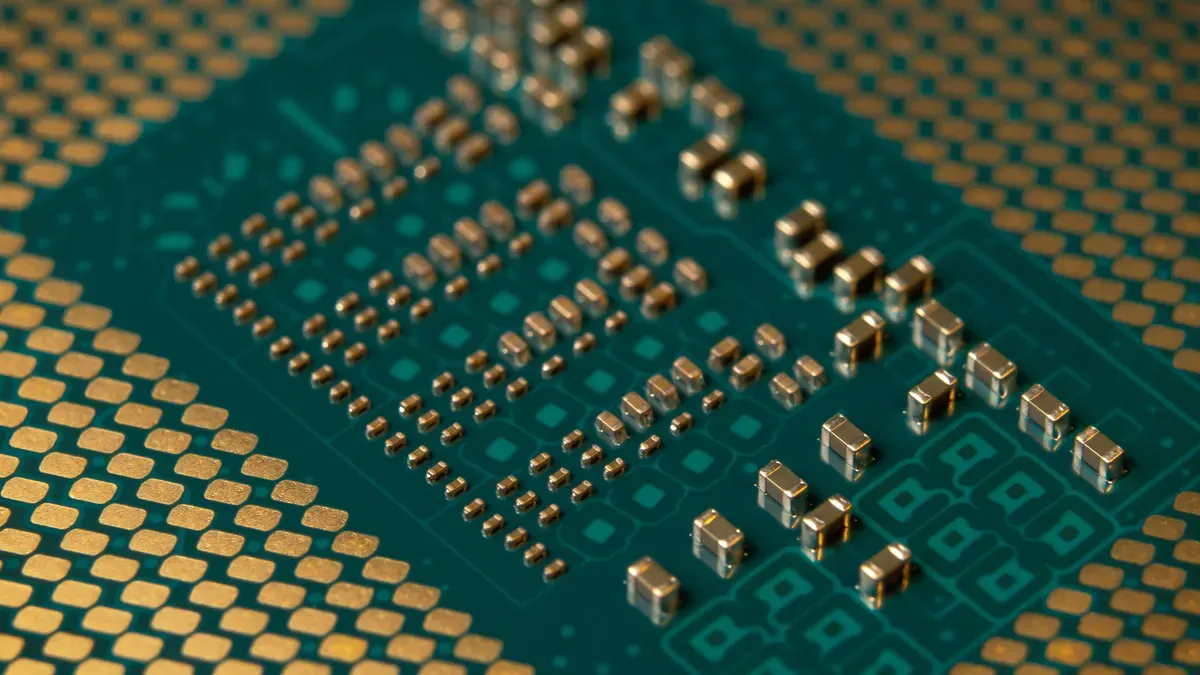
The edge node is the brain inside each vending cabinet or smart shelf. It runs computer vision models for checkout and inventory tracking without sending video to the cloud. A typical node has a camera and an AI accelerator. Regular CPUs are too slow for real work, so you need a special chip.
Several accelerator platforms can do this job. The table below shows common choices.
AI Accelerator Platform | Key Characteristics / Use Case |
|---|---|
ARM Ethos-U | Built into newer Cortex-M and Cortex-A SoCs |
Intel Movidius VPU | Myriad X and later generations |
NVIDIA Jetson Nano / Orin Nano | More compute for cabinets with multiple cameras |
Qualcomm QCS series | Combines 5G and AI in one module |
NPU and TPU co-processors that can reach at least 4-8 TOPS are key for real-time object detection and classification. These edge ai devices work with ONNX, TensorFlow Lite, and PyTorch Mobile, so you avoid being locked into one company's SDK. A typical edge device uses under 5W when active and under 1W when idle. It fits in a fanless case rated from -20°C to +60°C and has 4-8 GB of LPDDR4/5 RAM plus 32-64 GB of industrial storage. Secure boot and TPM 2.0 keep your models safe.
Why does the accelerator choice matter? Mobile NPUs focus only on deep learning tasks. Mobile GPUs already handle graphics, so sharing the workload slows inference down. A KAIST benchmark showed NPU designs were up to 60% faster at inference than modern GPUs while using 44% less power. For single-inference latency, NPUs usually win with sub-millisecond times. GPUs are better at batch throughput instead. This trade-off shapes your hardware pick for retail edge ai solutions.
Middleware and Cloud Training Backend
Edge devices do not have the compute power or data to train deep learning models on their own. They send data to the cloud, where it is combined with data from similar devices and used to train models. The cloud then sends those models back to the edge. This split is what defines edge computing in retail.
Several backend services help with this workflow. Couchbase Capella is a fully managed Database-as-a-Service that syncs data to edge devices. It also supports AI model calls from the database using real-time operational data. Couchbase Server gives you a self-hosted option with in-memory processing and a distributed setup. Couchbase Analytics Service processes operational data right where it sits without ETL. It also supports Python User Defined Functions to connect ML models to SQL queries. Red Hat OpenShift AI offers an integrated MLOps platform for managing model lifecycles across hybrid cloud setups.
The cloud also handles deployment and monitoring. Tools like quantization and pruning shrink trained models before they go to resource-limited edge ai devices. Edge devices sync collected data with a central repository on a regular basis, which allows continuous learning. Cloud platforms watch devices in real time, support predictive maintenance, and scale elastically for fleets of devices. This mix of edge artificial intelligence and cloud training gives you ai at the edge that gets better over time.
Data Flow in Smart Retail with Edge AI

Data moves through your store in a clear path. It starts at the sensors and ends with a decision. Knowing this journey helps you build smart retail with edge ai that reacts fast and keeps things private.
Sensor to On-Device Inference
The journey starts with sensors and cameras inside the store. Cameras watch shelves and doors. Weight sensors sit under each shelf. These sensors and iot devices grab raw data all the time. That data is messy. It has noise, outliers, and frames you do not need. So the edge device cleans it first. Data cleaning removes noise and outliers. Feature extraction pulls out useful signals and cuts down the number of dimensions. Normalization maps values to a set range. This step helps the model learn better and be more accurate. Preprocessing at the edge also cuts down delay.
After preprocessing, the edge device runs inference. A small chip inside or next to the camera runs the model. It makes the call locally in milliseconds. Raw video never leaves the device. This is the heart of ai at the edge. For a grab-and-go cabinet, weight and vision work as a team. A load cell records the shelf baseline before opening. During a pick, the load cell keeps measuring while vision tracks hand movement. When the door closes, the system figures out the weight change. Known SKU unit weights turn that change into quantity. Vision then tells apart SKUs with the same weight but different prices. The two results check each other. Mismatches can alert staff or hold payment. This sensor fusion gives you correct inventory deduction.
Real-Time vs. Batch Processing
Real-time processing handles actions that cannot wait. Theft detection is a good example. The system follows a clear order. First, detection finds the item and the person. A concealment event might show an item going into a bag instead of a cart. Second, tracking keeps the link between the anonymous person and the item across dozens of cameras and several minutes. Third, a rules layer sets the trigger, such as conceal in aisle then approach exit without paying. Fourth, the setup keeps latency low enough to alert staff while the person is still in the building. Fifth, staff get a proactive prompt to step in at the exit or checkout. The system also checks that all removed products are charged correctly and tells real shopping apart from theft.
Smart shelves show another real-time use. Real-time video intelligence drives layout changes based on shopper movement. Edge devices study heat-maps to find high-traffic zones. Dwell-time measurement shows how long shoppers spend in certain sections. Traffic flow analysis tracks movement patterns. You get video insights at the source without sending full video to the cloud. This is edge ai analytics at work.
Batch processing works in a different way. It handles analytics that can wait. You send summarized data to the cloud on a schedule. The cloud mixes it with data from other stores. Then it retrains models and sends updates back. This split keeps your edge ai devices fast and your models fresh. A common pattern uses cheap edge detection to throw away about 99% of boring frames. Only rare rule-tripping frames go to a central GPU for confirmation. This balance keeps bandwidth low and privacy high.
Retail Uses of Edge AI for Security
Security and privacy are big reasons why stores use edge ai. When data is processed on the device, you do not need to send private information over the network. This lowers the chance of data breaches and helps you follow rules. It also makes customers trust your data security more.
On-Device Processing for Privacy
You keep private video data on the device instead of sending it to the cloud. This lowers the risk of online threats. It also helps you follow strict privacy laws like GDPR and CCPA. Your data stays encrypted and stored locally, which stops unauthorized access.
Cloud inference forces private data to leave the user's device. That data then sits on systems outside your control. Even with privacy agreements, it stays on third-party servers during processing. For financial information, edge ai removes this risk completely. Data that never leaves the device cannot be caught in transit, stolen at the provider, or reached through third-party legal orders. Your edge devices improve security by keeping private payment data from going to the cloud for every transaction. They usually depend on secure elements, on-device authentication, biometric checks, and local encryption. This local handling lowers real-time exposure and makes the attack surface smaller. It also helps meet data residency rules. You should still check endpoint controls and confirm specific compliance certifications in writing with your vendor before deployment.
Secure Device Management
Strong device management keeps your edge ai devices safe from unauthorized access. Multi-factor authentication and biometric authentication make sure only approved users and devices can access the network. Role-based access control limits access based on user roles. Machine-to-machine authentication makes security between IoT devices stronger. Certificate-based authentication, API keys, OAuth tokens, cryptographic certificates, and hardware security modules build secure communication between devices.
Businesses should use secure over-the-air (OTA) updates, digitally sign firmware and software packages, check update integrity before installation, and set up regular patch management processes to fix newly found vulnerabilities.
Patch firmware and software only through tested, signed update channels. Digitally sign firmware, software, and model packages, and check their integrity on the device before installation. Enforce secure boot and verify signed updates as a basic device control. Encrypt model weights and artifacts both at rest and during transfer. Reject unsigned model updates in production. Track firmware, OS, container, and model versions across your fleet. Watch failed updates, rollback events, and integrity-check failures. Practice and test rollback so a bad signed update can go back to the previous known-good artifact. Send device logs to a SIEM or central logging platform for auditing and response.
Implementation and Best Practices
Pilot Deployment and Performance Tuning
Start with one edge node. Use a single vending cabinet. Put a camera and an AI accelerator on that node. Run your computer vision model for checkout. This test lets you check real performance before you grow.
Measure two key metrics first. The first metric is inference latency. Real-time edge ai applications need latency between 1 and 10 milliseconds. If you miss that window, your system fails. The second metric is accuracy. The model must meet your limit for false positives and negatives. If accuracy blocks checkout, you cannot scale yet.
You face a trade-off. Bigger models give better accuracy but take longer. Smaller models run faster but may miss items. Your job is to find the right balance. Test several model versions on your edge device. Compare speed and accuracy against what you need.
Check consistency during busy hours. A fanless cabinet can get too hot. Measure power usage. A model that uses too much power gets costly across many edge ai devices. Heat inside a cabinet limits how many models you can run.
Tune your model with quantization and pruning. These methods shrink the model without losing much accuracy. They help you reach the latency target while keeping false detections low. Only after you meet your metrics on one node, move to the next step.
Scaling with Modular Edge Infrastructure
Scale your edge ai deployment across retail store locations. Use modular edge infrastructure. Each cabinet gets its own edge ai architecture with an accelerator and local storage. This keeps inference local and keeps latency low across the fleet.
Load balance your inference workloads across edge devices. Spread camera feeds evenly. Watch inference speed on every device. If one node shows a lag spike, look into heat or resource contention. Uneven performance stops you from deploying to thousands of devices.
Send model updates through over-the-air channels. Push trained models from the cloud to every edge device. Use version tracking. Set up a rollback process for bad updates. Practice the rollback before you need it.
Add fail-safe mechanisms. If a node fails during busy hours, the system must fail gracefully. The cabinet might block new transactions instead of guessing wrong. Your edge ai system must handle peak workloads reliably.
Keep the hardware limits in mind. Each edge device has limited compute, memory, and thermal capacity. Your model must stay inside those limits at scale. This is edge computing. You design for limits, not endless resources.
Think about network bandwidth. Local processing cuts cloud costs. Models that need frequent offload raise expenses. Your retail edge ai solutions should reduce cloud dependency.
Start small, measure everything, and grow step by step. This edge ai approach brings ai at the edge across your whole store network.
A good edge ai architecture plan gives shoppers self-service store experiences. You get fast checkout and live inventory tracking. Shoppers have a nicer trip. This smart retail with edge ai solution handles data right on site. You cut operating costs. Customers get quicker service. Begin with one edge node. Check latency and accuracy. Then improve from that starting point. This way builds smart retail that grows across stores. Edge ai systems make quick choices at the source. Edge ai turns your store into a smart store. You raise satisfaction with each launch. Edge ai lowers cloud reliance. Your store tasks run more smoothly.
FAQ
What hardware do I need for an autonomous vending cabinet?
You need an edge node with a camera and an AI accelerator. Choose an NPU or TPU that reaches at least 4-8 TOPS. Add 4-8 GB of RAM and 32-64 GB of industrial storage. Secure boot and TPM 2.0 protect your models. A fanless case rated from -20°C to +60°C works well.
How fast must my edge ai system respond?
Real-time edge ai applications need latency between 1 and 10 milliseconds. If you miss that window, your system fails. Edge inference skips the network round trip. You get response times from sub-millisecond to low-millisecond. Cloud-only processing cannot reliably match that speed.
Does edge ai help with privacy compliance?
Yes. On-device processing keeps private video and payment data on the device. This lowers the risk of online threats. It also helps you follow GDPR and CCPA rules. Data that never leaves the device cannot be caught in transit or stolen at a provider.
How do I start a pilot deployment?
Start with one edge node on a single vending cabinet. Run your computer vision model for checkout. Measure inference latency and accuracy. Test several model versions to find the right balance. Use quantization and pruning to shrink the model. Only scale after you meet your metrics.
How do I keep models updated across many stores?
Push trained models from the cloud through secure over-the-air channels. Use version tracking and a rollback process for bad updates. Load balance inference workloads across edge devices. Watch for lag spikes from heat or resource contention. Encrypt model weights at rest and during transfer.
See Also
The Inevitable Rise Of AI-Driven Retail Stores
What Retailers Must Understand About AI Corner Shops
Transforming Online Store Management With AI Tools
