Edge AI architecture makes shopping smarter and easier


You notice a change when edge ai architecture is used in stores. This technology makes the store smarter, so you get help faster. It also gives you suggestions that match what you like. When you grab something, edge ai architecture shows you information right away. It helps you pay quickly, even if the internet is not working. Stores use edge ai architecture to save energy, protect your data, and spend less money. The table below explains how edge ai architecture helps you and the store:
Benefit | Description |
|---|---|
Energy Consumption Reduction | Stores can save money on energy by using edge AI better. |
Lower Total Cost of Ownership | Stores need less equipment, so they save a lot of money. |
Minimized Latency | Edge AI works on devices, so things happen with less delay. |
Improved Data Privacy and Security | Edge AI keeps your data safer by handling it in the store. |
Scalable AI Deployments | Stores can use AI in many places without problems. |
Accelerated Time-to-Market | Stores can add new AI tools faster because it is easier. |
Edge ai architecture also lets stores add new things quickly and keeps everything working well for you.
Key Takeaways
Edge AI architecture makes shopping better by giving help right away and offering suggestions just for you. This makes shopping easier for you.
Stores use edge AI to save money and energy. They do not need lots of equipment. It helps stores work better.
Edge AI keeps your data safe because it handles information in the store. This lowers privacy risks and gives you faster service.
Smart retail tools like automated checkout and smart shelves help you find things fast. They also make waiting shorter.
Edge AI lets stores change quickly to what customers want. You can get the products you need without waiting.
Edge AI architecture in smart retail
What is edge AI architecture?
Edge AI architecture is a system that uses artificial intelligence in stores. Computers, sensors, and cameras inside the store handle information right away. Data does not need to go to faraway servers. This helps stores make choices fast and keeps your data safe. You get help in real time. Stores keep working even if the internet is down.
Edge AI architecture changes how stores work. It makes shopping faster and more personal for you.
The table below shows how edge AI architecture is different from traditional AI systems:
Aspect | Edge AI | Traditional AI |
|---|---|---|
Data Processing Location | Local devices (sensors, cameras, etc.) | Centralized cloud servers |
Latency | Real-time processing without delays | Introduces latency due to data transmission |
Data Privacy | Data remains on-device, enhancing privacy | Data transmitted to external servers |
Bandwidth Efficiency | Reduces data transmission needs | Requires significant bandwidth for data flow |
Reliability | Operates independently of internet access | Dependent on cloud connectivity |
Cost Optimization | Lower operational costs due to reduced data | Higher costs associated with cloud services |
Applications in Retail | Inventory management, theft detection, etc. | General AI applications without specific focus |
Core components in retail
Edge AI architecture has important parts that help stores work better. These parts work together to support smart retail.
Operational resilience means checkout and other services keep running if the internet stops. Stores keep important services in the store.
Data security and compliance protect your information when it moves or stays in the store.
Real-time responsiveness lets stores use sensor data to act fast. You get quick feedback and faster service.
Edge AI brings computing power close to where you shop. Stores can automate checkout without big servers. Local video processing saves space and internet use. This makes your data safer. Edge computing handles information in the store. Stores can help you right away. This helps with inventory and helps stores make good choices.
Local processing is important when every second matters. You get smoother transactions and better service because stores manage things right where you are.
Edge vs. cloud AI
You might wonder how edge AI is different from cloud AI. The table below shows how they are not the same in speed, privacy, and reliability:
Aspect | Edge AI | Cloud AI |
|---|---|---|
Latency | Minimal, enables real-time processing | Higher due to network dependency |
Privacy & Security | Enhanced security due to local processing | Higher exposure to potential breaches |
Edge AI architecture helps stores use many channels in smart retail. Stores become more efficient and give you better experiences everywhere. Many retailers think edge computing is needed for AI features. The chart below shows how edge AI helps with efficiency, cross-channel experiences, and AI features:
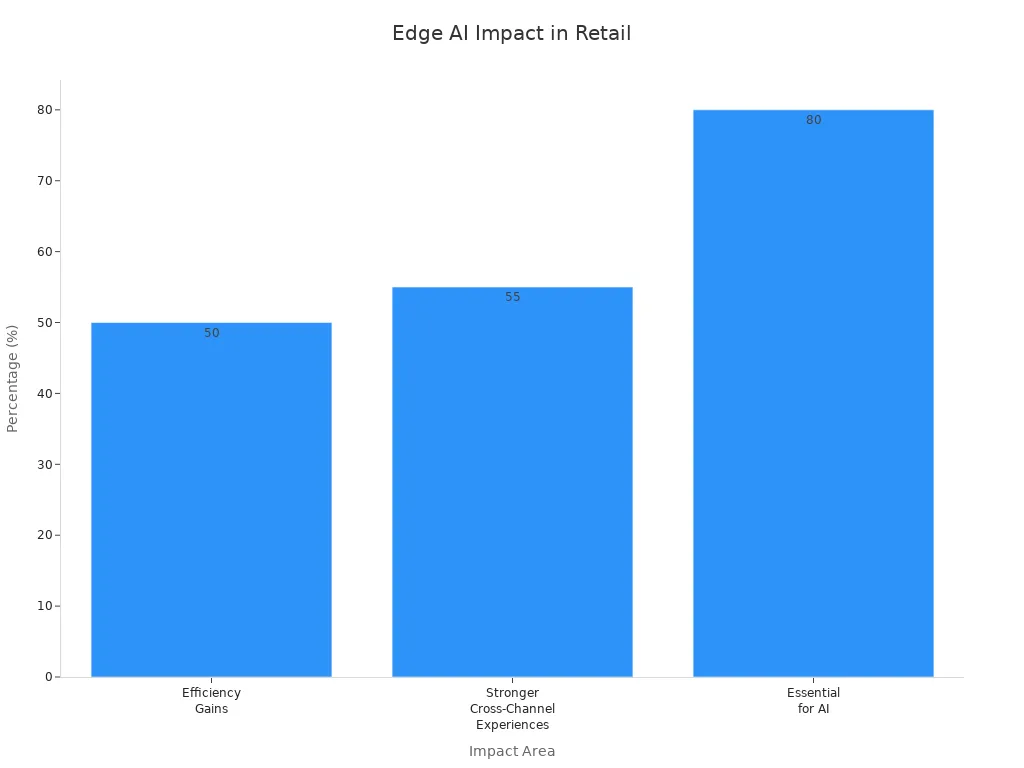
Edge AI makes shopping easier and smarter for you. Stores use this technology to make your experience better and run their business well. Smart retail depends on edge AI to give you fast, safe, and reliable service right where you need it.
Smart retail shopper benefits
Personalized experiences
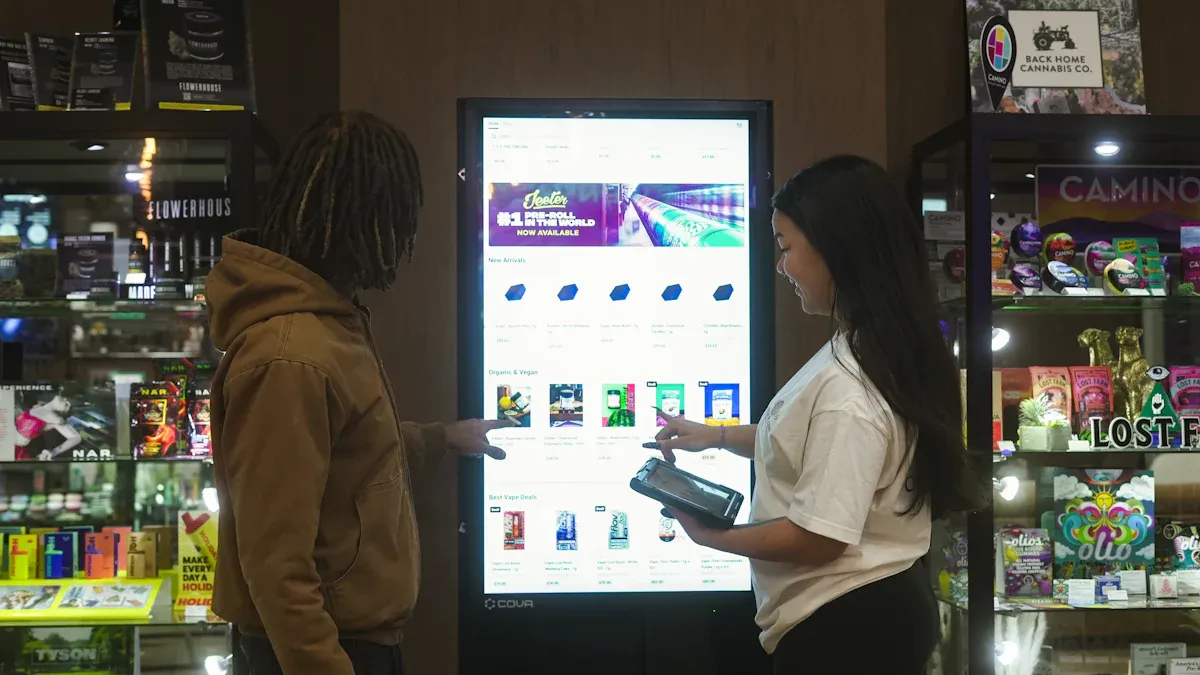
You want shopping to be special for you. Smart retail uses ai-driven personalization to make your trip unique. When you walk into the store, edge AI can notice you and remember your likes. This helps you see products and deals that fit your style. You do not have to spend time looking for things you want.
Some ways smart retail gives you a personal touch are:
Facial recognition lets the store know who you are and suggest things you may like.
You get special discounts based on what you bought before.
Prices and deals can change right away if you pick up something but do not buy it.
You feel like the store understands you. Shopping gets easier and more fun.
Faster service
You do not like to wait in long lines. Smart retail uses edge AI to make shopping faster. Stores use real-time insights to know what shoppers need right now. This helps you get what you want more quickly.
The table below shows how edge AI makes service faster for you:
Application | Impact on Service Speed |
|---|---|
In-Store Analytics | Real-time insights on shopper behavior and store layout optimization lead to faster service. |
Personalized Shopper Experiences | Immediate, tailored recommendations enhance customer engagement and reduce decision-making time. |
Inventory Management | Real-time stock monitoring prevents out-of-stock situations, ensuring products are available when needed. |
Loss Prevention | Instantaneous detection of scanning errors improves checkout efficiency and reduces wait times. |
You spend less time waiting and more time having fun shopping.
In-store assistance
Sometimes you need help finding things or have questions. Smart retail stores use edge AI to help you right away.
Here are some ways you get help in the store:
Technology Type | Application in In-Store Assistance |
|---|---|
Virtual Assistants | Help shoppers find products and answer inquiries |
Recommendation Systems | Provide personalized product suggestions based on shopper behavior |
In-Store Navigation Tools | Assist customers in locating items within the store |
Accessible Digital Platforms | Ensure compliance with accessibility standards for all shoppers |
Voice Commerce | Enable hands-free shopping experiences for individuals with disabilities |
You can ask a virtual assistant for help or use a map to find what you need. These tools make shopping easy for everyone.
Retailer advantages with edge AI
Real-time inventory tracking
Edge AI helps stores know what is in stock all the time. You can see where products are in different places. Computer vision counts items and finds mistakes fast. RFID tags and smart shelves tell your team right away when something changes. This lets you refill shelves before they are empty. You avoid empty spots and keep shoppers happy.
Stores have fewer empty shelves.
Teams spend less time checking stock by hand.
Shoppers find what they need without asking.
Edge AI uses predictive analytics to help you know when things will run low. You can order more before you run out. Generative AI updates your product catalogs and descriptions. Your digital shelves match what is in the store. Smart retail uses these tools to keep everything working well.
Security and loss prevention
Stores face risks like theft and loss every day. Edge AI helps protect stores with advanced technology. Video AI, license plate recognition, and RFID work together to watch over stores. These tools see more than people and help you act fast if something goes wrong.
Pillar | What it covers | Why it matters |
|---|---|---|
Technology | Video AI, license plate recognition, EAS, RFID, POS analytics | Extends coverage and speeds up investigations |
Retail shrinkage costs stores billions each year. Shoplifting has gone up a lot in recent years. Edge AI lets you spot problems quickly and reduce losses. You can keep your store safe and focus on helping customers. Smart retail uses these systems to protect products and people.
Actionable analytics
You make better choices when you have good data. Edge AI gives real-time analytics to help you understand your store. You can see what customers like, how they move, and what they buy. Predictive analytics help you plan for busy times and avoid waste. You can change prices based on demand and trends.
Type of Analytics | Description |
|---|---|
Predictive Analytics | Forecasts demand and helps manage inventory and cut waste. |
Customer Behavior Analysis | Shows what shoppers like and helps improve marketing. |
Inventory Management | Keeps stock levels right and cuts extra products. |
Pricing Strategy | Lets you change prices fast to match trends and needs. |
Supply Chain Optimization | Helps avoid delays and keeps products moving smoothly. |
You can use these insights to make your store work better. Most stores see a good return on investment from edge AI. Smart retail stores use analytics to grow sales, improve service, and stay ahead of others.
Edge AI in action
Smart shelves and checkout
Many stores now have smart shelves and checkout systems. These tools use edge AI to make shopping simple for you. Smart shelves watch products all the time. They know when you take or return an item. This helps stores keep shelves full and avoid empty spots. You get faster service because the system updates stock right away.
Self-checkout systems use AI to make paying quicker. You scan your items, and the system checks for mistakes. You wait less in line. Some stores use AIEdge-X® to run these systems. This platform lets stores control devices and update software from one place. You get a fast and easy checkout every time.
Smart shelves and checkout systems help you shop quickly and find what you need.
Customer behavior analysis helps stores learn how you use products.
Footfall analysis counts how many people visit and where they go.
Self-checkout augmentation uses AI to make paying simple.
Inventory management watches stock and predicts when things run low.
Customer behavior monitoring
Edge AI watches how you move and shop in the store. Cameras and sensors collect data about what you do. Stores use this information to make your visit better. For example, smart displays show you deals based on what you look at or pick up.
In-store analytics help stores see how you use products.
Smart displays use your actions to give you special deals.
Real-time inventory management keeps products ready for you.
You get a shopping trip that feels personal and helpful.
Automated workflows
Edge AI runs many automated workflows in stores. These workflows help stores work better and give you a nicer visit. The table below shows some examples:
Example of Automated Workflow | Operational Improvement |
|---|---|
Better customer experience | |
Autonomous checkout systems | Faster service and shorter wait times |
Real-time inventory management | Better supply chain management |
Stores use remote management to control these workflows. They can fix problems and update systems without stopping your shopping. In-store application automation keeps everything working well. You get quick service, full shelves, and a smart store.
Challenges and future trends
Privacy and integration
Stores using edge AI bring new privacy worries. Retailers collect sensitive data, sometimes without asking you first. They might use your information without permission. Surveillance and bias can change your shopping experience. Data leaks and theft can put your privacy at risk.
Many stores have trouble connecting edge AI to old systems. Most store technology was made for simple jobs like checkout. These systems do not work well with advanced AI features. Stores need to upgrade their equipment, so you may see slow changes.
Data privacy rules are getting tougher. Edge AI helps stores keep your information safe in the store and follow rules like GDPR and HIPAA.
Scalability solutions
Retailers want to use edge AI in many stores. You get benefits when stores use scalable solutions.
Here are ways stores fix scalability problems:
Solution Type | Description |
|---|---|
Purpose-Built AI Models | Special models help with tasks like defect detection and gesture recognition. They work well and fit different needs. |
Flexible Deployment Options | Using RISC-V and YAML-based automation lets stores test and use AI quickly. |
Stores use GDC to run and grow AI apps at the edge. GDC keeps things reliable and safe even if the internet is weak. |
Google Distributed Cloud brings AI to local stores.
It mixes cloud and edge apps without delay.
You get a safe platform for AI shopping.
Innovations ahead
Edge AI brings cool new ideas to smart retail.
You will see these trends in stores:
Edge-powered smart stores track inventory all the time.
Frictionless checkout makes paying easy.
Real-time anomaly detection improves loss prevention.
Automated systems handle inventory and logistics.
Unified data orchestration connects stores to central analytics.
Energy-efficient edge clusters reduce environmental impact.
Low-latency AI enables personalized promotions and augmented reality.
High-speed connectivity synchronizes online and physical stores.
Edge AI helps stores follow strict privacy rules.
Predictive analytics guess demand and trends. AI-driven personalization gives you product suggestions. Automation makes inventory and customer service easier.
Autonomous stores use AI and sensors to run with few staff.
5G-powered IoT lets devices talk fast.
AI-driven supply chains change quickly when problems happen.
Evidence Type | Statistic | Description |
|---|---|---|
AI Adoption | Most retail leaders expect AI-driven personalization soon. | |
Supply Chain | 41% | More stores will use AI for supply chain tracking. |
ROI Expectation | 59% | Leaders expect good results from AI supply chain projects. |
You will see smarter, safer, and more efficient shopping as edge AI grows.
You notice changes when you shop in a smart store. Edge AI helps you get faster service and special offers. It also gives you help right away. Stores use this technology to keep track of products and save money. It helps stop theft too. You get the right items, pay quickly, and find good deals.
They use real-time data to make shopping smart.
Automation lets workers spend more time helping you.
Personalization can help you save money and enjoy shopping more.
Experts say stores should use real-time information and connect online and in-store data for the best results.
FAQ
What is edge AI in retail?
Edge AI in retail means stores use smart computers and sensors right where you shop. These devices process data on the spot. You get faster service and better privacy because your information stays in the store.
How does edge AI protect my privacy?
You keep your data safer with edge AI. The store processes your information locally. Your data does not travel to faraway servers. This reduces the risk of leaks or hacks.
Will edge AI make shopping faster for me?
Yes! Edge AI helps you check out quickly. It tracks products in real time. You spend less time waiting in lines. You also find what you need faster.
Can edge AI work if the internet goes down?
Yes, edge AI keeps working even if the internet stops. Stores can still help you check out and find products. You do not lose service.
What are smart shelves?
Smart shelves use sensors and cameras. They know when you take or return items. You always see what is in stock. The store can refill products before they run out.
See Also
Revolutionizing Online Store Management With AI-Driven Tools
The Future of Retail Lies in AI-Enhanced Stores
Essential Insights for Retailers on AI-Driven Corner Stores
Launching a Cost-Effective AI-Driven Corner Store Successfully
Boosting Efficiency and Customer Experience With Cloudpick Technology
