The role of multi-sensor fusion in high-traffic autonomous stores in Corporate offices & tech parks.

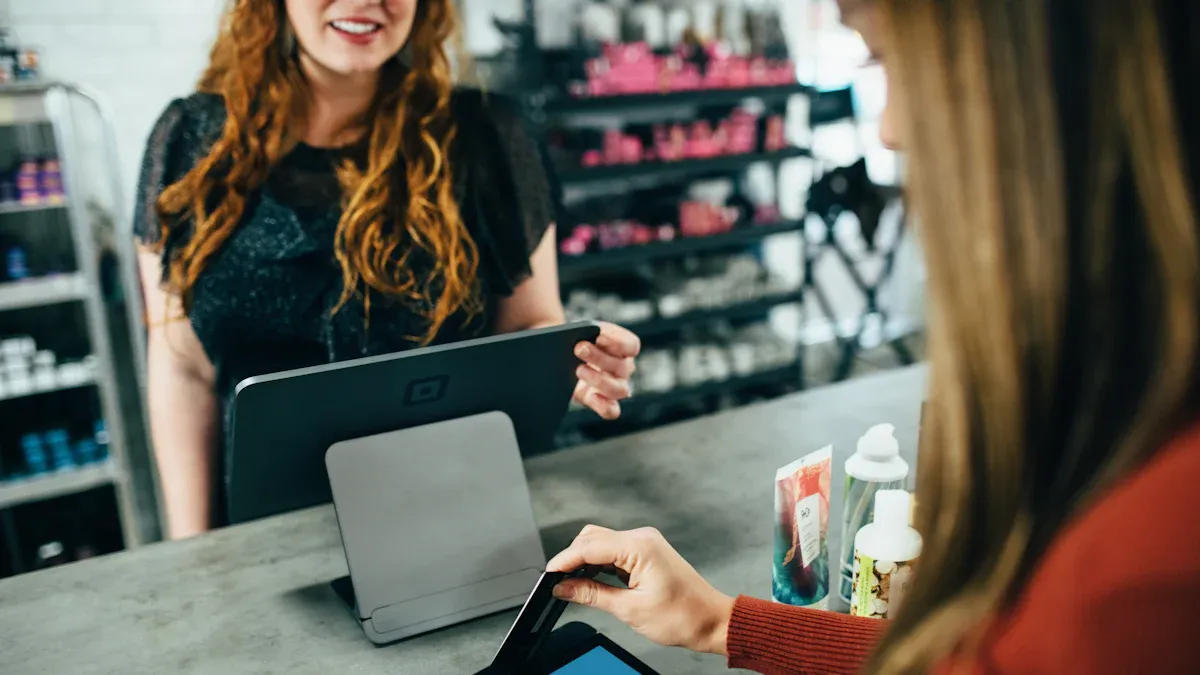
Imagine you walk into an autonomous store during your office lunch break. Dozens of people move through narrow aisles at the same time. You see how multi-sensor fusion helps the store track every customer and product, even when the space gets crowded. You experience faster checkout, fewer errors, and a safer environment. Store operators gain better efficiency and reliability in these busy settings.
Key Takeaways
Multi-sensor fusion combines data from various sensors to improve tracking and reliability in busy autonomous stores.
Using multiple sensors reduces errors and enhances safety, creating a seamless shopping experience even in crowded environments.
Real-time data processing allows stores to adapt quickly to changes, ensuring efficient operations and accurate inventory management.
Investing in multi-sensor systems can lead to significant cost savings and improved customer satisfaction through faster checkouts and fewer mistakes.
Emerging technologies like AI and 5G will further enhance the capabilities of multi-sensor fusion, making autonomous stores smarter and more efficient.
Multi-Sensor Fusion in High-Traffic Retail Stores
Challenges in Busy Corporate Environments
You face many challenges when you operate autonomous retail stores in corporate offices and tech parks. High traffic and crowded aisles make tracking every customer and product difficult. Multiple sensors must work together to keep the system reliable. Here are some common operational challenges you encounter:
Accuracy of product detection and billing often suffers. Misidentification and incorrect charges can frustrate customers.
Customer adoption and understanding may lag. Privacy concerns and the learning curve can slow usage.
High initial investment and operational costs create barriers for retailers.
Technical glitches and downtime disrupt service and impact customer satisfaction.
Inventory management challenges arise. Maintaining accurate inventory in real time is hard.
Data privacy and security concerns must be addressed. Collecting customer data raises important questions.
Shrinkage and fraud threaten the system. Shoplifters can exploit vulnerabilities.
You need a solution that helps you overcome these obstacles. Multi-sensor fusion gives you the tools to improve tracking and reliability in busy environments.
Why Multi-Sensor Fusion Matters
Multi-sensor fusion combines data from multiple sensors to create a complete picture of the store. You use cameras, RFID, weight sensors, and environmental sensors to track every movement and object. This approach helps you solve problems that single sensors cannot handle.
Multi-sensor fusion lets you detect objects, track customers, and manage navigation in crowded spaces. You minimize blind spots and reduce errors by using multiple sensors together.
The table below shows how multi-sensor fusion improves object detection, navigation, and positioning compared to single sensor systems:
Advantage/Challenge | Description |
|---|---|
Improved Robustness | Multi-sensor fusion enhances your ability to accurately identify and locate targets in complex environments. |
Reduced False Positives/Negatives | Combining data from multiple sensors minimizes errors in detection and tracking. |
Enhanced Environmental Understanding | Fusing different sensor data gives you a more comprehensive view of the surroundings. |
Data Asynchrony | Timing differences in data collection from multiple sensors can create challenges. |
Data Redundancy | Overlapping information from multiple sensors can complicate data processing. |
Computational Complexity | Managing data from multiple sensors increases the complexity of the system. |
You gain operational reliability by minimizing blind spots and sensor limitations. Multiple sensors provide comprehensive 3D sensing, capturing the full spatial layout of people, machines, and objects in real time. Accurate positioning gives you real-time tracking with ultra-low latency, preventing dangerous contact in confined spaces. Active illumination from multiple sensors allows reliable monitoring in dark or low-light environments. You maintain performance even in harsh conditions like smoke, dust, or glare. Seamless integration with intelligent systems links environmental sensors and AI analytics for automated alerts and adaptive protection.
Multi-sensor fusion helps you track every customer and product, even when the store is crowded. You reduce errors, improve safety, and create a seamless experience for everyone. You rely on multiple sensors to keep your store running smoothly and efficiently.
Types of Multiple Sensors Used
When you walk into a high-traffic autonomous store, you interact with many types of sensors working together. Each sensor plays a unique role in making your shopping experience smooth and secure. You can see how these sensors help the store track products, monitor customers, and prevent errors.
When you combine different sensors, you create a 360° view of the store. This helps the system make better decisions and improves accuracy.
Here is a table that shows common sensor types and their specific roles in autonomous retail stores:
Sensor Type | Specific Role |
|---|---|
Camera-based systems | Localization, item identification, and classification. |
Vibration sensors | Estimate weight changes and detect product interaction. |
RFID tracking | Inventory management and theft detection. |
LiDAR | Improve tracking reliability and monitor customer behavior. |
Ultrasound | Detect object movements and enhance security. |
Passive Infrared (PIR) | Monitor customer presence and interactions. |
Cameras and Computer Vision
You see cameras everywhere in autonomous stores. These cameras use computer vision to identify products, track customer movements, and prevent theft. Cameras help you check out quickly and make sure you get charged for the right items. When you combine camera data with lidar, you get more accurate tracking, even in crowded spaces. Cameras can sometimes miss objects if something blocks their view, but lidar fills in those gaps.
RFID, NFC, and Weight Sensors
You use RFID tags and NFC technology to track products in real time. RFID helps you manage inventory and spot missing items. NFC lets you pay with a tap, making checkout faster. Weight sensors measure changes on shelves when you pick up or return products. If you grab a snack, the system uses weight sensors and lidar to confirm the action. This reduces mistakes and helps you avoid wrong charges.
LIDAR, Infrared, and Environmental Sensors
You rely on lidar to map the store in 3D. Lidar sends out laser pulses to measure distances and detect movement. This helps you track customers and products, even when the store is busy. Lidar works well with infrared sensors, which spot heat and motion. Environmental sensors check for temperature, humidity, and air quality. When you use lidar with other sensors, you get a full picture of what happens in the store. Lidar also helps you monitor traffic flow and improve safety. You can trust lidar to work in low light or smoky conditions. Lidar makes your autonomous store smarter and more reliable.
Tip: By using lidar with cameras, RFID, and other sensors, you reduce blind spots and make better decisions in real time.
How Multi-Sensor Fusion Works
Data Collection and Integration
You start with many sensors in your autonomous store. Cameras, RFID, weight sensors, and lidar all collect data at the same time. Each sensor gives you a different view of what happens in the store. Cameras watch people and products. RFID tags track items for inventory. Weight sensors notice when you pick up or put back a product. Lidar maps the space and movement.
You need sensor integration to make sense of all this information. The system uses data-level fusion to combine raw data from each sensor. This step is called data integration. You get a single, clear picture of the store. The system checks for errors and fills in missing details. You can trust the results because the system uses many sources.
Tip: Good sensor integration helps you avoid mistakes and keeps your inventory up to date.
Real-Time Decision Making
You want your store to react fast. Real-time processing lets the system handle data as soon as it arrives. The system uses real-time tracking to follow every customer and product. If the store gets crowded, the system adapts. It uses real-time decision-making to change how it tracks people and items. You see fewer errors and faster service.
The system uses data-driven rules to make choices. For example, if someone picks up a snack, the system checks the weight sensor and RFID tag. It updates the inventory right away. You get a smooth shopping experience. The store stays safe and efficient, even when many people shop at once.
Real-time processing and sensor integration help your store stay smart and reliable.
Single vs. Multiple Sensors in Retail
Accuracy and Reliability
You want your autonomous store to work smoothly every time. If you use only one sensor, you may face problems. A single camera or sensor can miss important details. For example, a camera might not see a product if someone stands in front of it. This can lead to mistakes in billing or inventory. You may also see more false alarms or missed detections.
When you use multiple sensors, you increase accuracy. Each sensor checks and supports the others. Cameras, RFID, and lidar work together to track every item and customer. If one sensor fails, the others keep working. This makes your system more reliable. You can trust the results because the system uses many views at once.
Here is a table that shows how a multi-sensor system like HoloVIC improves store perception:
Feature | Description |
|---|---|
Sensors Used | Camera, Lidar, Fisheye |
Number of Sensors | 6-18 per intersection |
Total Frames | Over 100,000 synchronous frames |
Purpose | Enhance perception by addressing blind spots and occlusions |
Field of View | 360° horizontal, 90° vertical |
You get better performance and fewer errors with multi-sensor fusion. Your store can adapt to changes and keep running, even if one sensor has a problem.
Handling Blind Spots and Occlusions
Blind spots and occlusions can cause big issues in a busy store. A single sensor cannot see everything. For example, a shelf or another person can block the view. This means the system may not notice when someone picks up or returns a product.
Multi-sensor fusion helps you solve this problem. You use different sensors to cover all angles. Lidar and fisheye cameras give you a wide field of view. RFID tags track items even if you cannot see them. The system adapts if one sensor gets blocked or fails.
You get a 360-degree view of the store.
The system covers blind spots that single sensors miss.
You maintain detection even when the environment changes.
The system keeps working if one sensor stops.
Tip: Multi-sensor setups are essential for handling crowded spaces and keeping your store accurate and safe.
With multi-sensor fusion, you make sure nothing gets missed. You improve safety, reduce errors, and give your customers a better experience.
Real-World Applications in Corporate Offices

Micro-Markets and Snack Stores
You see autonomous micro-markets and snack stores popping up in tech parks and office towers. These retail spaces use ai and iot devices to give you quick access to snacks, drinks, and office supplies. You do not need to leave your building to grab what you need. These stores operate 24/7, so you can shop any time, even late at night. Contactless payments make your shopping experience faster and safer.
You notice that these stores use occupancy tracking to monitor how many people enter and leave. This helps keep the space safe and prevents overcrowding. You benefit from automation because the system updates inventory in real time. You always find what you need on the shelves. The use of iot devices and ai also reduces downtime and improves safety for everyone.
Here is a table that shows why companies choose autonomous retail stores in corporate offices:
Key Drivers | Benefits |
|---|---|
Technological innovation | Enhances operational efficiency |
Environmental compliance | Improves customer experiences |
Supply chain resilience | Enables data-driven decision-making |
Workforce challenges | Reduces downtime and improves safety |
Traffic Flow and Customer Experience
You notice that high-traffic environments need smart solutions. Multi-sensor fusion with ai and iot devices helps track occupancy and manage traffic flow. You move through the store easily because the system uses occupancy tracking to adjust lighting, temperature, and even music based on how many people are present. This creates a comfortable experience for you and your coworkers.
You see that safety is always a top priority. The system uses real-time occupancy data to alert you if the store gets too crowded. You feel confident that the store protects your privacy and safety while you shop. You also enjoy a seamless retail experience with fewer errors and faster service.
Tip: Autonomous retail stores in corporate offices use ai, iot devices, and occupancy tracking to create a safe, efficient, and enjoyable shopping experience for you.
Operational Benefits of Sensor Fusion
Efficiency and Cost Savings
You see sensor fusion making your store more efficient every day. Multiple sensors work together to track products, customers, and shelf activity. This teamwork speeds up checkout and reduces mistakes. You spend less time waiting in line because the system recognizes items quickly and updates inventory in real time. When you use sensor fusion, you lower cashier costs and improve store operations.
Here is a table that shows how sensor fusion impacts checkout speed and accuracy:
Driver Category | Key Driver Description | Estimated Impact on CAGR (%) | Geographic Relevance | Impact Timeline |
|---|---|---|---|---|
Demand for frictionless checkout | Reduced queues and faster transactions | ~9.2% | North America, Europe | Short Term |
Expansion of computer vision systems | Accurate item recognition and billing | ~5.9% | North America, Asia Pacific | Mid Term |
Sensor fusion systems | Movement and shelf interaction tracking | ~6.1% | Developing | N/A |
You notice that big retailers can save millions each year by using sensor fusion. For example, a chain with 1,500 stores could save up to $100 million in cashier costs. Checkout wait times drop by half. You avoid costly mistakes and keep shelves stocked, which prevents lost sales. The largest retailers lose more than $1 billion each year because of on-shelf availability issues. Sensor fusion helps you solve these problems.
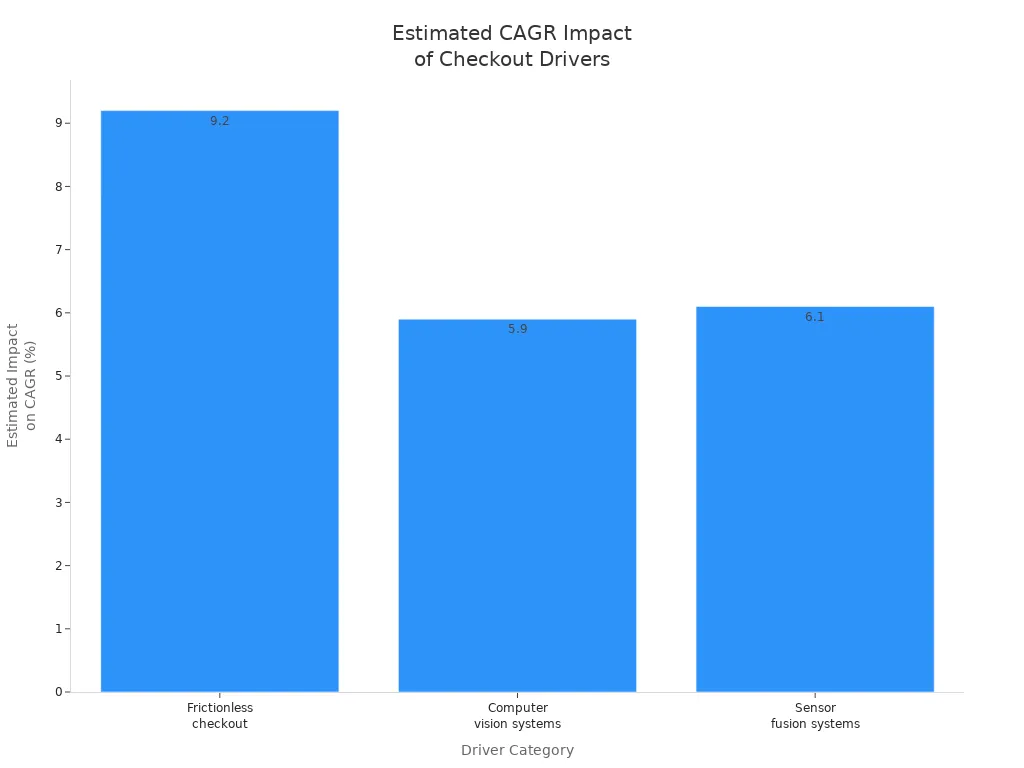
Sensor fusion gives you faster transactions, accurate billing, and real-time inventory updates. You boost efficiency and cut costs across your store.
Security and Loss Prevention
You rely on sensor fusion to keep your store safe. By merging data from cameras, RFID tags, and other sensors, you improve loss prevention. The system detects suspicious behavior and minimizes false alarms. You see fewer mistakes because the sensors confirm each other's data. This is important in high-traffic stores where many people and products move at once.
You use sensor fusion for monitoring store activity. Cameras and RFID tags track every item and customer. If someone tries to steal or tamper with products, the system alerts you right away. You reduce shrinkage and protect your inventory. You also keep shoppers and employees safe by monitoring entrances and exits.
Sensor fusion strengthens your security system. You get better detection, fewer false alarms, and faster response to threats.
Data Insights for Optimization
You gain valuable insights from sensor fusion. The system collects data from cameras, RFID, weight sensors, and environmental sensors. You use this information to optimize store operations and improve the shopper experience.
You track consumer movements and adjust product placements for better sales.
You streamline operations by monitoring inventory, staffing needs, and checkout processes.
You analyze consumer preferences and evaluate marketing campaigns.
You improve safety and security by monitoring store activities in real time.
Sensor fusion helps you evaluate campaign effectiveness and optimize merchandising. You assist suppliers in enhancing their category leadership. You reduce shrinkage and improve safety for everyone in the store.
Sensor fusion gives you the power to make data-driven decisions. You use real-time monitoring to keep your store running smoothly and adapt to changing needs.
You see that sensor fusion transforms your store. You boost efficiency, strengthen security, and gain insights that help you optimize every part of your operation.
Future of Multi-Sensor Fusion in Retail
Emerging Trends and Technologies
You will see many new trends shaping the future of multi-sensor fusion in retail. Artificial intelligence (AI) keeps getting smarter. AI can now process data from many sensors faster and more accurately. You will notice that edge computing is becoming popular. Edge devices process data close to the sensors, which means you get real-time results with less delay.
You will also see more stores using 5G networks. 5G gives you faster and more reliable connections. This helps your store handle large amounts of sensor data without slowing down. You may find that stores use advanced sensors like hyperspectral cameras. These cameras can detect details that regular cameras miss, such as freshness of food or product tampering.
Note: You can expect more stores to use cloud-based analytics. Cloud systems help you store and analyze data from many locations at once.
Here are some trends you should watch:
AI-powered sensor fusion for smarter decision-making
Edge computing for faster processing
5G networks for better connectivity
Advanced sensors for deeper insights
Cloud analytics for large-scale data management
Challenges and Opportunities
You will face some challenges as you adopt multi-sensor fusion. Data privacy remains a big concern. You must protect customer information and follow strict rules. Sensor costs can be high, especially when you want the latest technology. You may also need skilled workers to manage and maintain these systems.
However, you will find many opportunities. Multi-sensor fusion helps you reduce errors and improve safety. You can offer a better shopping experience with faster checkouts and fewer mistakes. You will also gain valuable insights from data, which helps you make smarter business decisions.
Challenge | Opportunity |
|---|---|
Data privacy | Better customer trust |
High costs | Long-term savings |
Skill shortages | New jobs and training |
System complexity | Smarter, more adaptive stores |
Tip: You can stay ahead by investing in training and choosing flexible sensor systems. This helps you adapt to new trends and keep your store running smoothly.
Multi-sensor fusion helps you solve the toughest problems in busy autonomous stores. You gain better accuracy, faster service, and stronger security. Operators see fewer errors and lower costs. Shoppers enjoy a smooth, safe experience every time.
You can expect smarter sensors and AI to keep improving these stores.
You have the chance to bring these benefits to your own business.
Think about how sensor fusion could transform your workplace and create a better shopping experience for everyone.
FAQ
What is multi-sensor fusion in autonomous stores?
You use multi-sensor fusion to combine data from different sensors in an autonomous store. This helps you track products and customers more accurately. The system uses data from cameras, RFID, and other sensors to improve safety and efficiency.
How does data from multiple sensors improve accuracy?
You get better results when you use data from many sensors. Each sensor gives you a different view. The autonomous system checks all the data together. This reduces mistakes and helps you find products and people even in crowded spaces.
Why do autonomous stores need so much data?
You need a lot of data to keep an autonomous store running smoothly. The system uses data to track inventory, monitor customer movement, and prevent theft. More data means better decisions and a safer shopping experience for you.
Can autonomous stores protect my privacy with all this data?
You can trust that autonomous stores use strong security to protect your data. The system only collects data needed for store operations. Many stores use encryption and strict rules to keep your personal information safe.
What happens if a sensor fails in an autonomous store?
You do not need to worry if one sensor fails. The autonomous system uses data from other sensors to keep working. This backup helps the store stay open and accurate, even when there are technical problems.
See Also
How AI-Driven Stores Are Shaping Tomorrow's Retail Landscape
Exploring AI-Driven Vending Machines: Advantages for Today's Retail Industry
Reimagining Spaces: The PARC at Tysons Becomes A Community Hub
Smart Stores Vs Micromarkets: Global Insights Into Automated Retail
AI-Driven Corner Stores Are Rising: Key Insights for Retailers
