The Role of Spatial Identity in Connecting Access Control With Personalized Guest Recognition

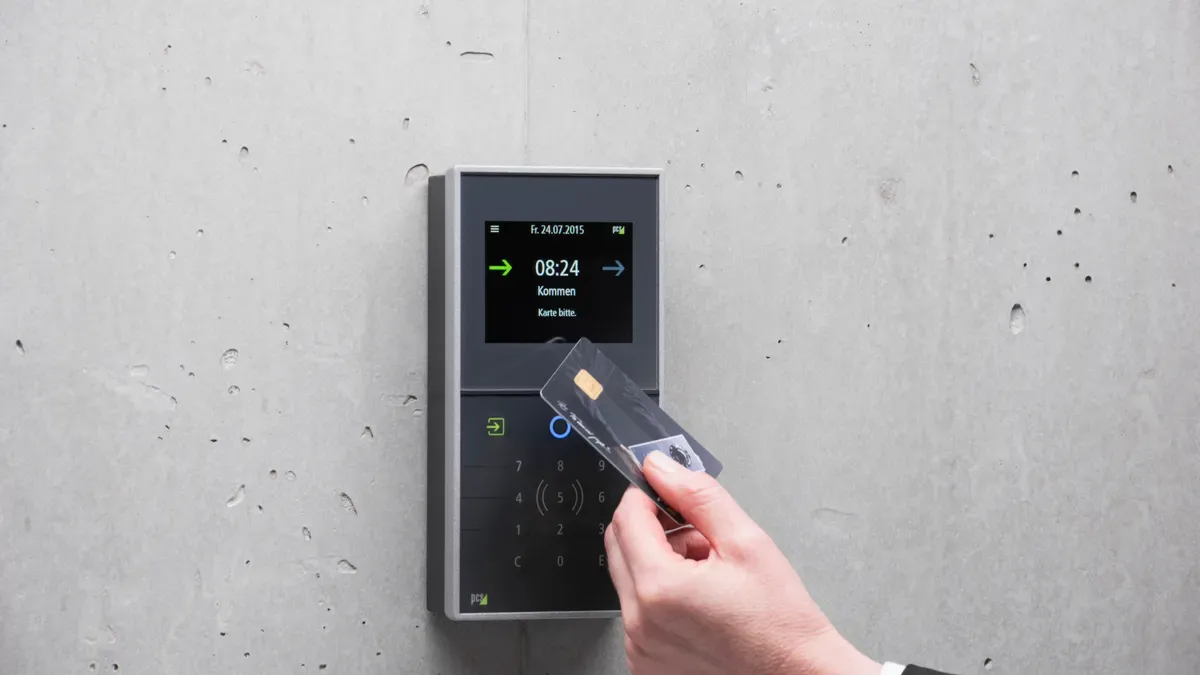
Access control and guest experience have been separate fields for twenty years. Neither one sees the physical trip between the door and the seat. Badge readers answer just one question. Apps ask you to identify yourself.
Spatial identity closes that gap by acting as a shared behavioral layer. It tracks movement, dwell time, and interaction moments. Privacy rules, privacy controls, privacy review, and privacy consent keep the thread anonymized until a guest opts in. Privacy settings, privacy safeguards, and privacy choices decide when a name gets attached. Privacy design, privacy defaults, and privacy culture build trust.
Persistent recognition makes security and personalization stronger. Security teams gain full-journey context. Security response gets faster. Security and hospitality share one view.
Key Takeaways
Spatial identity follows a guest's whole trip without using their name, not just when they enter.
Guests decide their own privacy; recognition only becomes personal when they choose to opt in.
Real-world systems like the Contactless Corridor show smooth, personalized access.
Businesses get faster security responses and happier guests with spatial identity.
Spatial identity bridges the gap between access control and hospitality platforms.
The Blind Spot in Access Control and Guest Experience
What Checkpoint Systems Miss
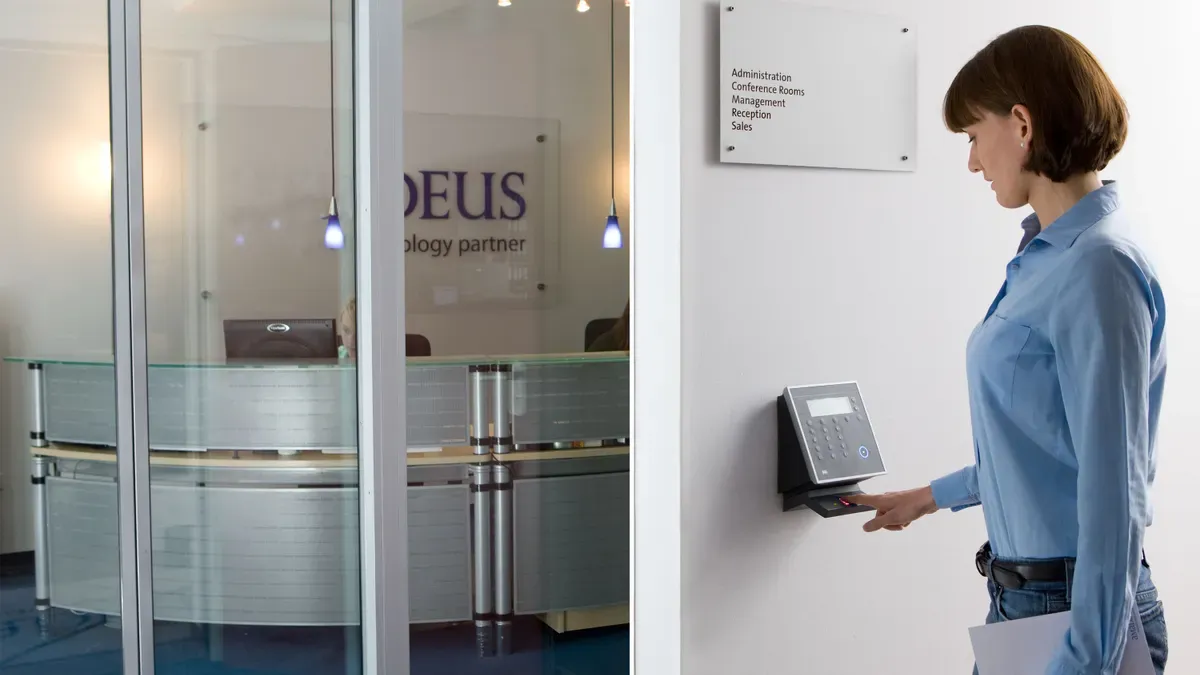
Badge readers, ticket scanners, and biometric gates answer one question: allowed in or not. Once you pass the threshold, these systems go quiet. They enforce entry at the checkpoint, but they give no tracking after it. You cannot trace where anyone goes. A static model makes security worse. Privilege changes do not show up in real time, so security lapses follow. Turnstile throughput becomes a real limit at busy entry points, such as 300 workers in a 30-minute window. Every access point needs hardware coverage and protection. Passive beacons detect and log presence in the background, but they do not stop physical entry. Video surveillance tied to access events extends tracking beyond the checkpoint, yet it captures only moments, not a journey. Privacy management starts with good logs, and these logs stay thin. Privacy management demands real-time context, which a static model cannot supply. Protection suffers when privacy management stops at the door. Access control ends at the gate, and privacy management inherits the blind spot. Security teams lose the thread after entry.
Why Service Turns Reactive
Guest experience tools rely on apps or self-identification. Interactions reset without active engagement. A closed app makes the guest invisible. Staff are left guessing. They cannot see dwell time or congestion. Service becomes reactive: a host waits for a complaint instead of anticipating a need. Privacy management shapes this gap. Without consent, staff cannot attach a name to a face. Privacy management tools keep the thread anonymized, a good protection. Privacy management defaults decide when recognition becomes personal. Privacy management culture often treats data collection as a risk to avoid. Privacy management alone cannot close the gap. Privacy management needs a behavioral layer to work with. Security knows the threshold. Hospitality knows the app. Nobody knows the journey in between. Security gains no context, and protection stays partial.
What Is Spatial Identity?
A Continuous, Opt-In Behavioral Thread
Spatial identity is an anonymized behavioral thread that stays continuous across a physical space. It follows a guest from entry through every zone they visit. The thread keeps track of movement patterns, dwell, congestion, and interaction moments. Think of it as a memory of the journey, not just the door.
"At its core, Spatial Identity is the continuity of an anonymized behavioral thread across a physical space. It follows a guest from entry through each zone they visit, maintaining awareness of movement patterns, dwell, congestion, and interaction moments. When a guest opts in through ticketing, loyalty, or biometric systems, that behavioral thread can connect to a known identity. The result is recognition that persists, not just at the gate, but throughout the visit."
That definition carries three properties. First, the thread is continuous. Second, the thread is opt-in. Third, the thread is behavioral. The thread connects to a known identity only when the guest opts in through ticketing, loyalty, or biometrics. That link gives you persistent recognition throughout the visit. Without the link, the thread stays anonymous and still useful. You see the physical journey either way.
Privacy Management and Consent
Privacy management decides when the thread becomes personal. The thread stays anonymized until consent arrives. Opt-in governs the moment recognition becomes personal. Privacy management tools enforce that boundary at every step. Privacy controls let the guest set the terms. Privacy preferences record those terms in a durable way. Granular control matters here. A guest may share identity for entry and withhold it for retail zones. Privacy management honors that split.
Cross-context privacy keeps the thread from leaking between venues or visits. Privacy management tools should treat each context as separate. Privacy controls should travel with the guest, not with the building. Privacy preferences should survive a change of device or app. Privacy management culture turns these rules into daily practice. Privacy management defaults should lean toward anonymity. Privacy management review should check the thread against consent on a regular schedule. Privacy management alone cannot create the thread. Privacy management protects it.
The behavioral thread gives you a persistent view of the visit. The behavioral layer stays useful even when identity stays hidden. You gain context without collecting names. You gain pattern awareness without surveillance overreach. That balance is the point of spatial identity.
Real-World Deployments

The Contactless Corridor
The Contactless Corridor from AiFi and Paravision shows how continuous spatial tracking works in real life. The system pairs facial recognition with a continuous behavioral thread. A guest walks through the corridor without stopping, scanning, or showing credentials. Identity resolves as the person moves. Access opens on its own.
Privacy management shapes the whole flow. The thread stays anonymized until the guest opts in. Privacy controls let each person set the terms of recognition. Privacy management tools enforce those terms at every zone. Privacy defaults lean toward anonymity. Privacy review checks the thread against consent on a schedule. Privacy culture keeps staff aligned with those rules. Privacy safeguards protect the behavioral record. Privacy choices stay with the guest, not the building. Privacy preferences travel across visits. Privacy management keeps the link between identity and position secure. The corridor shows that access and protection can work together without friction.
Parallel Reality at Intuit Dome
Intuit Dome in Los Angeles takes the idea further. The Parallel Reality display from Misapplied Sciences works with AiFi's 3D tracking. One shared screen shows personalized messages to dozens of individuals at once. Each person sees content meant for them alone. The display relies on continuous tracking of each guest's position. Privacy management keeps the underlying thread anonymized until consent arrives. Privacy controls decide who sees which message. Privacy management tools separate one guest's view from another's. Privacy defaults protect anyone who stays opted out. Privacy review confirms the display honors each consent state. Privacy culture keeps the venue honest about the boundary. Privacy safeguards cover the tracking data behind the screen. Privacy choices remain visible to the guest. Privacy preferences govern every personalized experience the screen delivers. Privacy management turns a shared surface into a personal one.
Both deployments show the same pattern. Continuous identity tracking sharpens security operations. Security teams see the full journey, not just the threshold. Security response gets faster. Security and hospitality share one view. Personalization lifts the guest experience at the same time. The physical space becomes a layer both teams can trust.
Awareness and Security at Scale
Extending the Seasoned Host's Instinct
Think of a restaurant host who knows fifty regulars by name. That host remembers who likes a quiet corner and who always orders the same drink. Spatial identity takes that instinct and stretches it to thousands of guests during one event. The system keeps a continuous behavioral thread for each visitor. Recognition happens without anyone stopping at a kiosk.
You can send a known guest to an express lane. You can greet a repeat visitor by name at the door. You can upgrade a service tier without slowing the guest down. Personalization happens while people move, not at a counter. Privacy management sets the boundary here. Privacy controls decide which guests get a greeting. Privacy preferences record who wants to stay anonymous. Granular control lets one guest share identity for entry and keep it private for retail. Privacy management tools enforce that split at every zone. Strong protection of the thread makes this awareness safe to use.
Context That Sharpens Incident Response
A behavioral anomaly becomes visible across the whole visit, not just at the gate. You see a guest who lingers in a restricted zone. You see a crowd building near a closed exit. Complaints map to wait times and congestion. Contextual detail travels with the individual, so your team acts on facts instead of guesses.
Contextual awareness cuts false positives. A guard sees the whole path, not one snapshot. Response gets faster. Privacy management keeps that context tied to consent. Privacy controls limit who can view the thread. Privacy preferences govern how long the record lives. Privacy management review checks the data against policy. Privacy management culture keeps staff accountable. The physical space yields contextual signals your security team can trust. Privacy safeguards protect the guest at the same time. Privacy choices stay visible. Privacy defaults lean toward anonymity. Privacy management turns raw movement into usable protection.
Business Impact and Positioning
Measurable Gains Across the Visit
Spatial identity gives you numbers you can track. Entry processing time goes down. Queue abandonment drops. The time from entry to first purchase gets shorter. In-venue spending goes up. Incident detection latency improves. Each metric ties to a moment in the physical journey, so you can see where the gain comes from.
Loyalty programs built on real behavior beat surveys. The 2026 Bond Loyalty Report shows 85% of consumers are more likely to keep doing business with a brand that runs a loyalty program. It also shows 73% spend more as a result. Behavior beats stated preference every time.
"The shift from vanity metrics to value metrics is crucial. Instead of celebrating redemption rates, leading brands now focus on incrementality—if an incentive drove clients to act when they otherwise would not have."
Track these indicators to prove the gain:
Loyalty member acquisition rate
Customer retention rate
Reward redemption
Customer lifetime value (CLTV)
Incrementality (measuring whether an incentive changed behavior)
Where Spatial Identity Fits
Spatial identity sits between two camps. Traditional access control providers like Genetec and LenelS2 build around credentials. Hospitality platforms work through mobile apps. Neither one owns the journey. Spatial identity grounds both in real-world behavior.
Demand for this middle layer is climbing fast.
Metric | Value |
|---|---|
CDP market value (2025) | USD 8.74 Billion |
Projected market value (2033) | USD 42.68 Billion |
Forecast CAGR (2026–2033) | 21.9% |
Key demand drivers | AI-powered analytics, omnichannel marketing, privacy-compliant data management, first-party data strategies, regulatory pressure, decline of third-party cookies |
Strategic implication | CDPs increasingly critical for unifying customer data across touchpoints to enable real-time profiles and personalization |
The data security platform market tells the same story. Buyers are moving away from stand-alone tools toward coordinated platforms. They want unified policy definition with continuous visibility across the data lifecycle. Operational usability, audit-ready workflows, and rapid policy updates now matter more than manual coordination. Vendors combine classification, policy creation, monitoring, and enforcement into shared workflow models. Buyers judge those models on coverage breadth, policy consistency, and administrative efficiency within a single control plane.
That shift mirrors what happens in venues. Security posture is moving from checkpoint-based verification toward ongoing visibility with adaptive control baselines. Organizations are leaving scheduled audits behind for near-real-time understanding of where sensitive data resides, how it moves, and which workflows touch it. Buyers now expect operational feedback loops, such as updated policy recommendations and timely enforcement tied to observed context. Technology answers with richer telemetry, better correlation of access events to policy categories, and flexible baselines you can refine without re-architecting. Platform usage cycles grow more frequent, which raises the value of administrators who tune policies iteratively. Competitive differentiation intensifies around analytics depth, audit trace quality, and consistent policy outcomes as environments and schemas evolve.
In retail and e-commerce, high volumes of customer, payment-adjacent, and behavioral data create exposure risk that expands during promotions, migrations, and omnichannel operations. Platforms offering only periodic scanning often miss rapid changes in data access patterns and misconfigurations. The opportunity is to innovate around continuous detection and enforcement—improving classification resilience and accelerating remediation loops—by emphasizing near-real-time monitoring, remediation automation, and deployment options that fit seasonal and campaign-driven peaks.
Spatial identity already runs in secure corridors, premium venues, and high-throughput public spaces. Checkpoint-based identity limitations become harder to ignore as demand increases. Guests expect persistent recognition. Operators expect full-journey context. The gap between the two camps closes when one layer serves both.
Spatial identity unifies security and hospitality. Both teams now work from one shared view of the physical world. Your guests feel known without doing anything. Your security team gains full-journey context. Privacy management makes that trust possible. Privacy controls, privacy defaults, and privacy review keep every thread safe. Privacy culture and privacy choices protect the guest. Privacy safeguards and privacy settings hold the line. Privacy management earns consent at each step. Access control no longer stops at the door. Access opens smoothly, and access stays accountable. Security sees the whole visit. Security response gets faster. Security and service finally agree. Checkpoint-based identity limits become harder to ignore as demand grows.
FAQ
How does spatial identity differ from a badge reader?
A badge reader answers one question at the door. Spatial identity follows the whole journey instead. It tracks movement, dwell, and congestion. Your security team sees context after entry. Privacy management keeps the thread anonymous until consent. Privacy settings decide when a name attaches. Privacy management tools enforce that rule.
When does recognition become personal?
Recognition becomes personal only when a guest opts in. Ticketing, loyalty, or biometrics can link the thread to a name. Until then, privacy controls keep it anonymous. Privacy defaults lean toward anonymity. Privacy management enforces that boundary at every zone. Privacy review confirms the link stays valid.
How do you protect guest data?
You set privacy defaults toward anonymity. Privacy preferences travel with the guest. Privacy review checks the thread against consent. Privacy management tools separate each context. Privacy culture keeps staff accountable. Privacy management defaults lean toward protection.
What results can you measure?
Entry processing time drops. Queue abandonment declines. Time to first purchase shortens. In-venue spend rises. Incident detection latency improves. Privacy management lets you track these gains without collecting names. Privacy management review checks the data. Privacy safeguards cover the behavioral record. Privacy management tools enforce the rules.
Where does this fit between access control and hospitality platforms?
It sits between credential-based access control and app-based hospitality tools. Neither owns the journey. Spatial identity grounds both in real behavior. Privacy management protects the guest throughout. Privacy choices stay visible. Privacy settings remain in the guest's hands. Privacy management culture keeps the boundary honest.
See Also
Walgreens Self-Checkout: Balancing Retail Convenience With Everyday Challenges
How Self-Checkout Has Evolved Over Time in Retail
Walmart Self-Checkout Access: Key Changes Coming in 2025
Transforming Spaces: PARC at Tysons Becomes Community Hub From Container Store
Micromarkets Versus Smart Stores: Automated Convenience Retail Explained Globally
