How We Tested Computer Vision Models in Complex Retail Environments

Putting smart camera computer vision models into busy stores creates tough technical problems. Changing shelf lights constantly alter how things look to the camera. Large crowds during busy shopping times often block the view of products. Small shakes can suddenly move the camera angles out of place. Also, smaller store computers strictly limit how much data can be processed.
Engineers must use a strong testing process to check computer vision models before putting them in stores. Retail businesses need these systems to run smoothly without ever breaking down. This process tests self-checkout stations and shelf cameras under real-world pressure. The main goal is to check accuracy, speed limits, and overall reliability across all store locations. This careful testing method ensures that computer vision models work reliably everywhere.
Key Takeaways
Virtual store models test cameras safely without getting in the way of real shoppers.
Model compression reduces file sizes so that store computers can operate more quickly.
Store computers process video right inside the shop so they keep working if the internet goes down.
Testing in real stores when they are busy helps fix problems with blocked cameras.
Shadow deployments test software updates safely in the background before they are fully released to everyone.
Pre-Deployment Simulation and Stress Testing
Benchmarking Synthetic Data and Zero-Shot Models
Engineers build virtual store models to test setup changes and spatial data before installing real equipment. These digital spaces let scientists run tough store situations without disrupting actual shoppers. Simulation tools create realistic aisle setups that feature different shelf depths. Teams test how well models adapt by using special datasets like MIMEX. These tests check zero-shot classification skills under changing light and shifting display setups. Automated systems then test detector accuracy across thousands of fake store layouts.
Creating fake data speeds up model training while cutting down on costly hand-labeling tasks. Artificial pipelines produce millions of item pictures from many different viewing angles. High-quality computer graphics place these digital products directly onto simulated store shelves. This approach improves computer vision tools by showing deep neural networks rare visual situations. Smart training methods learn new product SKUs quickly without needing endless real-world photos. The updated settings handle strange product positions much better.
Simulating Retail Visual Noise and Planogram Variations
Engineers test object detection systems against hard physical barriers commonly found in busy stores. Simulated aisles recreate heavy shelf blockages caused by large shopping crowds. Smart detection tools must correctly spot target items behind moving hands, overlapping carts, and misplaced items. System testers check bounding box accuracy whenever shoppers hide product labels. Computer vision models face strict tests using missing shelf tags, torn boxes, and damaged barcodes.
Store teams constantly track shelf display accuracy by using automated location tracking software. Simulated visual distraction tests force vision tools to tell neighboring items apart under blinking lights and bright sun glare. Local computer setups evaluate real-time tracking performance right on small hardware units. Tough stress tests push camera processing limits to spot potential lost frames. These thorough tests make sure that automated inventory and checkout systems stay accurate across the retail industry.
Testing Computer Vision Models on Edge Hardware
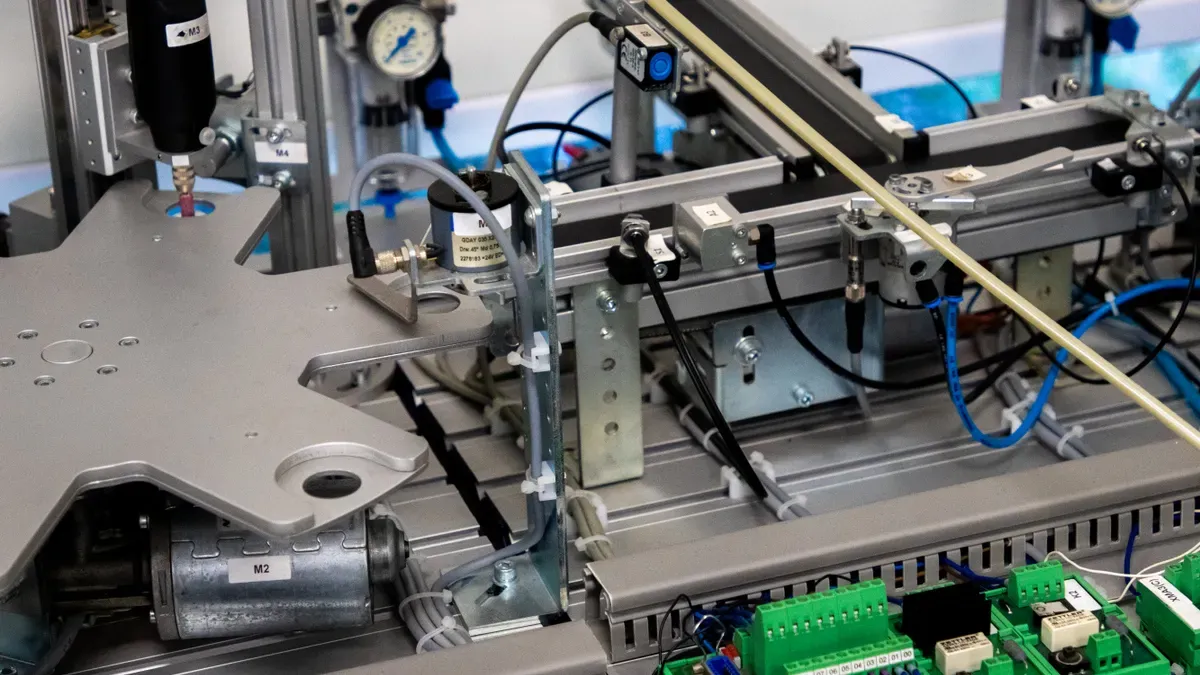
Engineers evaluate computer vision models directly on store edge hardware before full system deployment. Local store processors analyze high-definition visual streams right near physical store shelves. This local processing setup decreases overall cloud bandwidth expenses across wide retail networks. However, small edge hardware units provide limited local memory and constrained compute capacity. Successful ai model deployment requires optimizing deep neural networks specifically for these tight physical hardware bounds.
Profiling Latency and Throughput Post-Quantization
Quantization changes neural network weights from high-precision floating numbers to lower-precision integer values. Model compression techniques shrink total file sizes significantly while preserving necessary functional accuracy. For example, Datature benchmarks show that INT8 quantization reduces YOLOv8 Nano model size by roughly 75%. This size reduction causes only a slight degradation in prediction accuracy. However, hardware choices heavily influence final execution speeds. Standard central processing units running INT8 models can run around twice as slow as FP32 baselines. Extra quantize and dequantize conversion steps cause this unexpected latency delay on CPU chips.
Engineers evaluate performance trade-offs across different neural network architectures using strict test protocols. The table below details specific post-quantization outcomes across common computer vision applications:
Model family | Quantization | Observed outcome | Accuracy drop vs FP32 baseline |
|---|---|---|---|
ResNet50 | Static INT8 | 3.3x speedup and 4x smaller model | 0.25 percentage points |
ConvNeXt Base | INT8 dynamic | 93.73% accuracy | 0.05 percentage points |
ConvNeXt Base | INT8 static | 93.07% accuracy | 0.71 percentage points |
EfficientNet B3/B5 | INT8 | Became unusable | Catastrophic drop (not quantified) |
Different neural network architectures react differently to precision reduction techniques. ResNet50 gains major execution speed increases along with substantial memory savings. ConvNeXt Base maintains strong object recognition metrics under dynamic precision conversion. Conversely, EfficientNet architectures suffer a catastrophic drop and become completely unusable under INT8 settings. Engineering teams must profile each unique architecture carefully before building targeted commercial applications.
Evaluating System Resilience to Network Jitter
Retail store communications suffer from periodic wireless signal drops and network switch congestion. Edge applications must execute real-time inference reliably during total internet connectivity losses. Local store servers process incoming camera video frames continuously without relying on active cloud connections. The edge software saves event metadata into temporary local disk storage buffers during internet disruptions. Local message queuing systems push stored transaction records back to central databases immediately after network connection recovery.
Store operators prevent critical point-of-sale operational downtime by retaining all primary visual inference logic on local edge devices during network outages.
Robust software frameworks evaluate local applications under artificial network latency and packet drops. Test scripts intentionally inject high network jitter into store router connections during active stress tests. These tests confirm that edge hardware maintains uninterrupted frame processing speeds despite external network instability. Engineering teams separate local camera processing pipelines from external network communications. This architecture decoupling isolates physical store operations from remote cloud server outages. High software resilience guarantees stable performance across custom computer vision applications in complex store settings.
In-Store Validation of Computer Vision Applications
Engineers transfer their software testing directly into real store locations once they finish checking the edge hardware. Testing in real stores lets technical teams see how these special computer vision tools work under true daily conditions. Running these live store tests confirms that the model is fully stable before launching it across many store locations.
Validating Automated Checkout and Inventory APIs
Engineers link real-time inference software right into store register systems and main databases. Fast computer vision tools move picture data smoothly between local edge hardware nodes and main cloud server networks. High processing speeds allow instant product checks while shoppers use live self-checkout stands. Technical teams measure total system success using strict performance goals across different retail uses:
Area | Real-time validation metrics |
|---|---|
Self-checkout verification | Item recognition precision, reduction in false alerts, low-latency edge processing, and item-level confidence across frames |
Inventory monitoring | Stock-level indicators including out-of-stock rates, overstock rates, inventory accuracy, and continuous shelf reconciliation |
Loss prevention | Shrink reduction, per-item shrink reporting, and visual cue validation |
Store networks need fast API connections to refresh main stock database files without causing system slowdowns. Automated scripts send local processing results straight to register software without creating extra work for store employees. This quick data flow helps store managers run key stock controls and theft prevention checks smoothly across all retail spots. Safe software connections block double item scans, stop stock counting errors, and keep product numbers correct across every shelf aisle. Constantly checking these computer vision applications safeguards store money while strengthening overall safety rules across the whole store chain. Also, local edge processing keeps self-checkout machines working great during peak shopping times.
Field Testing Under Active Shopper Foot Traffic
Engineers test video system pipelines during busy shopping times to check real system strength under heavy store activity. Busy shopping aisles bring sudden store events that challenge basic object recognition systems. Active customers pull items off shelves quickly, put products on the wrong displays, and hide item tags with their fingers. Smart camera networks must keep tracking target items through all of these fast daily situations.
Technical teams test product recognition skills while shoppers try out self-checkout stations. Normal customer actions include putting personal bags near scanners, holding items crookedly, or moving products past camera lenses too fast. Advanced camera tools track moving products safely through these fast movements. This steady tracking creates a simple shopping visit for every customer. Keeping item detection accurate stops false theft warnings, reduces help calls for cashiers, and improves the whole shopping trip.
Real store testing needs constant checks comparing live visual predictions against real store actions. Technical teams adjust confidence levels step by step to improve stock control and loss prevention as aisle events change. This steady checking loop keeps model accuracy strong when shopper habits shift across the store business. In the end, these fully tested computer vision tools bring reliable work results, lower costs, and long-term value for modern store apps. Teams install these computer vision systems to maintain lasting stability through continuous system monitoring and regular software updates.
Production Observability and Continuous Drift Monitoring
Detecting Environmental Data Drift in Real Time
Engineers track working systems constantly to keep high accuracy across changing store tools. Visual shifts like seasonal displays, altered shelf lighting, or moved physical fixtures push fresh picture data away from early training sets. Local edge servers check incoming frame details, spot ambient light shifts, and calculate statistical distance measures right away.
Technical teams use specific statistical process control metrics to spot feature drift in live computer vision applications:
Drift detection method | Metric or threshold | Operational monitoring role |
|---|---|---|
Statistical test | Kolmogorov-Smirnov (K-S) test | Identifies input feature distribution shifts |
Distance metric | Population Stability Index (PSI) > 0.2 | Quantifies categorical feature drift severity |
Heuristic rule | Share of predicted category > 10% | Flags unexpected visual category spikes |
Automated observability tools fire off operational alerts when feature numbers cross set boundary limits. Monitoring software writes data drift events into local logs without disturbing active store sales.
Executing Automated Shadow Deployments
Engineers launch candidate software next to live production pipelines using automated shadow deployments. These hidden pipelines test new computer vision models on live camera feeds without sending output data to checkout stands. Real-time shadow runs show edge hardware latency delays under true network traffic.
Technical pipelines test candidate computer vision applications against strict cutover levels before sending new software to local store servers:
Evaluation layer | Key comparison metrics | Required cutover criteria |
|---|---|---|
Model quality | Accuracy and recall | Outperform baseline without metric regression |
System performance | Latency and error rate | Satisfy target latency SLOs under load |
Data stability | Feature distribution drift | Maintain drift metrics below alert limits |
Automated safety guardrails cancel candidate pipelines quickly if system numbers drop below set operational levels. Engineers protect edge systems by keeping experimental software inside temporary system boxes. System monitors send real-time operational numbers back to cloud engineering dashboards. Engineering teams constantly study these operational feedback loops to improve their continuous deployment strategy. These checking steps protect store register uptime and keep big business applications running smoothly across complex store spaces.
A multi-phase testing framework helps engineers deploy computer vision models safely across complex retail environments. Local edge hardware balances processing limits with continuous cloud observability. Rigorous field testing prevents false self-checkout reads, theft failures, and stock miscounts. These validation steps prevent severe profit losses during busy shopping hours.
Engineering teams must treat field testing as a continuous feedback loop rather than a static pre-launch phase.
Deploying reliable computer vision applications improves everyday store performance. Strong testing methods optimize computer vision technology for self-checkout setups. Consequently, the retail industry gains better operational control. Continuous updates empower long-term success across critical inventory and theft management tasks.
FAQ
How does quantization affect inference latency on edge hardware?
Model file sizes drop a lot when you use quantization. Applying static INT8 quantization, for example, makes a model four times smaller. Yet, standard central processing units can run INT8 models twice as slow as FP32 baselines. These extra conversion steps create latency delays on regular processors.
Why do engineers conduct in-store testing during peak hours?
Large crowds of active shoppers build unexpected barriers inside aisles. Busy customers frequently cover up product views and shift items fast during peak shopping times. Running tests in these true conditions guarantees high accuracy for edge vision pipelines across the retail industry.
How do edge systems maintain uptime during network outages?
Local edge servers handle every visual processing task completely on their own. During internet drops, hardware units save transaction records in local buffers. Messaging pipelines then push all updated stock data back to central inventory databases right after network connections recover.
How do shadow deployments improve automated checkout accuracy?
Shadow deployments run candidate algorithms on live camera streams right behind active production tools. Engineering teams check inference latency and model precision without disturbing actual store sales. This safe setup tests self-checkout software updates before making a final system cutover.
See Also
Analyzing Convenience And Challenges Of Walgreens Self Checkout Systems
Understanding How Global Automated Retail Functions In Modern Society
Why Artificial Intelligence Driven Retail Outlets Represent Our Future
Essential Retailer Insights On The Growth Of Automated Markets
How Intelligent Digital Solutions Revolutionize Modern Online Business Management
