Unmanned store for office buildings: strategic scenarios and whitepaper insights

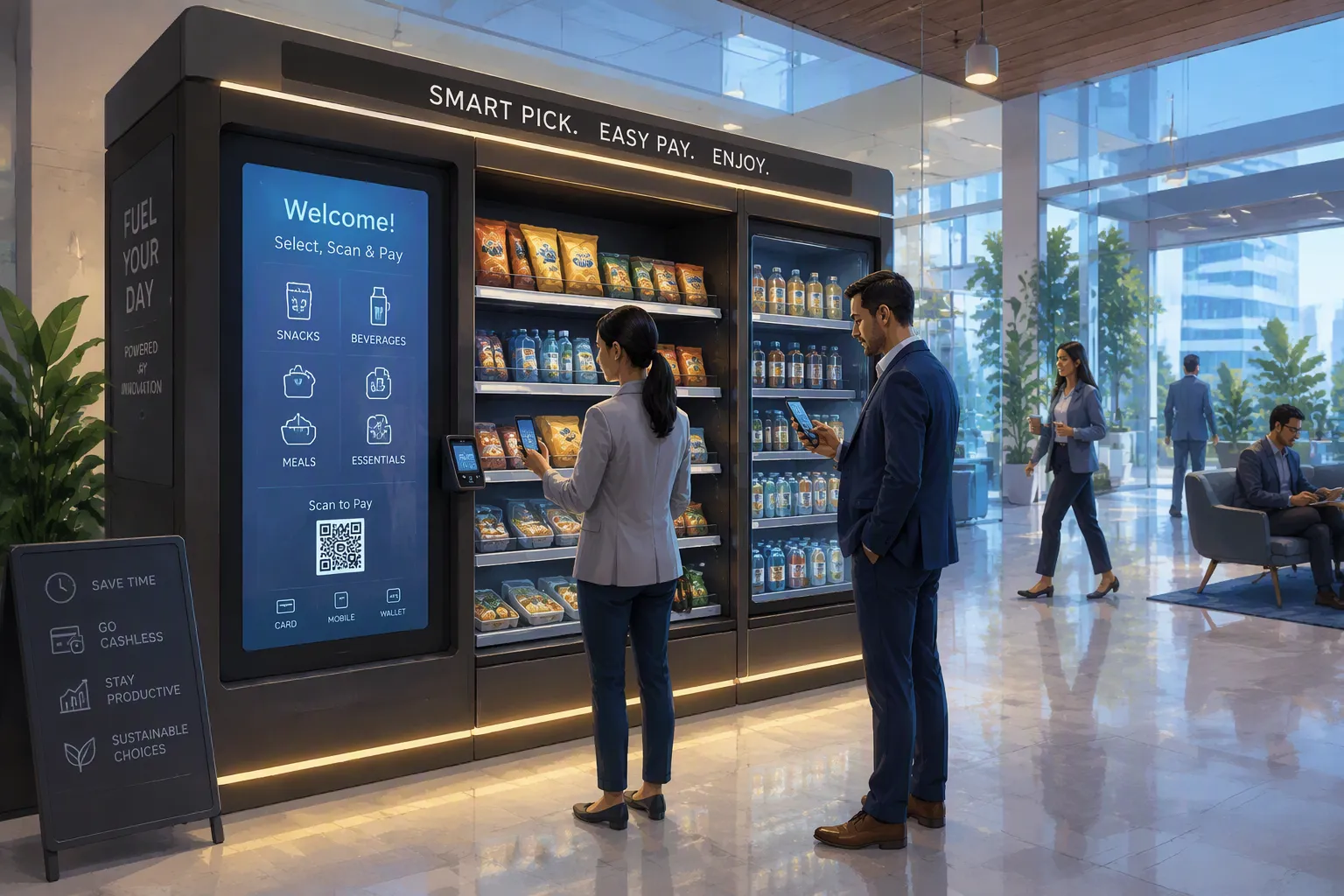
Imagine you are working late at the office. The cafeteria is closed. You really want coffee, but there is nothing left to buy. Or think about the busy morning: a long line for coffee wastes your time. These common problems show a missing piece in workplace perks. How can you set up an unmanned store in your office building to fix after-hours access and busy-time crowds? Current reports give useful answers. The next parts look at real examples, research-based ideas, and simple steps to set up an unmanned store well. This method turns convenience into a smart business tool.
Key Takeaways
Unmanned stores are open all day and night, so workers can grab snacks or drinks whenever they want, even late at night.
These stores use AI and IoT to track stock and customer actions, cutting waste and saving money.
Putting stores inside offices reduces waiting and makes things easier, which improves the workplace.
Flexible designs and modular tech let you customize the store to fit any office space.
The market for unmanned retail is growing quickly, so investing now can give you an advantage.
Evolution of the unmanned store concept
From vending to autonomous retail
You know the old vending machine: a locked steel box, a coil that turns, a product that falls. That machine worked well for many years. It gave no info on what customers like, no way to change how items are shown, and no live data on what is in stock. The autonomous micro store changes all of that.
Look at the operating differences. A vending machine only lets you pick from fixed slots and pay with a basic card. An autonomous store lets you walk in, pick up items, and walk out without waiting to pay.
Operational Aspect | Vending Machines | Autonomous Micro Stores |
|---|---|---|
Security | Locked steel case; less risk of theft | Open area; needs video cameras |
Staffing Needs | Less restocking; few staff | More frequent restocking; more staff needed |
Inventory Tracking | Manual checks; basic systems | Cloud-based; live tracking |
Operational Efficiency | Less hands-on work | Needs constant monitoring and trust |
The move from vending to autonomous retail is a big change. You go from a machine that drops items to a store full of data. Old machines give zero data on customer behavior. AI-driven stores give live inventory tracking, foot traffic numbers, and details on how products sell. This change turns a simple buying spot into a smart business tool.
AI and IoT as enabling technologies
Two technology groups make the modern unmanned store possible: artificial intelligence and the Internet of Things. IoT devices let store equipment, shelves, RFID tags, and cameras talk to each other. These devices send live data to a central system. This allows constant checking of what products are available, where items are, and what customers do.
AI powers the smart layer. Computer vision algorithms spot products even when customers pick them up and put them back. This makes sure purchases are correct. High-definition cameras watch the whole store. AI models are trained to notice suspicious actions. Facial recognition lets people enter the store and pay. Voice assistants let customers search for products without using hands. Robots with cameras and sensors scan shelves to find items that are low on stock.
These technologies work together to create a smooth experience. You enter, pick, and leave. The system tracks everything. This technology backbone changes retail from manual to automated, from reactive to predictive.
Strategic scenarios for unmanned store deployment
Addressing after-hours and peak-hour gaps
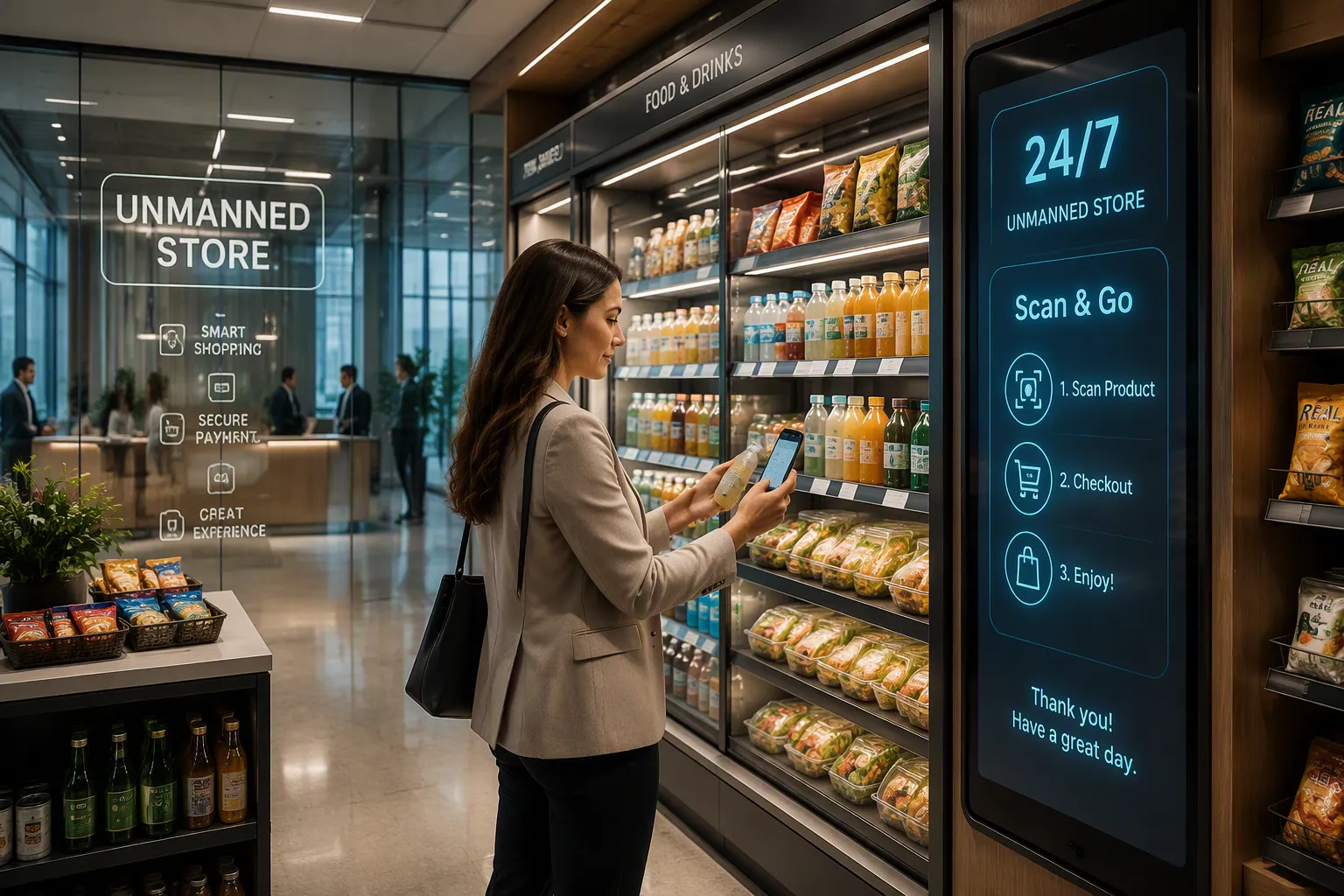
You get to work before the sun comes up. The cafeteria is closed. You stay late to finish a project. The vending machine only has old chips. An unmanned store fixes both issues. It runs all day, every day. You can get food or drinks whenever you need them.
The no-checkout design removes lines. This cuts down waiting time during busy hours. Putting stores near offices and business parks makes them easy to reach during commutes and breaks. Mobile ordering and automatic payment speed up your visit. You spend less time inside.
Queue-free model: Unmanned stores remove checkout lines, which cuts wait times.
Strategic placement: Placed in or near offices and business parks, they are easy to reach during busy commutes and breaks.
Frictionless payment: Mobile ordering and automatic payment make transactions faster, so you spend less time in the store.
Stores without cashiers tend to cut wait times and lower costs, making the whole experience smoother and less annoying.
Real examples show this works. Mamie Clafoutis changed how bakeries operate. They worked with Leav to add Mobile POS and Scan & Go tools. This allowed the bakery to run 24/7 with no staff. Customers got better service. The bakery stayed open on its own.
Another case shows how autonomous retail helps remote places. Lib Convenience is a fully self-run micro-store. It operates 24/7 with no staff in Northern Quebec. Only 375 people live there. Before this store, residents drove over 30 minutes for basic items. The store ended that trip. It offers essential goods all day and night.
These examples show one clear point. The autonomous store fills important time gaps. It serves workers when other options are shut. It eases crowding during rush times. It creates a smooth experience that fits modern work life.
Sustainability and data-driven benefits
The autonomous store gives more than convenience. It helps cut waste and lower environmental harm. Store data improves your inventory. You stock only what workers buy. This cuts food waste a lot. You also reduce packaging waste by offering the right amounts. The result is a smaller carbon footprint.
Store design supports this efficiency. You can put the store next to a coffee shop or rest area. Cloudpick's solution allows this. The modular design lets you adjust the store for different spaces. You set it up in lobbies, rest areas, or near current amenities. Adding it to any office building is easy.
Data drives the sustainability impact. The system tracks every product move. You see which items sell fast. You see which ones stay on shelves. This lets you change inventory in real time. You order fewer items that go to waste. You stock more of what workers actually want. Less spoilage means lower waste disposal costs.
The environmental gains build over time. Less waste means fewer deliveries. Fewer deliveries mean lower transport emissions. Smart inventory management shrinks the carbon footprint of the whole operation. You also cut packaging waste. Bulk options and minimal packaging become possible.
The data itself becomes a valuable asset. You learn worker preferences. You see peak purchase times. You understand which products make the most profit. This insight helps you improve the store's offerings constantly. The store becomes a feedback loop. It collects data, you review it, and you make the operation better.
Whitepaper insights on technology and operations
Optimal technology stack
Recent whitepapers point to a modular architecture called composable commerce. This approach lets you build your unmanned store from interchangeable parts. You can add or remove features without rebuilding the entire system. This flexibility matters as your store evolves.
Computer vision and AI hold the largest market share at 27.4%. These technologies power shopper tracking, product recognition, and behavioral analytics. Autonomous checkout follows at 23.8%. Together, these categories form the core of any modern deployment.
IoT devices complete the stack. Smart shelves with RFID tags and weight sensors monitor stock levels automatically. They flag low inventory and misplaced items in real time. This data feeds AI algorithms that predict demand. You can adjust orders based on weather, local events, and historical buying patterns.
The market reflects this momentum. The global autonomous retail market grows from US$103.97 billion in 2026 to US$783.52 billion by 2035. That is a compound annual growth rate of 25.2%. Investing in the right technology stack positions you for long-term success.
Operational efficiency and cost savings
Self-checkout systems already handle a significant share of retail transactions. Industry projections suggest they will account for roughly 40% of global retail transactions by 2026. Your store can capture this shift early.
Smart shelves deliver measurable gains. They reduce out-of-stock rates by up to 30%. They also cut manual inventory checks by approximately 40%. You spend less time counting products and more time serving customers.
AI-driven demand forecasting produces similar results. It reduces inventory costs by up to 20%. It also cuts food waste by as much as 30%. You order precisely what workers will buy. Nothing sits on shelves past its prime.
Security systems also benefit from AI. Video analytics monitor shopper behavior and flag unusual activity. This approach reduces shrinkage by up to 35%. You protect your inventory without hiring security staff.
Scenario planning ties these pieces together. You model different supply chain situations before they happen. This unifies departments under one cohesive vision. Operations, finance, and procurement align on the same forecasts. Your store becomes a predictable, data-driven asset rather than a gamble.
Implementation considerations for office buildings
Location, spatial design, and flexibility
Start by checking what your building really needs. Look at how many people work there, how much space you have, and what products they actually want. Set clear goals before spending money. Do you want to save staff time? Offer healthier snacks? Cut down on morning rush lines? Figure out your return on investment by adding up setup costs, yearly running costs, and savings from less labor and faster checkouts.
Your tech choices should fix real office problems. AI checkout removes lines. Smart inventory tracking keeps shelves full. Pick vendors who offer training, support, and room to grow. Big stores like Amazon and Alibaba use these systems well; your office can use the same ideas on a smaller scale.
Choose products based on data, not guesses. Use sales records or ask employees what they like. Design a layout that feels natural and easy to move through. Smart shelves and IoT sensors restock items automatically when supplies run low. Digital price tags update instantly, so no more printing labels. A solid point-of-sale system handles payments safely, while barcode scanners cut down on checkout mistakes.
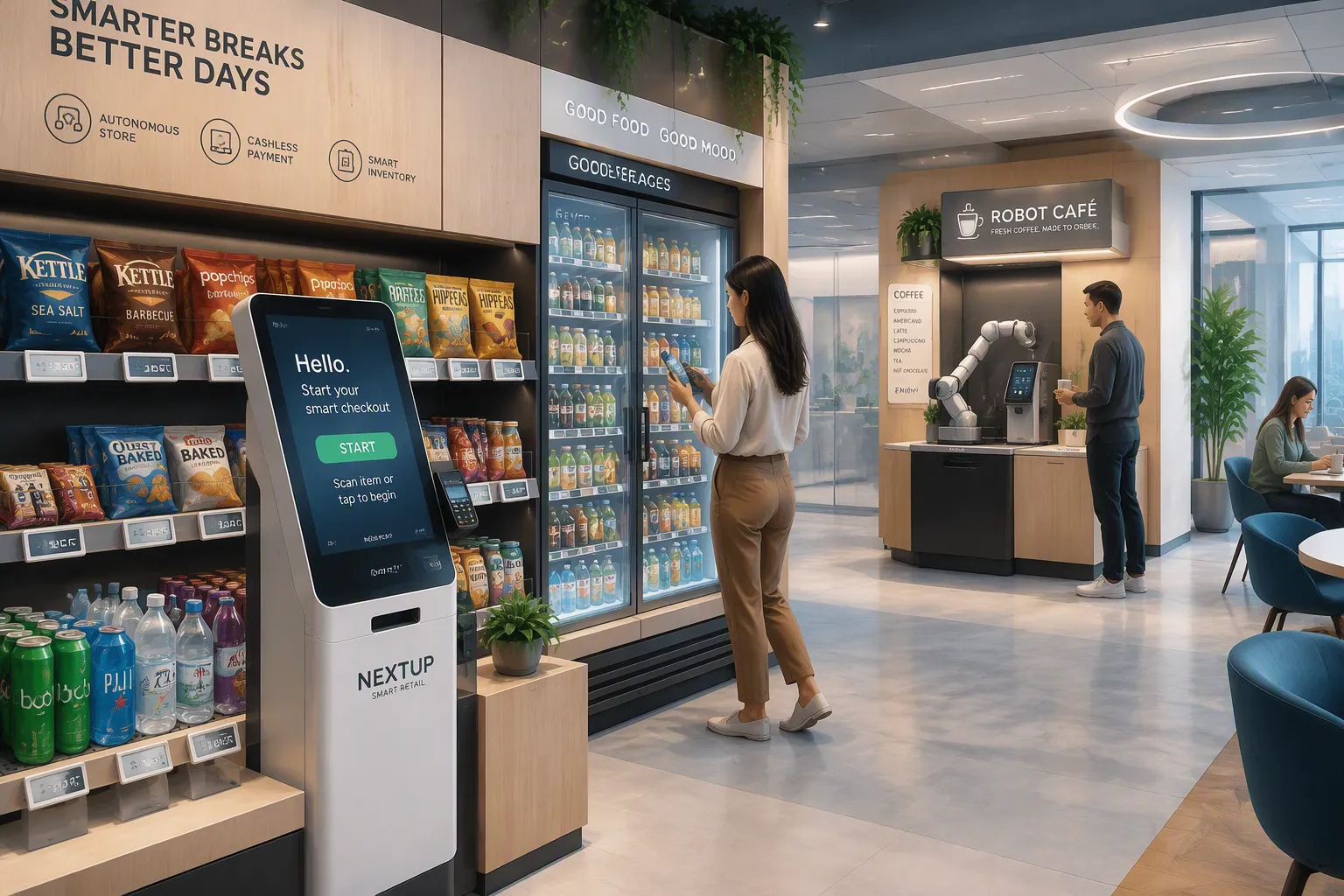
Where you put the store matters just as much as the tech inside it. Different office spots need different setups:
Office Area | Recommended Unmanned Store Type | Key Customization/Feature |
|---|---|---|
Micro markets | Open-shelf displays, smart coolers, self-checkout kiosk; allows fresh food variety and hundreds of SKUs | |
Building lobbies (high-density urban areas) | Robotic cafés | Automated brewing systems; small footprint; high consistency and low overhead |
The company confirms that their unmanned store solutions are modular and stylish, and they can customize the layout and design to seamlessly integrate with the office environment's aesthetic, creating an effective modern breakroom solution.
This modular setup gives you real flexibility. You can place a small robotic café in a lobby corner without blocking traffic. You can install a micro market in a breakroom with open shelves that invite browsing. The store fits the space, not the other way around.
Security, loss prevention, and maintenance
Security needs several layers. Smart shelves, AI cameras, and computer vision track every product from shelf to exit. These systems spot odd behavior and flag problems in real time. A self-service POS system scans items, handles payments, and creates detailed sales and restocking reports. This data shows you every transaction clearly.
Digital threats need equal attention. Strong encryption protects customer payment data. Secure login stops unauthorized access to your management systems. Multi-layered detection guards against break-ins and data leaks. Regular software updates fix new weaknesses. You cannot treat security as an afterthought.
Inventory management keeps things running smoothly. AI and visual recognition track items and predict demand. Set reorder points and lead times for each product type. Plan delivery routes so restocking arrives before shelves empty. This proactive approach prevents both empty shelves and overstock.
Maintenance follows a steady rhythm. Schedule software updates during off-hours. Train staff to fix common issues like payment failures or sensor calibration problems. Monitor system health remotely to catch problems before customers notice. Access control systems and people-counting sensors improve staffing and layout choices over time.
The unmanned store becomes a self-improving asset. Each transaction creates data. Each data point sharpens your inventory forecasts. Each forecast boosts your operational efficiency. You build a retail operation that learns from every interaction and grows more valuable each month.
Overcoming common challenges in unmanned stores
Inventory management and supply chain
Unmanned stores bring a special problem. No staff are there to check shelves or remove expired items. The system must handle inventory on its own. Smart shelves use weight sensors and RFID tags to track every product. This information goes to an AI engine that predicts what shoppers will need. You order more items before they run out. The system also spots products that sell slowly. You cut waste by stocking only what workers buy. This method reduces food waste and shrinks your carbon footprint.
Supply chain reliability is just as important. You need steady restocking schedules. Set automatic reorder points for each product type. Adjust lead times using past data. The AI system learns from every out-of-stock moment. It gets better at forecasting over time. You end up with a self-correcting inventory system. This reliability keeps shelves full and customers happy.
User experience and trust building
Your users must feel safe entering a store with no staff. Trust starts with convenience. Unmanned stores remove lines and cashier interactions. Workers grab what they need and leave. The store runs 24/7. This flexibility serves every shift without exception. Removing on-site staff also lowers labor costs. You pass these savings to customers through lower prices. This builds goodwill and brings people back.
Data-driven insights help you customize the experience. Customer behavior data shows which products sell best. You adjust layouts and offerings to match. Better inventory management through IoT and AI keeps popular items in stock. Nothing kills trust faster than an empty shelf. The system watches stock in real time. It alerts you when products get low. You respond before customers notice a gap.
Trust also needs transparency. Show customers how the system works. Explain the computer vision and payment process upfront. Address privacy concerns directly. The store collects data on products, not people. Say this clearly. Use clear signs and simple instructions. First-time users need guidance. A short onboarding screen or QR code tutorial helps. Once users understand the system, they trust it. This reliability turns first-time users into regular visitors.
Future trends in autonomous workplace retail
Integration with smart building systems
Your unmanned store links right into the building's main systems. It shares live data with the building management system (BMS). This link creates new ways to save. Lights and HVAC change based on how many people are in the store. When the store is empty, energy use drops on its own. When busy times hit, the system turns up lights and sets a comfy temperature. These small changes add up to real savings over time.
Access control systems also connect with the store. Workers use the same badge to enter the building and the store. This makes the experience smooth and easy. You also see how people move through the space. You learn which hours are busiest. You find out which entrances get the most use. This info helps you plan staffing and restocking better. Whitepapers point to this data sharing as a big step forward. Retail data plans now go beyond the store itself. They become part of a larger workplace intelligence system.
The data flows in both directions. The store sends sales info to the building's analytics platform. The building shares occupancy forecasts with the store. This exchange helps you predict demand more accurately. You get ready for a busy Monday morning before the crowd shows up. The store plans ahead instead of just reacting.
Market growth and scenario planning
The market numbers back up this trend. The global unmanned retail store market grows from US$103.97 billion in 2026 to US$783.52 billion by 2035. That is a compound annual growth rate of 25.2 percent. These numbers come from recent industry whitepapers. They show a clear path for autonomous retail in workplace settings. You cannot ignore this momentum when planning your own setup.
Scenario planning helps you handle this growth. You test different futures before spending money. What if adoption speeds up faster than expected? What if a new tech shakes up the market? You run these scenarios against your current plan. Each one shows gaps and chances. You adjust your deployment plan as needed. This method brings departments together under one vision. Operations, finance, and procurement agree on the same forecasts. Data from each deployment feeds back into the planning model. You see what works and what needs fixing. Over time, your scenario planning gets sharper. You build a retail operation that handles uncertainty with confidence.
Two main points stand out from this review. The first is about strategy. Stores that work after hours and ease busy-time crowds give the biggest benefits. Going green and using data make these benefits even stronger. The second point is about putting the plan into action. Flexible layouts and strong technology build a solid base for success.
You can begin with a simple step. Set up a test store in a busy lobby. Use the data from the test to improve what you sell and how you arrange it. Grow the operation based on worker feedback and performance numbers.
Unmanned stores are more than a nice extra. They become a valuable tool. This tool makes the workplace better. It also boosts how well you run the business.
FAQ
What is an unmanned store and how does it differ from a vending machine?
An unmanned store is a retail space with no staff. You walk in, grab items, and leave. AI cameras and sensors track what you buy. Unlike a vending machine, it has open shelves, fresh food, and live inventory data. A vending machine only offers fixed slots and gives no customer insights.
How does an unmanned store improve after-hours access for office workers?
It runs 24/7. You can get food or drinks even when the cafeteria is closed. This solves the problem of working late with no options. The store serves every shift without exception. It fixes both after-hours gaps and peak-hour crowding.
What technology powers an unmanned store?
Computer vision, AI, and IoT devices form the core. Smart shelves track inventory. Cameras monitor shopping behavior. You enter, pick, and leave. The system handles every transaction automatically. These technologies work together to create a smooth experience.
How do you prevent theft in an unmanned store?
AI cameras and computer vision track every product. The system spots unusual behavior in real time. Smart shelves detect misplaced items. Multi-layered security protects both physical inventory and digital payments. This reduces shrinkage by up to 35 percent.
What is the market outlook for unmanned retail stores?
The global unmanned retail market grows from US$103.97 billion in 2026 to US$783.52 billion by 2035. That is a 25.2 percent compound annual growth rate. This momentum makes workplace deployment a strategic opportunity worth pursuing now.
See Also
Understanding The Emergence Of AI-Driven Convenience Stores For Retailers
The Future Of Retail Belongs To Artificial Intelligence Stores
From Retail Space To Community Center: The PARC At Tysons Transformation
Global Automated Retail: Comparing Micromarkets And Smart Stores
