Reducing labor dependency in Airports & transportation hubs with AI-powered stores

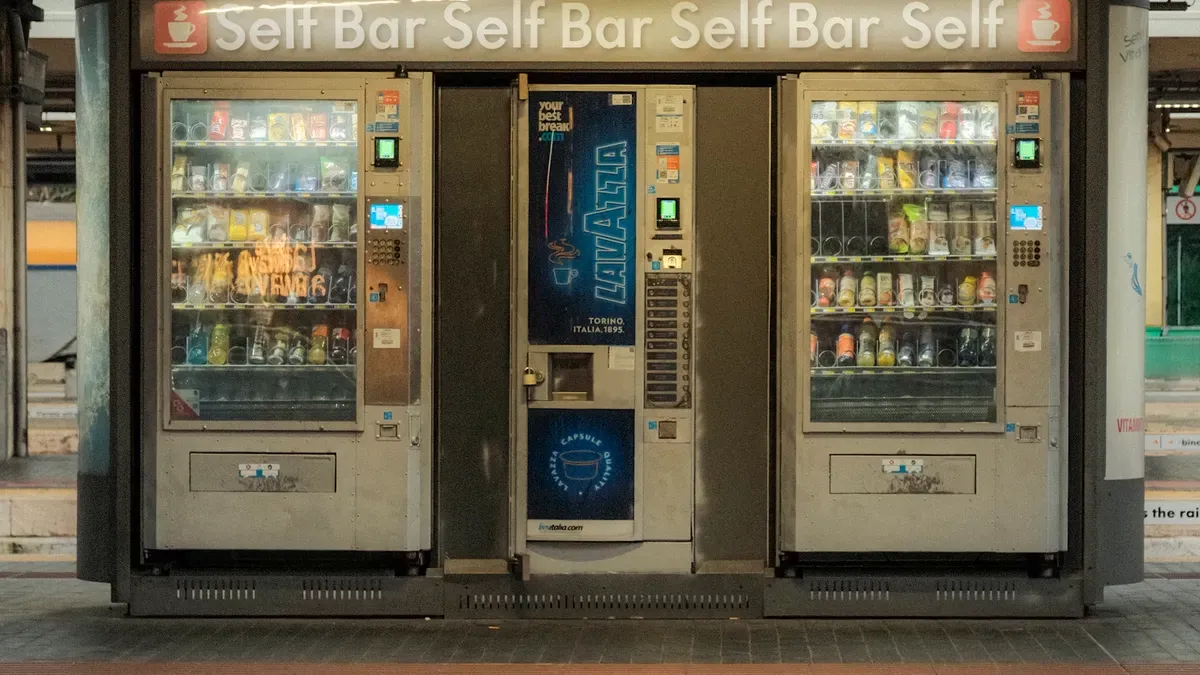
You see how AI-powered stores are transforming airports and transportation hubs. Rising labor costs and high turnover rates put pressure on your operations. For example, global non-aeronautical revenue per passenger dropped by 12% since 2019, and hourly earnings in leisure and hospitality increased by $0.80. Some airports now mandate minimum wages as high as $25.00. With ai and automation, you can automate checkouts, track inventory, and reduce the need for staff, making your stores efficient and always available.
Metric | Value |
|---|---|
Global non-aeronautical revenue per passenger | $7.57 in 2024 |
Decline from 2017 to 2024 | 12% compared to 2019 |
Average hourly earnings (leisure & hospitality) | Increased by $0.80 |
Annual turnover rate for pre-board security screeners | 80% before QSP implementation |
Key Takeaways
AI-powered stores automate tasks like checkout and inventory management, reducing the need for staff and saving costs.
24/7 store access allows passengers to shop anytime, increasing sales and improving customer satisfaction.
Automation helps airports manage labor challenges by optimizing staffing schedules and reallocating staff to higher-value tasks.
Implementing AI technologies can lead to significant efficiency gains, with reports showing 20-30% improvements in operations.
Investing in AI-powered stores requires careful planning and pilot projects to measure ROI before full-scale adoption.
AI-powered stores and labor reduction

Automating retail operations
You can see how ai-powered stores change the way retail works in airports. These stores use automation to handle many tasks that once needed people. AI-driven inventory management tracks products on shelves and orders new stock when needed. Dynamic pricing adjusts prices based on demand and time of day. Customer service chatbots answer simple questions from passengers, so your staff can focus on more important problems. Automated baggage handling systems move luggage quickly and lower mistakes. With these tools, you can optimize staffing schedules and improve how your store runs. Automation lets you do more with fewer people, which saves money and reduces stress for your team.
Tip: When you use ai-powered stores, you can reassign staff to higher-value tasks instead of cutting jobs. This helps your team grow and learn new skills.
Minimizing staff requirements
You do not need as many workers when you use ai-powered stores. Automation takes care of routine jobs like scanning items, checking out customers, and restocking shelves. AI can predict busy times and help you schedule the right number of staff. You can use chatbots to answer common questions, so your team does not get overwhelmed. Automated systems also help with security and compliance, which means you need fewer people to watch over the store. In airports, where finding and keeping staff is hard, ai-powered stores make your life easier. You can run your store smoothly even when you have fewer workers.
AI-powered stores:
Reduce manual labor for checkout and inventory.
Lower the need for staff during slow hours.
Help you manage costs and keep your store open longer.
24/7 store access
You can keep your ai-powered stores open all day and night. Autonomous checkout technology lets passengers shop whenever they want, even late at night or early in the morning. You do not need to hire extra staff for night shifts. This means you can increase sales and serve more customers without raising labor costs.
Autonomous checkout allows for 24/7 access to food and goods.
Retailers see double-digit sales gains when they extend hours with ai-powered stores.
Customer satisfaction goes up, especially during late-night and early-morning hours.
You give passengers more choices and better service. Your store becomes more flexible and ready for the busy world of airports. Automation helps you meet the needs of travelers at any time.
Labor challenges in airports
High costs and staffing shortages
You face high labor costs and frequent staffing shortages in airports. Many airports spend a large part of their budget on wages. For example, labor costs range from 29% at Nashville to 68% at Reno-Tahoe. Local wage mandates and pension contributions push these costs higher each year. You must also deal with workforce shortages in critical roles like pilots, maintenance engineers, and ground staff. The COVID-19 pandemic caused layoffs and early retirements, leaving a talent gap. Other industries compete for skilled workers, which leads to wage increases. Training programs cannot keep up with demand, making it hard to rebuild your workforce.
Labor Challenge | Description |
|---|---|
Workforce Shortages | Gaps in pilots, engineers, and ground staff. |
Impact of COVID-19 | Layoffs and retirements created a talent gap. |
Competition for Skilled Labor | Other industries offer better conditions, raising wages. |
Need for New Pilots | Hundreds of thousands of new pilots needed in coming decades. |
Training Pipeline Issues | Training programs lag behind demand. |
Managing passenger flow
You must manage passenger flow efficiently in airports. This process involves several labor-intensive steps. You track passenger arrival times and processing times at check-in desks and security lanes. You evaluate how many resources you need at each touchpoint. You predict resource allocation using historical data and real-time demand changes. You recommend staggered arrival times for different passenger categories to optimize flow. Traditional systems require many staff members to handle passenger processing and keep operations smooth. AI and automation help you reduce manual work and improve efficiency.
Track passenger arrival and processing times.
Evaluate active resources like check-in desks and security lanes.
Predict resource needs based on data and demand.
Recommend staggered arrival times for passengers.
Security and compliance
You must follow strict security and compliance rules in airports. Businesses operating behind secure lines need an Airport Security Bond to meet Customs regulations. Violations result in financial penalties covered by the bond. Employees must know these regulations, which increases training needs. Training standards at San José Mineta International Airport require regular updates and certifications for security, safety, and customer service. The New York Healthy Terminals Act mandates wages, benefits, and leave for airport workers that meet federal standards. Employers must audit workforce coverage and update compensation practices. These requirements increase labor needs and costs. AI-powered stores can help you meet compliance standards while reducing manual labor.
AI technologies in intelligent airport stores
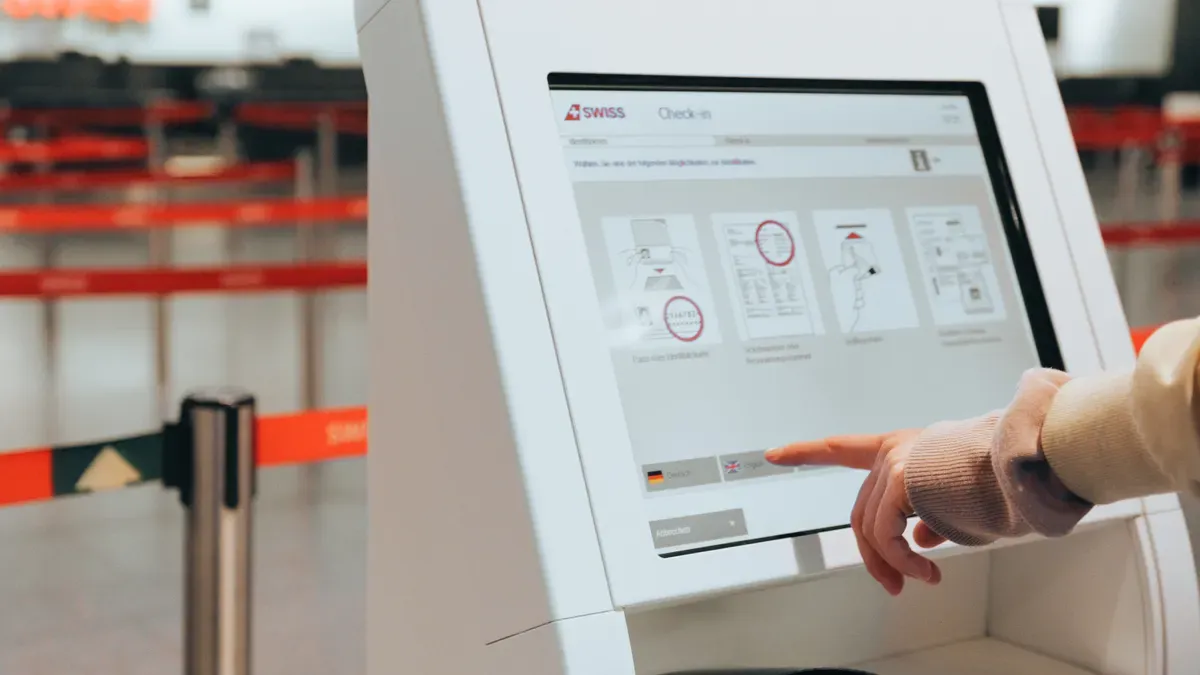
Self-checkout systems
You can use self-checkout systems to boost efficiency in airport stores. These systems let travelers make purchases on their own, which cuts wait times and improves satisfaction. You see more throughput during busy hours because self-service systems handle many customers at once. Most retailers report that self-checkout reduces staffing needs at the front end. You save about 22% of labor capacity each year. You still need some staff to help customers feel comfortable with new technology. This approach gives you autonomy and optimization in daily operations.
70% of retailers say self-service systems improve throughput during peak hours.
83% of retailers notice fewer staff needed after self-checkout adoption.
Biometric payments
You can speed up transactions with biometric payment systems. These systems use fingerprints or facial recognition to let passengers pay quickly. You minimize checkout friction and create a seamless experience. Airports pilot biometric payments to meet compliance rules and protect privacy. You build unified identities across services by partnering with airlines and retailers. This method gives you autonomy and optimization in payment processing.
Biometric payments enhance speed and reduce friction.
Compliance and privacy safeguards support successful adoption.
Edge AI for baggage and inventory
You can rely on edge AI for baggage handling and inventory management. AI-driven tracking systems use intelligent tags and autonomous monitoring to keep bags visible at all times. You get real-time data for optimization and autonomy in sorting and routing. Robots move bags based on real-time data, which lowers errors and boosts efficiency. Predictive maintenance keeps baggage systems running smoothly. AI improves security screening and resource allocation. You streamline operations and reduce costs with optimization and autonomy.
Enhanced tracking and real-time visibility
Automated sorting and routing
Predictive maintenance and improved security screening
Agentic AI for safety-critical tasks
You can trust agentic AI for safety-critical tasks. Autonomous patrol robots monitor passenger areas and support human officers. You see these robots at Singapore Changi Airport, where they improve security. They operate at critical infrastructure sites and prove reliable in real-world scenarios. You gain autonomy and optimization in safety and security. IBM’s vision for intelligent airports highlights the importance of safety and security. You use predictive airport operations to keep passengers safe.
Note: You achieve autonomous operations and optimization by combining AI technologies for tracking, payment, and safety.
Real-world airport examples
Successful ai-powered store deployments
You can see real progress in airports that use ai-powered airport stores. At Dallas Fort Worth International Airport, you find stores that let travelers grab snacks and pay without waiting in line. These stores use cameras and sensors to track what you pick up. You do not need to scan each item. You just walk out, and the system charges your account. In Amsterdam Schiphol, you see similar technology. Travelers enjoy fast shopping, and staff focus on helping with special needs instead of running cash registers.
Note: These examples show how airports of the future can use ai to make shopping easier and faster for everyone.
Lessons from transportation hubs
You learn important lessons from other busy places like train stations and bus terminals. In Tokyo, train stations use ai to manage vending machines that never close. These machines restock themselves and alert staff only when needed. You see how this reduces labor and keeps stores open all day. In London, bus terminals use smart kiosks for ticket sales and snacks. These kiosks help travelers get what they need quickly, even during late hours.
Key takeaways for airports of the future:
Use ai to keep stores open 24/7.
Let staff focus on safety and customer care.
Make shopping simple and fast for travelers.
You can use these lessons to plan your own ai-powered airport. You help shape airports of the future by learning from real-world success.
Benefits of ai-powered stores in airports
Efficiency and cost savings
You can achieve higher labor efficiency and save money by using ai-powered stores in airports. These stores automate many tasks, so you need fewer workers. You see faster checkouts and better inventory tracking. When you use ai, you can also reduce flight delays and improve ground operations. Many airports report that targeted ai deployment leads to 20-30% efficiency gains in ground operations and maintenance. You may notice an increase in EBITDA by 6-8% within a few years.
AI-powered stores help you:
Lower staffing costs
Reduce errors in daily operations
Improve overall efficiency
Improved passenger experience
You give travelers a better passenger experience when you use ai-powered stores. Passengers enjoy shorter lines and faster service. They find stores cleaner and more organized. You can see how these changes improve passenger experiences and satisfaction. The table below shows some of the ways ai-powered stores make a difference:
Improvement Aspect | Metric |
|---|---|
Reduction in cleanliness complaints | |
Enhanced partner alignment | Stronger collaboration |
Predictive crowd-flow insights | Earlier interventions |
Improved passenger satisfaction | Higher ASQ scores |
You help travelers feel more comfortable and less stressed. You also support stronger teamwork among airport partners.
Scalability and adaptability
You can scale ai-powered stores to fit airports of any size. These stores adapt to busy times and changing needs. You use edge computing for tasks that need quick responses. Robots in stores need uplink throughput of about 5 Mbps and downlink of 2 Mbps each. Good network resource allocation is important, especially when you use many robots at once.
You also meet the needs of all travelers. Multilingual support and easy-to-use interfaces help people from different backgrounds. You address accessibility for passengers with disabilities. Trials in real airports show that ai-powered stores work well in busy environments and improve both passenger experience and efficiency.
Challenges and considerations for airports
Investment and ROI
You need to consider the investment required for ai-powered stores in airports and transportation hubs. Upfront costs can include hardware, software, and training. You must evaluate the return on investment by looking at labor savings, increased sales, and improved efficiency. Many airports see long-term gains as workforce automation reduces manual tasks and boosts productivity. You can track performance metrics to measure success and adjust your strategy. Decision-makers often weigh the benefits against the risks before moving forward.
Tip: Start with pilot projects to test ai-powered stores and measure ROI before scaling across your transportation network.
Workforce transition
You face important workforce challenges as ai and automation change airport operations. You must plan for workforce transformation and help your team adapt to new roles. Many airports hire from untapped labor sources by working with educational institutions. You see a rise in alternative workforces, with projections showing payroll increases from 17% to 38% by 2030. Nearly half of airport leaders focus on reskilling workers for new technology. You can use workforce automation to shift employees into higher-value positions and support ongoing training.
Collaborate with schools to find new talent.
Prepare for more alternative workforce options.
Reskill your workforce for technology-driven roles.
Data privacy and security
You must protect sensitive data when you use ai-powered stores in airports and transportation hubs. Privacy or data breaches can happen if systems are not secure. Insider threats may arise when authorized users misuse their access. Malicious use of ai can lead to cyberattacks that disrupt operations. You need strong security protocols and regular audits to keep your workforce and passengers safe.
Secure systems to prevent data breaches.
Monitor for insider threats.
Guard against malicious ai use.
Infrastructure integration
You encounter technical challenges when integrating ai-powered stores with existing airport infrastructure. Ageing systems and data silos make it hard to connect new technology. You need a unified, ai-ready approach to link data and applications across your transportation ecosystem. This integration gives you a complete view of operations and supports effective workforce automation. Without a strong foundation, ai solutions may become disconnected and less effective.
Note: Address infrastructure gaps early to ensure smooth ai adoption and maximize workforce benefits.
Recommendations for intelligent airport stakeholders
Adoption steps
You can guide your intelligent airport toward successful ai-powered store adoption by following clear steps. First, define strategic outcomes and set priorities. Identify pain points in aviation operations and focus on measurable improvements. Next, build strong connectivity and data infrastructure. Reliable networks and comprehensive data collection help you manage aviation systems efficiently. Deploy digital twin technology to create virtual replicas of airport systems. These twins give you real-time monitoring and simulation, which improves aviation safety and performance. Implement ai-powered intelligence to automate operations. Turn data into actionable insights that enhance passenger experience and streamline aviation workflows. Finally, scale your solutions strategically. Continuously optimize performance by tracking metrics and integrating new capabilities as your intelligent airport grows.
Tip: Start with small pilot projects in aviation to test ai in aviation solutions before expanding across your intelligent airport.
Step | Action |
|---|---|
Strategic Outcomes | Identify pain points and set clear goals |
Connectivity & Data | Build robust networks and collect comprehensive data |
Digital Twin Technology | Use virtual replicas for real-time monitoring and simulation |
AI-Powered Intelligence | Automate operations and improve passenger experience |
Strategic Scaling | Optimize performance and integrate new capabilities |
Best practices
You can learn from airports that have already succeeded with ai-powered stores in aviation. Use ai for in-store marketing personalization. Tailor product recommendations and communications to each traveler in your intelligent airport. Engage customers before and after purchases with ai-driven virtual assistants. These assistants support passengers and improve their shopping experience in aviation environments. Optimize inventory by forecasting demand. Ensure popular items stay in stock, which boosts satisfaction in your intelligent airport. Apply dynamic pricing strategies. Adjust prices based on real-time data to maximize revenue in aviation retail.
In-store marketing personalization enhances customer experience.
Pre and post-purchase engagements improve support and satisfaction.
Inventory optimization keeps shelves stocked with popular items.
Pricing optimization adapts to real-time data for better revenue.
Note: When you follow these best practices, you create a smarter, more efficient intelligent airport that meets the needs of modern aviation.
You gain many advantages when you use ai-powered stores in airports. These systems help you move baggage faster, lower labor costs, and improve the passenger experience by making check-ins quicker. You can look ahead to a future where airports use robotics and automation for safer, more efficient operations.
Empower your team to explore new solutions and lead with innovation.
Balance technology with strong training and security to keep everyone safe.
Smart choices today help you build a resilient airport for tomorrow.
FAQ
How do AI-powered stores reduce labor costs in airports?
You use AI-powered stores to automate tasks like checkout, inventory tracking, and restocking. This reduces the number of staff you need. You save money on wages and training.
Are AI-powered stores secure for passenger payments?
You benefit from advanced security features. AI-powered stores use encryption and biometric authentication. These tools protect your payment information and keep your data safe.
Can AI-powered stores operate during all hours?
Yes, you can keep AI-powered stores open 24/7. Automated systems handle sales and inventory at any time. You serve travelers even during late-night or early-morning hours.
What happens to staff when you adopt AI-powered stores?
You can move staff to higher-value roles. Many workers learn new skills, such as customer service or technology support. You help your team grow with training and new opportunities.
Do AI-powered stores support different languages?
Yes, you find multilingual support in many AI-powered stores. Passengers from around the world can use the system in their preferred language. This improves the shopping experience for everyone.
See Also
The Future of Retail Lies in AI-Driven Stores
Transforming Online Store Management with AI E-Commerce Tools
Modern Retail Benefits from AI-Enhanced Combo Vending Machines
