Key technology requirements for autonomous retail in Hospitals & healthcare facilities

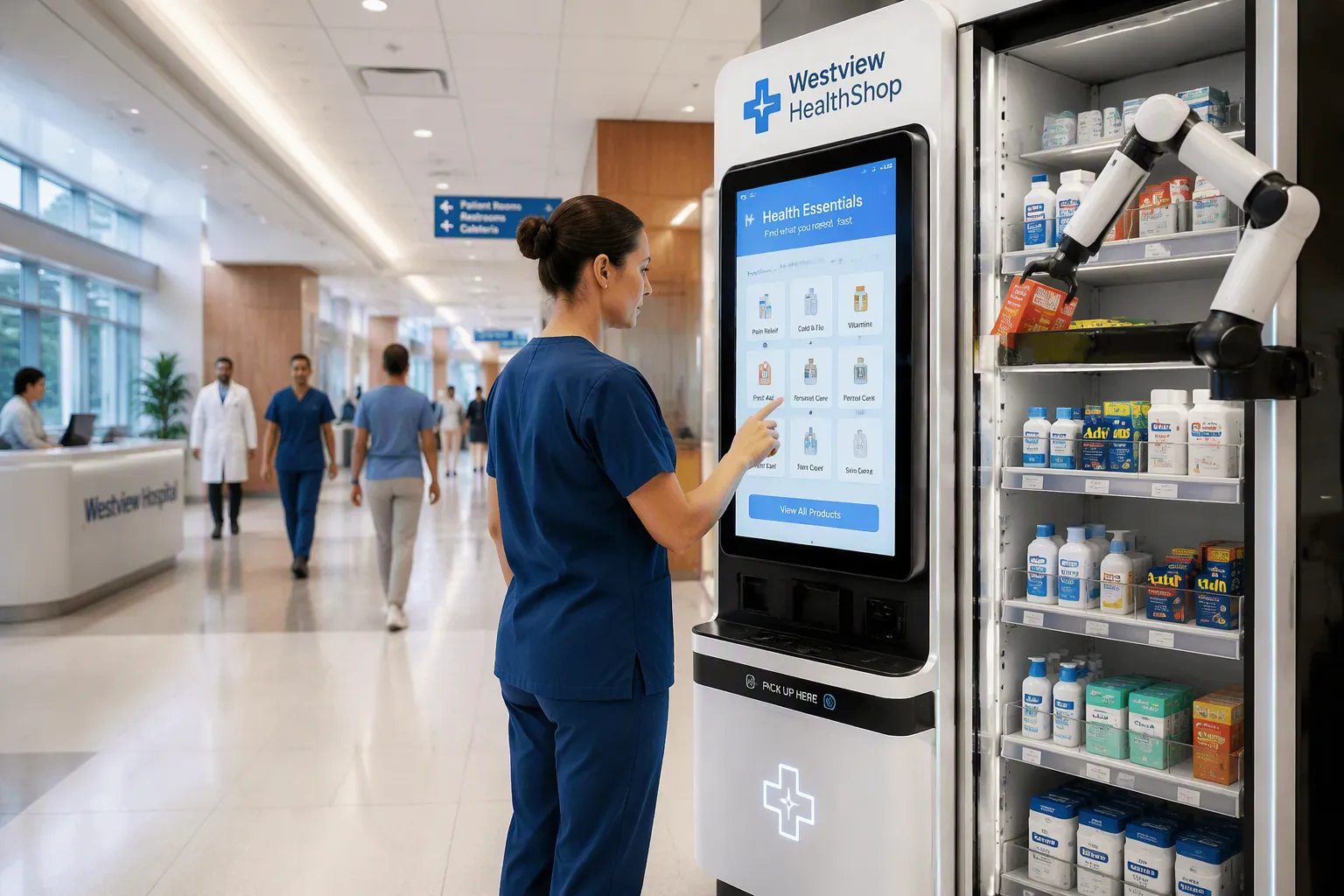
Autonomous retail in hospitals & healthcare facilities demands a technology stack far different from standard stores. Hardware must withstand clinical cleaning and tight spaces. Software must process transactions and analytics around the clock. Integration with hospital systems protects patient safety and keeps data flowing. Security and compliance guard regulated health information. Reliability and user experience keep autonomous systems usable for every patient and staff member. Each category matters because healthcare never closes, and safety always comes first.
Key Takeaways
Hospitals need special hardware that survives harsh cleaning and fits tight spaces.
Software must run all day and night to handle sales and keep shelves stocked.
The system connects with hospital records to protect patient safety and data.
Strong security and privacy rules keep patient information safe from breaches.
Reliable systems and easy-to-use designs help everyone access care items anytime.
Hardware for Healthcare Environments
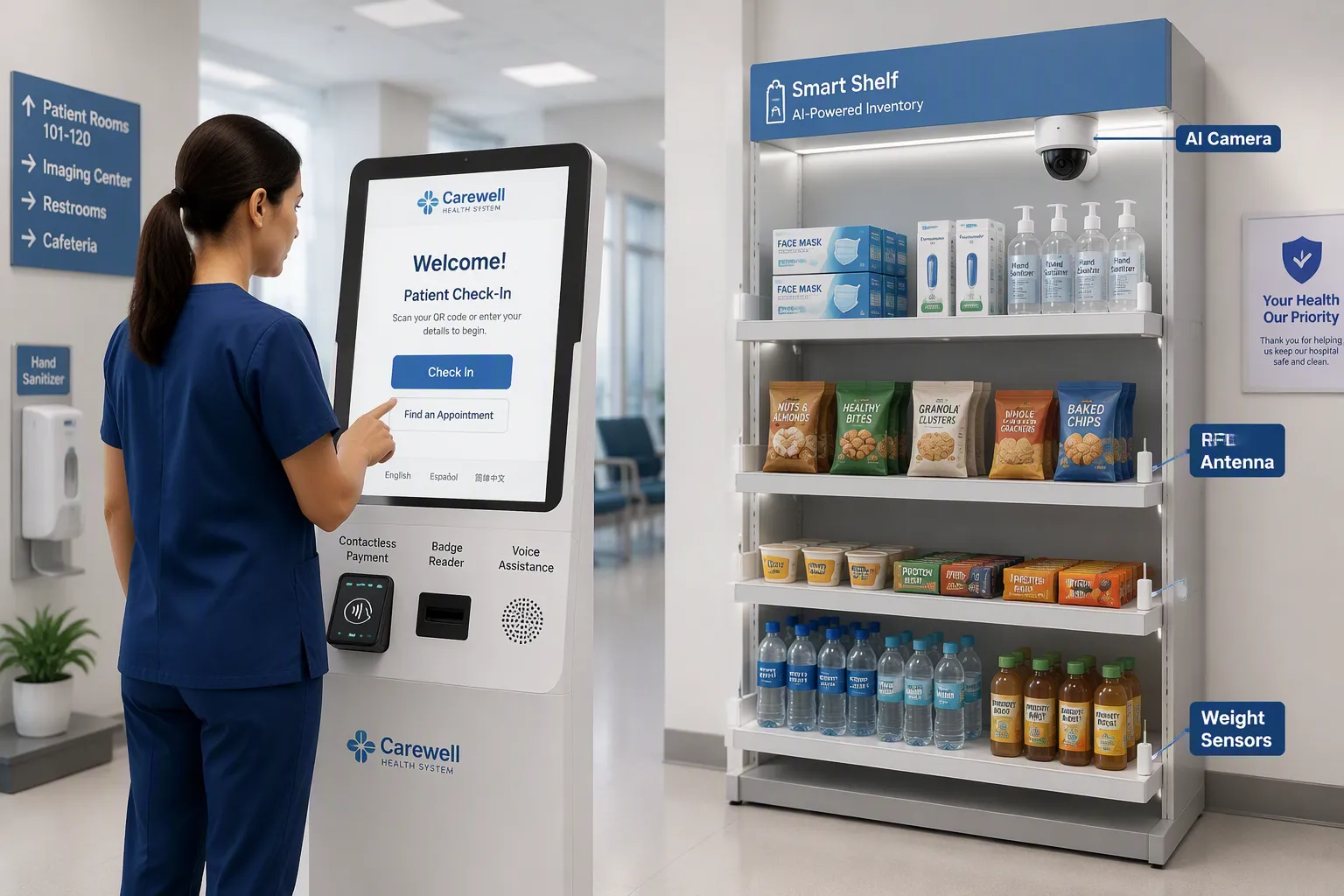
Hardware deployed in clinical settings must meet strict requirements. Surfaces must withstand frequent disinfection with harsh chemicals without degrading. Equipment must fit narrow corridors and operate quietly to avoid disturbing patients and staff. Space is often limited, so hardware must be compact and mountable on walls or carts. These constraints shape every component used in autonomous retail in hospitals & healthcare facilities.
Autonomous Checkout Kiosks and Smart Shelves
Autonomous checkout kiosks now serve multiple roles in clinical settings. They handle patient check-in, wayfinding, and payment processing, reducing staff workload and wait times in high-traffic areas. In May 2025, Fujitsu launched a biometric-enabled medical kiosk that provides real-time health monitoring and patient triage, directly supporting hospital digital transformation. This shows how autonomous checkout technology is becoming essential in clinical environments. Kiosks must include antimicrobial touchscreens, voice guidance for accessibility, and integration with facility badge systems for secure access. Voice control and contactless payment options further enhance the user experience. Kiosks also comply with ADA standards for accessibility, ensuring all users can interact with the system. The kiosks are modular, allowing placement in multiple locations.
Smart shelves use a combination of weight sensors, computer vision, and RFID tags to track product presence and movement continuously. The block quote below captures the core concept:
Smart shelves combine weight sensors, computer vision, and RFID tags to continuously track product presence and movement in real time.
AI cameras on smart shelves detect several conditions that improve inventory accuracy. The table below lists those detections and their benefits:
Detected by AI cameras | Resulting benefit |
|---|---|
Empty shelves | Faster replenishment |
Low stock levels | Higher shelf availability |
Misplaced products | Increased sales conversion |
Weight sensor bins measure real-time weight shifts to determine exact piece counts for non-tagged consumables such as small medical items. In clinical settings, this enables real-time audit control over surgical implants, OT consumables, and pharmaceutical stock with a full compliance trail. RFID tags complement weight sensors by providing unique item identification, reducing false counts. The combination of weight detection and computer vision ensures near-perfect inventory accuracy even when items are hidden behind other products. Regular calibration of sensors maintains measurement integrity despite environmental changes. The system integrates with procurement software to automatically generate low-stock alerts. Weight detection also helps theft prevention by flagging unexpected removals.
Sensors and Cameras
IoT sensors deployed throughout the retail area provide real-time inventory tracking and patient flow monitoring. These sensors communicate wirelessly with central management systems. Computer vision cameras identify product misplacements and low stock levels, driving efficiency in restocking operations. Edge computing processes camera data locally, reducing network load and latency. This allows instant alerts for misplaced items or low stock. Cameras must operate in variable lighting conditions, from bright retail areas to dimmer corridors. Weight detection systems complement cameras by capturing changes that vision alone might miss, such as when a product is stacked behind another item. Weight sensors are recalibrated periodically to maintain accuracy despite environmental vibrations or temperature changes. Cameras are housed in tamper-resistant enclosures to prevent vandalism in public areas. Scalability of the IoT network allows adding sensors without extensive rewiring.
Autonomous mobile robots (AMRs) handle restocking and logistics within the facility. They integrate with facility design through pre-mapped routes and elevator communication. AMRs navigate using lidar and vision-based simultaneous localization and mapping. They communicate with elevators and automatic doors through wireless interfaces. Robotics reduces staff walking distance, freeing caregivers for patient-facing tasks. This automated robotics system requires regular calibration of cameras and weight sensors to maintain accuracy. Robotics also includes AMRs for transporting supplies from central storage to retail points, improving overall operations. The use of robotics in clinical retail increases efficiency by reducing manual restocking trips. Fleet management software dispatches robots based on real-time inventory data. Battery status monitoring ensures continuous operation without human intervention. Safety features include emergency stop buttons and obstacle avoidance sensors. AMRs operate at low volume levels to maintain a peaceful environment. Hygiene remains paramount; AMRs use antimicrobial surfaces and HEPA filters to prevent contamination. IoT sensors also monitor temperature and humidity in storage areas, ensuring compliance with regulatory standards. This automation of inventory management reduces the need for manual counts.
Software for Autonomous Retail in Hospitals & Healthcare Facilities
Software powers every transaction and decision in autonomous retail in hospitals & healthcare facilities. The system must run 24/7 without interruption. Real-time transactions and analytics keep shelves stocked and patients served at any hour.
Inventory and Payment Processing
Real-time sales data syncs with the enterprise resource planning system. Procurement teams see demand instantly and place orders based on actual consumption. Every item removal updates stock levels on a dashboard. That dashboard shows exact quantities, fast-selling items, and slow-moving products. Predictive analytics help the AI learn hourly and seasonal variations. The system then forecasts future demand to optimize stocking and reduce waste. Computer vision tracks every transaction and updates inventory per shelf. This reduces shrinkage and enables continuous monitoring.
Blockchain secures payment transactions and supply chain data. Drugs are tagged with barcodes or RFID tags. When scanned, their records are stored on a blockchain in non-alterable and secure digital blocks. Records update in real time as drugs move between entities. Authorized parties, including patients, can check records at any time. The immutable nature of blockchain provides drug traceability from manufacturer to customer. It also helps identify whether the system has been compromised. Blockchain uses one-way hashing and records transactions on multiple systems. At least three public ledgers are kept. Altering one flags a problem while two good entries remain intact. Smart contracts that execute payments as milestones are met give stakeholders a strong incentive to participate. This approach reduces disputes about milestones and contract terms.
AI, Edge Computing, and Cloud
AI drives personalization, demand forecasting, and purchasing behavior analysis. Cloud-based AI solutions enable personalized shopping experiences in healthcare settings. The table below shows three key features:
Feature | Description |
|---|---|
NLP-Enabled Search | Uses natural language processing to let users find healthcare services by symptoms, conditions, and care types. |
Smart Service Matching | Connects users to precisely matched care options based on eligibility, benefits, past behavior, and vendor criteria. |
Personalized Care Recommendations | Surfaces tailored service suggestions and next best actions based on individual health history and care gaps. |
Edge computing processes data locally to maintain privacy and deliver low latency. An edge on the hospital site enables right-time notifications to practitioners about unusual patient trends. It also supports 360-degree view patient dashboards for full visibility. Edge computing keeps data close to the source, enabling faster insights and improving reliability even if internet access fails. It also supports HIPAA compliance by minimizing unnecessary data transfers. Pharmaceutical chains need edge systems to monitor temperature and handling, ensuring patient safety. Scalable cloud infrastructure handles transaction data and analytics across the entire network. This combination of edge and cloud delivers the speed and scale that healthcare operations demand.
Integration with Hospitals
Seamless integration with existing hospital IT and security systems is essential for compliance and safety. Autonomous retail in hospitals & healthcare facilities cannot operate as a standalone island. It must connect with the systems that already manage patient data, staff access, and building security. This connection protects patients and keeps operations running smoothly.
EHR, ADT, and Staff Systems
The retail system connects to the Electronic Health Record (EHR) to verify patient identity and care context. This link allows the system to apply dietary restrictions or care protocols when a patient makes a purchase. The Admission, Discharge, and Transfer (ADT) feed tells the retail system when a patient arrives or leaves. That data helps the system adjust inventory and staffing needs in real time. A staff directory connection lets caregivers use their existing badges for authentication and payment. Nurses and doctors do not need separate accounts. This reduces friction and saves time during busy shifts.
Security and Wireless Connectivity
Physical security integration ties the retail system to the hospital's access control network. Only authorized staff can enter storage areas or override transactions. Cameras and sensors feed into the same monitoring dashboard that security teams already use. This unified view helps teams respond faster to any incident. Reliable wireless connectivity is the foundation for all device communication. Wi-Fi 6 and 5G networks provide the bandwidth and low latency that cameras, sensors, and robots need. A dropped connection could halt sales or delay restocking. Hospitals must design their wireless coverage to reach every corner of the retail space, including elevators and storage rooms. Redundant connections prevent single points of failure. This ensures that the autonomous retail system stays online around the clock.
Security and Compliance
Data security and privacy compliance are non-negotiable in healthcare. A single breach can expose patient records, trigger federal penalties, and damage trust. Autonomous retail systems in hospitals handle sensitive information at every transaction, so they must meet the same standards as any clinical system.
HIPAA and PHI Safeguards
The Health Insurance Portability and Accountability Act (HIPAA) sets the baseline for protecting protected health information (PHI). Autonomous retail systems must encrypt PHI at rest and in transit, enforce role-based access, and log every record view. Common compliance failures include unauthorized access, improper disclosure, lack of physical security, inadequate technical safeguards, and negligent disposal of PHI. Each failure creates real risk.
The table below shows recent enforcement cases and their penalties.
Case | PHI Exposure Failure | Penalty |
|---|---|---|
Montefiore Medical Center | Employee stole e-PHI of 12,517 patients | $4.75M settlement (2024) |
Gulf Coast Pain Consultants | Contractor retained access to 34,310 individuals' data | $1.19M civil penalty (2024) |
Children's Hospital Colorado | Phishing attack breached 10,840 patients' data | $548,265 fine (2024) |
Solara Medical Supplies | Breach letters sent to 1,531 wrong individuals | $3M settlement (2024) |
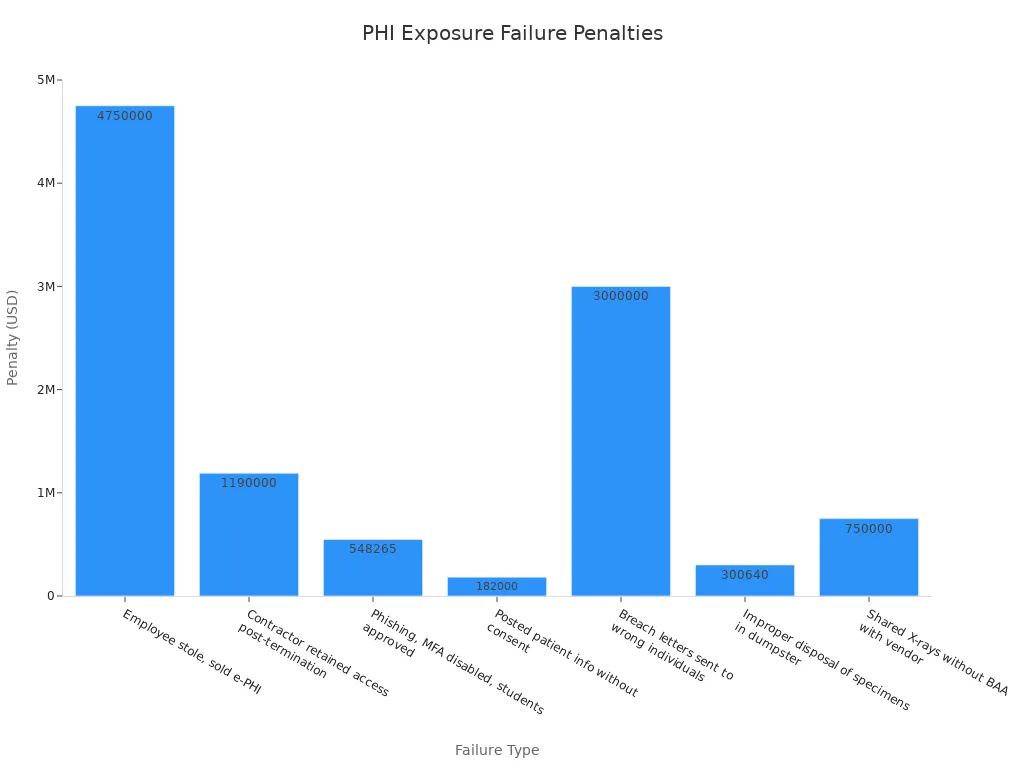
Hospital micro-markets also expose PHI through web tracking. Cookies, pixels, and session-replay scripts can collect IP addresses and browsing paths. These become PHI when tied to a health inquiry. Recommended controls include tracker audits, data minimization, and signed business associate agreements with analytics vendors.
Payment and Audit Requirements
PCI compliance governs every card transaction in the retail system. The system must tokenize card data, never store raw numbers, and maintain a complete audit trail. Audit logs record who accessed what, when, and why. These logs support breach investigations and regulatory reviews.
Blockchain offers one option for securing transactions and supply chain data. Its immutable ledger makes records tamper-evident. Smart contracts can release payment when delivery milestones are met. This reduces disputes and strengthens traceability from manufacturer to patient.
Reliability and User Experience
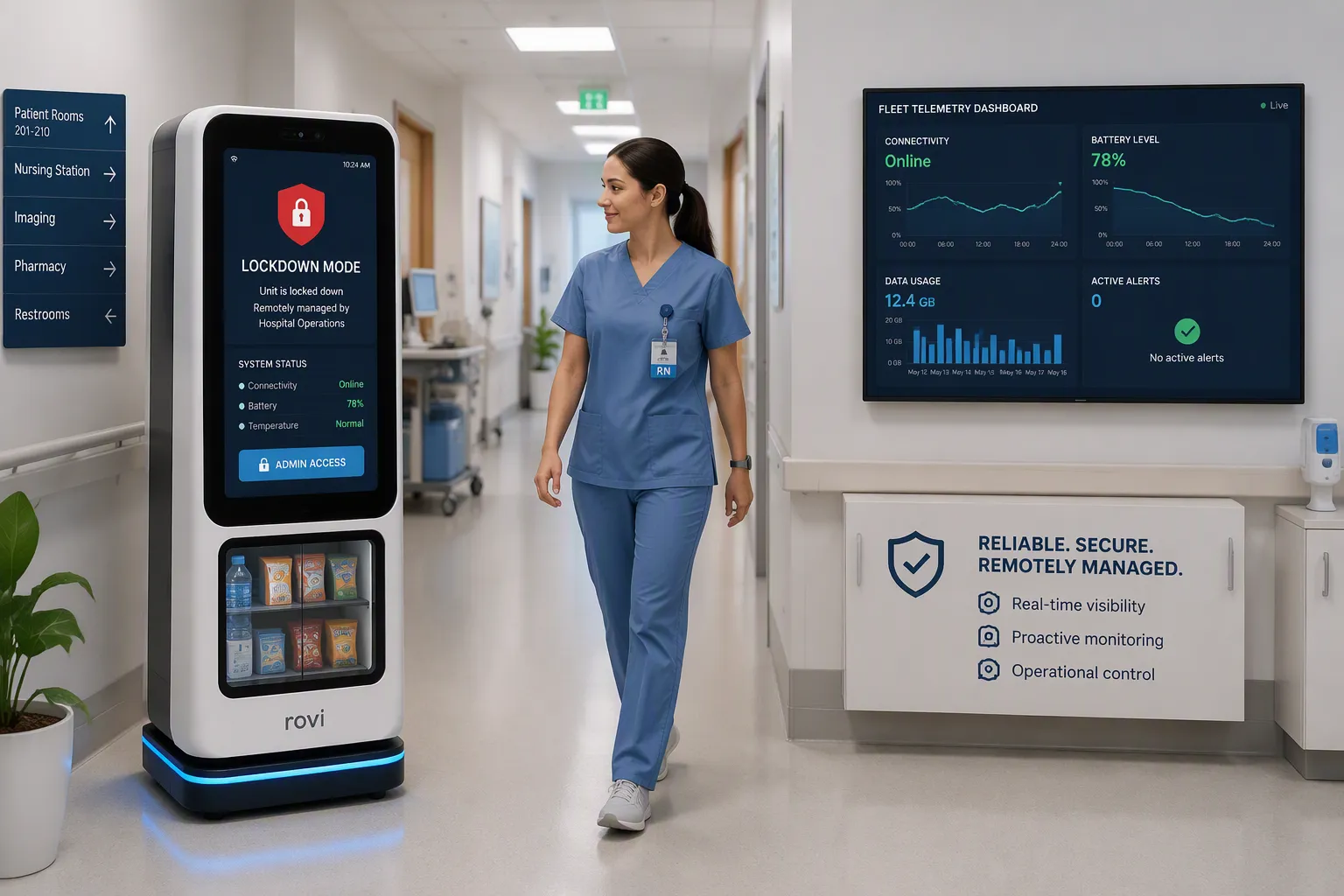
Autonomous retail systems must operate without fail around the clock in a hospital. A broken kiosk during a night shift means staff have no access to food or supplies. Patients may need items at any hour. Reliability protects both revenue and patient care.
Uptime and Remote Monitoring
Remote monitoring solutions keep autonomous retail operations running in healthcare environments. A real-time telemetry dashboard tracks connectivity, battery levels, and data usage. IT teams can see if a Wi-Fi signal drops or a kiosk becomes unplugged. They can remotely view and control kiosks without sending someone on site. An AI assistant called Hexnode Genie provides intelligent monitoring support. Automated alerts catch system errors early and prevent kiosk failures. Remote remediation fixes software glitches or pushes over-the-air updates to resolve issues. These capabilities directly support operational efficiency goals.
The three pillars of 24/7 uptime include lockdown mode, kiosk monitoring, and remote remediation. Lockdown mode restricts the user interface to approved apps only. Monitoring collects real-time data on device status, connectivity, and battery health. Remediation applies fixes and updates without physical access. This combination of robotics and automation improves efficiency. These gains allow staff to focus on patient needs instead of equipment troubleshooting. Hygiene standards remain high because remote fixes reduce physical contact with devices.
Contactless checkout technologies like RFID and computer vision support autonomous checkout. They automatically track selected items, creating a fast and frictionless payment experience. These technologies improve customer satisfaction. They also solve staffing challenges by reducing labor pressure. The autonomous checkout system enables 24/7 accessibility. Purchases happen any time without waiting for a cashier.
Accessibility and Inclusive Design
Accessibility is a legal requirement and a design necessity for autonomous retail in hospitals. The Department of Justice has consistently interpreted disability law to apply to electronic and information technology used to deliver goods and services. The ADA does not have a single kiosk-specific provision. Enforcement actions and settlement agreements create clear expectations.
The Department of Justice has consistently interpreted disability law to apply to electronic and information technology used to deliver goods and services. Although the ADA lacks a single kiosk-specific provision, enforcement actions, settlement agreements, and technical standards establish clear expectations: organizations must provide effective communication for people with vision, hearing, or speech disabilities; reasonable modifications to policies and practices when needed; and accessible routes, reaches, and operable parts. Separate or lesser experiences are not acceptable when integration is possible.
Kiosks must include specific features for different user groups. Blind or low-vision users need tactilely discernible controls, speech output, standard headphone jacks, and meaningful labels. Deaf or hard-of-hearing users require visual instructions and confirmations because audio-only cues are insufficient. Users with limited mobility need compliant reach ranges and adequate clear floor space. Cognitive accessibility demands plain language, consistent navigation, and easy correction paths. Assistive technology compatibility requires working audio ports and glare-free displays. Privacy matters too. Kiosks must allow private use so patients do not reveal sensitive information aloud.
Hardware must survive clinical cleaning and tight spaces. Software must run transactions and analytics every hour. Integration with hospital systems protects patient safety. Security and compliance guard regulated data. Reliability and user experience keep every person able to use the system.
These five categories work as one system. A weak link breaks the whole chain. Hospitals that treat them as isolated features will struggle.
Meeting these requirements enables safe, efficient, and patient-friendly autonomous retail in hospitals & healthcare facilities. This approach boosts efficiency, protects revenue, and creates a model for future healthcare facilities. Autonomous retail in healthcare can then serve patients and staff well.
FAQ
What makes hardware different in a hospital setting?
Clinical hardware must survive harsh disinfectants, fit narrow corridors, and run quietly near patients. Antimicrobial touchscreens, tamper-resistant camera enclosures, and compact mounts meet these needs. Weight sensors and computer vision also keep inventory accurate when items sit behind other products.
How does the retail system connect to hospital records?
The system links to the Electronic Health Record to confirm patient identity and apply dietary or care rules at purchase. An Admission, Discharge, and Transfer feed adjusts inventory and staffing in real time. Staff badges work for authentication and payment, so caregivers avoid separate accounts.
Which rules govern data and payments?
HIPAA sets the baseline for protected health information. The system encrypts data at rest and in transit, enforces role-based access, and logs every record view. PCI compliance covers card transactions through tokenization and a full audit trail. Blockchain offers tamper-evident records for supply chain traceability.
How do hospitals keep kiosks running at night?
Remote monitoring tracks connectivity, battery levels, and data usage on a live dashboard. Automated alerts catch errors before a kiosk fails. Lockdown mode, continuous monitoring, and remote remediation form the three pillars of 24/7 uptime. Over-the-air updates fix software glitches without an on-site visit.
Do these systems work for people with disabilities?
Yes. The Department of Justice applies disability law to electronic technology that delivers goods and services. Kiosks need tactile controls, speech output, headphone jacks, visual confirmations, compliant reach ranges, and clear floor space. Plain language and private use protect patients who cannot share information aloud.
This healthcare retail model succeeds only when every requirement works together.
See Also
A Look At Walgreens Self-Checkout: Retail Convenience And Its Challenges
Walmart Self-Checkout Access: What Changes Are Coming In 2025?
Why Stores Powered By Artificial Intelligence Represent The Future
How Electronic Vending Machines Are Transforming Retail Through Smart Technology
Micromarkets Versus Smart Stores: How Automated Convenience Retail Operates Globally
