AI-Driven Compliance: The New Standard in Hospital Supply Management


Picture yourself in a busy hospital supply room. Staff write down every item by hand, yet shelves still hold expired products. Running out of supplies disrupts important procedures. The inventory system never matches what is really there, creating compliance headaches for healthcare leaders.
What if artificial intelligence could fix these problems with ease? Imagine a system that tracks every supply automatically, giving you full visibility into your operations. This visibility turns hospital consumables management ai into a smooth process.
AI-powered smart warehouses are becoming the clear answer for modern healthcare logistics. These systems offer real-time tracking, cut down on waste, and boost regulatory compliance. The gains in efficiency touch every part of hospital management, from daily inventory checks to long-term supply planning. Healthcare organizations that adopt this technology get useful data and unmatched visibility across their whole supply chain. This visibility leads to smarter decisions, better patient outcomes, and lasting cost savings. Your healthcare facility deserves this level of control and insight.
Key Takeaways
AI automatically tracks hospital supplies. This cuts waste and saves money.
AI helps hospitals follow rules. It makes correct records for each item.
AI predicts what supplies are needed. This helps avoid running out or having too much.
AI gives full visibility. Staff see every item from warehouse to patient.
AI saves staff time. Nurses focus on helping patients, not counting supplies.
The High Cost of Manual Hospital Consumables Management

Manual inventory processes create hidden expenses that drain your healthcare facility's resources daily. When staff log supplies by hand, errors become inevitable. These mistakes ripple through your entire operation, affecting everything from patient care to your bottom line.
Inventory Inaccuracies and Expiry Waste
Your clinical teams face constant challenges with manual tracking systems. Nurses spend up to 60 minutes per shift searching for equipment instead of providing patient care. This labor inefficiency translates to an estimated $14 billion in lost productivity annually across the U.S. healthcare industry. Every minute spent hunting for supplies diverts highly paid clinical staff away from revenue-generating activities toward non-value-added inventory tasks.
Manual processes also create significant waste problems. What is shocking is that it has become accepted by the industry that 8 to 10 percent of all disposables expire on hospital shelves annually.
What is shocking is that it has become accepted by the industry that 8 to 10 percent of all disposables expire on hospital shelves annually.
This waste represents pure financial loss. Poor tracking leads to expired products remaining on shelves, and you cannot use or return these items. Overstocking compounds the problem. Facilities hold excess supplies "just in case" to avoid shortages, which ties up valuable working capital. Excess inventory requires more physical space, significantly increasing your storage expenses. Manual counting consumes staff time that should focus on clinical duties, creating a ripple effect of wage waste throughout your healthcare supply chain.
Compliance Risks and Reconciliation Burden
Manual bill-only workflows create significant compliance vulnerabilities in your hospital. Uncataloged items bypass inventory systems entirely. Manual documentation burdens increase error likelihood. Vendor representatives leaving your operating room with handwritten documentation containing patient information creates HIPAA exposure. These failures result in no verified digital record, incomplete documentation, and potential PHI leaks.
Your compliance risks extend further. Discrepancies between clinical and billing systems lead to missing documentation and incorrect procedure codes. Lack of standardized charge capture across departments causes inconsistencies. Manual reconciliation processes remain time-consuming and prone to human error. Limited visibility into denials prevents your team from identifying underlying charge reconciliation issues. These gaps lead to failed audits, delayed reimbursements, and potential compliance investigations that threaten your healthcare organization's reputation and financial stability.
AI-Powered Visibility: The Intelligent Warehouse Solution
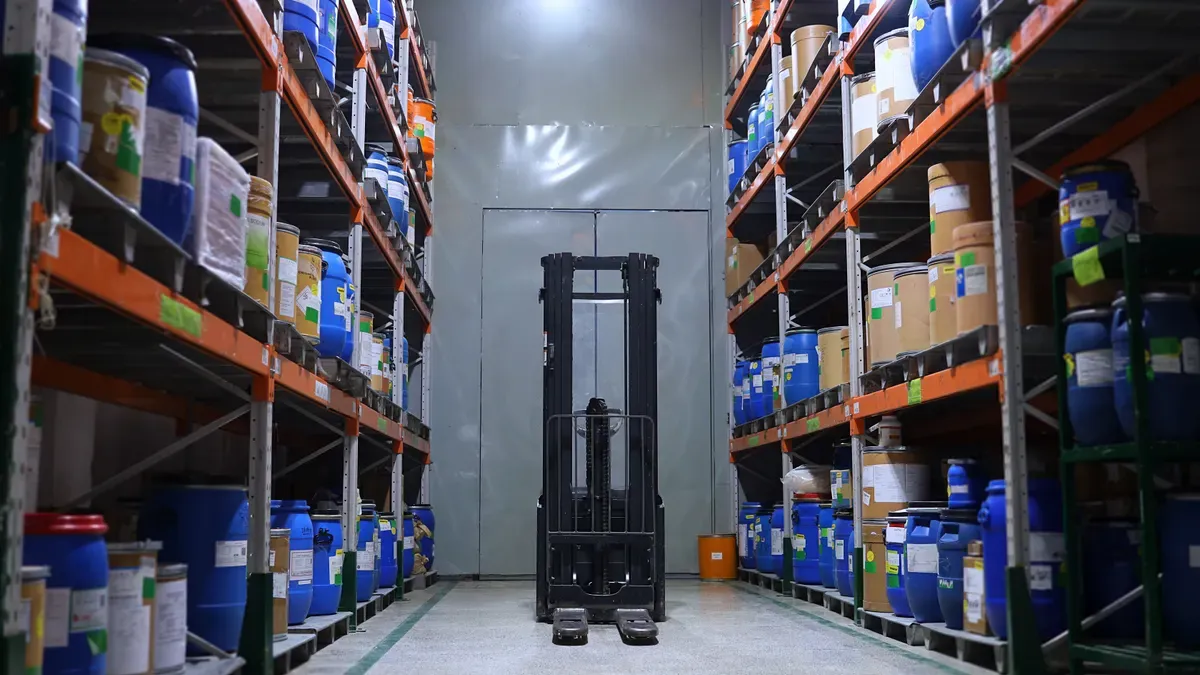
Your healthcare facility can upgrade supply management with a smart warehouse system. This solution uses hospital consumables management ai to make work easier for your team. The system removes manual steps and gives you full visibility into your operations. You take charge of every part of your healthcare supply chain management. Your supply chain visibility improves right away.
Real-Time AI Identification Workflow
The workflow follows a clear set of automated steps. Medical staff enter the supply room using facial recognition. The system checks each person's identity immediately. Staff pick up needed consumables from shelves. AI identifies each item in real time with sensing technology. The system creates usage records automatically and sends them to your hospital system. No manual logging is needed.
This process depends on several key parts working together. Sensing technology includes category-specific options like RFID, vision, and weight sensors. The system tracks inventory confidence through uncertainty levels, reconciliation status, and observation age. Staff handle only flagged exceptions with evidence and reasons instead of manual counting. Point-of-use replenishment designs around clinical locations like bedsides and operating rooms. AI agents coordinate to retrieve stock, check purchase orders, and execute low-risk actions within explicit permissions.
Process automation from this approach cuts manual intervention by 25-30 percent. Your team no longer spends time on manual data entry or delayed reporting. The system handles these tasks automatically. This efficiency gain changes your daily operations. Your staff focuses on patient care instead of paperwork. Every transaction gets recorded without human effort.
Full Traceability and Frictionless Operations
Full traceability solves the last-mile visibility gap that troubles many healthcare supply chains. Your staff gains clear insight into every item from warehouse to bedside. This directly improves patient safety. Transparency between different entities in the healthcare supply chain is crucial for better outcomes. Supply chain visibility helps you prevent costly errors.
The benefits of complete tracking are significant. End-to-end tracking ensures critical medicines are not misplaced. Expired stock gets noticed quickly. Batch-level tracking enables swift recalls by isolating only risky items. Technology like barcoding and RFID assigns unique digital identities to products. Accurate traceability data empowers pharmacy and clinical teams to collaborate effectively. Clean data fuels predictive models that forecast shortages and flag safety risks before they escalate.
Consider the measurable operational gains from streamlined supply chains. Your facility achieves a 15-30 percent reduction in material costs through smarter ordering. You see a 25-40 percent reduction in waste from expired or unneeded items. Your providers save 1-2 hours per week from fewer disruptions. Lower days sales outstanding results when sessions do not face delays from missing supplies.
Frictionless operations eliminate mid-session disruptions. Your team no longer asks where supplies are located. The answer becomes available instantly. Your staff reclaims time for patient care while the system handles processes. Integration of revenue cycle management with workflows enables real-time eligibility checks. Interoperability ensures systems communicate in real-time. A unified source of truth gives time back to your clinicians. Happier staff and more consistent care become your new reality.
Your healthcare supply chain management gains unprecedented control through this approach. The combination of real-time tracking and automation creates a system that runs smoothly. You achieve better compliance through accurate documentation. Your inventory management improves dramatically. This technology solves the last-mile delivery challenge that has frustrated healthcare logistics for years. Supply chain management becomes a strategic asset for your organization. Operational efficiency reaches new levels. Supply chain efficiency improves across every metric in your healthcare supply chain. Supply chain visibility transforms your daily operations. This inventory management approach sets a new standard for healthcare logistics. Your compliance monitoring becomes effortless and complete. The monitoring system alerts you to any issues immediately. Your healthcare logistics reach a new level of sophistication. This represents the future of healthcare supply chain management.
AI in Healthcare: Reducing Waste and Ensuring Availability
The cost of waste in the healthcare supply chain is huge. Doing things by hand means you accept losses that new tech can stop. AI changes how you control costs. Your supply chain work becomes a strength. Managing the healthcare supply chain gets a strong new tool when you use AI. The whole healthcare supply chain gains from this change. Smart supply chain work leads to better patient results in your hospital.
Cost Savings and Waste Reduction
Your hospital wastes money each time supplies expire. Old systems cannot stop this loss. AI changes everything. Accenture says AI can cut supply chain waste by 50% in healthcare.
A report by Accenture says AI can cut supply chain waste by up to 50% in healthcare.
AI saves money by smartly predicting what you need. The system moves from reacting to planning ahead. It looks at data like how many patients come and what you used before. Your team knows what supplies you need and when. This stops shortages. Your planning becomes active. Healthcare supply chain work becomes more efficient. Your supply chain management gains from good data that guides every choice.
Inventory management gets better with automatic ordering. AI checks current stock against how long it takes to get new items and planned procedures. It creates orders by itself. Important items stay available without oversight. This changes healthcare supply chain management. Stock management in your supply chain becomes automatic and reliable. Your supply chain runs smoothly without constant manual checks.
The AI balances between ordering too much and too little in real time. Ordering too much creates expired supplies. Ordering too little causes delays. Your system balances these extremes by itself. This makes sure supplies are there during busy times. Supply chain efficiency improves through smart distribution. Your hospital consumables management ai system handles these choices on its own. This stops human error in ordering and lowers management costs.
Think about the accuracy gains. AI demand forecasting reaches 85% accuracy, while old methods get 65%. This higher accuracy allows planning ahead. AI-driven stock management cuts medical supply waste by 30-40% and keeps 99% product availability. Your supplies are there when your team needs them. This level of performance changes your supply chain work. Your stock management reaches new precision. Better patient results come from having supplies when needed.
Real examples show this value. Mayo Clinic uses AI for supply chain management. Cleveland Clinic uses similar tech. Medtronic adds AI to its logistics. These groups show the power of this approach. Their results prove the value of AI in healthcare logistics.
The pandemic showed the value of planning ahead in healthcare logistics. During COVID-19, AI predicted shortages of PPE and ventilators. Suppliers changed production early. Supplies stayed available. This protects patient results during emergencies. Your supply chain management can get similar results.
Enhanced Compliance and Supply Chain Visibility
Your compliance duties cover every supply transaction. AI boosts your ability to meet rules. The system creates full records for every item. This paperwork helps with audits and improves management. Compliance becomes an automatic part of your healthcare supply chain. Patient outcomes improve through steady rule following.
AI-powered compliance systems combine with blockchain to create records that cannot be changed. This openness meets rules for tracking controlled substances and medical devices. The system automatically checks if products are real. Fake supplies never enter your hospital. This double role directly boosts your compliance in the healthcare supply chain. Supply chain management gets stronger through automatic monitoring.
Supply chain visibility reaches new levels with AI. Healthcare AI systems report a big drop in stock errors. This fixes a common weakness in seeing across departments. Your team gets full visibility into what you have and where it is. Real-time visibility supports better choices across departments.
Real-time supply data allows you to see how products are used. You understand usage patterns across departments. This visibility was hard to get before. Now joined visibility connects your healthcare supply network. Separate departments become one view. This operational efficiency changes your logistics management.
Monitoring capabilities grow a lot. The system watches every transaction on its own. Exceptions trigger instant alerts. Your team fixes issues before they become compliance problems. This active monitoring strengthens your rule-following. Your team spends less time on manual matching. The system handles paperwork on its own. Good monitoring across your healthcare supply chain makes sure nothing is missed.
Revenue cycle management integration allows real-time eligibility checks. Interoperability ensures real-time communication. A single source of truth gives time back to your clinicians. This operational efficiency improves daily logistics.
Supply chain visibility changes daily work. You track every item from warehouse to bedside. This solves the last-mile delivery problem for healthcare logistics. Your logistics operation becomes a strategic asset. Supply chain visibility supports better patient results through accurate tracking.
The mix of fewer errors and good tracking improves management. Your hospital gets better patient results through steady supply availability. Compliance improves through accurate paperwork. Healthcare supply chain management reaches new levels. Your supply chain visibility gives you the data you need for strategic planning.
This tech sets a new standard for healthcare logistics. Inventory management improves across every measure. Data gives useful insights. Monitoring ensures nothing slips through. The result is a healthcare supply chain that serves patients and your organization. Your results improve through this complete approach. Healthcare logistics has found its future in AI-powered systems.
Implementing AI for Better Management
Integration with Existing Hospital Systems
You might worry about adding new technology and upsetting daily work. These concerns make sense. Hospitals use many older systems to handle different jobs. Each system uses its own format. Scattered data across these platforms makes it hard to gather and study the information AI needs. Connection problems and privacy worries create big hurdles in many healthcare settings.
The setup follows a clear path. Cloud-based links between ERP and EHR systems give AI the shared data foundation it requires. This link lets AI study buying patterns, predict needs, and automate tasks. By matching purchase data with supply usage from EHR systems, AI supports proactive inventory control. This cuts shortages and boosts teamwork between supply chain and clinical staff.
AI can watch inventory, spot problems, and start purchases safely through ERP or EHR systems. It works like an automatic helper, not just a passive data source.
The system connects to many hospital platforms. EHR links share patient and procedure details for supply operations. OR systems connect with surgery schedules and records. Pharmacy systems coordinate with medication handling. Lab systems support lab supply management. This full setup gives you clear sight across your entire healthcare supply chain.
Proven Success in Leading Healthcare Organizations
Rollout follows a step-by-step plan that limits disruption. The first step focuses on data work. You digitize inventory and record all moves digitally. You clean and organize product lists. This base work takes months one through three. The second step brings visibility tools. You set up real-time usage dashboards and minimum stock alerts. You start tracking logistics KPIs. This step runs from months three through six.
The third step turns on prediction features. You create demand forecasts from past data. You set up flexible reorder points. You combine clinical and logistics data. This step runs from months six through twelve. The final step enables full automation. You activate automatic purchase orders and improve distribution between sites. You set up automatic problem detection. This step starts after month twelve.
Top healthcare groups show the worth of this method. Mayo Clinic says AI and automation help patients and staff in daily work while making supply operations more flexible and responsive during disruptions. Their supply operations use AI to keep critical supplies ready when and where needed. Cleveland Clinic and Medtronic also add AI to their logistics work.
The long-term payoff makes the switch worthwhile. You cut waste through better tracking. You improve compliance with accurate records. Your inventory control becomes exact. Your healthcare supply chain management hits new levels of efficiency. The starting cost pays off through ongoing savings and better patient results. Your logistics work changes from a cost drain into a strategic strength.
Your healthcare facility uses AI warehouses for supply operations. Healthcare visibility through real-time smart logistics transforms healthcare supply chain management. Healthcare inventory management improves efficiency as data drives patient outcomes. Your leadership team gains operational insight.
Supply chain management reaches new standards. Inventory visibility enables real-time logistics tracking. Healthcare efficiency improves through data. Management teams gain logistics improvements. Logistics inventory control becomes automation. Supply chain management visibility improves healthcare outcomes. Data supports operational decisions. Inventory efficiency drives patient outcomes. Healthcare logistics ensures transparency.
AI transforms inventory control. Supply chain inventory analytics drives results. Healthcare visibility drives patient outcomes. Healthcare management reaches logistics excellence. Healthcare supply chain management organizations take action. Visit our website for supply chain inventory management visibility.
FAQ
How long does implementation take?
The rollout has clear steps. Data prep takes months one to three. Visibility tools start in months three to six. Prediction features turn on from months six to twelve. Full automation begins after month twelve. Your hospital sees gains at each step. You do not have to wait for everything to finish.
Will AI replace my staff?
AI takes over boring tracking tasks, not patient care jobs. Your team moves to more important work. Nurses spend less time hunting for supplies. Supply managers use system reports to plan better. This tech makes jobs better, not fewer. Your hospital gets more efficient, and your staff gets more satisfied.
How does AI track different supply types?
The system uses special sensors for each item type. RFID tags work well for costly items. Vision sensors spot packaged goods. Weight sensors track bulk supplies. Each method records usage on its own. Your inventory stays correct for every category. This way you see all supplies without counting by hand.
What happens during a system outage?
The system has backup plans to keep things running. Staff can get supplies using manual steps. Records are saved once the system comes back. Your compliance paperwork stays complete. This safety net keeps patient care going. Your logistics work continues smoothly even if tech problems pop up.
How does AI improve compliance reporting?
AI makes automatic digital records for every action. Your team does not rely on handwritten notes anymore. The system flags problems right away with proof. Audit prep becomes easy and fast. Your hospital stays fully compliant without extra paperwork. This automatic method strengthens your rule-following every day.
See Also
Major Walmart Self-Checkout Policy Updates Coming In 2025
Analyzing Walgreens Self-Checkout Convenience And Modern Retail Challenges
How Self-Checkout Technology Has Transformed Over The Years
The Inevitable Rise Of AI-Powered Retail Stores In Coming Years
Benefits And Features Of AI-Powered Combo Vending Machines For Retail
