Cashierless stores in hospitals and healthcare facilities

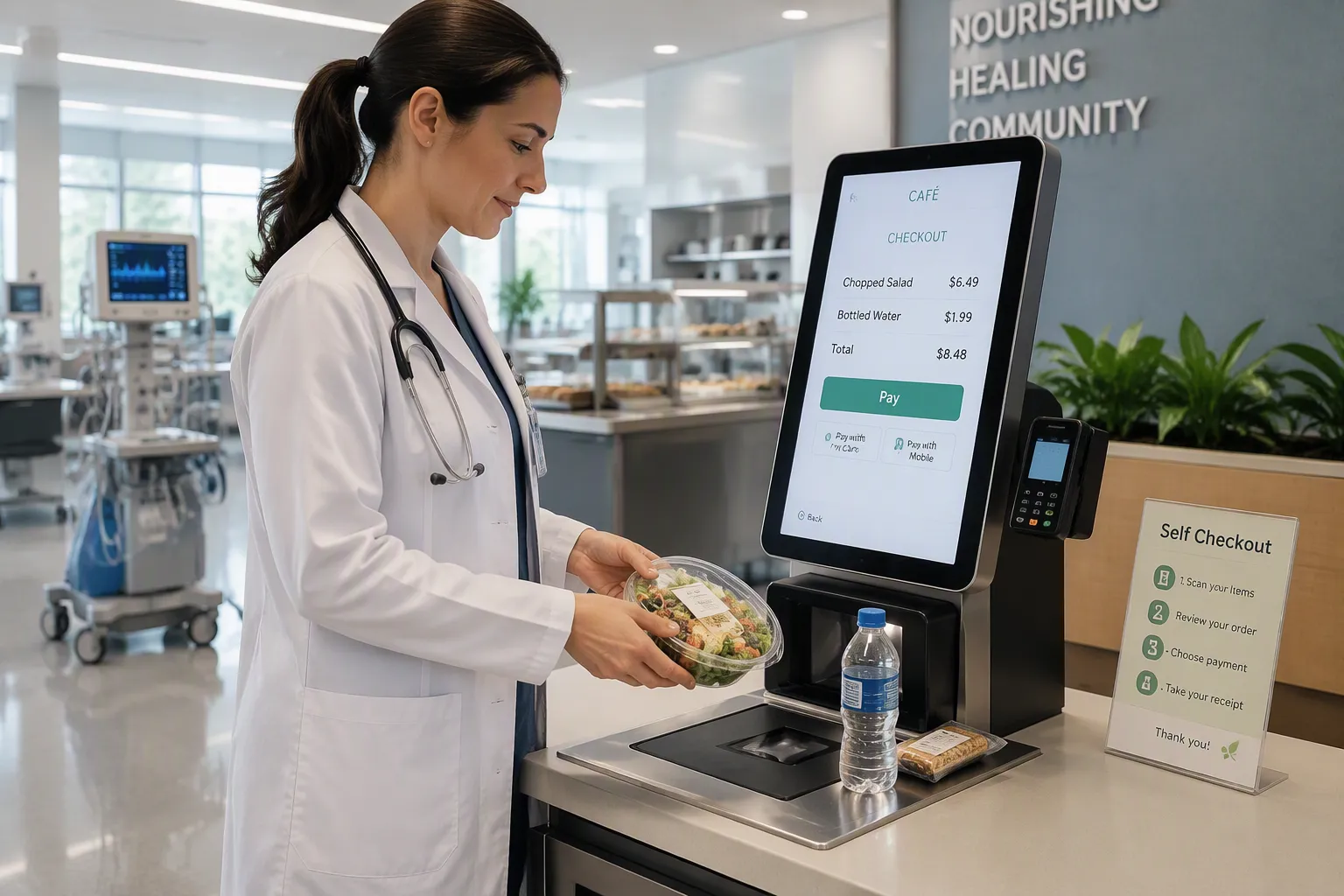
Picture a parent searching for a coffee at 3 AM. Hospital corridors feel endless. Now imagine a nurse grabbing a quick snack between shifts. Traditional shops are closed. A cashierless store in hospitals solves this problem. It uses sensors and AI to track what you pick up. You walk out without waiting in line. This technology fits healthcare's constant activity. It provides speed when every minute matters. It also reduces touchpoints, supporting hygiene. This article explores how this innovation reshapes retail for patients, visitors, and staff. You will also learn about practical questions like privacy and accessibility. The future of hospital convenience starts here.
Key Takeaways
Cashierless stores use cameras and sensors to track your items. You walk out without waiting in line.
These stores stay open 24/7. They give staff and visitors quick access to food and supplies at any hour.
Contactless shopping reduces the spread of germs. This keeps patients and staff safer.
Hospitals protect your privacy. They remove personal details from your purchase data and keep it secure.
You can pay with a badge, card, or phone. The system works for everyone, even without a smartphone.
How a Cashierless Store in Hospitals Operates
The Core Technology: AI, Sensors, and Computer Vision
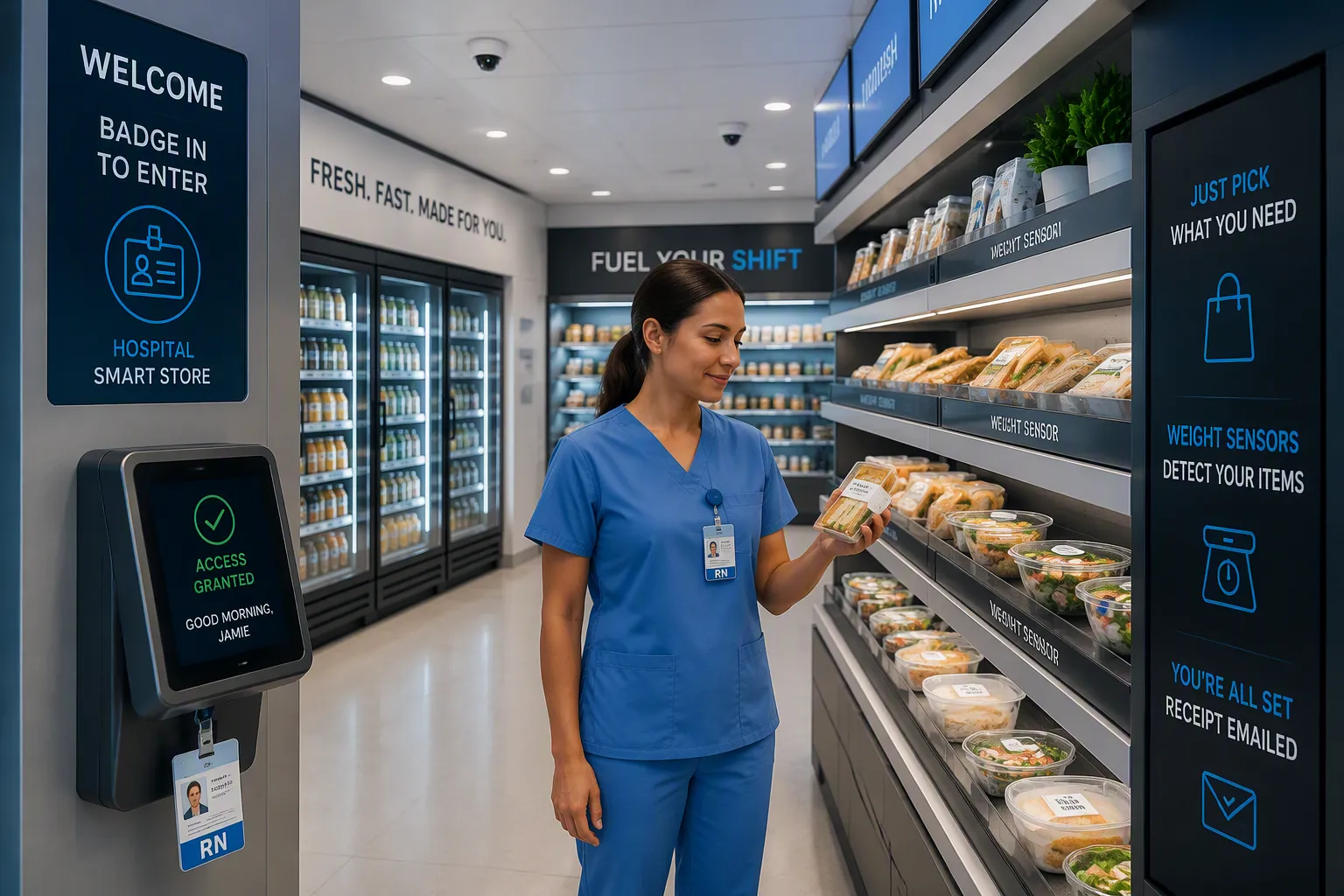
You walk into a small store inside a hospital lobby. You grab a sandwich, a bottle of water, and perhaps a bag of chips. You walk out. No checkout line. No scanner. No payment terminal. The system already knows what you took, and it charges your account automatically.
This experience relies on several technologies working together. Ceiling-mounted cameras track your movements throughout the store. Weight sensors on shelves detect when you remove an item. Computer vision algorithms identify each product you pick up, even when you place it back and choose something different. Artificial intelligence processes all this data in real time. It builds a virtual shopping cart that updates with every action you take.
The system also distinguishes between shoppers. When you enter, you scan a payment method—a credit card, a smartphone app, or in some cases, an employee badge. The AI links your virtual cart to your unique identifier. If two people stand close together, the system still separates their purchases correctly. This accuracy matters in a busy hospital setting where staff members might shop in groups during short breaks.
The technology handles complex scenarios as well. You might pick up a cold drink, set it down, and grab a warm coffee instead. The sensors register both actions. You might hand an item to a companion. The system tracks that transfer. These capabilities make the experience feel effortless, even though the underlying computation is sophisticated.
Leading Providers and Real-World Deployments
Amazon leads the field with its Just Walk Out technology. On January 29, 2024, the company announced a significant adaptation for healthcare environments. The new feature, called badge pay, allows hospital employees to pay using their existing identification badges. This integration removes the need for a separate payment method. Staff members simply tap their badges at the entrance, shop, and leave.
The initial deployment of this badge pay system took place at St. Joseph's/Candler's Candler Hospital Campus in Savannah, Georgia. Amazon implemented this launch in collaboration with CBORD, a healthcare automation provider. This partnership shows how technology companies tailor their solutions to meet healthcare-specific needs.
Beyond this direct deployment, Amazon partnered with Morrison Healthcare, a food service company. This relationship positions Just Walk Out technology to appear in many more healthcare facilities.
Other companies see the potential as well. Choice Market developed Choice Mini-Mart, a cashierless convenience store concept designed specifically for non-traditional retail spaces such as hospitals, airports, and campuses. The product range emphasizes healthy eating. It includes high-quality prepared food, natural groceries, and everyday necessities. The inaugural location at CU Anschutz Medical Campus also features Central, a Pan-American kitchen offering customizable bowls, tacos, burritos, salads, and sandwiches made from sustainable, locally sourced ingredients.
This growing variety of providers means that a cashierless store in hospitals is no longer a distant concept. The technology exists today, and multiple companies compete to deliver it. For hospital administrators, this competition creates options. You can choose a solution that fits your facility's size, budget, and patient population.
Why Hospitals Are Embracing This Technology
Unmatched Convenience for Staff and Visitors
Hospitals never close. Neither do their demands. A cashierless store in hospitals meets this reality head-on. You might work the night shift, finishing rounds at 2 AM. You need coffee and a protein bar. Traditional cafeterias lock their doors hours ago. Vending machines offer limited, stale options. A cashierless store stays open around the clock. You walk in, grab what you need, and leave within seconds.
The convenience extends beyond staff members. Consider a family camped in a waiting room during a loved one's surgery. Hours pass slowly. Hunger sets in. Someone needs to step away for supplies. A cashierless store provides immediate access without forcing a long walk to an off-site convenience store. You can step out, return quickly, and remain close to your patient.
Healthcare leaders recognize this value. Bart Kaericher, President & CEO of Aramark Healthcare, explains the impact directly:
"ARK complements our workforce by engaging operations and uplifting efficiency, especially for hospital staff working late at night. By merging robotics with our operational brilliance, we're serving a scalable solution for individuals late or over time."
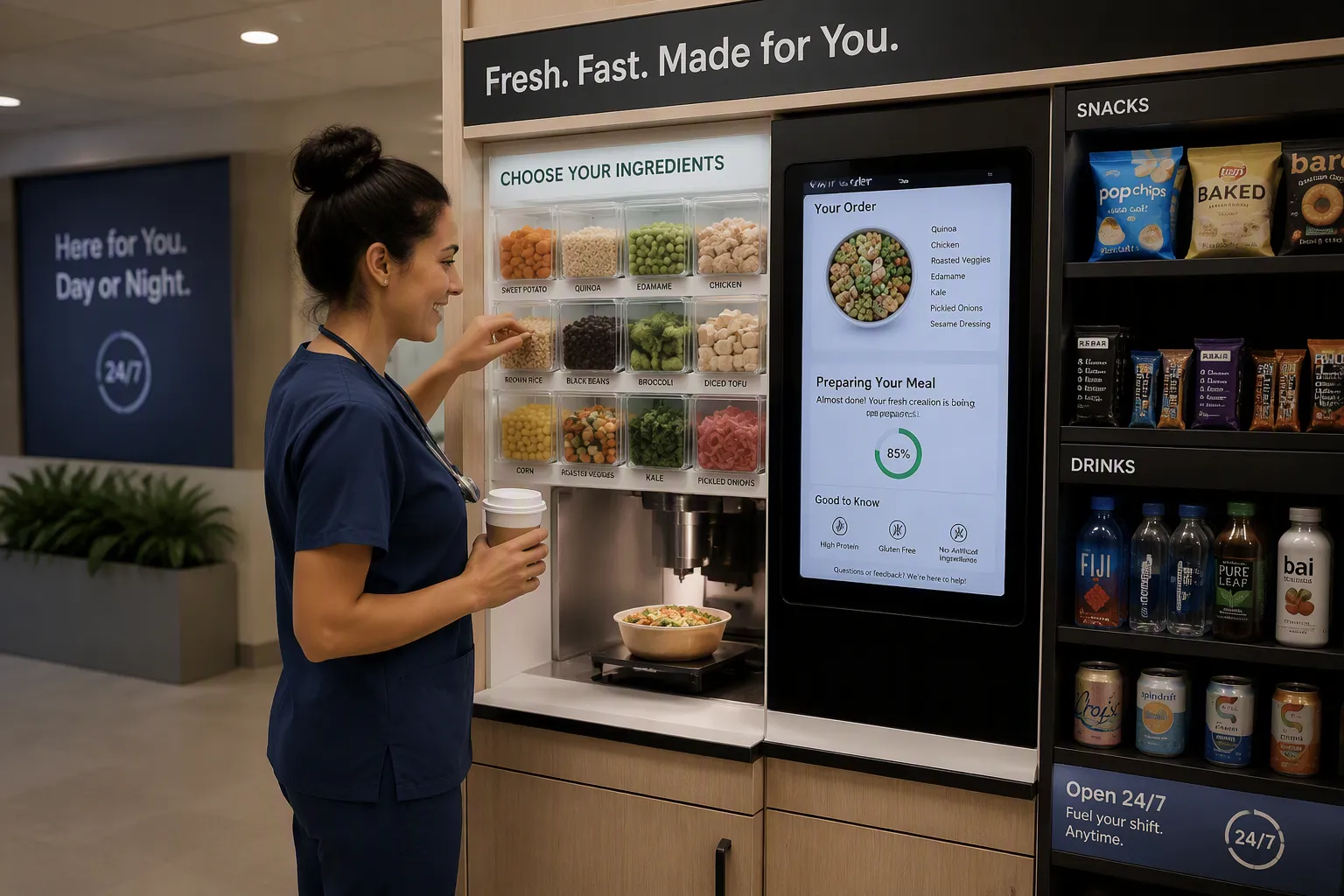
The ARK system demonstrates how technology addresses the 24/7 nature of medical facilities:
Round-the-clock access through kiosks, mobile ordering, and traditional dining options serves third-shift workers directly.
Autonomous operation within a 400-square-foot space prepares up to 4 personalized meal bowls at once using 80 fresh ingredients.
Integrated workflows covering menu management, supply chain, and point-of-sale systems ensure meals appear without requiring staff presence.
This approach solves a persistent gap. Off-peak hours previously meant limited food access. Now you can find fresh, customized meals at any hour. The system prepares your order while you finish other tasks. You arrive, collect your meal, and return to your duties.
Enhancing Hygiene and Reducing Infection Risk
Hospitals prioritize infection control. Every surface, every touchpoint matters. Traditional checkout involves shared keypads, cash exchanges, and close proximity to cashiers. Each interaction creates potential transmission routes. A cashierless store eliminates most of these concerns.
You enter using your own payment method. You select items without handing them to anyone. You exit without touching a shared terminal. The entire transaction happens through sensors and cameras. No physical exchange occurs between you and another person. This contactless model aligns perfectly with healthcare hygiene standards.
Consider the difference. In a conventional shop, you might press a PIN pad that dozens of others touched that day. You might receive change from a cashier who handled countless bills. Every step introduces risk. The cashierless model removes these variables. Your phone or badge serves as your only interface. The system tracks your selections automatically. You maintain complete control over your personal exposure.
This advantage matters especially during flu season or pandemic outbreaks. Hospitals become high-risk zones. Reducing unnecessary contact protects vulnerable patients, exhausted staff, and worried visitors alike. A cashierless store in hospitals supports broader infection prevention strategies without sacrificing convenience.
The technology also reduces crowding. Traditional checkout lines create bottlenecks where people stand close together. Cashierless stores let you move freely and exit immediately. You spend less time in shared spaces. You encounter fewer people. This natural social distancing becomes a built-in feature rather than an enforced rule.
For hospital administrators, these hygiene benefits translate into tangible outcomes. Fewer touchpoints mean lower transmission risks. Lower risks mean healthier staff and patients. Healthier environments mean better operational performance. The investment in cashierless technology supports clinical goals while improving daily experience.
The evidence grows clearer. Hospitals that embrace this model serve their communities better. They provide essential goods safely and efficiently. They respect the unique pressures of healthcare environments. They acknowledge that convenience and safety must work together, not compete.
Overcoming Hurdles: Privacy, Security, and Accessibility
Addressing Patient Privacy and Data Security
Cameras and sensors line the ceiling of every cashierless store. They track your movements and purchases. This reality raises important questions in a healthcare setting. You might worry about who sees this data. Hospital administrators share your concern. They must protect patient privacy under strict regulations like HIPAA.
The system collects transaction records. These records could reveal sensitive information. A purchase of certain snacks might suggest a dietary restriction. A late-night coffee purchase might indicate a patient's condition. Hospitals must handle this data carefully. They must de-identify personal health information when using it for analytics or cloud processing. This process strips away direct identifiers like names and social security numbers. Pseudonymization allows internal re-linking without exposing identity to outside vendors.
Audit trails provide another layer of protection. Every access to protected data gets logged. The system records who retrieved what, when, and from which device. These logs capture the entire lifecycle of information. They help reconstruct events if a breach occurs. Hospitals can trace exactly what happened and respond quickly.
Encryption protects data during transmission and storage. Hospitals manage the encryption keys themselves. This control ensures that third parties cannot access sensitive information. Private networking keeps systems off the public internet. Continuous monitoring detects unauthorized access attempts. Vendor risk assessments evaluate encryption standards and incident response plans. Certifications like SOC2 Type II demonstrate that vendors meet industry security benchmarks.
Ensuring the System is Usable for Everyone
A cashierless store in hospitals must serve everyone. Not every visitor carries a smartphone. Some patients arrive without wallets. Elderly family members might struggle with unfamiliar technology. The system must accommodate these realities.
Payment options should include credit cards, employee badges, and prepaid hospital cards. Amazon's badge pay feature already lets staff use their existing identification. Visitors can tap a credit card at the entrance. Those without cards might use a kiosk to purchase a prepaid code. This flexibility ensures no one gets locked out of essential supplies.
Physical accessibility matters equally. Shelves should sit at reachable heights for wheelchair users. Wide aisles accommodate mobility devices. Clear signage with large text helps people with visual impairments. Voice-guided instructions assist those who cannot read small screens. Staff members remain available nearby to help anyone who needs assistance.
The technology should not create barriers. It should remove them. Designers must test systems with diverse users. They should include people of different ages, abilities, and technical skills. Feedback from these groups shapes better interfaces. A truly inclusive design serves everyone equally.
Hospitals that prioritize accessibility demonstrate their commitment to patient-centered care. They recognize that convenience means nothing if some people cannot use it. The cashierless model succeeds only when every person can shop with dignity and ease.
Implementing a Cashierless Store: A Guide for Administrators
Strategic Placement and Store Design
Location determines how many people use your store. Place it in high-traffic areas. Near main lobbies or staff entrances works best. These spots catch visitors and employees throughout the day. Night-shift workers can access supplies without walking long distances. Study foot traffic patterns during different shifts before choosing a spot.
Store design matters equally. You need wide aisles for efficient foot traffic. Avoid bottlenecks near entrances or shelves. Consider space-saving merchandisers that display independently or integrate within existing serving lines. This flexibility helps you adapt to your hospital's layout. Preventing food waste becomes easier when you control inventory precisely. The system tracks expiration dates and popularity. You restock only what people actually buy. Fresh items stay fresh. Old items get removed before they spoil.
Integration with Hospital Operations and Staff Training
A cashierless store in hospitals must connect with existing security networks and IT infrastructure. The payment system should accept employee badges, credit cards, and prepaid cards. This variety serves everyone who enters your facility.
Staff training remains essential. Your team must understand how the technology works. They can then assist visitors who struggle with the system. Clear instructions near the entrance help new users. Staff members should know how to troubleshoot common issues.
Hospital micro markets provide a consistent way to support staff while improving breakroom offerings across busy medical settings.
The technology addresses labor shortages directly. Nearly a quarter of healthcare operators report that automation helps them manage staffing gaps. A cashierless store in hospitals runs without dedicated checkout personnel. This frees employees for patient care tasks. The system streamlines inventory management as well. You reduce waste and keep popular items in stock.
Total cost of ownership favors these solutions. Energy consumption stays low. Fees remain competitive. Labor costs drop because you need fewer checkout staff. Profitability improves over time. Your investment pays for itself through operational savings.
A cashierless store in hospitals delivers more than convenience. It represents a strategic investment in patient and staff experience. You gain round-the-clock access to essentials. You reduce infection risks through contactless transactions. You free employees for clinical duties.
Technology serves healthcare's human mission. The sensors and AI work quietly behind the scenes. They let you focus on what matters: healing, comforting, and caring. Innovation becomes invisible. Compassion stays visible.
This technology will likely become standard in modern facilities. Early adopters gain valuable insights. They shape best practices for others.
Consider exploring a pilot program at your hospital. Start small. Measure results. Share your experiences with colleagues. The future of hospital retail begins with your decision today.
FAQ
How does a cashierless store protect your privacy?
The system de-identifies personal health information before processing. Encryption safeguards your data during transmission. Audit trails log every access. Hospitals retain control of encryption keys. You stay protected.
Can you use the store without a smartphone?
Yes. You can pay with a credit card. You can use an employee badge. You can use a prepaid hospital card. Staff members remain nearby to assist anyone who needs help. No smartphone required.
What happens when you pick up an item and put it back?
Cameras track your movements. Shelf sensors register each action. The system updates your virtual cart in real time. It removes the item when you place it back. The technology handles these changes automatically.
How does badge pay work for hospital staff?
You tap your employee badge at the entrance. The system links your cart to that badge. You shop and leave. No additional payment steps required. The badge serves as your only interface.
Are these stores open around the clock?
Yes. Cashierless stores operate 24/7. You can access essentials at any hour. Night shifts and late family visits no longer mean limited food options. You shop when you need it most.
See Also
Cloudpick Delivers Seamless Checkout-Free Shopping Experience
Walgreens Self-Service Kiosks: Retail Pros and Pitfalls
Resolving Cash Mistakes at Self-Checkout for Error-Free Purchases
Tracing the Development of Automated Self-Service Checkout Systems
Walmart's 2025 Self-Checkout Policy Updates and Customer Impact
