Prevent Shrinkage at Self-Checkout with Computer Vision

The ECR Loss Group and Professor Adrian Beck found that 52% of shrink at self-checkout happens by mistake. That number does not make the loss harmless. Accidental errors still cut into your profits every day.
Intentional theft makes the problem worse. Shoppers skip scans or hide items under other products. These tricks drain millions from retailers' profits each year. You need a way to stop these losses without slowing down shoppers or burdening staff.
Computer vision offers a proven answer. This technology uses cameras and AI to spot items, check scans, and send real-time alerts. Visual AI helps you prevent shrinkage with computer vision while keeping checkout fast and smooth. Visual AI turns your busiest lanes into controlled, loss-free environments.
Key Takeaways
Computer vision catches accidental errors and intentional theft at self-checkout.
Visual AI reduces produce selection mistakes from 18% to less than 4%.
The system tracks every item and sends real-time alerts without slowing shoppers.
Real stores cut shrink by up to 60% and boosted transaction speed by 40%.
Cost per lane is $1,000 to $3,000 with payback in under 12 months.
Loss Prevention at Self-Checkout: The Shrink Sources
Intentional Theft and Accidental Errors
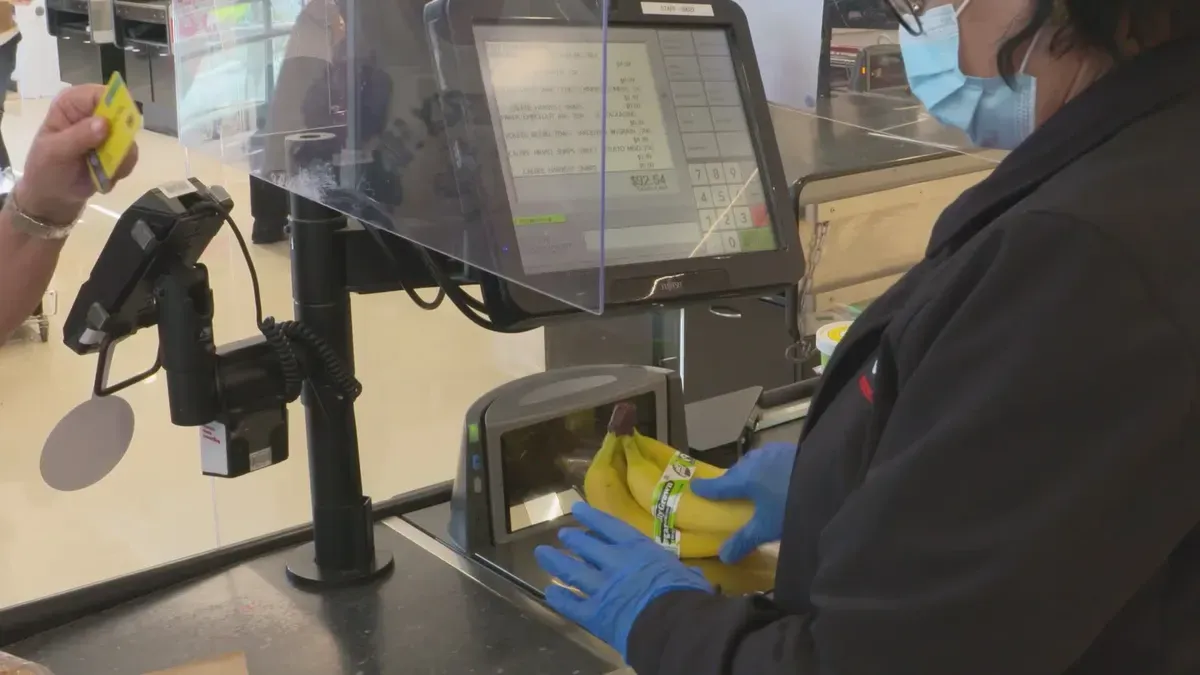
Self-checkout losses come from two very different places. The first is intentional theft. Shoppers skip scans, hide items under other products, or swap barcodes to pay less. The second source is honest mistakes. A shopper scans a Fuji apple as a Gala, hesitates at the PLU screen, or picks the wrong variety of green onions. These errors look small, but they add up fast.
The numbers show how common these mistakes are. Without a produce recognition system, about 18% of produce selections result in errors. With a recognition system, that error rate drops to less than 4%. Missed scans matter too. Three percent of transactions include unscanned merchandise, and non-scanned items account for over 60% of self-checkout loss. Research from the ECR Loss Group and Professor Adrian Beck found that 52% of self-checkout shrinkage is accidental. Honest shopper errors, not theft, drive more than half of the problem.
A Data-Driven Understanding of the Problem
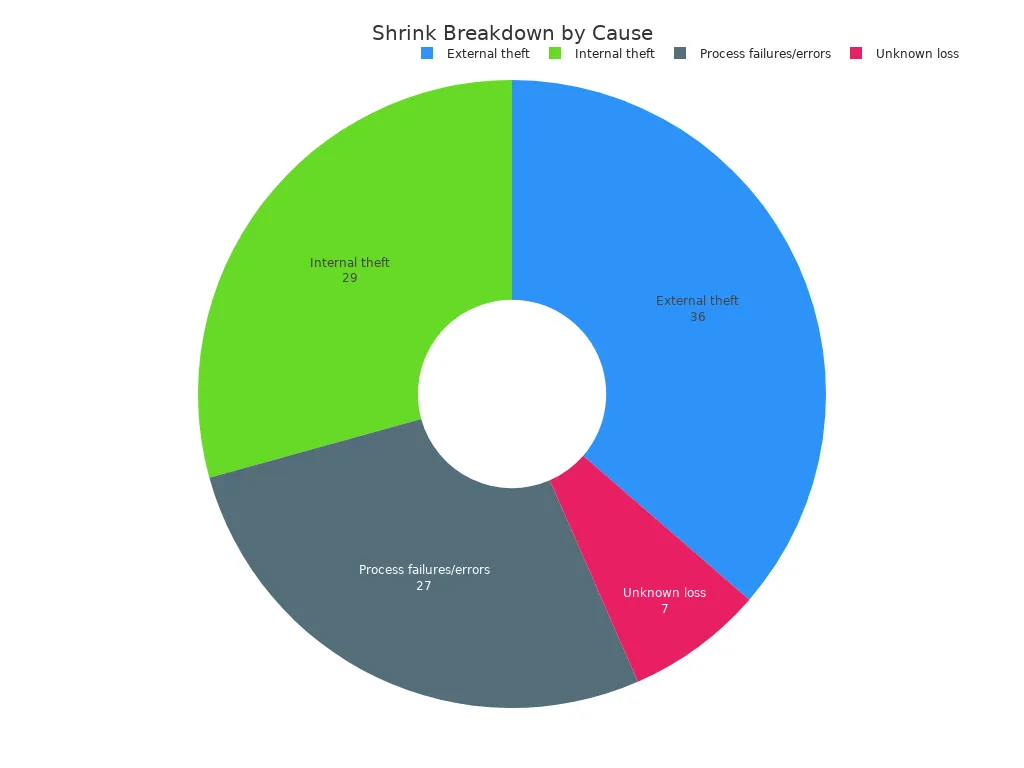
The scale of self-checkout shrink becomes clear when you compare lanes. The industry average shrink rate sits at 1.4–1.6% of sales. Self-checkout lanes run at 3.5% of sales, while staffed lanes stay near 0.2%. That gap is enormous. External theft accounts for 36% of total shrink, internal theft for 29%, and process failures or errors for 27%.
A LendingTree survey found that 15% of self-checkout users admitted to stealing, and 44% of those planned to do it again. Even among the 21% who took an item by accident, most did not correct the mistake. Traditional loss prevention methods cannot separate an honest error from a deliberate act. Visual AI can. It watches every scan and flags the difference in real time.
How to Prevent Shrinkage with Computer Vision
Visual AI That Tracks Every Item
Visual AI watches every item from the moment it enters the scanning zone until it reaches the bagging area. The system builds an independent visual count that runs alongside your POS scan log. This approach uses computer vision AI to fuse camera observations with barcode scan events. The result is a complete picture of each transaction.
The tracking process follows a clear sequence:
The camera continuously tracks each item from the scanning zone to the bagging area, building a visual count separate from the POS log.
The system compares the visual item count and estimated size against the POS transaction log in real time, searching for items with no matching scan event.
When a mismatch appears, a graduated response triggers — a gentle on-screen prompt to rescan for likely mistakes, or a flagged attendant alert for patterns matching known fraud.
Confirmed events are logged with a timestamped video clip, giving loss prevention teams reviewable evidence in seconds.
Modern platforms use deep learning to recognize fresh items on the scanner scale. They present a short, high-confidence list of options. Some systems use proprietary AI with real-time 3D modeling to identify all items at once, regardless of arrangement or similarity, with 99.99% accuracy. This accuracy inherently verifies scans by minimizing misidentification. Manual intervention is required only rarely.
The technology also differentiates items that most humans cannot. It handles crowded trays or full carts simultaneously. Cloud-based continuous model improvement means every lane and location learns from the others. You can prevent shrinkage with computer vision without adding a single step for shoppers.
Real-Time Alerts for Immediate Action
Visual AI turns your existing IP cameras into real-time sensors. AI analytics software runs on edge compute appliances, processing video locally to detect anomalies with low latency. Alerts reach staff in milliseconds. This avoids the bandwidth costs and data privacy exposure of cloud-based processing.
The system detects anomalies during checkout, flags suspicious transactions, and alerts staff to potential theft in progress. Intelligent image scanning predicts the barcode of an item. If a shopper scans a different barcode repeatedly while the predicted one is missing, staff receive an alert. Video displays showing the live feed act as a deterrent, raising the perceived barrier to theft.
Alert types serve different purposes:
Alert Type | Example | Benefit |
|---|---|---|
Visual | Indicator light on self-checkout module | Signifies need for customer assistance or potential theft |
Silent (on-screen message) | Message "you are on video" displayed to customer | Deters theft even if video is not live-monitored |
Audio | Software detects unique audio profile of a gunshot | Alerts associates to notify authorities or lock down store |
Metal-foil detection | System flags a foil-lined bag designed to defeat EAS | Alerts loss prevention staff to a specific theft method |
These alerts help you reduce shrinkage while keeping lanes moving. Shoppers who make honest mistakes see a gentle prompt. Those who attempt fraud face immediate scrutiny. The system learns from audits of selected transactions, improving which behaviors trigger future alerts. This is how visual AI prevents self-checkout shrink without slowing down your busiest lanes.
Tangible Benefits: Reduce Shrink and Improve Checkout
Faster Lanes and Fewer Interventions
Speed and accuracy often work against each other. Visual AI solves that problem. The system spots items at the scanner scale and suggests the right match in about half a second. The full add-to-till step finishes in roughly six seconds. A manual produce lookup takes 10 to 15 seconds per item. That gap matters, because 35% of self-checkout fans say produce scanning is inconvenient. Also, 52% say they would likely skip self-checkout entirely when their cart holds a lot of produce.
Real deployments confirm the gain. Produce entry times fell by about two seconds per item across hundreds of lanes in a regional grocery chain. Checking out a produce item runs up to 44% faster with Picklist Assist, a tool now deployed across more than 35,000 self-checkout lanes worldwide. Transaction throughput rose by up to 40% more transactions per hour. At Intermarché, employee interventions dropped by roughly 15%.
Self-correction keeps those numbers strong. The system spots common mistakes, such as regular versus organic produce or a single item versus a multipack, and prompts the shopper to fix the issue. Staff step in only when visual input and the shopper's choice truly conflict. Morrisons is rolling out vision-based AI across up to 200 UK stores for exactly this reason.
Morrisons is rolling out vision-based AI across up to 200 UK stores that can identify potential scanning errors and prompt customers to resolve them without waiting for an associate. The stated goal is fewer interventions, faster transactions, better shrink protection, and associates freed for higher-value work.
Measurable Results from Real Deployments
The results hold up across formats and vendors. Grabango's computer vision cut shrink losses by 60% across partner stores. One European chain reduced incident response time by 50% and reached up to 30% shrink reduction in high-risk stores within the first year. Independent Forrester research into Everseen's platform found a 374% ROI over three years and an average annual uplift of $88,000 per store.
Deployment | Measurable Outcome |
|---|---|
Amazon Just Walk Out | 375+ stores across 5 countries; shopper theft below 1%; 99.9% uptime over 12 months |
VF Corporation with Scandit | 60% reduction in associate scanning time |
Tesco and Lidl | Documented shrinkage rates below 1% in cashierless environments |
Kroger | Reduced shrink alongside smoother self-checkout operations |
Kroger frames its visual AI rollout as both a customer experience upgrade and a loss prevention tool. Chris McCarrick, the company's senior manager of asset protection solutions and technology, told Chain Store Age that the system strengthens checkout accuracy without creating friction. That balance is the point. You reduce shrink while shoppers enjoy a faster lane, and you reduce shrinkage without adding staff hours.
The economics work for most stores. Self-checkout computer vision costs roughly $1,000 to $3,000 per lane, and payback lands under 12 months for grocery, mass-market, and drug stores. Retailers above $50 million in annual shrinkage typically see payback in 12 to 24 months. Shrink reduction targets of 20% to 30% in the first year are common, with a false-positive rate below 5%. Those numbers explain why visual AI has moved from pilot projects to standard equipment. Visual AI catches errors silently, so honest shoppers never feel accused. Visual AI also frees your attendants for higher-value work. When you prevent shrinkage with computer vision, every lane becomes both faster and safer.
Implementation to Prevent Retail Shrinkage
Integration with Existing Systems
You do not have to swap out your self-checkout lanes to add visual ai. Most solutions work with the hardware you already have. GK Vision, for example, works with any hardware and runs on standard USB cameras. This makes setup simple and low-cost. The system links to your POS through standard event APIs, so real-time alerts go into platforms like Cloud4Retail without any trouble.
Compatibility depends on your POS software, operating system, connection type, and drivers. You should check these details before you order any new equipment. Intel offers open-source reference implementations that support Go, Python, and C client libraries. These tools work with your current POS and self-checkout setups. Middleware and API connections link visual ai insights with your inventory and CRM platforms. Data flows smoothly, and your store layout stays the same.
Steps for a Smooth Deployment
A good rollout starts with a clear plan. Start with a pilot program in one store or for one specific use. This approach lowers risk and lets you measure results before you expand. Set your business goals first. Do you want to cut shrink, speed up lanes, or both? Then compare vendors against your technical and budget limits.
Follow these steps for a smooth launch:
Do a cost-benefit analysis to confirm the money works out.
Check that the technology works with your current infrastructure.
Train staff and customers on the new system.
Make sure you follow data privacy rules like GDPR and CCPA.
Set up regular maintenance and software updates.
Track KPIs from day one. Put money into staff training and plan for step-by-step improvements. Cloud-based services offer flexible pricing and are easier to scale than on-premise solutions. With the right approach, you can prevent retail shrinkage and make your loss prevention strategy stronger. Visual ai makes the process non-intrusive and easy to roll out across your stores.
Self-checkout does not have to be a risk. You can stop shrinkage with computer vision and make your busiest lanes a controlled, loss-free space. You keep checkout fast, and you keep customers happy.
The technology is fully developed. The results can be measured. The path to use is simple. Visual AI lowers shrink, visual AI finds errors quietly, and visual AI frees your staff for better tasks. Computer vision ai makes every lane safer.
Ready to see how visual ai can lower shrinkage in your stores? Contact us for a demo or pilot program today.
FAQ
How accurate is computer vision at identifying items?
Today's systems are 99.99% accurate. They use deep learning and real-time 3D modeling to spot items, no matter how they are arranged or how alike they look. This accuracy checks scans on its own by cutting down on wrong matches. A person needs to step in only once in a while.
Will computer vision slow down my checkout lanes?
No. The system finds items in about half a second and completes the add-to-till step in roughly six seconds. In real stores, produce entry times dropped by about two seconds per item. Transaction throughput went up by as much as 40% more transactions per hour.
What happens when an honest shopper makes a mistake?
The system shows a gentle on-screen prompt to rescan. Staff step in only when what the camera sees and what the shopper picked truly clash. Honest shoppers never feel blamed. This keeps lanes moving while catching errors quietly.
How much does computer vision cost per lane?
Self-checkout computer vision costs about $1,000 to $3,000 per lane. Payback comes in under 12 months for grocery, mass-market, and drug stores. Retailers with more than $50 million in yearly shrinkage usually see payback in 12 to 24 months.
Does the system work with my existing self-checkout hardware?
Most solutions work with the hardware you already own. GK Vision, for example, works with any hardware and runs on standard USB cameras. The system connects to your POS through standard event APIs. Your store layout stays the same.
See Also
How Self-Checkout Machines Have Transformed Modern Retail Shopping
Understanding Cash Errors In Self-Checkout And Finding Effective Solutions
A Look At Walgreens Self-Checkout Benefits And Retail Challenges Today
Upcoming Changes To Walmart Self-Checkout Access During The Year 2025
Common Self-Checkout Mistakes And Errors Customers Face At Walmart Stores
