Prevent shrinkage with computer vision through advanced self checkout fraud detection


Retail loss hurts store profits when people steal at checkout. You can prevent shrinkage and stop this loss by using modern computer vision tech at self-checkout lanes. Smart AI programs quickly block fake scans, switched price tags, and unscanned items. Overhead cameras watch the area continuously while small local devices take in live video. These clever AI tools review security camera footage and match visual actions directly with receipt records.
Special computer vision setups mark unusual sales right away. You boost store security without slowing down paying shoppers. This expandable security setup protects retail businesses from major product loss risks. Strong vision programs improve overall store safety. Upgraded safety systems improve daily work across your whole company. High-accuracy vision tools strengthen automatic fraud protection.
Key Takeaways
Smart cameras stop store theft by automatically finding items that were not scanned at self-checkout registers.
Computer vision stops price-tag cheating by comparing product pictures with scanned barcode data.
Nearby computer hardware scans video quickly to stop stealing without making payment lines move slower.
Motion tracking spots wrong hand movements to stop fake scans and sweethearting right away.
AI Item Recognition to Prevent Shrinkage
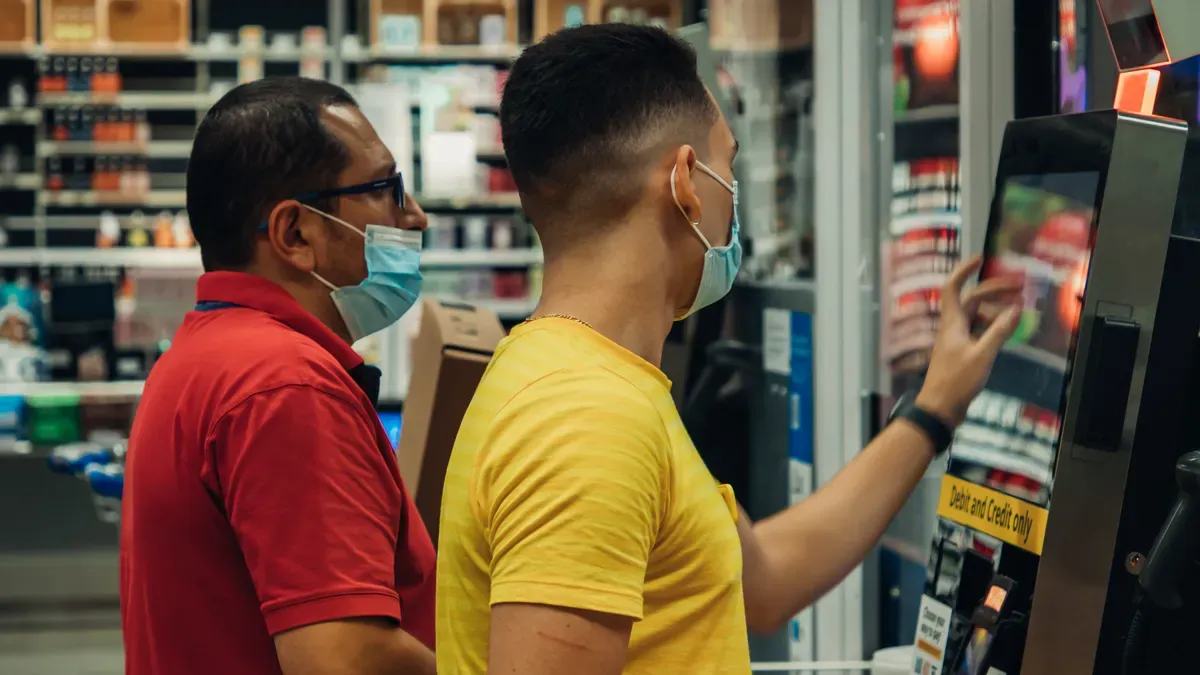
When stores lose products, their earnings drop fast. You can prevent shrinkage by using easy computer vision tools at everyday registers. Today, smart artificial intelligence turns regular self-checkout registers into smart safety stations.
Object Detection Models for Item Validation
Special cameras record real-time video of items moving through the checkout line. Smart ai software quickly studies these images to spot items without extra manual help. You can select different model architectures to match your specific speed requirements.
YOLO Series (YOLOv10/YOLOv8): Offers a great mix of low computer strain and high accuracy. This simple method helps the computer spot and count many items at once during busy checkout times.
Faster R-CNN: Stands out as a top design that finds items with great precision. Its special network speeds up checking by skipping slow search steps to pinpoint objects fast.
Choosing good local hardware keeps systems running fast and stops annoying register lines.
Edge Device | Model Variant | Inference Time (ms) | Notes |
|---|---|---|---|
Raspberry Pi 5 (CPU) | SSD_v1 | 93 | Fastest on Pi5 CPU |
Raspberry Pi 5 (CPU) | SSD_lite | 127 | |
Raspberry Pi 5 (CPU) | YOLO8_m | 1348 | Slowest on Pi5 CPU |
Raspberry Pi 5 (w/ Edge TPU) | SSD_v1 | 10 | Achieves fastest overall time |
Raspberry Pi 5 (w/ Edge TPU) | Det_lite2 | 139 | |
Jetson Orin Nano | YOLO8_n | 16 | Minimum time on this device |
Jetson Orin Nano | Det_lite / SSD models | ~20 | Similar performance range |
Jetson Orin Nano | YOLO8_m | 50 | Slowest on this device |
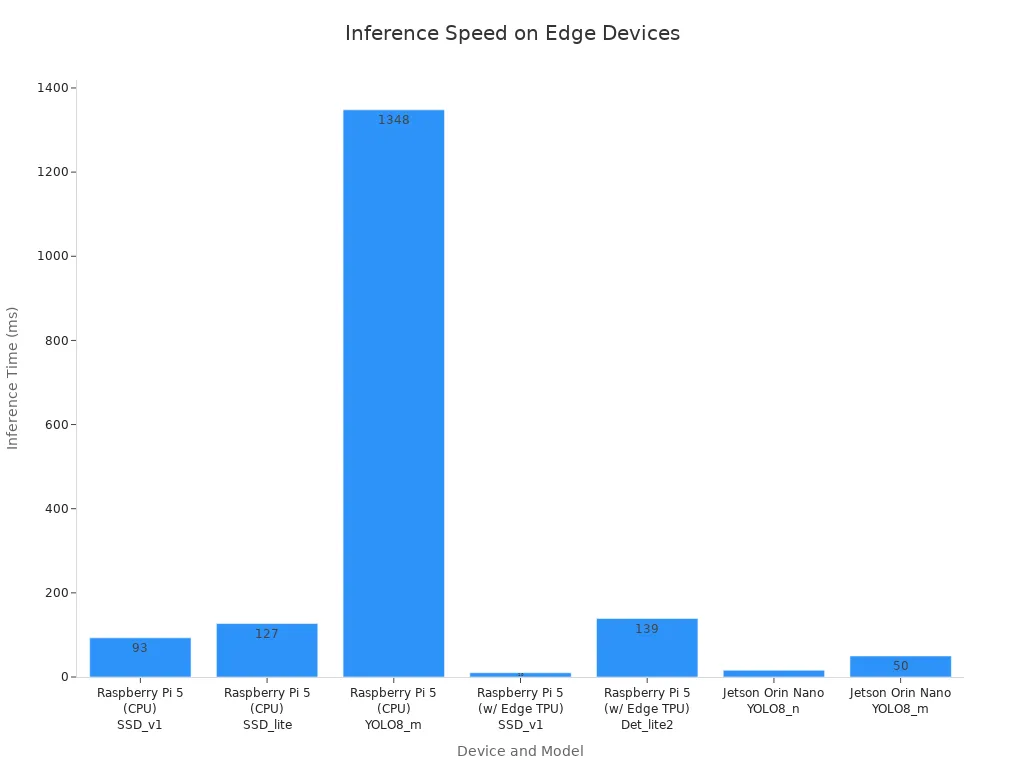
Aim for top results while testing your new tools.
You want your item checkers to reach 95% accuracy during early trials. This test shows that the tracking tools can handle crowded, busy store conditions easily.
Cross-Referencing Visual Predictions with Barcodes
Swapping price tags drains store money silently. Some buyers put cheap tags onto pricey goods. Smart computer vision models stop ticket switching by comparing item looks with receipt records.
Aspect | Description |
|---|---|
Core Technique | Fusion of computer vision model observations with POS (barcode scan) event streams. |
Process | 1. Models observe scan events and customer behavior. |
Required Data | SCO camera feeds, POS event logs (with timestamps & item IDs), item catalog images, historical shrink patterns. |
System Integration | Must integrate with POS systems, self-checkout software, and alerting interfaces for associates. |
Smart vision algorithms send instant warnings when item details do not match. Automatic tracking marks odd scans without bothering honest shoppers nearby. You strengthen store protection across every lane. These smart vision solutions fix stock counts while cutting store losses. Modern vision tools give security staff a clear view of all actions. Reliable ai processing helps prevent shrinkage without delays. Strong safety features block theft around the clock. You keep correct product lists and shield store earnings. Constant camera tracking drops overall stealing by a huge amount. Smart ai vision monitoring gives total control over checkout lines. You give store managers instant facts about daily register activity. Every updated lane receives better protection. This complete system plan lowers product loss across every open store location.
Real-Time Motion Tracking for Shrinkage Mitigation
Retail stores lose significant revenue at self-checkout lanes daily. Shrinkage at self-service lanes runs 2-4 percentage points higher than at staffed registers. You can prevent shrinkage effectively by deploying intelligent video analytics across your checkouts. Modern computer vision algorithms analyze customer actions instantly. These systems verify whether the scanned item matches the item placed in the bagging area. Real-time monitoring helps you spot unscanned items left inside shopping carts. You transform passive security camera feeds into proactive tools that protect store profits. Automated cameras track every item movement across register counters continuously. Smart software detects missed scans before customers walk away from registers.
Hand Trajectory Tracking with Pose Estimation
Smart cameras overhead track human skeletal joints and hand movements. AI models map customer hand paths between carts, barcode scanners, and bagging zones. This continuous monitoring detects intentional theft and accidental non-payment instantly. Advanced vision software identifies produce items with over 95% accuracy in under 0.5 seconds. The visual system evaluates hand movements to confirm proper barcode scanning before items reach bags. You stop physical bypass techniques without disrupting store operations or slowing down honest customers. High-precision pose estimation models calculate hand coordinates continuously to spot improper scanner skips.
"Decisions typically need to happen in under a few hundred milliseconds or less, especially for payments. Every millisecond of added latency risks either allowing fraud to slip through or frustrating a legitimate customer."
You need reliable key performance metrics to evaluate your motion tracking systems:
Detection rate
False positive rate
Decision latency (with a common goal of under 100ms)
High performance systems reduce total store shrinkage while maintaining seamless transactions. You protect high value inventory across every active register lane automatically. Advanced algorithms process spatial coordinates fast enough to inform attendant displays immediately.
Detecting Sweethearting via Event Sequence Anomalies
Dishonest cashiers or shoppers commit sweethearting by passing items around scanners without recording sales. This form of employee theft costs retail businesses millions each year. Traditional video surveillance fails to catch these swift physical bypasses. AI algorithms in modern computer vision systems correlate spatial hand movements directly with register event logs. The system flags sequence discrepancies immediately when a physical item moves into a bag without an active barcode scan event. Visual trajectory algorithms verify whether hand motions cross scanning boundaries properly every single time.
Deploying specialized systems like Diebold Nixdorf’s Vynamic Smart Vision system claims a 30% reduction in losses. This vision technology delivers proactive loss prevention by locking self-checkout screens automatically upon detecting anomalies. You give cashiers instant alerts on their handheld devices. Consequently, store security personnel intervene immediately before suspects leave the premises. Automatic pause commands block further transactions until attendants verify scanned items manually.
Smart AI architecture strengthens your general loss prevention program while preserving frictionless shopping experiences. Low latency real-time monitoring catches subtle theft tactics instantly. High-speed video processing protects store margins without creating customer friction. You prevent inventory loss and upgrade your overall security framework through automated visual intelligence. Automated safeguards ensure accurate recordkeeping across all checkout lanes daily. Continuous camera analysis stops merchandise loss before it impacts your annual operational bottom line.
Edge Computing and System Architecture
Edge Device Processing for Low-Latency Streams
Edge computing processing keeps live monitoring quick at self-checkout lanes. Cloud networks add lag that slows down fast retail sales. High-definition camera streams use heavy network bandwidth when sent to far cloud servers. Local processors check raw video right at the register. System setups with Intel Core Ultra processors or NVIDIA Jetson boards handle local tasks easily. Small modules like the Hailo-8 AI card add computing power straight to current register systems.
Low delay guards store goods without creating annoying checkout delays. Local devices reach a fast 150-millisecond reaction window for quick alert triggers. Small hardware like the fanless BCO-500 Series platform offers many ports for store registers. You protect registers because local AI programs run even during sudden internet outages. Local ai-powered tools eliminate external data traffic loads entirely.
Event-Driven Integration with Legacy POS Systems
Older register software often holds back needed technology upgrades. Gartner reports that 63% of edge computing projects miss business goals due to growth obstacles. You fix this setup problem by using computer vision tools with event-driven setups. Fast message channels link vision nodes to older register software without performance lag.
The computer vision system sends instant alert messages when cameras catch suspicious events. Registers get these smart notices right away. This live monitoring link lets registers pause sales quickly before product loss happens. High-speed software paths handle event data without slowing down store networks.
Fast messaging replaces slow back-and-forth data requests. The camera vision system checks high-speed video without waiting for register replies. You boost lane safety while cutting overall loss. Smart video monitoring links smoothly with current store setups to block item theft. Modern vision models offer strong safety tools across all open store registers.
Model Performance and False Positive Reduction
Balancing Precision and Recall for Customer Experience
Smart camera systems stop store theft without slowing down real buyers. You must balance your settings carefully to keep the checkout lines moving fast.
Catching every thief is usually more important than being perfect every time. Letting a thief go can cost a business huge amounts of money. Meanwhile, a false alarm just means an employee must quickly check a shopping bag.
Track these important scores together to protect your store's money:
Precision shows how many alerted events were actual real thefts.
Recall measures the total percentage of stealing your system catches.
Comparing these scores shows if you catch thieves without bothering honest buyers.
Low approval numbers show that your checkout process is getting too slow.
Incorrect security flags make good customers lose trust in your store.
Aspect | System Target |
|---|---|
Impact | False alarms annoy shoppers and create a bad visiting experience. |
Solution's Target | Smart systems use accurate tools to keep false alerts very low. |
Implied Precision Level | High-tech cameras aim for 90% accuracy so false alerts rarely happen. |
Latency Optimization for Real-Time POS Escalation
Fast local computers check self-checkout lines without any slow waiting times. Smart camera programs watch live video feeds to catch unbagged items instantly. AI devices review the video footage before shoppers finish paying for goods. Quick checks stop product loss without making buyers wait in long lines. You protect store items while keeping register lines moving along smoothly.
Keep your AI programs working great over time with these simple steps:
Let computers gather and label new camera pictures to cut human mistakes.
Focus mostly on difficult video clips where your system gets confused.
Check system accuracy and error scores regularly to spot new problems.
Use small software updates to train models without wasting computer power.
Save copies of your data files so you can fix mistakes.
Smart camera tools keep high safety standards across every register lane. You improve checkout security and build better ways to stop store loss. These helpful AI programs protect your inventory and boost store profits.
You deploy edge hardware, link point-of-sale streams, and run computer vision pipelines at self-checkout registers. Continuous model retraining updates ai algorithms with fresh transaction data every day. Regular edge device maintenance protects security hardware from unexpected system failures. You balance system detection thresholds carefully to preserve customer experience while stopping theft.
Modern ai vision solutions transform your security operations fast. You measure technological return on investment through total shrinkage reduction and overall loss prevention. These smart ai vision systems give store operators immediate alert feeds. Intelligent fraud prevention technology cuts store loss effectively. You prevent shrinkage and upgrade vision security to protect retail earnings reliably.
FAQ
How does computer vision stop ticket switching at self-checkout?
Smart camera tools match an item's looks with barcode data from sales logs. The system alerts workers right away if a scanned tag doesn't match the item's store picture. You stop price tag swapping on the spot.
Why do stores process video feeds on edge devices?
Local edge devices study register video right on site to prevent web lag. Online networks slow down quick sales transactions. Nearby hardware keeps a fast 150-millisecond reaction rate. You spot unscanned goods fast and keep lines moving well without web needs.
How does AI detect sweethearting during checkout?
Body-tracking software follows hand paths near scanner glass and bagging areas. The setup checks physical hand actions against real receipt logs. AI marks unusual patterns fast when items hit bags without good scans. You turn regular cameras into real-time theft catchers.
What accuracy rate should you expect from item validation models?
You want to hit a 95% success rate in early system tests. High score numbers prove these item-spotting tools manage packed checkout areas well. You balance system settings to block theft without bothering good buyers with many false alerts.
See Also
How To Fix Common Cash Handling Errors At Self-Checkout
Tracing The Historic Evolution Of Automated Checkout Systems In Retail
Understanding The Major Pros And Cons Of Walgreens Automated Registers
Important Updates To Walmart Self-Checkout Rules Coming In 2025
Troubleshooting Frequent Scanning And Payment Errors At Walmart Kiosks
