Which Is Better for Your Office Building? Unmanned Stores or Traditional Convenience Stores

The better choice depends on your building's needs, not on one option winning everywhere. Both an unmanned store for office buildings – scenario commercial settings especially and traditional convenience stores can succeed. They simply serve different priorities. Weigh the pros and cons against your own situation. Some offices need round-the-clock convenience for late shifts. Others thrive on a friendly face at the register. No single answer fits every lobby or floor plan. Your traffic, budget, and space decide the winner. Employees notice small differences in access and speed. Managers notice costs and setup effort. Both matter when you choose a format.
Key Takeaways
Unmanned stores give you access all day and night, plus quick checkout. This is great for offices with night shifts or flexible schedules.
Traditional stores offer friendly help and a familiar setup, but they have limited hours and higher labor costs.
Think about how many people come through your building, how much money you can spend, and how much room you have to pick the best store type.
Unmanned stores save money on workers over time, but they need a lot of money up front for technology and security systems.
Traditional stores are great at helping customers and showing off products, but they need more room and more workers to manage.
Convenience and Accessibility
Unmanned Stores: 24/7 Access and Autonomous Checkout
Unmanned stores stay open all day and night. Your employees can shop at 2 AM or 6 AM with no limits. This 24/7 access works well for offices with night shifts, weekend work, or flexible schedules. A cashierless model means no staff needed during off-hours. The store just stays open, watches itself, and restocks on a schedule.
The autonomous checkout process changes how people shop. Employees scan their work card or use facial recognition to get in. They grab items and walk out. No cash, no cards, no waiting. This smooth shopping takes seconds instead of minutes. For a busy employee getting coffee and a snack, speed matters. High-tech, cashierless stores give this autonomous retail experience every time. Each visit follows the same easy pattern.
Traditional Stores: Set Hours and Human Interaction
Traditional convenience stores only open during set hours. You might open at 7 AM and close at 9 PM. Employees on late shifts lose access right when they need supplies most. The store needs staff there during all open hours. That limit affects your building's after-hours convenience.
Some employees like talking to a person at the register. A familiar cashier remembers their usual order. A quick chat breaks up a stressful day. This personal touch helps customer satisfaction in ways machines cannot copy. But traditional retail depends on staff schedules. If a cashier calls in sick, the store may close without warning. Your employees face uncertainty.
Autonomous grab and go stores often beat traditional formats on speed. No checkout line forms because there is no register. The quick checkout process clears bottlenecks during lunch rushes. Traditional stores see lines build at peak hours. Employees wait, frustration grows, and the experience gets worse. For offices that want speed and access, autonomous grab and go stores work better. Self-checkout kiosks in traditional stores help, but you still scan each item. The friction-free checkout of an unmanned store beats that. Self-checkout cuts wait times but cannot match walk-out convenience. This autonomous retail advantage shows up clearly during busy periods.
Cost and Labor
Unmanned Stores: Lower Labor, Higher Tech Costs
You save real money when no cashier works at a register. An unmanned store cuts the biggest ongoing cost in convenience retail: wages. There are no shifts to fill, no overtime to pay, and no turnover to manage. That is why lower labor costs push so many office buildings toward autonomous retail. Your budget moves from people to machines, and machines do not call in sick.
The trade-off comes upfront. You pay for entry scanners, cameras, shelf sensors, and payment software. You also pay for security monitoring and a restocking system that keeps shelves full without staff. These costs come early and hit hard. Over time, the savings from wages can make up for them. Run the math for your own building. Compare one year of cashier wages against your one-time technology bill plus monthly service fees. The answer depends on your traffic and your local wage rates.
Traditional Stores: Predictable Staffing, Personalized Service
A traditional retail store runs on people, and people cost money every single day. You pay cashiers, supervisors, and stockers. You cover hiring, background checks, and training. High labor costs stay with you month after month, and they rise when minimum wage laws change. A traditional retail store also loses money when staff quit and you must hire again.
Yet this model gives you something machines cannot. Your staff greet regulars by name and suggest products. They solve problems right away. That service builds loyalty and keeps employees coming back. Compare the two paths honestly. A small coffee kiosk with two part-time workers may cost less than a full sensor network. A large lobby with steady all-day traffic may flip that result. Traditional retail stores win on flexibility and human touch. Autonomous retail wins on long-run savings. Neither choice guarantees lower costs by itself. Your staffing plan and your technology plan decide which one pays off.
Space and Layout
Unmanned Stores: Compact and Modular
You don't need a whole store floor to run an unmanned store. Many office buildings use unmanned shelves placed near shoppers. These shelves go in a lobby corner, a break room, or a hallway nook. They hold the most popular items and cover part of your stock without a separate room. You put them where people already walk.
Autonomous retail changes how customers come in, move around, and leave. You walk in, take what you need, and go. No set path pushes you through aisles. This freedom allows more open layouts. A small unattended convenience-style store usually runs mostly with automated machines and cashless payments. Vending walls, smart coolers, and self-checkout kiosks fit into tight spaces. You gain selling space without losing walkway room.
Traditional Stores: More Space, More Merchandising
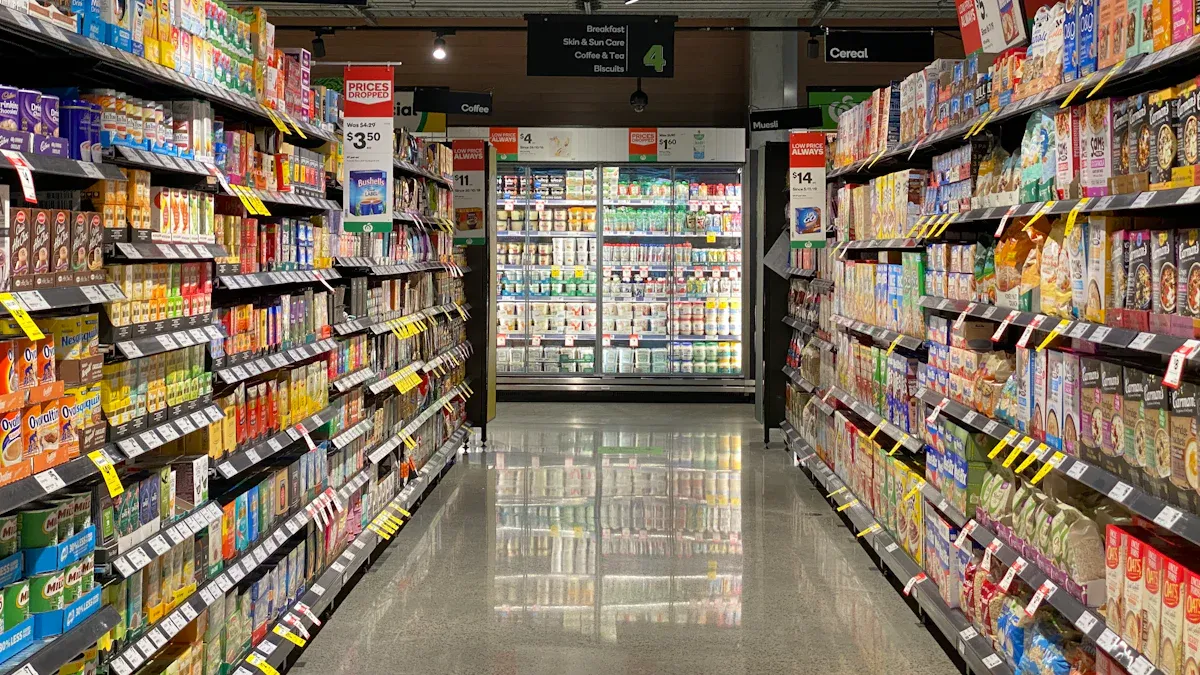
Traditional retail needs more room for the same product range. A fixed checkout area takes up floor space near the entrance. You need aisles wide enough for carts and browsing. That layout limits how you use the rest of the floor. You also need back-room storage for extra stock.
The extra space buys you something valuable. You can merchandise. End caps, shelf talkers, and impulse bins near the register drive unplanned purchases. A cashier can point out a new snack or a discounted drink. That personal nudge lifts basket size in ways a shelf alone cannot. A traditional store also handles fresh food, hot drinks, and made-to-order items. Those categories need prep space and staff. Your layout must support them.
Weigh your square footage against your goals. A tight lobby favors compact, contactless and fully automated setups. A larger ground-floor space can support a full store with a checkout line and room to browse. Match the format to the floor you actually have.
Implementation Complexity
Unmanned Stores: Tech Integration and Security
Unmanned retail is a type of "Smart Retail." Setting it up means connecting technology, payment systems, and security. You have to link cameras, sensors, and payment software into one system that works. This takes planning and tech support.
Security is the most important part. AI cameras and sensors track what customers take and charge their accounts on their own. Digital payments mean no physical cash. This lowers robbery targets and stops internal theft. Every transaction leaves a secure audit trail. Tokenization creates one-time-use tokens instead of sending card numbers. Biometric authentication stops unauthorized access. End-to-end encryption protects transaction data. Your systems must follow PCI DSS and GDPR rules.
How It Works | Role | |
|---|---|---|
Cameras capture products from multiple angles; ML algorithms identify items in real time. | Enables cashierless checkout and accurate product recognition. | |
RFID Scanner | Tags emit unique signals detected without line-of-sight. | Registers transactions and alerts on unpaid item movement. |
Smart Weight Sensors | Shelf scales detect weight changes as small as a few grams. | Confirms purchases and reduces billing errors. |
Contactless Payment Encryption | NFC readers accept tap-to-pay cards and QR codes. | Protects cardholder data under PCI DSS. |
Triple Verification | Vision, RFID, and weight systems cross-reference data. | Maximizes accuracy with error rates below 1%. |
An unmanned store for office buildings – scenario commercial settings may work well when traffic is steady. The autonomous store model is an upgrade and exploration of the traditional convenience store. That connection can make your switch easier.
Traditional Stores: Familiar Setup and Vendor Coordination
Traditional retail gives you a setup you already know. You hire staff, train them, and work with vendors. You have done this before. Hiring takes time. Training takes weeks. Vendor coordination means staying in touch often. These steps are easy to predict.
You must train employees in emergency response and where equipment is kept. They need de-escalation skills for workplace violence. Daily inspections check for loose shelving and dangling wires. Regular safety audits make sure you follow OSHA and local rules.
An unmanned store for office buildings – scenario [commercial scale and traffic decide what fits. A small office with low traffic may find traditional setup easier. A large campus with high traffic may be worth the investment in an autonomous system. The autonomous technology needs more work upfront. The payoff comes through lower long-term labor costs.
Autonomous vs Traditional Retail: Which Fits Your Priorities?
You have compared the good and bad points of access, cost, space, and setup. Now you need to make a clear choice. The table below sums up the main trade-offs.
Priority | Autonomous Retail | Traditional Retail |
|---|---|---|
Access hours | 24/7, no staff needed | Set hours only |
Labor cost | Low ongoing, high upfront tech | High ongoing payroll |
Layout | Compact, modular, flexible | Fixed checkout, more merchandising |
Setup | Tech integration and security | Hiring, training, vendor coordination |
Service | Fast, self-service | Personal, human touch |
When Autonomous Retail Wins
Choose an autonomous system when you need access all day and night. Night-shift workers want snacks at 3 AM. Weekend crews need drinks on Saturday. An unmanned store never shuts down. Your people can shop any time they want.
Low labor cost is important too. You skip cashier pay, overtime, and people quitting. The autonomous store model shifts your budget from people to machines. Machines do not get sick or leave without warning.
Flexible layouts make it the best choice. Unmanned shelves fit in a lobby corner or break room nook. You get more selling space without losing room to walk. The checkout process takes only seconds. Employees grab items and walk out. No lines form during lunch rushes.
Pick autonomous retail when speed, access, and long-term savings guide your choice. High traffic and steady demand help the investment pay off faster.
When Traditional Retail Wins
Pick the traditional brick-and-mortar model when personal service matters most. A familiar cashier greets regulars by name. That human touch builds loyalty. Machines cannot copy it.
A familiar setup also helps. You know how to hire, train, and work with vendors. You have done it before. The steps are easy to predict. Your team feels sure running the store.
Daytime-only traffic favors traditional retail. If your building empties at 6 PM, you do not need 24/7 access. You staff the store during busy hours and close at night. Your labor cost stays manageable.
Choose traditional retail when service, simplicity, and daytime traffic define your building. You trade round-the-clock access for a warmer experience.
Your priorities decide the winner. Autonomous technology suits buildings with after-hours staff and high traffic. Traditional retail suits buildings with daytime-only crowds and a service-first culture. Neither option wins everywhere. Match the format to your people, your budget, and your space.
Unmanned stores are better for hours, labor cost, and flexibility. Traditional stores are better for service, familiarity, and easier setup. Think about what is good and bad for your building.
A small tech office with workers on late shifts fits an unmanned store for office buildings – scenario commercial settings especially. A large company campus with people only during the day fits a store with staff. Both keep convenience and customer happiness.
Check your main goals first: employee happiness, budget, space, and ability to set things up.
Hybrid work may change this balance. Return-to-work rates were about 54%–59% of pre-pandemic levels in early 2023. Shoppers now like stores close to home. The European unmanned market should grow from EUR 1.8 billion in 2024 to EUR 5.2 billion by 2030.
FAQ
Do unmanned stores really save money for an office building?
You cut cashier wages, overtime, and turnover costs. You pay more upfront for scanners, cameras, and software. Your traffic and local wage rates decide the payoff. Run the math for one year of wages against your technology bill.
How much space does an unmanned store need?
You can start small. Unmanned shelves fit in a lobby corner or break room nook. They hold popular items without a separate room. A full traditional store needs aisles, a fixed checkout area, and back-room storage.
Can employees without smartphones use an unmanned store?
Yes. Many systems accept work cards or facial recognition. You link each employee to a payment account. The store charges them after they leave. No cash or phone needed at the shelf.
What happens when an item does not scan correctly?
Smart weight sensors and RFID tags cross-check every item. The system flags errors in real time. You review the audit trail later. Accuracy stays high with triple verification.
Is an unmanned store for office buildings – scenario commercial settings a good fit for small offices?
It depends on your traffic. A small office with daytime-only staff may find a traditional setup simpler. A building with night shifts and steady demand gains more from autonomous retail. Match the format to your people and your budget.
See Also
Comparing Micro Markets And Smart Stores In Global Automated Convenience Retail
The Reasons AI Driven Retail Stores Will Dominate Tomorrow
How Time Out Corner Shops Are Transforming City Convenience Retail
The Growth Of AI Powered Corner Stores And Key Retailer Insights
Boosting Staff Productivity Through Smart Vending Machines In Small Offices
