Autonomous Checkout Solutions for Lower Operational Costs

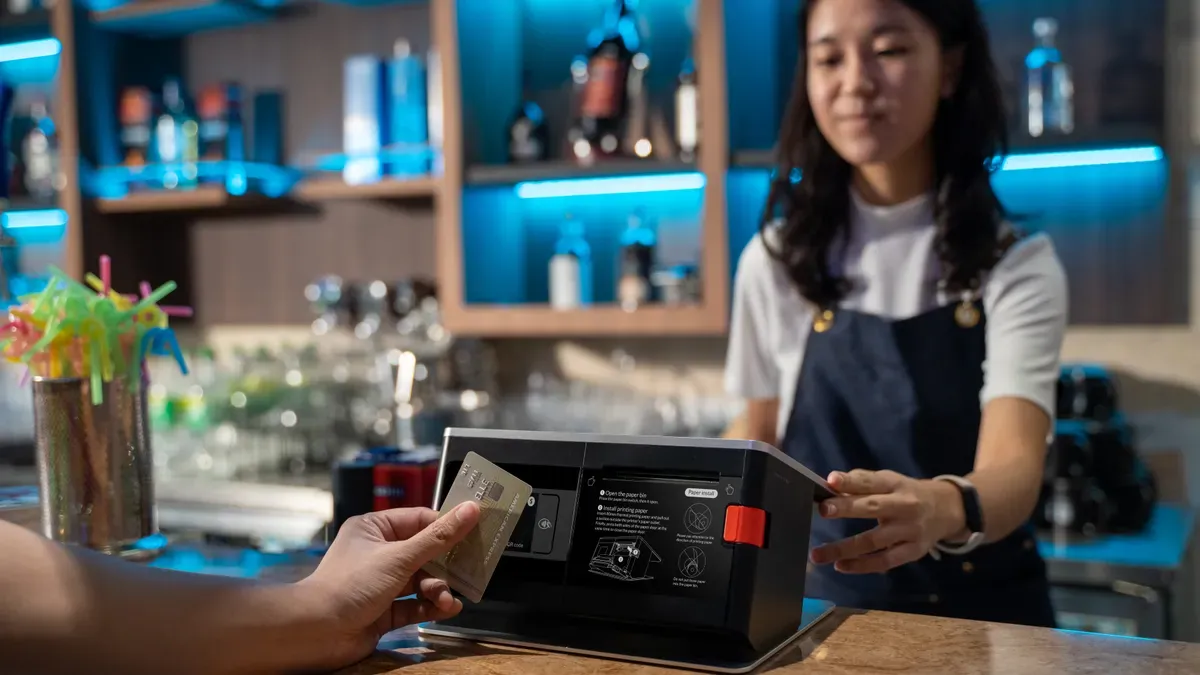
Autonomous checkout lowers costs in four ways: it cuts labor, speeds up checkout, stops inventory loss, and gives strong returns. AI-powered systems can cut labor costs by about 20–30%, which helps control expenses over time and drives meaningful cost savings. You will see how each part works, with real data on savings, staffing, shrinkage, and payback periods. Self-checkout systems and other autonomous checkout tools give you a clear way to lower costs and achieve cost savings. This section explains each source of savings in detail, so you can estimate your own results. The technology spots products as shoppers pick them up, so manual scanning is no longer needed.
Key Takeaways
Autonomous checkout cuts labor costs by reducing cashiers and moving staff to better jobs.
It speeds up checkout, making customers happier and more likely to return.
The system prevents theft and inventory loss with real-time tracking and AI.
You can save money and see payback in about 3 to 5 years.
Faster checkout leads to more loyal customers and higher sales.
Labor Cost Savings
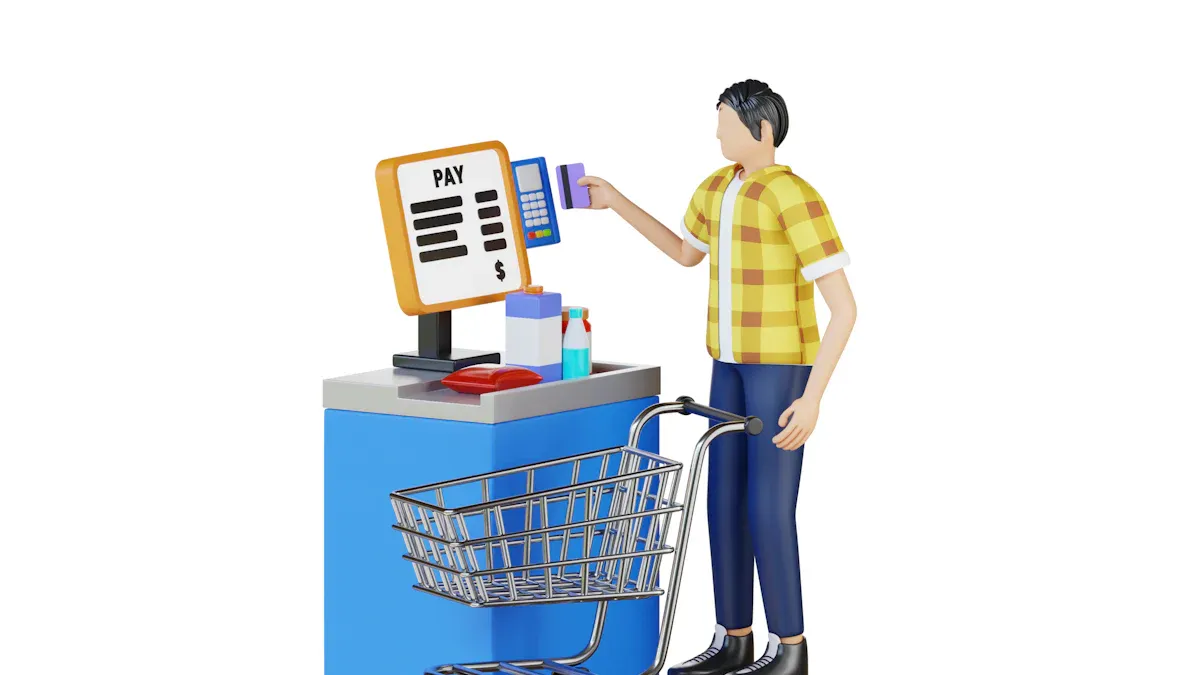
The biggest way autonomous checkout saves money is by lowering labor costs. When you have fewer cashiers at the front, you cut your largest operating expense. AI-powered systems can cut labor costs by up to 30%. This happens in two main ways. You have fewer people at the register. You also move current workers into jobs that bring more value to your business. These two plans work together to create real savings.
Fewer Cashiers, Lower Payroll
Labor is a big part of what retail stores spend. Regular stores need several cashiers for each shift. They spread out schedules to cover busy hours. They hire part-time workers to fill in the gaps. This makes a complex mix of payroll costs, training expenses, and management oversight.
Autonomous checkout changes this fully. When shoppers scan items themselves or use computer vision to track what they buy, you no longer need dedicated cashiers. The system handles transactions without any staff. Your team only steps in for age-restricted items or tech problems.
According to T-ROC, self-checkout systems usually bring a 25-40% drop in checkout-line labor hours. This leads to real payroll savings for retailers. Fewer scheduled hours directly lower your weekly payroll. You also cut related costs like benefits, paid time off, and overtime pay. Less hiring also means less spending on recruitment. You spend less on job postings, interviews, and onboarding for high-turnover cashier jobs. You stop paying for uniforms and equipment for cashiers you no longer need.
These lower staffing needs add up over time. A store that cuts checkout labor by 30% saves that much every single week. Over a year, those savings grow large. You free up money for other investments.
Reallocating Staff to Higher-Value Tasks
The real gain from autonomous checkout is more than cutting jobs. You take employees away from low-value scanning work and move them into roles that make money.
Just Walk Out technology lets operators improve labor by freeing up front-of-house staff to focus on higher-value tasks such as shopper support.
Here are the main ways you can move your team to new roles:
Reducing dependence on cashier manpower: You rely less on human cashiers, which directly lowers staffing costs and makes store operations better.
Reallocating staff to value-adding activities: Instead of working checkout lanes, employees move to customer service, sales help, and store management.
Managing operational expenses amid rising labor costs: As minimum wage laws go up, automated systems help you control costs by needing fewer staff.
Continuous operation without added staffing: AI-driven systems run all the time, so you can extend hours without paying for extra staff.
The results show in how employees work in new ways. One store operator said the system let staff focus on tasks that face customers.
Our staff is now more mobile to stock the store and interact with patrons.
Another operator explained the change in thinking. Instead of being very transactional, staff members can keep their eyes up and make sure fans' needs are met.
You move workers from behind the register to the sales floor. They restock shelves during busy shopping times. They help customers find products around the store. They answer questions about pricing and promotions. They help with online order pickup and delivery prep. They handle returns and exchanges at special service points. These tasks bring more value than standing at a register.
This shift improves your store in two ways. You get lower payroll costs by needing fewer people at checkout. You also make the customer experience better by having more helpful people on the floor. The whole package brings real savings without lowering service quality. You get the most value from every team member. This approach turns labor from a fixed cost into a flexible asset.
How Autonomous Checkout Streamlines Operations
Faster, Streamlined Checkout Process
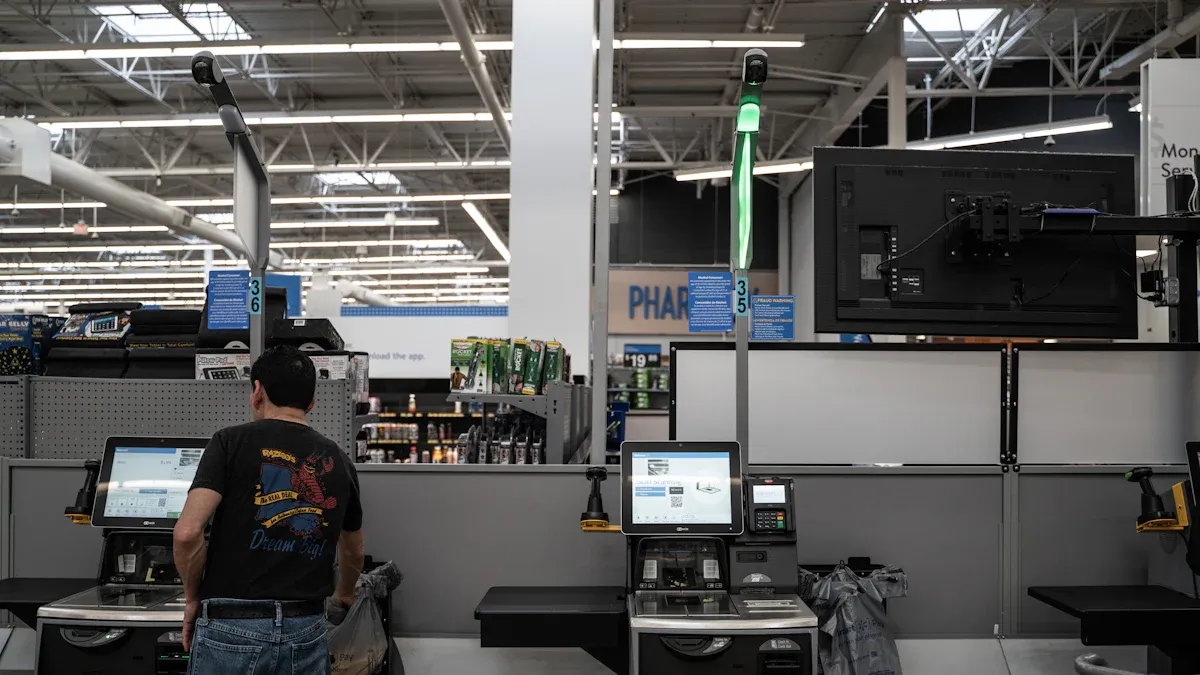
Speed is important when you pay. Old checkout lines make customers wait about 3 to 5 minutes. New self-checkout systems cut that wait to 1 or 2 minutes. One clothing store saw time go from 4 minutes down to 1 minute 30 seconds. A home improvement store went from 3 minutes 40 seconds to 2 minutes 10 seconds.
Scenario | Traditional Checkout Time | Autonomous/Self-Checkout Time | Reduction |
|---|---|---|---|
General comparison | 3–5 minutes | 1–2 minutes | 2–4 minutes |
Fashion sector case study | 4 minutes | 1 minute 30 seconds | 2.5 minutes |
DIY sector case study | 3 minutes 40 seconds | 2 minutes 10 seconds | 1.5 minutes |
Those minutes turn into a lot of time. The average American waits about 37 hours in line every year. Many shoppers give up on buying if they wait more than 5 minutes. 86% of U.S. shoppers have left a store because lines were too long. Stores lose about $38 billion in possible sales. A faster checkout removes these problems. It also makes the store run better. Workers no longer have to watch lines or fix machines. They can help customers instead.
"High-traffic locations with long lines are ideal places to introduce the technology," said Jamie Obletz, president, Delaware North Sportservice. "Just Walk Out technology enables our high-volume stores to serve even more fans, with increases of 20 to 30 percent."
Better Resource Allocation
Autonomous checkout changes how you use your workers. You don't need people just for the register. You keep staff for stocking shelves, helping customers, and taking care of the store. You move current workers to jobs that add more value. This makes the whole store work better.
Your store can also be open all day and night. You don't need someone to watch the checkout. Sensors and AI systems collect data on what customers do, what products are popular, how people move, and what stock you have. You use this data to make the store layout better, give special deals, and manage inventory. New jobs come up in fixing technology, watching AI, looking at data, and helping customers. These jobs need workers to learn new skills. Self-checkout and other autonomous checkout tools give you a clear way to run your store better.
Inventory Loss Prevention
Real-Time Tracking and Accuracy
Manual inventory counts happen every week or month. Between counts, your records no longer match what is on your shelves. Autonomous checkout solves this problem. The system follows each item as shoppers take it or put it back. Your stock data updates the moment a product leaves the shelf.
This real-time method brings several benefits. It removes human mistakes in inventory recording. It gives instant updates on stock movement. It makes your supply chain easier to see. It cuts down time spent on manual audits. It boosts how well your whole store runs.
The technology behind this tracking uses many sensors working together. Computer vision uses cameras and deep learning to spot products. RFID tags identify shoppers and track inventory. Weight sensing shelves measure changes when someone takes an item. Vibration-based detection tracks movement on shelves. LiDAR builds depth maps for tracking people without cameras. Sensor fusion mixes weight, vision, and vibration data for better accuracy. Deep learning algorithms recognize products and tell similar items apart. Real-time data processing keeps everything running smoothly through edge-to-cloud computing.
Reducing Shrinkage and Theft
Shrinkage cuts into your profits. You lose money when items leave the store without being paid for or when employees make mistakes. Autonomous checkout fights this problem in several ways. One recorded case shows a store that expected a 5.6% shrinkage rate reached zero shrinkage after using Vision AI autonomous checkout technology. That is a 100% drop. Data from Trigo-powered stores shows autonomous checkout can cut inventory shrinkage by as much as 70%.
The system stops fraud without staff stepping in all the time. Computer vision item recognition studies live video to identify items and check them against scanned barcodes. Comparing visual predictions with barcodes stops ticket and price-tag switching. Real-time motion tracking catches unscanned items before customers leave. Hand trajectory tracking with pose estimation detects physical bypass and on-purpose non-payment. Sweethearting detection flags items bagged without a scan event. Edge computing allows instant alerts with about 150ms reaction time. Automatic screen locking stops fraudulent transactions right away.
In autonomous retail, shrinkage prevention isn't about better cameras or more sophisticated algorithms. It's about systematic data verification. Real-time monitoring systems flag transactions where AI confidence falls below acceptable thresholds. Instead of stopping customers or requiring staff intervention during active shopping, verification happens through systematic data review by trained annotation specialists. This workflow creates a continuous learning loop: every mistake caught in verification becomes training data preventing similar errors in future transactions.
These systems protect your margins. They reduce the cost savings you lose to theft and error. They make self-checkout systems more reliable. Every prevented loss adds to your bottom line.
ROI and Added Cost Savings
Upfront Costs and Payback Periods
You need to know what you will spend before you see any savings. Hardware costs are different for each type of system. Tablet-based kiosks cost from $150 to $2,000. Entry-level models cost between $3,000 and $7,000. Standard floor-standing kiosks range from $3,000 to $8,000. Basic self-checkout models fall between $2,500 and $10,000. Commercial-grade floor-standing units cost $2,500 to $15,000 per unit. Full-size retail units run from $15,000 to $40,000 or more. High-end systems with cash recyclers and AI loss prevention also cost $15,000 to $40,000 or more. A grocery store self-checkout kiosk averages about $30,000. A four-lane grocery setup averages about $125,000.
System Class | Cost Range |
|---|---|
Tablet-based kiosks | $150 – $2,000 |
Entry-level models | $3,000 – $7,000 |
Standard floor-standing kiosks | $3,000 – $8,000 |
Basic self-checkout models | $2,500 – $10,000 |
Commercial-grade floor-standing units | $2,500 – $15,000 per unit |
Full-size retail units | $15,000 – $40,000+ |
High-end/advanced systems | $15,000 – $40,000+ |
Grocery store self-checkout (average) | ~$30,000 |
Four-lane grocery setup (average) | ~$125,000 |
You also pay one-time costs like installation, electrical work, network drops, and pilot testing. Recurring costs include software subscriptions, remote monitoring, spare parts, and field service labor. Hidden cost drivers include support at scale and shrink exception handling.
Payback timelines for autonomous checkout run about 3 to 5 years, or roughly 36 to 60 months. This depends on customer adoption. That is a longer payback play than other retail computer-vision uses like loss prevention, which pays back in 12 to 24 months. You should plan for a multi-year horizon when you budget for this technology.
Customer Retention Benefits
A faster checkout does more than save time. It keeps customers coming back. Customers are more likely to make repeat purchases when their in-store wait time feels short and well-managed. According to the 2025 American Customer Satisfaction Index (ACSI), even a 1% improvement in checkout speed can boost satisfaction scores for general merchandise retailers. Small changes have a measurable impact.
The numbers show how retention pays off. Strong loyalty programs see an 8-15% increase in 12-month repeat visit rates. Weak loyalty programs see a 5-12% decrease. You can capture 40-60% of potential lifetime value through loyalty integration at self-checkout. Locations using autonomous checkout report double-digit sales growth.
A quick, smooth checkout often becomes the deciding factor that keeps customers coming back instead of turning to competitors. You turn a one-time shopper into a repeat buyer. That repeat revenue compounds over time. The cost savings from labor and loss prevention grow alongside the revenue you gain from happier, more loyal customers. Together, these benefits build a strong case for the investment.
Autonomous checkout cuts your operating costs in four proven ways. You lower labor, because stores see 20–30% labor cost drops within five years. You make operations smoother, moving shoppers through faster. You stop inventory loss, though shrink still runs higher than cashier lanes. You get strong returns, with payback in 36–60 months.
Adding checkout-free tech gives stores useful data. It helps build better total buyer visits. This builds strong brand loyalty over time. It brings back more shoppers later on.
Check your own staffing, shrinkage, and throughput numbers to estimate your savings. Self-checkout systems and similar tools give real cost savings. Adoption keeps growing, and the long-term financial impact looks strong.
FAQ
How much can autonomous checkout cut labor costs?
AI-powered systems can cut labor costs by up to 30%. Self-checkout systems usually bring a 25-40% drop in checkout-line labor hours. You also save on benefits, overtime, and hiring. Those savings grow every week you operate.
Does autonomous checkout really reduce theft and shrinkage?
Yes. One store reached zero shrinkage after adopting Vision AI autonomous checkout. Trigo-powered stores show shrinkage cuts as high as 70%. Computer vision checks items against scanned barcodes. Real-time motion tracking catches unscanned items before customers leave.
How long until the investment pays back?
Payback runs about 3 to 5 years, or 36 to 60 months. That timeline depends on customer adoption. Loss prevention tools pay back faster, in 12 to 24 months. Plan for a multi-year horizon when you budget.
How much faster is checkout with these systems?
Traditional lanes make you wait 3 to 5 minutes. Autonomous systems cut that to 1 to 2 minutes. One fashion store dropped from 4 minutes to 1 minute 30 seconds. Faster checkout keeps shoppers from abandoning purchases.
Do faster lanes actually improve customer retention?
Yes. Even a 1% improvement in checkout speed can lift satisfaction scores. Strong loyalty programs see an 8-15% increase in repeat visits. Locations using autonomous checkout report double-digit sales growth. Repeat revenue compounds alongside your cost savings.
See Also
Cloudpick's Checkout Computers Boost Efficiency, Accessibility, And Experience
Self-Checkout Cash Error Causes And Remedies For Smooth Transactions
The History And Evolution Of Self-Checkout Technology Explained
Cloudpick Offers Cashierless Convenience For Your Retail Store
The Walgreens Self-Checkout Systems Highlight Convenience And Retail Challenges
