How AI-powered unmanned convenience stores like ALLDAYS at NYU Shanghai are transforming campus life and retail operations

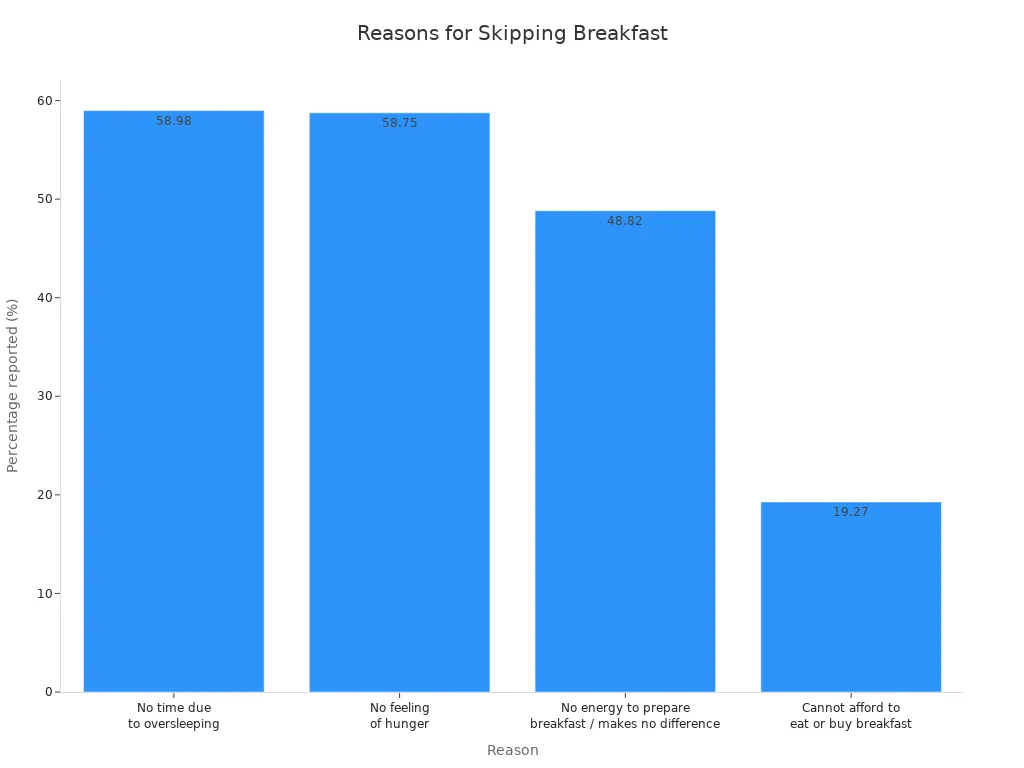
Imagine this: you get out of bed, grab breakfast downstairs, and still make it to your first class. That small win tells you a lot about campus life. In fact, 58.98% of university students say they skip breakfast because they sleep too late and run out of time.
An ai convenience store like ALLDAYS at NYU Shanghai solves that problem. It gives you two wins at once: easy everyday convenience for you, and data-driven efficiency for operators. Unmanned stores remove checkout lines. Unmanned retail keeps shelves stocked with what you really buy. You get smart retail, and operators get automation that works. The unmanned store concepts behind ALLDAYS show how unmanned retail store design fits real campus habits. This post explains how the model works, and how you can copy it on your campus.
Key Takeaways
Unmanned stores like ALLDAYS give students quick access to snacks and drinks without waiting in line.
Facial recognition and automatic billing make shopping fast and easy.
AI tracks what students buy and helps stores keep popular items in stock.
Stores plan around student habits, like late-night shopping and breakfast needs.
Campuses can start small with a micromarket and grow based on data.
Inside an AI Convenience Store on Campus
From Dorm to Storefront
You step out of your dorm building and walk a short path to a purple-branded storefront. That storefront is ALLDAYS at NYU Shanghai. The trip takes less time than waiting for an elevator in some towers. You reach the door before your coffee craving fully wakes up.
This is what an ai convenience store feels like in daily life. You do not plan a trip. You just go. The store sits close to where you sleep, study, and eat. That short walk changes your whole morning routine. You grab what you need and head to class. The ai convenience store model works because it removes distance from the equation.
Everyday Essentials in One Stop
Step inside and you see the full range at once. Drinks fill the coolers. Packaged food lines the shelves. Snacks sit near the entrance. Study supplies wait in a corner for exam week. The mix matches what campus shoppers actually buy.
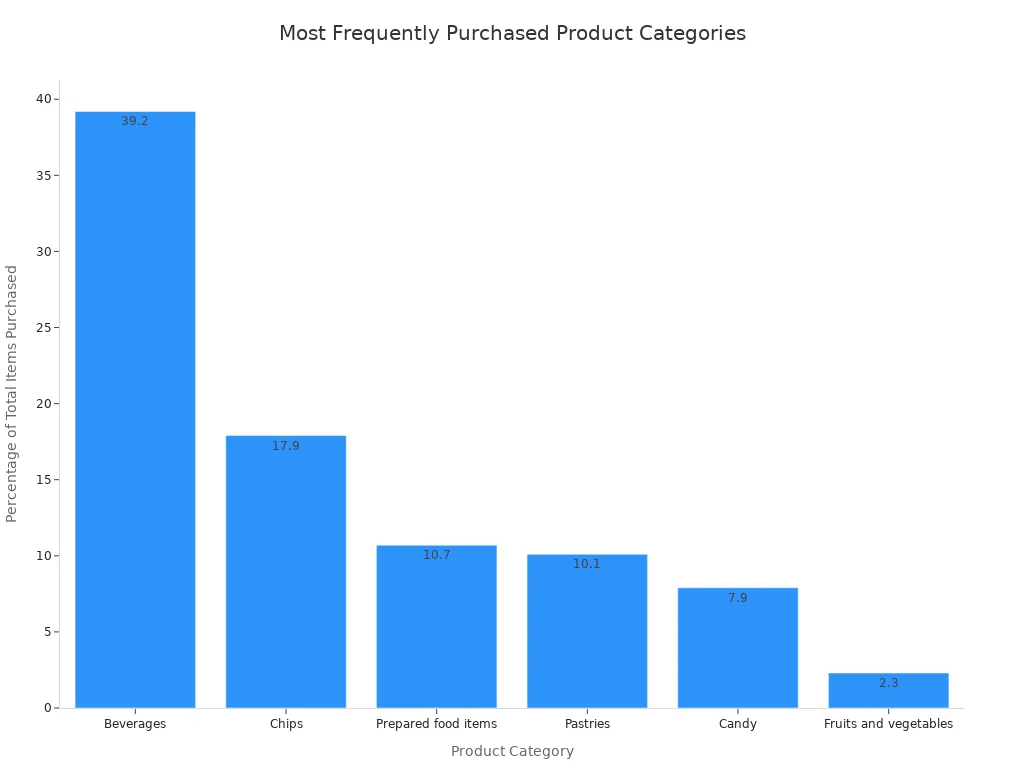
The data backs this up. Beverages lead campus purchases at 39.2% of total items. Chips follow at 17.9%. Prepared food items reach 10.7%, pastries 10.1%, and candy 7.9%. Fruits and vegetables trail at 2.3%.
Now watch a shopper. You pick a drink and a snack. You walk out. No line, no scanner, no receipt hunt. The unmanned store concepts behind this journey rely on the internet of things and product recognition. Cameras and sensors handle the rest. That is the efficiency you feel as a customer. You exit fast, and the system settles your bill on its own.
Why Students Choose Unmanned Stores
Quick Errands Between Lectures
Your schedule rarely leaves room for a real shopping trip. You have ten minutes between a lecture and a study session. That gap is too short for a full supermarket run. It is plenty of time for unmanned stores.
The nearby location does the heavy lifting here. You walk out of class, cross the path, and reach the door in under a minute. You grab a drink, a snack, or a notebook. Then you head back to your desk. Unmanned retail fits into the cracks of your day. That is the whole point.
Think about a typical Tuesday. You finish a morning lecture and realize you forgot a pen for the afternoon exam review. A traditional shop means a long walk and a wait at the register. An unmanned store means a two-minute stop. You stay on schedule. Unmanned stores turn small errands into background tasks. You barely notice them, and that is exactly why students keep coming back.
Familiar Products, Fast Checkout
The entry process removes the first point of friction. Facial recognition entry lets you walk in without swiping a card or scanning a code. The door opens, and you are inside. No app fumbling, no queue at the entrance.
Checkout works the same way. Automatic bill settlement charges you after you leave. You never stand in line. You never hand over cash. This checkout-free setup is the heart of the seamless shopping experience. Product recognition and automation handle the tracking in the background. You just pick up what you want and walk out.
Here is why that matters for a student on a tight schedule. A cashier-less store removes the two slowest steps of any shopping trip: waiting to pay and waiting to enter. Unmanned retail cuts both. The efficiency adds up across a semester. Five saved minutes a day becomes hours of study time.
The product mix seals the deal. You find the brands you already know. Drinks, snacks, packaged food, and study supplies sit where you expect them. Unmanned stores work because they feel familiar, not foreign. A convenient and efficient way to shop beats a flashy one you have to learn.
This is smart retail in its simplest form. The technology stays invisible. The store gives you a quick journey from door to shelf to exit. Unmanned store concepts succeed when they disappear into your routine. Students choose unmanned stores for three plain reasons: familiar products, a location next door, and a fast trip. An unmanned retail store that nails all three earns repeat visits. A cashier-less store that misses one loses them.
The model also scales. One unmanned store can serve a single dorm building. A network of unmanned stores can cover an entire campus. Each location stays small, focused, and close to its users. That is the quiet strength of unmanned retail on campus.
How AI Powers Smarter Operations
Tracking Product Popularity
You see the shelves. The store sees the data. AI cameras watch how products move in the store. They track which drinks leave the cooler fast and which snacks sit untouched. This is product recognition at work, and it runs quietly in the background. The system logs every pick and every pass. Over time, it builds a clear picture of what your campus actually buys.
That picture matters. Merchandising ranks as a high-impact AI use case for 81% of grocers, with assortment, pricing, and planograms as top optimization areas. Merchandising AI capabilities are projected to add $21.2 billion in value by 2025. Your campus store runs on the same logic, just at a smaller scale. The cameras feed the unmanned retail intelligent service system with real purchase signals. No guesswork, no surveys. Just what students pick up and what they leave behind.
The data loop closes fast. Store teams read the patterns and adjust. A drink that sells out by noon gets more space. A snack that never moves loses its spot. This is how artificial intelligence turns raw shelf activity into operational efficiency. The unmanned store learns your habits, and the shelves start to match them.
Data-Driven Assortment Suggestions
Now the store acts on what it learns. AI-driven assortment suggestions help store teams understand what the campus community wants. The system spots demand patterns and recommends changes. Better stock distribution reduces overstock and lifts sell-through. Fewer markdowns protect profit. Rebalancing inventory moves slow sellers to where they sell. Store-level forecasting raises accuracy, and McKinsey reports gross margins up to +4% from more accurate demand forecasts.
The results show up in availability. One deployment improved core SKU distribution by +50%. It triggered +50K replenishment orders across 10 stores. It cut assumed demand transfer by 40–70% versus standard models. It covered 110+ retailer-category combinations. That is the power of automated SKU recognition feeding inventory management.
A real-world deployment from the Coca-Cola Founders Program tackled hospital vending machines stocked the same way everywhere, causing frequent stock-outs and rising labor costs. Using actual per-machine sales data, machine-learning models predicted the ideal item mix and space allocation for each machine. Tailored restocking reduced stock-outs and optimized revenue — the same store-level logic now applied to convenience-store assortments.
You feel this loop as a shopper. The essentials you buy every week stay in stock. The unmanned retail store stops running dry on the items you count on. RFID-enabled smart shelves and smart shelves keep counts accurate. Automation handles the restocking signals. That is intelligent retail in practice: the right product, in the right spot, at the right time. The unmanned store concepts behind ALLDAYS show how a customer-to-shelf software service framework and a customer-to-shelf approach turn daily purchases into smarter decisions. The internet of things ties it together, and the ai convenience store keeps getting sharper.
Balancing Convenience in Unmanned Retail Store Planning
Planning Around Visit Times and Essentials
Easy access and products in stock both matter. A store close to you that runs out of your drink still fails you. A store with full shelves but a long walk fails you too. So plan the unmanned retail store around users, visit times, and essentials.
Start with visit times. Students shop late. One campus store sees 56% of transactions between 6 p.m. and midnight. Another sees 33% of sales from 8 p.m. to midnight. Longer hours keep unmanned stores useful when hunger hits after a study session.
Then plan the essentials. Improve the assortment around real demand. Keep stock visibility clear, so high-demand products stay available. On-site restocking is limited in unmanned retail, so plan inventory carefully and cost-optimize it. An ERP system helps you track stock and analyze data. AI-driven inventory management can raise operational efficiency by up to 30%. That is how smart retail earns its place.
A Fit for Campus-Service Businesses
Campus-service businesses already run convenience formats. Compass Group, Sodexo, and Aramark deliver vending, micro-markets, grab-and-go, and smart merchandising under master agreements. Sodexo's Food Hive stores are modular and scale fast. These operators fit the unmanned store business models well, because campuses offer localized, high-foot-traffic access.
Retail operators fit too, in their own way. Lawson and FamilyMart Malaysia bring brand recognition and supply chains. They suit larger footprint formats and busy retail zones. The unmanned store concepts here suit tight, convenience-driven spots. Each option fits a different job. Pick the one that matches your site.
The internet of things, product recognition, and automation make the unmanned retail model work. A customer-to-shelf data loop keeps shelves honest. Automation handles reordering. That is the efficiency you want.
Cloudpick's Practical Path to Unmanned Retail
Focusing on Moments That Matter
Cloudpick is built around small, real moments. You want a cold drink between classes. You need a snack before a long study session. You make a quick stop on your way back to the dorm. Those moments shape the design. The ALLDAYS store makes the idea real. You can walk in, grab what you need, and walk out without slowing down your day.
The model works in many places. Cloudpick powered a frictionless Auchan Go store at EDHEC Business School in France. It has been open since September and serves more than 4,000 students and staff. The company also opened a new unmanned store at the National University of Singapore. This builds on its first campus unmanned store from 2019. Cloudpick has powered 190+ autonomous stores around the world. Each one relies on product recognition, automation, and a customer-to-shelf data loop. That mix gives you efficiency you can feel and smart retail your operator can measure.
Planning Your Campus Rollout
A campus rollout does not need a big buildout. One micromarket example reused existing space with no major construction. It added about 18 linear feet of shelving, plus refrigerators, beverage coolers, and freezers. No extra power was needed at first. The next location's buildout cost under $2,000, and the full setup ran about $20,000 per micromarket. Visible security cameras matter too.
Plan around your users and when they visit. Stock the essentials they buy late at night. Then let the data guide the rest. Unmanned stores reward careful planning, and unmanned retail rewards a tight product mix. Unmanned store concepts like these fit dorms and teaching buildings alike. Unmanned retail store layouts stay small and focused. Unmanned stores near lecture halls cut walking time. Unmanned retail keeps shelves honest through automation. Unmanned stores serve breakfast without a cafeteria trip. Unmanned retail turns a spare room into a storefront. Unmanned stores scale one building at a time. Unmanned retail fits your campus budget. Unmanned stores make the ai advantage practical.
Ready to plan your own? Reach out at jefffeng@cloudpick.me, visit www.cloudpick.ai, or connect at https://lnkd.in/gWsGAewR.
You have seen the two big wins. ALLDAYS at NYU Shanghai makes your day easier. It also gives retailers smarter operations that use data. That balance is the real win.
Two things must work together. Easy access gets you in the door. A product mix built around your campus community, your visit times, and your recurring essentials keeps you coming back. Unmanned stores that master both earn repeat visits.
Campus administrators and retail operators can copy this model. Unmanned retail fits dorms, teaching buildings, and spare rooms. Unmanned stores reward careful planning. Unmanned retail turns daily habits into useful data. Unmanned stores make the ai convenience store idea practical. Unmanned retail proves smart retail can feel simple. Unmanned stores show how unmanned store concepts work. Unmanned retail depends on product recognition and automation. Unmanned stores lean on automation for efficiency. The model delivers efficiency you can measure.
Take the next step with Cloudpick. Email jefffeng@cloudpick.me, visit www.cloudpick.ai, or connect at https://lnkd.in/gWsGAewR.
FAQ
How do you get in and pay at these unmanned stores?
Facial recognition opens the door for you. No card, no code, no app. You pick your items and walk out. The system settles your bill automatically after you leave. That is the whole journey at unmanned stores like ALLDAYS. Entry and checkout take zero waiting.
What can you actually buy inside?
You find drinks, packaged food, snacks, and study supplies. The mix follows real campus demand. Beverages lead purchases, and snacks come next. Unmanned stores stock what you buy often, not what looks good on a planogram. You get the essentials without a long walk.
How does AI make these unmanned stores smarter?
AI cameras track which products move and which sit still. Store teams read those patterns and adjust the shelves. Popular items get more space. Slow sellers lose their spot. That data loop keeps unmanned stores stocked with your recurring essentials. It is smart retail running quietly in the background.
When do students use unmanned stores the most?
Late. One campus store sees 56% of transactions between 6 p.m. and midnight. Another sees 33% of sales from 8 p.m. to midnight. Unmanned stores stay open when hunger hits after a study session. Plan your hours around those late visits, and the store earns its keep.
Can another campus copy this model?
Yes. Cloudpick has powered 190+ autonomous stores worldwide, including campuses in France and Singapore. A micromarket setup can run about $20,000 and reuse existing space. Unmanned stores scale one building at a time. Start small, watch the data, and grow from there.
See Also
Why Stores Powered By Artificial Intelligence Will Dominate Tomorrow
The Growing Rise Of AI Corner Stores Every Retailer Should Understand
Micromarkets Versus Smart Stores: How Automated Convenience Retail Operates Globally
Exploring The Growth Of 24-Hour Vending Machine Cafes Where Convenience Meets Innovation
AI-Powered Combo Vending Machines: Key Features And Benefits For Modern Retail
