How AI-powered analytics helps optimize assortment in Airports & transportation hubs.


Imagine you walk into a busy hub and find shorter lines, personalized shopping options, and smooth movement through each area. Ai-powered analytics makes this possible by using data to predict passenger flow, improve retail offerings, and increase revenue. When you use ai-powered analytics, you help airports reduce waiting times by 20% and cut costs by up to 30%. You see retail sales rise by over 20% and enjoy a better passenger experience. The table below shows how ai-powered analytics transforms revenue and operations:
Impact Area | Result |
|---|---|
Passenger Flow Accuracy | 85–92% forecast accuracy with ai-powered analytics |
Retail Sales Increase | 20%+ boost for nearly 70% of airport retailers |
Operational Cost Reduction | Up to 30% reduction with ai-powered analytics |
Retail Revenue Share | Over 40% of non-aeronautical revenue at top airports |
Key Takeaways
AI-powered analytics can reduce passenger wait times by up to 40%, enhancing the overall travel experience.
Personalized shopping options driven by AI increase retail sales by over 20%, making shopping more enjoyable for travelers.
Real-time data helps airports optimize staffing and resources, leading to improved operational efficiency and reduced costs.
Investing in AI platforms and building data partnerships are crucial steps for airports to maximize the benefits of AI analytics.
Continuous improvement through data analysis allows airports to adapt quickly and enhance passenger flow and satisfaction.
AI-powered analytics benefits
Demand forecasting in airports
You can use ai-powered analytics to predict how many passengers will move through airports each day. This helps you plan for busy times and avoid long lines. With advanced analytics, you get real-time data from ticket sales, security checkpoints, and even weather reports. Machine learning models study these data points and spot patterns that humans might miss.
Ai systems improve accuracy by combining data from many sources.
Heathrow uses ai to predict passenger numbers, so you can adjust staffing and resources quickly.
Schiphol uses ai for crowd control and resource planning, which means you can send staff where they are needed most.
Ai-driven solutions help you maximize capacity without building new terminals.
You can keep improving your forecasts because ai models learn from new data all the time.
When you use ai analytics, you make airports more efficient and sustainable. You reduce waste by matching resources to demand. This leads to better passenger flow and less waiting.
Personalized offerings with ai
Personalization changes the way you shop and travel in airports. Ai for retail uses data to understand what each passenger likes and needs. This means you see offers and products that match your interests. Retail personalization makes shopping easier and more fun.
Aspect | Description |
|---|---|
Data and Technology | Ai studies passenger preferences and behaviors to create unique experiences. |
Predictive Operations | Ai predicts when you might need help or want to shop, making retail more efficient. |
Seamless Experiences | Biometric solutions let you move through security and boarding faster, giving you more time to shop. |
Collaboration | Sharing insights helps airports and retailers serve you better. |
Commercial Insights | Most airport leaders believe digital tools boost retail revenue and passenger satisfaction. |
Ai-powered retail can suggest products based on your past purchases. Machine learning helps forecast flight delays, so you get updates and can plan your time. Ai integration across airport systems means you get a smoother experience from check-in to boarding.
You benefit from hyper-personalized duty-free promotions and dynamic product placements. These features make your journey more enjoyable and efficient. Ai-driven personalization ensures you get the right offer at the right time.
Operational optimization
You can see big improvements in airport operations with ai-powered analytics. Airports like Heathrow and Schiphol use ai to optimize demand forecasting, crowd control, and resource planning. Machine learning tracks queue lengths, service times, and passenger density. When lines get too long, supervisors get alerts and can act fast.
Airport | Optimized Processes | Description |
|---|---|---|
Heathrow | Demand forecasting, capacity optimization | Ai predicts passenger volumes, so you can move staff and resources where they are needed. |
Schiphol | Crowd control, resource planning | Computer vision monitors crowds and helps you adjust staffing and gate use. |
Schiphol | Sustainability goals | Optimization algorithms cut energy use and emissions while keeping performance high. |
Schiphol | Digital twins | Virtual models let you test new ideas without risking real operations. |
Aircraft turnaround times drop by 15-20% when you use ai analytics.
Passenger wait times can fall by up to 40%.
On-time performance improves by 10-15 percentage points.
You can adjust staffing and queue management in real time to prevent bottlenecks.
Ai-powered analytics supports sustainability by reducing energy use and emissions. You get better resource allocation, which means less waste and more efficiency. These improvements lead to a better passenger experience and higher retail sales.
Tip: Start with small ai projects in one terminal or retail area. Measure the results and expand to other parts of the airport for greater impact.
AI in airports: use cases

Real-time data-driven airport operations
You can see how airports use real-time data to improve daily operations. Cloud-based platforms collect information from IoT sensors and cameras. These tools track everything from jet bridges to baggage conveyors. Machine learning studies this data and predicts when equipment needs maintenance. This helps you avoid delays and keeps things running smoothly. Staff can view dashboards that show live performance across all airport locations. Automatic software updates keep systems secure and up to date. When you use ai for predictive maintenance, you fix problems before they disrupt airport operations.
Use Case | Description |
|---|---|
Enhanced Operational Efficiency | Automates and optimizes processes like baggage handling and security screening, improving efficiency. |
Intelligent Decision-Making | Processes large data sets for actionable insights in resource planning and capacity management. |
Improved Safety and Security | Uses AI for intelligent video surveillance to detect threats and enhance security measures. |
Personalized Passenger Experience | Analyzes passenger data to provide tailored recommendations and real-time information. |
Cost Savings and Revenue Generation | Identifies trends and optimizes processes for cost savings and new revenue opportunities. |
You benefit from reduced wait times, better passenger flow, and higher satisfaction. For example, ai sensors and camera analytics track movement and give real-time updates on wait times. This lets you choose the best lane and spend more time enjoying your airport experience.
Mobility and congestion management
You can move through airports faster with ai-powered congestion management. These systems track passenger locations using privacy-compliant data. When congestion builds, staff receive alerts and can reorganize queues. Ai queue management adjusts staffing based on real-time data, which increases throughput and improves passenger satisfaction. Video analytics monitor movement and spot crowding early. Predictive modeling helps airports plan for busy times and keep passenger flow steady.
Measurable Outcome | Description |
|---|---|
Reduced Wait Times | Real-time updates help you avoid long lines and choose faster lanes. |
Improved Passenger Flow | Dynamic lane assignment and proactive management boost throughput. |
Increased Commercial Revenue | Faster processing gives you more time in retail areas, raising non-aeronautical income. |
Higher Customer Satisfaction | Shorter waits lower stress and complaints, making your journey better. |
A major US carrier used computer vision to analyze passenger movement and optimize retail placement. This led to a 22% increase in retail revenue per passenger.
Baggage and resource optimization
You can trust ai to make baggage handling faster and more reliable. Many airports use ai-powered systems to automate baggage sorting and tracking. For example, London Stansted uses automated tracks and carts to move bags from check-in to aircraft in about six minutes. Ai sorts bags, monitors their condition, and predicts arrival times. This reduces lost luggage and mishandling. Predictive analytics also help airports assign gates and schedule ground crews efficiently.
Ai-powered baggage handling reduces misroute rates and manual labor.
Predictive models estimate baggage arrival times for better coordination.
Dynamic gate assignment cuts taxi time by 23% and boosts resource use by 62%.
Benefit | Description |
|---|---|
Reduced baggage mishandling rates | Fewer misplaced bags mean smoother operations. |
Improved baggage tracking accuracy | Better tracking ensures bags reach the right place. |
Faster issue detection and resolution | Ai spots problems quickly, reducing delays. |
Enhanced passenger experience | Reliable baggage handling makes your journey less stressful. |
Greater operational efficiency | Streamlined processes help airports handle more travelers. |
You get a better passenger experience with fewer delays and more reliable service. Ai helps airports manage growing passenger numbers and keeps operations efficient.
Implementation strategies for optimization
Investing in ai platforms
You can start your journey by choosing reliable ai platforms that fit your airport’s needs. Look for solutions that help you analyze large datasets from IoT sensors and GPS. These platforms let you predict trends and optimize terminal operations. You should check if the system is reliable and comes with strong vendor support. Make sure the platform is easy to use and offers training for both staff and ai. Customizability is important because every airport has unique challenges. When you invest in ai-powered tools, you can automate product content, use predictive merchandising, and apply dynamic pricing. These steps help you improve passenger experience and streamline operations.
Ensure real-world reliability to avoid disruptions.
Choose vendors who provide ongoing support and updates.
Pick platforms with intuitive design for better user experience.
Ask for robust training for both staff and ai.
Select solutions that adapt to your airport’s needs.
Building data partnerships
You need strong data partnerships to unlock the full value of ai-powered analytics. A centralized data hub, like the Common Data Environment at Miami International Airport, helps you manage and share business data. This approach breaks down silos and gives you immediate access to information. Reliable partners help you keep up with the fast-changing world of analytics. Collaboration with experts brings specialized knowledge and improves decision-making. When you have up-to-date data, you can respond quickly to passenger needs and optimize terminal energy optimization.
Use a centralized data environment for easy access.
Work with partners who understand airport operations.
Share data to improve passenger flow and satisfaction.
Overcoming challenges
You may face challenges like risk aversion, limited capital, or infrastructure readiness. You can solve these with smart solutions. For example, ai-integrated cameras help you monitor operations. Predictive analytics let you allocate resources wisely. Virtual assistants support passenger interaction and reduce pressure on staff.
Challenges | Solutions |
|---|---|
Risk aversion | AI-integrated cameras for monitoring operations |
Limited capital | Predictive analytics for resource allocation |
Need for infrastructure readiness | Virtual assistants for passenger interaction |
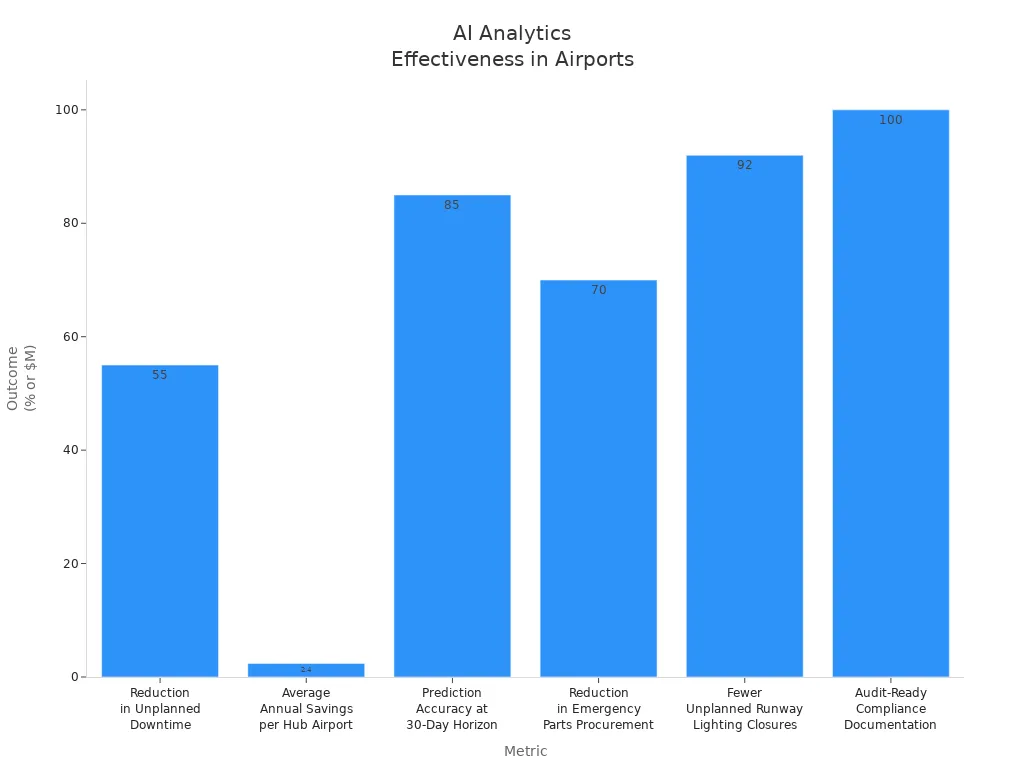
You can see real results when you use these strategies. Airports have reduced unplanned downtime by 55% and saved an average of $2.4M each year. Prediction accuracy now reaches over 85%. Emergency parts procurement has dropped by 70%. These improvements lead to fewer delays and a better passenger journey.
Tip: Start small with pilot projects and expand as you see positive results. This approach helps you manage risk and build confidence in ai-powered tools.
Data-driven airport transformation

Continuous improvement with ai
You can drive real change in airports by using ongoing data analysis. This approach helps you improve baggage handling, passenger flow, and staffing decisions. You spot problems early and use metrics to measure success. Real-time feedback lets you test new ideas and make quick adjustments. You do not fix issues once and forget them. Instead, you keep refining your operations for better results.
You use analytics to understand delays and errors in baggage handling.
Data-driven notifications about queues and wait times help passengers make smart choices.
You focus on continuous improvement, not just one-time fixes.
Airports use video analytics to watch queue lengths and manage passenger routing. AI helps detect security incidents and suspicious behavior in real time. Predictive maintenance tools analyze equipment data and prevent failures before they happen.
Application Area | Description |
|---|---|
Passenger Flow Analysis | Uses video analytics to monitor queues and manage routing. |
Security Incident Detection | AI finds threats and suspicious actions quickly. |
Predictive Maintenance | Predicts equipment problems and allows for fast repairs. |
You see better passenger experiences, more efficient retail operations, and less waste. These steps support sustainability by reducing emissions and energy use. You help airports move closer to a sustainability transformation.
Future trends in airport optimization
You will see many new trends in airport optimization. Airports now use digital twin technology to create virtual models of their operations. These models help you monitor and improve performance in real time. Biometric identity systems make passenger processing faster and safer. AI-driven predictive operations let you plan for busy times and keep everything running smoothly.
Trend | Description |
|---|---|
AI-driven predictive operations | Predicts flight patterns and passenger flow for better planning. |
Digital twin technology | Creates virtual airport models for real-time monitoring. |
Biometric identity systems | Speeds up passenger checks and improves safety. |
Flight efficiency | Optimizes routes and reduces congestion, lowering emissions. |
Safety enhancements | Detects risks early and keeps airports safe. |
You will also see airports focus on resource management and predictive maintenance. These tools help you cut costs and improve reliability. As airports evolve, you will notice a shift toward integrated systems. Biometric data will feed into predictive centers, making resource allocation smarter. This change supports sustainability by lowering emissions and helping airports reach their sustainable aviation transition goals.
Airports now aim to become intelligent ecosystems. You see retail and passenger services blend with digital tools. These changes create new ways to reduce emissions and support sustainability. You help lead the way in sustainability transformation by using data and AI to make better decisions.
Note: Airports that invest in data-driven management see improved passenger experiences, higher retail revenue, and lower emissions. You play a key role in building a more sustainable future for aviation.
AI-powered analytics gives you clear advantages in airport assortment optimization. You see enhanced customer engagement, improved sales efficiency, and higher conversion rates.
Benefit | Description |
|---|---|
You manage resources better and respond faster to changes. | |
Reduced Wait Times | Predictive tools help you cut lines and improve passenger flow. |
Better Passenger Experiences | Personalized offers and easy navigation make travel less stressful. |
To maximize results, you should:
Start with pilot projects and map your current processes.
Use real-time tracking and proactive congestion alerts.
Invest in staff training and partner with technology experts.
Measure impact and adapt your strategies for ongoing improvement.
FAQ
How does AI-powered analytics improve your airport experience?
AI helps you move faster through airports. You see shorter lines, better shopping options, and fewer delays. AI predicts busy times and helps staff manage crowds. You get real-time updates and personalized offers.
Is your personal data safe with AI systems in airports?
Most airports use strong security to protect your data. They follow privacy laws and use encryption. You can ask how your data is used. Your information helps improve your journey but stays safe.
Can small airports use AI-powered analytics?
Yes, small airports can start with simple AI tools. You can use pilot projects in one area, like baggage or retail. This helps you see results before expanding to other parts of the airport.
What are the main benefits for airport operators?
You get better resource use, higher sales, and happier travelers. AI helps you cut costs, reduce waste, and improve safety. You can make smarter decisions with real-time data.
See Also
Exploring The Advantages Of AI-Driven Vending Machines Today
Transforming Online Retail Management With AI-Enhanced Tools
The Future Of Retail Lies In AI-Driven Stores
Understanding The Growth Of AI-Enhanced Corner Stores
Launching A Budget-Friendly AI-Driven Corner Store Successfully
