How AI-powered analytics helps optimize assortment in Hospitals & healthcare facilities

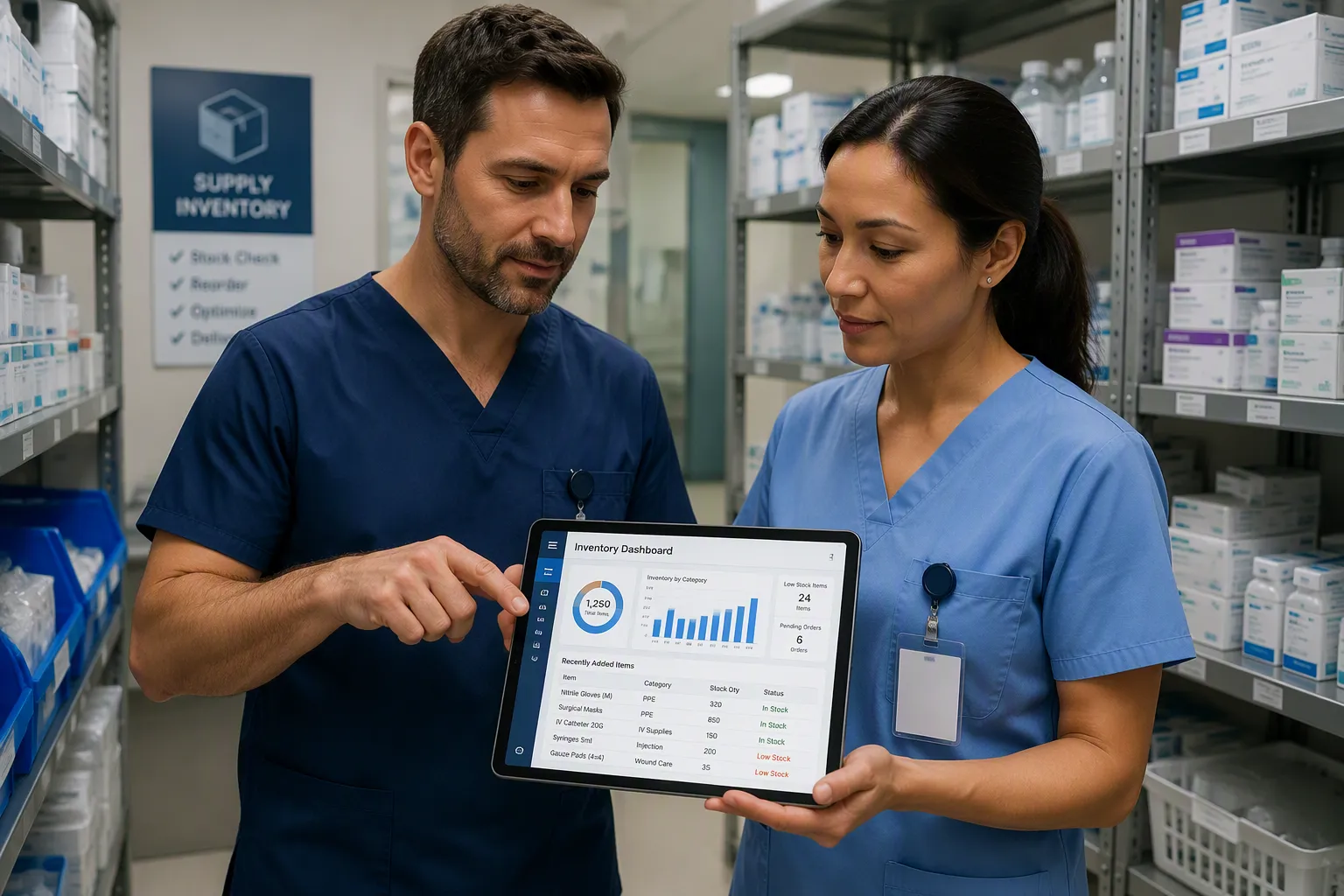
AI-powered analytics transforms assortment optimization in healthcare. These systems examine vast datasets to predict demand, cut waste, and keep critical medical supplies available. Hospitals no longer rely on reactive inventory methods. Instead, they adopt proactive, data-driven strategies. This shift improves patient care and operational efficiency.
Predictive analytics supports assortment planning across healthcare supply chains. Demand forecasting helps inventory management teams align stock with real patient needs. Analytics also powers ai in healthcare to reduce overstocking and stockouts. These changes strengthen both clinical outcomes and financial performance.
Healthcare leaders now face a clear choice. They can keep manual processes or embrace intelligent systems. The following sections examine how these tools work, what benefits they deliver, and how facilities implement them.
Key Takeaways
AI analytics predicts demand using patient data, seasonal trends, and supplier signals.
Hospitals cut procurement costs by 15% and reduce medical waste by 40% with AI.
Predictive models prevent stockouts and keep critical supplies available for patients.
Clean data and staff training ensure AI tools deliver reliable inventory decisions.
Automated systems adjust stock levels in real time to match actual patient needs.
How AI-powered analytics works
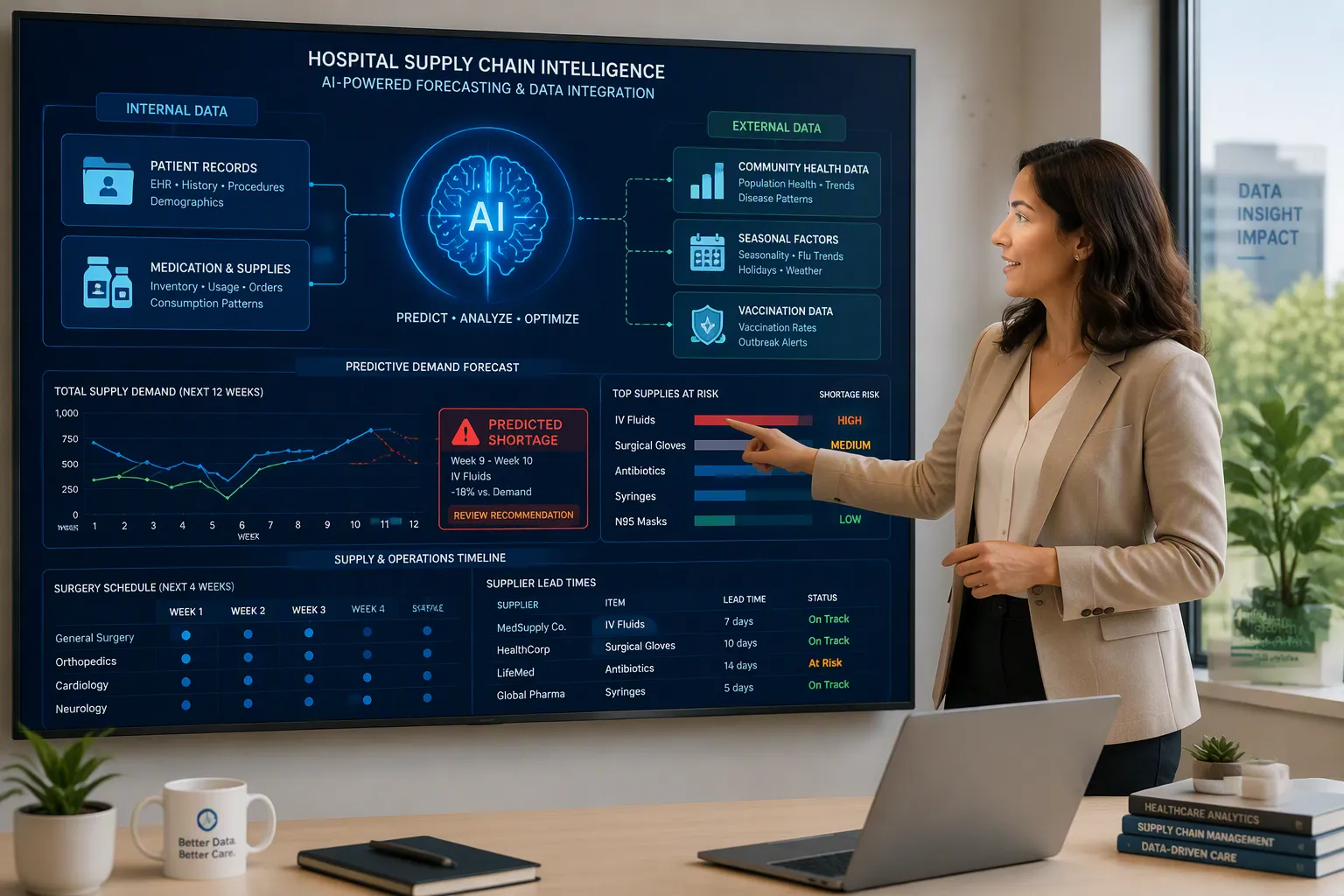
AI-powered analytics combines multiple data streams with machine learning models to predict what hospitals will need and when. The system learns from past patterns and adjusts to new signals in real time. This approach replaces static rules with dynamic, data-driven decisions.
Data sources for demand forecasting
Effective demand forecasting depends on integrating internal and external data. Internal sources include patient data and historical consumption levels of medications. External sources cover community health data, seasonal health trends, time of year, vaccination levels, and prevalence of illness in the community. Hospitals use internal data to forecast demand for medical supplies, staffing, and pharmacy medications. They rely on external data to forecast operational needs, resource allocation, and medication demand influenced by outside forces.
Data Source Category | Specific Data Sources | Example Forecasting Applications |
|---|---|---|
Internal | Patient data; historical consumption levels of medications | Forecasting demand for medical supplies, staffing, and pharmacy medications |
External | Community health data; seasonal health trends; time of year; vaccination levels; prevalence of illness in the community | Forecasting operational needs, resource allocation, and medication demand influenced by outside forces |
Predictive analytics also draws on historical order history and demand patterns to detect usage trends. Clinical schedules, such as surgery schedules, help forecast demand based on planned care. Supplier lead times and disruption signals help anticipate availability gaps. The models combine these inputs to predict shortages and optimize inventory.
Predictive modeling and forecasting
Predictive analytics forecasts demand for medical supplies based on historical usage, surgery schedules, and seasonal trends. The models learn from historical usage data and adapt to sudden changes. AI-powered demand forecasting achieves 85% accuracy, significantly higher than traditional methods. During the COVID-19 pandemic, such models correctly predicted shortages in PPE and ventilators. This demonstrated how historical data and real-time signals, like outbreak patterns, improve forecast reliability.
Analyzing historical appointment and patient flow data helps hospitals maintain the right mix of products. This reduces overstocking and stockouts. Predictive analytics supports inventory management by aligning stock levels with anticipated demand. The system identifies slow-moving and obsolete items to optimize inventory turnover. Supply chain analytics also provides insights into purchasing costs, inventory holding costs, and transportation expenses.
AI-driven engines automate stock management and dynamically adjust inventory levels to align with actual patient needs. These engines use real-time analytics to trigger reorders based on consumption velocity and lead time. Advanced analytics flags shortfalls days in advance, giving supply planning teams time to act. Prescriptive analytics goes further by recommending optimal stock levels for each product. This minimizes stockouts and overstocking across the healthcare supply chain. For healthcare supply chains, the result is a system that learns, adapts, and improves over time.
Key benefits for healthcare supply chains
AI-powered analytics reshapes how hospitals manage supplies. The technology helps teams optimize order quantities and product selection. Better decisions improve efficiency and cut waste across the healthcare supply chain.
Reducing costs and minimizing waste
Analytics-based inventory systems help hospitals cut procurement costs by 15%. AI-powered waste management strategies reduce medical supply waste by 40%. Stock level optimization lowers inventory waste by 30%. These gains come from fewer expired items, less overstocking, and smarter purchasing.
Predictive analytics also supports waste reduction at the point of use. Computer vision captures product information from medical supply packaging during procedures. This approach reduces reliance on barcode scanning and manual data entry. Teams gain reliable data about supplies used per procedure. They can then compare similar cases, investigate utilization variation, and review preference cards. Hospitals that adopt these methods find products routinely stocked but rarely used. They align purchasing and inventory levels more closely with actual consumption.
Real-world results show the scale of these benefits. A UK hospital system cut pharmaceutical waste by 30% in one year with an AI-powered inventory forecasting platform. A California hospital saved roughly $1 million annually through AI-based surgical kit customization. These examples show how advanced analytics turns supply data into measurable savings.
Improving patient care and inventory efficiency
Better assortment planning keeps critical supplies available when patients need them. Predictive analytics prevents stockouts that cause treatment delays. It also blocks expired or recalled items from reaching patients. Accurate budgeting frees resources for direct patient care.
Inventory management automation gives staff real-time visibility into stock levels. This visibility helps teams avoid both shortages and excess stock. Optimizing par quantities with AI-driven analytics prevents stockouts and reduces unused inventory. Centralized storage with FIFO rotation lowers errors and the risk of expired items. Automation and integration with ERP and EHR systems reduce human error and support timely decisions. Regular audits and KPI tracking, such as stock turnover and stockout rates, safeguard against problems that affect patient care. These steps help hospitals optimize resource allocation and strengthen supply planning. The result is a healthcare supply chain that supports both operational goals and clinical quality.
Implementing AI-powered analytics
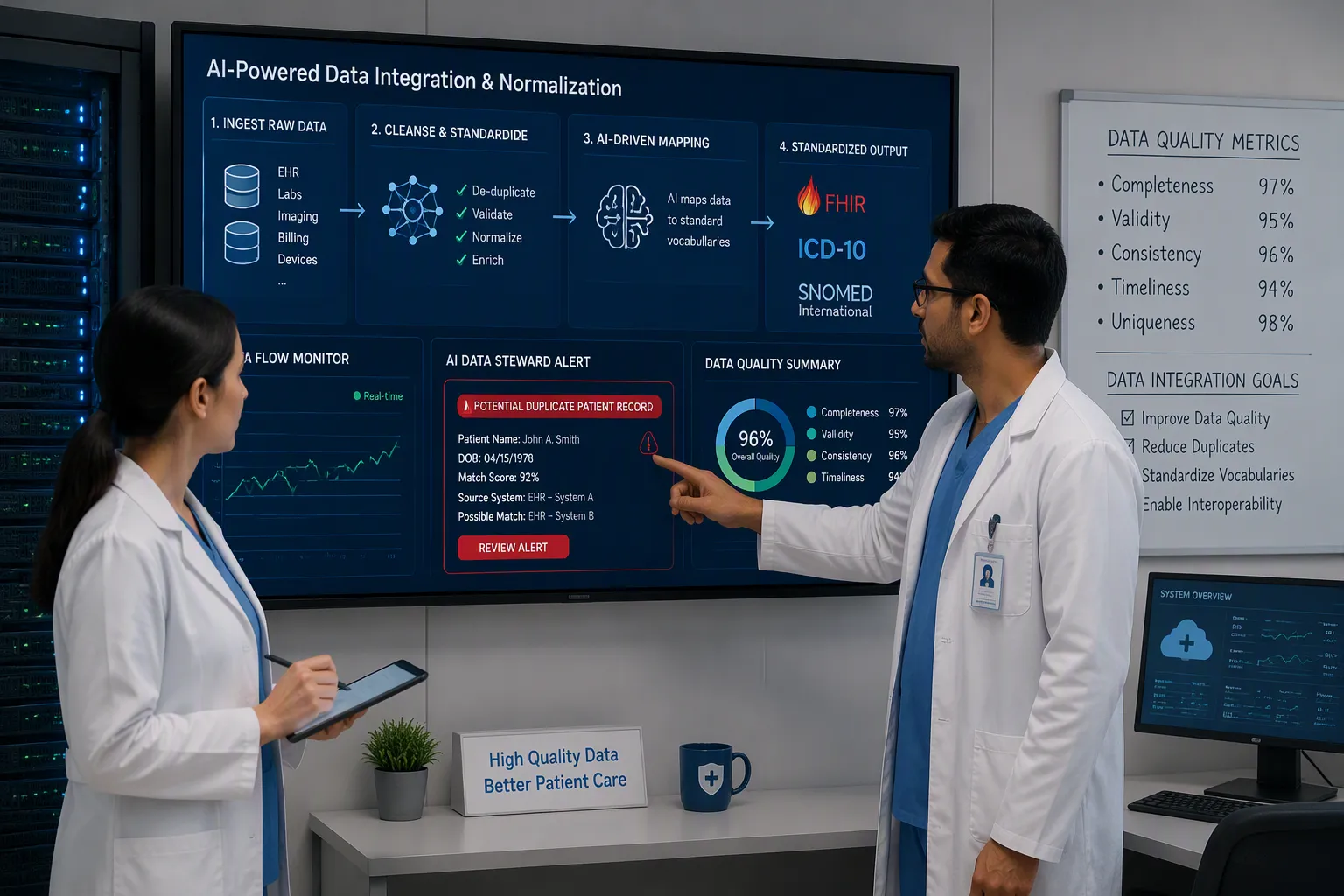
A successful rollout depends on clean data, trained staff, and automation that adapts to daily conditions. Hospitals that follow a structured path move from pilot projects to full deployment with fewer disruptions.
Data integration and staff training
The first step is to evaluate data readiness. Teams audit their data regularly to remove duplicates, correct errors, and ensure consistency. They store organized data in a multimodal database so that ai-powered analytics can draw on it without friction. Data cleaning and normalization play a central role here. AI-driven mapping converts raw data from various sources into usable formats, and machine learning models map legacy fields to standard codes. This turns multi-week IT onboarding projects into near-automatic processes. An AI data steward continuously scans incoming data for errors, missing values, or outliers, fixing issues or alerting staff in real time. Structured systems like FHIR enforce standardized data and code systems such as ICD-10 and SNOMED, which ensures semantic consistency. High-quality, standardized data means AI models train better and produce more reliable outputs. Automated deduplication and entity resolution also help. AI-powered data matching analyzes variations across records to identify duplicates, such as recognizing "John Smith" and "Jonathan Smith, Jr." as the same patient. This reduces fragmentation and improves reporting accuracy.
Role of Data Cleaning & Normalization | How It Supports AI Implementation in Hospitals |
|---|---|
Accelerated ingestion and transformation | AI-driven mapping and normalization convert raw data from various sources into usable formats. |
Continuous data quality monitoring | An AI data steward scans incoming data for errors, missing values, or outliers and alerts staff in real time. |
Improved data quality and consistency | Structured systems like FHIR enforce standardized data and code systems (ICD-10, SNOMED). |
Automated deduplication and entity resolution | AI-powered data matching identifies duplicates across records and reduces fragmentation. |
After data readiness, leaders set measurable goals tied to supply chain KPIs, such as reducing order errors by 20%. They align AI goals with broader business strategies. Next, they build an AI strategy and roadmap. They prioritize projects by impact and feasibility, start with quick wins, and develop a phased deployment timeline. Investing in the right tools and technology follows. Teams assess pre-built versus custom solutions, choose tools like predictive analytics or machine learning, and select scalable cloud-based platforms.
Staff training determines whether these tools deliver value. Hospitals provide hands-on training on AI tools and foster collaboration between AI insights and human judgment. They standardize processes across all functions, including procurement, ordering, storage, and management, using standard operating procedures. Ongoing training for all staff keeps skills current. Teams track adherence with metrics like order accuracy. Real-time dashboards monitor supply chain KPIs such as inventory turnover, order fulfillment times, stockout rates, and supplier lead times. These dashboards provide actionable outputs for demand forecasting and inventory tracking.
Inventory management automation
AI systems process incoming data in real time to perform demand sensing. They identify emerging trends and allow planners to simulate different scenarios. Instead of relying on static safety stock, AI dynamically adjusts inventory levels based on real-time factors such as supplier reliability and lead time changes. This approach transforms inventory management into a continuous, event-driven system. It replaces static min/max thresholds with real-time adjustments to reorder points and safety stock levels. Hospitals achieve leaner stock levels without increasing stockout risk. They respond to demand fluctuations and lead-time variability immediately.
Using real-time data from IoT devices, RFID tags, and sensors, AI systems continuously monitor inventory levels and movements across warehouses, stores, and transit. Stock thresholds are dynamically adjusted, triggering reorder alerts as soon as inventory dips below optimal levels. This enables just-in-time practices and reduces reliance on costly safety stock. Automated replenishment and prescriptive analytics work together to recommend optimal stock levels for each product. The assortment then aligns with operational requirements across the healthcare supply chain.
Monitoring performance ensures success through continuous evaluation. Hospitals track delivery timeliness to evaluate how often suppliers deliver on time. They assess quality to maintain patient safety and compare supplier pricing to identify cost-effective options. Cost savings analysis finds opportunities for reducing expenses through order consolidation or inventory reduction. Inventory optimization identifies slow-moving or obsolete stock and determines appropriate reorder points. Demand forecasting uses predictive analytics on historical data to anticipate future demand for supplies and equipment.
Metric | Description |
|---|---|
Delivery timeliness | Evaluates how often suppliers deliver on time to ensure supply chain reliability. |
Quality | Assesses the quality of supplied medical items to maintain patient safety. |
Pricing | Compares supplier pricing to identify cost-effective options. |
Cost savings | Analyzes cost drivers to find opportunities for reducing expenses. |
Inventory optimization | Identifies slow-moving or obsolete stock and determines appropriate reorder points. |
Demand forecasting | Uses predictive analytics on historical data to anticipate future demand. |
Analytical insights highlight standardization opportunities, identify slow-moving stock, and flag anomalies such as sudden usage surges. Improved accuracy and compliance minimize human error through barcode and RFID tracking. Enhanced automation and efficiency free staff for clinical work and ensure stock never reaches zero. Better demand forecasting uses predictive models with historical and contextual data to anticipate demand surges. This enables proactive planning. Continuous evaluation against these metrics lets hospitals refine strategies and confirm that intelligent and ai-driven tools meet operational goals.
AI-powered analytics balances cost-efficiency with superior patient care across healthcare supply chains. The 2022 contrast media shortage proved this advantage. Hospitals with AI-enhanced dashboards rerouted demand within 36 hours, keeping scan volumes flat. Peers without that technology faced diagnostic delays and price surges. This resilience makes predictive analytics essential for modern inventory management.
Technology continues evolving. Digital twins now model disruption effects before patients feel them. Autonomous logistics and robotics reduce waste while freeing clinical staff. These innovations transform inventory from a cost center into a strategic insights engine for optimization. Healthcare administrators should adopt AI-driven strategies now. The next disruption arrives without warning. Prepared organizations stay ahead.
FAQ
How does predictive analytics improve inventory management in hospitals?
Predictive analytics examines historical usage, surgery schedules, and seasonal trends to forecast demand. This approach helps hospitals maintain the right product mix. It reduces overstocking and stockouts. The system learns from new data and adjusts stock levels dynamically. Healthcare teams gain real-time visibility into supply needs.
What types of data do AI systems use for demand forecasting?
AI systems combine internal data like patient records and historical consumption with external data such as community health trends and vaccination levels. They also use supplier lead times and disruption signals. This comprehensive dataset helps hospitals anticipate shortages and optimize inventory across the healthcare supply chain.
How does AI-powered analytics reduce costs in healthcare supply chains?
Analytics-based inventory systems help hospitals cut procurement costs by 15%. AI-powered waste management reduces medical supply waste by 40%. Stock level optimization lowers inventory waste by 30%. These gains come from fewer expired items, less overstocking, and smarter purchasing decisions. A California hospital saved roughly $1 million annually through AI-based surgical kit customization.
What steps should hospitals take to implement AI-powered analytics?
Hospitals should first evaluate data readiness by auditing and cleaning their data. They then set measurable goals tied to supply chain KPIs. Staff training ensures teams use AI tools effectively. Inventory management automation dynamically adjusts stock levels. Continuous monitoring through dashboards tracks performance and confirms success.
Can AI-powered analytics prevent stockouts of critical supplies?
Yes. Predictive analytics flags shortfalls days in advance. This gives supply planning teams time to act. The system triggers reorders based on consumption velocity and lead time. Hospitals maintain leaner stock levels without increasing stockout risk. Critical supplies remain available when patients need them.
See Also
Transforming Online Store Management Through The Use Of AI-Powered E-Commerce Tools
Understanding Why AI-Powered Retail Stores Represent The Future Of Shopping
Exploring Features And Benefits Of AI-Powered Combo Vending Machines For Modern Retail
The Emergence Of AI-Powered Corner Stores: Essential Knowledge For Retailers Today
Boosting Employee Productivity In Small Offices Using Smart Vending Machine Solutions
