How Energy Companies Cut Costs with AI-Powered Requisition Warehouses


Manual requisition processes waste time and money at energy facilities. Staff fill out paper forms, wait for approvals, and lose track of who took what. Accountability suffers. Can companies get rid of these inefficiencies while cutting yearly costs by over $15,000?
An AI-powered requisition warehouse offers a solution. Staff swipe a card, pick needed items, and walk out. No forms. No waiting. Major companies already use this technology. They have won multiple innovation awards for it.
This system works through AI cameras and automatic data sync. It delivers real savings and builds trust. The industry is taking notice. This shift matters for them.
Key Takeaways
AI-powered warehouses save more than $15,000 every year by reducing paperwork and delays.
Employees swipe a card and grab what they need. AI cameras keep track of it all on their own.
The system updates inventory in seconds. This builds trust and stops items from getting lost.
Big energy companies like Shell and BP use this technology. They save millions of dollars.
This smart warehouse is good for the planet. It reduces waste and helps meet net-zero targets.
Hidden Costs of Manual Warehouses
Paperwork, Approvals, and Delays
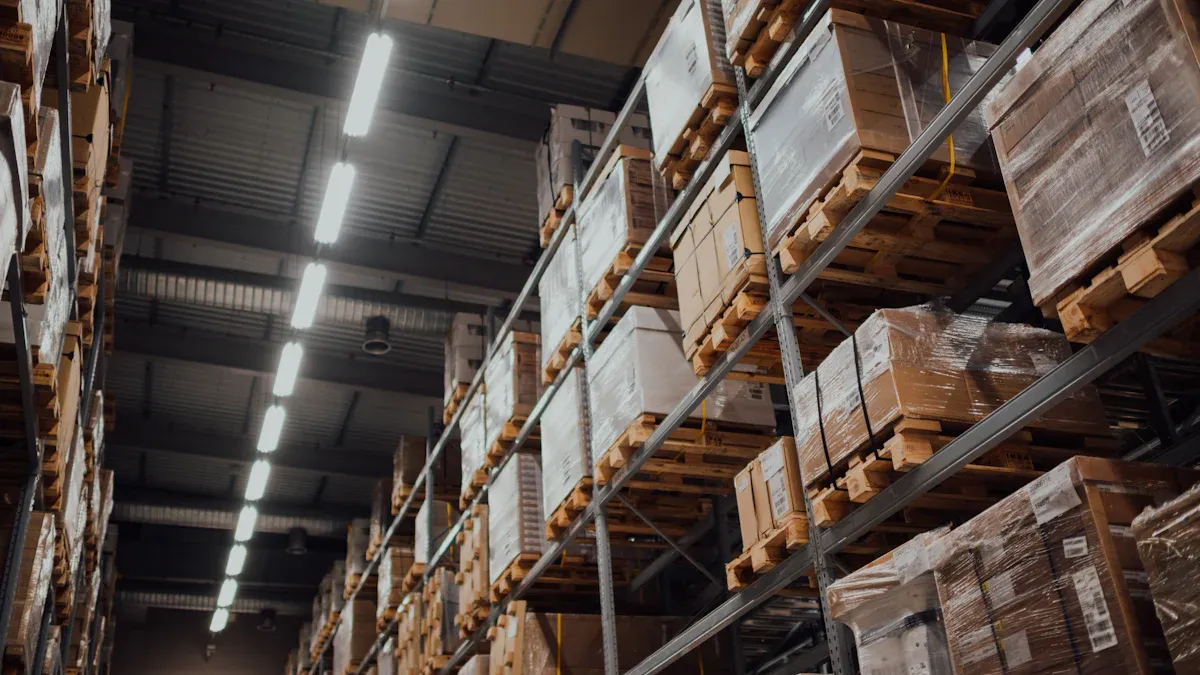
Paperwork and approvals slow things down a lot at energy facilities. Each time someone needs a part, they have to fill out paper forms. These forms go to supervisors for a sign-off. Getting that approval can take hours or even days. Workers waste time just waiting for a signature. This slow process raises the cost of managing supplies. Better warehouse management can cut these costs. Tracking inventory by hand makes the problem worse. You don't know stock levels until someone counts everything. That leads to rush orders and higher carrying costs. This waste adds up fast across many sites.
Approval delays also hurt important maintenance work. Field workers need parts right away. A hold-up in approvals makes them wait. This lowers overall efficiency and pushes back project timelines. Warehouse management depends on manual records. That leads to human error and mistakes in data entry. Wrong inventory records mean what you have on paper doesn't match what's on the shelf. Inventory management becomes reactive, not proactive. This reactive way of working causes more delays. Energy companies see these delays turn into higher spending.
The Accountability Gap
The accountability problem grows when no system tracks who takes what from the warehouse. Workers take items without any formal check-out process. Supervisors cannot figure out who is responsible for missing supplies. This lack of clear information hurts trust in the supply management process. Managers cannot fix inventory differences well. They think theft or misuse might be happening, but they have no proof. This operation has no reliable audit trail. Without good warehouse visibility, distrust grows. This gap makes the whole team lose confidence.
Smart warehouse technology solves these trust problems directly. Without automatic tracking, energy companies cannot enforce accountability. The gap between recorded inventory and real stock keeps getting wider. This hurts the entire supply chain. Inventory management becomes a guessing game. Warehouse teams spend too much time looking into differences instead of making things better. The cost of lost trust shows up in write-offs and emergency buys. A smart warehouse removes these blind spots from manual work. It brings back confidence in inventory management. This technology supports long-term efficiency. These benefits grow over time.
How AI-Powered Requisition Warehouses Work
Card Swipe Access and Item Pickup
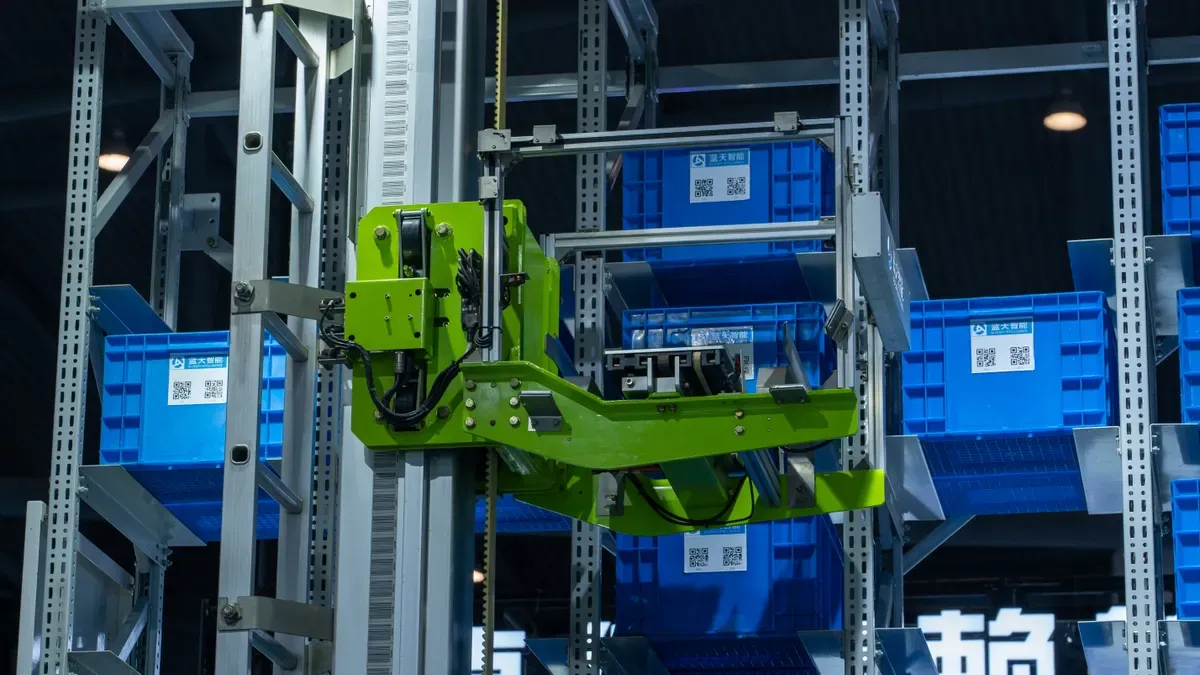
Setting up an AI-powered requisition warehouse starts with an easy process. Workers get work cards that have their identity and access level on them. Swiping the card at a reader records their entry and unlocks the door. They go straight to the items they need, grab them, and leave without stopping. There is no paper form to fill out. No boss has to sign off. The whole action takes seconds, not hours.
In a manual system, a field technician might wait hours for a sign-off. Approvals usually need a supervisor to check paper forms. This new system lets technicians grab items and go back to work right away. The system records who came in, when, and what they took. Warehouse managers can see inventory moves in real time. The problem of not knowing who took what goes away because each action has a verified ID. This system makes warehouse management better across the whole facility. Energy companies see it as a direct fix for trust problems. The design allows quick access while keeping full records of what happened.
AI Cameras and Data Sync
Advanced camera networks do the job of identifying items. High-resolution cameras are placed at fixed spots at the ends of shelves and where aisles meet. They watch every storage area all the time, so there is no need for handheld scanners. When a worker picks up an item, the system snaps the moment and starts analyzing.
The system runs several recognition methods at the same time. Optical character recognition reads lot codes and SKU numbers right from the image. When labels are hidden or damaged, visual signature matching takes over. It uses the item’s shape, wrap pattern, and stack height. Every identification gets a confidence score. If the score is low, the system sends it for quick human check rather than just accepting it.
Model / Task | Metric | Value |
|---|---|---|
YOLOv8 shelf detection | Precision | |
YOLOv8 shelf detection | Recall | 98.93% |
Product detection | Precision | 94.61% |
Product detection | Recall | 93.02% |
ResNet101 / FAN Transformer | Accuracy (real-world retail) | 99.86% |
Few-shot (5 samples/class) | Top-1 accuracy | 98.39% |
Production deployments (general) | Accuracy range | 95%–99% |
These accuracy numbers explain why companies trust this tech in warehouses. Synthetic training data makes the system even stronger. Generative models create thousands of realistic product images in different lighting and shelf setups. This speeds up training for new items without needing to take real pictures. Multi-modal fusion adds another layer of reliability. Weight sensors on shelves and RFID tags send data to a single inventory model. They double-check the camera’s results and catch tricky cases. This combined method handles changes in lighting and other conditions. Good warehouse management needs accurate data from systems like this.
Data sync happens instantly. When the system confirms an item is taken, the inventory record updates right away. The company’s main system shows the change within seconds. There are no batch updates or overnight fixes that slow things down. Warehouse teams see stock levels adjust at once. The facility becomes a self-documenting place where AI handles the tracking. Every pick creates a record with a time stamp. Audit trails are complete without anyone doing extra work.
The system runs smooth, clear, and accountable supply management. Staff move freely around the facility. AI in warehouse management handles the tracking quietly in the background. Setting it up does not change how end users work. The tech adapts to the current layout. This change improves warehouse management across all operations and every level of the facility.
No forms, no waiting, no guessing. Automation takes over the paperwork load. Inventory management moves from always putting out fires to smart planning. Logistics operations get faster without losing accuracy. Supply chain becomes more reliable because decision-makers trust the data. AI in warehouse management makes this change happen for the energy sector.
Implementation Results and Savings
Annual Cost Savings Over $15,000
An AI-powered requisition warehouse gives back more than $15,000 each year in savings. This money comes from cutting out paperwork, ending approval delays, and stopping inventory loss. Paper forms alone cost thousands in supplies and filing time. Approval delays make technicians wait instead of working. Smart warehouse tech fixes both issues.
Inventory accuracy gets much better with this system. Manual setups lose items because tracking is poor. The AI system logs every transaction as it happens. Lost inventory goes down a lot. Fewer write-offs mean lower operating costs. Emergency purchases also go down. Each emergency order costs more for quick shipping. Good warehouse management needs accurate data from systems like this. Cutting these orders adds to savings.
Labor productivity adds even more savings. Workers no longer fill out forms or look for supervisors. Each supply run takes minutes, not hours. That time goes back to useful maintenance work. Fewer delays mean less overtime. Energy companies see labor costs fall as work flows faster. The yearly savings add up from these areas.
One facility saves more than $15,000 each year. Many sites make that number bigger. A company with many locations saves hundreds of thousands. The cost to set up pays off within months. After that, each dollar saved adds to profits. Companies see this as a clear payback.
Efficiency Gains and Awards
Efficiency goes well beyond just saving money. Warehouse management becomes fully clear. Managers see stock levels right away. They know who took what and when. This visibility gets rid of the guessing in manual inventory work. Warehouse teams say they see operations better. Supply chain choices are based on data, not quick fixes.
The system boosts performance a lot. Workers move through the facility without stopping for paperwork. AI tracks every item on its own. No one needs to scan barcodes or type entries. This automation lets employees do more important work. Field teams get parts faster. Maintenance schedules stay on time.
Many industry awards honor this technology. The AI-powered warehouse has won several prizes for changing industrial logistics. These awards come from trusted groups that study supply chain tech. Companies get these awards with their tech partners. The recognition proves the real-world impact.
Sustainability links directly to these gains. A smart warehouse cuts waste in many ways. Less paper means fewer trees cut for forms. Better stock management cuts down on over-ordering and material waste. These changes lower the carbon footprint of supply work. Energy use at the facility also drops because workers finish tasks faster. Shorter visits mean less lighting and heating or cooling energy.
Companies aiming for net-zero goals see this system as a useful tool to cut emissions. Every paper form removed and every emergency shipment stopped cuts carbon output. The renewable energy sector likes this approach a lot. Green operations need lean supply chains to match their green mission. Sustainability becomes measurable when warehouse energy use falls along with waste.
Inventory turnover gets better with the smart warehouse system. Items move through faster because staff get to them quickly. Lower stock levels cut carrying costs and cooling needs. AI in warehouse management handles tracking on its own. These operation improvements help cut costs over time. Setup teams report steady gains every year. The setup model works for different facility sizes. Companies add these savings into larger sustainability reports.
The system helps energy efficiency directly. Faster pick times cut warehouse energy use. Better data stops overstocking and wasted materials. This mix of money savings and green results makes a strong business case.
Why Energy Companies Adopt AI
Proven by Global Energy Leaders
Big energy companies already use this tech. ExxonMobil, Shell, bp, TotalEnergies, Chevron, aramco, Eni, Equinor, and Petrobras all have AI-powered supply systems. Their results show it works. Shell cut equipment failures by 40% and maintenance costs by about 20%. That drop saves roughly $2 billion each year. Shell also reduced unplanned downtime by 35% and raised operational uptime by 5%. BP saves $10 million every year from its AI platform Sandy. The same tool cut data collection, reading, and simulation time by 90%. BP also improved over 80MW of energy asset network capacity. These numbers show why the industry trusts smart warehouse systems.
Company | Metric | Reported Value |
|---|---|---|
Shell | Less equipment failure-related incidents | 40% |
Shell | Lower maintenance costs | 20% (about $2 billion yearly savings) |
Shell | Less unplanned downtime | 35% |
Shell | More operational uptime | 5% |
BP | Yearly cost savings from AI platform 'Sandy' | $10 million |
BP | Less time for data collection, reading, and simulation | 90% |
BP | AI-improved energy asset network capacity | Over 80MW |
The Future of Smart Logistics
AI-powered warehouses shape the next wave of smart energy logistics. Several new technologies drive this change:
Generative AI and deep reinforcement learning move fleet management from simple reactions to smart planning. Robot fleets see order surges coming and plan travel routes before backups happen.
Mobile manipulation units have robot arms on wheels. These units go to a spot, find items, pick them correctly, and move them without any human help.
Industrial network support lets robotic fleets talk to each other all the time. Industrial Wi-Fi 6 and private 5G networks give the needed connection.
Software that works together lets robot platforms link with ERP and WMS systems through standard APIs.
Digital twin setups let companies test situations, predict stock changes, and make the best use of space.
IoT sensors track temperature, humidity, stock levels, and equipment status. RFID tags and smart shelves create fully automatic inventory management. Self-driving robots use lidar, cameras, and AI-based navigation to pick, pack, sort, and move items. Energy-saving features switch idle robots to low-power modes and plan charging around time-of-day energy costs.
AI handles hard tasks so people focus on important work. Teams stop chasing paper and start making operations better. This change defines the future of energy management.
An AI-powered requisition warehouse makes energy supply work less complex. It saves money and builds trust. Proven results include over $15,000 in savings each year, several innovation awards, and use by big energy companies. Moving from paper forms to smooth, accountable supply management changes how teams work.
Picture AI doing the hard warehouse work. The smart warehouse tracks every item. The smart warehouse updates data right away. Teams then focus on valuable work. This setup helps sustainability goals. It cuts carbon emissions and supports net-zero targets. Renewable operations need this kind of logistics. Warehouse management becomes easy. Inventory stays correct. Efficiency goes up.
Schedule a chat, send an email, or visit the company website to learn more.
FAQ
How does a smart warehouse track items without barcodes?
AI cameras watch each shelf and recognize products by shape, label, and packaging. The system reads SKU numbers and lot codes from images. Weight sensors and RFID tags double-check the results. In real warehouses, accuracy ranges from 95% to 99%. Staff never have to scan anything.
What stops employees from taking items without approval?
Every worker swipes a work card at the door. The system links each item taken to a verified identity and a time stamp. Managers see the full record within seconds. This record removes the accountability gap that manual warehouses create.
How fast does the inventory data update?
The company system updates within seconds after an item is picked. No batch jobs or overnight fixes slow it down. Warehouse teams see stock levels change in real time. Decision-makers trust the numbers because the data stays current.
Do energy companies need to change their warehouse layout?
No. The technology works with the current layout. Cameras mount at shelf ends and where aisles meet. Workers keep their normal routes. Setup teams report steady improvements every year for different facility sizes.
What results have major energy companies reported?
Shell cut equipment failures by 40% and maintenance costs by about 20%. BP saves $10 million each year from its AI platform. The system also won several industry innovation awards. These results help with long-term cost reduction and sustainability goals.
See Also
AI Powered Stores Are The Future Of Retail Industry
AI Powered E Commerce Tools Transform Online Store Management
The Emergence Of AI Powered Corner Stores And Retailer Insights
AI Combo Vending Machines Deliver Key Benefits For Modern Retail
