How AI Retail Helps Airports Handle Peak Passenger Flow Smoothly


Picture December 23rd at a big airport. Families pull suitcases through crowded halls. Security lines wind around past baggage claim. Every gate agent looks stressed. This scene happens every holiday season. AI-powered passenger flow management can reduce wait times by 30–35% when handling peak passenger flow. But most airports still use old-fashioned methods. Unpredictable waves of passengers stretch every resource you have thin. Staff schedules fall apart. Stores lose money. Travelers miss their planes. You need a better way. AI retail turns this mess into smooth operations. It sees busy times coming before they arrive. It moves people and tools where they are needed most. Your airport can finally feel calm during the rush.
Key Takeaways
AI can tell when airports will be busy before it happens.
AI reduces how long passengers wait by more than 45% during busy times.
Faster service increases store sales and lowers lost income.
AI helps workers handle crowds and make the passenger experience better.
Airports can start with a small pilot and expand AI step by step.
The Challenge of Handling Peak Passenger Flow
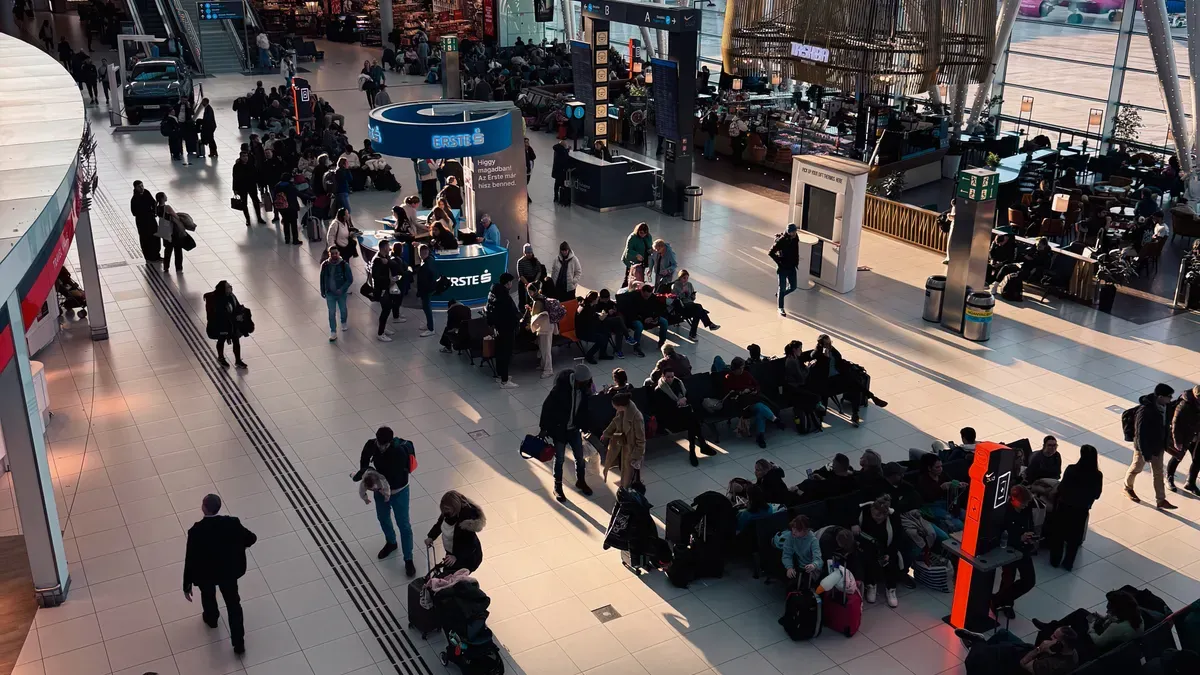
Congestion Costs for Airlines and Retailers
AI-powered passenger flow management can reduce wait times by 30–35%. That number shows how big the problem is. Without a system like this, your airport deals with a serious operational pain point. Handling peak passenger flow is the top challenge for airport managers around the world. Every surge puts heavy strain on your resources.
Airlines pay a high price for congestion. Planes stay at gates longer. Crews run out of time. Fuel burns while aircraft wait for passengers to board. Retailers suffer too. A passenger stuck in a security line cannot browse duty-free shops. That traveler cannot buy a meal or a gift. Your retail revenue growth stalls during the busiest hours.
Passenger Frustration and Revenue Loss
A frustrated passenger tells friends about a bad airport experience. That story spreads fast. Long lines at check-in management and security create stress. Travelers miss flights. They abandon purchases. They rate your airport poorly online. Each negative passenger experience costs you future business.
The passenger journey breaks down during peak periods. A traveler moves from check-in to security, then to the gate. Each step adds delay. Queueing builds at every touchpoint. Your staff cannot react fast enough. They lack real-time data about where crowds form. This gap hurts passenger experiences and your bottom line. You lose retail sales. You lose loyalty. You lose the chance to turn a stressful journey into a smooth one.
AI changes this picture. It tracks passenger flow in real time. It predicts surges before they hit. It helps you protect both passenger experience and retail revenue growth. The next section shows you how.
Using AI for Passenger Flow Management
AI gives you a new way to handle peak passenger flow. Machine learning solutions use visual detection to find people in real time. You can see passenger flow patterns as they happen. This changes how you manage passenger flow. You stop reacting and start anticipating. That shift makes every part of your operations better.
These tools help airports learn their own rhythms. The system studies data from past years. It looks at booking trends and airline schedules. Outside data like tourism trends and economic indicators add context. Real-time feeds bring current conditions into view. Flight tracking shows arrivals and departures. Weather data reveals possible disruptions. Road traffic conditions show how many travelers head to your terminal. Immigration databases give border processing counts. All this data comes together in one view.
AI-Powered Predictions for Peak Flow
Holiday periods get special attention. Demand changes from events are built into every model. You see the shape of the day before it starts. This foresight helps you keep peak-hour availability for staff and resources.
Spatial AI adds another layer. 3D LiDAR sensors build a digital twin of your terminal. An ai-driven platform processes this data nonstop. The system tracks every movement path. It understands passenger journey patterns instead of just counting heads. Privacy stays protected because the system tracks footsteps, not identities. Your command center gets live crowd density maps. Staff can act before queues grow.
The accuracy supports wide adoption. 2D video analytics deliver 92 to 96 percent accuracy in most indoor spaces. 3D active stereo vision with AI reaches up to 99 percent accuracy in crowded conditions. The system works in complete darkness. It handles occlusion where people block each other. You get reliable data every time. Real-time insights power every decision.
Dynamic Resource Planning with Machine Learning
Predictions mean nothing without action. Machine learning links forecasts to resource decisions. You adjust staffing levels based on predicted volume. You open extra security lanes before the rush arrives. You assign gate locations to balance load across your terminal. Throughput improves because you match capacity to demand.
A case study from airport research shows the approach. One project combined passenger processing data with printer supply data. The ML model predicted consumption of boarding pass paper stocks. The system alerted staff only when resources ran low. This replaced routine manual checks. Benefits included better time allocation and new insights into process management.
Results from large hubs confirm the value. Integrated analytics across gates and security lanes cut queue lengths. Wait times improved. Staff used early warnings to deploy before delays grew. Response times got shorter. Average processing time went down.
The evidence supports every claim. Wait times drop by 30 to 35 percent. Passenger satisfaction climbs by 15 to 28 percent. Missed connections fall by 23 percent. Staff questions decrease by 31 percent. The system runs with greater efficiency. Foot traffic to shops increases by 20 percent. Retail loss drops by 70 percent. Each metric proves the impact on your experiences and your bottom line.
Journey analytics ties everything together. You understand the complete passenger journey from check-in to security to the gate. You know where bottlenecks form. You know how to fix them. Better management of resources means smoother operations during peak periods.
The technology works at every scale. Start with a single terminal. Expand to your entire airport. Each step builds on the previous one. The data gets richer. The predictions get sharper. Traveler experiences improve substantially. Every step of the journey becomes smoother.
Real-Time AI to Improve Passenger Flow and Experiences
Computer Vision for Instant Congestion Alerts
Computer vision systems change how you deal with crowding. Privacy-safe 2D and 3D sensors check real-time occupancy at terminals, gates, and security checkpoints. They do not use smartphones or biometrics. Movement speed, density, and direction are tracked all the time. When passenger density or queue length goes past optimal thresholds, instant alerts go off. Supervisors and staff act right away. You stop bottlenecks before they form.
The system spots crowd patterns as they develop. It finds bottleneck locations. Waiting time estimates guide every queue management decision. Twenty-four-seven heat maps show congestion hotspots across your terminal. KPI data tracks performance trends across all zones. Live alerts trigger immediate responses whenever delays or congestion appear. Your operations stay smooth.
AI can predict passenger flow during peak times, allowing airports to allocate staff and resources more effectively to prevent bottlenecks and reduce wait times.
Real-time occupancy counts give instant visibility into crowd density. Automatic queue tracking spots growing lines early. Staff redeployment happens before delays escalate. Individual journey tracking from curb to gate reveals end-to-end patterns. You optimize throughput at every checkpoint. Face recognition technology speeds up verification. Security screening time drops. Queues shrink. Auto-enrollment tracks movements continuously. Passenger experiences improve at every touchpoint.
Automated Queue Adjustments and Staff Reassignment
The waiting time reduction from automated queue systems is real. You stop reacting to congestion. You start preemptively repositioning staff. Personnel move twenty minutes or more before demand peaks. Studies show 40% fewer peak-hour wait exceedances with this approach.
The AI prediction engine combines computer vision queue data, flight schedules, and historical patterns. It forecasts wait times thirty to sixty minutes ahead. Operations receive specific redeployment recommendations.
A digital twin simulates every processing point. Your team tests scenarios. Close a lane. Shift officers. The system shows impact in passenger-minutes of delay. Data drives every decision. Predictive analytics adjust staffing dynamically. They achieve 92% accuracy up to twenty-four hours in advance.
AI algorithms autonomously change security lane configurations. Throughput increases up to 25% during peak hours. One percent more staffing at peak times reduces wait times by three percent. Airlines and airport authorities collaborate on shared staffing pools. Deployment becomes more flexible.
Real-time data from LiDAR and 3D cameras tracks passenger flow. Staffing predictions reach twenty-four hours ahead. The automated system maintains smooth handling peak passenger flow. Operations run well even during the busiest periods.
Retail revenue growth follows naturally. Passengers move through security faster. They spend more time shopping and dining. Passenger safety improves. Bottlenecks no longer create dangerous crowding. Staff maintain visibility across all zones. Seamless gate operations become standard.
Journey analytics connects everything. You see the complete passenger path from curb to gate. You spot delays in real time. Throughput optimisation happens continuously. Every passenger experiences faster processing. Efficiency improves across your terminal.
The ai-driven platform powers these capabilities. It provides real-time insights for every decision. Queueing gets managed proactively. Peak-hour availability of staff matches demand precisely. Management gains clarity on resource allocation. Experiences improve for passengers and staff alike.
The technology scales from one checkpoint to your entire terminal. Each deployment builds richer data. Predictions get sharper. Operations run better. The metrics prove the impact.
Integrating AI for Seamless Passenger Flow Management
Adding AI for passenger flow management does not upset daily operations when you do it slowly. You begin with a pilot in one terminal. You start handling peak passenger flow better through step-by-step integration. Each part connects using standard interfaces.
Integration with Existing Airport Systems
Your current airport systems already hold useful data. The AI solution tracks specific metrics from each part and allows real actions.
Airport Infrastructure | What AI Measures | Operational Action Enabled |
|---|---|---|
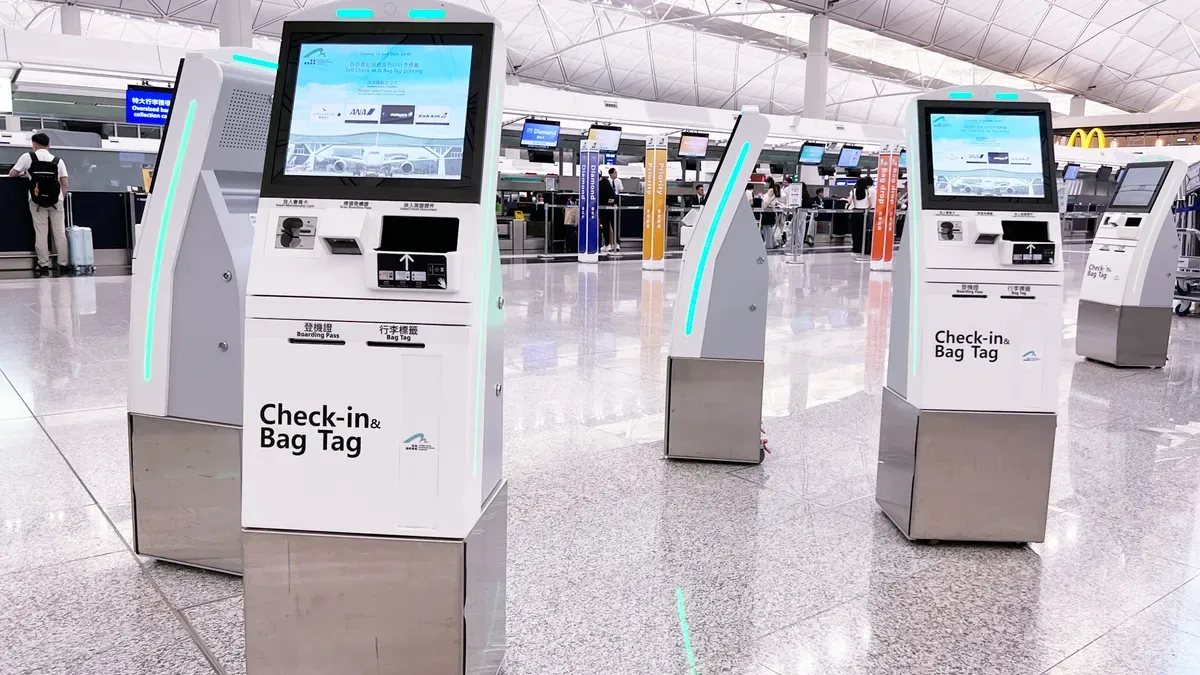
Check-in kiosks & counters | Wait time, people in line, open counters, processing rate | Adjust counter openings, anticipate peaks by flight |
Security queues | Wait time, density, scanner rate, saturation alerts | Reduce friction, maintain service levels |
Flight Information Displays | Flight-correlated flow data, peak anticipation | Align resource openings with flight schedules |
Broader operational systems | Queue, dwell, occupancy, and flow metrics | Real-time dashboards, threshold alerts |
Integration goes through APIs that link to your terminal management system and operational database. The system uses your current CCTV streams with local edge processing. Anonymous metadata indicators keep your security posture safe. You get real-time insights without saving video footage. This guards passenger privacy and boosts passenger safety.
Staff Training and Overcoming Resistance
Staff may fear that AI will take their jobs. An airport operations manager agreed that AI may lower staffing needs but stressed that the workforce needs reskilling. A ministry representative pointed out that staff lack training for advanced technology. Half of surveyed officers named a skilled workforce gap as a major challenge. Ninety percent put enhanced staff training first as a key improvement.
Airports that take this path use extended reality technologies for effective training. Virtual reality and augmented reality build realistic simulation environments. Maintenance technicians use augmented reality headsets to see digital overlays of equipment schematics. This cuts training time for new technicians.
Effective training strategies include tailored, schedule-friendly programs that fit tough shift schedules. Digital twin simulations let staff practice responding to AI-generated insights safely. Phased, role-specific training makes sure staff adopt AI tools with confidence. Transparency builds trust. You make clear where AI begins and ends in safety-critical roles. This reinforces that AI enhances human judgement.
Collaboration works best. Operational staff work closely with data scientists to test predictive models. Staff build in human oversight mechanisms. This empowers staff and boosts trust. Your peak-hour availability improves as staff confidence grows. Passenger experiences become smoother. The entire journey benefits from better throughput and overall efficiency. Your management approach shifts from reactive to proactive. Your experiences as leadership improve when staff trust the system.
You now know three main AI tools for managing peak passenger flow. Predictive analytics spot surges before they occur. Real-time monitoring detects congestion as it develops. Automated staff placement sends workers where they are needed. Together, these tools cut lines and boost throughput. Automated systems lower wait times by 30–35% during peak periods. That number shows the impact on passenger experiences.
Your next action is simple. First, check your current passenger flow data. Then book a demo of an AI retail system. This AI method makes your whole trip more efficient. You gain knowledge that leads to a better experience for every traveler. Your operations and management teams will see the change.
FAQ
How does AI predict peak passenger flow before it happens?
AI looks at past data, booking trends, flight schedules, and real-time feeds like weather and road traffic. Machine learning models mix these sources to guess surges hours ahead. You see the shape of the day before it starts. This lets you get staff and resources ready in advance.
What role does computer vision play in managing crowds?
Computer vision uses privacy-safe 2D and 3D sensors to track occupancy, movement speed, and queue length. When density goes past best thresholds, instant alerts go off. Supervisors act right away. You stop bottlenecks before they form. Real-time insights guide every queue management decision.
Can AI reduce wait times during busy periods?
Yes. Automated queue systems cut average waiting times by 30–35% during peak periods. AI adjusts lane setups and moves staff twenty minutes before demand peaks. Studies show 40% fewer peak-hour wait exceedances. Your passenger moves through security faster and gets to the gate on time.
How does AI improve retail revenue during peak flow?
Faster processing means travelers spend more time shopping and dining. Foot traffic to shops goes up by 20%. Retail loss drops by 70%. When you cut congestion, passenger experiences get better and retail revenue growth follows naturally. Every minute saved in line becomes a minute spent browsing.
Does AI replace airport staff?
No. AI helps human judgement. Staff work with data scientists to test predictive models and build oversight mechanisms. Airports use virtual reality and augmented reality for training. Transparency builds trust. Your team gains confidence as safety and efficiency get better together.
See Also
Discover How AI Combo Vending Machines Benefit Modern Retail Stores
Learn How AI E-Commerce Tools Revolutionize Online Store Management Today
Why Cloudpick Checkout Computers Boost Efficiency Accessibility And Customer Experience
How To Launch An AI Corner Store With Very Little Money
Why AI Powered Retail Stores Represent The Future Of Shopping
