Transforming Physical Stores into Smart Shopping Destinations


What if your store could greet shoppers by name, anticipate their needs, and never run out of stock? Current AI trends are making this a reality for physical stores, closing the gap with online experiences. According to Grand View Research, the AI in retail market is projected to grow from $11.61 billion in 2024 to $40.74 billion by 2030, driven by these trends. This investment transforms stores into smart spaces that respond to shoppers. You get a better customer experience with personalized service. Your customers enjoy faster service and relevant suggestions. AI trends are reshaping inventory management, pricing, and foot traffic optimization. This tour shows you real applications that work now. You will learn how to turn your store into a smart shopping destination.
Key Takeaways
AI makes physical stores into smart places that give each shopper a personal experience and help stores run better.
Smart inventory systems reduce waste and keep shelves stocked, which helps increase sales and profits.
Computer vision makes checkout faster and cuts down on theft, making stores safer and quicker.
Begin with a small AI test project to see how it works before growing it to other parts of the store.
Use AI to boost your team's personal touch, not swap it out, for improved customer care.
AI Trends Reshaping Brick-and-Mortar Retail
The global AI in retail market is growing fast. Spending on AI is expected to pass $2 trillion in 2026, up 36.8% from $1.48 trillion in 2025. For retailers, most of this money goes toward customer relationship management, personalization tools, chatbots, predictive analytics, and supply chain optimization. This steady demand shows that AI is moving from hype to real-world use. These AI trends give physical stores a true chance to compete with online convenience. The table below shows the measurable impact of key technologies.
AI Trend | Reported Impact |
|---|---|
Intelligent Shelf Monitoring | 25–40% reduction in out-of-stock rates, translating to $200K–$400K recovered sales per store annually |
AI-Powered Demand Forecasting | 20–35% improvement in forecast accuracy, representing $5M–$15M in annual margin improvement for mid-size retailers |
Unified Commerce Platforms | 15–20% improvement in inventory accuracy and 10–15% reduction in order fulfillment cost |
Edge Computing | Measurable improvements in queue abandonment rates and promotional conversion |
Micro-fulfillment Automation | 40–60% reduction in per-order fulfillment cost |
"AI isn't going away, it's becoming entrenched because the opportunity of it can't be ignored. Cultural changes are coming ... . Any company that doesn't make the changes will find it increasingly hard to compete ... those [that] adapt best and fastest are going to win." — Richard Kestenbaum, Partner at Triangle Capital LLC
Hyper-Personalization at Scale
Hyper-personalization uses data to customize every shopper's experience. AI tools study past purchases, browsing habits, and live location to suggest relevant products. These AI trends let you treat each shopper as an individual. Retailers using predictive analytics improved Q1 sell-through by 8–12%. This precise merchandising ensures each store gets products most likely to sell for its unique shoppers. By removing guesswork and matching inventory with local demand, shoppers find what they need, leading to higher conversion rates. These personalized experiences build loyalty and boost order values. You can also use personalized shopping through targeted promotions that fit each shopper's preferences. This retail technology also powers customer interaction bots that help shoppers on the sales floor. The bots answer questions and guide shoppers to the right products. For physical stores, this level of customization was impossible before modern AI in retail solutions. Your in-store operations become more efficient when you use these tools to match inventory with local demand.
Dynamic Pricing and Promotions
Dynamic pricing changes prices in real time based on demand, inventory levels, and competitor pricing. Retailers using AI-driven dynamic pricing have reported gross profit gains of 5% to 10%. Extra benefits include an average order value lift of up to 13% during peak sales periods, a turnover increase of up to 3%, and a profit margin improvement of up to 10%.
However, shoppers often view dynamic pricing as unfair, especially when prices jump without warning. This has caused backlash against large retailers. To succeed, you must use dynamic pricing with transparency. Relationships grow stronger through personalized offers and loyalty perks tied to real-time price shifts. For example, a coffee chain might discount pastries late-day, making customers happier. This shows that dynamic pricing can boost satisfaction when used with value.
Frequent price changes can confuse and annoy customers, hurting brand image. Retailers must avoid big swings too often and aim for small, manageable changes that match customer expectations. A careful balance between revenue optimization and customer satisfaction is needed.
AI Technologies Revolutionizing In-Store Experiences
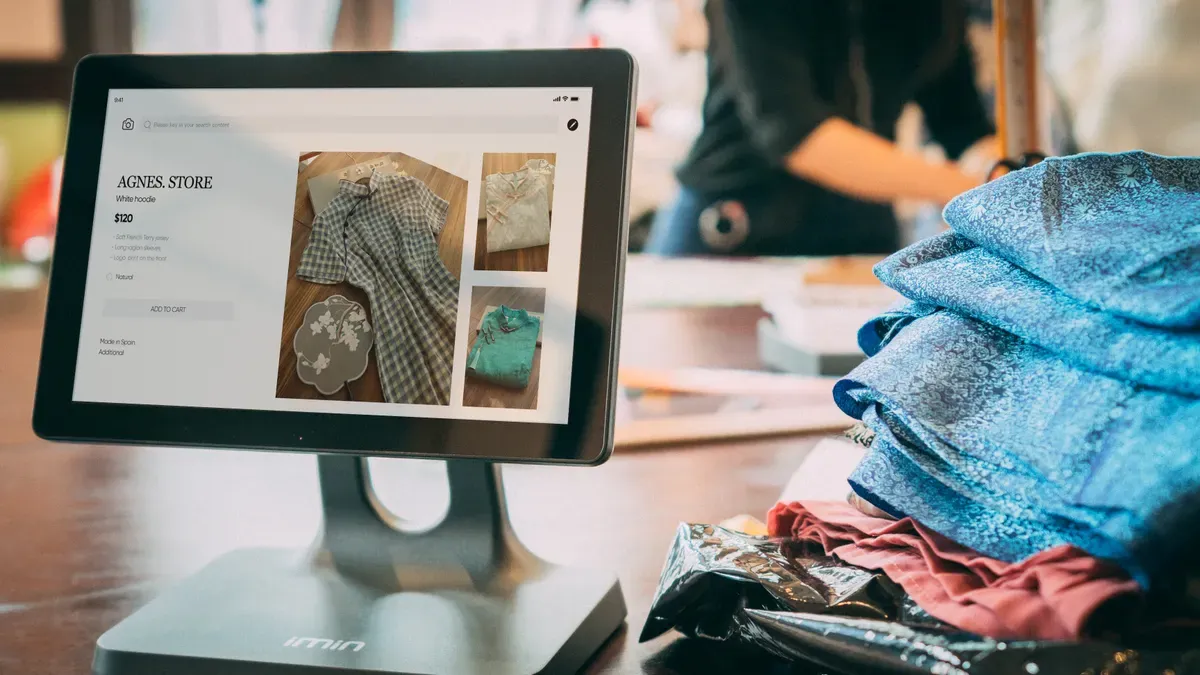
Smart inventory management and computer vision lead the list of AI tools that change how stores work. These tools work behind the scenes to keep shelves full and checkout lines moving. You see the results as a smoother shopping trip and a more efficient store.
Smart Inventory and Demand Forecasting
Smart inventory management starts with demand forecasting. AI systems look at real-time sales data, weather patterns, and local events to guess what shoppers will buy. Walmart uses these systems to learn from live data and make forecasts even when it has little past data. The analytics tool predicts which products shoppers will buy and whether they will visit the store or order online for delivery. This helps restock before shelves go empty.
The results are clear. AI-powered demand forecasting can cut stockouts by 15–30% for FMCG brands. PepsiCo's system lowered truck stock-out rates by 4%. Companies using AI demand forecasting report up to 65% fewer lost sales from stockouts. Firms that use AI inventory management systems cut inventory costs by 10% to 20%. These numbers show real savings for your store.
Better forecasting also reduces waste. You order the right amount of perishable goods, so less food spoils. You avoid overstocking items that sit unsold. Your store operations become leaner and more profitable.
Reducing Friction with Computer Vision
Computer vision tackles theft, checkout delays, and shelf monitoring. AI-powered cameras spot suspicious activity at self-checkout stations. Redner's Markets uses this technology to catch theft, stopping a customer stealing $5,000 worth of goods. Sainsbury's put in a computer vision solution from ThirdEye that runs on existing cameras and cut theft by half. Diebold Nixdorf installed software that notices when shoppers fail to scan items or scan wrong barcodes. It can also check age for age-sensitive products.
Checkout speed gets much better with computer vision. At a shop at San Jose State University using Standard AI's system, wait times at checkout dropped by over 50%. Shoppers grab items and walk out without scanning each product. The cameras track everything automatically.
Computer vision also watches shelf conditions. Captana Artificial Intelligence uses micro-cameras to check shelves all the time. The system finds out-of-stocks, price mistakes, and planogram errors. You fix problems before customers notice them.
These AI technologies that change in-store experiences make physical stores more important, not less. Early adopters saw buy-online-pick-up-in-store (BOPIS) rise 34% more than competitors. The store becomes a fulfillment hub and a showroom. You mix digital convenience with physical presence.
The broader AI trends point toward deeper integration. Cameras, sensors, and analytics work together to create a responsive environment. Your store learns from every shopper interaction. Each visit makes the next one better.
These tools also enable checkout and payment innovations. Self-checkout with AI verification cuts errors. Cashierless stores remove friction completely. You offer options that match different shopper likes.
The investment pays off across brick-and-mortar retail. Stores that use these technologies gain a competitive edge. They deliver the in-store experience that modern shoppers expect. You turn your physical location into a smart destination that rivals any online platform.
Overcoming AI Adoption Hurdles
Using AI in stores has real challenges. You must connect new tools with old systems. You also need to keep customer data safe. Both problems need careful planning. The reward makes the work worth it.
Integrating Legacy Systems
Your current checkout and stock systems might be very old. They hold important data. You cannot change them all at once. A step-by-step plan works best.
Start with AI tools that only read data. These tools look at information and give suggestions without changing anything. Making product details better and improving search are safe first tests. Your team learns how the data works without putting core tasks at risk.
Next, build an AI layer on top. This layer reads from old systems through approved connections. It does not write back directly. If the AI fails, your checkout and order taking keep running. This separation keeps your daily work safe.
After testing, add controlled write-back. A person or a business rule makes the final call on any action. The system saves the model input, suggestion, approval, and result. This creates clear accountability.
Follow a step-by-step rollout plan. Make a prototype overlay in 2-4 weeks. Run shadow mode for 2-6 weeks. Add human-approved write-back for 3-6 weeks. Then roll out with monitoring and emergency plans.
Rank your tasks by risk. Low-risk tasks like search tuning are safe first tests. Medium-risk tasks like stock forecasting need workflow control. High-risk tasks like automatic price changes need strict oversight. This ranking helps you decide what to do first.
Data Privacy and Trust
Customers worry about how you use their data. You must handle these concerns directly. Clear communication builds trust.
Use strong data management practices. Combine sales, stock, customer feedback, and supply chain data on one platform. Set up rules with regular checks. Assign teams to keep data accurate. These steps remove gaps and give you steady real-time insights.
Fair AI practices matter too. Clearly tell customers your data collection and use rules. Follow GDPR and CCPA by working with legal experts and audits. Set internal guidelines for fairness and reducing bias. Multi‑team ethics groups can watch over these efforts.
Training workers lowers resistance. Give job‑specific training on AI ideas. Use step‑by‑step rollouts with employee feedback chances. Share early success stories to build momentum. Trained workers give better customer service.
These steps create real improvements. Your store runs more smoothly. Customers trust your brand as a careful data handler. You avoid fines and build lasting loyalty.
The hurdles seem big at first. Each step you take lowers risk. Each success builds confidence for the next step.
Real-World Wins from Early Adopters

Early adopters see real results from AI deployment. A survey of 585 global leaders in Retail & CPG shows 78% report ROI from generative AI now. 56% say AI resulted in business growth. These numbers prove the tools work in brick-and-mortar retail. You can achieve similar outcomes in your own stores.
Grocery Chains Cutting Waste
AI-driven demand forecasting cuts grocery waste directly. Danone, a fresh products manufacturer, reduced forecast error by 20%. The company cut lost sales and product obsolescence by 30% each. McKinsey reports cross-industry forecast error reductions of 20–50%. Lost sales from stockouts drop by up to 65%. These numbers mean your shelves stay full and your spoilage costs go down.
Afresh, a grocery AI platform, shows similar results. Stores using Afresh see shrink reduction of up to 25%. They gain a sales lift of about 3% and improve inventory turns by 7%. These operational improvements add up to real savings each month. The foundation of these results is smart inventory management. You order the right amount of perishable goods. Less food spoils. Your store runs more efficiently. Early adopters of AI grow store sales 79% faster than competitors.
Fashion Retailers Boosting Sales
Fashion retailers use AI to increase sales and revenue in physical stores. Guess partnered with Alibaba's FashionAI to install smart mirrors in concept stores. The result was increased sales in Asia. Dior uses AI-powered virtual try-on in boutiques. This approach reduces returns and supports revenue retention.
Stylitics clients show strong results. Rhone, an activewear brand, saw a 39% increase in average order value. The company achieved a 10x ROI within 100 days. JD Sports reports Shop the Model drives 50% of total widget revenue. These tools help shoppers find complete outfits. You sell more items per visit.
Grosvenor Flooring, using merchi.ai, reported 976% online revenue growth after AI deployment. The company cleared a 1,000-product backlog that had generated zero revenue before. This shows direct and measurable ROI from AI implementation.
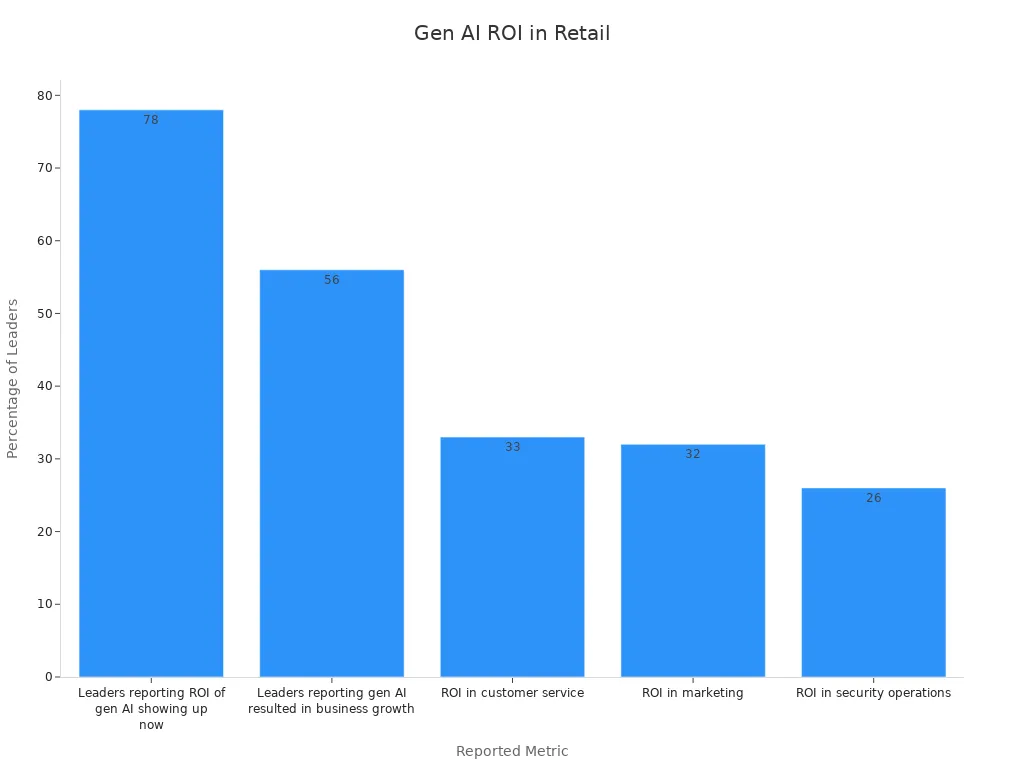
The chart above shows where retailers report ROI. Customer service delivers 33% ROI. Marketing gives 32% ROI. Security operations provide 26% ROI. These numbers show AI improves store operations across multiple areas.
Grocery chains cut waste. Fashion retailers boost sales. Both prove AI transforms physical stores.
Future AI Trends in Physical Stores
The next wave of AI will change your store into a smart space that knows what shoppers need before they ask. P&S Intelligence says the AI retail market will hit $36.462 billion by 2030. Stores are already using checkout-free tech, which makes shopping easier and lets workers help customers more. These AI trends point to a future where physical stores become smart places to visit.
Autonomous Shopping Carts
Autonomous shopping carts will change how you shop. These carts use deep learning, sensor fusion, and computer vision to track items as you put them in. You skip the checkout line completely. The cart adds up your total and pays automatically when you leave.
These smart carts also give real-time suggestions. As you add items, the cart screen shows related products based on what you picked. You get personalized coupons while you shop. This tech frees your staff from checkout work, so they can help shoppers on the floor instead.
The Global AI in Retail market is expected to grow by 34% over six years, from $2.938 billion in 2021 to $17.086 billion by 2028. This growth comes from better productivity and inventory accuracy. Autonomous carts link directly to your inventory system, updating stock levels instantly as shoppers remove items.
"What if stores could read your mood, adapt their atmosphere in real-time, and create personalized experiences for every shopper? It's not science fiction. It's retail in 2030." - RetailNext
This vision of smart spaces starts with autonomous carts. They collect data about shopping patterns, popular products, and busy times. You use this info to improve store layouts and staffing plans.
Predictive Analytics for Local Markets
Predictive analytics helps you pick new store locations with confidence. Retail location analytics combines geographic, demographic, foot traffic, and competitor data to understand market potential. You check trade areas, review site options, and spot market gaps before spending money.
This approach lowers expansion risk a lot. You predict demand by location, helping you choose new sites and improve existing networks. Predictive analytics estimates possible revenue by looking at demographics, property market conditions, and customer buying habits.
AI also adjusts product mixes to local tastes. A coastal store can focus on swimwear, while city stores highlight business clothes. This local approach improves relevance and cuts waste. You make sure inventory matches what shoppers want in every location.
Good data sources for local demand forecasting include local weather data, passenger numbers at transport hubs, and upcoming local events. Adding weather data alone can cut forecast errors by 5–15% at the product level and up to 40% at the product group and location level. You mix these outside factors with point-of-sale data and store-level counts for accurate predictions.
These new tools make physical retail more competitive than ever. You turn data into action, creating stores that meet each community's unique needs.
You have seen how AI transforms every aisle, checkout, and stockroom. These ai trends turn physical stores into responsive spaces that serve customers better. Remember, AI amplifies your team's human touch; it does not replace it.
Start small. Choose one pilot, such as foot-traffic analytics or a smart shelf system. Measure your ROI carefully. Learn from the data. Then expand.
The smart store is already here, and the retailers who embrace AI trends today will define the future of brick-and-mortar retail. What is your biggest takeaway? Share it below or contact us for a consultation. Your next step starts now.
FAQ
What is the first step to adopt AI in your store?
Start with one pilot project. Choose foot-traffic analytics or a smart shelf system. Measure your ROI carefully. Learn from the data. Then expand to other areas of your store.
How does AI affect your store employees?
AI does not replace your team. It amplifies the human touch. Employees focus on helping customers instead of running checkout tasks. Technology handles repetitive work for them.
Can small retailers afford AI solutions?
Yes. Start with low-risk tools that only read data. These tools give suggestions without changing your core systems. The investment pays for itself through waste reduction and sales growth.
How do you protect customer data with AI?
Follow GDPR and CCPA rules. Work with legal experts. Conduct regular audits. Tell customers how you use their data. Strong practices build trust and help you avoid fines.
What results do early adopters see?
78% of retail leaders report ROI from generative AI. 56% see business growth. Early adopters grow store sales 79% faster than competitors. Grocery chains cut waste by up to 25%.
See Also
The Future of Retail Belongs to AI-Driven Stores
Global Automated Convenience: Comparing Micromarkets and Smart Stores
AI E-Commerce Tools Revolutionize Online Store Management
Smart Tech in Electronics Vending Machines Transforms Retail
PARC Tysons: From Container Store to Community Hub Transformation
