What Amazon Go's Airport Expansion Signals About Frictionless Checkout

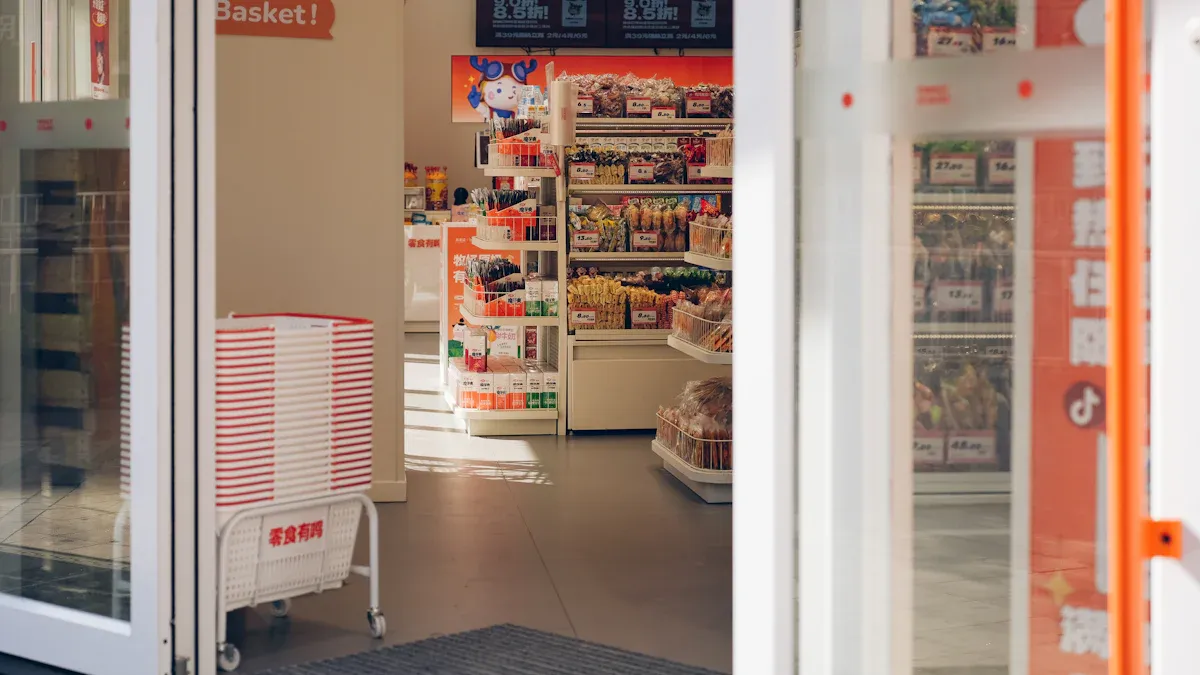
Amazon Go is expanding into busy airport locations today. This smart move shows that camera-based technology works well and is ready for real business. Crowded travel spots are the toughest test for any cashierless convenience store. Heavy crowds and constant bags block the sensors, pushing the store's tracking systems to their absolute limits.
Actual results in airports answer big questions for the shopping industry. Thousands of rushed travelers test these self-running stores every hour. Local computer networks process complex location data instantly under tight time limits. Smart camera systems track shopper movements correctly, even during the busiest hours. Store leaders now see that these automated systems can grow dependably while offering a smooth, easy checkout experience.
Key Takeaways
Amazon Go stores use smart cameras and shelf sensors to track purchases automatically in busy airports.
Customers save time because they pick up items and leave without standing in long cashier lines.
Live sensor alerts allow shop employees to refill bare shelves quickly, which greatly cuts staffing expenses.
Expensive gear makes constructing big cashierless grocery stores very hard and costly for business owners today.
Powerful cloud security and simple privacy choices keep buyers' payment information and palm-scan data safe.
Technical Architecture of the Cashierless Convenience Store
Entry Authentication and Sensor Fusion
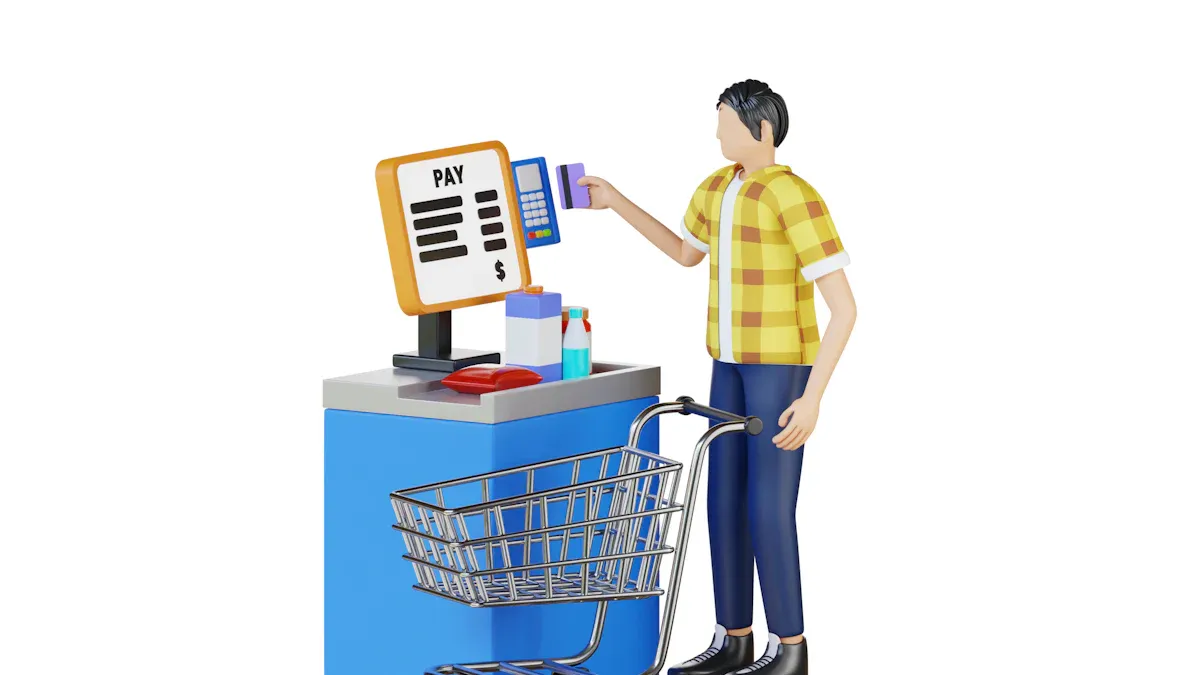
Modern cashierless stores use quick check-ins to confirm customer identities at the door. For instance, an airport store at Fort Lauderdale-Hollywood International Airport lets travelers tap a physical credit card. Instead, customers can wave their hand above an Amazon One scanner. This biometric palm scan connects the traveler right away to a digital payment account. The entry grants instant store access while keeping transactions safe. This check-in method offers great ease for rushed travelers.
Inside the cashierless convenience store, ceiling sensor arrays track store activity all the time. These sensor networks mix video inputs with weight data to keep tracking accurate.
Sensor Type | Key Characteristics | Primary Function (as inferred) |
|---|---|---|
RGB Cameras | Set up in ceiling grids; custom-made with built-in processors; handle basic computer vision tasks | Collect color visual data for basic object and scene tracking. |
Depth-Sensing Cameras | Separate devices from RGB cameras; use time-of-flight technology; dark matte finish | Create 3D space data to track positions and movements of people and items. |
The system pairs these high cameras with smart shelf weight sensors. Sensor fusion matches picked items to the right shopper. Big luggage often blocks camera views in crowded airport stores. Weight shifts instantly alert the system when a product leaves a shelf. Deep learning models blend weight changes with space coordinates to keep tracking precise.
Human Action Recognition at Scale
The technical base of ai-driven checkout relies on cloud servers and local store computers. Strong network pipes handle large streams of video data at the same time.
Kinesis Video Streams: Collect, run, and save video streams for data analysis and machine learning.
Engineers created the Just Walk Out technology using four key parts:
Core Video Capture: Ceiling cameras form the core of the tech, recording shopper paths and product picks inside the store.
Scalable Hybrid ML Model: The system relies on scalable machine learning models that run between local store hardware and cloud systems. This setup offers choices to boost cloud power when needed or handle data locally to save internet speed.
Cloud-Native Architecture: The Just Walk Out platform was built from scratch to shift store tasks easily to the cloud, allowing it to adjust for shopper crowds and manage any store size.
Robust Network Infrastructure: A safe control network was built from the ground up, with choices for backup internet links to the cloud as needed.
Smart neural networks read tricky human moves inside busy cashierless stores. The system checks physical actions using custom machine learning models.
Core Task | Deep Learning Architecture(s) | Specific Application / Notes |
|---|---|---|
Human Action Recognition (Customer Association) | 1. A novel, custom Deep Learning model for detailed body pose tracking. | Used to draw a stick-figure frame of the buyer from overhead video. The CNN builds a body joint map using smart grouping tools. |
Item Identification & Association | 1. Convolutional Neural Networks (CNNs) for primary item type detection. | Used to tell similar items apart after the first CNN step. Trained on large image sets to handle lighting and shape changes. |
These joined systems help cashierless stores follow complex shopper actions. The software keeps individual shopper profiles clear across the whole floor. A customer can grab an item in a crowded cashierless convenience store without stopping. Automated networks log every item pick correctly.
Operational Advantages for Cashierless Stores
Maximizing Throughput and Speed
Standard store registers create big delays inside busy airport shops. Rushed travelers regularly skip buying items when facing long lines before their flights. Removing physical cash registers completely changes this shopping setup in cashierless stores. Travelers just enter, grab their items, and leave without stopping to scan products or pay workers. This smooth checkout process greatly cuts down the time spent inside. As a result, small store spaces handle far more customer sales per square foot every hour.
Fast-paced travel hubs need a steady stream of moving shoppers. Normal store layouts lose big sales during sudden crowds because human cashiers cannot scan fast enough. Automated entry gates remove these physical store roadblocks entirely. Travelers scan a payment method at the door and start picking items right away. Removing checkout lines completely boosts overall store sales during peak travel times. Rushed travelers get extreme speed, while store owners raise sales without needing bigger shop spaces. Moreover, these smart practical upgrades make airport shops work like super-fast sales engines. Quick checkout features save vital earnings that regular travel stores usually lose due to tight flight schedules.
Automated Inventory Tracking
Busy travel hubs need quick product restocking to keep items ready on crowded shelves. Smart camera systems and sensors upgrade standard stockroom tasks by collecting automated store data constantly. The smart store setup updates stock counts live to stop items from running out.
The automated inventory tracking system operates through four coordinated operational steps:
Real-Time Detection: Smart retail tech sensors turn on the moment a buyer grabs a shelf item, instantly logging it as sold or picked.
Instant Alert Generation: The main store setup sends quick automatic alerts to workers about empty shelf space right away.
Enabled Proactive Restocking: Clear shelf alerts help workers restock products fast, removing delays caused by checking shelves by hand.
Labor Optimization: Automated tracking saves up to $40,000 yearly in manual work expenses, letting employees focus fully on stocking tasks.
Modern store tech gives workers clear live views of product stock changes and safety tasks. Store owners keep precise records in busy airport hubs by using smart inventory management tools:
High Inventory Visibility Dashboard: The system gives store leaders a clear, real-time digital view of all shelf stock numbers.
HITL Security Integration: Setup pairs artificial intelligence store monitoring with human oversight at a ratio of 1 person per 20 cameras to stop theft.
Reduced Manual Stocktaking: Accurate system tracking cuts down the need for regular physical count tasks and hand-checking stock errors.
These combined tech tools make cashierless stores work great inside busy travel hubs. Staff members stop wasting work hours walking store aisles to count missing items by hand. Ceiling camera arrays track every single item move non-stop across the main store space. This precise tracking helps automated cashierless stores stay fully stocked during big flight delays and busy travel hours. Modern cashier-free shops prove that automated tracking protects long-term store profits. Ultimately, retail owners using this system provide a better shopping experience inside every cashierless convenience store location.
Infrastructure Limits and Alternative Architectures
Hardware Costs and Scalability
Expensive equipment prices make growing cashierless shops into bigger retail spaces very difficult. Standard register systems usually need total equipment expenditures between $700 and $1,000 for a simple shop setup. On the other hand, self-running setups demand huge initial spending. A 2,000-square-foot shop using 120 cameras along with 200 shelf sections requires $200,000 to $500,000 just for physical equipment.
Growing this tech past small store layouts creates major practical challenges. Expanding into a 10,400-square-foot store layout needs hundreds of ceiling cameras to track heavy shopper crowds and tricky product picking. Local store network setups cost $10,000 to $30,000 per location, while local processing computers add $20,000 to $80,000 in expenses.
"In our analysis, we find that even though GPU compute is getting cheaper each year, the system will not prove a breakeven in a large format grocery store, compared to the status quo of operating the front end with cashiers, until after 2040."
Vision Systems vs. RFID Exit Lanes
Smart camera networks offer live tracking accuracy, while other tech options target specific theft problems. Ceiling camera setups provide item matching accuracy over 95 percent and keep false system errors under 5 percent. These smart vision networks achieve a 60 percent drop in stolen goods by watching shopper movements closely.
System Feature | RFID Exit Lanes | |
|---|---|---|
Primary Theft Reduction | 60 percent shrink loss reduction | 60 percent theft reduction |
Fraudulent Return Reduction | Tracked via visual item identification | 90 percent reduction |
Item Tagging Cost | No tag cost per item | $0.10 to $0.50 per tag |
Radio-frequency tracking gives store owners another clear option when choosing smart automated payment systems. Attached product tags cost between $0.10 and $0.50 for every single item. These scanner gates stop fake product returns by 90 percent through exact item checks. Store owners compare these tag fees against camera setups when picking their shop systems.
Strategic Outlook for Autonomous Travel Retail

Enterprise Licensing and Integration
Amazon grows its business presence by using corporate tech agreements. Outside airport merchants pay to use Just Walk Out systems to update their shops. Store owners add smart camera networks into their current building spaces. This business setup lets airport sellers provide self-running retail options without wasting years creating software.
Connecting these systems means linking online servers with store tracking databases. Airport managers connect old payment programs right to overhead room sensors. The software changes stock records and handles bills right away. This online design cuts daily expenses for airport merchants while keeping clear view of all items.
Data Privacy and Customer Adoption
Body-scanning sign-in tools create big worries about protecting private buyer details. Flying travelers read security rules carefully before trying palm-reading devices. Amazon handles these worries by asking for clear permission during initial account signup.
An Amazon spokesperson stated: "Only shoppers who choose to enroll in Amazon One and choose to be identified by hovering their palm over the Amazon One device have their palm-biometric data securely collected, and these individuals are provided the appropriate privacy disclosures during the enrollment process."
The brand uses strong safety controls to guard body details gathered inside automated locations. Inside rules limit digital and real access to private user profiles.
Privacy Measure | Description as Stated by Amazon |
|---|---|
Data Anonymization | The palm-print data is anonymized. |
Secure Storage | Data is stored securely in the cloud. |
Access Control | Access is limited to a 'small group of trained Amazon researchers' working to improve the technology. |
Data Deletion Option | Customers can ask Amazon to delete their handprint from its cloud storage. |
Proprietary Format | The scanning method means the data is of virtually no use to any other organization. |
Open safety rules build customer faith with regular plane passengers. Visitors love the ease of fast store visits during short flight delays. Honest security steps finally speed up buyer use across busy travel centers.
Amazon Go's success in airport locations proves that frictionless checkout works reliably for large retail systems. High-traffic travel hubs test autonomous shopping setups under extreme stress. Deep learning models, ceiling cameras, and shelf sensors maintain accurate tracking despite heavy crowds and rolling luggage. Surviving these chaotic environments proves the strength of core computer vision and sensor fusion architectures.
As a result, operators deploy cashierless stores to boost speed and customer satisfaction without adding physical space. These airport implementations now serve as the primary blueprint for enterprise retail adoption across stadiums, universities, and grocery chains. Ultimately, the modern cashierless convenience store sets a new standard for automated commerce worldwide.
FAQ
How does Just Walk Out technology track customer purchases in crowded airports?
Ceiling cameras watch where shoppers move on the sales floor. At the same time, shelf weight sensors notice when buyers pick up or put back items. Smart computer programs mix video feeds and weight changes together. This smart system connects chosen items straight to the right shopper profile.
What payment methods allow travelers to access an Amazon Go store?
Travelers tap a regular credit card at the front gate to enter. Otherwise, visitors wave their hand over an Amazon One palm reader. The setup connects the palm scan to a saved bank card and opens the gates right away.
How do cashierless airport stores prevent product theft without physical cashiers?
Smart camera networks watch customer actions across the store all the time. Shelf sensors spot exact product removals as they happen. In addition, real workers check tricky system alerts to keep everything accurate. These combined high-tech tools cut shoplifting losses by 60 percent.
Why do retailers prefer computer vision over RFID tags for travel retail?
Camera setups do not need extra stickers attached to every product. Electronic tags add extra costs between $0.10 and $0.50 for each item. Vision systems remove extra tagging work while keeping track of product stock changes instantly on store shelves.
See Also
Understanding Major Walmart Self Checkout Policy Changes Coming In 2025
Tracing The Fascinating Historical Journey Of Modern Retail Self Checkout
Comparing Amazon Go And Cloudpick For Modern Autonomous Retail Solutions
Transforming Traditional Retail Stores Using Innovative Cloudpick Cashierless Technology Solutions
Analyzing Retail Customer Convenience And Operational Challenges At Walgreens Checkout
