Cloudpick Leads Airport Cashierless Convenience Store Revolution

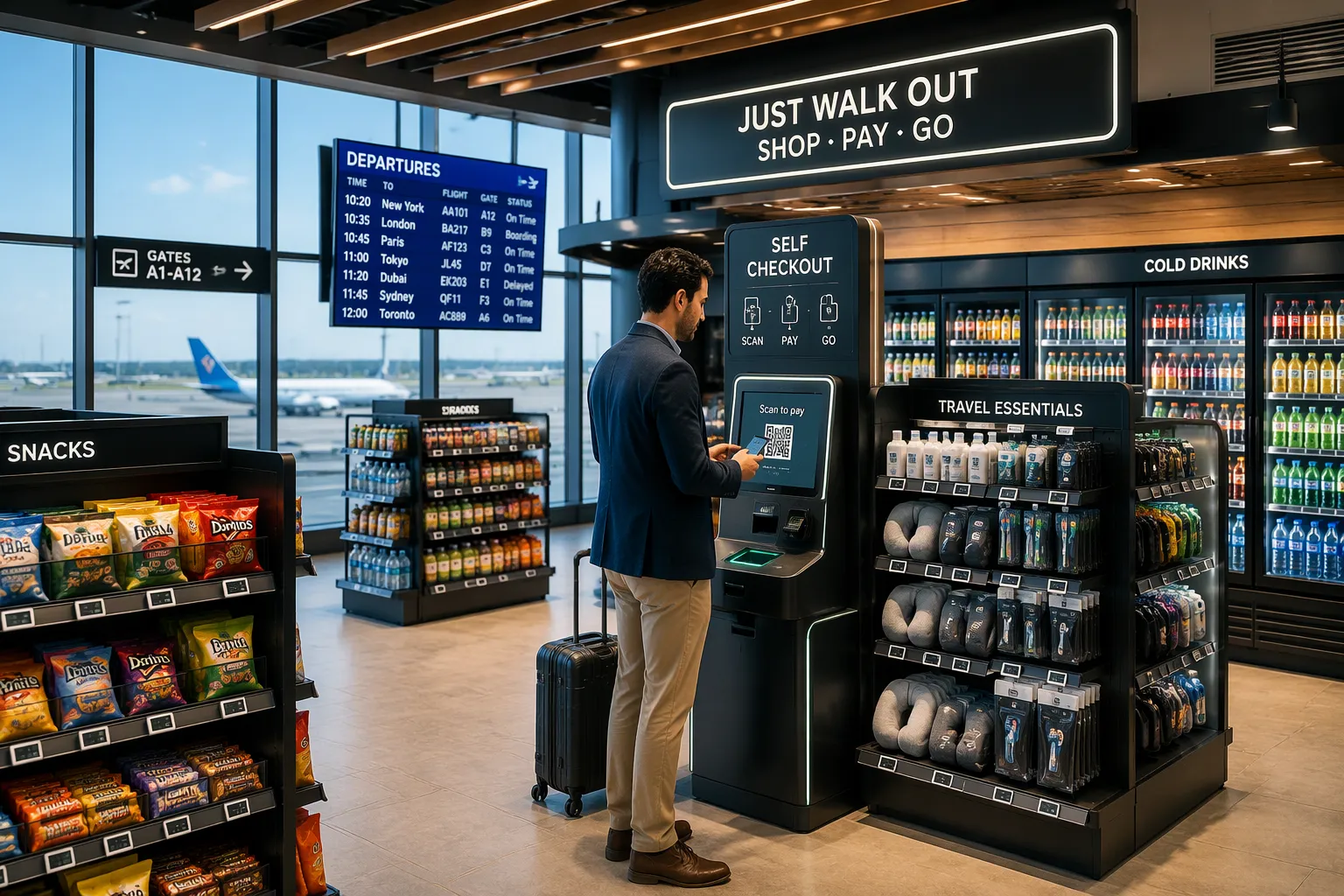
A short layover makes every traveler run. One eye stays on the clock. The other looks for a snack or a phone charger. Then comes the checkout line you dread, and the run turns into a slow crawl. Cashierless convenience stores fix this problem, and Cloudpick leads the way.
Why do these stores work so well in airports? Speed is at the top of the list. Shoppers grab items and walk out, and the system pays the bill on its own. Saving space matters too, since small stores fit more retail into costly terminals. Being open all day and night keeps shelves open at any hour. Cloudpick stands out with technology that is quick to set up and a Smart Store Management System. That mix powers the airport cashierless convenience store – scenario 12, where travelers shop in seconds and never miss a boarding call.
Key Takeaways
Travelers save time by picking up items and walking out—no checkout lines.
Cloudpick's technology uses cameras and sensors to track what people buy accurately.
Stores benefit from staying open 24/7 and spending less on workers.
Cloudpick provides a quick, flexible setup that fits into small airport spaces.
Airport Cashierless Convenience Store – Scenario 12: Why Now
The Airport Retail Squeeze
Airport retail runs on a tight clock. A traveler has forty minutes before boarding, and a coffee line eats up twenty of them. Staffing makes the squeeze worse. NBC News reports that airports in Austin, Myrtle Beach, and Charlotte told travelers to arrive as much as three hours early because of long security lines. The same story notes that Star Concessions contracted 75 workers at DFW, and only 34 showed up on their first day.
The money tells its own story. Terminal food, beverage, and retail concessions made up about 7 percent of U.S. commercial airports' nearly $25 billion in 2019 operating revenue, according to NBC News. High rent meets limited staffed hours, and square footage underperforms. That gap is exactly where the airport cashierless convenience store – scenario 12 earns its keep.
How Cloudpick Set the Pace
The economics of these stores have changed a lot. A traditional convenience setup once cost roughly $100,000 and needed one cashier on duty. Automated stores now run $1 million-plus, and they sell around the clock without a single staffed shift. Operators get more revenue per square foot, and travelers get their time back.
Cloudpick built its lead on that shift. The company serves 100+ clients across 30 countries and has powered 200+ smart stores in 13 countries. Its core team brings senior scientists from Silicon Valley and Seattle. That depth shows in the airport cashierless convenience store – scenario 12, where deployment moves fast and remote management keeps costs down. Operators weighing an airport cashierless convenience store – scenario 12 now have a proven path, and Cloudpick paved much of it.
How Cloudpick's Technology Works
Step-by-Step Shopper Journey
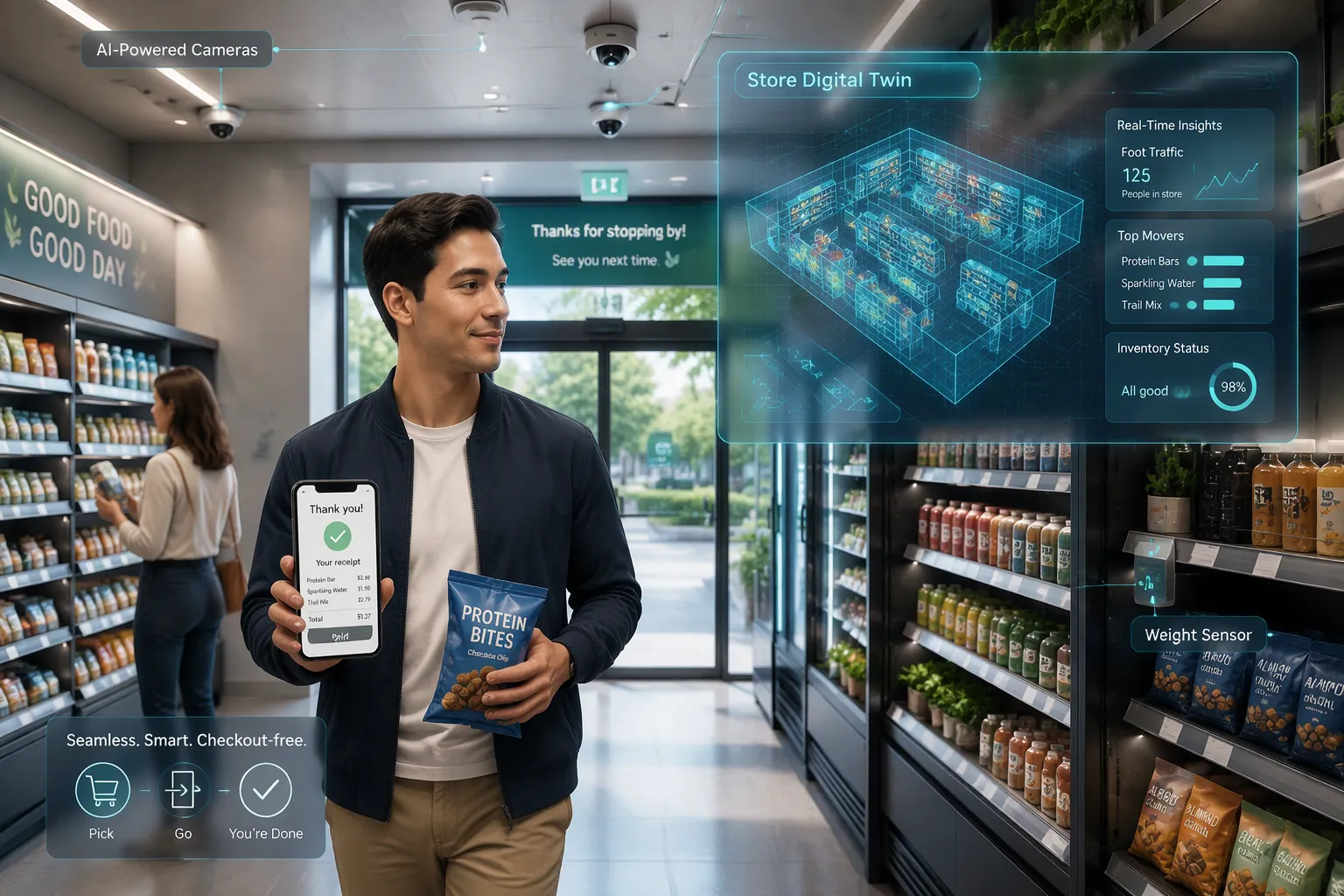
The whole trip through a Cloudpick store feels almost too easy. AIMultiple describes the flow in three beats, and the pattern holds across most cashierless formats. A shopper walks in, picks up a snack, and leaves. The bill settles itself.
Here is how that plays out in practice:
The shopper enters by tapping a credit card, debit card, mobile payment, or membership card at the door. Some formats ask for a quick app scan instead.
The shopper grabs items or puts them back. A virtual cart updates on its own, adding and removing products as hands move.
The shopper walks out. The system charges the linked payment method and sends a digital receipt to the phone.
No scanner, no conveyor belt, no small talk about the weather. Business Insider notes that shoppers simply pick up goods and exit, and the register never enters the picture. A traveler with eight minutes to spare can spend three of them shopping and five of them sprinting to the gate.
The Tech Behind the Walk-Out
The magic rests on layers of sensing. AI-powered cameras and weight sensors watch the shelves, the ceiling, and sometimes the cart itself, according to Business Insider. These systems track where each item sits and notice the moment a hand lifts it. Business Insider compares the stack to the hardware in self-driving cars: "a combination of computer vision, sensor fusion, and deep learning."
Cloudpick adds a digital twin to the mix. Fieldpie describes a digital twin in retail as a live virtual copy of the physical store. It updates the instant a shelf empties or a shopper turns a corner. The twin pulls from cameras, sensors, and point-of-sale data, then merges space, product placement, stock levels, and shopper movement into one model. ICSC reports that more than 1,700 U.S. Walmarts run floor plan twins for similar purposes, which shows how mainstream the approach has become.
Cloudpick's own engine, Cloudpick++, leans on computer vision and machine learning to spot products and shopping habits. A RealSense case study credits the company's depth-camera setup with a 99.5% accuracy rate in tracking shopper activity and purchases.
The product lineup covers different footprints. The AI-Powered Unmanned Store runs the full grab-and-go flow. The Smart Store Management System lets one team watch several sites remotely, and Cathay Capital notes that much of a store's management can happen off-site. Cloudpick's blog describes the Computer Vision Coolbinet as a compact format for purchases within the last 10 meters, which suits a gate-side kiosk. The Moby Mart rolls that idea outdoors for flexible scenarios. None of it requires a PhD to use. A shopper just grabs and goes.
Cloudpick vs. Amazon Go and Zippin
Performance, Fit, and Compliance
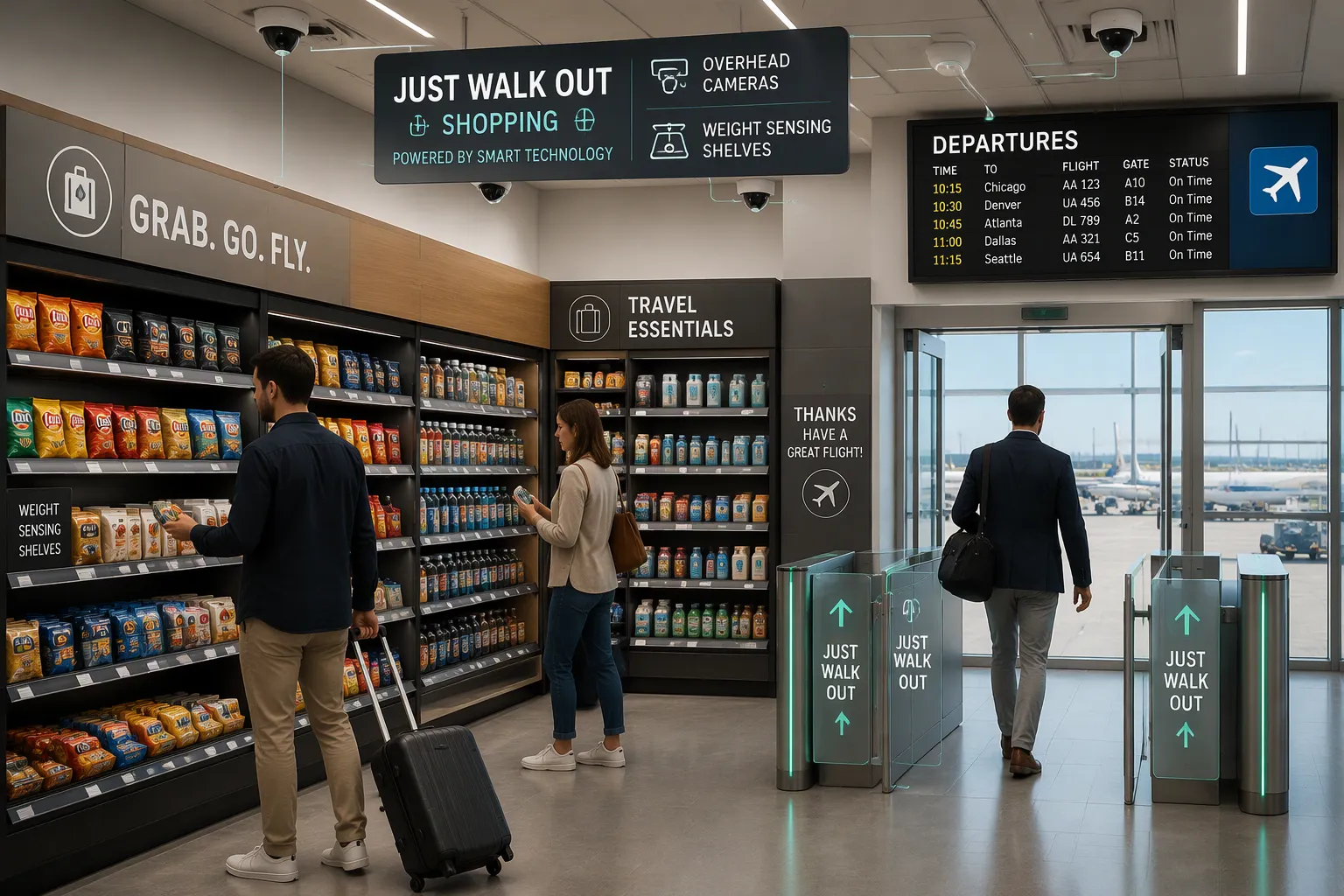
Every platform uses cameras and weight-sensing shelves to track shoppers. The real differences come down to store layout and paperwork. Amazon's Just Walk Out technology has already proven itself in airports. Concessions operator SLA Worldwide opened Everything Travel in Philadelphia International Airport Terminal D, a store powered by Amazon Just Walk Out Technology, according to Moodie Davitt Report. Hudson runs another Just Walk Out store at Harry Reid airport in Las Vegas, the same outlet reports. Amazon fits operators who want a big-name system inside a full-size terminal store.
Zippin leans toward food and beverage units in European hubs. SSP opened AI-powered stores at Dublin and Oslo airports, Moodie Davitt Report notes. The table below shows how those two sites compare.
Airport | Store concept | Technology |
|---|---|---|
Dublin Airport | Food and beverage convenience unit branded as "Dublin Town To Go" | Zippin's AI platform (camera technology and weight-sensor-enabled shelving) with payment integration by Planet |
Oslo Airport | Point convenience unit | Zippin's AI platform (camera technology and weight-sensor-enabled shelving) with payment integration by Planet |
Zippin's reach keeps growing. Zippin-powered stores now sit at DFW, Dublin, Oslo, JFK, and Rio de Janeiro international airports, according to the company's blog. Zippin CEO Krishna Motukuri framed the stakes well:
"When it comes to airport shopping, long checkout lines can be the difference between catching a flight or missing it. Countless travellers skip shopping altogether to avoid the risk. We're excited to bring checkout-free to Oslo and Dublin airports to eliminate the friction of traditional checkouts and make it easier for travellers to shop."
Cloudpick brings its own airport proof. Cloudpick and Lagardère opened Hong Kong International Airport's first AI-powered unmanned store, the IoT M2M Council reports. That system recognizes each product and processes the transaction in seconds. On compliance, every operator must clear local payment rules and airport concession agreements. Planet handles payments for the Zippin sites, and Cloudpick integrates payment at the door. Each vendor works within the same regulatory frame, so fit matters more than bragging rights.
Cost and Deployment Considerations
Deployment speed separates the three options. Cloudpick treats a store as drop-in retail, not a construction project. The model is modular, fast to deploy, and scalable, per the IoT M2M Council. Operators can start with one pilot gated by key metrics over 30 to 45 days, then scale only if it beats the baseline. The Smart Store Management System adds remote operations and fewer site visits. Computer-vision cool cabinets cover the last 10 meters, and the Moby Mart handles outdoor and pop-up scenarios. Higher sales per square meter, fewer out-of-stocks, and lower shrink risk round out the operator gains.
Amazon and Zippin both suit operators who want a familiar brand behind a larger terminal footprint. Cloudpick fits tight footprints, fast timelines, and lean staffing. No single option wins every dimension. The right pick depends on store size, payment setup, and how quickly an operator needs doors open.
Real-World Benefits in Action
Wins for Retailers
Running a store without cashiers changes the math for airport operators. A small store can stay open 24/7 with no cashier on shift, and the lights stay on for a late-night arrival. Remote control through the Smart Store Management System lets one team watch several sites at once, so a single manager covers more ground. Labor savings show up fast. One report from DFW cited by edwinhernandez.com showed payroll cuts of 25% or more after cashierless checkout arrived.
Data turns those savings into growth. RetailNext describes how heat maps and foot traffic data help retailers place products and design layouts for maximum engagement, and it points to Apple as a user of the approach. Sharaf DG, a Middle East electronics retailer, uses in-store analytics to improve promotions and placement, which RetailNext links to better sales and customer loyalty. Carrefour collects purchase, foot traffic, and market trend data, according to a study on PMC, and uses it to adjust pricing and target promotions. In an airport cashierless convenience store – scenario 12, that same data tells an operator which snacks sell before the 6 a.m. rush and which chargers gather dust.
Traveler Wins in the Airport Cashierless Convenience Store – Scenario 12
Travelers feel the difference in seconds. They walk in, grab a drink, and head for the gate. The system charges the saved card on its own, and no register ever slows the exit. Cloudpick's blog describes the flow plainly: no line, no cashier, payment happens on the way out. Several shoppers can leave at once, so throughput rises and a crowd never forms.
The scale of this shift is real. AVA Retail, through PR Newswire, reports more than 30 million customer journeys logged, 750 million product interactions on shelves, and over 20 million checkouts across four continents. Each one represents a traveler who skipped a queue. Contactless shopping also means no cash fumbling and no receipt hunting at the gate. For a family sprinting to catch a connection, the airport cashierless convenience store – scenario 12 turns a ten-minute detour into a thirty-second grab.
Cloudpick turns a frantic airport dash into a thirty-second grab. Its sensing technology, digital twin engine, and Smart Store Management System give operators a fast path to unmanned retail. The company competes fairly with Amazon Go and Zippin, and each option fits a different footprint. Cloudpick's Hong Kong International Airport launch with Lagardère proves the model works where it matters most. Travelers win time, and retailers win round-the-clock sales.
Ready to see it up close? The Cloudpick team keeps several doors open for curious operators:
Email: Kbechara@cloudpick.me
Website: www.cloudpick.com
LinkedIn: https://lnkd.in/dwih2ZJT
Book a meeting: https://lnkd.in/dZieM8kw
FAQ
How fast can an airport operator open a Cloudpick store?
Speed ranks high on the list for busy terminals. Cloudpick treats a store as drop-in retail, not a construction project. Operators can launch a pilot and judge it against key metrics over 30 to 45 days. If the numbers beat the baseline, scaling up comes next.
What happens if a shopper picks up an item and then puts it back?
The virtual cart keeps up with every move. Cameras and weight sensors watch the shelves, and the system adds or removes products as hands lift and return them. The final bill matches what actually leaves the store.
Does a Cloudpick store need staff on site at all times?
No cashier needs to stand at a register. The Smart Store Management System lets one team watch several sites remotely. A single manager covers more ground, and the lights stay on for late-night arrivals. One DFW report cited payroll cuts of 25% or more after cashierless checkout arrived.
How accurate is the product recognition?
Cloudpick's depth-camera setup earned a 99.5% accuracy rate in tracking shopper activity and purchases, according to a RealSense case study. That precision keeps bills honest and shrink risk low. Shoppers notice the difference when the receipt matches the bag.
Which payment methods work at the door?
Shoppers tap a credit card, debit card, mobile payment, or membership card to enter. The system links that method to the visit and charges it on the way out. A digital receipt lands on the phone, and no cash ever changes hands.
See Also
How Cloudpick Delivers Cashierless Shopping Convenience to Your Retail Store
Cloudpick Self-Checkout: Availability, Locations, and Customer Experiences in 2025
Why Cloudpick Checkout Computers Boost Efficiency, Accessibility, and Customer Experience
How Cloudpick Vending Machines Impact Healthy Snacking Choices
Why Cloudpick Vending Machines Are Revolutionizing the Energy Drink Market
