Airport Store Automation, Cashierless Checkout Systems and Convenience Store Growth

You walk into a small shop near your gate in 2026. You grab a snack and a drink, then head straight to your flight. The system charges your account automatically. No line. No cashier.
A cashierless convenience store works through a simple flow. You enter through a secure gate. AI-powered cameras and smart shelves track every item you pick up. When you exit, payment processes through your saved card or mobile wallet.
Airports demand this speed. High passenger volume, tight boarding schedules, carry-on bags, and security rules make quick service essential. You need to grab what you want and go.
Key Takeaways
Cashierless airport stores use AI cameras and smart shelves to track what you buy. They charge your card on their own when you leave.
Quicker checkout helps you help more travelers during busy boarding times. This raises sales and cuts down on long lines.
Connect entry gates to a saved card or mobile wallet. This step cuts down on theft and billing errors.
Begin with one test store, watch how passengers move, then grow slowly. Keep signs clear and simple for first-time users.
How a Cashierless Convenience Store Works in 2026
AI Cameras and Smart Shelves Track Purchases
The technology behind a cashierless convenience store feels like magic, but it uses a clear set of tools. Overhead cameras and computer vision follow customer movements. These cameras track items when shoppers take them from shelves or put them back. Computer vision is an AI field that reads digital images and videos to understand what is happening and then take action.
Smart shelves add another layer of accuracy. These electronic devices monitor the store's inventory with sensors and RFID tags. Weight sensors change mechanical force, such as pressure or load, into a digital output signal. When you lift a bottle of water, the shelf feels the weight change. When you put a sandwich back, the shelf notes the return too.
Amazon Just Walk Out technology uses AI, computer vision, sensor fusion, and RFID to track what customers take. Machine-learning algorithms then connect the chosen items to your account. The system uses overhead cameras, weight sensors, and deep learning to see which items you remove or put back. It also keeps those items in a virtual cart. The mix of weight changes and camera-based visual recognition tells if you are taking an item or returning it.
Just Walk Out serves convenience stores and airports. It now runs in 16 airports and 5 convenience stores. These numbers show it works in real terminal settings, though no 2026-specific deployment is named.
Automatic Payment on Exit
Payment happens when you leave. The system automatically charges your saved card or mobile wallet. You never stop at a register. You never give cash to a clerk. The virtual cart from your visit becomes the final bill.
Camera-gated exits can confuse some travelers, though. A gate that opens only after payment may feel odd to a first-time user. Clear signs and an easy store layout fix this issue. You should know exactly where to walk and what happens next.
The whole process is simple. You walk in through a secure gate. AI cameras and smart shelves track everything you take. When you leave, the system charges your saved card or mobile wallet. That is what a cashierless convenience store is all about in 2026.
Airport Store Design for Cashierless Operations
Passenger Flow and Security Constraints
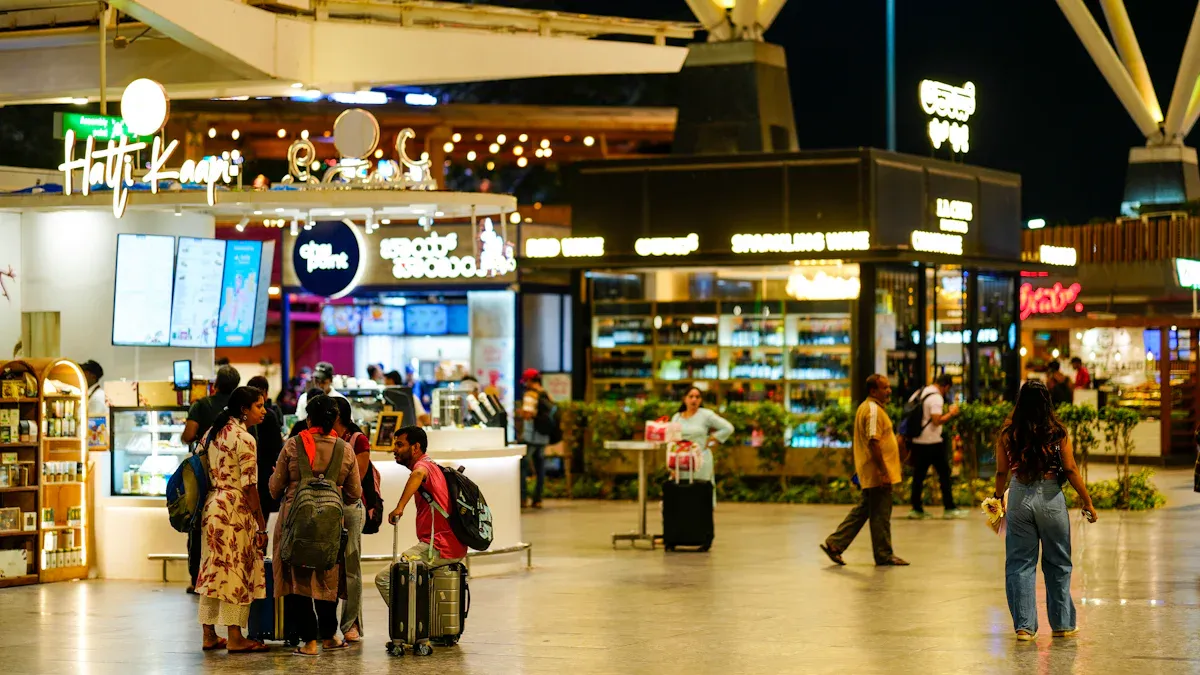
Passenger flow shapes every design choice. You walk into a store near your gate with a carry-on bag and a boarding pass on your phone. You need to move through the space fast. A simple entry point matters more than fancy technology. The gate must feel easy to spot. If you stop, other travelers bunch up behind you. Early airport setups show this. Zippin opened a cashierless store at Dallas Fort Worth International Airport. Since 2022, cashierless airport stores have grown in Los Angeles and Dallas. These spots prove the model works in busy terminals.
Security rules also shape the layout. Airport rules affect where cameras can go. They limit sensor placement and how long video is kept. You cannot hide cameras behind signs or put shelves where they block sight lines. The exit gate must pass security review while staying easy to use. You should see the whole path from entrance to exit. Clear signs tell you what to do. Plan for signs at eye level so you never hesitate. When the layout fits passenger flow, the store feels natural.
Layout, Merchandise Mix, and Peak Traffic
A small space near the gate works best. You only need one narrow aisle for a quick stop. Shelving should leave room for your suitcase. Wide aisles also help families with strollers and travelers with wheeled luggage. If two travelers pass each other, they should not have to squeeze. Keep high-demand items like water, snacks, and headphones near the front. This cuts search time and shortens dwell time. A shorter path also helps you reach your gate faster. The store becomes part of your walk to the gate, not a separate errand.
Merchandise mix follows traveler needs. Focus on grab-and-go items rather than large baskets. Boarding schedules create sharp peaks. One departing flight can empty a store in minutes. A cashierless convenience store handles that surge because you never wait in line. The whole transaction takes seconds after your last item. Those tight boarding windows turn speed into higher sales.
How Cashierless Convenience Store Growth Benefits Airport Retailers
Faster Service and Higher Sales per Traveler
The global airport convenience products market should hit $21.81 billion in 2026 and $36.23 billion by 2034. This growth comes from more passengers and a stronger need for quick, easy shopping. Airport retailers are right in the middle of this trend. A cashierless convenience store helps them grab more of that spending.
You already know how painful a long checkout line feels when your flight boards in twenty minutes. A traditional store makes you wait behind other travelers. Every transaction takes time. A cashier scans items, takes payment, and bags the goods. That same process repeats for each customer. During busy departure waves, the line grows fast. Some travelers give up and leave with nothing. The store loses a sale it could have made.
Cashierless checkout flips this model. You walk in, take what you need, and leave. The system charges your saved card on its own. No cashier scans your items. No line forms at a register. Throughput rises because the store no longer limits how many people can pay at once. Several shoppers can exit at the same time. Each one finishes a purchase in seconds.
Higher throughput directly lifts sales per traveler. You serve more passengers during the same peak window. A traveler who would have skipped the store now grabs a snack and a drink. That extra transaction adds revenue without adding staff. The store captures demand that traditional checkout cannot handle. Over a full day of departing flights, those small gains add up. Retailers see stronger revenue per square foot and better returns on their terminal space.
Operational Savings and Labor Efficiency
Labor is one of the biggest costs in airport retail. Traditional stores need cashiers, shift supervisors, and staff to run registers. You also need extra workers during peak hours to keep lines moving. Cashierless operations cut much of that overhead. The store still needs staff for stocking shelves, handling deliveries, and helping travelers. But you no longer schedule a full team just to run registers.
Those savings go beyond payroll. You cut training costs because new hires do not need to learn POS systems. You lower cash handling risks because the store takes no cash. You also free up floor space once used for checkout counters. That space becomes room for more shelves and more products. More products mean more ways to earn revenue from the same footprint.
Labor efficiency also improves consistency. A cashierless store never calls in sick. It never runs short on staff during a holiday rush. The system processes every transaction the same way. Travelers get a predictable experience whether they shop at 6 a.m. or 10 p.m. That reliability builds trust. Repeat visitors know they can count on a fast stop before their flight.
The combined effect is powerful. Faster service raises sales per traveler. Lower labor costs improve margins. Together, these gains make airport retail more profitable and more scalable. As passenger volumes climb toward 2034, cashierless stores give retailers a model that grows with demand.
Overcoming Airport Cashierless Store Challenges
Preventing Shrinkage and Billing Errors
Theft is a real worry in any retail store. A cashierless convenience store removes the cashier, but it does not remove all risk. Some travelers may take an item and walk out without any valid payment method on file. Others may accidentally leave with an item they forgot to scan. You need layered defenses to protect your inventory. Overhead cameras and smart shelf sensors already track every item. You can pair that data with entry gates that need a saved card or mobile wallet before anyone enters. This step alone stops many would-be thieves.
Billing mistakes upset shoppers just as much as theft hurts a store's profit. A wrong charge makes a traveler lose trust right away. The traveler may call their bank to dispute the charge. They may post a bad review, or they may never come back. You can lower these errors by keeping camera and sensor data in sync. If a mismatch happens, your system should flag it before it finishes the charge. Offer an easy refund process at a kiosk or in a mobile app. A fast fix turns an angry traveler into a loyal, returning customer.
Uptime Reliability and Security Compliance
Your system must work every hour, every day. If a cashierless store goes offline during a busy departure wave, it causes chaos. Travelers cannot pay. Staff have to rush to open manual registers. You lose sales and break trust. Build backup power and network systems. Test failover plans during slow times. Keep spare cameras and sensors on site for fast swaps.
Airport security rules add another layer of difficulty. These rules decide where cameras and sensors can go. They also limit how long you may keep video footage. They shape the design of exit gates. You must work with airport authorities early in planning. Send your camera placement plans for review. Check that your video retention policy meets all local and federal guidelines. Make exit gates secure but easy for travelers to use. Following the rules is not optional in an airport terminal environment.
Scaling Cashierless Convenience Stores in Airports
Clear Signage and Traveler Trust
A traveler walks into your store for the first time. They see no cashier and no register. They may hesitate. Clear signage solves this problem. Place a bright sign at the entrance that explains the flow in three steps: enter, take, and walk out. Use simple icons and short phrases. A sign that says "Payment happens automatically" tells travelers what to expect. Mark the exit clearly. A camera-gated exit can feel like a barrier. Add a sign that reads "Your receipt is on your phone." This small text builds confidence.
Trust grows when every step matches expectations. Frequent travelers know the system. First-time users are the real test. They need to know the store charges only for items they keep. Put a sample shelf display near the entrance. Show a water bottle and a snack with a virtual cart. Travelers can watch the system track items before they commit. Staff or a help button near the exit handles questions. When the experience feels obvious, travelers return.
Phased Rollout Across Terminals
Start with one pilot store before you expand. Pick a terminal with steady traffic and a simple layout. Run the pilot for at least one full quarter. Watch how passengers behave during real departure waves. Track transaction time, average basket size, and error rates. The pilot also reveals operational gaps. You learn when stock needs replenishment and which items sell fastest near a gate. Change the layout based on those observations.
After the pilot proves stable, expand in phases. Open a second store in the same airport, then a third. Keep the same entry, shelf, and exit design each time. Consistency helps travelers who move between terminals. You can then move to other airports. Choose airports with high passenger flow and a partner who understands local security rules. Long-term growth depends on making the experience simple for new users. A cashierless convenience store scales only when a traveler in any airport can walk in, grab a snack, and leave without a second thought.
You now get how the 2026 airport store works. You walk in through a safe gate. AI cameras and smart shelves keep track of what you take. When you leave, the system charges you on its own.
This setup helps stores grow. You help travelers faster, make more money from each person, and cut down on extra work. The market keeps growing through 2034.
But technology by itself will not save a store. You still need to stop theft, keep systems running, follow security rules, and make the experience easy for first-time users.
Think about what is coming. Your cashierless store may soon know what you like, suggest items, and connect with your flight plan. Automation will keep changing how you shop before you fly.
FAQ
How does the store track the items I take?
The store tracks items with overhead cameras and smart shelves. Computer vision follows your path as you shop. Weight sensors detect when you lift or return a product. Every item you pick goes into a virtual cart.
What stops someone from walking out without paying?
Before you enter, the gate needs a saved card or mobile wallet. Cameras and shelf sensors watch everything you take. These steps stop most stealing. If someone leaves without paying, staff can check the video.
What happens if I get charged for the wrong item?
The system checks camera and sensor data before charging. It spots mistakes before payment goes through. You can ask for a refund at a kiosk or in the app. A fast fix keeps you happy and willing to return.
Can I use cash?
No. The store takes only a saved card or mobile wallet. You link your payment method at the entry gate. The system charges you when you leave. That rule makes checkout fast and safe.
What happens if the system goes down?
Stores have backup power and backup network connections. Staff can use manual registers if the system fails. Extra cameras and sensors stay on site for quick swaps. You can still finish buying without waiting.
See Also
A Look At Walgreens Self-Checkout: Retail Convenience And Its Challenges
How Cloudpick Delivers Cashierless Shopping Convenience To Your Retail Store
Walmart Self-Checkout Access: What Changes Are Coming In 2025?
Tracing The Historical Development And Evolution Of Self-Checkout Technology
Micromarkets Versus Smart Stores: How Automated Convenience Retail Operates Globally
