Cut Retail Labor Costs with AI Without Hurting Customer Service

Yes, AI can help you lower labor costs without hurting customer service. It often makes service quality better. Rising wages and thin profits put pressure on retailers today. Labor shortages make it harder than ever to find workers. You face a challenge all the time. You need to balance cutting costs with the customer experience.
AI scheduling cuts labor costs by about 15% on average while improving peak coverage. This number shows the power of reducing retail labor costs with ai. Good retail labor optimization starts with smart workforce planning. You can find practical solutions for your store's unique needs. The potential of ai in retail goes far beyond simple automation.
This post explores ways to achieve this balance for your business.
Key Takeaways
AI scheduling lowers labor costs by about 15% on average and makes peak coverage better.
AI handles boring jobs, like counting stock and checking out items. This frees your team to help customers.
Real stores use AI tools to cut overtime by as much as 72% and labor costs by 10-15%.
Help workers feel less worried and follow data privacy rules to make the switch to AI go smoothly.
AI makes employees happier and improves service. It does this by taking care of boring tasks. This gives staff more time to help customers.
Why Rising Labor Costs Threaten Retail Service

The Financial Strain on Retailers
Retail pay keeps going up. By 2025, retail wages in the United States went up 4.8% from the year before. This rise hurts your profits a lot. Retail profit margins are already very small. Every extra dollar you spend on pay makes those margins even smaller. You feel this pressure every time you make a schedule.
You also deal with a lasting retail labor shortage. It is hard to find good workers. When you do find them, they cost more. Many retailers deal with this by cutting staff hours. This plan saves money for a short time. It causes bigger problems later on. Your store cannot run well with too few people working. Customers notice the difference right away.
The Service Quality Trade-Off
Cutting staff without a plan hurts your customers. Fewer workers mean longer lines at checkout. Shelves stay empty because no one has time to restock them. Shoppers cannot find help when they have questions. Upset customers leave and may not come back. Your reputation takes a hit along with your sales. This cycle harms your business in ways that are hard to fix.
Smart retail labor optimization gives you a better way. AI agents can handle routine tasks like inventory management and checkout. This automation lets your team focus on talking with customers. You lower labor costs without losing service quality. The key is a smart plan, not random cuts. Technology should help your people, not take their place. When you use AI the right way, your employees become more valuable, not less.
Reducing Retail Labor Costs with AI
AI gives you a real way to lower labor costs without making service worse. The technology takes care of the busywork. Your team takes care of the people. This balance is the heart of reducing retail labor costs with ai.
Demand Forecasting and Smart Scheduling
AI-powered forecasting looks at your store, each department, and every hour of the day. It studies past sales, weather, holidays, and local events. Then it builds a staffing plan that matches real demand. This approach turns guesswork into demand-based scheduling.
Rules-based automated scheduling takes that forecast and acts on it. You set the rules. The system fills the shifts. Dynamic scheduling tools adjust in real time when a rush hits or a slow period appears. Shift assignment optimization places your best people where they matter most. Predictive analytics even flags future spikes before they arrive. The result is simple. You stop paying for idle hours. You stop running short at peak times. That is retail labor optimization in action.
Automating Repetitive Tasks
Routine work eats your payroll. AI agents for retail can automate inventory management, checkout, and basic customer interactions. According to the Nomtek article, this automation can reduce retail labor costs by up to 40%. That figure marks the maximum potential reduction. A narrower range of 20 to 30 percent applies to checkout assistants alone.
Cashierless checkout removes the need for a staffed lane at every hour. Automated systems track stock and reorder goods before shelves go empty. Robots scan shelves and clean floors at a steady pace. These robots never call in sick. The robots free your staff for customer conversations. Robots also work overnight without overtime pay. When robots handle the dull tasks, your people gain time for service. Robots cut the hours you spend on manual counts. That is how robots lower costs and lift service at once.
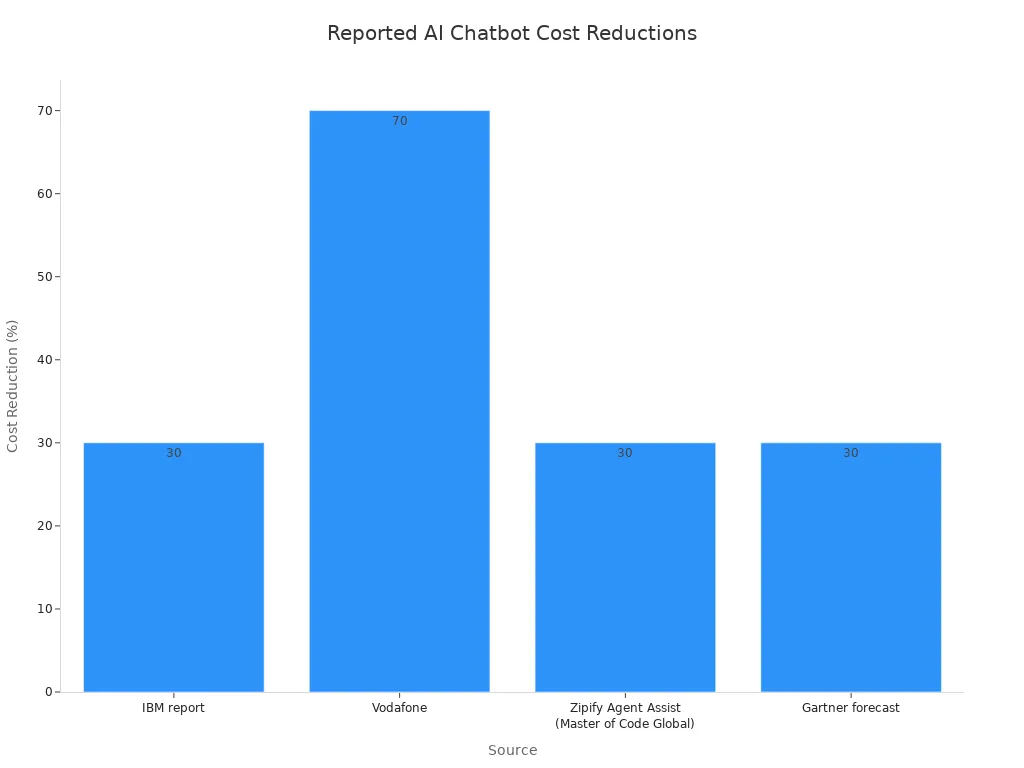
AI chatbots deliver similar gains on the support side. A Zipify Agent Assist deployment reported a 30% lower operating cost for retail customer support. Gartner forecasts that agentic AI could reduce operational costs by 30% by autonomously resolving 80% of common customer service requests by 2029.
These tools lift efficiency and productivity across your whole operation. They give you real-time data on every task. They support ai-powered workforce management without adding headcount. A retail labor shortage no longer forces you to choose between coverage and cost. You can cut labor costs and keep your service strong. The next step is seeing how real stores made this work.
Real-World Retail Labor Optimization Success Stories
Grocery Chain Cuts Overtime with AI
You can see how automated scheduling helps grocery stores right now. Pyramid Foods cut overtime by 72% after using AI scheduling tools. Woods Supermarket got a 68% overtime reduction with similar technology. These results show how retail labor optimization brings real savings.
AI scheduling tools can cut overtime by as much as 28% across grocery operations. That drop helps a lot to lower labor expenses. You stop paying higher wages for extra hours you did not plan. Your budget stays under control.
Retailers using AI scheduling often report a 15–20% drop in total labor cost. Less overstaffing causes most of that savings. You staff your store to match real demand. You avoid paying for idle time during slow periods.
One grocery chain used AI-driven scheduling and cut labor costs by 10% in a single quarter. Customer satisfaction went up at the same time. Your team works smarter hours. Your customers get better coverage.
Specialty Retailer Boosts Service with AI
A specialty retailer used AI-driven price optimization to make over 30,000 price cuts in 2025. That plan cut labor costs by 15%. The retailer moved staff time from manual price changes to customer engagement. You can use the same approach.
AI agents for retail handle routine tasks like inventory management and checkout. This automation frees your associates to focus on shoppers. Robots scan shelves and clean floors without breaks. Robots never call in sick. Robots work overnight without overtime pay. Robots keep your store running while your people help customers. Robots reduce the hours you spend on manual counts. Robots lift service quality. Robots lower your costs. Robots give your team more time for conversations. Robots make your store more efficient.
These cost-saving applications prove that reducing retail labor costs with ai works in real stores. You gain efficiency and productivity without sacrificing service. Your customers notice the difference.
Overcoming Challenges to Cut Labor Costs with AI
Employee Resistance and Training
Your team may worry that AI will take their jobs. That fear is real and you should address it head-on. Transparent communication is your first tool. Explain what the AI will do and what it will not do. Show your staff that the technology handles repetitive tasks. Your people then gain time for customer interaction. That message turns fear into support.
Training programs make the transition smooth. Offer hands-on sessions with the new scheduling and automation tools. Let employees practice before the system goes live. Upskilling shows your commitment to their growth. A retail labor shortage makes retention even more critical. When workers feel valued, they stay longer and serve customers better.
Lowe's SVP Chandu Nair noted at CES that closing the gap between AI pilot and production is 70% a change management challenge and 30% a technology challenge. IHL Group research confirms this view. Execution, governance, and operational readiness matter more than the software itself. Your people are the key to success.
Data Privacy and Ethical Use
AI workforce tools collect employee data. You must handle that data with care. Privacy laws set clear rules for retailers. The table below shows the main requirements you need to meet.
Regulation | Jurisdiction | Key Requirements |
|---|---|---|
GDPR | European Union | Establish a lawful basis for processing employee data; provide transparency; apply data minimization; honor access, correction, and deletion rights; conduct DPIAs for high-risk processing |
CCPA / CPRA | California, United States | Let employees know what data you collect; allow deletion and correction; limit use of sensitive data; avoid discrimination for exercising privacy rights |
Build robust data governance policies before you deploy any tool. Conduct risk assessments for systems that monitor or profile workers. Under CCPA/CPRA, businesses using automated decision-making technology for significant decisions must give pre-use notices and allow opt-outs. GDPR enforcement now moves faster across EU countries.
AI-powered workforce management bridges labor shortages and boosts efficiency. It does not replace people. It gives your team better tools and more time for the work that matters.
Benefits of AI-Powered Workforce Management
Cost Savings and Efficiency
AI-powered workforce management gives you two wins at once. You cut spending and you raise service quality. AI scheduling lowers labor costs by about 15% on average. It also improves coverage during busy times. That one change shows how reducing retail labor costs with ai pays off.
Better visibility drives these gains. You see demand by hour, by department, and by store. Stronger workforce planning then removes unneeded labor costs. You stop paying for idle hours. You stop rushing at peak times. Your store performance improves because your team matches real traffic.
Automation of inventory management adds more savings. McKinsey data shows the impact clearly.
Cost Saving Metric | Estimated Impact |
|---|---|
Inventory carrying costs | Reduction of 20% |
Stockouts | Reduction of up to 50% |
Inventory forecast accuracy | Increase of 35% |
Robots scan shelves and count stock overnight. Robots cut the hours your staff spend on manual counts. Robots feed real-time data into your planning systems. Robots never call in sick. This automation lifts efficiency and operational efficiencies across your operation. Your employee performance tracking also improves because you measure output, not hours.
Happier Employees, Better Service
Your team gains when AI handles the dull work. AI scheduling tools improve employee satisfaction in several ways:
Shift swapping lets workers trade hours without manager approval.
Availability inputs align schedules with personal needs.
Predictable schedules support work-life balance.
A retail case study found that AI-driven scheduling analysis identified overtime as a leading cause of employee attrition. Management redesigned shifts for better balance. Retention improved as a result. In high-turnover sectors, giving employees control over schedules increases loyalty and reduces churn.
According to PerformYard, the share of time spent on meaningful work versus repetitive drudgery shapes engagement. AI scheduling and related automation reduce routine tasks like scheduling and reporting. Burnout drops. Satisfaction rises. Your people gain capacity for customer interaction. That shift lifts productivity and service quality together. Retail labor optimization becomes a win for your budget and your team.
AI lowers your labor costs through four levers: demand forecasting, smart scheduling, task automation, and workforce management. Each one protects service quality while trimming waste. Success still depends on you. Roll out tools with a clear strategy, win employee buy-in, and govern data ethically.
Ready to start? Follow this path:
Assess your biggest pain points.
Pilot one scheduling tool.
Train staff early.
Measure ROI.
AI scheduling cuts labor costs by about 15% on average. You can cut costs and still deliver better service. Treat AI as a partner, not a replacement. It handles the dull work. Your people handle the relationships.
FAQ
How much can AI lower your retail labor costs?
AI scheduling lowers labor costs by about 15% on average. AI chatbots cut support costs by up to 30%. AI agents can lower labor costs up to 40% by automating tasks.
Will AI replace your current employees?
No. AI does boring tasks like tracking stock and checkout. Your staff gets more time to help customers. AI helps your workers, not replace them. Clear talks and training help your team adjust.
What retail tasks can AI automate for you?
AI handles guessing demand, making schedules, and managing stock. AI chatbots answer common customer questions. Robots scan shelves and mop floors. These tools let your staff talk with customers more.
How do you start using AI scheduling in your store?
Begin with one test tool. First, look at your biggest problems. Teach your staff how to use it early. Track if it saves you money. Use the tool in all stores after you see good results.
Is employee data safe with AI workforce tools?
Yes, if you follow the rules. Follow laws like GDPR and CCPA. Make data privacy rules before using tools. Check for risks in systems that watch workers. Keep worker data safe and fair.
See Also
AI-Driven Convenience Stores Are Growing: Essential Insights For Retailers
AI E-Commerce Solutions Are Revolutionizing How Online Shops Are Managed
Launching An AI-Enabled Convenience Store Without Spending A Lot
The Future Of Retail Lies In AI-Powered Store Operations
Cloudpick Delivers Checkout-Free Shopping Experience To Your Retail Location
