Enhancing Retail Employee Experience through Smart Store Innovations

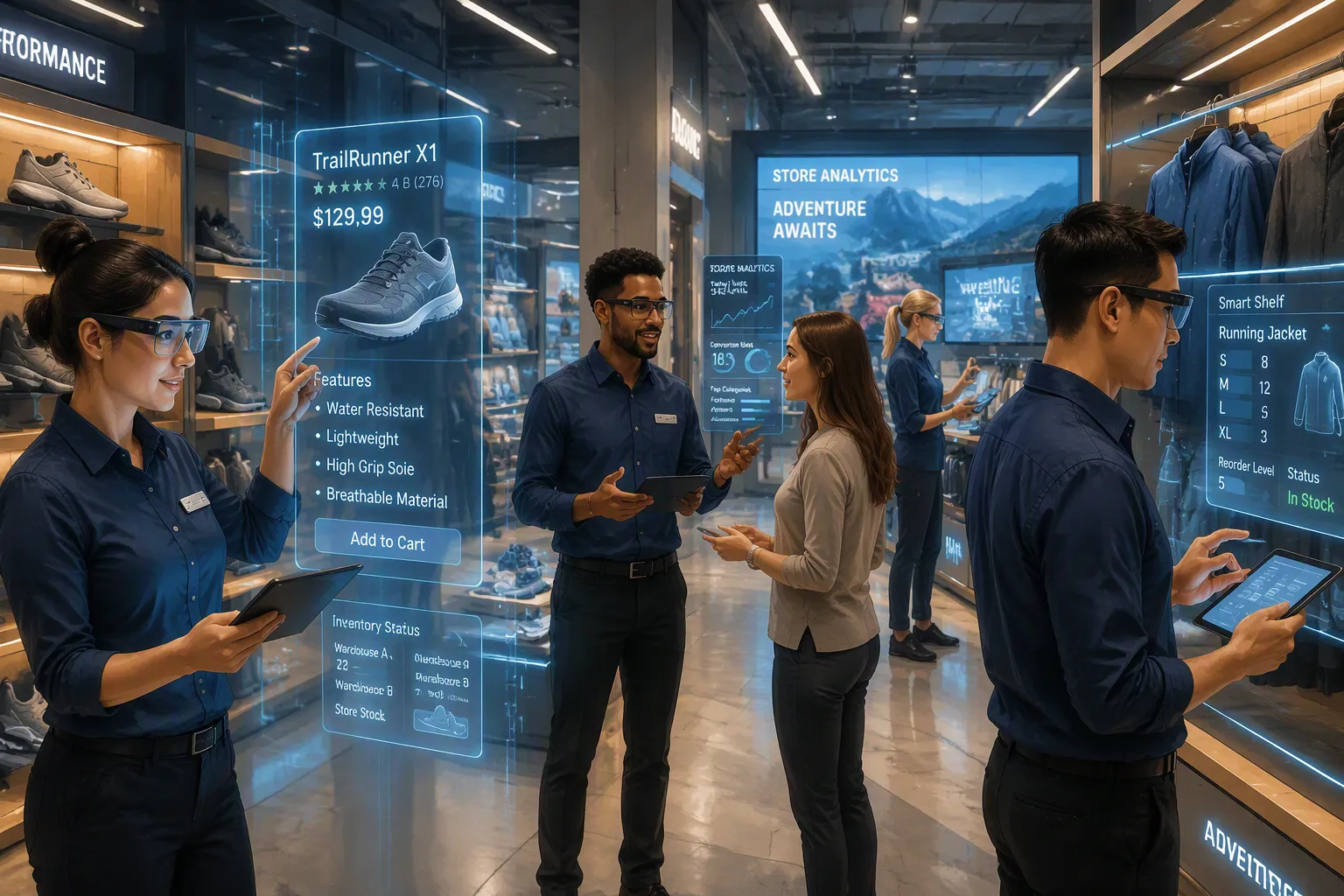
Picture yourself bent over in a dusty stockroom, counting boxes by hand while your phone buzzes with another shift change request. Your manager just said no to your time-off request. You wonder if quitting is easier than dealing with this mess.
Smart stores change that reality. Retailers using data-driven scheduling and automation report a 25% improvement in employee satisfaction and much less burnout. These innovations remove boring tasks, not people. They let you focus on customer experience and personal growth.
This workplace change touches five areas: task automation, smart scheduling, data empowerment, enhanced communication, and continuous learning. Each one rebuilds workplace culture and job happiness. When you feel valued, improving customer satisfaction becomes natural. Smart stores improve employee satisfaction by design, creating a cycle where happy employees drive customer satisfaction.
Key Takeaways
Automation takes over dull jobs, so you can spend more time helping customers and learning new skills.
Smart scheduling gives you steady hours and lets you manage shifts using mobile apps.
Real-time data on your device helps you become a smart advisor who fixes customer issues.
Digital tools make communication and learning better, so you feel valued and capable.
How Smart Stores Improve Employee Satisfaction by Automating Tasks
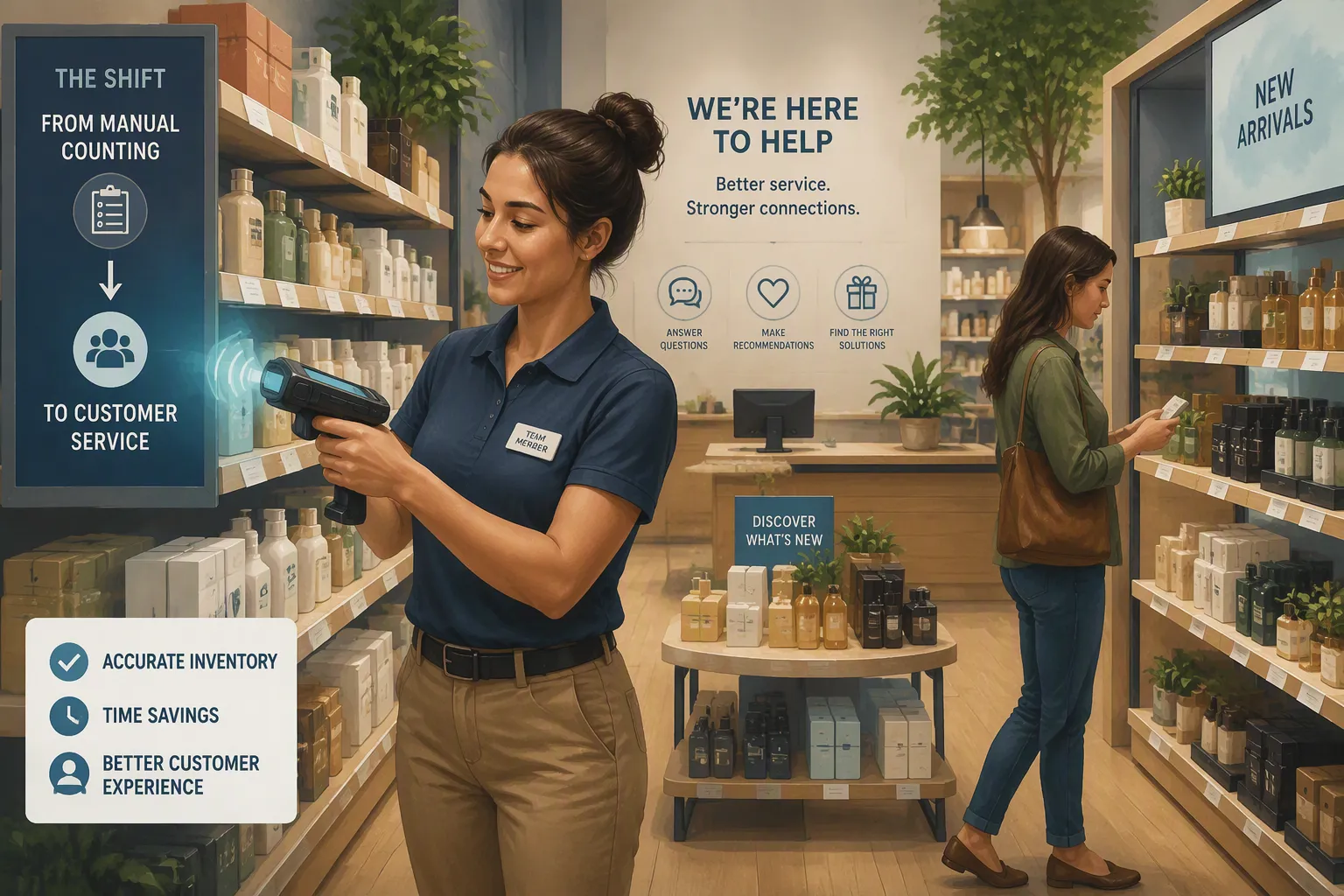
Task automation removes the boring "robot" work from your daily routine. You no longer spend hours on repetitive chores that drain your energy. Instead, you use your human skills—empathy, creativity, and problem-solving—for work that really matters. This change directly affects how smart stores improve employee satisfaction.
Shifting Focus from Inventory Counting to Customer Engagement
Manual inventory counting takes up your whole shift. You scan each barcode one by one, write numbers on paper, and hope nothing changes overnight. RFID technology changes this picture completely. A case study of an urban convenience store showed that after using RFID, inventory count times dropped by 75% and stockout incidents fell by 30%. Staff said they spent much more time helping customers, which led to higher satisfaction scores.
RFID lets you read many tags at once. You wave a handheld device near a shelf, and the system captures every item instantly. What took hours now takes minutes. This efficiency frees you for the sales floor, where your real value lives. Smart inventory systems using barcodes, RFID, and machine learning update stock in real-time. You check accurate inventory on your handheld device and help customers without worrying about "out of stock" surprises.
This transformation changes your role from manual laborer to consultative expert. You listen to customer needs, give in-depth advice, and build personal relationships. You sell experiences and trust rather than just products. This role feels rewarding because you use your judgment and people skills. The result is improving customer satisfaction through genuine human connection.
Reducing Physical Strain with Automated Replenishment
Retail work takes a physical toll. You lift heavy boxes, bend often, and walk miles across the sales floor. Automated replenishment systems reduce this strain a lot. Robots and scanners handle picking and packing in the warehouse. These machines save hours of manual work and make sure orders arrive on time. This efficiency keeps customers happy and lowers your stress levels.
Automated return processes in POS systems also reduce complexity. You handle transactions quickly and professionally without memorizing complex rules. The system guides you through each step, removing guesswork and errors.
Workforce automation streamlines repetitive tasks like inventory management, scheduling, and compliance checks, allowing store employees to focus on customer service and strategic activities. By integrating tools like AI-driven analytics and real-time reporting, automation enhances operational efficiency and ensures consistent execution across multiple store locations. This leads to improved productivity and a better customer experience.
According to an IDC report, 58% of businesses have an automation strategy centered on removing mundane employee tasks. This strategy frees up time for value creation and boosts both employee satisfaction and customer experience. When you stop worrying about physical exhaustion and tedious chores, you bring more energy to your interactions. Your workplace becomes a space for growth rather than a source of burnout.
Automation in retail increases efficiency and productivity. You take on more strategic work and focus on customer engagement. This shift naturally improves job happiness. You feel valued because the technology supports you rather than replaces you. Your service quality improves because you have the time and energy to deliver exceptional experiences. This positive cycle reinforces itself, creating a workplace where both employees and customers thrive.
Smart Scheduling for Enhanced Employee Satisfaction
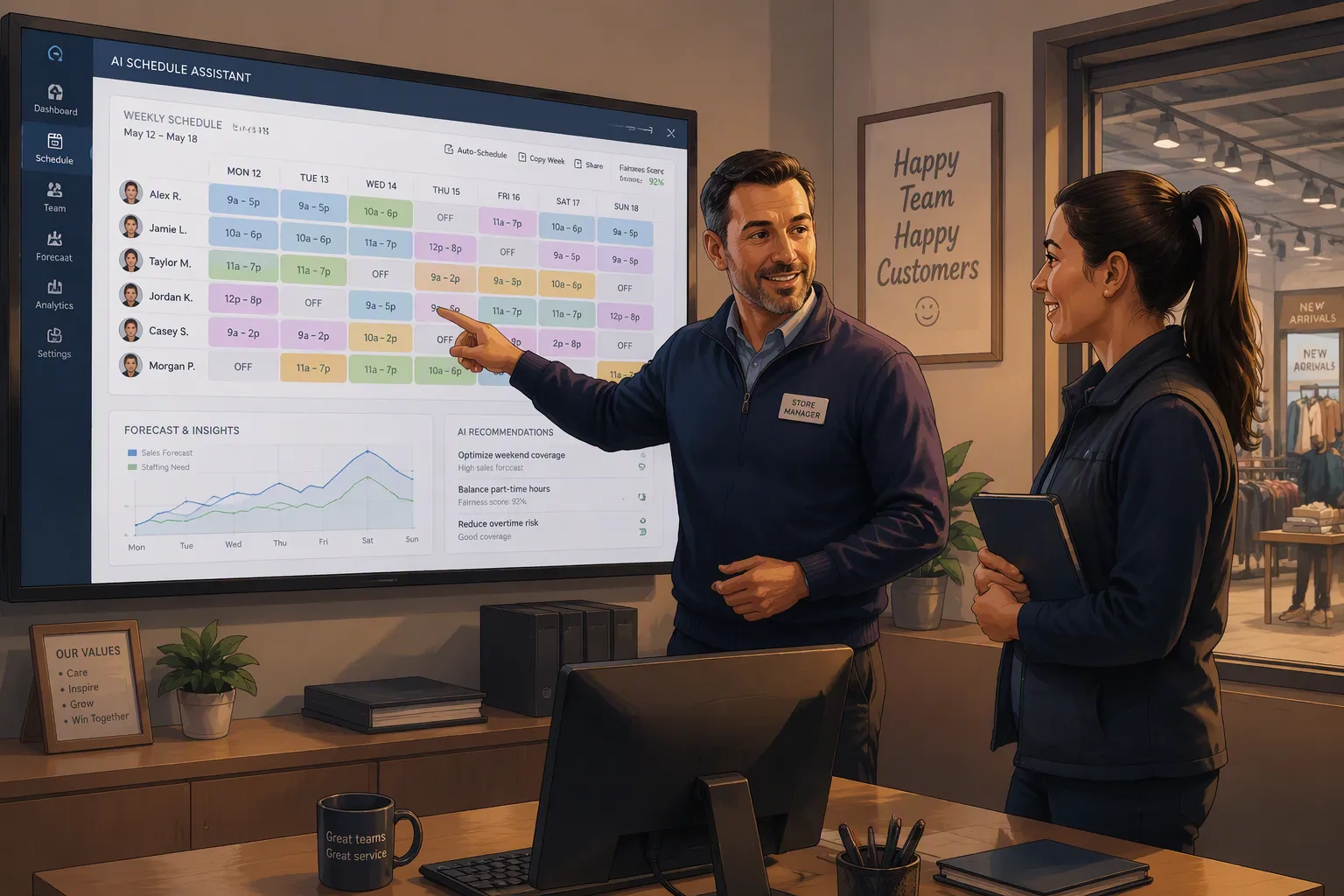
Fair and predictable schedules are a big reason why retail workers stay. You know how annoying last-minute changes are. You know the stress of not being able to plan your life around work. Smart scheduling tools change this completely. They use AI to match store needs with your availability. AI systems balance business needs and employee preferences at the same time. The result is a schedule you can rely on every week. This directly boosts your satisfaction and lowers burnout. Smart stores improve employee satisfaction through these scheduling tools.
Using AI-Driven Demand Forecasting for Predictable Hours
AI-driven demand forecasting removes guesswork from scheduling. The system looks at past sales data. It checks weather patterns. It studies local events. It predicts exactly how many staff are needed each hour. This creates fair and predictable schedules. You get your schedule weeks ahead. You plan your life without fear of sudden changes. Schedule fairness means equal shift distribution, predictable hours, and advance notice for work-life balance.
The evidence shows clear results. MIT Sloan 2025 research reports staffing prediction accuracy up to 90%. McKinsey 2024 study finds a 10-20% improvement in workforce utilization. Overtime costs drop by 5-8%. Schedule generation becomes 30% faster than manual methods. These numbers mean real benefits for you and your store.
Metric | Value |
|---|---|
Staffing prediction accuracy | Up to 90% |
Workforce utilization improvement | 10-20% |
Overtime cost reduction | 5-8% |
Schedule generation speed | 30% faster |
A Texas-based convenience store chain used TimeForge's labor forecasting engine. They reported an 8% reduction in labor costs. Manager productivity increased by 25%. This shows that AI-driven forecasting delivers real results. It supports more efficient and predictable scheduling.
Fairness improvements typically reduce turnover by 10-15%. This saves money on hiring and training. More experienced staff give better customer service. This directly connects to improving customer satisfaction. Optimized scheduling ensures peak hours are fully staffed. It avoids extra labor costs during slow periods. Your shifts match actual demand.
Clear communication builds your trust. You see fairness scores. You use self-service scheduling tools. You understand how AI improves your work experience. The system removes personal biases and errors from scheduling. AI-generated schedules are both fair and predictable. This predictability lets you plan your personal life. This is a main reason for improved satisfaction and lower turnover. The system shows you that technology supports your needs.
Enabling Self-Service Shift Swapping via Mobile Apps
Self-service shift swapping gives you control over your schedule. You handle all changes from your phone. No more paper forms to fill out. No more waiting for manager approval. The process takes seconds from anywhere. This boosts your independence significantly.
Organizations that use this technology report 87% workforce engagement within months of launch. Shift swapping becomes a self-service action done in seconds. This cuts down manager workload. This is especially useful in high-turnover retail environments.
Personalization through employee self-service hubs creates a sense of belonging and inclusion. This directly drives engagement and loyalty. You feel valued when the system supports your needs. Your workplace becomes a place of flexibility rather than rigidity.
Digital shift swap tools offer real-time schedule visibility. You find swap opportunities easily. Managers approve them quickly. This reduces last-minute intervention for everyone. Mobile scheduling apps let you manage schedules, request time off, bid on shifts, and swap with peers. More control over schedules leads to better work-life balance and higher job satisfaction.
Shift bidding removes scheduling surprises. This lowers stress. It creates a healthier work environment. Workers match shifts to personal needs. This lowers stress and prevents burnout. Staff feel more in control. This boosts motivation and productivity. Employees easily swap shifts with coworkers without manager approval. This handles unexpected events smoothly.
A retail store saw a 20% drop in staff turnover after adopting self-scheduling. This shows improved morale and reduced stress. Easy schedule changes fit personal needs. Your job happiness grows when you control your time.
Smart scheduling changes your workplace experience completely. You gain predictability through AI forecasting. You gain control through self-service tools. Your stress drops significantly. This creates a positive cycle for everyone. Happy employees give better service. This directly improves customer satisfaction. Team morale improves when scheduling supports your life. The result is a workplace where employees and customers thrive together.
Empowering Employees with Real-Time Data and Insights
When you have real-time data at your fingertips, your role changes completely. You no longer guess answers or check with a manager. You know stock levels, product details, and customer preferences instantly. This transforms you from an order-taker into a problem-solver. You feel a stronger sense of purpose and value. You become a valued employee rather than a simple task worker. This empowerment directly affects customer satisfaction. It enhances the customer experience in every interaction.
Turning Store Associates into Informed Advisors
Real-time inventory data gives you confidence. A customer asks about a specific product. You check your handheld device and see stock levels across the entire store. You know exactly where the item is located. You even see alternative options if the product is out of stock. This knowledge makes you an informed advisor rather than a passive salesperson. You solve problems on the spot. This ability boosts your satisfaction with your role. You see yourself as a trusted expert. This is a key part of improving customer satisfaction.
Customer data also helps you personalize interactions. You see purchase history and preferences. You recommend products that match their tastes. You remember their name and past conversations. This creates meaningful connections. The positive feedback loop is clear. You feel good about your work. The customer leaves happy. Your store sees better customer satisfaction scores. This cycle repeats with every interaction. Each successful interaction reinforces your value as an employee.
Fostering Autonomy with Mobile Point-of-Sale (mPOS) Devices
Mobile POS devices give you freedom. You complete transactions anywhere in the store. You do not need to walk a customer to a fixed register. You help them right where they stand. This speeds up the checkout process. It also makes the shopping experience smoother for the customer. You feel trusted to handle payments independently. This autonomy increases your sense of control.
Mobile POS devices empower retail staff to assist customers anywhere in the store, complete transactions on the go, and provide personalized service, thereby enhancing autonomy and improving customer interactions.
With mPOS devices, you handle returns, check prices, and look up product information from the sales floor. You stay with the customer throughout their journey. This uninterrupted service improves service quality. The customer feels valued because you give them your full attention. You feel capable because you have the tools to do your job well. This combination of tools and trust creates a powerful workplace dynamic. You become an autonomous decision-maker. Your performance improves with every transaction. This independence directly boosts customer satisfaction. This directly contributes to improving customer satisfaction. The result is a positive cycle where empowerment drives customer satisfaction.
Enhancing Communication and Recognition Through Digital Platforms
Streamlining Team Communication with Instant Messaging Tools
You no longer wait for callbacks or emails. Instant messaging tools change how you talk with others. You see who is online. You can message several people at once. You get answers quickly. This stops delays.
A McKinsey study shows instant messaging can boost work output by 20-25%. Mobile-first apps let managers send quick shift updates to your phone. You get health reminders and new floorplans. Managers use group chat to confirm tasks. They answer questions right away. You get the same info as office workers.
One retail chain with 40 stores replaced bulletin boards with weekly videos and text updates. The main office collected feedback through quick surveys. This made communication better. You feel less alone. You can reach support and share feedback easily.
Gamifying Performance and Celebrating Wins Digitally
Digital recognition tools reward your achievements publicly. Leaderboards and badges show your wins. This meets your need for appreciation. SHRM's 2024 research shows a 48% boost in employee engagement. 83% of employees who get gamified training feel more motivated.
McKinsey found that 30% of employees who left within six months said more recognition would have kept them. Gamified e-learning hits 90% completion rates versus 25% for regular training. A 2019 study revealed 89% of employees feel more productive with gamification. 88% feel happier at work. Your brain releases dopamine when you earn rewards. This keeps you going. You get instant feedback through live scoring. Your actions connect directly to results. This steady feedback improves your work.
This approach strengthens workplace culture and team spirit. Happy employees give better service. This helps raise customer satisfaction. Your workplace becomes a place where achievements count. Your morale improves with each win. Your job happiness grows with every recognized achievement. The result is higher customer satisfaction. You see the link between recognition and improving customer satisfaction. Quick surveys provide ongoing feedback on your experience. This data improves the system. The result is lasting customer satisfaction.
Providing Continuous Learning and Development Opportunities
Training represents an investment in your growth, not a company requirement. Smart tools make learning accessible and engaging. You build confidence and competence with every module. Employees who see a path for growth stay longer. This reduces turnover costs for the business.
Delivering Micro-Learning Modules via Handheld Devices
Micro-learning delivers bite-sized modules that fit your busy schedule. You complete a five-minute lesson during a short break. Research shows people remember content better in short sessions than long lectures. Instead of a two-hour compliance session, you receive a series of five-minute modules. Each one covers a single key regulation. You review content at your own pace on your handheld device. This improves retention and reduces repeated training sessions.
Micro-learning modules use videos, quizzes, and gamification. Points and badges keep you motivated. Short quizzes make learning active rather than passive. You access modules during lunch breaks or while commuting. This flexibility empowers you to take charge of your development. In a fast-moving retail environment, you learn a new product feature in minutes. You apply this knowledge immediately on the sales floor. This just-in-time training approach helps you adapt quickly.
Creating short modules costs less than developing lengthy courses. You spend less time away from the sales floor. Training happens on demand through your handheld device. This reduces disruptions to daily operations. When a customer asks about a new product, you access the answer instantly. This reduces dependency on managers and helps you make informed decisions quickly.
Using Augmented Reality (AR) for Interactive Product Training
AR training transforms how you learn about complex products. You see digital versions of equipment overlaid on physical items. This visualization helps you understand internal parts without opening anything.
AR allows technicians to view a digital version of the machine or overlay internal parts on physical ones. Regardless of their experience, frontline workers benefit from AR product knowledge training to visualize complex equipment.
You practice with interactive scenarios that mirror real customer questions. This hands-on approach builds your confidence before you face actual situations. You receive immediate feedback through the AR system. This feedback loop accelerates your learning. Regular feedback from the system helps you improve. Your competence grows with each session. This confidence translates directly to better customer interactions. You answer questions accurately and recommend products with authority. This improves customer satisfaction scores across your store.
Continuous learning creates a positive cycle. You feel valued because the company invests in your development. This investment reduces turnover and builds loyalty. Your growing expertise enhances every customer interaction. This directly contributes to improving customer satisfaction. The workplace becomes a hub of growth and opportunity. Your satisfaction rises as you master new skills. Improving customer satisfaction becomes a natural outcome of your expanded knowledge. Your training directly impacts customer satisfaction in every interaction. Every employee benefits from this approach.
The five innovations share one goal: restoring the human element in retail. You gain time, control, knowledge, connection, and growth. Each element rebuilds workplace culture.
The business case is clear. Engaged employees drive results:
Stores with higher engagement achieve 70% higher net sales.
High-engagement locations show 6.25% higher operating margin.
These stores experience 20% lower shrink.
Customer satisfaction scores rise 112% within six quarters.
This creates a virtuous cycle. Happy employees deliver better service quality. This quality improves customer satisfaction. Higher customer satisfaction drives sales. Improving customer satisfaction becomes your daily reality. Your workplace becomes a place where everyone wins.
The future pairs human intuition with machine intelligence. Technology handles the "what" and "when." You focus on the "why" and "how" of exceptional customer experience. Smart stores improve employee satisfaction by design. Customer satisfaction follows naturally.
FAQ
How quickly can a store implement smart scheduling tools?
Most AI scheduling tools work in four to six weeks. You add your availability and sales data. The system makes fair schedules right away. Your team sees the new schedule on their phones in days. Staff need very little training to use it.
Will automation replace my job in retail?
No. Automation takes over boring tasks like counting stock and making schedules. You still need people skills like empathy, judgment, and problem-solving. RFID cuts inventory time by 75%, but you still help shoppers pick items. Technology does the "what" and "when." You handle the "why" and "how" of service.
What training do employees need for smart store tools?
Most tools need under two hours of training. Short, five-minute lessons on your phone teach you. You practice with games before using tools on the sales floor. AR training shows you products without opening boxes. You learn at your own speed during breaks.
How does real-time data improve customer interactions?
You see stock levels and what customers like right on your phone. You answer questions without asking a manager. You suggest products based on past buys. This makes you a helpful expert instead of just a cashier. Good advice makes customers happier. You feel more sure of yourself in every talk.
Do smart stores actually reduce employee burnout?
Yes. Data shows a 25% boost in employee happiness and less burnout. Predictable schedules lower stress. Automated tasks reduce physical strain. Self-service shift swapping gives you control over your time. Digital recognition tools celebrate your wins publicly. These changes create a workplace where you do well, not just get by. Happier employees directly lead to happier customers. Happy staff give better service. Better service raises customer satisfaction scores. This cycle helps everyone in the store. Customer satisfaction goes up when you feel valued. Your good mood reaches every shopper. Customer satisfaction comes naturally from your well-being. Each happy customer adds to your sense of purpose. Customer satisfaction grows with every real interaction. The store becomes a place where both you and customers want to be. Customer satisfaction and employee happiness go together. This partnership defines modern retail. Customer satisfaction follows when technology supports your work. You focus on people, not paperwork. Customer satisfaction improves through real conversations. Your expertise shows in every suggestion. Customer satisfaction reflects your involvement. The numbers prove this link. Customer satisfaction and loyalty rise together. You see the results every day. Customer satisfaction becomes your daily reality. This is the future of retail work.
See Also
Global Automated Retail: Comparing Micromarkets And Smart Stores
Smart Tech In Vending Machines Transforms Electronics Retail
Boosting Office Productivity With Smart Vending Solutions
