Upgrade existing store in Hospitals & healthcare facilities into cashierless format

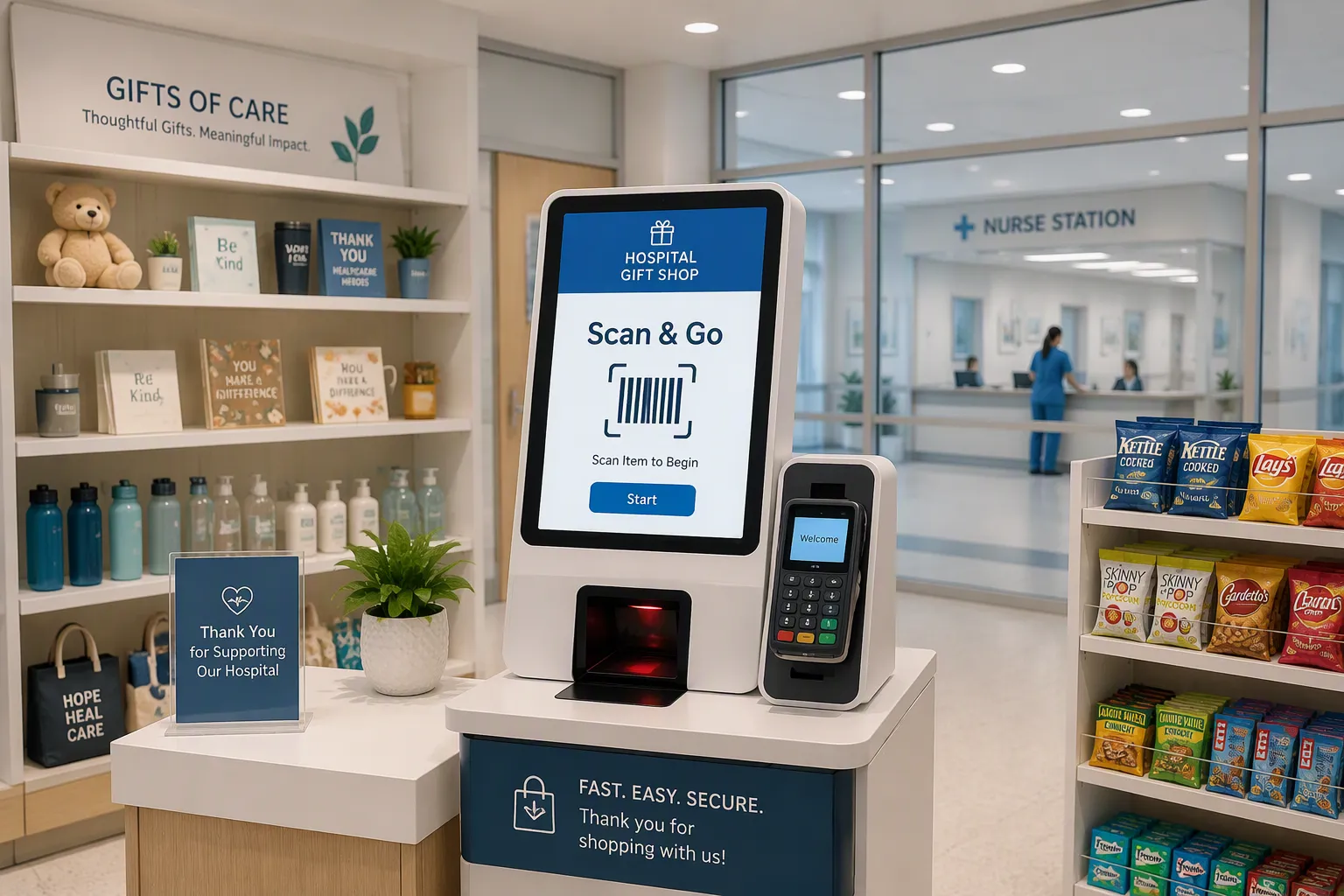
You can upgrade existing store operations without closing your hospital retail space. Think of this as a smart makeover, not a full rebuild. Amazon's Just Walk Out technology already works in healthcare places, proving the model is effective today.
Three main reasons make this change worthwhile. You cut operating costs because you need fewer workers. You boost the experience for staff and visitors with quicker checkouts. You offer 24/7 access without hiring extra overnight staff.
Current systems have improved a lot. AI-powered cameras and sensors give reliable tracking. Payment setup with employee badges works smoothly. This technology is no longer a risky experiment.
You can move forward with confidence on your implementation roadmap.
Key Takeaways
Cashierless stores reduce labor costs and increase revenue by staying open 24/7.
AI cameras and sensors track items correctly without using facial recognition.
Employee badges let staff pay quickly and safely.
Upgrade in two steps: check and plan, then put together and try it out.
HIPAA compliance and hygiene are key for healthcare retail.
Why Upgrade Your Hospital Store?
Choosing to upgrade your store brings clear financial and operational benefits. You spend less on labor, earn more money, and make everyone who visits happier. These gains make a strong case for the investment.
Calculating ROI and Operational Savings
Labor is the biggest cost in running a store. Cashierless technology removes one or more checkout workers per shift. Savings add up fast across many stores in a healthcare system. You can use that money for patient care or better facilities.
Revenue grows when checkout lines disappear. Staff buy items they would skip with a regular register. The average sale goes up because shoppers grab more when they do not worry about waiting. The system works 24/7 without overtime pay or extra night staff. Night-shift nurses and on-call doctors can get food and supplies even when the store used to be closed.
Amazon's Just Walk Out technology shows how this works. Workers in participating hospitals pay with their ID badges. Badge payment means no wallets, cards, or phones needed. Checkout takes just seconds. This speed helps during busy times like lunch breaks. The system also links to payroll deduction or meal plans, so one payment method works across the whole facility.
Improving Staff and Visitor Experience
Hospital workers have very little free time. A break feels too short when you spend half of it waiting in line. Cashierless stores remove this problem completely.
"Everybody has to eat, and waiting in lines is often not an option–whether you are a staff member, or you need to quickly return to the bedside of a loved one."
— Taylor Miller, Regional Director, Morrison Healthcare
This quote shows why hospital retail must be fast. Every minute of a break counts. A cashierless setup removes the checkout bottleneck. Staff grab what they need and leave in seconds. Visitors and family members get the same ease. They wait less and spend more time at the bedside.
The improvement goes beyond speed. Workers like a modern, thoughtful store. Hospital leaders gain a useful way to boost staff satisfaction and keep employees. An upgraded store shows care for workplace quality. You can improve your store without stopping daily operations.
Key Technologies for a Cashierless Store
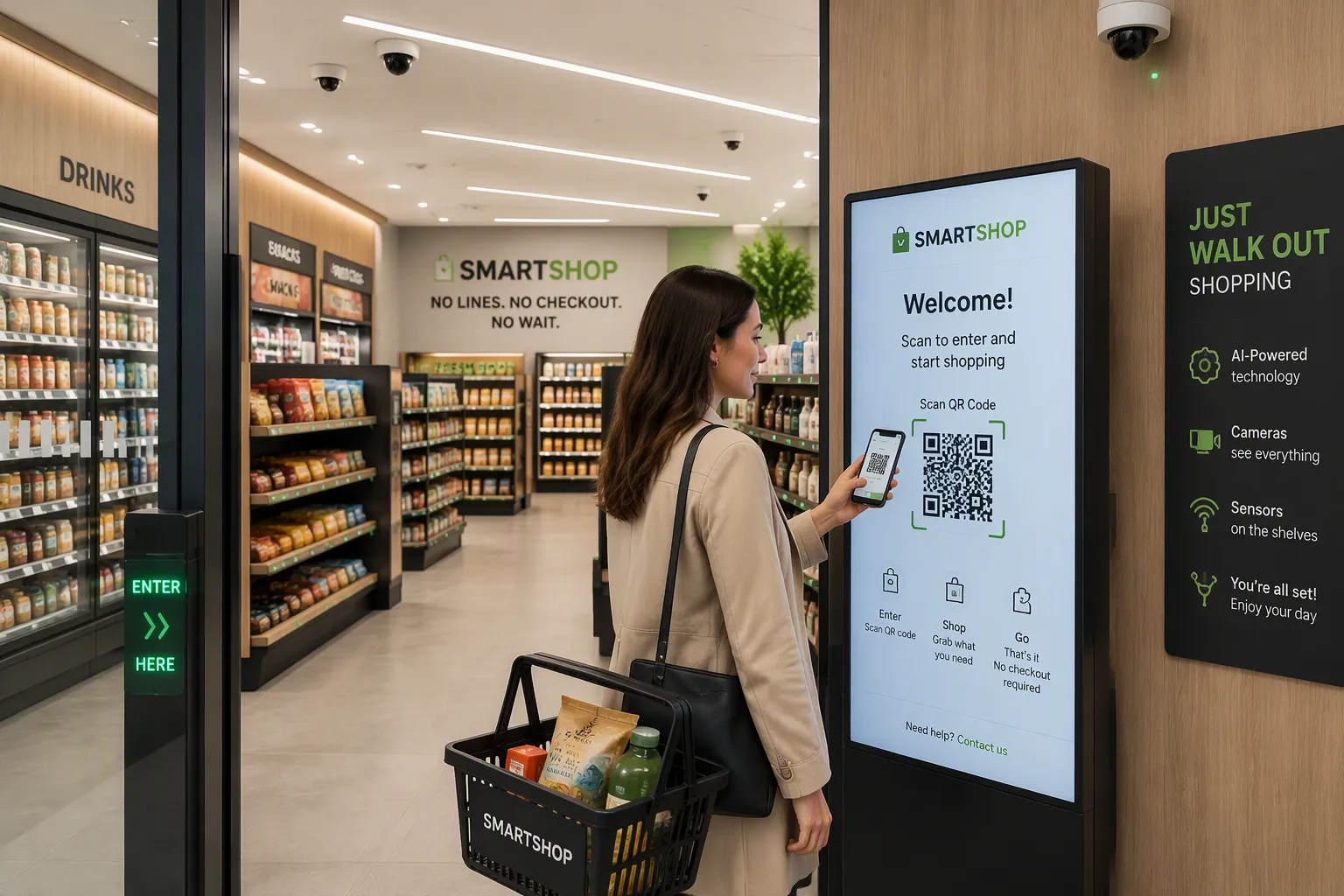
A cashierless store uses simple technology. Cameras and shelf sensors track every item you pick up. Artificial intelligence builds a virtual cart as you shop. Payment happens automatically when you walk out. No scanning, no waiting, no checkout line. The process is smooth and easy.
AI, Sensors, and Computer Vision
Ceiling-mounted cameras cover every aisle. Weight sensors under shelves detect when you remove an item. Computer vision algorithms identify each product in your hand. The system links every action to your shopping trip. All processing happens in milliseconds.
Accuracy matters for this system. According to SymphonyAI, AI-powered automated checkout systems achieve accuracy rates above 99% for tracking items. Your cart shows what you grabbed and kept. The system knows when you return an item to the shelf. It removes that product right away.
A common concern involves your privacy. The technology does not use facial recognition. This design choice protects your identity. The system uses anonymous tracking methods instead.
Process | Method Used (Without Facial Recognition) |
|---|---|
Customer Identification | One-time QR code scan at entry linked to an account; persistent tracking via body shape, clothing color, height proportions, and gait patterns; unique tracking ID assigned per shopper. |
Item Tracking | Ceiling-mounted cameras, object detection, hand tracking, action classification, and weight sensors on shelves; all interactions attached to the shopper's unique tracking ID. |
You scan a QR code at the entrance. The system tracks you using body shape, clothing color, height, and gait. It assigns a unique tracking ID. Ceiling cameras use object detection. Hand tracking follows your movements. Weight sensors confirm product removal. All interactions attach to your ID. You stay anonymous.
Payment Integration and Badge Systems
Payment happens when you leave the store. The system calculates your total from the virtual cart. It charges your linked account instantly. You never stop walking. You never pull out a wallet. The friction disappears.
Integration with your hospital IT infrastructure makes this possible. The system connects with your existing network. It meets your security standards and protocols. It works with your current payment systems. This ensures a smooth deployment.
Employee ID badges offer a powerful option in healthcare. Your staff already use badges for building access. They use badges for meal plans. The system accepts the same badges for payment. This removes the need for wallets or phones during shifts. Workers move through the store without friction.
The badge system links to payroll deduction or meal accounts. Nurses grab a snack at 3 AM without carrying anything extra. Doctors pick up coffee during a quick break. The badge handles everything.
Visitors and patients can use regular payment methods. Credit cards and mobile wallets work through the same system. The technology handles both groups seamlessly.
Vendors like Amazon provide these integration services. They work with your existing infrastructure. They ensure data security and HIPAA compliance. They adapt the system to your requirements.
The technology is ready for deployment. It is reliable, accurate, and secure. Your hospital store can become a model of efficiency and convenience.
How to Upgrade an Existing Store
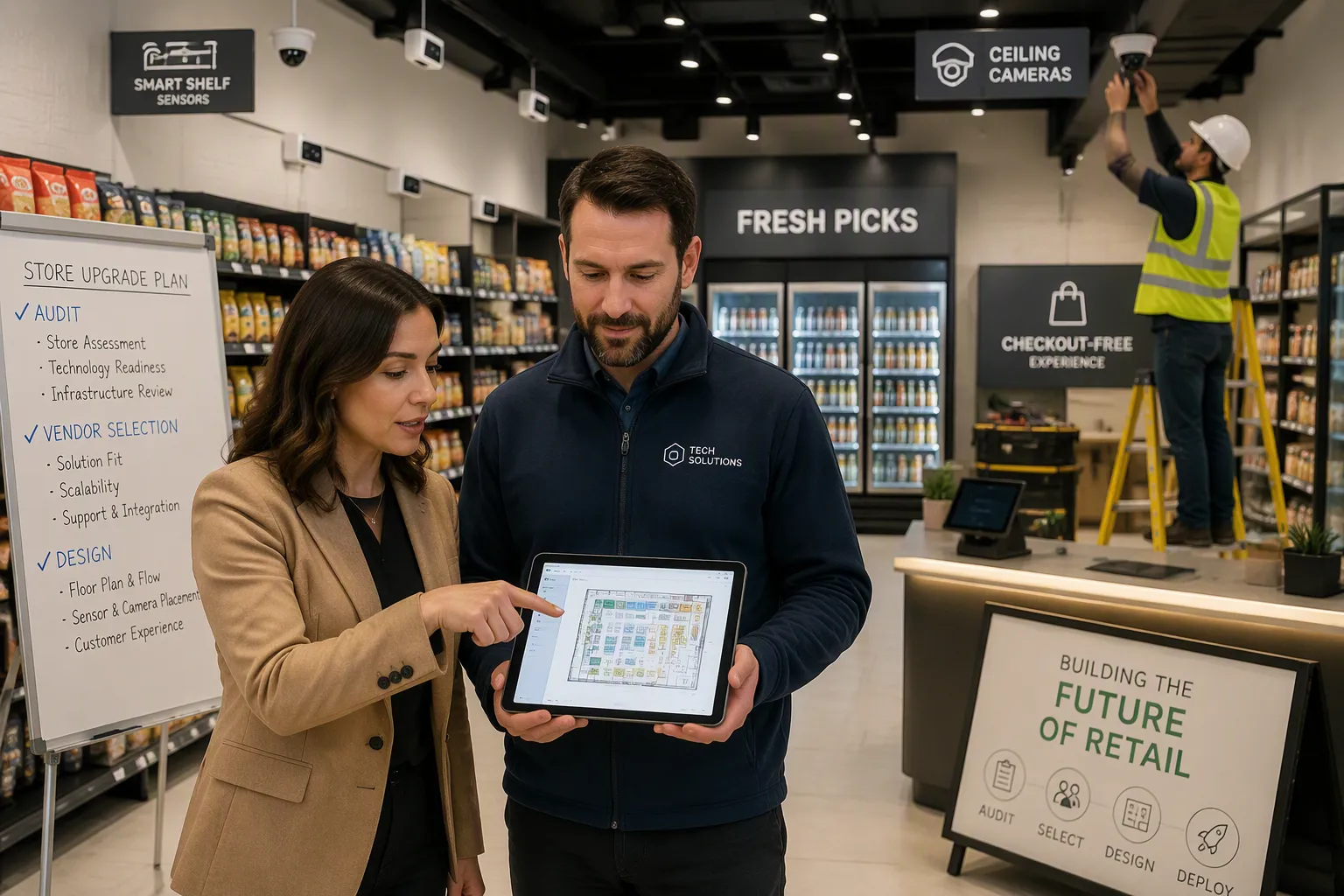
You can transform your current retail space without closing its doors. The process follows two clear phases. Each phase builds on the previous one. You maintain operations throughout the transition. Your staff continues serving customers during the upgrade.
Phase 1: Audit, Vendor Selection, and Design
Start with a complete audit of your current store. Measure the floor plan. Document traffic patterns. Identify peak shopping hours. Note the placement of shelves, coolers, and entry points. This information shapes every later decision.
Your audit must also review your existing IT infrastructure. Check network capacity. Verify security protocols. Confirm the age and condition of your payment terminals. These technical details determine what integration work your upgrade existing store project will require.
Vendor selection follows the audit. You have several strong options. Amazon offers Just Walk Out technology with proven healthcare deployments. Choice Market and Health Hospitality Partners (HHP) jointly provide a solution called Mini-Mart, designed explicitly for healthcare facilities. The Mini-Mart concept uses Choice Now technology with AI and cameras for checkout-free transactions. Its initial deployment at the University of Colorado Anschutz Medical Campus serves staff, patients, and visitors around the clock.
Evaluate each vendor against your audit findings. Ask about their healthcare experience. Request references from hospital clients. Verify their HIPAA compliance documentation. Confirm their system integrates with employee badge payment.
Design work comes next. Your vendor maps the new floor plan. They position ceiling cameras for full aisle coverage. They install shelf sensors at optimal locations. They plan entry and exit gates that maintain smooth traffic flow. The design must accommodate your existing refrigeration units and shelving where possible. You reduce costs by reusing fixtures that still work well.
Phase 2: Integration, Pilot Testing, and Staff Transition
Execution begins with system integration. Your vendor connects the cashierless platform to your hospital network. They ensure data encryption meets your security standards. They verify the system does not interfere with electronic medical records or other critical applications. Payment integration links to your existing payroll and meal plan systems.
Pilot testing follows integration. Select a small group of staff for the initial trial. Choose people from different shifts and departments. Give them clear instructions. Collect their feedback daily. Monitor transaction accuracy. Track any technical issues. This testing period reveals problems before you open the store to everyone.
Aramark Healthcare ran similar pilot testing for their ARK solution. Bart Kaericher, President & CEO of Aramark Healthcare, stated: "We are impressed and proud of this technology's performance in our pilot testing... ARK complements our workforce by engaging operations and uplifting efficiency, especially for hospital staff working late at night. By merging robotics with our operational brilliance, we're serving a scalable solution for individuals late or over time."
The pilot results showed several operational benefits:
Mobile alerts and compact staffing optimize workflow for healthcare operations.
24/7 availability works through kiosk, mobile ordering, and traditional dining.
Integration with Aramark's menu management, supply chain, and POS system enables end-to-end meal preparation.
Frontline staff experience improves, especially for those working late or overnight shifts.
Staff transition completes the process. Your existing employees do not lose their jobs. They move into new roles. Some become restocking specialists who keep shelves full. Others serve as customer assistants who help visitors navigate the technology. Some take on system maintenance duties. You retrain each person for their new responsibilities. You communicate clearly about the change. You explain how their roles add value in the new format.
Your upgrade existing store project concludes with a full opening. You monitor performance closely for the first month. You adjust staffing levels based on real demand. You refine restocking schedules. The system matures quickly. Your store operates efficiently with fewer checkout staff and happier customers.
Compliance and Hygiene in Healthcare Retail
Protecting Patient Privacy (HIPAA)
Your cashierless system gathers purchase data. That data might connect to specific people. This link triggers HIPAA rules. You must keep patient information safe during the whole shopping process.
Your vendor's system needs HIPAA-compliant design. Ask for their Business Associate Agreement before you sign any contract. This paper makes the vendor legally responsible for keeping patient data safe. You also need written proof that their system encrypts all purchase records. Data must stay encrypted while moving and while stored on their servers.
Anonymization adds another layer of safety. The system should remove identifying details from purchase histories. Your staff's badge numbers should not show up in analytics reports. Patient visitors should never see their buying patterns tied to who they are. You can do this with data segmentation and access controls.
Your compliance team must check the vendor's data retention policies. Purchase records linked to patient identifiers need strict deletion schedules. Unlimited data storage creates unnecessary legal risk for your facility.
Your internal policies need updates as well. Only authorized staff should see transaction reports. Your compliance officer should review the system regularly. These checks confirm that data handling stays aligned with HIPAA rules.
Maintaining Sanitation and Accessibility
Hospital stores need strict hygiene rules. High-touch surfaces require frequent cleaning. Entry gates, payment kiosks, and shelf edges collect germs quickly. Your environmental services team needs clear cleaning schedules for these spots.
The technology itself must not block infection control. Ceiling cameras and shelf sensors should have smooth, sealed surfaces. These materials resist bacteria and wipe down easily. Your vendor should give cleaning guidance for their equipment. You should confirm that disinfectants do not harm sensors or cameras.
Accessibility stays just as important. Patients with mobility aids need wide aisles and clear paths. Your entry gates must fit wheelchairs and walkers. Visually impaired shoppers benefit from tactile signs and audio announcements. The system should offer other payment methods for patients without smartphones or badges.
Your staff training should include accessibility awareness. Employees can help patients who struggle with the technology. They can also watch cleanliness during their shifts. This combined approach keeps your store safe, clean, and welcoming for every visitor.
You have seen the whole process. The reasons start with saving money on labor. They end with checking HIPAA rules. Each step helps build a smarter store.
Upgrading your store brings lasting benefits. You lower payroll costs. Staff and visitors feel happier with the experience. You create a system that keeps working during night shifts and emergencies.
Your approach makes the difference. Plan with care. Pick a technology partner with a strong record. Talk openly with your team and patients during the change.
Begin now with a simple review of your current store layout. Or book a meeting with a cashierless solutions provider. The technology works. Hospitals across the country show it every day. Your facility can join them with confidence and forward motion.
FAQ
Will current employees lose their jobs?
No. When you upgrade an existing store, workers move into new roles. They become restocking specialists, customer assistants, or system maintenance staff. You retrain each person. No one loses their position.
How accurate is the tracking technology?
AI-powered systems achieve accuracy above 99%. Ceiling cameras and shelf sensors track every item. The system knows when you return a product. It removes that item from your virtual cart instantly.
How does payment work for visitors without employee badges?
Visitors use credit cards or mobile wallets. The system accepts both groups seamlessly. Badge payment remains exclusive to staff. Regular payment methods work for everyone else entering the store.
What happens if the system makes a tracking error?
Your vendor handles discrepancies through customer support. Staff members assist anyone who notices a mistake. Pilot testing catches most issues before full launch.
See Also
Cloudpick Delivers Frictionless Checkout To Retail Stores
Walmart Updates Self-Service Checkout Rules For 2025
Walgreens Self-Checkout Offers Benefits Yet Poses Retail Hurdles
How Self-Checkout Technology Has Transformed Over Time
Comparing Micromarkets And Smart Stores In Global Automated Retail
