Using AI to monitor store performance metrics in Airports & transportation hubs.


AI changes the way you monitor store performance in airports and transportation hubs. You face many challenges in these busy places. Stores must deal with strict security, longer opening hours, and limited storage space. Real-time data helps you make smart choices and improve operations. Look at some common challenges:
Challenge | Description |
|---|---|
Security | Extra screening for products, especially liquids, to stop smuggling. |
Longer opening hours | Stores stay open longer, need more shifts, but often have fewer staff. |
Onboarding time | Staff take longer to hire because of security checks and language needs. |
Replenishment | Small storage areas make it hard to restock, which affects customers. |
Strict delivery times | Delivery must follow tight schedules, leaving little room for changes. |
Difficult returns | Customers struggle to return items after leaving the airport. |
AI gives you the tools to solve these problems and run your store better.
Key Takeaways
AI transforms airport retail by providing real-time data, helping you make informed decisions and improve operations.
Track key performance indicators (KPIs) like sales per passenger and customer satisfaction to understand store performance.
Use smart sensors and AI technology to monitor foot traffic, manage crowds, and enhance customer experiences.
Implement predictive insights to optimize staffing and inventory, ensuring you meet passenger demand effectively.
Start with simple AI tools to build your team's skills, then expand your system for greater efficiency and improved results.
Performance Metrics in Airports
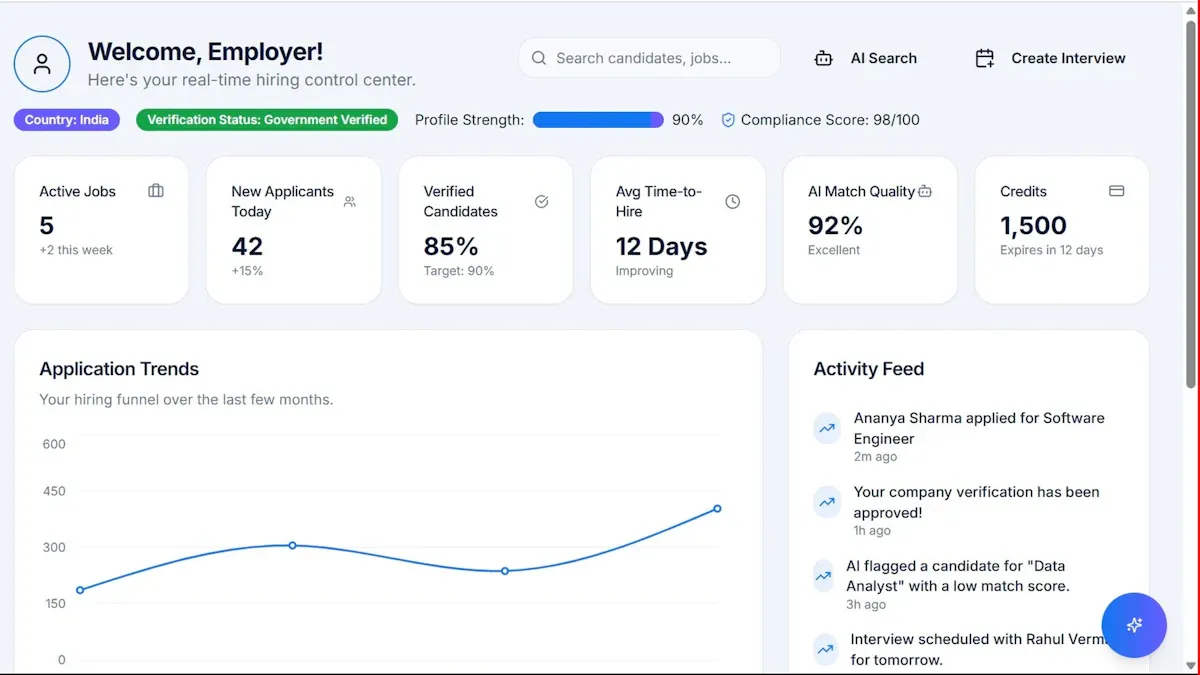
Key KPIs for Retail Stores
You need to track different key performance indicators (KPIs) when you run a store in an airport. These KPIs help you understand how well your store is doing and where you can improve. Airport retailers focus on digital tools and customer engagement. You see more stores using omnichannel strategies, which connect online and offline shopping. Here are some important KPIs for airport retail:
Sales per passenger: You measure how much each traveler spends in your store.
Conversion rate: You check how many visitors become buyers.
Average transaction value: You track the average amount spent in each sale.
Customer satisfaction: You collect feedback to see how happy travelers are.
Digital engagement: You monitor how travelers use your website, app, or digital payment options.
Inventory turnover: You see how quickly products sell and restock.
Airport stores invest in digital sales platforms and customer relationship management systems. You use big data and advanced analytics to monitor store performance. You also focus on sustainability and offer products that fit travelers’ needs.
Unique Challenges in Transit Hubs
Running a store in a transit hub brings unique challenges. You face barriers that do not exist in traditional retail. High initial investment and maintenance costs make it hard for smaller airports to use AI. Data privacy and security concerns require you to protect sensitive information. Employees may resist new technology because they worry about job loss. You need skilled workers to manage AI systems, but finding them can be tough.
Many airports have old systems that do not work well with new AI tools. Over-reliance on technology can cause problems if something breaks. You must balance human oversight with automation. These challenges make it harder to monitor store performance, but you can overcome them with careful planning and training.
Tip: Start with small AI projects and build up your team’s skills. This helps you manage costs and reduce resistance to change.
How AI Helps Monitor Store Performance
Real-Time Data and Smart Sensors
You can use AI to monitor store performance in real time. Smart sensors collect data as soon as passengers enter your store. People counting sensors track how many travelers walk by or come inside. These sensors help you understand peak hours and how people use your space. You can use this information to adjust your store layout or plan for busy times.
Smart sensors do more than count people. They also help you manage crowds and improve customer experiences. For example, you can spot rush hours and move staff to the right places. This keeps lines short and customers happy.
Airports use many types of AI technology to monitor store activity and passenger flow. Here is a table that shows some common tools and how they work:
AI Technology | Application in Airports |
|---|---|
Video Analytics | Monitors passenger movement, detects congestion, and identifies safety incidents using real-time CCTV feeds. |
Edge AI | Processes data locally for faster response times and enhanced security without cloud dependency. |
Automated Systems | Provides real-time operational intelligence by identifying abnormal movement patterns and monitoring security risks. |
You can also use face recognition technology to track passenger movements. This system helps you keep your store secure and understand how people move through the airport. AI tools can estimate waiting times and spot crowd patterns. This helps you manage queues and avoid bottlenecks.
Note: Smart sensors and video analytics give you a clear picture of what happens in your store every minute. You can use this data to make quick decisions and improve your operations.
Predictive Insights and Automation
AI does more than just collect data. It helps you predict what will happen next. You can use AI to analyze both real-time and historical data. This lets you spot trends and make better decisions. For example, AI can predict when your store will get busy. You can then schedule more staff or open extra registers before the rush starts.
Here are some ways AI gives you predictive insights:
AI helps you optimize the customer experience and manage foot traffic.
You can tailor offers and move products based on how passengers behave.
AI supports dynamic pricing and demand models for parking, lounges, and advertising.
You can use predictive demand models to plan for busy travel seasons.
AI-driven automation speeds up your decision-making. You do not have to guess when to add staff or restock shelves. AI predicts passenger flow patterns with high accuracy. You can adjust staffing and manage queues before problems start. This proactive approach helps you avoid last-minute rushes and keeps your store running smoothly.
AI systems process huge amounts of data quickly. You get accurate insights that help you monitor store performance and improve efficiency. You can shift from reacting to problems to preventing them. This saves time and reduces stress for your team.
AI-driven automation lets you manage resources based on real-time data.
You can identify trends and improve operational efficiency.
Your team can focus on serving customers instead of solving problems.
Tip: Start using AI for simple tasks like tracking foot traffic or predicting busy times. As you get comfortable, you can add more advanced features to monitor store performance and boost your results.
AI Applications for Operational Efficiency

Dynamic Staffing and Scheduling
AI helps you manage staffing and scheduling in airport stores. You can use smart systems to reduce manual labor, especially for checkout and inventory tasks. AI lowers staffing needs during quiet hours, which helps you control labor costs. Autonomous checkout technology lets you keep your store open all day and night. This increases sales opportunities without needing extra staff. You see higher sales when you extend store hours with AI-powered solutions. Passengers feel happier because they can shop late at night or early in the morning.
AI-driven stores reduce manual labor for checkout and inventory.
You lower staffing requirements during off-peak hours.
Autonomous checkout allows 24/7 access, boosting sales.
Extended hours with AI increase sales and customer satisfaction.
Inventory and Asset Management
AI makes inventory and asset management easier and more efficient. You can use automation to cut analytics costs by 35%. Unified inventory systems help you streamline procurement and manage resources better. Generative AI and data platforms give you insights into passenger behavior, so you can adjust your services and inventory. Real-time dashboards help you avoid emergency procurement costs, which can be 8–14% of yearly spending. AI optimization reduces safety stock levels by up to 28% while keeping stockout risks low. AI-powered inventory management systems track stock levels and send alerts when inventory is low. You restock before items run out, which reduces waste. Sensors and IoT devices show you which products sell fast, so you plan better and avoid excess inventory. AI models analyze passenger dwell time and buying trends, improving forecast accuracy by up to 20%. You align inventory with demand and prevent overstocking.
Enhancing Customer Experience
AI improves the customer experience in airport retail stores. You monitor store performance using key metrics that show how well you serve passengers. The table below lists important metrics:
Metric | Description |
|---|---|
Measures how satisfied customers are with their experience in the retail environment. | |
Wait Times | The duration customers spend waiting in queues, impacting their overall experience. |
Occupancy Measurements | Tracks how many customers are in a given area, helping to manage space and resources effectively. |
Efficiency of Service Delivery | Assesses how quickly and effectively services are provided to customers. |
AI helps you shorten wait times and deliver services faster. You use occupancy measurements to manage space and resources. Customer satisfaction rises as you provide a smoother shopping experience. You can monitor store performance and make changes that improve service for every traveler.
Case Studies and Measurable Impact
Success Stories from Airports
You can see how AI transforms airport retail by looking at real-world examples. Many airports use AI to monitor store performance and improve operations. The table below shows how some airports benefit from AI:
Case Study | Measurable Impact | Source |
|---|---|---|
DFW Airport | Reduced aircraft turn times by 5 to 12 minutes, adding $15–$25 million in revenue | International Airport Review |
Heathrow (Assaia) | Saved 5 minutes per turn, allowing three fewer stands during peak operations | Assaia case study |
Changi Airport | Reduced passenger wait times, improved on-time performance, enhanced efficiency | AI-Powered Airport Operations Guide |
Schiphol Airport | Optimized staffing and gate allocation through crowd control measures | AI-Powered Airport Operations Guide |
You notice that Changi Airport uses AI systems to improve on-time performance and reduce passenger wait times. Heathrow Airport relies on AI for demand forecasting, which helps allocate resources and boost efficiency. Schiphol Airport employs computer vision for crowd control, optimizing staffing and gate allocation. DFW Airport uses AI to speed up aircraft turn times, which increases revenue.
Lessons Learned
You learn several important lessons from these airports. AI helps you make faster decisions and manage resources better. You see that real-time data lets you respond quickly to changing conditions. AI systems improve passenger flow and reduce bottlenecks. You can optimize staffing and avoid unnecessary costs.
You gain more control over store operations.
You improve customer satisfaction by reducing wait times.
You boost revenue by making operations more efficient.
You see that starting small and scaling up works best.
Tip: Begin with simple AI tools to monitor store performance. Expand your system as you see positive results.
You discover that airports benefit from using AI in different ways. Each airport finds unique solutions that fit its needs. You can apply these lessons to your own store and see measurable improvements.
You gain many advantages when you use AI to monitor store performance in airports and transportation hubs. The table below shows key benefits:
Benefit | Description |
|---|---|
Improved Operational Efficiency | Better resource management and quicker response to changes. |
Reduced Wait Times | Predictive tools that enhance passenger flow and minimize lines. |
Better Passenger Experiences | Personalized offers and simplified navigation reduce travel stress. |
AI systems help you save money and reduce downtime. You see prediction accuracy rise above 85%. Emergency parts procurement drops by 70%, which means fewer delays and happier passengers.
You will notice new trends shaping the future of airport retail.
Real-time dashboards give you instant updates on store activity.
Machine learning forecasts demand and helps you plan resources.
AI acts as a co-pilot, offering real-time suggestions for operational changes.
If you want to start using AI, begin with simple tools. Train your team and build confidence. Expand your system as you see results. You improve efficiency, boost revenue, and create a better experience for travelers.
FAQ
How does AI help you track store performance in airports?
AI uses sensors and cameras to collect data. You see real-time updates on sales, foot traffic, and inventory. This helps you make quick decisions and improve your store’s results.
Is AI difficult to set up in airport stores?
You can start with simple tools like people counters or smart cameras. Many systems offer easy integration. Training your team helps everyone feel comfortable using new technology.
What are the main benefits of using AI in airport retail?
You gain faster insights, reduce wait times, and improve customer satisfaction. AI helps you manage inventory and staff more efficiently. You save money and boost sales.
Can AI protect customer privacy in airports?
AI systems follow strict privacy rules. You can use anonymous data and limit access to sensitive information. Many tools offer built-in privacy features to keep customer data safe.
See Also
The Future of Retail: Embracing AI-Driven Stores
Modern Retail Benefits from AI-Enhanced Combo Vending Machines
Transforming Online Retail Management with AI-Driven Tools
Understanding AI-Driven Corner Stores: Essential Insights for Retailers
Global Insights on Automated Retail: Micromarkets Versus Smart Stores
