The Rise of AI-Powered Unmanned Warehouses in Office Supply Management

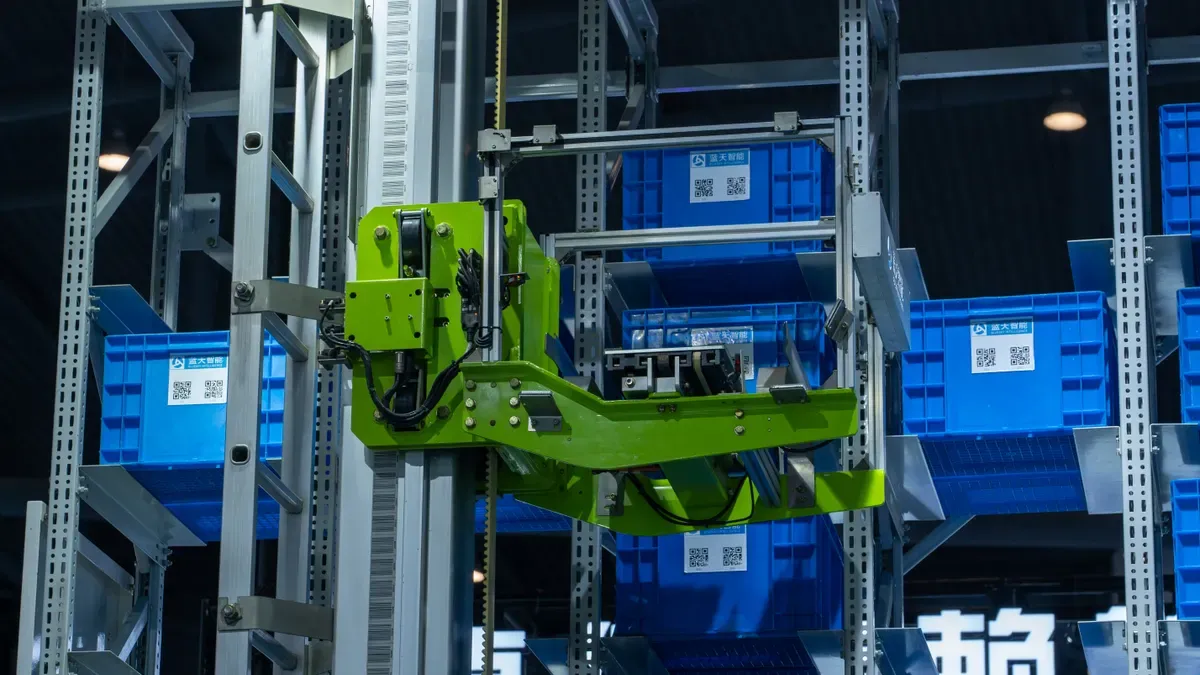
At a recent office supplies show, one booth caught everyone's eye: a smart unmanned warehouse running at full speed. Visitors called it a real black tech breakthrough. Robotic arms moved, scanners flashed, and supplies flowed with no clipboard anywhere.
How can AI-powered warehouse automation cut waste, save time, and improve transparency in office supply management? The answer is in every swipe, every scan, and every synced record. This hints at something bigger. AI-powered warehouse automation is turning everyday business tasks into smooth, smart systems. Warehouse automation is no longer just for huge distribution centers. It now reaches the office supply room, and its effects go far beyond the show floor.
Key Takeaways
Warehouses run by AI keep an eye on supplies on their own. This cuts out paper forms and saves time.
The system tracks every item taken. Data updates company systems in real time.
Automation reduces mistakes and makes work faster. Inventory accuracy hits 99.9%.
Big companies like JPMorganChase and HSBC use this technology. It shows the system works.
AI links warehouse information to business choices. This gives companies an edge over others.
How AI-Powered Warehouse Automation Works
Simple Swipe, Seamless Sync
The process starts with one simple action. An employee swipes an ID card to enter the smart warehouse. The system checks who the person is before letting them in. This step links every pickup to an approved person.
The worker then takes the office supplies they need. The system records every item right away. Data syncs with the company's current systems in real time. No paperwork shows up. No manual sign-in slows things down. No jam forms at the door.
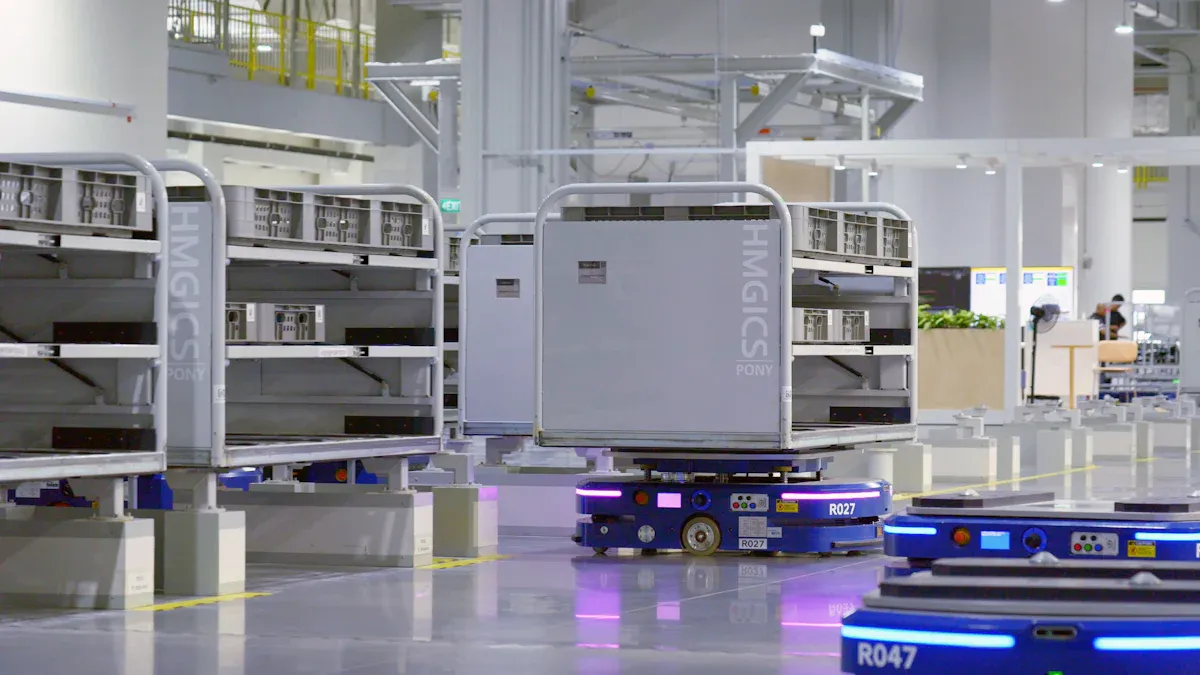
Several technologies make this work. An AI-powered warehouse management system tracks inventory very accurately. It studies past data and trends to help predict demand. IoT sensors and RFID tags give real-time inventory tracking. Automated storage and retrieval systems move goods without human hands. With AI integration, these systems pick the best storage spots based on how often and how big orders are. Autonomous mobile robots use AI-powered navigation with LiDAR sensors and cameras. They spot obstacles, adjust to changing spaces, and pick fast routes. Robotic picking arms with advanced vision systems handle products of many shapes, sizes, and weights. Predictive maintenance algorithms study equipment performance data. They catch early warning signs of failures and cut downtime.
Recording happens through several channels. IoT-based weighing measures item weight during pickup. AI-powered visual recognition identifies items and helps with automated logging. RFID systems track tagged items and match them with requisition forms. Weighing sensors spot weight changes on smart shelves. Gravity sensors watch item removal from storage spots. Vision systems team up with RFID and gravity sensing to keep traceability. AI video analytics can also watch employee activity, spot unauthorized access, and track the movement of goods for security and compliance.
Individual and Group Picking
Workers may take supplies one at a time or in groups. The system handles both patterns without extra steps. Each item is recorded the moment it leaves the shelf. This flexibility matters in busy offices where needs change by the hour.
The mechanism follows a clear sequence:
Employees swipe their ID cards to enter the intelligent unmanned warehouse.
They take the office supplies they need, either individually or in groups.
The system instantly records every item picked up.
Data is seamlessly synced with the company's existing systems.
No paperwork, no manual registration, and no bottlenecks occur.
This is a real-world example of AI in logistics. The same logic that runs big distribution centers now serves the office supply room. Automated inventory tracking replaces clipboards and spreadsheets. Inventory control becomes a background job instead of a daily chore.
The technology stack behind this is not experimental. AI-powered warehouse automation already runs in production environments. Warehouse automation handles the physical movement. AI handles the decisions. Together they remove friction from warehouse processes and turn routine supply pickup into a self-documenting event.
The result is effortless, automated management. It saves time, reduces friction, and boosts corporate efficiency. This solution has been adopted by global leaders in finance and professional services such as JPMorganChase, Goldman Sachs, HSBC, Citibank, PwC, Deloitte, EY, and KPMG.
Benefits of Warehouse Automation
Eliminating Paperwork and Bottlenecks
Warehouse automation removes tasks that take a lot of manual work, like data entry and analysis. Automatic identification and data capture tools replace paper records with electronic ones. This cuts down physical paperwork in inventory management, order processing, and back-office operations. AI in logistics makes this happen on a large scale. This warehouse automation approach builds a fully digital supply chain and logistics operations.
Automation tools focus on making documents. They get rid of paper-based workflows. Automating entry tasks like order processing and invoice payment removes the need for manual paperwork. It lowers errors that lead to rework. Automated collection from orders removes paper forms. No one fills out a requisition slip. No one files a paper receipt. Every warehouse automation deployment targets these bottlenecks first.
The system removes disruptions at every step. No one waits for approval. No one searches for a clipboard. The AI knows who took what and when. This knowledge goes into company systems without human help. AI in logistics achieves this transparency. AI makes warehouse automation smarter over time. The system records every removal without any manual steps.
Handling documents by hand takes 12-15 minutes. Automated handling takes under 5 minutes. Total cycle time drops from 8-12 hours to 15-30 minutes. Worker throughput jumps from 5 documents per hour to over 10,000. These gains come from removing paper. Warehouse processes become faster through warehouse automation. Every step of the process runs without manual intervention.
Time and Cost Savings
The efficiency data is clear. Inventory accuracy reaches 99.9% in case studies of modern warehouse automation. AI-powered warehouse automation improves inventory tracking through real-time updates. Stock accuracy stays above 99.5% at all times. Error rates drop by over 99% in busy operations. Emergency repair costs fall by 60-70%. Inventory control becomes a background function. Inventory data flows automatically into systems. Workers spend less time counting and more time on valuable tasks.
Processing time with automation runs 80-90% faster than manual methods. A worker processing 100 items per day saves about $1,575 per month in labor costs. ROI payback sits at 18-24 months. Operations run 24/7 without breaks. Warehouse automation delivers continuous productivity gains. This optimization builds long-term value for the organization.
AI handles demand forecasting to prevent inventory stockouts. The system minimizes supply chain disruptions by keeping accurate inventory counts. Optimization happens in real time as data flows through the logistics network. Each logistics optimization cycle improves accuracy. AI monitors every transaction in the logistics chain. Logistics efficiency improves with each cycle. Companies eliminate counting errors and reduce waste across the board. Each cycle brings better accuracy and less waste.
Companies see wide productivity gains across operations. The combination of AI and warehouse automation drives better inventory control. Inventory tracking no longer requires manual counts. Logistics runs smoother with fewer disruptions. Logistics operations gain visibility. Supply chain operations gain control. Management gets accurate information without paper trails. Management overhead drops significantly. Warehouse automation across multiple warehouses proves its value. Demand forecasting prevents supply issues. AI learns from past logistics data to refine future inventory control decisions. AI analysis refines this process continuously.
Why Major Firms Adopt Automation
Productivity and Transparency Gains
Major firms use warehouse automation to boost productivity and improve transparency. Warehouse automation takes care of inventory management directly. Business processes become more visible and standard across operations. Warehouse automation reduces manual work. It creates clear records that can be checked for every transaction. AI tracks each pickup and ensures accurate logging. AI gives real-time views of inventory and logistics.
Automated reporting changes how clear things are at work. Financial accounts update in real time. Managers get instant sight into inventory levels. Inventory and logistics data flows automatically into company systems. No one waits for someone to update inventory by hand. The system makes this possible.
Companies use warehouse automation for order confirmations and stock updates. Integrated inventory systems send alerts when stock runs low. This reduces manual work and gives real-time sight into stock levels. Supply chain functions improve with warehouse automation, making management more efficient. Inventory demand forecasting gets better with accurate data. Inventory control works without people. Warehouse automation delivers these benefits: AI analyzes usage patterns, logistics runs smoothly, and this prevents supply disruptions. Continuous optimization improves tracking. Demand forecasting prevents stockouts. Inventory control becomes fully automated.
With more automated reporting methods, transparency at work is changing. Financial accounts update automatically and in real time, so this never has to be a problem. Automation keeps everyone informed and working together.
Validation from Global Leaders
Leading financial companies confirm this move toward warehouse automation. JPMorganChase, Goldman Sachs, HSBC, Citibank, PwC, Deloitte, EY, and KPMG all use this solution. These firms require precision, security, and trustworthiness. They choose warehouse automation because it works. AI powers this whole solution. Business leaders trust this system. Warehouse automation cuts down on disruptions across operations.
Leading financial companies trust this solution. JPMorganChase, Goldman Sachs, and HSBC use it every day. Their success shows how helpful AI in logistics is for warehouse management. These organizations need precision, security, and reliability. They choose this solution because it works.
Adoption by these firms acts as proof from others. It confirms the bigger trend toward AI-powered systems. When global leaders invest, the technology shows its value. Other companies follow their lead and build smart warehouses of their own. The market for AI in logistics keeps growing. Logistics optimization becomes standard. Logistics efficiency improves across industries. Productivity gains follow. AI in logistics changes operations. Logistics processes become fully automated. Logistics data analysis gets better over time. Data syncs in real time. This optimization cycle repeats with each transaction. Disruptions drop with better integration. This warehouse automation strategy proves its value.
The Future of AI in Logistics
From Supplies to Enterprise Intelligence
The smart warehouse is just the beginning. The bigger chance is in intelligence across the whole company. AI in logistics changes supply chain management for the entire organization. Data from every pickup goes into business systems. This data helps improve demand forecasting and inventory optimization across warehouses. Warehouse automation makes this data flow happen.
Big companies show how this grows. Amazon uses AI models to predict demand across its logistics network. Walmart depends on AI and automation to improve demand forecasting and boost operational efficiency. Gioseppo adopted Easy WMS with AI and business intelligence features. Patatas Meléndez runs a warehouse with an automated pallet shuttle and AI computer vision. The GENESIS project from MIT and Mecalux uses an AI-powered simulator to improve inventory strategies. The MIT and Mecalux smart replenishment system studies demand and inventory to improve warehouse processes. Warehouse automation makes all these abilities possible.
These examples show how AI-powered warehouse automation feeds into bigger business decisions. Management gets ai-powered insights for procurement and staffing. The warehouse becomes a data hub. It predicts shortages. It stops supply chain disruptions before they happen. Warehouse automation works behind the scenes. Logistics optimization becomes continuous. Inventory control becomes automated. Data flows without stopping.
Competitive Advantage via Integration
Integration with existing systems creates competitive advantage. The warehouse connects to ERP platforms through API handshakes. The warehouse management system syncs with financial software. Inventory accuracy gets better right away. This approach removes friction from warehouse processes.
Automated systems cut mis-picks and inventory discrepancies, dropping error rates. Warehouse automation removes manual handoffs. It automates workflows. It keeps real-time visibility. This integration reduces operational disruptions. Warehouse automation improves logistics performance across the board.
"Having been on the Finale system for the past year, we have been able to easily integrate our website, Chocoley.com, Shipstation, QuickBooks and Amazon.com for a seamless and accurate management of our inventory across all marketing & sales channels." – Steve Leffer, CEO @ Chocoley Chocolate
The future of workplace automation lies in this integration. The system connects the supply room to the boardroom. Warehouses become intelligence centers. Disruptions decrease with each cycle. This warehouse automation model scales across the organization.
This technology is available now. AI in logistics enables every capability described here. Warehouse automation delivers these benefits. AI makes them smarter over time. AI in logistics continues to evolve through ongoing optimization. To see how it fits your systems, book a call at https://lnkd.in/gWsGAewR. Get in touch at jefffeng@cloudpick.me. Learn more at www.cloudpick.ai.
AI-powered unmanned warehouses change how offices manage supplies. They get rid of paperwork, bottlenecks, and manual tracking. Warehouse automation records every item. Automation syncs data with business systems. AI in logistics delivers this efficiency.
Major firms confirm this trend. JPMorganChase, Goldman Sachs, HSBC, Citibank, PwC, Deloitte, EY, and KPMG adopted warehouse automation. Their choice confirms AI in logistics as the standard for warehouse operations. AI drives productivity gains across logistics networks.
The future of workplace automation goes beyond supply rooms. AI connects warehouse data to enterprise intelligence. Automation enables optimization across the supply chain. Warehouse automation delivers competitive advantage through logistics integration.
Book a call at https://lnkd.in/gWsGAewR. Get in touch at jefffeng@cloudpick.me. Learn more at www.cloudpick.ai.
FAQ
How does AI and warehouse automation improve logistics and inventory management?
AI uses sensors to keep track of every item. This warehouse automation makes exact inventory records. The warehouse management system saves the data. Logistics optimization depends on this information. Management gets full visibility into warehouse automation and inventory optimization.
What security does an AI warehouse provide for logistics automation?
The smart warehouse requires an ID card to enter. AI video analytics watches all activity. This warehouse automation stops unauthorized access. Data logs every transaction. Logistics automation becomes fully clear. This AI warehouse system protects the supply chain. Automation logistics depends on this data. This AI warehouse automation improves control.
How does warehouse automation optimize logistics and connect to business tools?
Yes. This warehouse automation links to software you already use. It syncs data in real time. This makes logistics and management processes better. The warehouse becomes a central intelligence hub for inventory control. This AI automation makes logistics operations smoother. Warehouse automation works with any warehouse size.
What ROI does warehouse automation deliver for logistics management?
This warehouse automation lowers manual labor costs. AI improves inventory levels. Logistics efficiency gets much better. Data drives these improvements. The investment pays back quickly. This AI warehouse automation delivers value and improves inventory.
Why do companies rely on AI and warehouse automation for logistics optimization and management?
AI and warehouse automation deliver accuracy. Warehouse automation cuts down errors. AI logistics operations run smoothly. Inventory management becomes easy. Data gives full visibility. Optimization happens all the time across warehouses. Warehouse automation scales to any size. AI and logistics automation drive value.
See Also
Artificial Intelligence Driven Stores Will Define Tomorrows Retail
Smart E Commerce Tools Revolutionize Managing Digital Storefronts
Essential Insights For Retailers On Ai Enabled Local Shops
Key Advantages Of Intelligent Combo Vending In Contemporary Retail
Boosting Worker Output Via Automated Vending In Small Workspaces
