How autonomous stores support digital transformation in hospitals and healthcare facilities

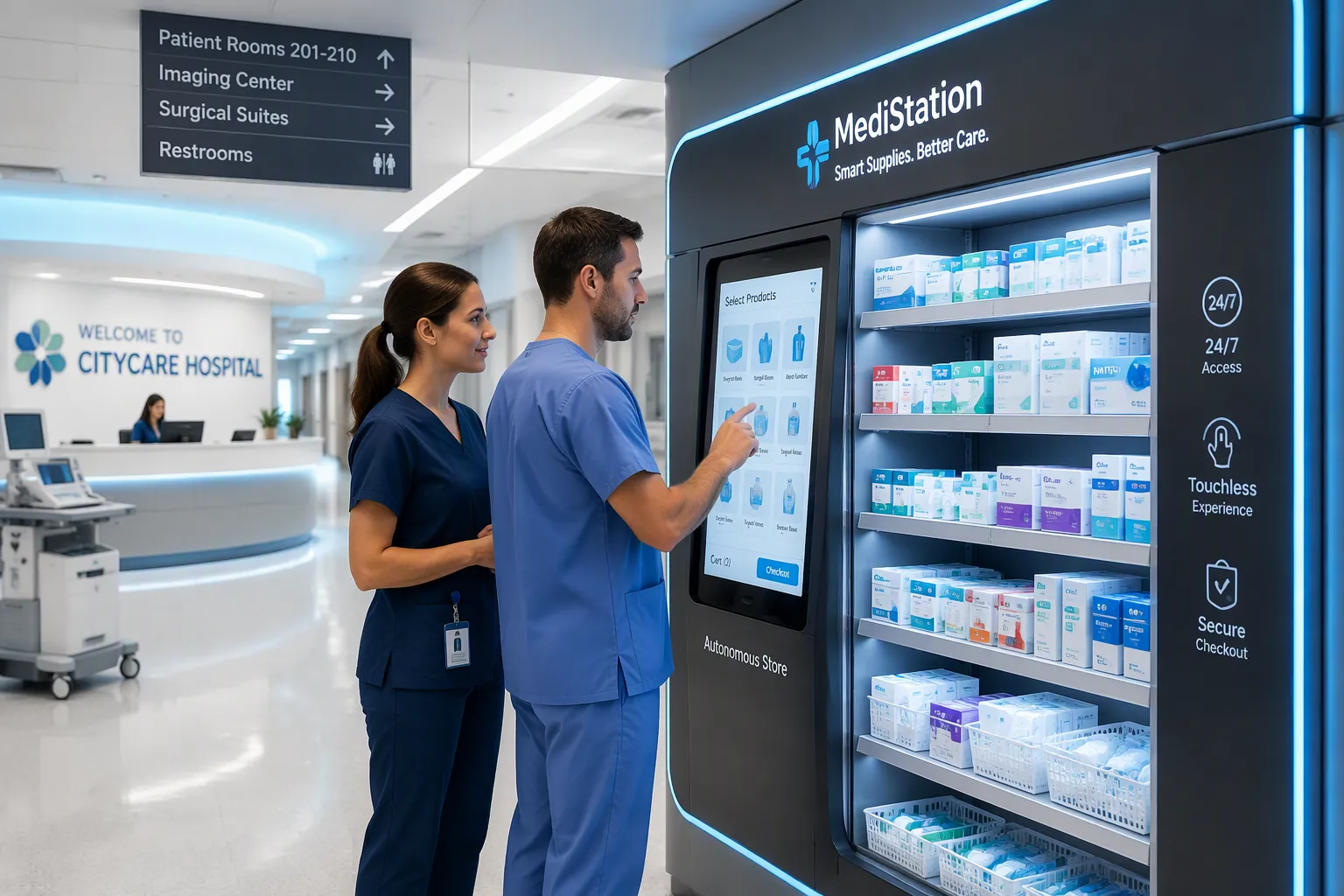
Nurses waste precious minutes hunting for supplies during every shift. One study found they lose 6 ± 8 minutes per shift searching for needed equipment. Manual inventory counts and avoidable stockouts make the problem worse. A 580-bed Alabama hospital traced roughly $500,000 in unaccounted medical supplies each year to inaccurate manual records.
Autonomous stores offer a smarter path. These AI-powered, self-service inventory points track supplies automatically and grant secure access to medical items. They help hospitals cut costs and free staff for patient care.
Autonomous stores support digital transformation in healthcare by automating inventory and boosting staff efficiency. This shift advances the digital transformation of healthcare and strengthens the digital front door for providers.
Key Takeaways
Autonomous stores use AI and sensors to track supplies automatically. This saves nurses time and reduces stress.
These systems cut costs by reducing inventory waste and preventing stockouts. Hospitals can save millions of dollars.
Automated tracking reduces errors and expired supplies. This improves patient safety and care quality.
Autonomous stores connect with existing hospital systems like EHR and ERP. This makes workflows smoother and billing more accurate.
Start with a pilot unit to test the system. Then expand gradually with staff training and support.
Autonomous Stores Support Digital Transformation in Healthcare
Defining Autonomous Stores and Core Technologies
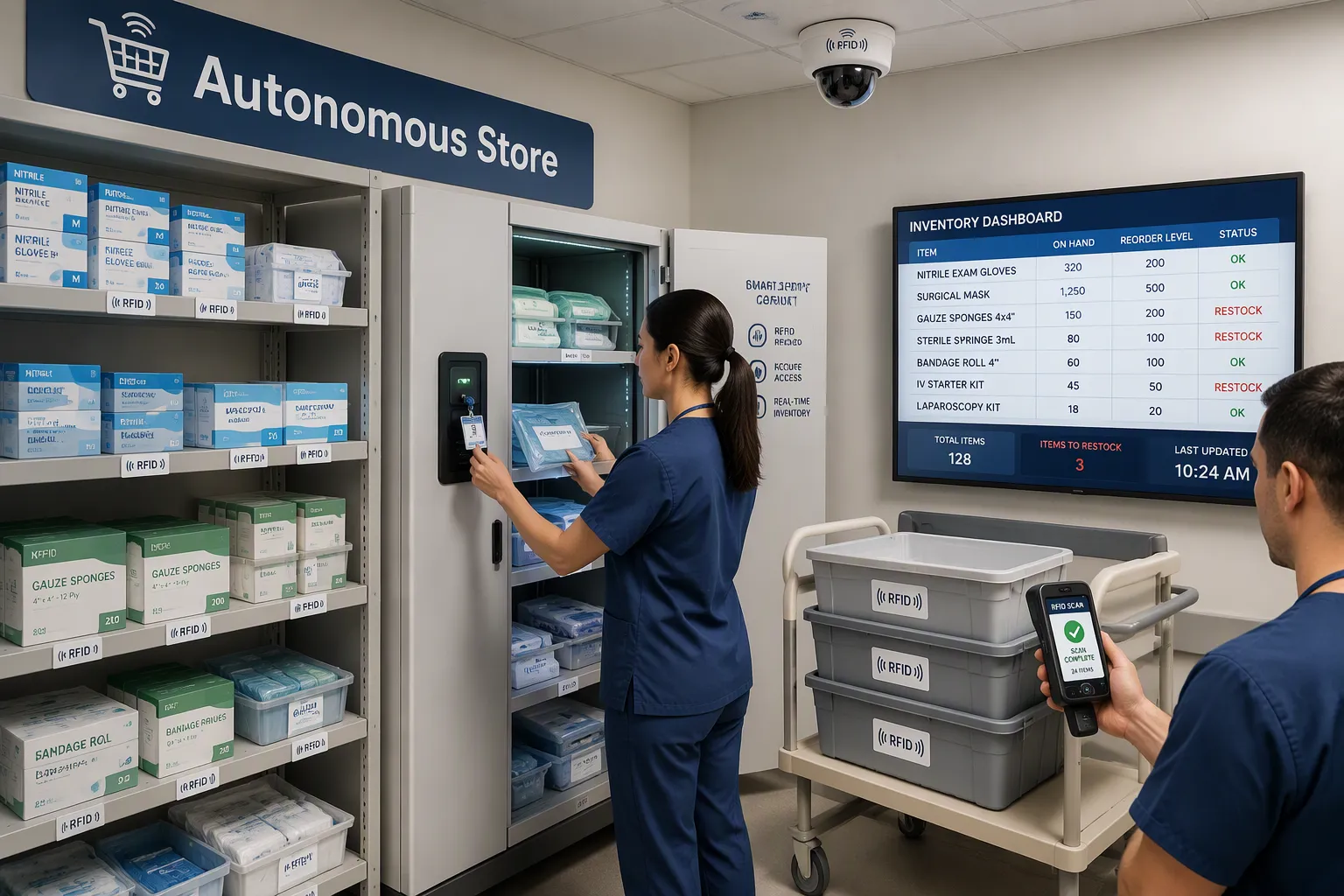
Autonomous stores are AI-powered self-service inventory points. They track medical supplies automatically and let staff check out items without a cashier or a sign-out sheet. Computer vision, IoT sensors, and RFID tags form the technology backbone. A camera-based system watches shelves continuously. It records every item removed or returned. RFID tags let a reader scan a whole cart in seconds. No one scans items one by one.
These systems differ sharply from traditional supply closets. Manual closets depend on paper logs and periodic counts. Errors creep in during those manual steps. Records fall behind rapid usage. Stockouts surprise the staff. RFID-enabled smart hubs update records in real time. They improve cycle-count accuracy and minimize stockouts. Real-time visibility replaces delayed insight. This shift matters for healthcare providers who need supplies ready at a moment's notice.
From Manual Supply Closets to Smart Inventory Hubs
The move from closet to smart hub changes daily operations. Consider a vision-based tracking system at a major U.S. academic medical center. It produced a 50% reduction in inventory, a 33% reduction in labor, and full ROI within 10 months. Those results show what automation can deliver. The system uses AI computer vision for continuous visibility. It does not rely on RFID tags, barcodes, or manual scanning. Industry sources such as Gartner and Becker's Hospital Review note that true inventory autonomy is shifting from legacy RFID and barcode scanning toward continuous camera tracking and AI demand analysis.
Financial returns vary by facility and system. The table below summarizes reported outcomes.
Facility | System | Payback Period | ROI / Savings |
|---|---|---|---|
561-bed hospital | Automated storage system | 4.46 years (average) | 167% ROI over system lifecycle |
Paris hospital pharmacy | Vertical Lift Module (VLM) | ~6 years | $163,331 annual savings; $1.14M cumulative savings over 7 years (on $978,656 investment) |
Other gains appear across the sector. A Pennsylvania teaching hospital cut stock levels by 36% while maintaining 98% fill rates. Picking errors disappeared entirely, which removed medication administration delays and liability risks. Labor cost reductions often exceed 40% of supply chain expenses. VLMs save up to 90% of floor space, and reclaimed space converts to revenue-generating clinical areas.
RFID-enabled hubs follow a clear process. Items receive unique EPC RFID tags and pass batch verification in seconds. RFID tunnels scan entire carts instantly. Shelf and room locations are tracked by combining barcode or QR with handheld or tabletop readers. Dwell and transit durations are monitored against target thresholds. Automated exception alerts flag delays immediately. Live par-value tracking and restock reminders keep ward stock adequate. Asset 360 and traceability reports show full movement history. Consumption forecasting and AI-driven queries support proactive replenishment and budgeting.
These capabilities make autonomous stores support digital transformation across hospitals. They also strengthen the digital transformation of healthcare by linking supply data to clinical workflows. For smart hospitals, the payoff is clear: better efficiency, lower waste, and more time for patient care. Smart hospital leaders who adopt these systems position their teams for the next wave of digital transformation and healthcare innovation. The digital front door extends beyond patient intake. It reaches every supply room where providers work.
Digital Transformation in Healthcare: Beyond the EHR
Digital transformation in healthcare spans two domains: clinical tools and operational support. The first domain includes telehealth, remote monitoring, and automated appointment scheduling. These solutions improve patient access and create a digital-first healthcare experience. The second domain covers autonomous stores. These systems keep supplies ready for healthcare providers.
Many hospitals treat the electronic health record (EHR) as the finish line. Yet healthcare digitalisation and transformation often stalls there. Costs overrun, training gaps appear, and staff push back. A 2021 BMC study found resistance to change had the greatest influence on nurses' reluctance to use EHRs. Adoption failure, not usability, causes many roll-outs to stall. Indeed, 34% of organizations cite change management as a top shared barrier.
Layered Modernization and the Digital Front Door
Layered modernization means you add new systems without tearing out the EHR. Autonomous stores fit this pattern. They support the digital front door. The digital front door in healthcare connects patients to services, but it also extends to the supply closet. A digital front door strategy that includes autonomous stores reduces friction for providers. When a nurse grabs an item, the store records it automatically. This gives real-time inventory and cleaner billing. It is a digital front door solution that works behind the scenes. The digital front door healthcare landscape now includes every supply room.
Connecting Autonomous Store Data to Clinical Workflows
Autonomous stores generate data that connects to healthcare workflows. Barcode scanning at the point of care captures patient, item, and location details in real time. This data flows into inventory, billing, and EHR systems. For hospitals, this improves charge capture. These integrations make workflows smoother and support the digital transformation of healthcare. They also contribute to the digital transformation of health care by closing the loop between supply and billing. This is the essence of digital healthcare and a step toward a digital-first healthcare model. Providers gain more time for patients. Administrators gain data for decisions. That is the promise of digital front door strategies.
Creating a Digital Front Door Healthcare Strategy
Improving Staff Efficiency with Self-Service Supply
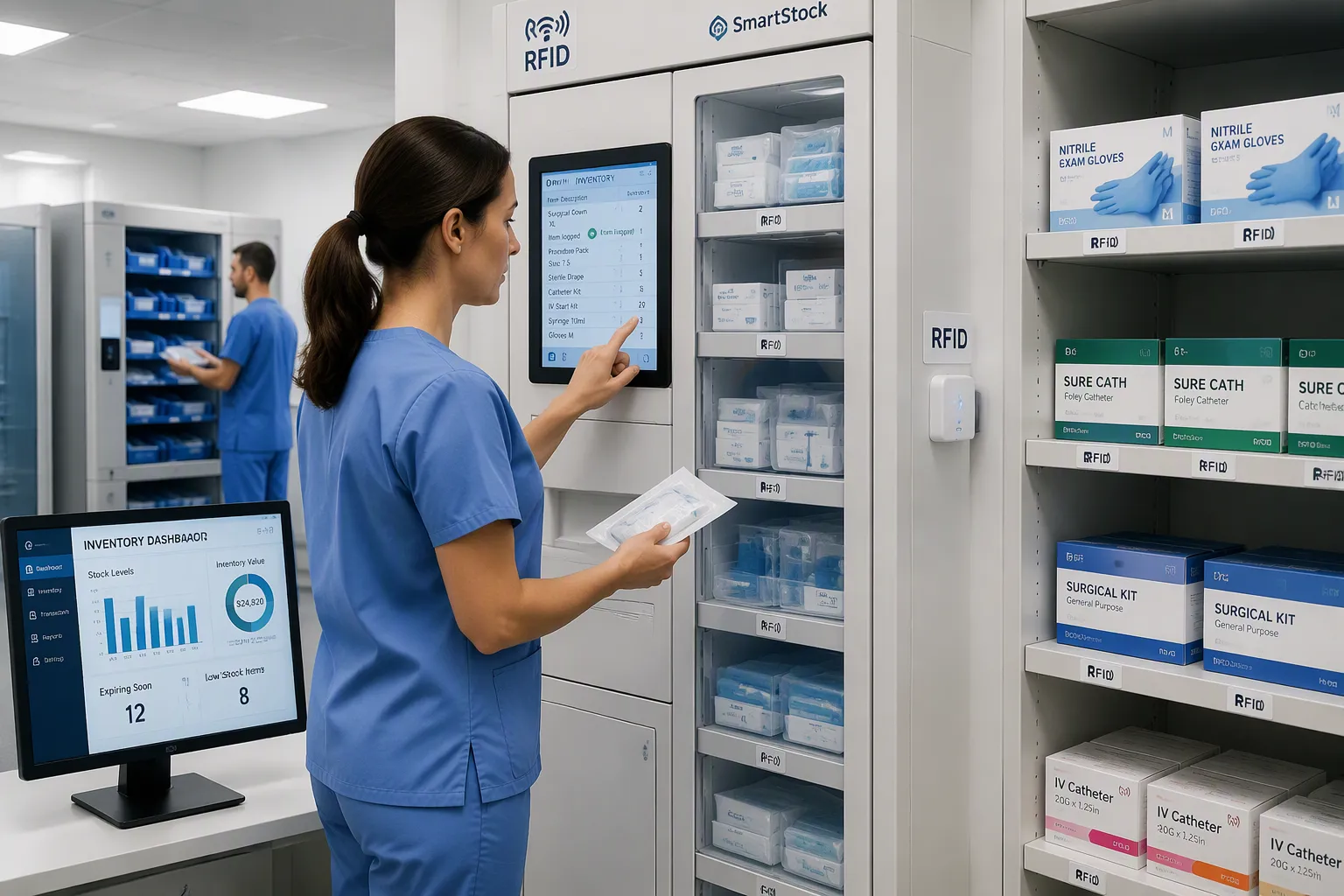
A strong digital front door strategy starts with your staff. When you give nurses and clinicians self-service supply access, you remove daily friction. They grab what they need at any hour. The system records every item automatically. No one waits for a supply room clerk. No one fills out a paper log.
The numbers tell a clear story. Hospitals using data-driven inventory systems report a 98% fill rate. That means supplies sit on the shelf when your team needs them. These gains come from real-time visibility, not quarterly counts.
Automated procurement tools generate purchase orders when stock falls below set thresholds. This cuts stockouts and over-ordering at the same time. Your materials management team spends less time chasing shortages and more time on strategic work.
A digital front door in healthcare extends past patient intake. It reaches every supply closet and every nurse who needs a glove, a catheter, or a surgical kit. When you connect supply data to your clinical workflows, you give healthcare providers more time for direct patient care. That is the real efficiency gain.
Reducing Errors and Waste with Automated Tracking
Manual tracking creates errors. People miscount, forget to log items, or hoard supplies in hidden drawers. Automated tracking removes those failure points. RFID-based systems track medication expirations and allocate inventory so each unit gets used before it expires.
Data analytics turns that tracking into better decisions. You see which departments use the most supplies. You spot usage patterns that signal waste or theft. You identify supplier performance issues through cost variance analysis. Administrators gain faster operational decisions because the data arrives in real time.
A digital front door healthcare model depends on this kind of visibility. When you know what you have and where it sits, you control costs. You also reduce the risk of expired products reaching patients. That protects patient safety and your reputation.
The table below shows key metrics you should monitor.
KPI | What it measures | Why it matters |
|---|---|---|
Supply cost per case | Total supply spend divided by cases | Core cost-control measure |
Inventory turns | How quickly stock is used | Higher turns mean less capital tied up |
Stockout rate | Frequency of unavailable critical items | Linked to delayed procedures |
Expired/wasted product | Value of discarded products | Patient safety and waste reduction |
A digital front door in healthcare works best when you treat supply data as clinical data. The same rigor you apply to patient records should apply to inventory records. That mindset builds a digital front door that serves everyone.
Implementation Steps and Challenges for Healthcare Facilities
Planning, Integration, and Staff Training
Start with a pilot on one high-use unit. Measure baseline stockouts and restocking time before you install anything. Then follow a phased rollout: pilot the unit, integrate with your existing inventory or ERP system, train staff, and build a change management plan. Integration matters most. Cloud-based software gives materials managers real-time stock visibility and reports. Direct ERP integration removes manual purchase order steps and works alongside your existing procurement workflows. Live dashboards show usage trends and replenishment history.
Training determines whether your staff adopts the system. High login rates do not prove changed practice. Sustain change through ongoing coaching and measurement. Align job descriptions, orientation, and performance expectations with the new system. Use structured models like Kotter's eight-step process or IHI's Psychology of Change. Build a change network, coach champions, and run readiness assessments. Avoid top-down enforcement. Front-line staff respond better to bottom-up approaches. Involve employees in development, provide real-time feedback, and introduce AI-enabled systems gradually. Combine change tactics with governance redesign that clarifies accountability and decision rights.
Cost, Security, and Privacy Considerations
Upfront costs and connectivity requirements can stall a rollout. Budget for hardware, network upgrades, and integration work before you commit. Data privacy demands equal attention. Any system touching protected health information must follow the HIPAA Privacy Rule, which permits access only for treatment, payment, public health protection, law enforcement reports, or with explicit patient authorization. The HITECH Act and Omnibus Rule expand these protections further.
Secure your RFID infrastructure with these technical safeguards.
Technical Safeguard | How It Supports HIPAA Compliance |
|---|---|
Encryption of RFID tag data | Protects stored medical data from unauthorized access |
EPC Gen-2 security features | Hardens tags against unauthorized memory access |
Kill command (EPC Gen-2 / ISO 18000-63) | Permanently disables tag components |
Backend encryption and authentication | Ensures confidentiality and availability of information |
Your medical database must hold tag UIDs to link them to patients or assets. Middleware processes tag data into a format your hospital system expects. Address staff adoption concerns directly. Resistance often reflects rational concern about risk transfer, not workforce stubbornness. Clarify liability and decision rights around the autonomous system. This approach strengthens your digital front door and supports broader healthcare digital transformation goals.
Real-World Healthcare Applications and Future Directions
Hospital Case Studies and Lessons Learned
You can see autonomous stores at work in hospitals across the country. One academic medical center uses RFID-enabled supply cabinets to cut restocking time and control expired inventory. Nurses badge in, grab what they need, and the system logs every item. Cross-department coordination improves because each unit sees live stock levels. No one hoards supplies in hidden drawers. No one discovers an empty shelf during a procedure.
These case studies teach a clear lesson. Start small and measure everything. A pilot on one high-use unit reveals real usage patterns. You learn which items move fast and which sit untouched. You also learn where staff resistance appears. Smart hospitals treat that feedback as data, not as a problem. They adjust training and workflows before scaling to other floors. This approach strengthens the digital front door by removing friction for providers at the point of care.
Building Resilient Digital Supply Chains
Digital supply systems help hospitals respond to global supply chain disruptions. End-to-end visibility lets you track shipments and monitor supplier performance in real time. Real-time information lets you react immediately when a disruption hits. That resilience protects patient care when shortages strike.
AI-driven risk evaluation takes this further. OhioHealth's algorithm weighs clinical importance and viable alternatives. It updates purchasing as inventory changes and automatically triggers vendor purchase orders. A shared, governed data platform lets multiple organizations work from the same information with strict permissioning. Automated workflows reduce manual handoffs. You can drill down by manufacturer, product family, facility, or contract. This turns disconnected data into operational intelligence. Teams respond faster to shortages and recalls. Clinicians face fewer disruptions. Patients benefit from continuity and safety. This foundation supports the digital front door and positions modern hospitals and providers for data-driven operations. It also advances healthcare digitalization across the healthcare ecosystem, making healthcare supply chains more resilient and healthcare delivery more reliable.
Autonomous stores support digital transformation. They are levers. Digital transformation in healthcare stalls when you focus on EHR. Digital front door solutions extend beyond portals. Smart hospitals understand. Autonomous stores support digital transformation by linking supply data to cost control, efficiency, and care. Your digital front door strategy includes inventory hubs. Digital transformation of healthcare needs this layer. Digital front door in healthcare reduces friction for providers. Digital front door in healthcare reaches supply rooms. Digital front door healthcare builds resilience. Providers regain time; healthcare leaders gain decisions. Hospitals adopting these systems position you for next wave. Use the digital front door. Digital front door. Digital front door. Digital front door. Digital front door.
FAQ
How does an autonomous store work inside a hospital?
An autonomous store uses AI computer vision, IoT sensors, and RFID tags. It watches every shelf continuously. Staff badge in and grab supplies. The system logs each item automatically. This real-time visibility supports your digital front door. Providers find what they need instantly. Healthcare leaders gain accurate data for decisions.
How do autonomous stores connect to existing clinical systems?
They integrate with inventory and ERP without replacing your EHR. Barcode scanning captures patient and item details. Data flows into billing. Your digital front door extends to every supply room. Providers stop manual tracking. Your digital front door links to healthcare operations.
Are autonomous stores secure and HIPAA compliant?
Yes, when configured properly. RFID tag data is encrypted. Backend authentication controls access. The HIPAA Privacy Rule permits access only for treatment or payment. Security anchors your digital front door. Healthcare organizations trust it because it protects sensitive data. Providers gain smooth access. Your digital front door remains trustworthy.
What measurable results do hospitals achieve?
One academic medical center cut inventory 50% and labor 33%. A Pennsylvania hospital reduced stock 36% with a 98% fill rate. These results give providers more patient care time. A reliable digital front door depends on this efficiency. Your digital front door grows stronger each time.
How should a hospital begin implementation?
Start with a pilot on one high-use unit. Measure baseline stockouts. Integrate with your ERP. Train staff, build a change plan, expect upfront costs. This reduces risk. A successful pilot proves your digital front door strategy. Each unit extends your digital front door. Providers adopt quickly. Healthcare transformation gains momentum.
See Also
The Future Of Retail Lies In AI-Powered Stores
AI-Powered E-Commerce Tools Revolutionize How Online Stores Are Managed
Walmart Self-Checkout Access And The Changes Coming In 2025
Micromarkets Versus Smart Stores: Automated Convenience Retail Worldwide Explained
AI-Powered Corner Stores Are Rising: What Retailers Must Understand
