What Happens Between Signing a Cashierless Store Contract and Opening Day?


Retailers often ask what happens between signing a cashierless store contract and opening day. The short answer: most projects take about 8–12 weeks. A cashierless store lets customers grab items and walk out without waiting in line or paying at a checkout. The appeal is convenience, speed, and in the end, profit. This roadmap breaks the work into phases. Each phase covers key activities, who is responsible, typical duration, and practical tips for a smooth launch. Cloudpick guides retailers through every step as the implementation partner, from kickoff to the first transaction.
Key Takeaways
Most cashierless store projects take 8–12 weeks from the time the contract is signed to opening day.
Checking the site early and mapping products correctly stops delays and helps installation go smoothly.
Testing everything carefully and training the staff well are very important for a successful opening.
A planned soft launch with real customers helps adjust the system before the grand opening.
Cloudpick helps at every step, from planning to improvements after opening. This helps retailers make a profit through convenience and speed.
Phase 1: Kickoff and Site Assessment
Work begins as soon as the contract is signed. This phase usually takes about 1–2 weeks. It sets the base for every step that follows.
Kickoff and Goal Setting
The kickoff meeting brings the retailer and Cloudpick's implementation team together. The group agrees on business goals first. These goals usually focus on speed, convenience, and profit. A clear goal shapes every later choice, from camera placement to staffing.
The team then confirms the project scope and names one project owner on the retailer side. Cloudpick assigns a solutions engineer to lead the technical work. Together, they build a shared timeline with milestones for design, installation, testing, and launch. Cloudpick writes down the plan so both sides track progress on the same schedule. The team also reviews the store's existing systems at kickoff. This review finds integration points for POS, inventory, and payment. Knowing about these systems early prevents surprises during installation.
Site Assessment with Cloudpick
Cloudpick surveys the physical space during this phase. The survey covers ceiling height, lighting, shelf layout, network and power access, and customer flow. Each factor affects how well sensors and cameras capture accurate data.
Cloudpick's solutions engineer recommends sensor and camera placement based on the survey. Poor lighting or low ceilings can limit coverage, so the assessment flags these issues early. The retailer's operations lead confirms the layout and shares floor plans. The assessment also maps customer flow through the store. Entry points, aisle width, and exit paths all affect sensor coverage. Cloudpick uses this map to place devices where they see the most traffic.
Two tips improve this phase. Assign one point of contact who can approve decisions quickly. Prepare current floor plans and network diagrams before the survey visit.
Phase 2: From Contract Signing to Opening Day: Design and Installation
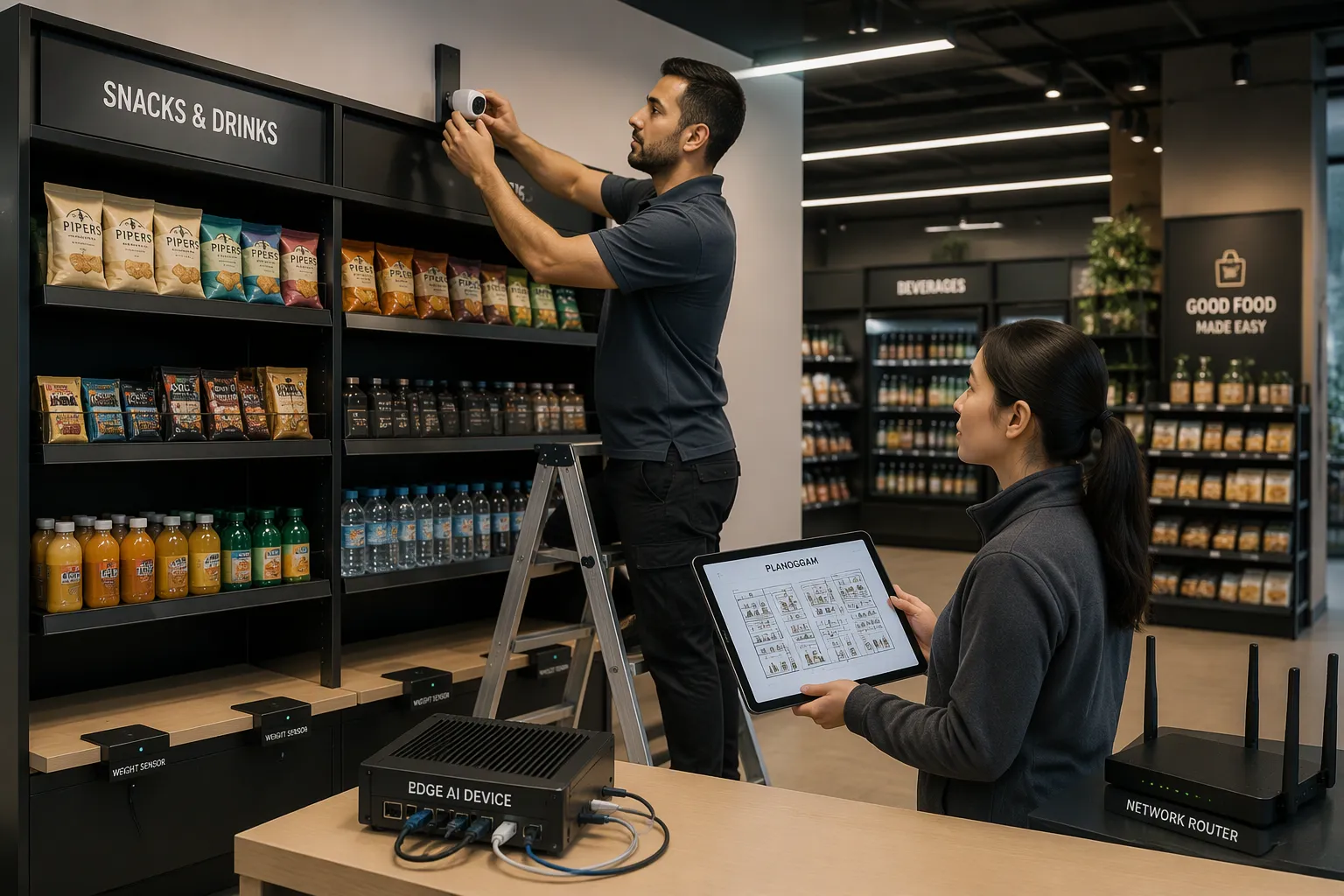
This phase covers the build side of what happens between signing a cashierless store contract and opening day. Layout design, product mapping, and installation usually take 3–5 weeks. Cloudpick leads the technical work, and the retailer provides product data and site access.
Store Design and Product Mapping
Cloudpick's design team builds the planogram first. The planogram links every shelf spot to a specific SKU. Each product then gets a barcode and image record in Cloudpick's catalog. This mapping matters because the computer vision models learn to know products from these records. A missing or blurry image makes recognition slower later.
Shelf and fixture planning comes next. Cloudpick checks shelf depth, height, and spacing against camera sightlines. The team also models how customers move through the aisles. This model shows where shoppers stop and where shelves block a camera's view. Cloudpick adjusts the layout before any hardware arrives.
Retailers should lock in the product list early. Every SKU change after mapping means a catalog update and a new recognition test. A steady product list keeps the schedule on track.
Hardware and Software Integration
Installation starts with cameras, sensors, and edge devices. Cloudpick mounts the cameras at the heights set during the site assessment. Weight sensors go under the shelves. Edge devices process video and sensor data inside the store, so recognition stays fast and does not rely on a faraway server. Cloudpick's sensor fusion approach pairs camera images with weight readings. Two signals together confirm which product a customer picked up, even when one signal is unclear.
Network setup comes after the hardware. Cloudpick checks coverage in every aisle before going live. Weak spots cause dropped frames and missed events.
Software integration links Cloudpick's platform to the store's POS, inventory, and payment systems. The platform sends purchase events to inventory and charges the customer's payment method on exit. Cloudpick tests each connection against the live systems, not a sandbox.
Two challenges show up often. Retrofit stores may have low ceilings or fixed shelving that limits camera angles. Cloudpick works around these limits with adjusted mounts and extra sensors. SKU data gaps are the second challenge. Retailers sometimes lack clean barcodes or product images. Cloudpick flags these gaps during mapping and asks for fixes before installation begins.
A final tip: check network coverage before install day. A failed connection test after mounting delays the whole schedule. Cloudpick schedules this check as a formal milestone in the project plan.
Phase 3: Testing and Staff Training
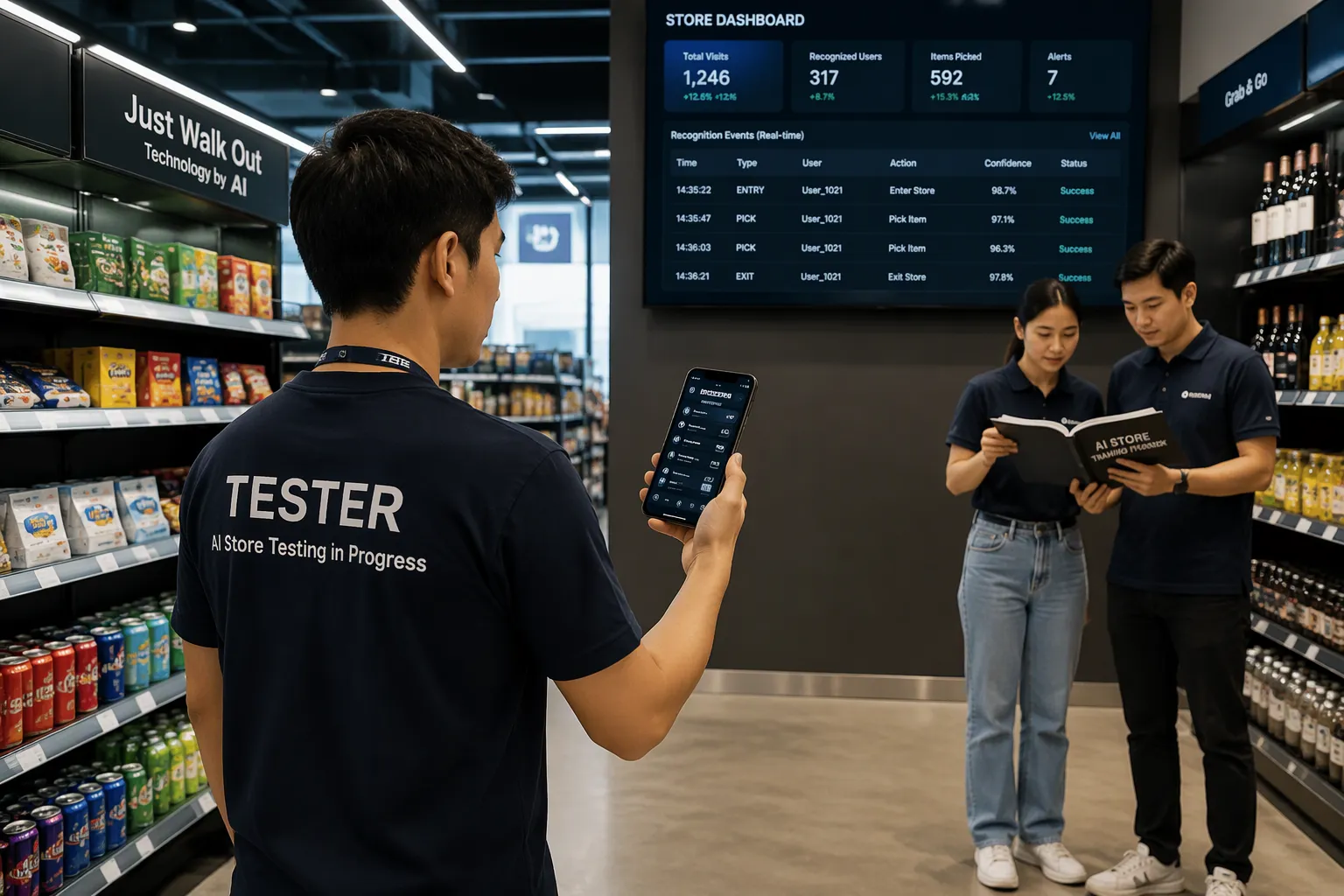
This phase decides whether the store opens on time. Even big companies have pushed back cashierless store openings to fix tech problems. For this reason, retailers should add extra time to the schedule. Testing and training usually take 2–3 weeks, and Cloudpick treats this window as a firm deadline, not a loose goal.
Accuracy Testing and Trial Runs
Cloudpick runs planned walk-throughs in the live store. A tester follows a set path, picks certain items, and exits. The team then compares the recorded basket with the items actually taken. Cloudpick's real-time dashboard shows each recognition event as it happens. Testers look for missed items, wrong quantities, and double charges.
Edge cases get their own rounds of testing. Returns, empty shelves, and group entry all put stress on the system in different ways. A group of shoppers entering together, for example, tests whether the platform tracks each person's picks separately. Cloudpick logs every issue in a shared tracker. The support team fixes each item and reruns the scenario until it passes. Retailers should watch the dashboard during these runs. The data shows where recognition has trouble and which shelves need adjustment.
Staff Training and Change Management
Cloudpick gives training sessions and playbooks to store staff. The playbooks cover restocking, exception handling, and customer help. Restocking matters more than it seems. A product placed in the wrong spot confuses the vision models and the weight sensors. Staff learn to match every item to its mapped shelf position.
Exception handling covers the moments when the system needs a person. A customer may dispute a charge or need help with entry. Staff learn the escalation path and the tools for solving each case. Cloudpick also gives advice on change management. Checkout roles go away, and new roles appear around floor support and data review. Retailers should explain these shifts early and honestly. Staff who understand the new roles adjust faster.
Two tips improve this phase. Train in the live store, not a classroom, so staff practice with real fixtures and real devices. Run multiple test scenarios at different times of day. The store manager owns staff readiness, and Cloudpick's support team owns technical readiness. Both sides sign off before the soft launch begins.
Phase 4: Soft Launch and Opening Day
The last phase usually takes 1–2 weeks. It turns a tested system into a real, working store. Cloudpick stays on site and watches the dashboards the whole time.
Soft Launch and Fine-Tuning
The soft launch opens the store to invited customers or for limited hours. This controlled setting lets the team watch real shopping behavior without big crowds. Cloudpick's dashboards show each recognition event, basket total, and exit charge in real time. The retailer's team watches for missed items and slow exits.
Cloudpick adjusts alerts and thresholds during these runs. A threshold set too tight floods staff with false alarms. Set too loose, it hides real problems. The team adjusts each setting using live data. Cloudpick also collects customer feedback at the door and through short surveys. Shoppers often report small problems that dashboards cannot show, like unclear entry instructions or confusing signs.
What Happens Between Soft Launch and Opening Day
Final adjustments close the gap between a working store and a ready one. The retailer updates signs, confirms app or entry setup, and finalizes staff schedules. Cloudpick checks that every device reports correctly and that payment connections hold under load.
Both sides then sign a go-live checklist. The list covers device health, network coverage, catalog accuracy, staff readiness, and the escalation path. Cloudpick reviews each item with the store manager before signing.
Opening day brings on-site Cloudpick support. The team watches the first transactions live and keeps a fast-response plan ready. A named contact handles each issue type, and fixes go in within minutes, not days.
Two tips improve this phase. Define go/no-go criteria before the soft launch starts, so the decision rests on data, not opinion. Keep a war-room channel open for the first week. After opening, Cloudpick's data insights keep guiding improvements to layout, assortment, and alerts.
The path from contract to opening day has four repeatable phases: kickoff and site assessment, design and installation, testing and training, then soft launch. Most retailers finish this journey in 8–12 weeks. Success depends on early site assessment, accurate product mapping, thorough testing with extra time, staff readiness, and a structured soft launch. Cloudpick's implementation team and dashboards help with each one.
Before opening, confirm these items:
Device health and network coverage checked
Catalog accuracy checked against shelves
Staff trained in the live store
Go/no-go criteria agreed and signed
After opening, Cloudpick's data insights keep improving layout, assortment, and alerts. That ongoing loop protects the real goal of what happens between signing a cashierless store contract and opening day: profit through convenience and speed.
FAQ
How long does a cashierless store project take from contract to opening?
Most retailers should plan for 8–12 weeks. Kickoff and site assessment take 1–2 weeks. Design and installation take 3–5 weeks. Testing and training take 2–3 weeks, and the soft launch takes 1–2 weeks. Cloudpick builds this timeline with the retailer at kickoff.
What causes delays in a cashierless store rollout?
Two problems show up most often. Retrofit sites with low ceilings or fixed shelving limit camera angles. Incomplete SKU data also slows product mapping. Cloudpick flags both during the site assessment and mapping stages, so the retailer can fix them before installation begins.
Does store staff need new skills for a cashierless store?
Yes. Checkout duties fade, and floor support and data review take their place. Cloudpick trains staff in the live store on restocking, exception handling, and customer help. Store managers should explain these role changes early, because staff who understand the new roles adjust faster.
What does Cloudpick handle during implementation?
Cloudpick leads the technical work at every stage. The team surveys the site, designs the planogram, and maps products. It installs cameras and sensors and connects the platform to POS and payment systems. It also runs accuracy tests and trains staff. The retailer supplies product data, site access, and one decision-making contact.
What support continues after opening day?
Cloudpick stays on site for opening day and watches the first transactions live. After that, its dashboards keep tracking recognition accuracy and basket data. Retailers use these insights to refine layout, assortment, and alerts. This protects the goal of profit through convenience and speed.
See Also
Discover How Cloudpick Delivers Cashierless Shopping Convenience to Your Store
Walmart Self-Checkout Access: What Changes Are Coming in 2025?
Micromarkets Versus Smart Stores: How Automated Convenience Retail Operates Globally
How to Launch an AI-Powered Corner Store with Minimal Financial Investment
Exploring Walgreens Self-Checkout: Convenience and Challenges in Modern Retail
