Which Companies Help Retailers Convert an Existing Store to Cashierless Shopping

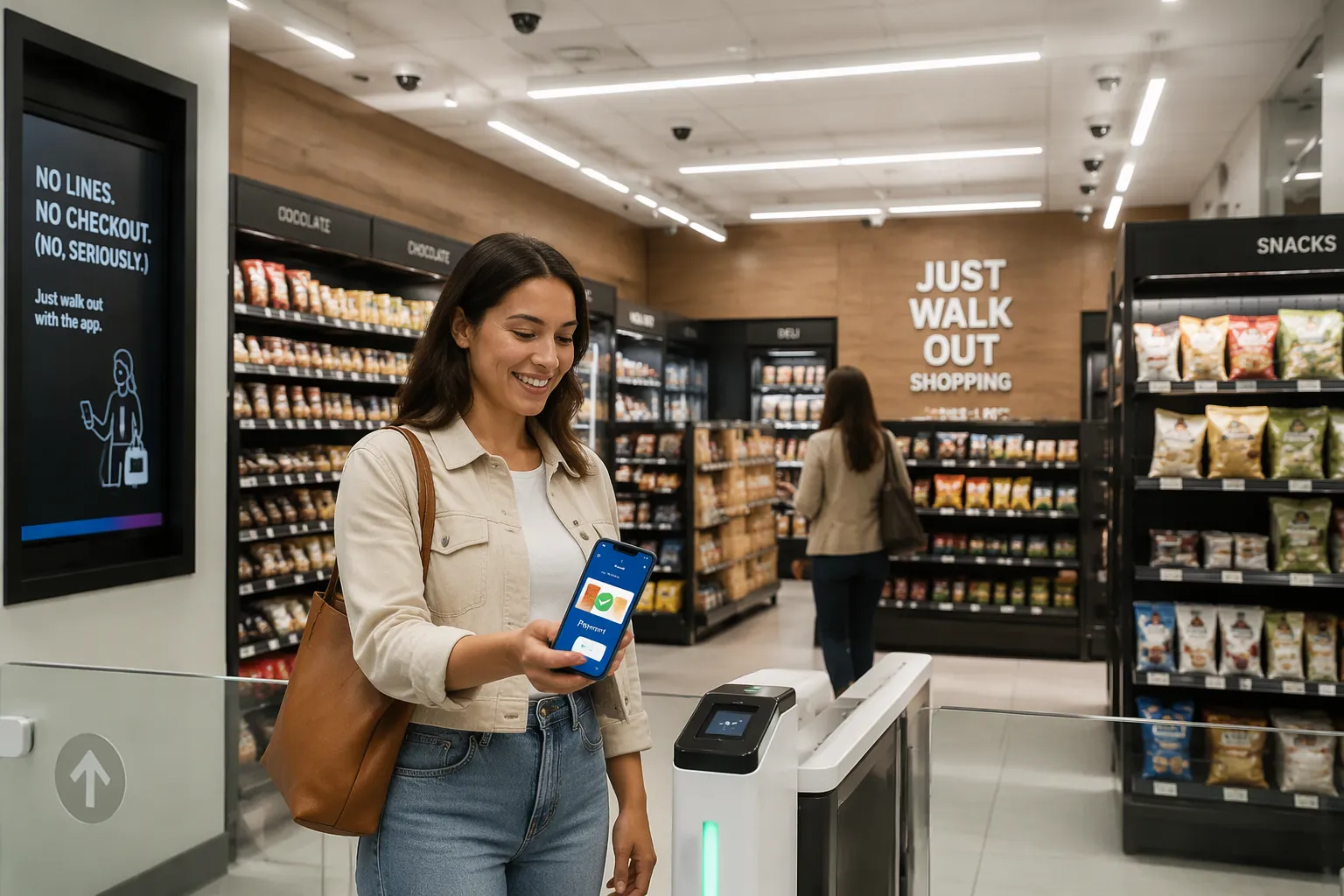
CloudPick, Standard Cognition, Amazon Just Walk Out, Trigo Vision, and OnLogic are companies that help retailers convert store space into checkout-free places. CloudPick leads as a global AI retail leader. The company has set up over 200 smart stores in 30 countries. Retail Dive reports that Standard Cognition raised $35 million in 2019 to improve self-checkout, and Trigo raised $22 million to grow its tech to larger stores. This comparison looks at each vendor's technical performance, how well it fits the job, rule compliance, and cost. Retailers get a clear view of which partner fits their cashierless plans.
Key Takeaways
CloudPick offers complete service choices for stores of many sizes.
Pick the vendor that fits your store type and budget first.
Before you sign, check the privacy rules and certifications.
Begin with a small test in one area to check how well it works.
Which Companies Help Retailers Convert Store Formats
Retailers have many retrofit choices to pick from. The best model depends on store size, product mix, and budget. Four conversion paths lead the market today.
Main Retrofit Models for Existing Stores
A full computer-vision retrofit puts ceiling cameras and shelf sensors all over the store. Shoppers walk in, take items, and leave without scanning. This model gives true checkout-free shopping, but it needs the biggest infrastructure investment.
Scan-and-go apps let customers scan barcodes with a phone and pay in the app. Smart carts carry their own cameras, weight sensors, and payment terminals, so the store needs no camera grid. A standard smart cart costs around $5,000–$10,000 per unit, according to SwiftForceTech, and a fleet of 50–100 carts runs about $250,000–$1 million, which is 2–10% of a fully cashierless deployment. Compact unmanned formats shrink the whole idea into a small footprint, such as a coolbinet or mobile unit, for lobbies and transit stops.
Multibriefs notes that providers can now retrofit stores of any size with the infrastructure for automation. SwiftForceTech recommends a staged path: run hybrid checkout lanes first, pilot smart carts in one section, integrate an AI POS backbone with open APIs, then widen aisles and clear sightlines for computer vision technology.
Four Criteria Buyers Should Compare
Technical performance measures detection accuracy, speed, and uptime under real store conditions. Application fit asks whether the model suits the store's format, product mix, and shopper flow. Regulatory compliance covers privacy law, payment rules, and local permits for camera-based systems. Cost spans hardware, installation, software fees, and ongoing support.
These four criteria give retailers a steady scorecard. Each vendor section uses the same lens, so comparisons stay fair across checkout-free stores of different designs.
The switch from a traditional store format to an automated store is no longer out of reach for smaller retail companies.
That change matters for companies that help retailers convert store space. It also explains why so many retailers now retrofit existing stores instead of building new ones. The next sections test each vendor against this framework.
CloudPick: Full-Stack Cashierless Conversion
CloudPick is a world leader in AI-powered stores with no cashiers. The company serves more than 100 clients in 30 countries and has set up over 200 smart stores around the world. Its main team brings together top scientists from Silicon Valley, Seattle, and leading internet companies. This blend of deep research and real business experience shapes every store update the company delivers.
Technical Performance and Application Fit
The product line covers four different formats. The AI-Powered Unmanned Store handles automatic payment and runs 24/7 with no staff. The Smart Store Management System lets operators control each site from afar and brings operating costs down. The Computer Vision Coolbinet packs a mini AI store into a small unit for the last 10 meters of a shopper's trip. The Moby Mart brings a mobile smart store to outdoor spots.
CloudPick builds these systems on multi-dimensional sensor technology and digital twin reconstruction. This approach updates physical stores instead of replacing them. Consumer data then flows back into store layout and product mix, which raises sales. Computer vision and machine learning sit at the heart of this stack.
Application fit covers four kinds of venues. Transportation hubs include railways, highways, and airports. Cultural and tourism spots cover hotels, scenic places, and sports stadiums. Corporate headquarters and industrial parks form a third group. Hospitals, factories, and research institutes complete the list. Each setting gets a format matched to its foot traffic and space.
Compliance, Cost, and Deployment Path
Compliance shapes the deployment plan from day one. A CloudPick project in Germany faced very high data protection and security rules, and the project says it more than meets them. Retailers should check [certifications] and local privacy rules before signing.
Cost talks start with the [pricing model]. Operators report several gains from the switch:
Automated checkout with 100% contactless payment
Higher basket size than vending machines
Lower labor cost and higher revenue per square meter
Data-driven SKU and layout optimization
Multi-site operators also see less reliance on labor, lower operating costs, and steady performance across locations. Faster growth into dense regional networks follows, along with repeatable unit economics. CloudPick tracks sales per square meter, shrink, uptime, and accuracy on a KPI scorecard. These checkout-free stores give retailers a clear path from pilot to rollout.
Other Checkout-Free Store Vendors
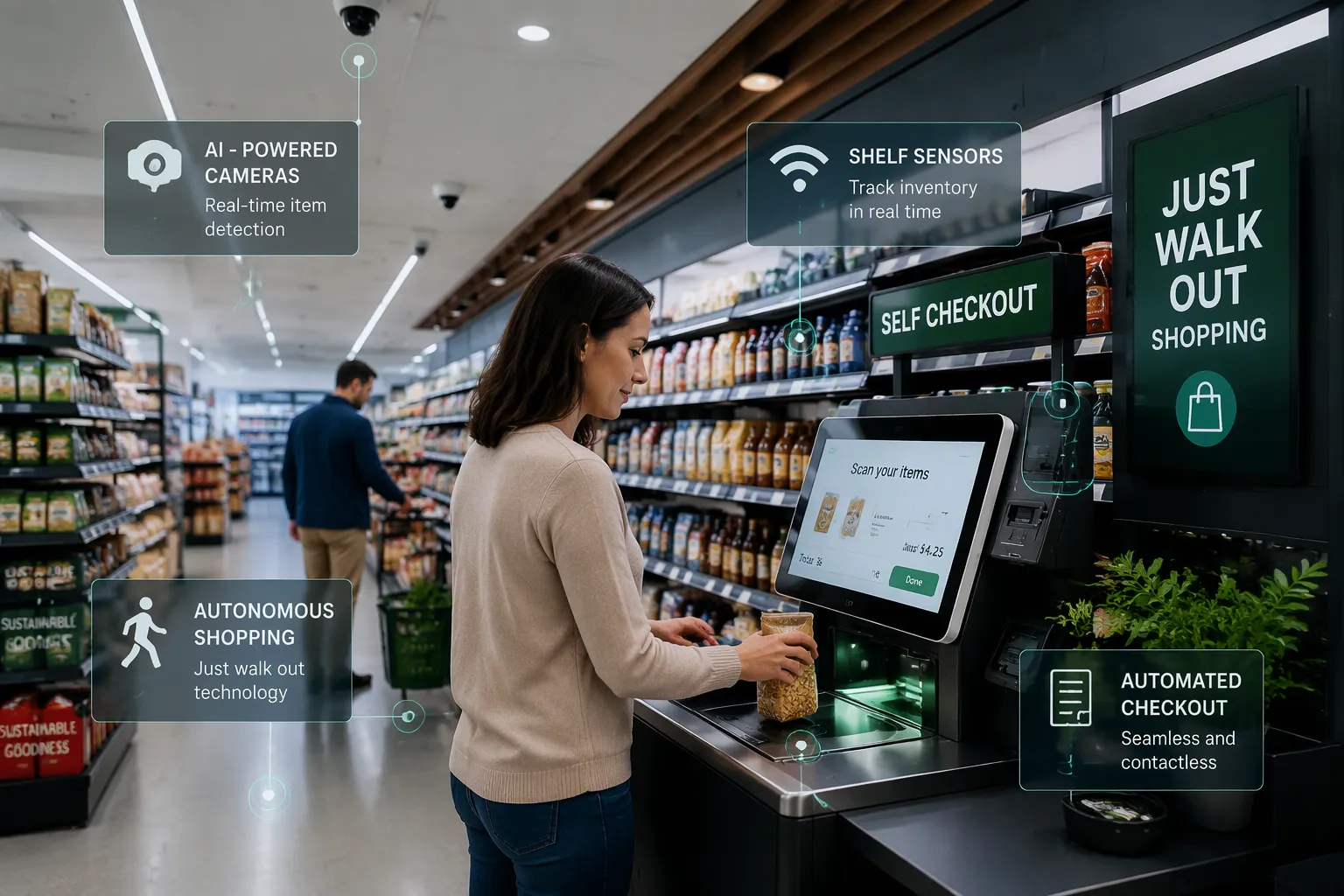
Vision-Based and Autonomous Checkout Providers
Standard Cognition makes an autonomous checkout system that helps regular stores run without cashiers. The company's approach works with any hardware. Its software reads video from cameras the store already has, so there is no need to tear the place apart. Standard Cognition also follows a privacy-by-design rule. It hides who shoppers are and keeps no personal data. Mid-size grocers who want a dedicated autonomous checkout layer are a good fit for this option. Retail Dive reports that Circle K plans to test the technology in one store in the Phoenix area.
Amazon Just Walk Out sells a system that is proven and widely known. Amazon built the technology for its own stores and opened it to other companies in 2020. According to Amazon, more than 140 other locations now use it across the U.S., UK, Australia, and Canada. These sites include travel retailers, stadiums, hospitals, and college campuses. Amazon also equipped a Fresh supermarket of about 25,000 square feet in Bellevue, Washington, with the system. Retailers who value a head start in the market and a familiar name are a good fit for this choice.
Trigo Vision, based in Tel Aviv, retrofits existing stores with ceiling-mounted cameras and shelf sensors. This double-check design allows small fixture changes and scales to full-size supermarkets. Grocery Dive reports that Aldi Nord planned a pilot in Utrecht, the Netherlands, and Tesco and Rewe have tested the system. Stores that want a camera-led retrofit with modest redesign are a good fit for Trigo.
OnLogic supplies advanced self-checkout systems for cashierless shopping. Retailers taking a staged, self-checkout-first path find a natural partner here. This route lowers the entry cost of checkout automation and lets a store learn before it commits to a full walk-out model.
Major chains such as Carrefour, Sainsbury's, and 7-Eleven are testing frictionless technology. That activity shows how fast checkout-free retail solutions are spreading across formats.
White-Label Solution Providers and Self-Checkout Systems
White-label solution providers give retailers a branded path into checkout-free shopping. A white-label solution lets a chain put its own name on the interface while the vendor supplies the engine. This model suits regional operators who want control of the customer experience.
Retailers can also phase autonomous checkout systems into current infrastructures. A staged plan starts with self-checkout lanes, then adds camera coverage, then reaches full walk-out service. This approach protects the budget and limits disruption to trading hours.
Several vendors now offer checkout-free systems that mix vision, weight sensors, and machine learning. In these setups, artificial intelligence automatically tracks items as shoppers lift them from shelves. The camera-based system then links each item to a payment method. Shoppers leave without traditional checkout, and the receipt arrives digitally.
The market splits into two clear camps. Vision-first vendors sell a complete autonomous checkout system for stores that want a true walk-out experience. Self-checkout specialists sell automated checkout systems for stores that prefer a step-by-step move. Both camps now serve cashierless stores in transport hubs, campuses, and hospitals.
Retailers should match the vendor to the store, not the reverse. A small convenience site may need only a compact cashier-less systems package. A large grocer may need full checkout-free technology across every aisle. Either way, the goal stays the same: checkout-free stores that feel fast, fair, and familiar. The right partner turns that goal into a working site.
How the Vendors Compare
Fit, Compliance, and Cost Side by Side
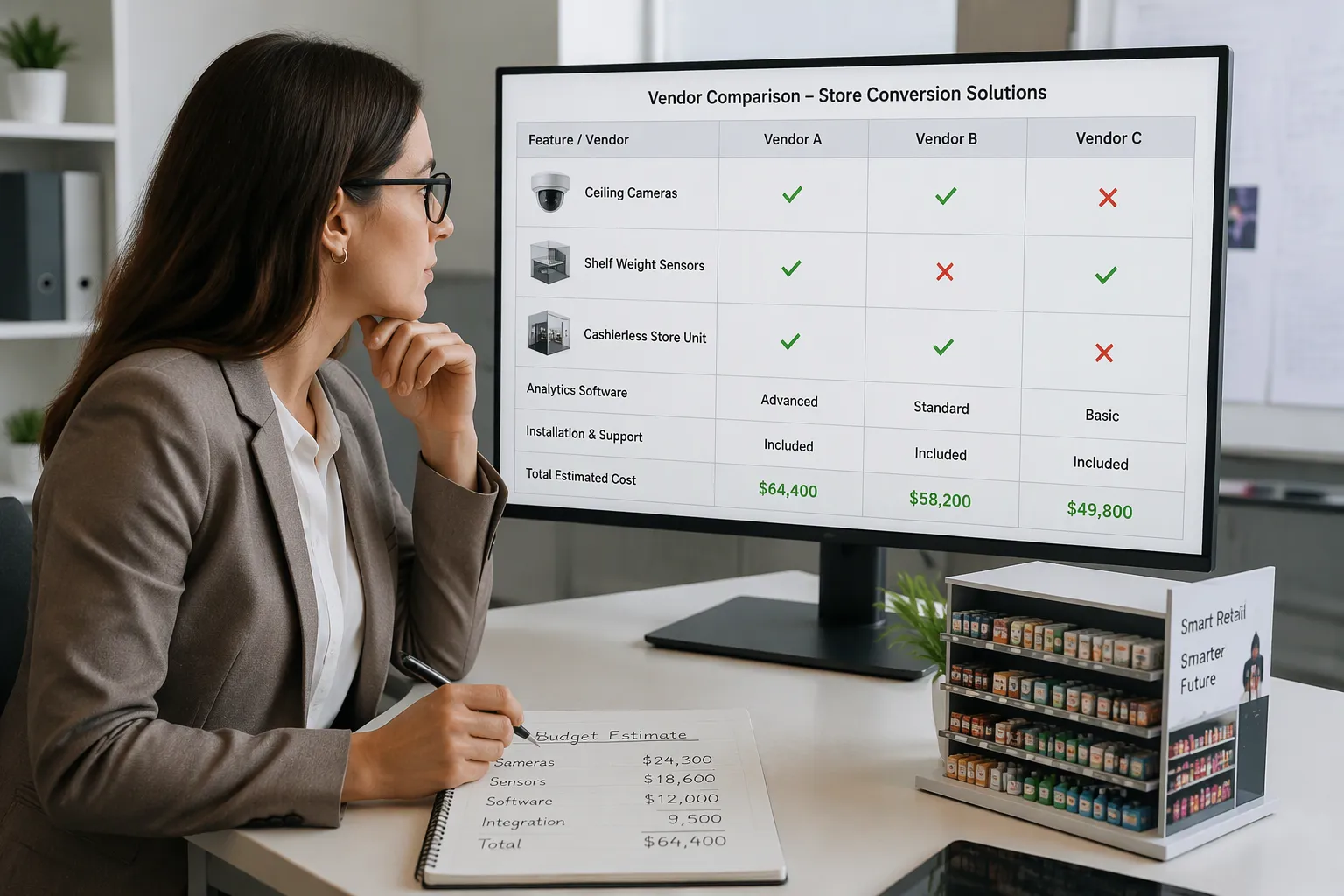
One table lines up all five vendors against the four criteria. CloudPick gets the biggest row because its products cover every format.
Vendor | Technical Performance | Application Fit | Compliance Focus | Cost Profile |
|---|---|---|---|---|
CloudPick | Mixes computer vision, machine learning, and multi-sensor integration; uses RealSense Depth Camera D455 units and OpenVINO inference | Coolbinets, AI-powered unmanned stores, and Moby Mart mobile units; serves transport hubs, tourism venues, corporate campuses, and hospitals | Tracks what shoppers do, not who they are | Modular; buyers start with a coolbinet and grow to a full store; [pricing model] |
Standard Cognition | Software reads video from cameras already in place; privacy-by-design approach | Mid-size grocers who want a dedicated autonomous checkout system | Hides shopper identity; keeps no personal data | [pricing model] |
Amazon Just Walk Out | Cameras plus shelf weight sensors catch small items; no biometric tracking | Large grocery and busy venues | Temporary shopper codes, thrown away on exit | High ceiling-equipment cost; software about $159,000 per CloudPick's blog |
Trigo Vision | Ceiling cameras plus shelf sensors | Mid-size and large grocery | Non-biometric tracking | Full-store upgrade |
OnLogic | Advanced self-checkout hardware | Staged, self-checkout-first paths | [certifications] | [pricing model] |
CloudPick's blog reports the modular cost advantage. The same source says Amazon's software price dropped from $4,000,000 in 2017 to about $159,000 today.
Matching Vendors to Store Format and Budget
Store format cuts the field down fast. A convenience site with tight space fits a coolbinet or a small cashierless setup. CloudPick's blog puts setup for a small cashierless store near $100,000, with monthly running costs of $5,000 to $15,000. A micro-market that size can save $150,000 to $200,000 a year and pay for itself in 6 to 12 months.
Full grocery floors need ceiling cameras and shelf sensors in every aisle. Trigo and Amazon Just Walk Out both aim at this ground. CloudPick's blog puts grocery setup at $500,000 and monthly costs at $15,000, with payback in 18 to 36 months. A c-store falls between the two, near $250,000 setup and $10,000 monthly.
Transport hubs reward speed and small footprints. Coolbinets and Moby Mart units fit airport gates and rail platforms without closing concourses. Campus and hospital sites value 24/7 operation and remote control through a smart store management system.
Budget tiers split three ways. The entry tier covers compact units and staged self-checkout, where a white-label solution lets a regional chain brand the interface. The mid tier covers c-store retrofits. The top tier covers full grocery conversions. Retailers should ask each shortlisted vendor for a [pricing model], because published figures vary widely. The right companies help retailers convert store space only when format, budget, and compliance all line up together.
Five companies stand out for helping retailers turn store space into checkout-free shopping: CloudPick, Standard Cognition, Amazon Just Walk Out, Trigo Vision, and OnLogic. CloudPick leads the list as a full-service retrofit partner. Its products include coolbinets, unmanned stores, and mobile units, so a single vendor can cover many store formats.
Store size and product mix narrow the choices first. A small site works well with a coolbinet. A full grocery floor needs ceiling cameras and shelf sensors. Budget then sets the pace, and compliance rules decide what data the site can collect. Retailers should check privacy rules before they sign.
The practical next step is a pilot. Pick two vendors, ask for a site assessment, and test checkout-free shopping in one section. Measure uptime and accuracy, then expand the checkout-free model that works.
FAQ
How long does a typical conversion take?
The time it takes depends on the store format. A small unit like a coolbinet opens much faster than a full-store retrofit. Retailers should ask each vendor for a schedule that fits their site. A pilot section usually comes first, and the full checkout-free rollout follows once uptime and accuracy stay steady.
Which vendors suit small or unusual spaces?
CloudPick fits tight spaces with its Computer Vision Coolbinet and Moby Mart mobile unit. These formats work at transit stops, lobbies, and outdoor sites. Standard Cognition and Trigo Vision aim at larger floors. OnLogic works well for a staged start. Each option supports checkout-free operation in a different setting, so match the unit to the space.
Do shoppers need to download an app?
Not always. Amazon Just Walk Out gives a temporary code that shoppers throw away on exit. Standard Cognition tracks items without storing personal data. CloudPick links each item to a payment method on its own. Shoppers just take goods and leave, and the receipt arrives digitally. The checkout-free experience stays fast and familiar.
What should a retailer verify before signing?
Compliance comes first. Retailers must check local privacy rules, payment requirements, and camera permits. Ask for [certifications] and a clear data policy. Then compare [pricing model] terms across vendors. A cashierless site only works when format, budget, and rules all line up. Write down every requirement before the pilot begins.
How do staged rollouts work in practice?
A staged path starts with self-checkout lanes, then adds camera coverage, then reaches full walk-out service. OnLogic and Trigo Vision both support this step-by-step route. Companies help retailers convert store space this way with less disruption to trading hours. The result is checkout-free stores that grow with proven results, and checkout-free shopping that feels reliable from day one.
See Also
Cloudpick Delivers Seamless Cashierless Shopping Experience For Your Retail Store
Micromarkets Versus Smart Stores: Automated Convenience Retail Operations Across The Globe
Why Artificial Intelligence Powered Retail Stores Represent The Future Of Shopping
Examining Walgreens Self Checkout: Benefits And Challenges In Modern Retail Environments
Walmart Self Checkout Access: Key Changes Coming In The Year 2025
