7 Digital Transformation Roadmap Best Practices for Convenience Stores

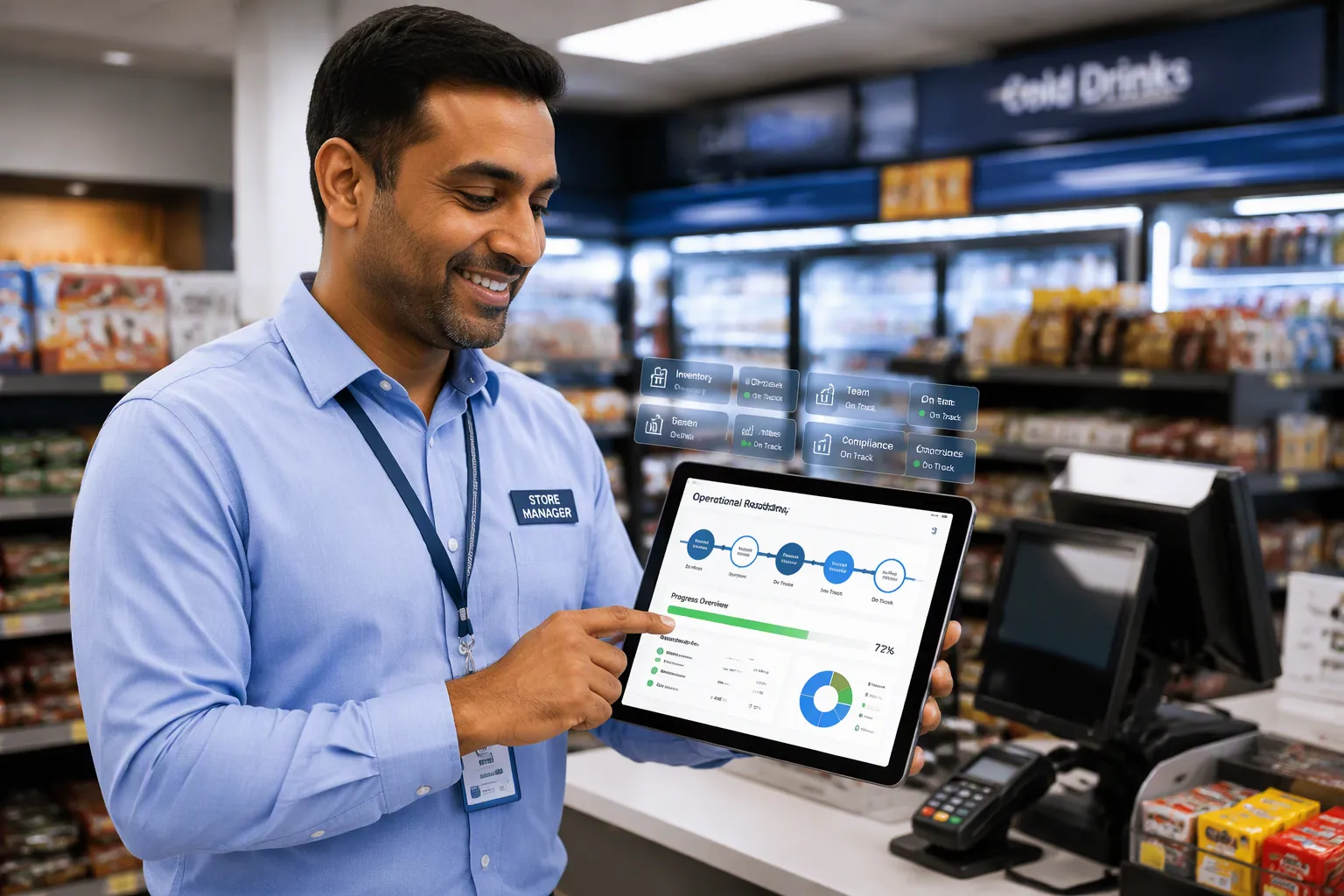
You know the pressure. Profit margins stay very thin, with the whole site making only 1% to 3%, while customers want faster service and easier checkout. Vendor pitches come in every day, and each one promises a fix.
The answer is a steady digital transformation roadmap, not another tool. Seven best practices make up that path, and they begin with leadership, context, and clear goals.
Here is the hard truth: most efforts get stuck in planning, not in technology. Research shows 70% to 84% of efforts fail to meet their stated goals. A digital transformation roadmap for convenience stores – scenario 12 proves that careful implementation beats speed.
This guide gives you practical, store-level steps for your convenience operation. You will learn to lead your convenience business with confidence.
Key Takeaways
Get your leadership team on the same page first. Bring in owners, operations, IT, and finance so decisions happen faster and no owner stays silent and out of the loop.
Look at your business situation before you set goals. Check your systems and stop digitizing junk so your roadmap stays honest.
Set clear goals you can measure. Link each goal to a result, like faster checkout or fewer stockouts, so you can track progress.
Put the customer first in every choice. Map the customer journey and skip copying big-box stores to keep your convenience promise.
Try it in one store first before you grow. Test your changes in a single store, check the results, and look over your roadmap every three months to stay on track.
Align Leadership First
A roadmap gets stuck when just one leader is in charge of it. You need the owner, operations, IT, and finance at the same table from the start. Each voice fills a gap the others cannot see. Operations knows how a convenience store really runs day to day. Finance protects the budget. IT checks what your systems can truly handle. This team from different areas turns a wish list into a plan that works. It also speeds up decisions, because no single department can block progress by saying nothing.
Form a Steering Group
Build a small steering group that has real power to decide. Give it a named chair, a set meeting schedule, and a written charter. The charter should say who approves spending, who settles disputes, and who signs off on each phase. Keep the group small enough to act. Five to seven people usually works for a single-site or small-chain convenience operation. Invite store managers to report in, even if they do not get a vote. Their input brings up problems early, like staff pushback to change and gaps in employee training. Deal with those signals in the steering meeting, not after go-live.
Avoid the Silent-Owner Trap
The silent-owner trap sinks more roadmaps than any technical failure. Leadership approves a budget, then steps away from the hard choices. Managers get the work without the power to make calls. Decisions stall. Vendors wait. Momentum dies. Stop this trap with a simple rule: the owner joins the steering group or hands off authority in writing. Ask for one decision per meeting, and write it down. Link each decision to the digital transformation timeline so accountability stays visible. When the owner stays involved, your implementation moves faster and your team stops guessing. The same discipline carries into every later phase of the implementation.
Assess Business Context
Digital transformation best practices begin with your business context, not your wish list. You must know how your stores really run before you write down goals and success criteria. Walk the floor. Watch how staff handle a rush at the register. Notice where customers wait and where they leave. This groundwork is careful research and planning at the store level, and it costs you time, not money. A digital transformation built on guesses fails on the first busy Saturday.
Audit Systems and Data
List every system your convenience stores use in a normal week. Include the point-of-sale, the back-office spreadsheets, the loyalty program, and the vendor portals. Mark each one as current, aging, or obsolete. Aging and obsolete tools are your legacy systems, and they slow down every new project. They also raise privacy concerns, because old software often lacks modern data protections. Write down where customer data lives and who can see it. You cannot protect what you have not mapped. Repeat this audit for each legacy systems cluster you find, and set a review date.
Stop Digitizing Junk
The "digitizing junk" pitfall wastes your budget fast. You automate a redundant step, an outdated form, or a duplicated approval, and the waste just moves faster. Run a Keep / Kill / Automate workshop with each department. Every task gets one label. Keep means the task stays manual. Kill means you drop it. Automate means it earns a system. This exercise protects operational efficiency and keeps your roadmap honest.
Your implementation improves when you fix the process first. A clean process makes the later implementation smoother. It also lowers privacy concerns, because fewer systems hold customer data. Convenience comes from speed, and speed comes from removing steps, not digitizing them. That is how operational efficiency and convenience grow together.
Set Clear Objectives
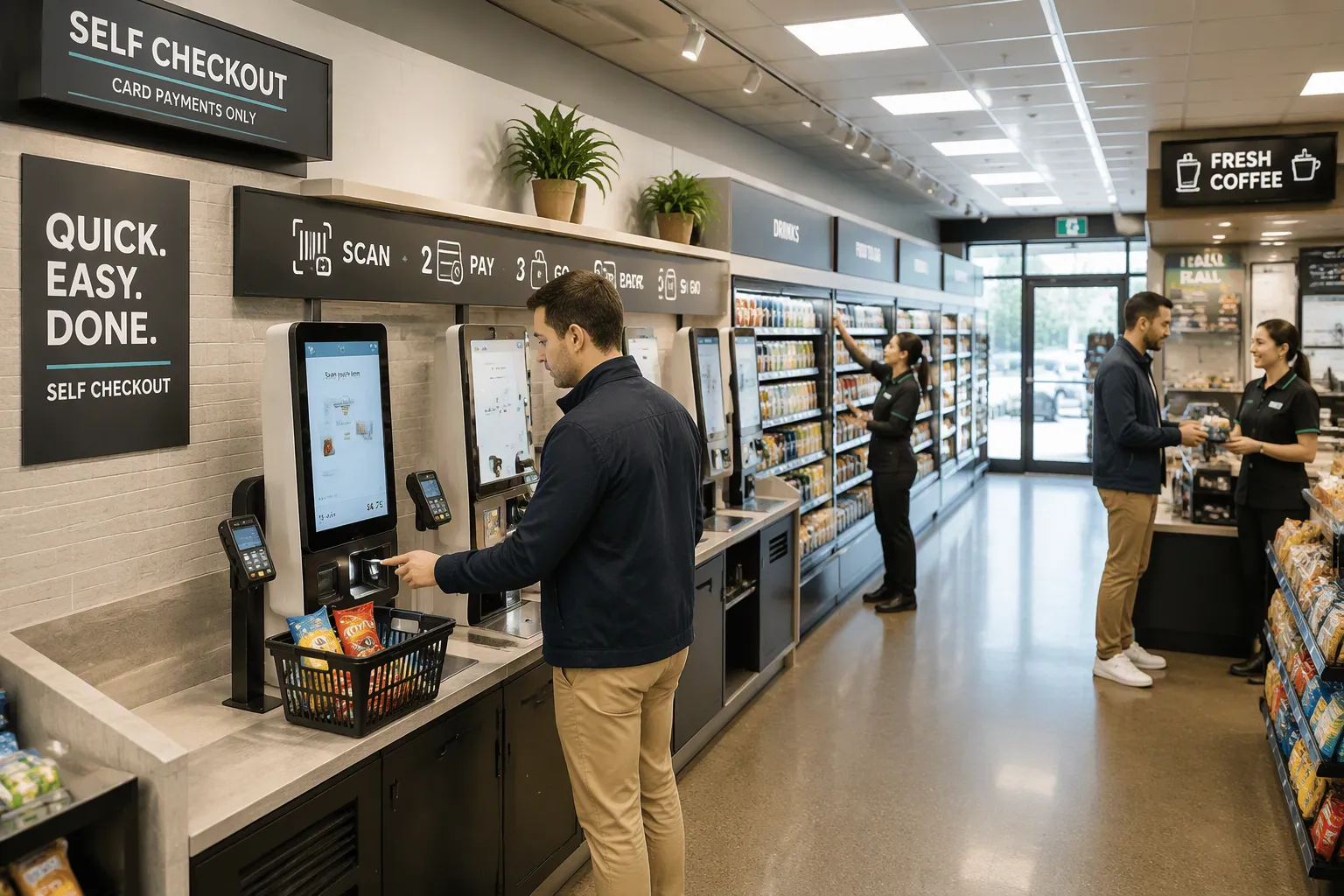
Efficiency is your first big goal. Self-service checkout shows how this works. Parker's Kitchen is a chain with 94 locations in Georgia and South Carolina. They put kiosks in 62 stores. The rollout made checkout faster and freed staff to restock and help with complex purchases. Kiosks handle small grab-and-go baskets in seconds. That speed matters, because 70% of shoppers pick self-service checkout when it is faster.
Metric | Value |
|---|---|
Shoppers who chose self-checkout because it was faster | 70% |
Shoppers who prefer self-checkout to bag their own items | 46% |
Shoppers who opt for self-checkout because lines are shorter | 36% |
Checkout time improvement from Express Self-Checkout at Target | 8% |
NPS improvement for wait times at Target checkout | +5 points |
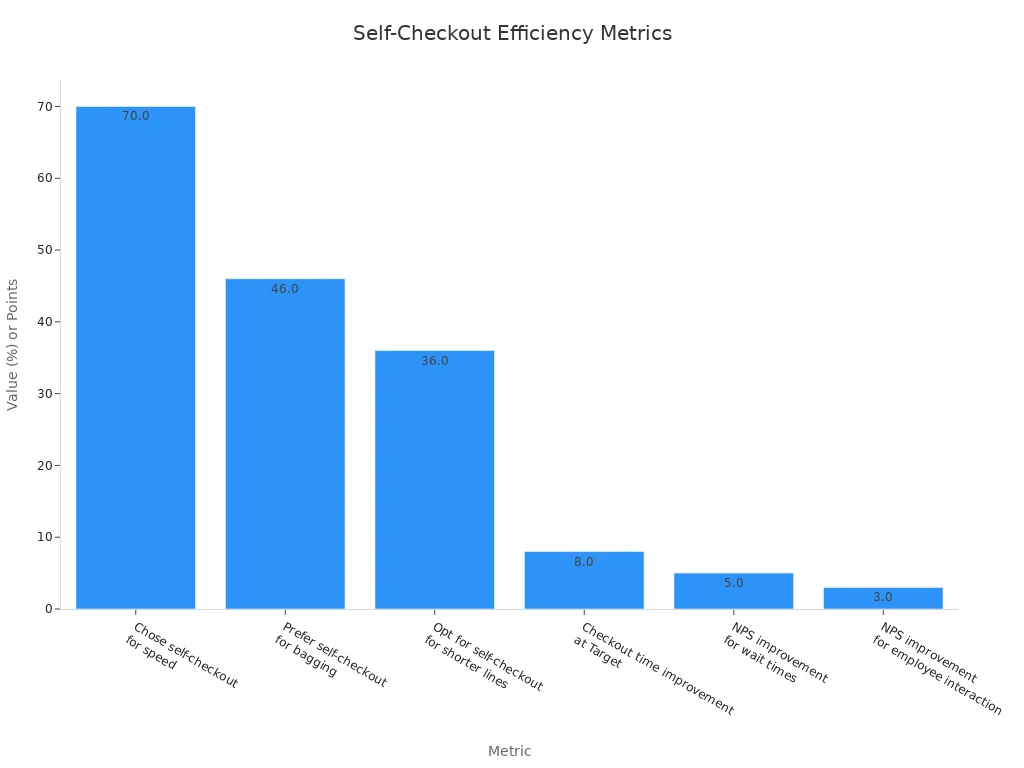
Build your digital transformation goals around results like these. Add menu boards and inventory management solutions to the same plan. Inventory management systems give you real-time inventory management, and that clear view protects operational efficiency. AI and analytics then turn your data into better store operations and a stronger customer experience. Your implementation stays on track when every goal names a result.
Tie Goals to Outcomes
Write each goal as a result you can measure. Nike doubled innovation, speed to market, and direct customer connections. Ikea built e-commerce, turned stores into fulfillment centers, and connected in-store and online interactions. Copy that discipline at your scale. Pair every in-store technological solutions purchase with a target, such as faster seamless checkout processes or fewer stockouts. Automated checkout solutions and self-service checkout belong in the plan only when they serve a stated outcome. This approach keeps your inventory management honest and your convenience promise real.
Dodge Vague Vision
A vague vision kills momentum. "Launch a new platform to improve customer experience" gives you no way to judge success. "Launch the platform and increase customer interaction by 20% within 3 months" gives you a benchmark. Vague goals also breed uncertainty and resistance among staff. Without measurable targets, you cannot track progress or justify continued investment. Tie every objective to a number, a date, and an owner. Review the list each quarter. Clear goals turn your digital transformation from a slogan into a working plan, and they keep self-service checkout, inventory management, and convenience aligned.
Center the Customer
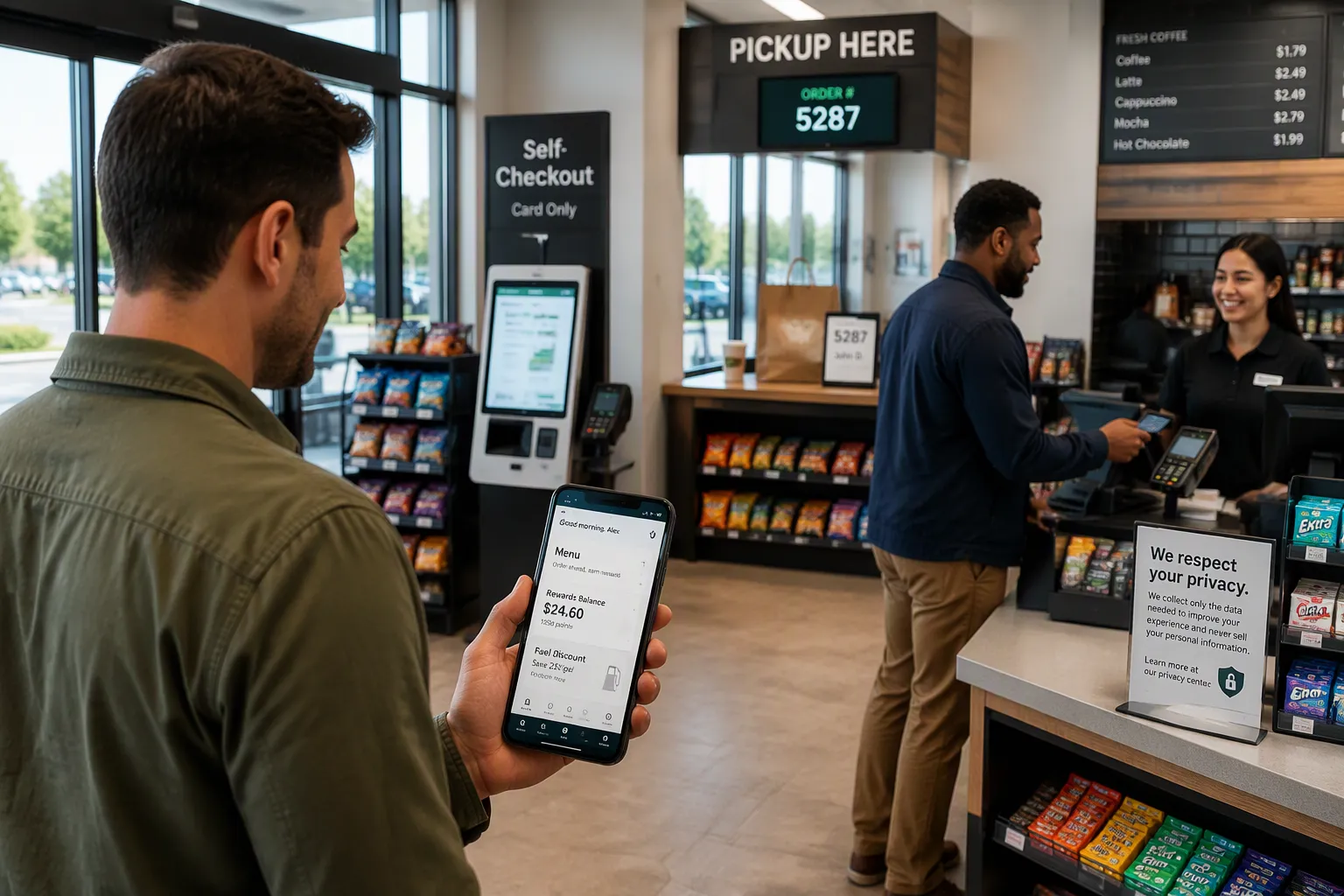
Your customer decides if your digital transformation pays off. Apps, online ordering, loyalty programs, and data all serve one purpose: better operations and a better customer experience. Start with the tools your shoppers already use. A mobile app can hold a menu, a rewards balance, and a fuel discount in one place. Online ordering lets a customer grab a sandwich without leaving the car. Loyalty data shows what people buy at 7 a.m. versus 11 p.m. You then stock shelves and plan promotions around real behavior. That is how technology adoption earns its place in your store.
Map the Journey
Walk through a visit the way your customer lives it. They park, walk in, find the item, pay, and leave. Map each step and mark where friction shows up. A long line at the register is friction. A loyalty card that never scans is friction. Self-service checkout removes the first problem for small baskets. Automated checkout solutions help only when they fit the trip, so test them against real baskets. Customer acceptance grows when the change feels faster, not harder. Consumer trust and acceptance follow when you explain what data you collect and why. Address privacy concerns openly at the counter and in your app. Strong data privacy concerns management protects both your shoppers and your brand.
Skip Big-Box Copying
Big-box playbooks assume big-box budgets. Copying them invites trouble:
Budget mismatch: Large retail chains fund loyalty apps with substantial financial resources; independent convenience stores cannot match that spending and instead require loyalty functionality embedded in the point-of-sale system they already use.
Friction of bolt-on apps: A standalone loyalty app disconnected from the register forces cashiers to prompt customers and customers to retrieve phones, causing many transactions to go unrecorded; integrating loyalty into the sales screen enables automatic enrollment and redemption.
Unfavorable delivery economics: Third-party delivery services impose their own cost structures that do not always work in the convenience store's favor.
"Sixty-six percent of convenience stores now offer a loyalty program, putting the category ahead of restaurants, where 57% currently have one."
That figure proves loyalty matters in your format. It does not prove you need a big-box build. Embed loyalty in your point-of-sale, keep inventory management visible on the same screen, and let inventory management data feed your promotions. Your implementation stays lean, and your convenience promise stays intact. Self-service checkout, clean inventory management, and honest privacy concerns handling all support operational efficiency. Plan the implementation around the trip your customer actually makes.
Fund Resources Realistically
A realistic budget decides whether your digital transformation survives contact with reality. Plan the money before you sign anything.
Plan Total Cost
Start with software systems that share data. Data is the most powerful tool for running a successful retail business. An integrated point-of-sale sends live sales and stock numbers into your inventory management systems, and that single source of truth leads to better decisions. Integrated fuel and payment systems give real-time reporting for compliant fuel sales management. Flexible loyalty software spreads rewards across groceries, merchandise, prepared foods, and fuel. Self-service kiosks shorten lines and build customer satisfaction. Shared data also makes document management simpler, a best practice for running a successful convenience store. One cloud platform can handle pricing, vendor invoices, and shifts from a single place.
Avoid Underfunding
High implementation costs rarely show up in the vendor quote. Budget for the costs that hide:
Hidden Cost of Underfunding | Consequence |
|---|---|
Change management | Usually 15–25% of total transformation costs; a main reason projects miss expected benefits |
Technical debt remediation | Adds unexpected costs before integration |
Productivity dips | Hurts performance during rollout |
Data quality problems | Need unplanned cleanup |
Integration complexity | Often goes over initial estimates |
Ongoing maintenance and security | Recurring costs after go-live |
Delayed adaptation | Doing nothing can cost far more than transformation |
A 30-person team processing $50,000/day with a 15% dip for 6 weeks costs about $315,000 in delayed throughput. Mid-market firms pay $25,000–$75,000 per system connection, totaling $150K–$600K. Budget the 90-day hypercare window and the optimization phase in months 4–18, where much of the ROI lands. Underfunding training produces shelfware. Ignoring your team's own time overloads key people. Usage-based AI pricing can surprise you. Fund regulatory compliance work and data protection regulations reviews up front. Address privacy concerns in the budget, because privacy concerns left unfunded become breaches. High implementation costs are predictable, and your implementation costs stay controlled when you plan them.
Pilot Before You Scale
A digital transformation roadmap for convenience stores – scenario 12 keeps the first rollout small. You test one store or one category before you change the rest of the chain. This controlled pilot protects your budget and your staff. It also gives you real proof for the next phase.
Pick a Representative Store
Choose a store that looks like your typical site. Average traffic, average size, average staffing. A flagship store hides the problems a normal store will show you. Run the full digital transformation roadmap for convenience stores – scenario 12 playbook there: install the system, train the team, and watch a full week of business.
Name a store lead and give that person the power to pause the test. Track the same metrics you will use chain-wide. A digital transformation roadmap for convenience stores – scenario 12 works best when the test store shows you what to fix before you scale.
Prevent Scope Creep
Pilot programs fail when the test grows past its purpose. Define exit criteria up front. Write down what success looks like, what you will measure, and when the test ends. Then hold that line.
Keep pilot programs limited with a few simple rules:
Limit revisions to 2-3 rounds, stated in the statement of work, and keep the review group to 1-3 experts.
Set SMART objectives so everyone knows what is in scope.
Run a formal change control process with a request form and a log.
Offer extra requests as a future phase at additional cost.
This discipline supports your planning and keeps the implementation honest. A tight pilot gives you clean data for the wider implementation, and your convenience promise stays intact. The digital transformation roadmap for convenience stores – scenario 12 approach turns a risky launch into a measured step.
Measure and Iterate
Your roadmap doesn't stop when the system goes live. Digital transformation is ongoing work, not a one-time launch. Treat the plan as a living framework. You change it based on what works and cut what doesn't.
Define Metrics Early
Choose your metrics before the pilot starts. Track business results, not activity. Dashboards full of workshops and training hours tell you nothing about cycle time, cost-to-serve, or lasting adoption. Tie each metric to a goal you already wrote down. Inventory management gives you clean numbers to watch: stockouts, shrink, and turnover. Review those numbers weekly during the pilot and monthly after rollout.
Measure the same way at every store. A shared scorecard lets you compare sites and spot problems fast. Keep the scorecard short. Five to seven metrics beat a wall of charts nobody reads. Your planning, strategy, execution, and measurement all connect through that scorecard.
Escape Set-and-Forget
The set-and-forget pitfall turns a strong roadmap into a stale one. Teams launch the system, declare victory, and stop looking. Signals change. Customer habits shift. The plan ages quietly. Episodic transformation fails for this reason. Run the program as a continuous sensing-and-improving capability instead.
A transformation strategy is a living framework, not a static plan. Organizations that review and update their roadmap quarterly — adjusting based on what is working and cutting what is not — consistently outperform those that treat transformation as a project with a fixed end date.
Set two review rhythms and hold them:
Review Level | Recommended Cadence |
|---|---|
Portfolio level | Quarterly |
Initiative level | Monthly |
Quarterly reviews keep your digital transformation best practices current. Use them to retire weak initiatives and fund strong ones. Check inventory management performance at each review, since stock data shows whether your implementation still serves the store. Protect convenience at every checkpoint: if a change slows the trip, fix it or drop it. Strong implementation discipline keeps your roadmap honest and your convenience promise intact.
The seven practices work together like a chain. Leadership alignment leads to an honest context assessment. Clear objectives shape choices that center on the customer. Realistic funding protects the pilot, and measurement keeps every step honest. Skip a link, and the chain gets weaker.
These pitfalls can be predicted. A silent owner, digitized junk, and a vague vision stall any plan. Disciplined planning removes them before they cost you.
Pick one practice this week. Form your steering group or run a Keep / Kill / Automate workshop. Then review your roadmap every quarter. Set your course, and let the plan adjust as your business moves forward. Your digital transformation starts with one decision, and your convenience gets better with each disciplined step. Start the implementation now, and protect your convenience promise store by store.
FAQ
How long should a digital transformation roadmap take?
Think of the roadmap as a plan that keeps changing, not a fixed project. Set a first phase you can finish in months, not years. Then check your progress every quarter. A digital transformation works through steady small steps, so you adjust the timeline as store data comes in.
Where should a small chain start?
Start by getting leaders on the same page and by studying how your business really runs. Map your systems and run a Keep / Kill / Automate workshop before you buy anything. This order protects your budget. It also keeps your convenience promise intact while you plan the first pilot.
How do you measure success?
Choose five to seven metrics before the pilot begins. Track results like stockouts, checkout speed, and repeat visits. Compare results across stores with one shared scorecard. Quarterly reviews then tell you which initiatives to fund and which to retire.
What causes most roadmaps to stall?
Most efforts stall in planning, not technology. A silent owner, digitized junk, and a vague vision are the usual culprits. Disciplined planning removes each one early. Strong implementation discipline then keeps the plan moving from pilot to chain-wide rollout.
Do you need a big budget to compete?
No. Embed loyalty and inventory tools in the point-of-sale you already run. Sixty-six percent of convenience stores now offer a loyalty program, so the format supports it. Fund change management and training up front. Careful spending beats a big-box build for a digital transformation at your scale.
See Also
Automated Convenience Retail Worldwide: Micromarkets Versus Smart Stores Explained
AI-Powered Corner Stores Rising: Essential Insights for Retailers Today
Understanding Corner Store Fundamentals and Their Importance
Walgreens Self-Checkout Explored: Retail Convenience and Challenges
Smart Technology in Electronics Vending Machines Revolutionizing Retail
