How autonomous stores reduce queues and waiting time in Hospitals & healthcare facilities

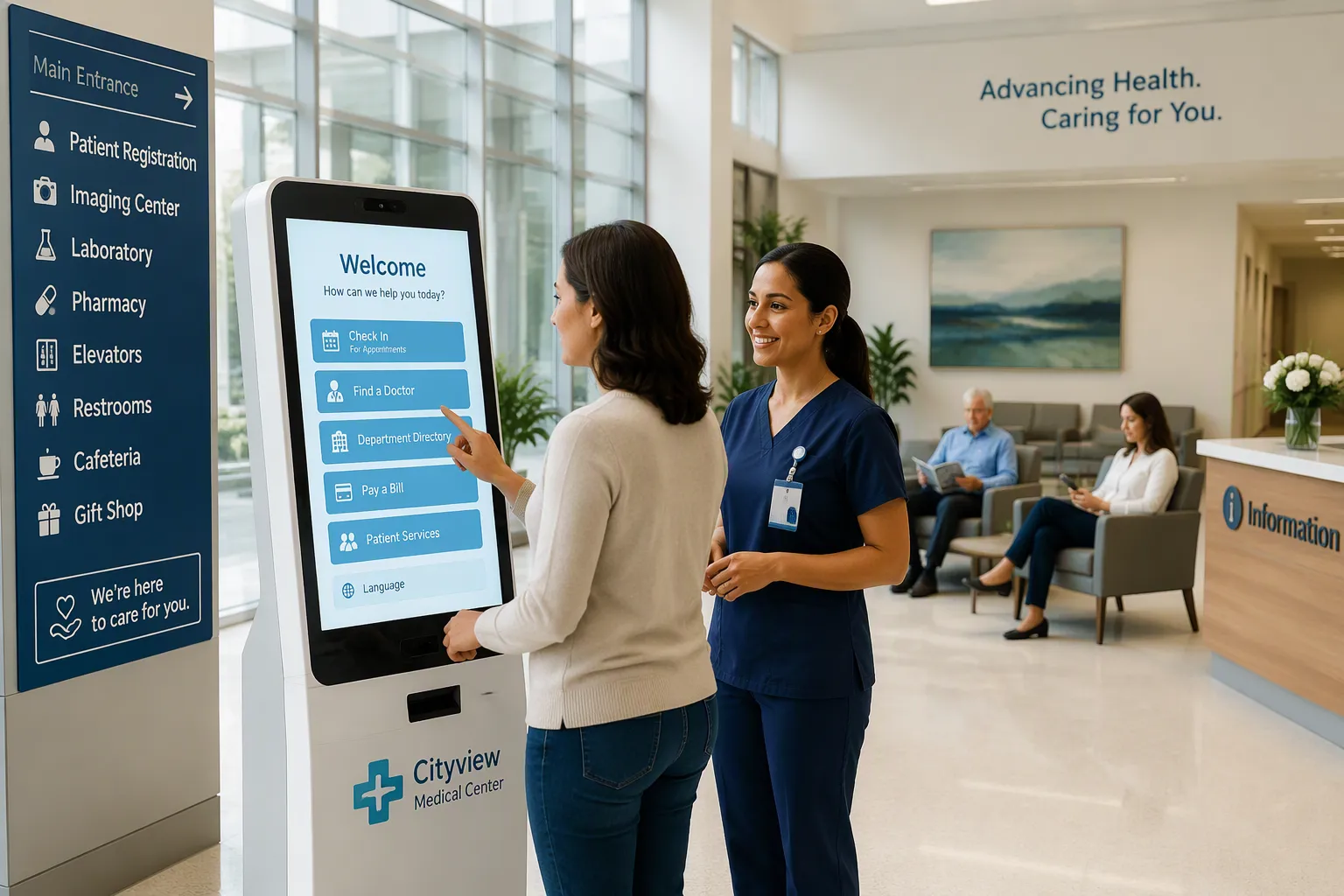
How autonomous stores reduce queues and waiting time in healthcare facilities comes down to removing checkout bottlenecks. A family member near an outpatient waiting area grabs a coffee and snack in seconds—no cashier, no line, no delay before returning to a loved one. That convenience relieves crowded lobbies and supports patient flow when clinical staff time is scarce. Hospital administrators can place this technology within a broader hospital queue management approach. Combined with a real-time queue management system, autonomous stores reduce actual and perceived wait times across hospitals. As such, autonomous retail belongs in every modern patient experience strategy.
Key Takeaways
Autonomous stores remove checkout lines with AI cameras and sensors, so you grab items and go.
These stores offer 24/7 access to food and essentials, helping night-shift staff and visitors.
They work with hospital queue management systems to reduce crowding and wait times.
Hospitals see faster shopping trips, like 88% shorter times, returning staff to patient care.
Pilot a store in a high-traffic area, measure results, and scale for better patient experience.
How Autonomous Stores Reduce Queues and Waiting Time
Eliminating Checkout Lines with Self-Service
Autonomous stores remove the traditional point-of-sale queue through a combination of AI-powered cameras, weight sensors, and scan-and-go apps. High-resolution cameras continuously monitor shoppers and their product interactions. These cameras feed video to AI algorithms that identify individuals and detect when items are picked up or returned. Weight sensors embedded in shelves work alongside the cameras. Sensor fusion combines data from these different sensor types to create a highly accurate understanding of what is happening in the store. For example, a camera may see a hand reaching for a product while a shelf weight sensor confirms the product was removed. AI and machine learning process this combined data to identify products and understand customer actions. Customers simply grab what they need and go, saving time and reducing stress.
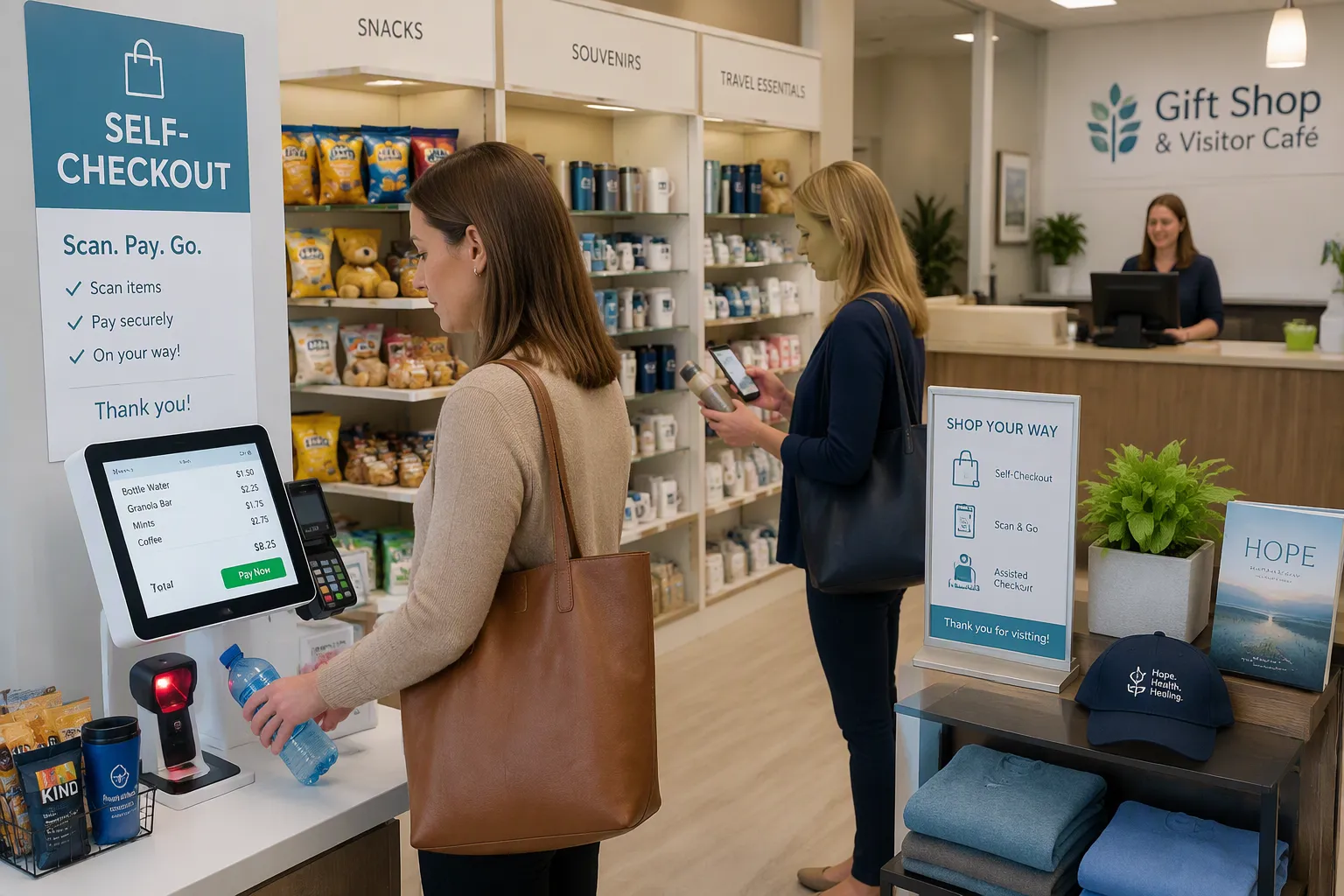
Hospital gift shops and visitor cafes benefit from similar mechanisms. Quick-scan barcode workflows speed up scanning of impulse-purchase items, souvenirs, snacks, and travel essentials, shortening transaction time per customer. Optional self-service kiosks let shoppers scan and pay on their own, reducing reliance on staffed registers. Self-checkout kiosks for routine items divert routine beverage and snack sales away from main registers, lowering congestion at the main point of sale. Express self-service kiosks maximize floor throughput during peak rushes by enabling customers to scan, pay, and go in seconds. The POS solution is explicitly listed as supporting hospital gift shops, indicating these queue-reduction features apply to that setting.
Mechanism | How it reduces point-of-sale queues |
|---|---|
Quick-scan barcode workflows | Speeds up scanning of impulse-purchase items, souvenirs, snacks, and travel essentials, shortening transaction time per customer. |
Optional self-service kiosk integration | Lets shoppers scan and pay on their own, reducing reliance on staffed registers. |
Self-checkout kiosks for routine items | Diverts routine beverage and snack sales away from main registers, lowering congestion at the main point of sale. |
Express self-service kiosks | Maximizes floor throughput during peak rushes by enabling customers to scan, pay, and go in seconds. |
Hospital gift shop support | The POS solution is explicitly listed as supporting hospital gift shops, indicating these queue-reduction features apply to that setting. |
A SIMUL8 simulation of a typical retailer (133 shoppers, 8 cashiers, 5 self-checkouts) found that average queue time decreases when a larger share of customers are familiar with self-checkouts. Its modeled store had a historical average queue line of more than 2 customers per register. This is simulation-based evidence rather than a formal published statistical study, and the queue-reduction effect depends on shoppers' familiarity with self-checkout.
Providing 24/7 Unstaffed Access
Byte kiosks bring 24/7 access to fresh meals and snacks to high-traffic hospital areas, providing new convenient options for night shift workers and efficiently reducing wait times for all.
Autonomous stores are particularly effective in liminal spaces — environments like hospital lobbies, airports, and train stations where people are away from familiar routines and prioritize speed and convenience over product choice. The analysis notes that such settings share controlled access, predictable traffic patterns, and customers who already accept friction (for example, badge checks, security lines). In these contexts, checkout-free stores eliminate queues and cashier waiting, making them well-suited to night-shift hospital staff who need quick access during limited breaks. The source contrasts this with failed autonomous stores in open residential or mall locations, where habitual shopping behavior and the effort of learning a new interface outweighed the convenience.
Princess Royal Hospital in Telford, UK cut average shopping time by 88%, dropping from 25 minutes to 3 minutes.
The reduction is attributed to a checkout-free setup where staff tap to enter, grab items, and walk out — with no lines, no registers, and no waiting.
This directly addresses the night-shift problem: with 74% of hospital cafeterias closed for late-night service and 29% closed entirely on weekends, 24/7 autonomous access removes the bottleneck that forces staff to rely on vending machines or bring food from home.
St. Joseph's Hospital in Tampa, FL reported 75% faster shopping trip times. Average shopping time fell from about 12 minutes to 3 minutes. BayCare VP of Innovation Craig Anderson said staff no longer need to stand in line and can actually enjoy most of their 20-minute break. These figures come from the Just Walk Out case-study article on autonomous retail in healthcare and higher education.
Autonomous Stores and Hospital Queue Management
Today's queue systems cut actual and perceived patient waiting times in emergency departments and outpatient clinics. Real-time SMS alerts, digital check-in, and AI triage improve flow. Autonomous stores support this by removing an unexpected waiting point.
Complementing Real-Time Queue Notifications
Hospital queue management software pairs naturally with autonomous retail. Digital queue systems send live updates to phones. Mobile-based check-in systems let patients register remotely and wait anywhere. Automated SMS alerts announce when their turn nears and which room to visit. This workflow reduces front-desk congestion and shortens perceived wait. Two queue management systems differ:
System | Check-In | Alerts | Impact |
|---|---|---|---|
Wavetec Hospital Queue Management System (Spectra QMS) | Kiosk, reception, online, phone, WhatsApp, QR code | Screen, speaker, WhatsApp, or SMS; automated alerts direct patients to the right room | Significantly reduces waiting times and raises satisfaction; patients wait elsewhere until alerted |
VizHIS (Datahouse) | Digital self-service check-in | Real-time/voice announcements only | Not specified |
An autonomous store adds convenience to these signals. Patients receiving estimated waiting times can take a drink and leave before the next alert. Real-time queue management thus extends beyond the screen to where patients actually wait. This synergy helps clinics and hospitals keep reception areas clear.
Reducing Crowded Lobbies and Patient Flow Delays
Autonomous micro stores reduce congestion in outpatient waiting areas through frictionless, checkout-free shopping. Ceiling-mounted cameras and computer vision track items and charge the shopper automatically. No scanning. No register. That eliminates long cafeteria lines during meal times, when staff have short breaks.
This removal of a retail bottleneck helps the broader patient flow management system. Fewer people cluster near food service areas, so staff return to care faster. Real-time queue monitoring at reception and pharmacy records fewer delays at ancillary service points. Healthcare leaders should view these stores as part of a patient queue management strategy. Automated check-in systems bring patients to the right clinician faster. Self-service patient check-in reduces administrative load. Queue management software coordinates these gains while the queue management system tracks patient movement. These tools let real-time waiting times drop.
Outcomes for Reducing Patient Waiting Times
Lower Perceived Patient Waiting Time
Shorter cafeteria, gift shop, and staff store lines change how patients and visitors experience their visit. A person who spends less time in a retail queue has more time to rest, prepare for an appointment, or support a family member. That shift lowers the overall perceived wait across the facility.
Research on hospital settings shows a clear pattern. Qualitative perceived waiting time, measured on a 1–10 scale, has a stronger correlation with patient satisfaction and perceived quality of healthcare than quantitative measures. A quantitative evaluation using an exact time scale shows a weaker correlation with satisfaction. Patients may perceive the same actual waiting interval differently, so managing qualitative perceptions matters.
Transparency supports this goal. Giving patients accurate information about their position in the queue, such as a screen showing where each patient stands, reduces perceived wait time. Streamlined registration and queue automation reduce actual wait time. A queue management system like Qminder addresses both at once: transparency lowers perceived waiting, while automation lowers actual waiting. Autonomous stores extend that same logic to retail spaces inside hospitals.
Faster Transactions and Staff Efficiency
Staff productivity gains follow directly from faster retail transactions. Nurses and clinicians spend less time buying essentials or standing in retail lines, so they return to care duties faster. The Princess Royal Hospital in Telford, UK cut average shopping time by 88%, dropping from 25 minutes to 3 minutes. St. Joseph's Hospital in Tampa, FL reported 75% faster shopping trip times, with average shopping time falling from about 12 minutes to 3 minutes.
These gains matter because long waiting times in retail areas pull clinical staff away from patients. A 20-minute break becomes usable when a shopping trip takes 3 minutes instead of 12. Reduced patient waiting time at ancillary points, such as pharmacy and reception, follows when fewer people cluster near food service areas. Hospitals that track patient flow see fewer delays when retail bottlenecks disappear. For healthcare leaders, the outcome is measurable: shorter lines, faster transactions, and more staff time returned to patient care.
Implementing Autonomous Store Solutions in Healthcare
Integrating with the Hospital Queue Management System
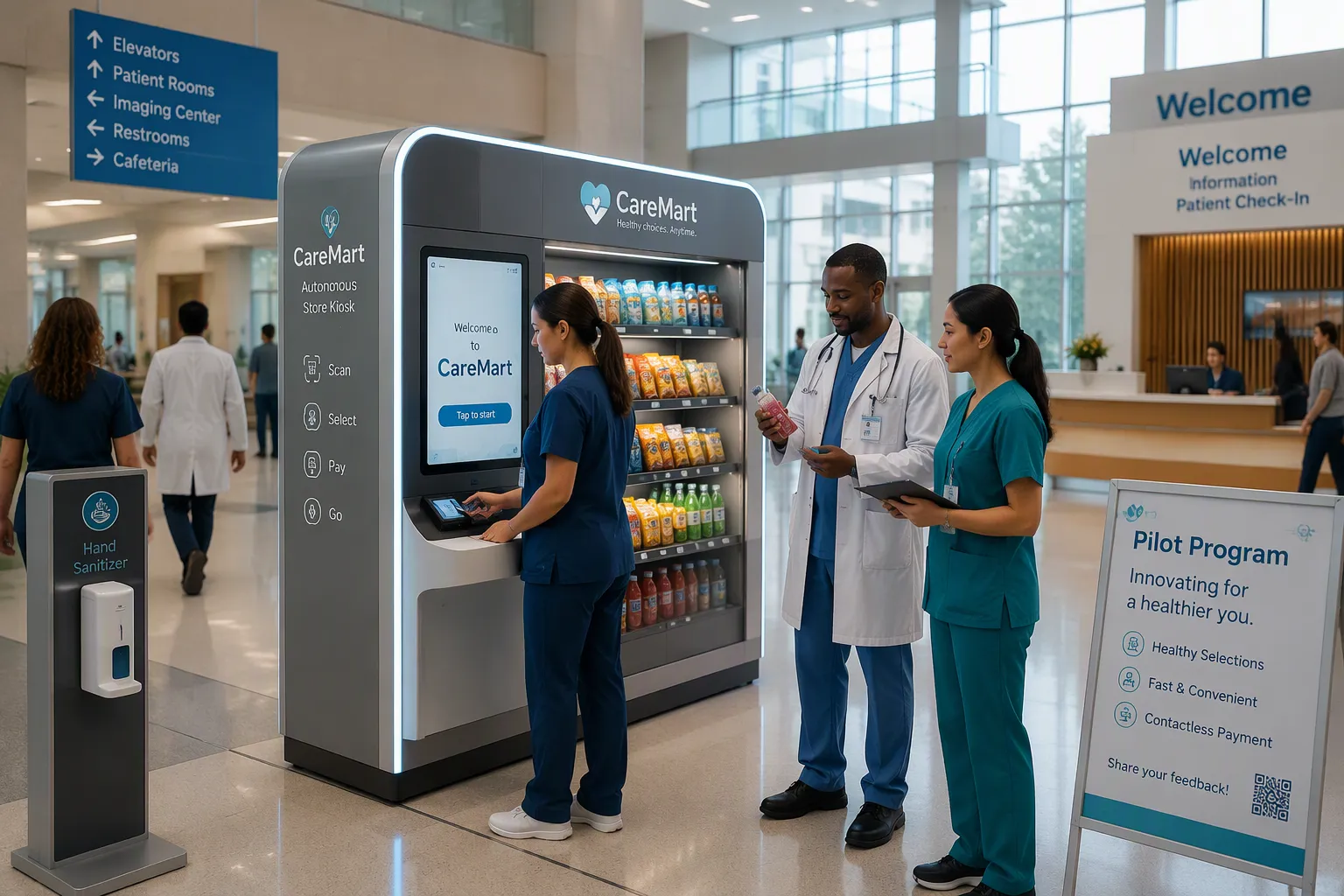
A phased pilot in a high-traffic area such as the main lobby or staff break room provides the safest starting point. Begin with a soft opening limited to a small group of staff members. Keep the pilot hidden from visitors until core systems prove stable. During the first 90 days, test core transactions and basic stock flow. Then expand access to evening and night shifts, and finally to visitors.
Connect this effort to existing hospital queue management metrics. Track transactions, basket size, satisfaction, and compliance weekly. Align restocking with low-traffic hours and maintenance with non-peak patient care times. Hold team huddles each shift to report one issue and assign a named owner. After stabilization, continue tracking KPIs weekly. Compare final results against SMART goals to inform broader rollout decisions.
Best Practice | Why It Matters for a High-Traffic Hospital Lobby |
|---|---|
Conduct a needs assessment with staff, patients, and visitors | Reveals demand patterns and product preferences |
Set SMART goals (for example, 200 transactions/week within 90 days) | Gives the pilot measurable success criteria |
Choose durable, easy-to-clean hardware and secure software | Supports infection control and secure data flows |
Engage staff early and train internal champions | Staff resistance is the biggest risk |
Ensure HIPAA, infection control, and ADA compliance from day one | Protects privacy, safety, and accessibility |
Overcoming Privacy, Security, and Adoption Hurdles
Patient privacy demands attention from the start. Cameras and sensors in common areas can capture protected health information. Use privacy-safe sensors that collect only environmental data. Apply access controls, audit logging, and retention policies when cameras are necessary. Encrypt data at rest and in transit. Use role-based access and enable automatic logout. Require Business Associate Agreements with vendors.
Accessibility and clear signage matter equally. Provide wheelchair access, clear signage, and compliant aisle widths from day one. Select easy-to-clean surfaces and touchless entry. Follow hospital cleaning protocols for high-touch areas. Conduct compliance reviews and report findings to hospital leadership. Train staff on store operation and privacy rules. Compare patient waiting time before and after deployment to measure impact. These steps help healthcare facilities integrate autonomous stores into a broader hospital queue management strategy. The queue management system then tracks patient flow more completely. An automated queue management software layer can coordinate retail and clinical waiting together.
Here is how autonomous stores reduce queues and waiting time in hospitals: remove checkout friction, provide 24/7 access, and let staff skip retail lines. That is how autonomous stores reduce queues and waiting time across a facility. Paired with a hospital queue management system, these stores support reducing patient waiting times because fewer retail bottlenecks mean less lobby crowding. The queue management system tracks flow while autonomous retail removes interruptions. Healthcare leaders should pilot a store in a high-traffic area, measure patient waiting time before and after, and scale proven results. This low-friction retail model benefits the overall patient experience.
FAQ
How do autonomous stores work without cashiers?
AI-powered cameras and weight sensors track what shoppers pick up. The system charges the customer automatically when they leave. No scanning or register interaction is needed. This creates a grab-and-go experience that removes the checkout bottleneck entirely.
Can autonomous stores operate around the clock in hospitals?
Yes. Unstaffed autonomous stores provide 24/7 access to meals, snacks, and essentials. This benefits night-shift staff especially, since most hospital cafeterias close for late-night service. Staff can shop during limited breaks without waiting in line.
What results have hospitals seen after installing autonomous stores?
Princess Royal Hospital in Telford, UK cut average shopping time by 88%, from 25 minutes to 3 minutes. St. Joseph's Hospital in Tampa, FL reported 75% faster shopping trips. These gains return valuable time to patient care duties.
How do autonomous stores connect to a hospital queue management system?
Autonomous stores remove an unexpected waiting point in the patient journey. A queue management system already coordinates clinical waiting through SMS alerts and digital check-in. Adding frictionless retail extends that coordination to non-clinical spaces. Together they reduce both actual and perceived wait times.
What should healthcare leaders measure during a pilot?
Track transactions, basket size, satisfaction, and compliance weekly. Compare patient waiting time before and after deployment. Align restocking with low-traffic hours. Use SMART goals to evaluate success. These metrics inform decisions about scaling autonomous retail across the facility.
See Also
Walmart Redefines Self-Checkout Access With Big 2025 Changes
A Look At The Ongoing Evolution Of Self-Checkout Technology
Walgreens Self-Checkout Brings Retail Convenience And New Challenges Alike
The Future Of Retail Belongs To AI-Powered Smart Stores
Reasons Cloudpick's Checkout Computers Enhance Efficiency, Accessibility, And Customer Experience
