How Edge AI Architecture Enhances Smart Retail Security and Loss Prevention

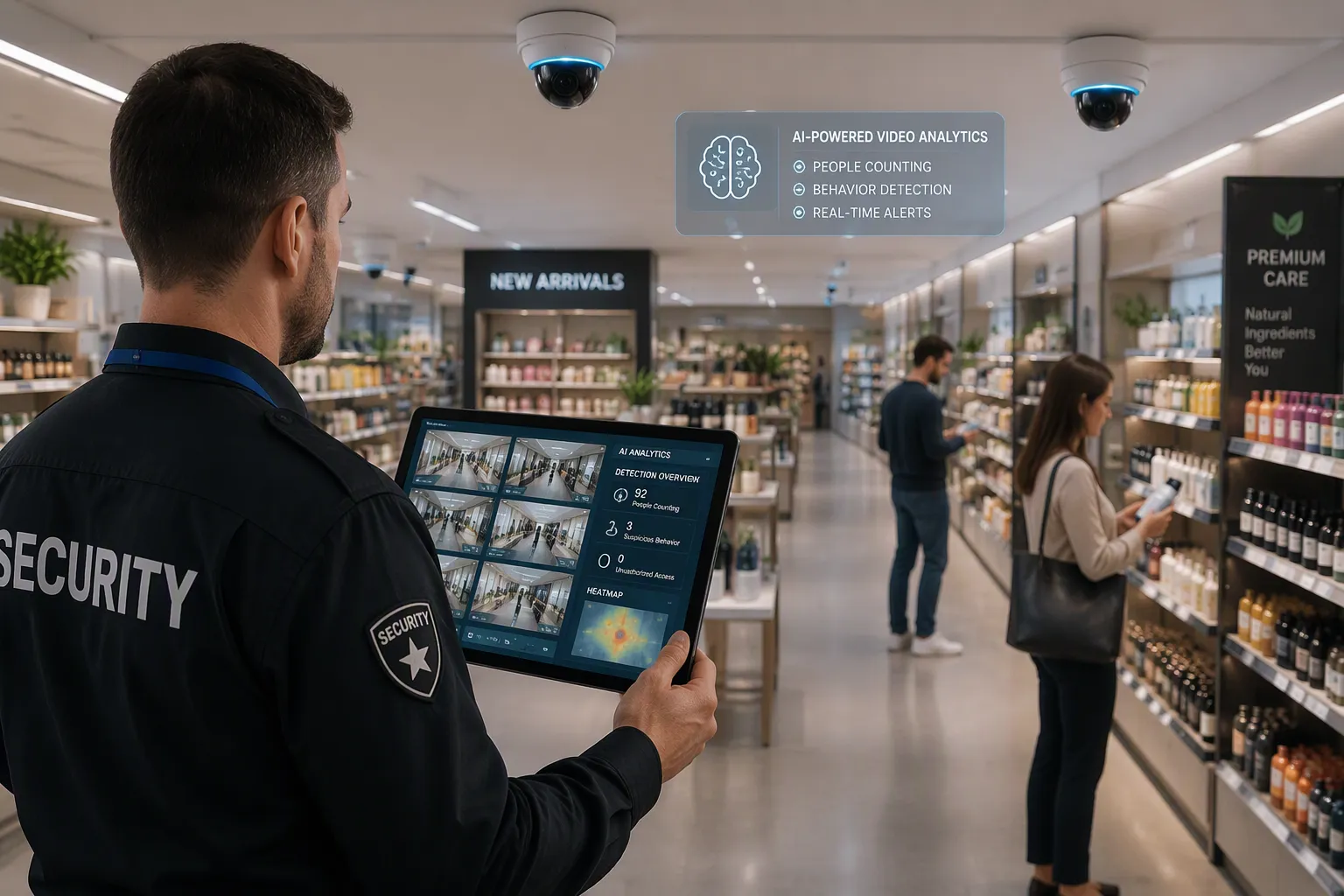
Edge AI architecture improves smart retail security and loss prevention by moving detection and response to where the action happens. You get real-time threat identification instead of after-the-fact review. That shift delivers faster alerts, reduced shrinkage, lower bandwidth dependence, and resilience when connectivity is limited. The stakes are clear: the NRF National Retail Security Survey (2022) puts the average shrink rate at 1.6%, up from 1.4%. Artificial intelligence at the edge changes how you respond to that pressure. This post covers security challenges, the technical architecture behind an edge AI architecture for smart retail – scenario [Commercial deployments], implementation best practices, ROI measurement, and common obstacles.
Key Takeaways
Edge AI sees theft as it happens and sends alerts within seconds.
Edge AI adds a quick detection layer to the security systems you already have.
Central management makes it easy to expand edge AI across many stores.
Keep track of shrinkage and response times to show the system works.
Begin with a small test in high-risk areas, then grow once you feel sure.
Retail Security Challenges and Edge AI Responses
Shrinkage and Theft Pressures
Shrink takes profit away from every part of retail. Total US retail shrink hit $112.1 billion in 2022, and the shrink rate climbed to 1.6% of sales, a 19.4% jump from the year before. That loss is about 25% of yearly US retail profit. You face a few different causes:
Outside theft makes up 36% of shrink, including shoplifting and organized retail crime.
Inside theft makes up 29%, with sweethearting and fake returns among the tricks.
Process and paperwork mistakes make up 27%, caused by miscounts, wrong labels, and scan errors.
Self-checkout lanes make the problem worse. Shrink at self-checkout is 3.5%, compared with 0.2% at lanes with staff. Grocery stores feel the most pressure at about 2.7% shrink, and fresh departments cause roughly 65% of total store loss in that segment. These numbers show the challenge without blaming any one technology. Cloud-only systems still work well for reporting and long-term analysis. The gap is at the moment of theft, and that is where AI at the edge proves its value.
Real-Time Detection and Alerts
Computer vision at the edge follows in-store activity as it happens. Object detection, tracking, and behavior analysis let the system watch for hiding items, switching tags, and strange movement patterns. The processing runs on local edge devices, so alerts come in seconds instead of after a nightly review. A Washington, D.C. liquor store shows this pattern. The owner had many cameras but still lost goods every day. He added an AI surveillance system that runs on his existing cameras. The system reads body language and movement, flags suspicious actions like hiding items in pockets or bags, and sends an instant phone alert with a video clip. He has stopped several thefts before the customer left the store.
This ability helps with real-time decisions at the store level. Staff get a clip, not a raw feed, so they act fast and with context. Local processing also cuts cloud transmission, which lowers privacy risk and bandwidth cost. Edge analytics work best as one layer in a layered security plan. Keep your POS exception reporting, your CCTV recording, and your inventory audits. Add edge AI applications where speed matters most: entrances, high-value aisles, self-checkout zones, and stockrooms. The edge layer handles detection and alerting in real-time operations. Your existing systems handle investigation, compliance, and trend analysis. Together they close the gap between seeing a loss and stopping it.
Edge AI Architecture for Smart Retail
Hardware, Software, and Network Components
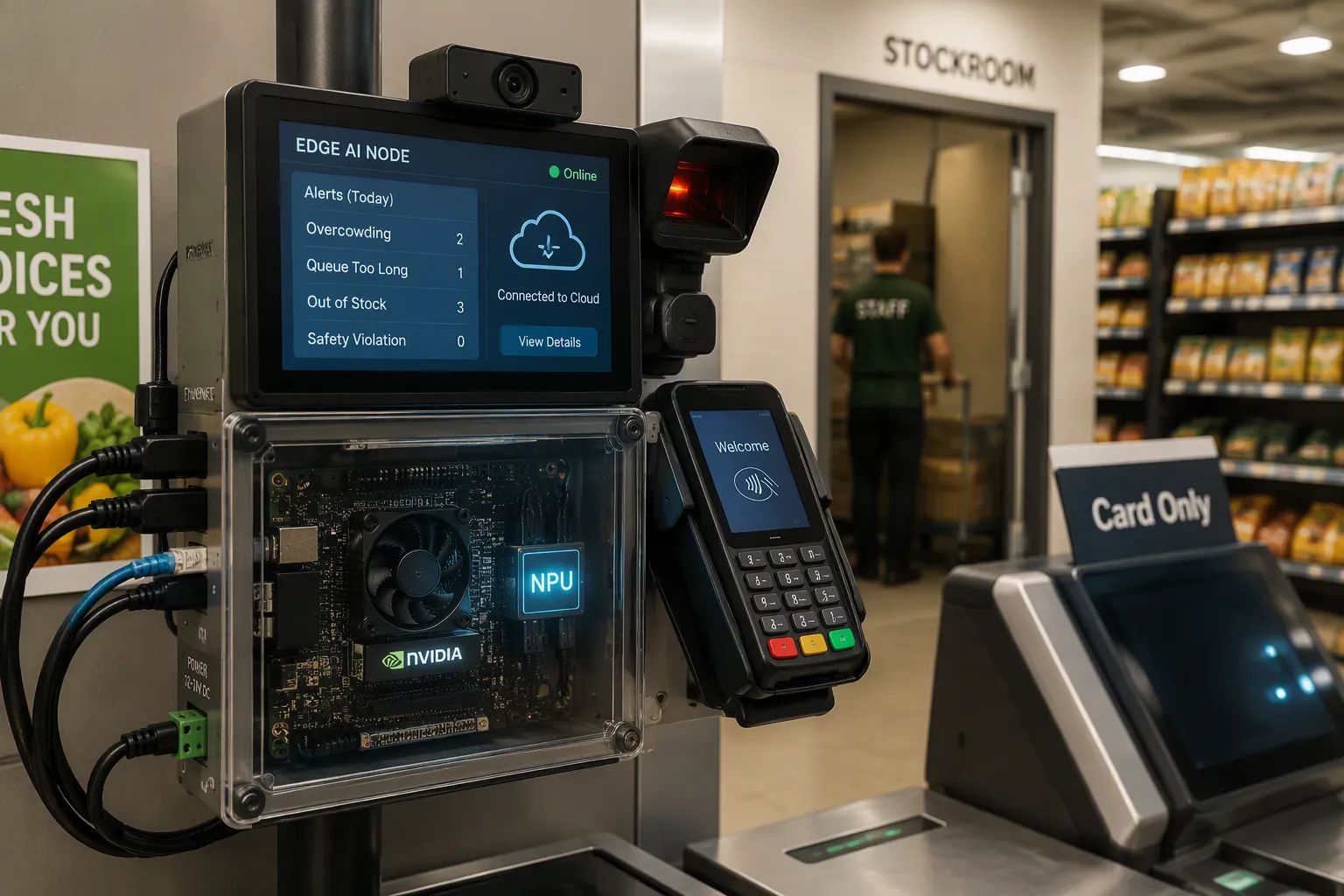
Imagine a real store setup: a medium-size grocery chain puts edge nodes at each store entrance, self-checkout area, and stockroom. Each node runs vision models on local hardware and sends only alerts and summaries upstream. This edge ai architecture for smart retail – scenario [commercial rollout] shows how the parts fit together.
The hardware layer does the main work. Special AI chips handle the heavy math: GPUs run parallel matrix operations for deep learning inference, and NPUs are built for neural networks with better performance-per-watt. Edge gateways and industrial PCs combine multi-core processors, hardware accelerators, and strong I/O for industrial protocols and real-time analytics. A typical retail edge node pairs a development board with a touch display, camera module, barcode scanner, payment module, and WiFi or Ethernet connectivity.
The software layer keeps models small and efficient. Lightweight models such as MobileNet, SqueezeNet, and EfficientNet work well for vision tasks in places with limited resources, and quantized LSTM or Transformer models handle time-series work. Frameworks like NVIDIA TensorRT, Intel OpenVINO, and Qualcomm Neural Processing SDK speed up inference and save energy. A Linux OS, an AI inference engine, a retail application interface, and a cloud API connection complete the stack.
The network layer connects everything. Strong, low-latency links such as 5G or dedicated wired connections join edge devices with cloud analytics servers. Reliable Wi-Fi connectivity is key for sending data from smart cameras to backend servers. Secure protocols such as VPNs set up encrypted connections and protect sensitive information.
How AI at the Edge Works Together
The system moves in a clear order: camera input, AI recognition engine, edge computing on the local board, display interface, payment system, and cloud management platform. Running AI algorithms locally lowers latency and cuts bandwidth use, because raw video never leaves the store. Edge-native data fabrics decide which information stays local and which moves upstream. Security relies on zero-trust frameworks, containerized sandboxed platforms that limit malware spread, and encrypted channels between edge devices and cloud services.
This edge computing architecture brings cloud-native capabilities closer to stores. Edge computing handles immediate, real-time processing near the data source. The cloud does heavier analysis, historical insight, and strategic decisions. Edge nodes keep inventory detection, customer flow optimization, and transaction processing running during brief connectivity loss. Centralized servers then gather data across locations for predictive analytics. Coordinated cloud workflows regularly update models at the edge, which prevents model drift. Containerized AI/ML workloads make those updates repeatable across sites. This hybrid model modernizes store technology infrastructure without a full rip-and-replace.
Implementation Best Practices
Deployment and System Integration
Begin with the systems you already use. Link the edge layer to your POS, CCTV, and inventory platforms using standard APIs. This way, alerts include transaction details, and camera clips connect to the right shelf event. Follow a clear order:
Use scalable, AI-friendly storage that expands with local data and keeps hot data ready for inference.
Design for spotty connectivity. Core functions run locally, and saved data syncs when the connection returns.
Tune models for edge limits using quantization, pruning, and vendor acceleration libraries.
Plan secure over-the-air updates with cryptographic checks and the ability to roll back.
Test performance under real store conditions, including changing power, latency, and heat.
Compress data early and shrink models before deployment. A smaller format loads faster and fits the memory limits of edge devices. Process raw video on site and send only key insights upstream. This keeps customer data on-premises and makes compliance work easier.
Building a Scalable Edge AI Architecture
A scalable edge ai architecture supports multi-store rollouts through central management. One control plane deploys, updates, and monitors every site, which cuts maintenance time across locations. Self-healing automation lowers downtime, so stores stay online. Costs stay predictable as you add stores, and a simpler setup delivers lower total cost of ownership.
Use containerized models, standard APIs, and interoperable middleware. This modular design makes a scalable edge ai architecture easy to grow, and it supports scalable edge ai for future needs without swapping hardware. Run legacy POS workloads next to containerized apps on one platform. Build in security for exposed store settings, and turn on remote setup to avoid costly site visits. These practices turn edge ai architectures into a repeatable model you can copy from store to store.
Measuring ROI and Effectiveness
Key Security and Loss Prevention Metrics
You need real numbers to show that an edge setup is worth the money. Start with shrinkage reduction. Track the shrink rate before and after you roll it out, and compare it to the 1.6% industry average from the NRF survey. Watch self-checkout zones closely, because shrink there is 3.5% versus 0.2% at staffed lanes. A smaller gap between those two numbers shows real value.
Alert response time is the next metric. Measure the seconds between a flagged event and a staff response. Edge analytics shorten this window because detection happens on site, not in a faraway data center. False-positive rates matter just as much. A system that cries wolf erodes staff trust, so log every alert and review the share that turns out harmless. Pair these with investigation closure rates and recovery values. Together they show whether ai at the edge changes outcomes or just adds noise.
Case Examples and Proven Outcomes
The Washington, D.C. liquor store offers a clear pattern. The owner ran many cameras yet lost goods daily. After adding AI surveillance to the existing cameras, the system flagged suspicious behavior and sent instant phone alerts with video clips. He stopped several thefts before customers left the store. The outcome was qualitative but direct: losses fell because staff acted in time.
Rollout data from multi-store deployments adds scale. Central management of edge devices cut maintenance time across locations. Self-healing automation lowered downtime. A simpler setup delivered lower total cost of ownership. These figures come from commercial rollouts of edge ai architecture for smart retail – scenario [commercial] programs. Use them as benchmarks, then measure your own retail sites against them. Run a pilot in high-risk zones, compare results to your baseline, and let the data guide expansion.
Overcoming Infrastructure and Scalability Challenges
Infrastructure Constraints
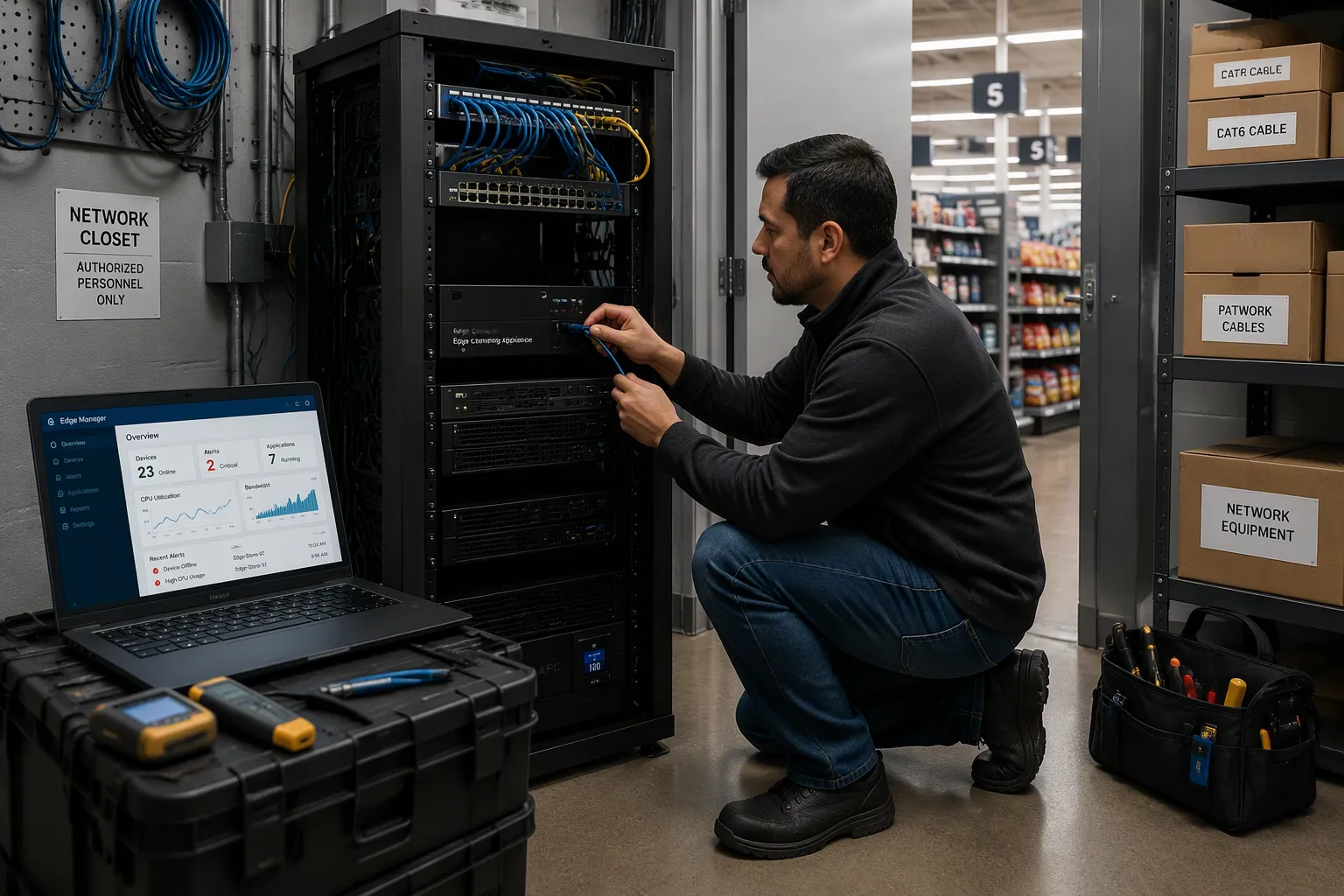
Store technology was made for steady, predictable work. Old POS systems, printers, and basic services run on special hardware built for one job. Newer apps often need an internet connection all the time, and that puts core store processes at risk. Current PCs and small servers often lack the fast hardware that quick AI needs. They also were not built for remote software updates at scale, many times over.
Several limits show up again and again in retail rollouts:
Constraint | What It Looks Like |
|---|---|
Setting up Kubernetes across thousands of stores takes heavy manual work and setup at each site | |
Fleet management | Keeping patches and configuration changes in sync without disrupting stores is complex |
Security | Edge infrastructure sits in wiring closets and backrooms, where data center security models fall short |
Operational cost | Frequent onsite visits drive costly truck rolls |
Connectivity | Store networks fail, yet POS and store services must keep running safely |
Running legacy VM workloads next to containerized apps adds separate infrastructure, cost, and complexity. These are real infrastructure modernization challenges, not small setup issues.
Practical Solutions and Mitigations
You can ease compute and energy limits with efficient algorithms and hardware-software co-design. Data preprocessing and edge caching cut bandwidth needs, because you send only relevant information. On-device computation keeps stock alerts and restocking triggers free of network delay. Run inference locally so edge devices stay useful in areas with weak bandwidth or far away. A hybrid strategy helps too: the cloud handles heavy training and analytics, and ai at the edge handles quick inference near the data.
Keep core store functions running locally. Transactions, digital signage, and back-office systems then keep going when the WAN link degrades. A hyperconverged platform that combines compute, storage, and virtualization in a small footprint fits stores with little space. Royal Farms showed this pattern across 300+ convenience and fuel locations, relying on centralized monitoring without on-site IT staff. Start with phased pilots, then grow into a scalable edge ai architecture. Edge computing lowers ongoing data-transfer fees over time, and edge analytics on local edge devices protect customer data. Treat edge computing as one layer of a layered plan, and weigh latency, privacy, budget, and reliability before you choose.
Edge AI gives your stores real-time detection, lower shrinkage, and efficient bandwidth use. You also gain resilience when connections fail and scalable store-level intelligence across every location. This approach works alongside your existing retail systems. It does not replace them. Put AI at the edge where speed matters most: entrances, high-value aisles, and self-checkout zones. Your POS, CCTV, and inventory platforms still handle investigation and trend analysis. Together they form a layered defense.
Start small. Pilot AI in your highest-risk areas and track results against defined loss prevention metrics. Compare alert response times and false-positive rates to your baseline. Then expand with confidence. Edge computing and edge devices fit neatly into your current infrastructure, so you can modernize without a full rebuild.
FAQ
What does AI at the edge actually do in a store?
It runs vision models on local devices inside the store. The system watches entrances, aisles, and self-checkout zones. It spots suspicious behavior and sends an alert with a video clip in seconds. Raw video stays on site, so you save bandwidth and lower privacy risk.
Does edge AI replace my current CCTV and POS systems?
No. It adds a detection layer on top of them. Your POS exception reports, CCTV recording, and inventory audits still handle investigation and trend analysis. The edge layer covers the moment of theft. Together they form a layered defense for your retail sites.
Can the system work when the store loses internet?
Yes. Core functions run locally on the edge devices. Detection, alerts, and restocking triggers keep working during a brief outage. Saved data syncs upstream once the connection returns. This resilience makes edge computing a practical fit for stores with weak networks.
How do I prove the investment pays off?
Track shrinkage reduction against your baseline and the 1.6% industry average. Measure alert response time and false-positive rates. Log recovery values and investigation closure rates. Run a pilot in high-risk zones first. Let the data guide expansion before you commit to a full rollout.
Where should I start a pilot?
Pick your highest-risk areas: entrances, high-value aisles, self-checkout zones, and stockrooms. Self-checkout deserves attention, since shrink there runs 3.5% versus 0.2% at staffed lanes. Start small with one or two stores. Compare results to your baseline, then scale with confidence.
See Also
AI-Powered Corner Stores Are Rising: Essential Insights for Retailers
Why AI-Powered Retail Stores Represent the Future of Shopping
AI-Powered Combo Vending Machines: Key Features and Benefits for Retail
How AI-Powered E-Commerce Tools Revolutionize Online Store Management
How to Launch an AI-Powered Corner Store with Minimal Investment
