Fans Embrace Frictionless Shopping for Faster Concessions and Merch

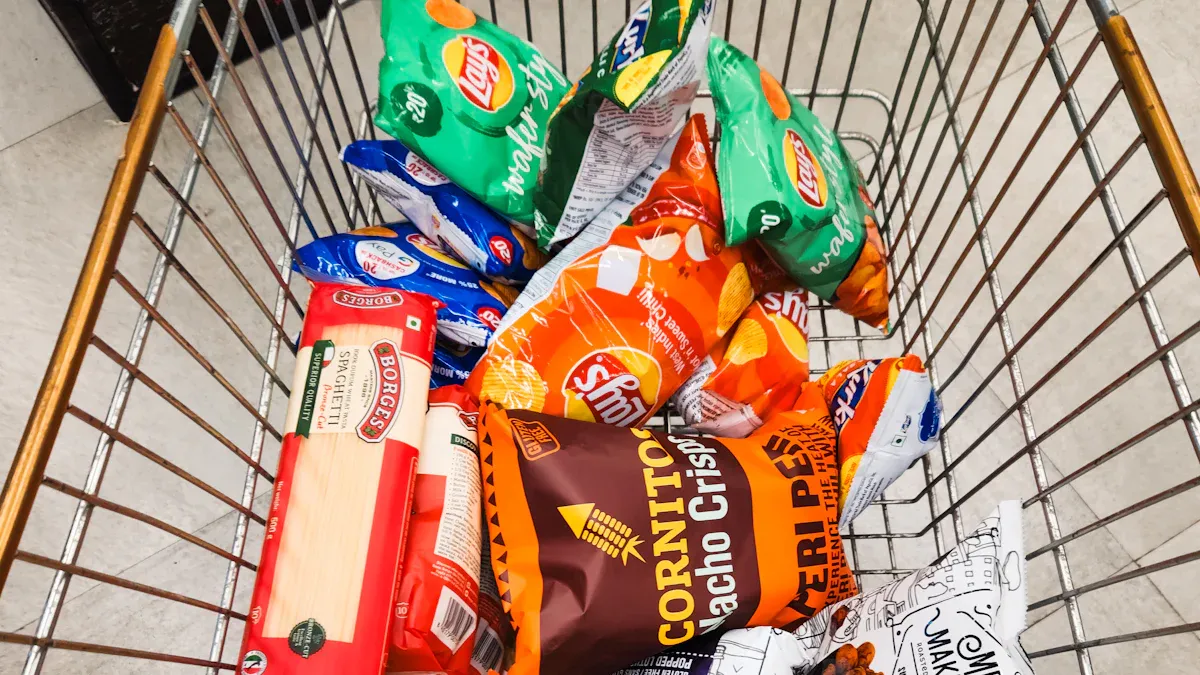
Frictionless shopping lets fans get food, drinks, and merch fast, with no long concession lines at busy times. A fan taps in, picks up items, and walks out. No old-style checkout slows the moment down. This frictionless autonomous market delivers wins for venues too: faster service and less crowding.
Speed matters because the concession line bottleneck takes time away from the event. In a 2025 Mashgin study of MLB fans, 53% guessed waits of 15+ minutes per concession visit, and 79% missed a key play while waiting. Oracle research puts the most wait fans will accept at 10 minutes. That makes speed a top priority for the overall fan experience—and a frictionless autonomous market is how venues deliver it.
Key Takeaways
Fans tap a card or phone to get in, grab what they want, and walk out—no checkout lines or scanning needed.
Easy shopping saves time and lowers stress at busy events, letting fans get back to the game faster.
Stadiums serve more people faster, which can boost sales and make fans happier.
The system uses smart cameras and sensors to track items and charge you automatically.
Co-op Live in Manchester is a good example. It shows the model works in a big arena.
A Fast, Frictionless In-Store Experience for Fans
No Lines, No Frictionless Checkout Wait
The fan journey is short and simple. A shopper taps a card or phone at the gate, and the door opens. One payment method covers the whole group. Inside, shelves, coolers, and racks track every item taken or returned. The shopper picks up a drink and a snack, then walks out. The system charges only for the items that leave the store, and the receipt appears online. That is the whole frictionless checkout experience.
Tap a card or phone at the gate to enter.
Pick up items from shelves and coolers.
Walk out, and the system charges the card automatically.
This flow removes the traditional stop at a till. Fans buy items in-store without waiting in line, stopping to scan, or paying. During a peak demand wave, that difference matters. A crowd arrives at once, and every minute in line costs fans time. A frictionless checkout keeps the line from forming at all. Fans get back to the game, and they get back to their seats.
The payoff is a convenient fan experience built on speed. Fans want a quick and seamless checkout process, and they want it without a drop in quality. Reshad Hossenally of Boxbar Tech makes the point plainly: customers crave speed and convenience, but they should not compromise on quality. A fast, frictionless in-store experience should still pour a proper drink and serve a fresh snack.
Quality Without Compromise
Speed alone does not win fans. A frictionless checkout store must match the quality of a staffed bar. Self-serve dispensing protects that standard in several ways. Stable temperature under peak load prevents foaming and preserves pour quality. Correct gas pressure, matched to beer style and line length, avoids turbulence and carbonation loss. Programmed valves and flow control govern speed, foam, and presentation. Flow meters and portion settings produce repeatable pours with less waste. Regular cleaning of lines, taps, and couplers protects flavor and hygiene.
Pour My Beer self-serve systems account for every ounce dispensed, eliminating shrinkage from over-pouring, and their equipment is manufactured through a joint venture with Glastender — presented by the vendor as evidence of dispensing quality and consistency.
Together, these controls deliver a checkout-free store experience that does not trade quality for speed. Fans get a fast, effortless store experience. They can quickly grab their items and go, and they can get back to their seats with a good drink in hand. That combination lifts fan satisfaction. Venues that offer easier and quicker shopping experiences keep fans in the venue and out of the queue. The result is a frictionless checkout that feels effortless from the fan side and reliable from the operator side.
Operational Wins: Throughput and Less Congestion
Higher Throughput at Peak Times
Arena food and drink operations face a set of problems they can predict. Demand comes in waves, especially at halftime and other busy moments. Space for preparing and serving food stays limited. The number of staff changes from event to event. Fans still expect speed and convenience. Without an efficient system, these things create long lines and lost sales.
Crowds that arrive in a short time make the problem worse. When 300 to 1,000 people enter within 45 minutes, even small gaps in coverage cause problems people can see. Lines stretch beyond the planned space, and guests ask for directions while still in line. A staff member who steps away to help slows service even more. Supervisors then get pulled into fixing problems instead of watching the overall flow.
Adding staff is one answer, and it costs real money. Three matchday staff members cost about £900 per match at £15 per hour, including National Insurance and matchday rates. That is about £27,000 a year for a club with 30 home matches. More staff does not promise faster service, though. The real bottleneck is the traditional way of taking orders. Staff must listen, process and enter orders, handle payments, and talk with the kitchen. Each step adds seconds that pile up during peak demand. That inefficiency stays the same whether a venue runs five matchday staff at a 2,000-capacity ground or 30 at a 20,000-seat stadium.
A frictionless checkout removes those steps. Self-serve dispensing shows what the model can do. TendedBar reports throughput of 35 people per five minutes at a single four-screen self-serve bar. It calls that rate hard to match in a normal manned setting while still making a fresh, customized drink. Drink Command states guests can pick, pay, and pour within 30 to 45 seconds. The operational benefits follow: fewer stops, less waiting, better throughput, and less congestion. Venues in stadiums, arenas, and other event spaces can serve fans better and faster. Shorter wait times for food and drinks lift fan satisfaction. As Yantha puts it, conversion rates matter to these venues, and adding points of sale while reducing concourse congestion encourages people to spend more.
A Repeatable Model for Venue Portfolios
Spatial intelligence turns these gains into a design method. It studies how people move, search, and interact indoors, and it turns foot traffic into measurable engagement. Operators can then guide people efficiently, balance movement across zones, and design service around actual flow rather than a fixed floor plan. That flow-based approach supports a scalable, repeatable model. A venue group can apply the same store format, the same dispensing setup, and the same frictionless checkout logic across its portfolio. Then it can tune placement and capacity to each building's traffic patterns.
Inside the Frictionless Autonomous Market Tech
Spatial Intelligence Meets Self-Serve Dispensing
Three partners built this system. AiFi supplies the spatial-intelligence platform. Boxbar Tech provides automated self-serve beverage technology. Oak View Group (OVG) brings venue operations expertise.
AiFi's platform uses AI and computer vision to build a real-time 3D digital twin of the physical space. Cameras and sensors track people and products as they move. The system identifies each item and follows its path, so every selection lands in a virtual cart without a barcode scan. João Diogo Falcão of AiFi describes the goal as building the foundation for digitized physical spaces that are consistent, scalable, and responsive to real-world behavior.
The main parts of successful frictionless checkout depend on this data layer:
Component | Role |
|---|---|
Traffic patterns | Shows busy zones, bottlenecks, and natural paths |
Dwell time | Reveals displays that work and zones that don't |
Conversion zones | Pinpoints where purchase decisions happen |
Layout optimization | Guides aisle width and flow |
Checkout optimization | Places kiosks and manages queues |
Product placement | Tunes adjacency and shelf height |
Boxbar's unit arrives as a self-contained, plug-in-and-pour container bar. It carries built-in cellars, so a busy concourse zone needs no marquees, flooring, or outside cellar. One unit pours up to 1,440 drinks per hour. Self-serve dispensing keeps draught quality intact through preset pours and controlled flow, which makes service the same across shifts and temporary staff.
Built for Peak-Demand Reality
A frictionless autonomous market must handle demand waves, not just steady traffic. Self-serve stations let guests pour their own drinks via RFID or QR, which cuts wait times and boosts throughput. Cloud and IoT connections give operators live data on pours, popularity, and inventory, so restocking happens before shelves empty. Pour-by-ounce tracking with POS integration keeps billing accurate and waste low.
Vendors frame the hardware around volume. One states its equipment handles 500+ pours per day without breaking a sweat. Another cites automation built for high volume, with rapid dispensing and simultaneous liquor and mixer delivery. Preset pours also make output the same across shifts.
Granular placement remains the hard part. Operators must resolve which concourse, next to what, and on what level. That demands fine-grained foot-traffic data and a platform that plugs into existing data systems. Get that right, and the frictionless autonomous market scales across a venue portfolio.
Proven at Co-op Live
Europe's First Fully Frictionless Market
Co-op Live in Manchester puts this model to work in the real world. The venue is the UK's largest live entertainment arena. Its new market sits at Vertu Place on Level 00. Four entry gates welcome guests into the space. This launch is Europe's first fully frictionless, autonomous market. It is also the first time AiFi's spatial-intelligence platform and Boxbar Tech's self-serve drink technology work together in one full guest flow.
The fan journey stays short from start to finish. A guest taps a payment card at one of the four gates. Inside, the shopper picks up hot food, premium grab-and-go items, and a fresh draught pour. Then the guest simply walks out. No traditional lines form, no tills wait, and no item-by-item scanning slows the visit. Boxbar's self-serve system sits right inside the market and recognizes each pour on its own. The frictionless checkout experience covers the whole visit.
The draught menu covers a full range of choices:
Fresh lager
IPA
Cider
Guinness
What Fans and Operators Gain
The results show up on both sides of the counter. Fans get faster service, shorter waits, and more time back in their seats. Operators get smoother guest flow across a busy concourse. Michalis Fragkiadakis of OVG International explains the goal clearly: Co-op Live was built to lead in modern venue operations, giving fans a faster, smarter, and smoother food and beverage experience. That frictionless checkout removes friction at every stage of the journey.
Co-op Live now stands as a new benchmark. It shows how a physical space can be digitized to respond to real-world behavior and peak demand. The venue pairs grab-and-go kiosks with pre-event retail and QR ordering to build a fan-focused retail ecosystem. Each piece lifts fan satisfaction and sharpens the overall stadium experience. For venue portfolios, the lesson is simple: the frictionless autonomous market is repeatable, and Co-op Live proves it at arena scale.
Frictionless shopping delivers a dual win. Fans gain speed and convenience through a frictionless checkout that removes queues, tills, and item-by-item scanning. Venues gain higher throughput and a cleaner operating model at peak demand. Co-op Live proves the point at arena scale. Guests tap a card, pick up food and a fresh draught pour, and walk out. Operators describe the result as faster, smarter, and far more seamless. The deployment also offers a scalable, repeatable model for venue portfolios, so teams avoid re-learning operational lessons at each site. That combination lifts fan satisfaction and strengthens fan engagement and loyalty over time. Venue operators can explore frictionless retail and self-serve beverage solutions today, and they can learn more about spatial intelligence platforms to plan their own rollout. The fan experience improves with every step.
FAQ
How does frictionless shopping work for a fan?
A fan taps a card or phone at the gate, and the door opens. The shopper picks up food, drinks, or merch and walks out. The system charges only the items that leave the store, and the receipt appears online. No till and no scanning slow the visit.
What stops fans from waiting in line at peak times?
The store removes the traditional checkout stop. Crowds arrive in waves, and every minute in line costs fans time. A frictionless market keeps the line from forming at all. Fans get back to their seats faster, and venues serve more people in the same window.
Which partners built the Co-op Live market?
AiFi supplies the spatial-intelligence platform. Boxbar Tech provides automated self-serve beverage technology. Oak View Group brings venue operations expertise. The Co-op Live launch marks the first time the AiFi and Boxbar systems work together in one full guest flow.
What drinks does the Co-op Live market pour?
Boxbar's self-serve system pours fresh lager, IPA, cider, and Guinness. The unit carries built-in cellars, so a busy concourse zone needs no outside cellar. Preset pours and controlled flow keep draught quality steady across shifts and temporary staff.
Can a venue group repeat this model elsewhere?
Yes. Spatial intelligence turns foot traffic into measurable engagement, so operators design service around actual flow. A venue group can apply the same store format and dispensing setup across its portfolio, then tune placement and capacity to each building's traffic patterns.
See Also
Automated Vending Machines for Selling Band Merchandise
How Cloudpick Delivers Cashierless Shopping Convenience to Your Retail Store
Tracing the Historical Development and Evolution of Self-Checkout Systems
Examining Walgreens Self-Checkout: Retail Convenience and Its Challenges
Walmart Self-Checkout Access: What Changes Are Coming in 2025?
