Why frictionless checkout is becoming a must-have in hospitals & healthcare facilities

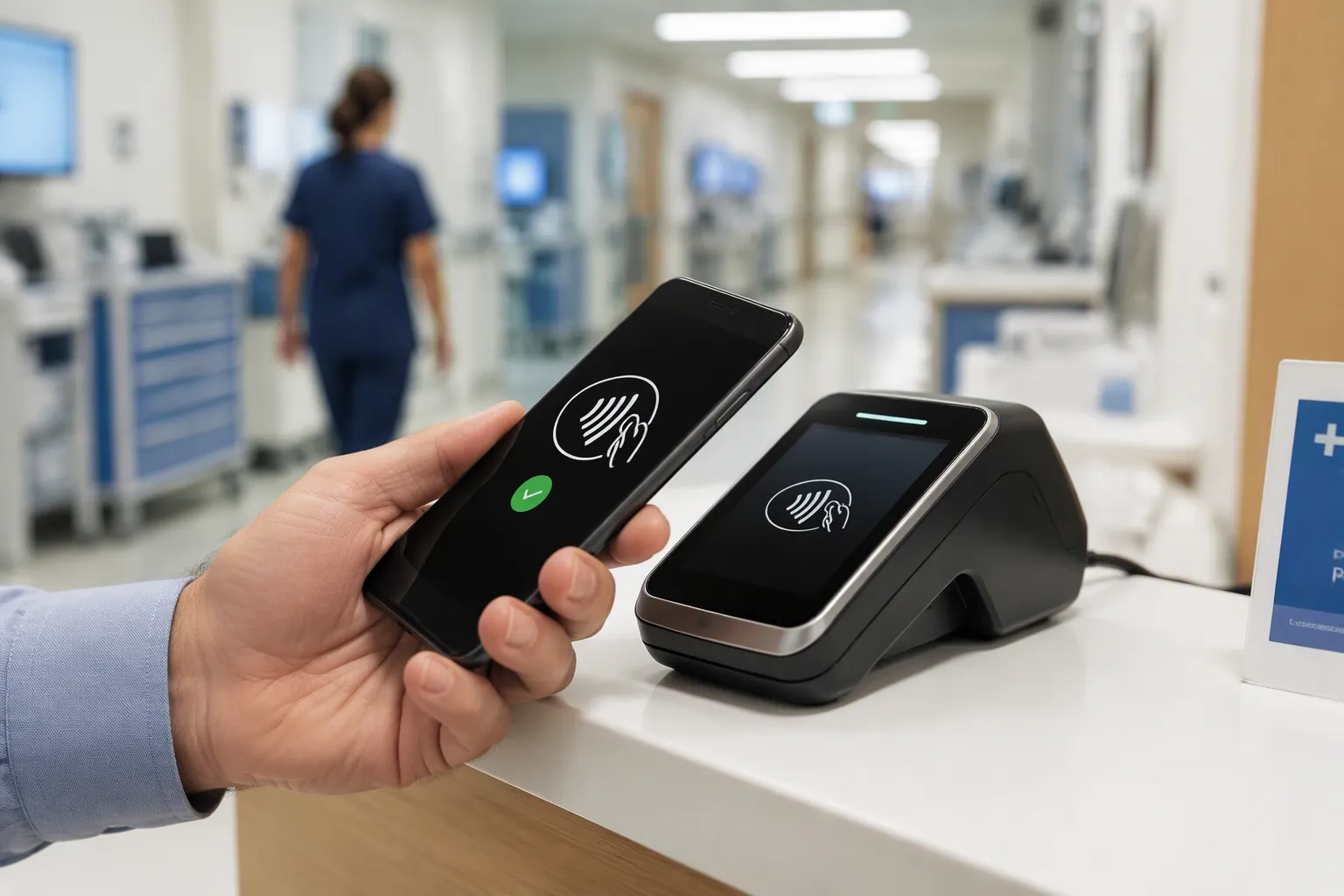
Frictionless checkout is now a must-have in hospitals and healthcare facilities. It improves patient and visitor experience, reduces administrative and labor burden, and increases revenue security. This shift from optional convenience to operational necessity changes how leaders plan their payment systems. You will learn what frictionless checkout means in practice, which key drivers push adoption, and what benefits it delivers. The discussion also covers the risks of inaction and practical steps for implementation. These points explain why frictionless checkout becoming must-have status now shapes decisions across healthcare facilities of every size. Each section gives you clear guidance you can apply right away.
Key Takeaways
Frictionless checkout meets high patient and visitor expectations for speed and convenience.
Autonomous retail and 24/7 stores reduce staffing pressure and labor costs.
Automated billing cuts errors and speeds up payment collection.
Clear payment paths boost revenue and patient satisfaction.
Start with one workflow, measure results, and expand to see gains.
Defining Frictionless Checkout in Healthcare
What Frictionless Checkout Means
A frictionless checkout experience removes unnecessary steps, delays, and mental effort from the payment moment. You tap a card, scan a phone, or simply walk out of a store. The system handles the rest. In many setups, technology charges shoppers automatically as they leave, so no line forms at a register. The goal is simple: you pay quickly and move on with your day.
In healthcare, the term covers two distinct areas. The first is retail and food service, such as a hospital-owned cafeteria, gift shop, or concession stand. The second is patient billing and settlement, where you settle a balance at a desk or through a portal. Both areas benefit from fewer clicks, shorter waits, and clearer steps. A frictionless process works the same way in each case. It strips out anything that slows the transaction down.
Frictionless does not always mean less human contact. Staff members step away from routine scanning and cash handling. They then spend more time helping people who need guidance, directions, or a friendly face. That shift turns a transactional moment into a service moment.
Why It Matters in Hospitals
Hospitals serve people under stress. A visitor buying coffee between appointments has little patience for a slow line. A nurse on a short break needs a fast option. Frictionless systems respect both situations. They cut the time between wanting something and having it.
These systems also matter for hospital and campus retail operations, which often run on thin margins and tight schedules. Smooth payment flow keeps revenue moving and reduces abandoned purchases. In healthcare settings, every minute saved returns attention to care. That is why frictionless checkout now shapes planning decisions across hospitals of every size.
Key Drivers Making Frictionless Checkout Becoming Must-Have
Rising Patient and Visitor Expectations
People who walk into a hospital today carry the same expectations they hold at a grocery store or an airport. They want speed, choice, and control over the payment moment. The evidence shows this clearly.
Patient/Visitor Expectation | Supporting Detail |
|---|---|
Convenient access to refreshments without cafeteria-hour limits | Self-service refreshments give patients and visitors access to snacks and drinks without added burden of limited food options or cafeteria hours |
Quick, easy checkout for grab-and-go meals | Self-checkout solutions let patients and visitors grab pre-made meals and snacks with a quick and easy checkout process |
Streamlined, consistent purchase experience | Same account usable across all checkout points (vending machines, micro markets, self-service dining kiosks) for a smooth, hassle-free process |
24/7 grab-and-go availability | Micro markets function as mini convenience stores open 24/7 with fresh, healthy food and drinks |
Checkout-free, seamless purchasing | Secure micro markets use AI and smart technology for a seamless, checkout-free experience |
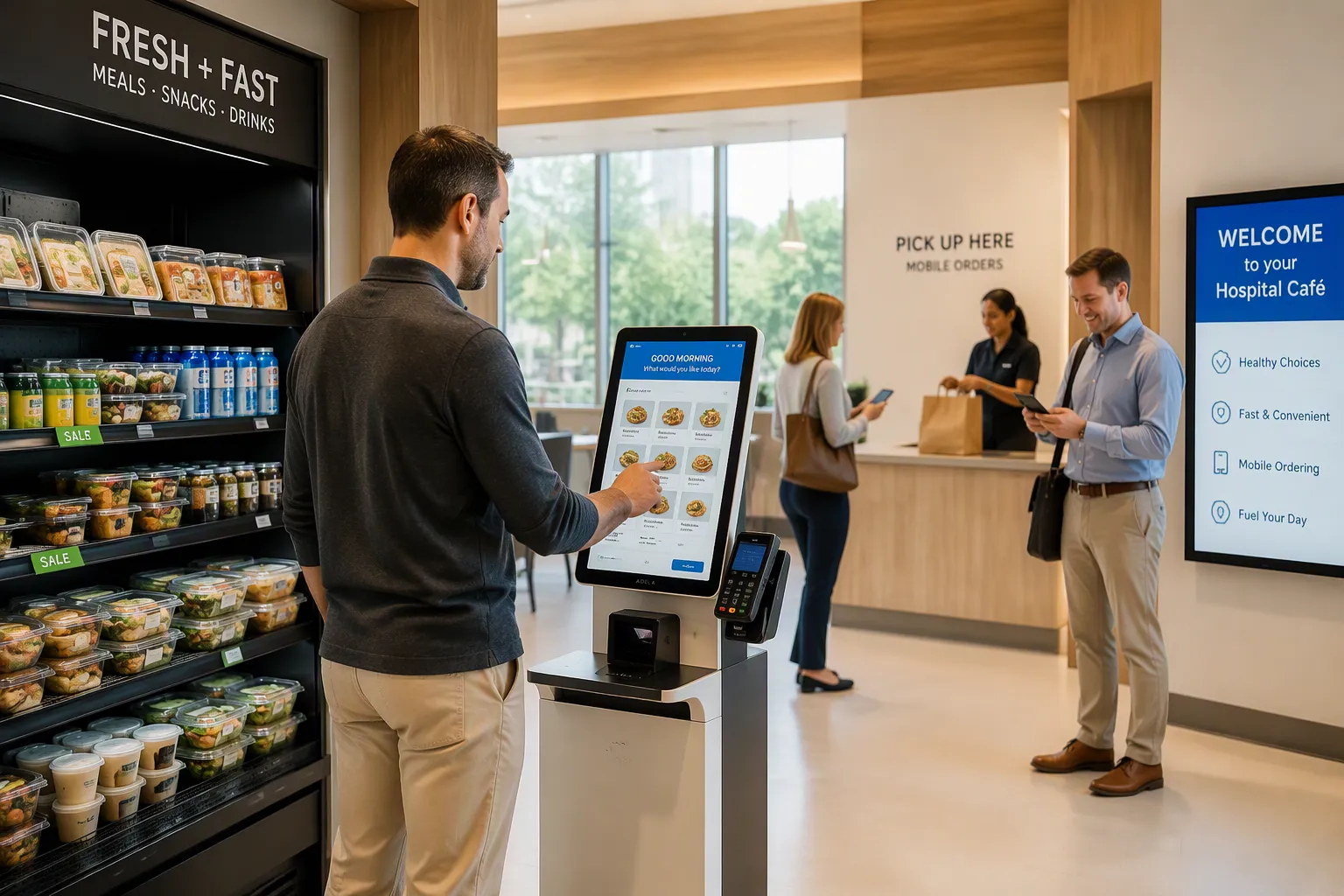
Dining data reinforces the trend. In one survey, 80% of patients felt comfortable ordering ahead for pickup outside the cafe, 75% felt comfortable with food delivery, and 71% felt comfortable ordering ahead and going inside to pick up. Mobile ordering is now part of the routine.
As mobile phones have become ubiquitous, patients want to integrate their devices into the dining experience. This trend was sped up during the COVID-19 response. Hospitals added more mobile ordering options and QR code menus to order patient meals. These innovations are here to stay and will continue to evolve to meet the diner's expectations.
Patients also expect a convenient, efficient check-in that avoids long lines and cumbersome paperwork. They value autonomy: entering personal information, verifying insurance, and making copayments at their own pace. They want an intuitive interface with large readable text, simple navigation, clear prompts, multilingual support, and accessibility features. They expect fewer errors from less manual data entry, plus reduced perceived wait times with queue position updates. These expectations explain why frictionless checkout becoming must-have status now reaches beyond retail into patient billing.
Staffing Shortages and Budget Pressures
Labor is the second engine behind adoption. More than 145,000 healthcare workers left the industry between 2021 and 2022. Burnout rates doubled between 2019 and 2021. In a 2022 study, 34% of doctors worldwide reported that medical errors increased when their units were short-staffed. U.S. open jobs hit a record 9.2 million in May 2021, then surpassed 10 million two months later. Pandemic-related income loss for hospitals and health systems exceeded $50 billion in 2021, worsened by labor-shortage costs like overtime and training.
These staffing pressures hit checkout directly. One county health system's phone wait times routinely exceed an hour at the start of the week. Some patients call their clinic as many as five times per appointment scheduled. Clinics can reduce pre-access staffing needs by 10% to 25% with modest up-front work. That is where 24/7 frictionless stores and autonomous retail earn their place. They serve patients, visitors, and staff around the clock without a cashier on shift. A 24/7 retail model gives healthcare workers a fast option during odd shifts. The same logic applies across healthcare and higher education, where round-the-clock demand never stops. Leaders in hospitals see 24/7 access as a labor strategy, not a luxury. Frictionless checkout becoming must-have status follows from tight budgets and thin rosters. Autonomous retail and 24/7 retail for healthcare workers turn a staffing gap into a working solution.
Benefits for Hospitals and Healthcare Facilities
Faster Service and Fewer Errors
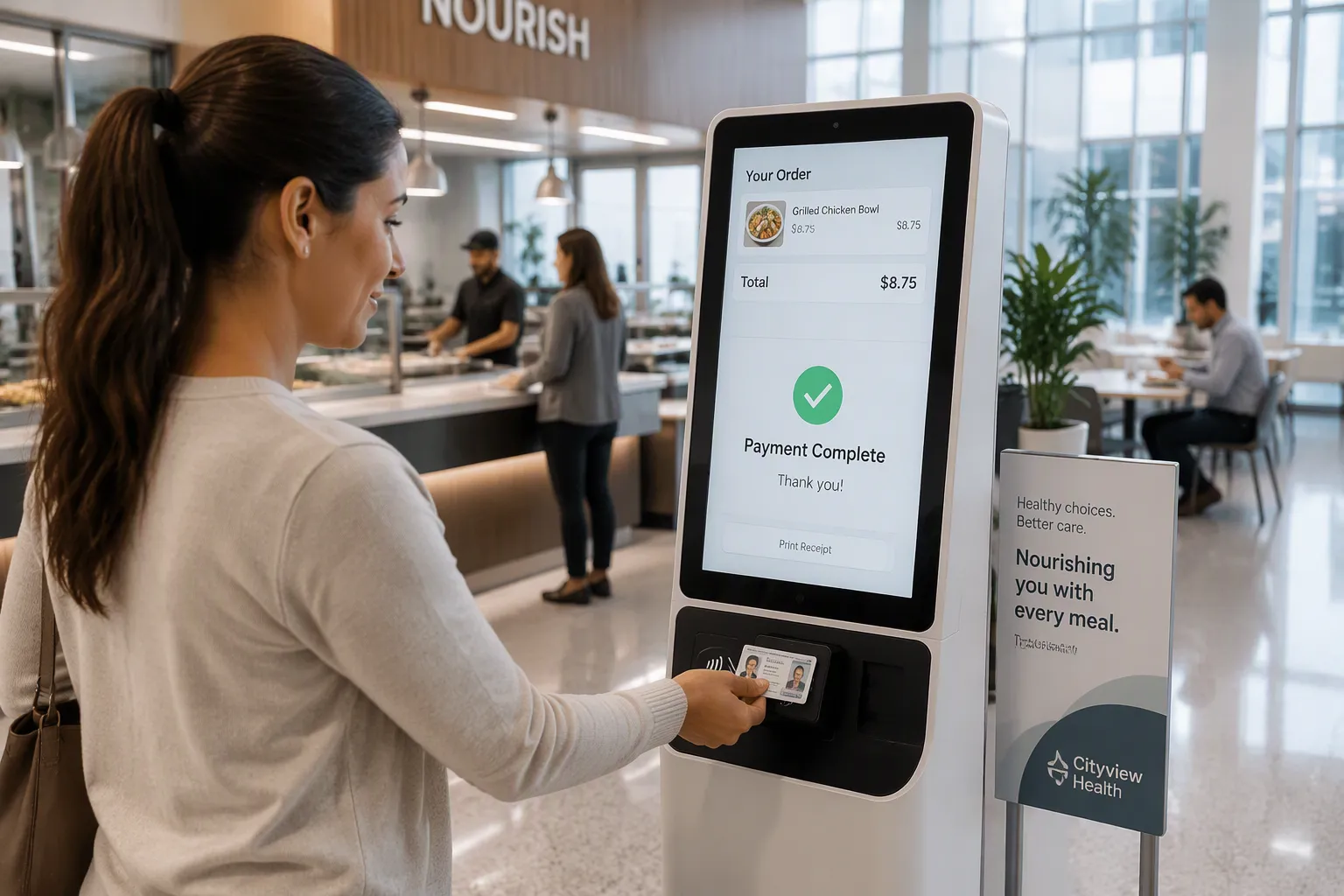
Speed is the most visible gain. Frictionless stores let a visitor grab a meal and leave without waiting in line. You remove the scan-and-pay step, so long checkout lines shrink or vanish. That matters most during cafeteria checkout times, when a short break leaves no room for a queue. Touchless payment also limits physical contact when hygiene matters, such as during flu season or a patient isolation period. Cutting wait times this way supports operational efficiency across the whole campus.
Accuracy improves alongside speed. Automated billing replaces manual processes, which removes human error from charge entry and invoicing. Automatic charge calculation from EHR data computes charges without manual steps. Instant, secure payment processing eliminates billing delays at discharge. Automatic posting of payment data to ERP, POS, and back-office systems removes manual reconciliation errors. EHR and EMR integration with kiosks and ID scanning auto-populates patient fields, which prevents data-entry mistakes.
Mechanism | How It Reduces Billing Errors | How It Improves Revenue Security |
|---|---|---|
Automated billing replaces manual processes | Removes human error from charge entry and invoicing | Prevents revenue leakage caused by mistake-driven undercharging |
Automatic charge calculation from EHR data | Computes charges accurately without manual steps | Ensures correct amounts are billed and collected |
Instant, secure payment processing | Eliminates billing delays at discharge | Speeds cash collection and shortens accounts receivable cycle |
Automatic posting of payment data to ERP/POS/back-office | Eliminates manual data entry and reconciliation errors | Recovers revenue that previously slipped away; lowers administrative costs |
EHR/EMR and system integration (kiosks, scanning of IDs/insurance) | Auto-populates patient fields, preventing administrative/data-entry errors | Keeps records consistent, supporting accurate invoicing and reconciliation |
Stronger Cash Flow and Satisfaction
Clear, simple payment paths protect revenue. Denials are a downstream problem with upstream causes. Initial claim denial rates keep climbing, and denials slow cash flow while demanding extra resources to chase payment. Prevention matters as much as recovery. Patient financial responsibility is another exposure point, especially when patients do not understand what they owe. Clear pricing, personalized financial communication, and flexible payment arrangements make obligations manageable. A confusing financial experience left unresolved becomes a payment problem.
"The more frictionless the path to payment, the more consistently patients follow through."
Early out services deliver a measurable improvement to cash flow, collection rates, and patient satisfaction scores for CFOs and revenue cycle directors. Patients who understand their financial responsibility are significantly more likely to pay. Clarity drives collections, and confusion drives avoidance.
Frictionless stores also give time back to staff. Associates stop scanning items and start guiding people. That returned time flows into patient care and eases staffing pressure. Several practical gains follow:
A strategic partnership now delivers a seamless, frictionless payment experience for healthcare providers and patients.
The collaboration integrates advanced payment processing solutions to enhance efficiency in the healthcare payment landscape.
Streamlined payment processes improve patient satisfaction, which supports more consistent and timely collection of patient balances.
Together, these gains serve healthcare facilities of every size. Autonomous retail and 24/7 retail keep service running when no cashier is on shift. Round-the-clock 24/7 access meets the needs of night-shift nurses and early-morning visitors. Each improvement compounds the next, and the case for adoption grows stronger with every transaction.
Risks of Not Adopting Frictionless Checkout
Revenue Leakage and Delays
Manual payment processes quietly drain revenue. Staff create invoices late or skip them at the point of sale. Add-on services go unrecorded, and time estimates fall short. Spreadsheets invite entry mistakes and poor integration with billing systems. Outdated customer data leads to charging for fewer units than you delivered, and expired cards cause nonpayment. Unclear policy information pushes sales staff to charge too low or miss billable extras. Pricing errors persist long after a promotion ends. Unenforced fees never reach the ledger.
Healthcare facilities sometimes fail to record services or charges on patient invoices, which affects insurance billing — a substantial part of healthcare revenues. Revenue leakage in paperwork-intensive industries like healthcare is usually due to inefficient processes, where poorly designed workflows and how multiple doctors, nurses, and specialists log their services directly affect billing.
Delayed payment compounds the damage. Payment friction rarely shows up as outright abandonment. It appears as extended accounts receivable timelines, more billing inquiries, and patients who postpone payment because the process feels harder than necessary. Patients stall when insurance adjustments, deductibles, or line-item charges stay unclear. Each breakdown looks small per transaction. Across thousands of transactions, these breakdowns slow the revenue cycle and add administrative workload.
Patient Dissatisfaction and Lost Ground
Hospital visitors compare your checkout to every other payment experience they know. They expect speed and clarity at the register and on the bill. A slow line or a confusing statement signals that your operation lags behind. That impression spreads. Patients share frustrations, and satisfaction scores slip.
Competitive pressure makes inaction costly. Hospitals and clinics that offer self-service, mobile ordering, and instant settlement win loyalty. Those that cling to paperwork and manual follow-ups create frustration, add staff work, and trigger delayed payments. Outdated processes also hurt staffing, because your team spends hours chasing balances instead of serving people. Facilities that wait lose ground they will struggle to recover.
Implementing Frictionless Checkout Effectively
Choosing Technology and Workflow
Start by mapping your current payment journey. Identify every step where a transaction slows down or stalls. Then evaluate technology that removes those specific bottlenecks. Look for systems that integrate with your existing EHR, POS, and billing platforms. Seamless integration prevents duplicate data entry and keeps records consistent across departments.
Consider the physical environment too. A hospital cafeteria faces different demands than a gift shop or a patient billing desk. Your technology should match each setting's traffic patterns and peak hours. For retail spaces, explore autonomous retail options that let customers grab items and leave without a traditional register. These systems shine during overnight shifts when you cannot staff a full checkout counter. They also support 24/7 retail operations, giving night-shift nurses and early visitors access to food and supplies without adding labor costs.
Workflow design matters as much as hardware. Define how transactions flow from the moment a customer selects an item to the moment payment settles. Build exception paths for returns, discounts, and unsupported transaction types. Document these workflows clearly so staff know exactly what to do when something falls outside the standard process.
Training Staff and Measuring Results
Technology only delivers value when your team uses it confidently. Achieve feature parity between mobile and desktop systems first. If staff find the new system missing features they relied on, they will revert to old habits. Train extensively using real transaction scenarios rather than abstract demonstrations. Assign mobile point-of-sale champions in each location to support peers during the transition. Monitor usage metrics by store and associate to spot adoption gaps early. Set clear expectations with store managers, including usage targets tied to performance reviews.
Build a staff playbook covering when to use the system, troubleshooting steps, device storage and charging, unsupported transaction types, and customer engagement scripts. Reinforce learning with laminated guides, short training videos, and in-app tips. For self-checkout areas, operationalize shrink training aligned with a mobile Remote Attendant Program. This equips hosts to spot and respond to price lookup manipulation and other problem behaviors. Informative handheld devices support staff in intervening appropriately. Clear, multilingual interfaces and accurate product images reduce unintentional customer mistakes. Positive customer interaction deters fraudulent behavior and promotes honest transactions.
Track metrics that reveal real performance. Measure wait times, error rates, and satisfaction scores before and after implementation. Review these numbers monthly and adjust workflows as needed. Staffing pressures ease when your team masters the new system, because fewer manual steps mean fewer errors and faster service. In healthcare settings, every improvement returns time to patient care.
Frictionless checkout is a must-have, not a luxury. Three core reasons drive this shift: patient and visitor experience, administrative and labor efficiency, and revenue security. Rising expectations and staffing shortages push adoption forward. Faster service, fewer errors, and stronger cash flow reward facilities that act. Revenue leakage and patient dissatisfaction punish those that wait. You now see why frictionless checkout becoming must-have status matters for every facility.
Evaluate your payment journey today. Test one workflow, measure the results, and expand from there. Leaders who adopt frictionless systems early will set the standard for care. Start your evaluation now, and let frictionless checkout becoming must-have thinking guide your next budget cycle.
FAQ
What does frictionless checkout look like in a hospital?
You pay with a tap, a scan, or by simply walking out. The system handles the rest. In hospitals, this covers cafeteria and gift shop purchases as well as patient billing and settlement. The goal stays the same: fewer steps, shorter waits, and less mental effort at the payment moment.
Does frictionless checkout remove staff from the process?
No. Staff step away from routine scanning and cash handling. They then spend more time helping people who need guidance or a friendly face. Your team trades repetitive tasks for service work. That shift eases staffing pressure and improves the visitor experience at the same time.
How fast can checkout get after adoption?
The gains are measurable. One case study documented a 75% faster checkout experience for busy staff and visitors. You should expect shorter lines during cafeteria rush periods and fewer abandoned purchases. Track your own wait times before and after rollout to confirm the improvement.
Can frictionless checkout work during overnight shifts?
Yes. Autonomous retail and 24/7 micro markets keep serving people when no cashier is on shift. Night-shift nurses and early-morning visitors get food and supplies without added labor costs. This round-the-clock access turns a staffing gap into a working solution for your facility.
How do you start without disrupting current workflows?
Map your payment journey first. Find each step where transactions stall. Then pick technology that integrates with your existing EHR, POS, and billing systems. Train staff with real transaction scenarios, and measure wait times, error rates, and satisfaction scores monthly. Expand one workflow at a time.
See Also
How Self-Checkout Technology Has Changed Over Time
Walgreens Self-Checkout: Benefits and Difficulties in Retail Stores
Walmart Self-Checkout Availability: What Changes Are Coming in 2025?
How Cloudpick Checkout Computers Improve Efficiency, Accessibility, and Customer Experience
Self-Checkout Cash Mistakes: Causes and Solutions for Smoother Transactions
