How Should a Business Choose Between a Cashierless Store, a Micro Market, and a Smart Fridge

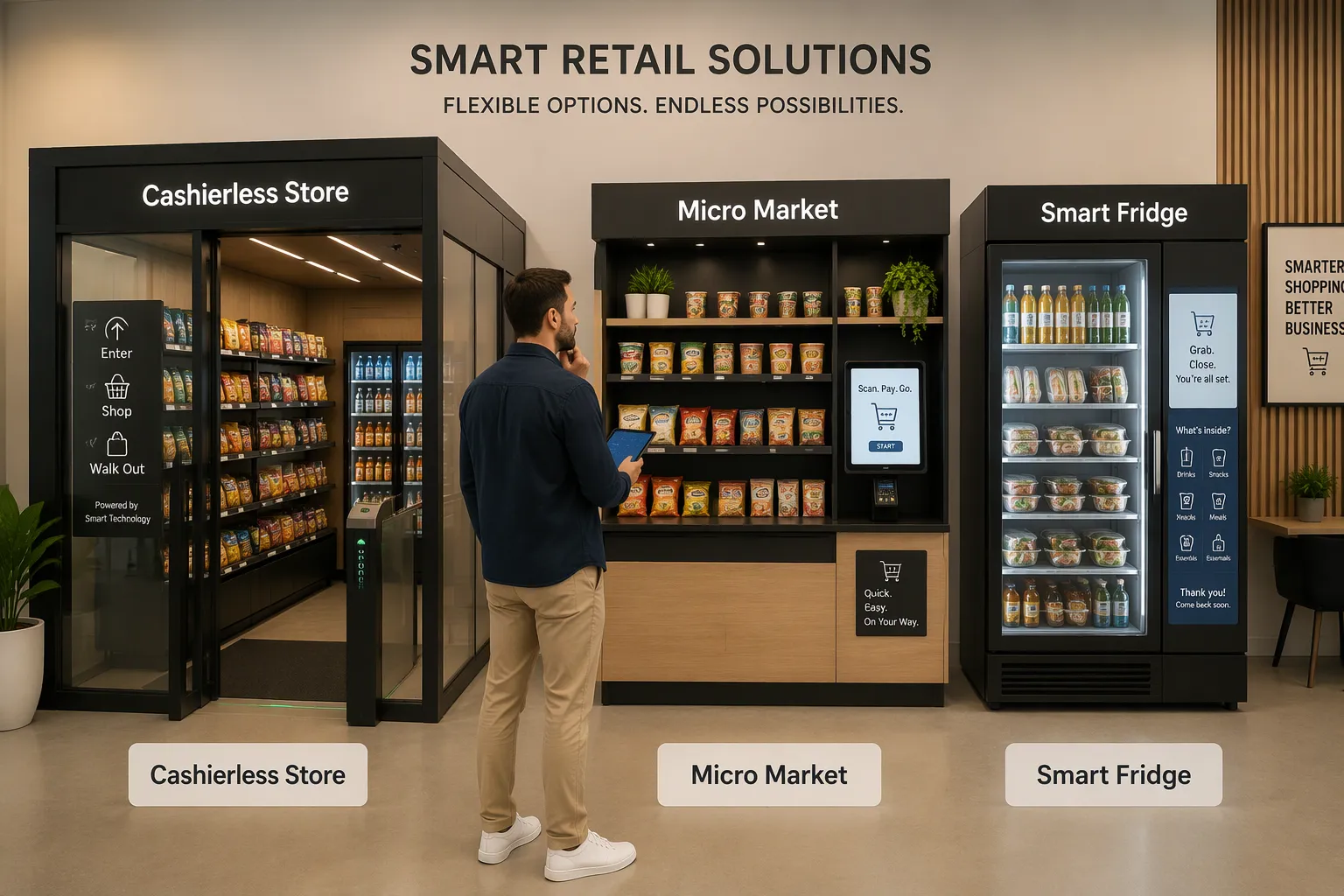
Four factors decide this question: technical performance, application fit, regulatory compliance, and cost. No single option wins on all four. Each one suits a different location, product mix, and budget. A busy cafeteria and a quiet break room need different answers. So do a fresh-food menu and a shelf of packaged snacks. This post compares the cashierless store, the micro market, and the smart fridge side by side. It closes with a decision checklist. You can run that checklist against your own site. Then you will know how should a business choose with confidence. Many businesses and retailers face this exact decision. The right pick depends on your facts, not on hype.
Key Takeaways
Use four factors to help you decide: technical performance, application fit, regulatory compliance, and cost.
Choose a cashierless store for big, busy places that have lots of products.
Pick a micro market for mid-size rooms with controlled access and a balanced mix.
Choose a smart fridge for small spaces and a few items that sell quickly.
Use the decision checklist for your site to make sure you pick the best option.
Comparison at a Glance
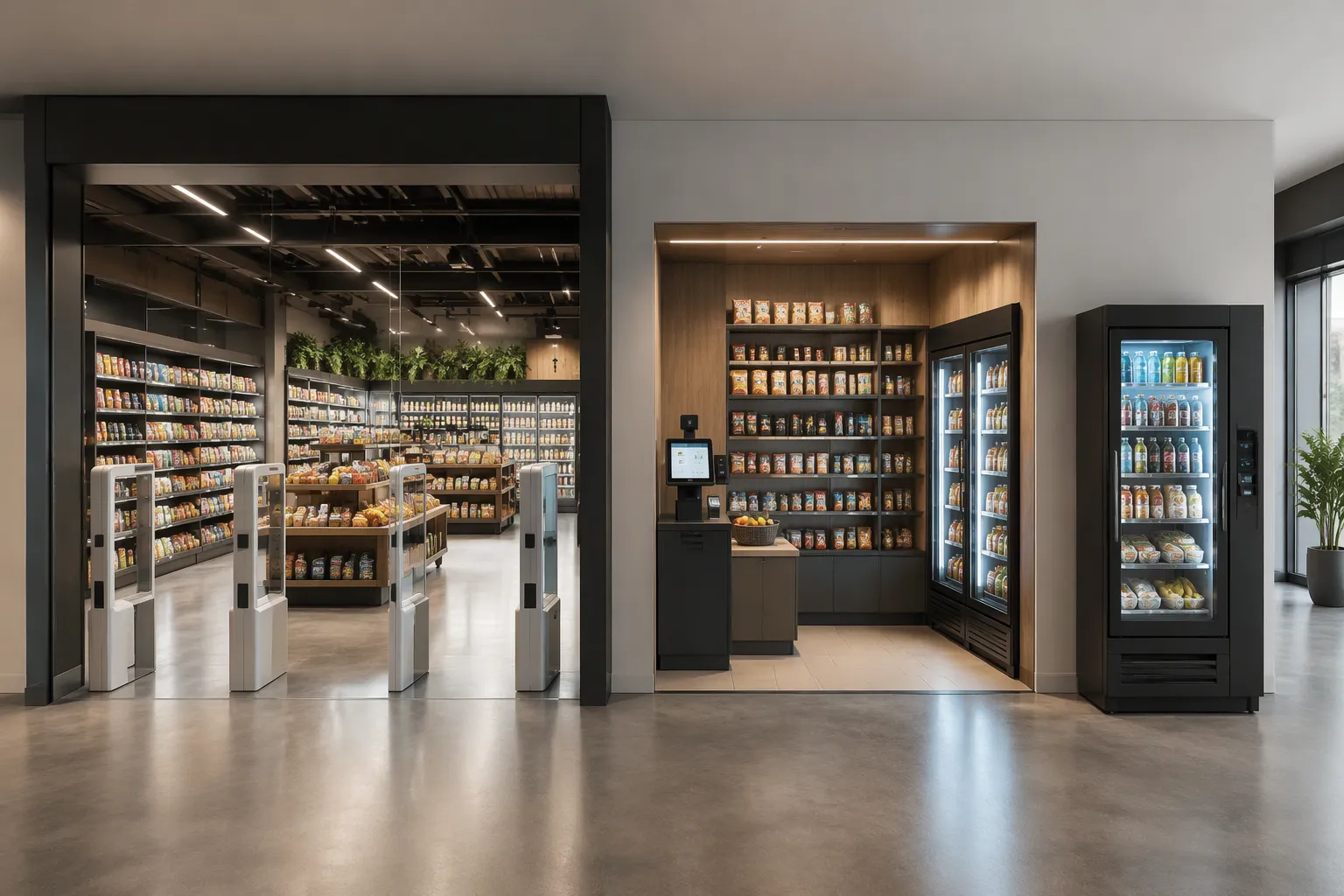
Cashierless Stores vs. Micro Markets vs. Smart Fridges
A cashierless store lets customers shop and leave without a regular checkout. A micro market is a small cashierless store with open shelves, coolers, and a self-checkout kiosk. A smart fridge is a small, connected cooler that tracks items and charges you on its own.
The table below sums up how each option does across the four decision factors.
Factor | Cashierless Store | Micro Market | Smart Fridge |
|---|---|---|---|
Technical performance | High throughput; strong shrink control in large spaces | Good balance of speed and variety; moderate setup complexity | Fast setup; best for limited, high-turn SKUs |
Application fit | Large, high-traffic sites with broad assortments | Mid-size, controlled-access sites with a balanced mix | Small footprints with a narrow product range |
Regulatory compliance | Most complex; permits, labeling, and age checks scale with size | Moderate; labeling and age-restricted rules apply | Simplest; compact format limits compliance scope |
Cost of ownership | Highest setup and operating cost | Middle setup cost; restocking effort grows with variety | Lowest setup cost; low restocking burden |
How to Read the Comparison
Read each row as a trade-off, not a scorecard. A high rating in one row often makes cost or complexity go up in another. Start with the factor that limits you the most. If floor space is tight, read the application fit row first. If your budget is fixed, start with cost of ownership. If you sell age-restricted items, begin with compliance.
Then check the other rows against your site. A large lobby with steady foot traffic may justify a cashierless store. A locked break room with a mix of snacks and fresh food often points to a micro market. A hallway corner with a few fast-moving items fits a smart fridge.
Many retailers compare these formats because retail automation now supports all three. Providers such as Cloudpick build cashierless store solutions and smart store platforms that cover the full range, from fully automated convenience stores down to compact coolers. That range matters here. You can match the format to your facts instead of forcing your site to fit one model.
Treat the table as a filter. It narrows your options to one or two candidates. The sections that follow look at each factor in depth, so you can confirm the fit before you commit.
Technical Performance
Reliability, Speed, and Shrink Control
Reliability, checkout speed, and shrink control set these formats apart more than any spec sheet can. A cashierless store handles heavy traffic well. Its cashierless checkout gets rid of the line at the register. That speed really helps during lunch rushes. Shrink control also holds up in big, well-lit spaces with good camera coverage.
Micro markets land in the middle. They move customers through a self-checkout kiosk quickly. They also keep close track of stock, so you notice gaps before shelves run empty. A smart fridge wins on simplicity. It opens, senses, and charges with almost no effort from the customer. Fewer moving parts mean fewer breakdowns.
Cloudpick shows what strong retail automation looks like in real use. Its ai product recognition supports product recognition for smart fridges and product recognition for vending machines. The same technology brings product recognition into vending machines and refrigerators. That accuracy speeds up checkout and reduces losses from items people don't pay for.
Smart Fridges and Intelligent Vending Machines
Smart fridges and intelligent vending machines bring compact, smart retailing to small spaces. Setup is faster than building a full store. You can automate vending machines and fridges without rebuilding the room. Micro markets support a wider variety and faster product rotation, which fits a menu that changes often.
Both formats work alongside traditional vending. Vending is still one of the fastest options for a single packaged item. Cloudpick also fits camera-based product recognition into vending machines. Its platform adds product recognition for smart fridges and smart fridge freezers, and it upgrades existing vending machines, refrigerators, freezers, and shelving fixtures. One smart store platform can run the whole site.
Match the format to the space you have. Choose smart fridges, smart vending machines, or intelligent vending machines for small spaces and a limited set of fast-selling SKUs. Choose micro markets for wider assortments. Choose cashierless stores for larger, high-traffic spaces.
Application Fit
Location, Footprint, and Product Mix
Where you put it, how much room you have, and what you sell decide more placements than anything else. A cashierless store needs space for shelves, coolers, and cameras. It works well in a lobby, a campus hub, or a factory entrance with steady foot traffic. A micro market fits a mid-size room with controlled access, like a break room or a staff lounge. A smart fridge needs only a corner or a short wall.
What you sell matters just as much. If you sell anything like fresh food, micro markets and smart fridges serve you better than traditional vending. Fresh items need open shelves or clear doors, and customers want to see what they buy. Cloudpick's cashierless stores and micro markets adapt to different locations and product mixes, so businesses can scale one format up or down without changing platforms.
Customer Flow Fit
Watch how people move before you choose. Note how long they stay, when they shop, and whether they come back every day. A site with a daily lunch crowd rewards a full cashierless store. A site with quick grab-and-go visits fits a smart fridge or intelligent vending machines.
Stocking more items is not the only reason to pick a micro market over a smart cooler. A micro-market area also supports browsing, combined purchases, and a frictionless shopping experience that feels like a small shop. Cloudpick's smart store platform ties these self-serve shopping solutions together, so you can start small and expand later.
Best fit: cashierless stores for large, busy sites with broad assortments; micro markets for mid-size, access-controlled rooms with a balanced mix; smart fridges for tight footprints and a narrow, fast-selling range.
Regulatory Compliance
Permits, Labeling, and Age-Restricted Sales
The larger the format, the more rules you have to follow. A cashierless store works like a small shop. It may need a business license, food permits for fresh items, and clear price and ingredient labels on every product. Age-restricted sales add one more layer. Alcohol, tobacco, and some energy products need an age check at the point of sale. A cashierless store must check age before the door opens or the purchase goes through.
A micro market falls in the middle. It needs labels for fresh food and clear signs for restricted items. Age checks usually happen at the self-checkout kiosk. A smart fridge has the lightest load. Its small product range means less labeling work, and its closed design makes age checks easier to enforce.
Keep the test simple. Ask three questions. Which permits does your local authority require for your product mix? Who checks age, and how? Can you label every item correctly without extra staff time? Cloudpick's smart store platform supports age verification and product-level tracking, which helps retailers keep these checks consistent across formats.
Compliance Fit by Option
Match the format to your compliance burden. Pick a cashierless store when you can handle full retail permits and you sell a broad mix, including restricted items, in a controlled space. Pick a micro market when you want moderate compliance work with a balanced product range. Pick a smart fridge when your range is narrow and your compliance scope is small.
If you sell age-restricted goods, favor a format with a built-in verification step at the point of sale. If you sell only packaged snacks and drinks, a smart fridge keeps paperwork light. When your rules are unclear, confirm requirements with your local authority before you buy. A short call now saves a costly retrofit later.
Cost of Ownership
Setup, Operating, and Total Cost
Setup cost climbs with format size. A smart fridge needs the least upfront money. You buy the cooler, connect it, and stock it. A micro market costs more. You add shelving, coolers, and a self-checkout kiosk. A cashierless store carries the highest setup bill. Cameras, sensors, and store build-out all add up.
Operating cost follows the same pattern. A cashierless store spends more on power, connectivity, and system upkeep. A micro market sits in the middle. A smart fridge runs lean. Total cost of ownership matters more than the sticker price. Add setup, operating, and restocking costs over several years. Then compare the totals.
Retail automation changes this math. Cloudpick's smart store platform cuts labor hours at checkout and lowers losses from unpaid items. Those savings offset part of the setup cost. Retailers who run several sites often see the gap between formats shrink once they count these gains.
Theft, Shrinkage, and Restocking
Theft and shrinkage hit every format, but the risk differs. A cashierless store relies on camera coverage and ai product recognition to catch unpaid items. A micro market uses kiosk checks and clear sightlines. A smart fridge tracks each item as the door closes, which keeps losses low.
Floor space carries a cost too. A cashierless store needs a real room. A micro market needs a mid-size area. A smart fridge fits a corner. Restocking effort grows with variety. A smart fridge takes minutes to refill. A cashierless store needs scheduled visits and planogram work.
Match the format to your budget. Pick a smart fridge for a small, fixed budget. Pick a micro market for a moderate budget with room to grow. Pick a cashierless store when you can fund the build-out and expect steady traffic to pay it back.
How Should a Business Choose: Decision Checklist
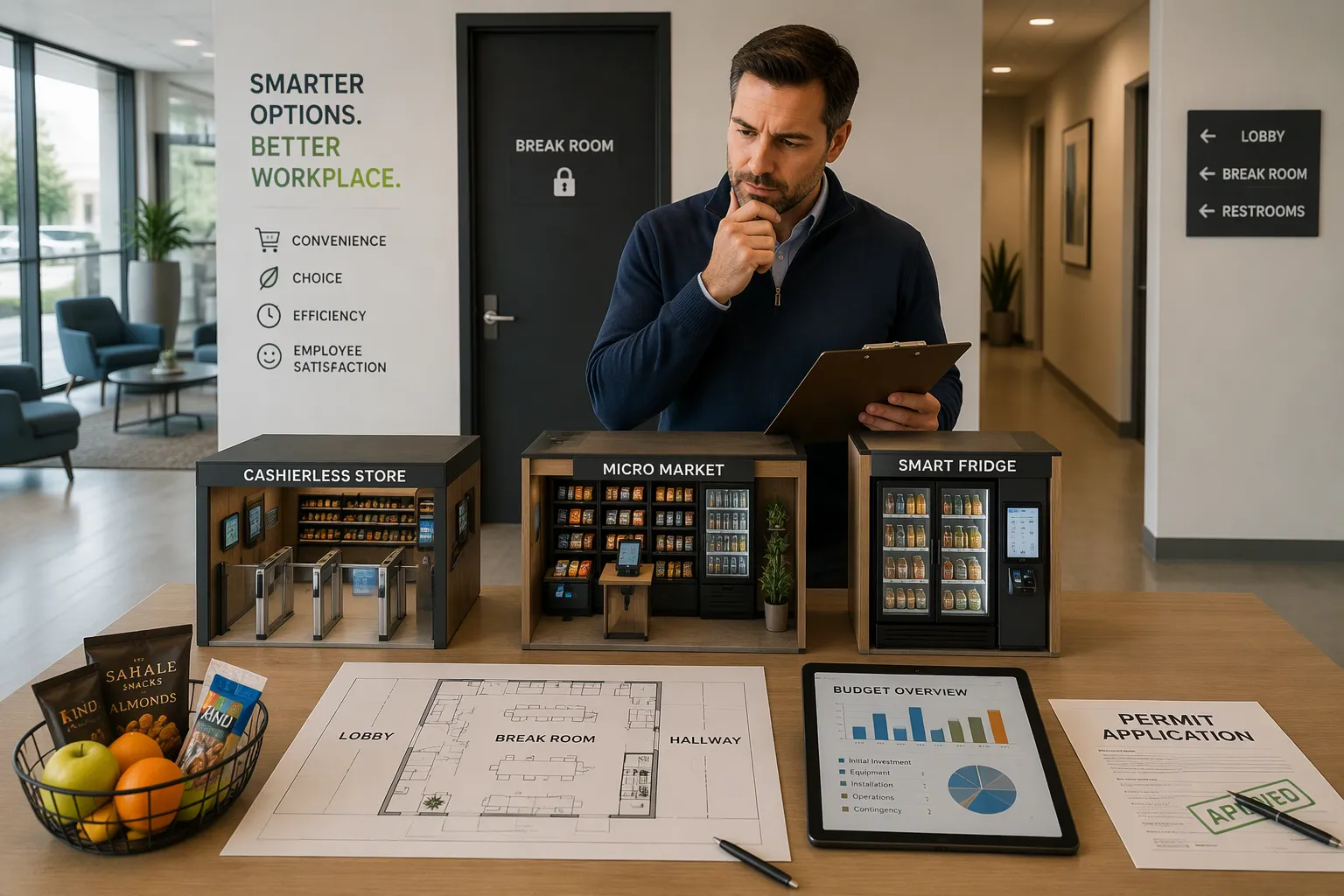
Questions to Match Your Situation
You have the four factors. Now apply them to your own site. Answer these five questions in order. Each one maps to a decision factor from the comparison.
Location and footprint: How much floor space can you dedicate, and who can reach it? A locked break room, a public lobby, and a hallway corner each point to a different format.
Product mix: Do you sell fresh food, packaged snacks, or age-restricted items? Fresh food rules out plain vending. A narrow snack range fits a compact cooler.
Customer flow: How often do people visit, how long do they stay, and do they come back daily? A daily lunch crowd behaves very differently from a quick grab-and-go stop.
Budget: What can you spend upfront, and what can you spend each month on power, connectivity, and restocking? Total cost over several years matters more than the sticker price.
Compliance: Which permits and labels does your product mix require, and who checks age at the point of sale? Confirm the rules with your local authority before you commit.
Keep your answers short. One line per question is enough. The goal is a clear picture of your constraints, not a perfect forecast.
From Checklist to Final Choice
Now read your answers together. The pattern usually points to one option.
A large space, steady daily traffic, a broad mix, and a budget for build-out favor a cashierless store. A mid-size, access-controlled room with a balanced mix of snacks and fresh items favors a micro market. A tight footprint, a narrow range of fast-selling SKUs, and a small fixed budget favor a smart fridge.
Mixed answers are common. Suppose your space is small but your product mix is wide. Start with a smart fridge and plan to expand into a micro market later. Suppose your traffic is heavy but your budget is tight. Begin with a micro market and scale up once sales prove the demand. This is where how should a business choose becomes a staged plan rather than a single purchase.
Platform choice matters here too. Cloudpick offers cashierless store solutions and a smart store platform that runs fridges, vending machines, and full markets on one system. That flexibility lets businesses start with one format and add another without switching technology. You can revisit the checklist each time your site changes.
Finally, test your leading option against the factor that limits you most. If compliance is your tightest constraint, confirm the age-check step works before you sign. If cost is tightest, model the total over several years. This is how should a business choose with evidence instead of guesswork. Run the checklist, compare the totals, and commit only when the answers agree.
Use four factors to guide your decision: technical performance, application fit, regulatory compliance, and cost. Each option works best in a different situation. Pick cashierless stores for larger, high-traffic spaces with a wide range of products. Choose micro markets for mid-size, controlled-access locations with a balanced product mix. Select smart fridges for small footprints and a limited set of fast-selling SKUs. No format wins everywhere, so match the option to your facts. Before you commit, run the decision checklist against your own site. Answer the five questions, compare the totals, and confirm the fit. That is how should a business choose with evidence. A cashierless store rewards careful planning, and so does every other format.
FAQ
Can you start with one format and add another later?
Yes. Many sites begin with a smart fridge and add a micro market once sales prove demand. Choose a platform that runs every format on one system. Cloudpick, for example, supports fridges, vending machines, and full markets together. That way you expand without replacing your technology.
Does a smart fridge work for fresh food?
Only in a limited way. A smart fridge suits packaged snacks, drinks, and grab-and-go items with a clear shelf life. A wider fresh menu needs open shelves and browsing space. That points to a micro market. Match the format to your menu, not the other way around.
Is the cheapest option always the lowest cost over time?
No. A smart fridge costs the least upfront. A cashierless store costs the most. Yet traffic and sales decide the real total. A busy site may pay back a larger build-out quickly. A quiet corner may never justify one. Compare totals over several years, not sticker prices.
Who handles age checks in each format?
Each format needs a verification step at the point of sale. A cashierless store checks age before the door opens or the purchase completes. A micro market checks at the kiosk. A smart fridge enforces checks through its closed design. Cloudpick's platform supports age verification across all three.
What if your answers to the checklist point in different directions?
Treat that as a staging signal, not a dead end. Start with the format that fits your tightest constraint, then expand as your site changes. Revisit the checklist each time your traffic, product mix, or budget shifts. A staged plan often beats a single large purchase.
See Also
Automated Convenience Retail Worldwide: Comparing Micromarkets And Smart Stores
Smart Fridge Vending Machines Revolutionize Round The Clock Fresh Food Access
AI-Powered Corner Stores Rising: Essential Insights For Retailers Today
Find Top Micro Market And Vending Solutions For Your Business Needs
Launch An AI-Powered Corner Store With Minimal Investment Required
