Why Smart Retailers Are Switching to Autonomous Checkout for Cost Savings


Smart stores are now using self-checkout for one big reason: it saves a lot of money. Forbes says self-checkout systems can cut staffing costs by up to 40%. That number shows why labor costs, operational efficiency, loss prevention, and strong ROI lead every decision.
Think about the good things about self-checkout. Money spent on workers drops 20%; inventory loss goes down 15%. Stores without staff cut payroll spending by as much as 70%. Faster checkout also gives your shoppers speed, cost savings, and better privacy.
These numbers show a clear result. This system lowers payroll spending, cuts training costs, and improves inventory accuracy. Investing early gives you a lasting edge at a price you can handle.
Key Takeaways
Self-checkout lowers the cost of paying workers by 40 percent. Stores need fewer cashiers. Money paid to employees goes down. Profits go up.
Self-checkout makes service 30 percent to 40 percent faster. Customers scan items on their own. Staff take care of stocking duties. Stores save time.
AI systems stop theft. They also cut down on inventory mistakes. Camera tools catch scans that were missed. Smart scales check products. Shrinkage drops by up to 70 percent.
Self-checkout systems pay for themselves in three to five years. Stores can save up to 30 percent on labor costs. Over time, the money saved is more than the money spent to start.
Autonomous checkout gives stores a long-term advantage. Starting early lowers risk. Smart stores begin small. They test one location. They find success.
Reduced Labor Costs Drive the Switch
Fewer Cashiers, Lower Payroll
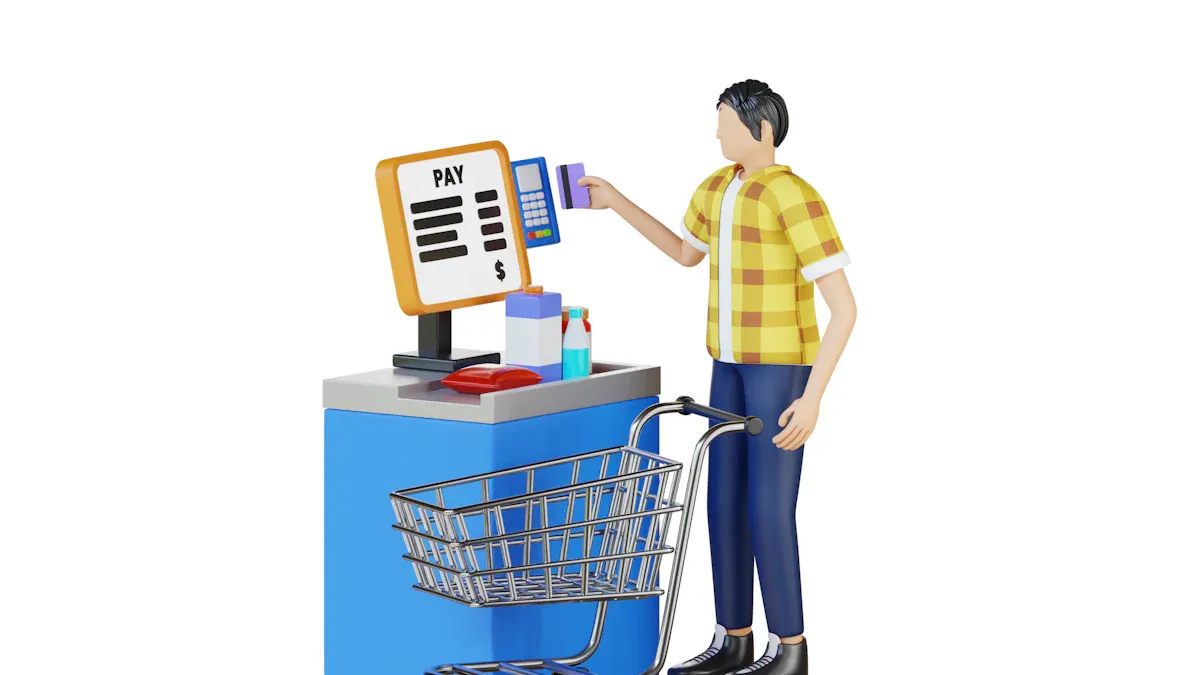
You already know payroll eats a large share of your store budget. Forbes reports that self-checkout systems can reduce staffing expenses by up to 40%. That figure explains why so many retailers make the switch. You need fewer cashiers needed at your lanes. One employee can supervise multiple self-service registers. This single change cuts your hourly wage bill fast.
Consider a store with ten traditional lanes. You might staff eight cashiers during peak hours. With self-checkout, you need two or three attendants for the same traffic. Your payroll drops by more than half. You also save on benefits, overtime, and shift differentials. Those costs add up every single week. The savings from reduced labor expenses go straight to your bottom line.
How Self-Checkout Systems Cut Staffing Expenses
Self-checkout systems lower your long-term hiring burden. You stop recruiting, interviewing, and onboarding large cashier teams. Each new hire costs money for job posts, background checks, and paperwork. High turnover makes this worse. Retail cashier roles often see rapid turnover. You pay those hiring costs again and again. Automation breaks that cycle. Your self-checkout machines do not quit after three months.
Training costs also fall. A new cashier needs days of register training. Self-checkout systems need a one-time setup and occasional software updates. You train a small attendant team once. That team then manages many self-checkout lanes. Your ongoing training budget shrinks. Your managers spend less time building schedules around callouts. They focus on sales and service instead.
Large retailers see the strongest savings. A chain with hundreds of stores would otherwise hire thousands of cashiers. Each location might need twenty or more. Cutting that number by even half saves millions per year. The cost savings scale with your store count. Small shops benefit too. A single owner can run more self-checkout stations with the same staff.
You also avoid maintenance costs tied to large teams. Fewer employees mean less break room space, fewer uniforms, and lower administrative work. Your human resources team handles fewer payroll disputes. Your scheduling software runs simpler. These small wins compound over time. The switch to autonomous checkout systems pays you back month after month.
The math is simple. Fewer cashiers means lower payroll. Lower payroll means more profit. Self-checkout delivers that result without hurting your service. Your customers scan and pay on their own. Your staff moves to higher-value tasks. That is why reduced labor costs drive the switch for smart retailers everywhere.
Operational Efficiency with Autonomous AI Checkout
Streamlined Checkout, Lower Overhead
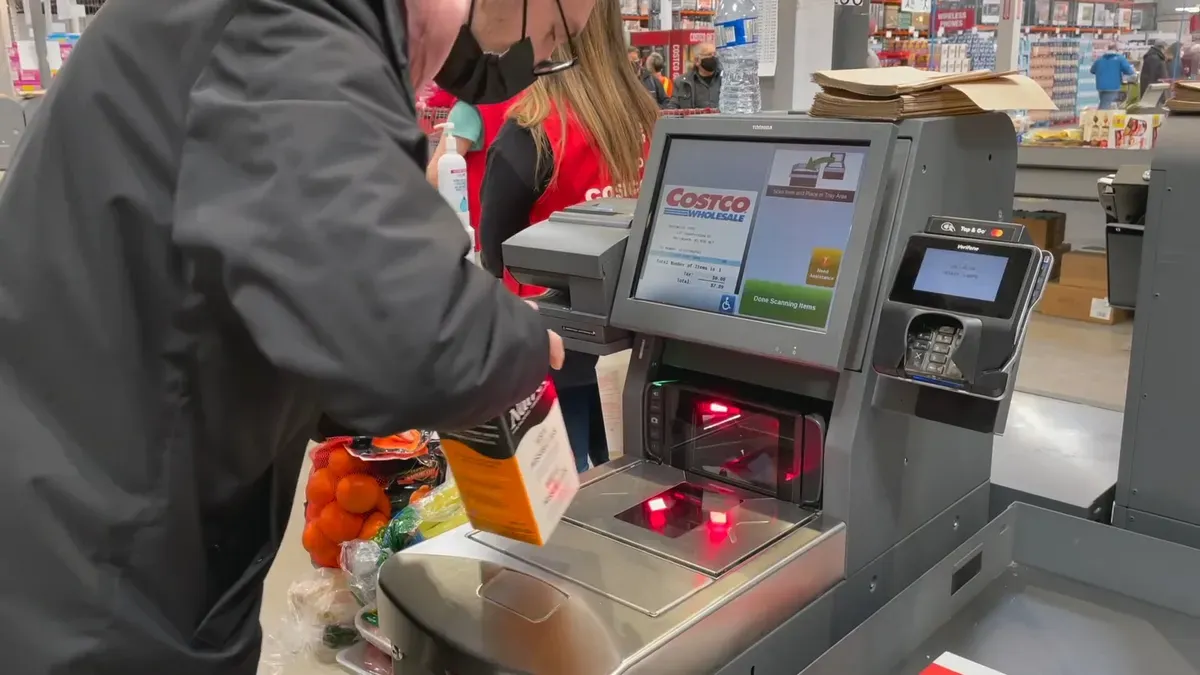
Autonomous ai checkout changes how your store handles each sale. Old lanes tie one worker to one register for every purchase. That setup puts labor cost into every item a customer buys. Self-checkout lets the shopper do the scanning. Computer vision spots products without barcodes. Your cost per transaction drops right away.
The speed gains are real. Checkout time gets 30 to 40 percent better than normal lanes. AI-assisted self-checkout also cuts item-finding time from 10 seconds to 3 seconds. One lane helping 40 customers an hour saves 280 seconds of customer time each hour. Those seconds add up fast over a full day.
Self-checkout systems also cut overhead beyond speed. Biometric authentication lowers merchant processing fees while speeding up the ordering line. A hospital cafeteria using this self-checkout tech serves staff faster during short breaks. The same efficiency works at any busy place. Self-checkout shines where you handle hundreds of transactions daily. Savings per transaction grow with volume.
Smarter Resource Allocation
You free up real hours when self-checkout systems run the lanes. A two-lane self-checkout cut frees 30 hours per week. You move those hours to stocking, customer service, or loss prevention. Staff leave cashier duties and take on higher-value tasks. This shift helps you cut operational costs without lowering service quality.
Automation also improves inventory management. Self-checkout systems send real-time data to your inventory and POS platforms. You see peak traffic patterns, inventory alerts, and product placement insights. Floor space once used for registers becomes room for more inventory. A yearlong survey found an 18 percent average sales boost for stores open from 9:00 p.m. to 7:00 a.m. with Just Walk Out technology. That extended availability creates new sales without adding checkout staff.
The result is clear operational cost reduction. Fewer cashiers mean lower payroll. Better inventory data means less waste. Your store runs leaner and serves customers around the clock. Self-checkout delivers these gains together, not one at a time.
Loss Prevention with Self-Checkout
Automated Loss Control
Shrink takes away your profit. Self-checkout systems help you fight back with tools that work on their own. Video AI agents spot pre-theft actions like loitering. Computer vision checks that scanned items match the product. Smart scales compare bagged item weights against the scanned SKU database. These tools catch mistakes during the transaction, before loss happens.
The numbers show why this matters. Traditional self-checkout suffered from shrink rates up to 65% higher than staffed registers. Theft is the biggest cause. Accidental scanning errors add to these losses too. A Financial Times report found that retailers who adopted self-checkout saw a surge in theft incidents after they reduced staff presence.
AI-based missed-scan detection changes this picture. The system spots items not scanned at checkout. It tells the customer to finish the scan and alerts nearby staff. This directly reduces shrink from unscanned items. Produce recognition uses computer vision to identify fruits and vegetables, cutting mislabeling at the scale.
Laurent Hugou, Director of Intermarché La Farlède, on vision AI in self-checkout:
"We can now clearly tell the difference between intentional and unintentional fraud. There are often items that are not scanned due to handling errors. All of this causes losses for the store of up to 3% of all transactions. Since these AI-enabled cameras were installed, this figure has been cut in half and our goal is to get it below 1%."
Better Inventory Accuracy
Accurate inventory saves you money. Self-checkout systems send real-time data to your inventory platform. Sensors and smart shelves track stock levels all the time. You see discrepancies right away. Store managers get automatic alerts when shelves need replenishment. This prevents out-of-stock situations.
Autonomous mobile robots add another layer. These robots map your store layout and monitor product locations. They deliver near-real-time insights into stock levels across all departments. Your team tracks shelf contents without checking each aisle by hand. This makes restocking smoother and keeps products available.
Better inventory accuracy lowers costly restocking and reconciliation mistakes. Automation reduces errors from manual entry. Intelligent forecasting analyzes sales reports and customer feedback to predict demand. You avoid overstocking and prevent stockouts. These improvements cut waste and protect your cost savings over time.
ROI and Long-Term Cost Savings
Upfront Investment vs. Long-Term Gains
You need to compare what you pay now with what you save later. Autonomous checkout systems do have real upfront costs. The table below shows common price ranges for different system types.
System Type | Upfront Cost Range |
|---|---|
Tablet-based kiosks | $150 – $2,000 |
Entry-level models | $3,000 – $7,000 |
Standard floor-standing kiosks | $3,000 – $8,000 |
Basic self-checkout models | $2,500 – $10,000 |
Commercial-grade floor-standing units | $2,500 – $15,000 per unit |
Full-size retail units | $15,000 – $40,000+ |
High-end systems (cash recyclers + AI loss prevention) | $15,000 – $40,000+ |
Grocery store self-checkout kiosk (average) | ~$30,000 |
Four-lane grocery setup (average) | ~$125,000 |
You also pay one-time costs for installation, electrical work, network drops, and pilot testing. Recurring costs cover software subscriptions, remote monitoring, spare parts, and field service labor. These numbers may seem high at first.
Now think about the payback. Industry studies show autonomous checkout systems usually pay for themselves in 3 to 5 years. Your real ROI period depends on how many customers use the system. Labor cost reduction reaches 20 to 30 percent within five years. Checkout-line labor hours drop by 25 to 40 percent. You also save on benefits, PTO, overtime, recruitment, uniforms, and equipment. Shrink reduction reaches up to 70 percent in Trigo-powered stores. One store even reached zero shrinkage. These gains lower your total cost of ownership over time.
Customer Retention and Training Savings
A better checkout experience keeps customers coming back. Your shoppers want freedom to choose, short wait times, and a smooth process. Self-checkout gives them these benefits. Customers reward you with satisfaction, repeat visits, and brand advocacy.
Checkout is evolving into an intelligent, connected platform that combines efficiency, flexibility, and innovation.
— Cetin Acar, Head of IT Research, EHI Retail Institute
Industry data backs this up. An EHI survey found that 60 percent of retailers depend on AI support at checkout. Another 56 percent are adding more self-service options. The number of German retail stores with self-checkout more than doubled in two years. These retailers see happier customers through smooth checkout experiences. That satisfaction builds customer loyalty.
Training savings also help your bottom line. Self-checkout systems need a one-time setup and occasional software updates. You train a small attendant team once. That team then manages many lanes. Your ongoing training budget shrinks. You cut costs tied to hiring, onboarding, and retraining cashiers who leave.
You can save money without lowering service quality. Self-checkout systems free your staff for higher-value tasks. Your team focuses on service and sales. Your store profitability improves. These savings grow over time for retailers of all sizes. You cut operational costs month after month. The upfront costs fade away as your savings grow.
An autonomous checkout saves you a lot of money. You cut payroll, shrink, and waste in daily work. These good points of self-checkout lead to strong ROI. Early users report lower operating and labor costs, richer consumer data, less theft, and AI-powered ease. A smooth checkout keeps customers coming back. You can start small. Test one store, map the customer journey, and keep a human touch. This approach lowers risk. Your upfront money pays back over time. First movers get a competitive edge. Self-checkout also frees staff for higher-value tasks. Self-checkout technology gets better every year. Set up self-checkout stations to replace routine register work. Pick self-checkout before rivals grab these gains. The waiting cost only grows. Check your operations now.
FAQ
How much can self-checkout save my store?
Forbes says self-checkout systems can cut staffing costs by up to 40%. You also save on hiring, training, and benefits. Labor cost reduction reaches 20 to 30 percent within five years. Your savings grow as more customers use the lanes.
What are the main benefits of self-checkout systems for small shops?
Small shops get the same core benefits as large chains. You need fewer cashiers at your checkout lanes. One attendant can watch over multiple stations. You cut payroll, reduce training time, and free staff for stocking and service. The benefits of self-checkout work for any store size.
How fast does an autonomous checkout system pay for itself?
Industry studies show most systems pay for themselves in 3 to 5 years. Your real payback period depends on customer adoption. Checkout-line labor hours drop by 25 to 40 percent. Shrink reduction reaches up to 70 percent in Trigo-powered stores. These gains lower your total cost of ownership.
Does self-checkout technology reduce theft and inventory errors?
Yes. Video AI spots pre-theft actions. Computer vision checks scanned items against the product. Smart scales compare bagged weights to the SKU database. One Intermarché store cut losses from 3% of transactions to half that figure after installing AI cameras.
Will self-checkout hurt my customer experience?
No. Checkout time improves by 30 to 40 percent. Customers want speed, privacy, and control. An EHI survey found 60 percent of retailers depend on AI support at checkout. Another 56 percent are adding more self-service options. A smooth checkout builds loyalty and repeat visits.
See Also
Walmart’s Self-Checkout Access Updates Coming in the New Year
Walgreens Self-Checkout: Modern Retail Convenience and Hurdles Explored
Fixing Money Mistakes at Self-Checkout for Seamless Checkouts
Tracing the Growth and Development of Self-Checkout Systems
Cloudpick Delivers Frictionless Store Checkout Without Any Cashiers
