Which Providers Can Support After-Hours Retail in Hospitals

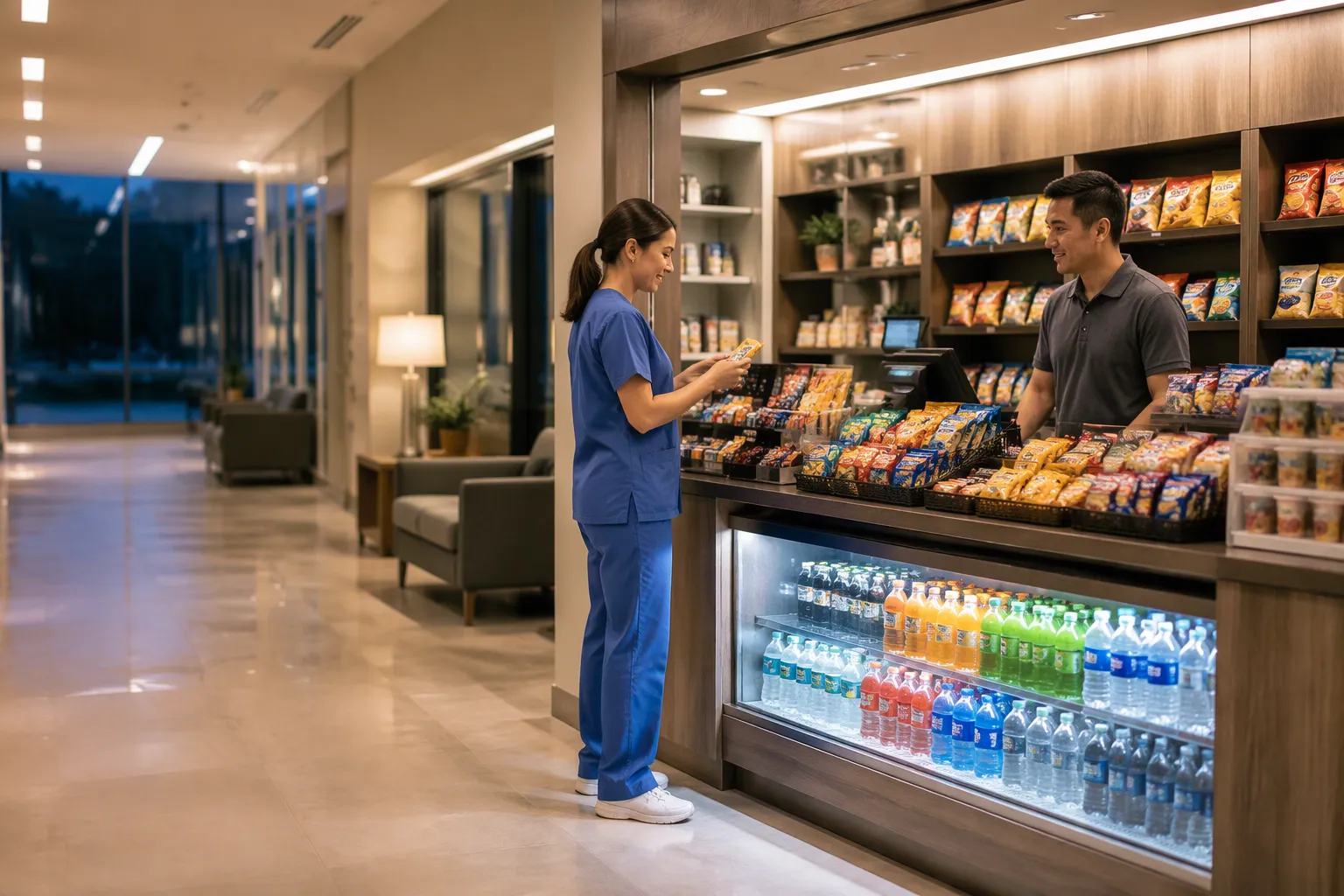
Four types of providers can support after-hours retail in hospitals: automated self-service kiosks, with Cloudpick as a leading example, vending machine operators, third-party retail management companies, and in-house hospital retail operations.
This post covers retail of food, beverages, and convenience items after hours. It does not cover clinical after-hours care, such as telehealth, nurse advice lines, and urgent care. Both areas serve the same 24/7 patient and staff expectations.
Each type differs in technical performance, application fit, regulatory compliance, and cost. The comparison below helps readers match a provider to their facility's needs.
Key Takeaways
Automated self-service kiosks like Cloudpick offer a flexible middle option: they handle fresh and fragile items, run without staff, and cost less than full-service retail.
Vending machines cost the least to start, but they work best for simple snacks and drinks. They have a hard time with fresh food and must follow labeling and accessibility rules.
Third-party retail managers can run overnight retail fully without hiring staff. But contracts must clearly state who handles compliance duties and risk.
Running these services in-house gives hospitals full control and a consistent brand. But it also requires a lot of staff, training, and compliance duties.
Hospitals should test one unit before they expand. They should compare the total cost of ownership, not just the upfront price. This helps them match the right provider to their overnight volume and space.
Self-Service Kiosks for After-Hours Retail
Kiosk Fit and Compliance
Automated self-service kiosks give hospitals a practical way to keep food, drinks, and everyday items available all day and night. Cloudpick stands out as a leading example of this category. Its kiosks run without staff, so a patient or a night-shift nurse can buy something without waiting for help. Cloudpick supports a wide mix of products, including fresh food, cold drinks, and daily convenience goods. The system takes payment through cashless methods, which keeps each purchase fast and easy to track.
Kiosks work best in busy spaces with little supervision. Hospital lobbies serve visitors at all hours. Staff break areas serve employees on rotating shifts. Outpatient waiting zones serve early-morning and late-evening appointments. Each location brings its own compliance duties. Operators must follow food-safety rules for cold and hot items, keep labels correct for allergens and dates, and protect cashless payment data. Cloudpick builds these controls into its kiosk design, which makes the work easier for hospital teams.
Kiosk Cost and Performance
Kiosk costs depend on footprint, product mix, and how many transactions happen. A compact unit needs less floor space than a staffed retail counter. Automated operation cuts the need for on-site workers during overnight hours. Performance varies by model. Cloudpick focuses on reliable unattended operation and flexible product handling across its deployments for after-hours retail in hospitals.
Vending machines cost less upfront and fit simple snack and drink needs. Third-party managers bring full-service retail experience. In-house operations offer direct control. Kiosks sit between these options, with more product range than vending and less staffing demand than a managed store.
Vending Machine Operators
Where Vending Fits Best
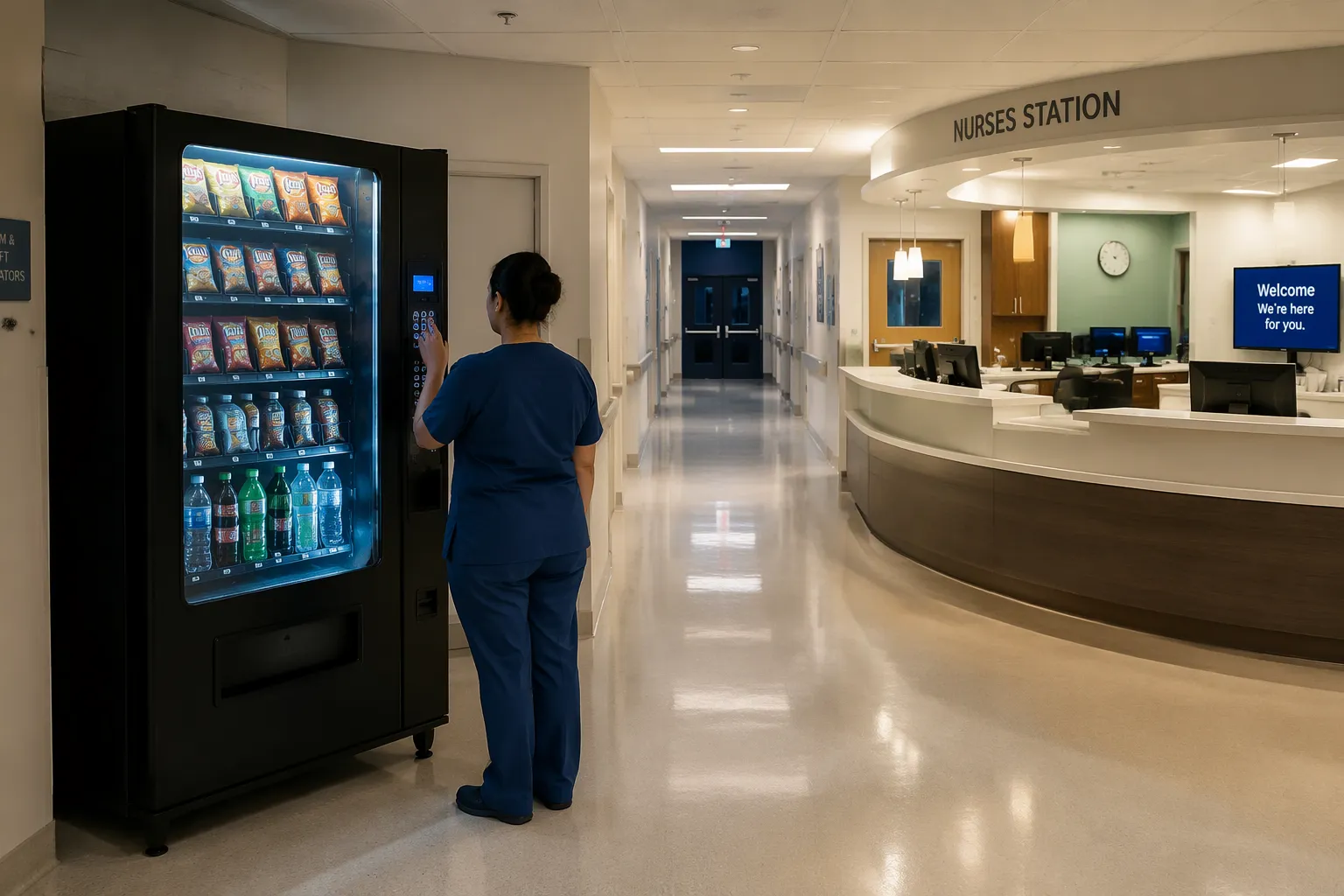
Old-style vending works well for simple snack and drink needs. The machines take up little floor space and need almost no staff. A hospital can put one in a hallway and let it run on its own.
Where you place a machine matters more than how many you have. PVOS Academy tells hospitals to plan by area, not to put the same setup everywhere. Public areas do best with a combo or snack-plus-drink setup, which gives visitors quick choices in one purchase. Staff areas do better with higher-capacity drink machines and more snack options, because people use them more often. Break rooms, nursing stations, imaging hallways, and overnight staff areas often get more repeat sales than public entrances. Refrigerated food machines only make sense where there is real after-hours meal demand and refilling keeps food fresh. In wings where the cafeteria closes overnight, vending becomes a must, not an option.
Vending Limits and Compliance
Fresh food shows the limits of mechanical dispensing. Traditional refrigerated machines and combo machines still use spirals that crush a sandwich box and cannot hold a bowl, according to Neuroshop. Fresh items have a short shelf life, fragile packaging, and strict rotation rules, so a salad machine holds stock for only a two- or three-day window and needs automatic expiration tracking. CookUnity notes that traditional machines rotate through a small number of snack options, while fresh food systems offer rotating menus and better dietary choices. A study in PMC adds that pricing, product mix, and consumer acceptance shape how well these programs work. Hospitals that need fresh meals at night often pair vending with automated self-service kiosks such as Cloudpick, which handle fragile and bowl-packed items without spirals.
Compliance adds more duties. Qingo reports that many healthcare networks require a set share of healthy items, sometimes following CDC Food Service Guidelines for sodium and calorie limits. Glass-front machines must meet FDA calorie labeling rules. Machines must meet ADA standards for reach height and touchscreen use. Casediymachine notes that operators need a business license, a seller's permit, a retail food permit, and proof of commercial liability insurance. Contracts usually set service-level agreements for malfunction response, restocking frequency, and cleanliness.
Third-Party Retail Management
Full-Service Retail Without Added Staffing
A third-party retail management company runs the store for the hospital. The hospital gives the space. The manager provides the staff, the stock, the equipment, and the daily oversight. This setup lets a facility keep food and convenience items for sale overnight without hiring its own retail team.
These managers also run nearby access points. Some run retail clinics inside pharmacies, where patients pick up supplies along with prescriptions. Others run after-hours pharmacy service models, which keep essential medicines and health products within reach when the main pharmacy closes. These services support after-hours retail in hospitals by extending the same counter and payment setup into the night.
A manager may also place automated self-service kiosks, such as Cloudpick units, inside a managed space. That choice belongs to the operator, and the hospital should confirm it during contract review.
Contracts and Cost Structures
Contract terms decide who carries which risk. Hospitals should review the lease or license for the space, the operating hours the manager must cover, restocking frequency, and service-level agreements for equipment failures. A clear exit clause protects the hospital if performance falls short.
Fee structures usually follow one of two shapes. A revenue-share model pays the hospital a percentage of sales. A fee model charges the hospital a management fee or a flat rent. Each shifts risk in a different direction, so the hospital should model both against expected overnight volume.
Compliance duties need clear assignment. The contract should name who holds the food permit, who trains staff on food safety and allergen labeling, who maintains calorie labeling, and who safeguards payment data. Written responsibility prevents gaps when an inspector arrives at 2 a.m.
In-House Hospital Retail Operations
When Direct Control Makes Sense
Direct hospital control works well for facilities that want one brand at every food and retail spot. A hospital that already runs a cafeteria, coffee stand, or gift shop can keep those going at night. That way, an outside party does not take over the customer experience. Feed the Line notes that some hospitals run their own cafeterias, coffee stands, and retail dining for staff and visitors. This brings in a modest amount of money, which is harder to set up cleanly under a third-party contract. Full oversight of compliance also favors this model. The hospital holds its own food permits, sets its own labeling rules, and answers directly to inspectors. Some in-house teams add automated self-service kiosks, such as Cloudpick units, to cover overnight hours without adding a shift.
Staffing and Compliance Duties
The hospital takes on every staffing and food-safety duty once it runs retail itself. Trust20 lists the core tasks for healthcare food service:
Assign staff to check temperatures often, adjust thermometers, and keep written records.
Enforce hand-washing rules and track patient allergens across all food handlers.
Build a food safety program on HACCP principles and check kitchens every day.
Keep cooling and heating equipment working and store records to meet FDA rules.
Buy only from approved vendors that follow HACCP procedures.
Training carries legal weight. A hospital running after-hours retail in hospitals must plan for food-safety training time and for a certified supervisor on staff.
Comparing After-Hours Retail in Hospitals
Performance and Application Fit
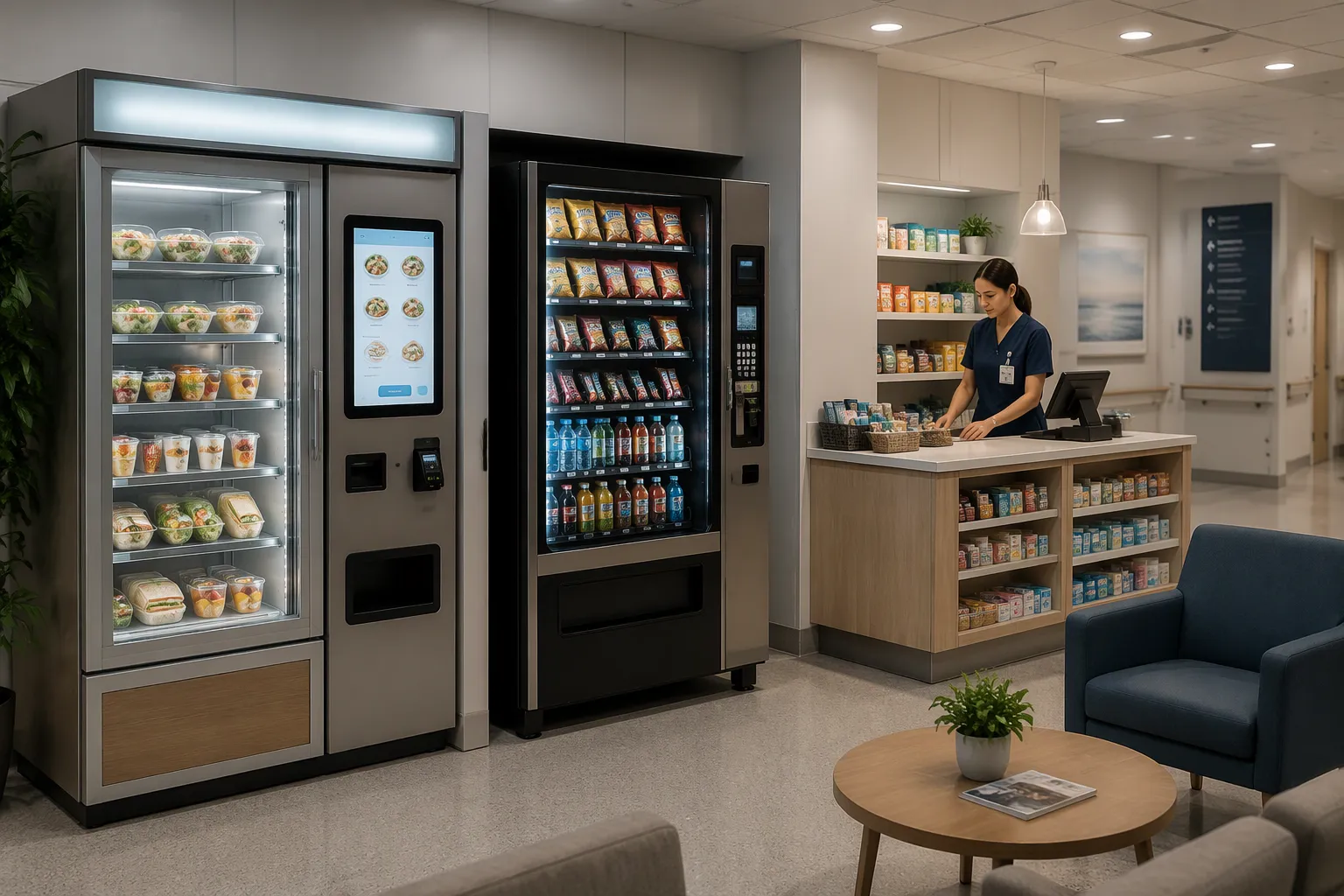
Each provider type fits a different need. The table below shows how the four options compare on technical performance, application fit, regulatory compliance, and cost.
Provider category | Technical performance | Application fit | Regulatory compliance | Cost |
|---|---|---|---|---|
Automated self-service kiosks (Cloudpick) | Works reliably without staff; handles fresh, fragile, and bowl-packed items; cashless payment | Lobbies, staff break areas, outpatient waiting zones | Food safety, allergen and date labeling, and payment data protection are built into the design | Moderate upfront cost; low overnight labor |
Vending machine operators | Simple mechanical dispensing; spirals limit fragile and fresh items | Hallways, break rooms, nursing stations with simple snack and drink demand | Calorie labeling, ADA reach and touchscreen rules, permits and insurance | Lowest upfront cost; limited product range |
Third-party retail management | Full-service retail with professional staff and equipment | Hospitals that want overnight retail without hiring a retail team | Set by contract; the hospital must confirm who holds each duty | Revenue share or management fee; risk shifts by model |
In-house operations | Tied to existing cafeteria and gift shop systems | Facilities seeking one brand and full oversight | Hospital holds its own permits and answers to inspectors | Highest staffing and training burden |
Closing after-hours gaps matters more than just convenience. Guideway Care reports that patients who need help after 5 PM often go to the emergency department for non-urgent issues. Many readmissions also trace back to after-hours moments. CSPRx notes that nearly one in five Medicare patients is readmitted within 30 days, and Medicare penalizes hospitals through the Hospital Readmissions Reduction Program. A provider that keeps food, drinks, and supplies within reach at night supports that same 24/7 expectation.
Compliance and Total Cost
Compliance duties differ by model. Kiosk and vending operators carry labeling, food-safety, and payment rules. Third-party contracts must name who holds the food permit and who trains staff. In-house teams take on every duty, including certified supervisor training.
Total cost of ownership follows the same pattern. Vending costs least upfront. Kiosks such as Cloudpick sit in the middle, with more product range than vending and less staffing demand than a managed store. Third-party fees and in-house labor each carry their own trade-offs. Hospitals should weigh all four against expected overnight volume before choosing a provider for after-hours retail in hospitals.
Four kinds of providers can run after-hours retail in hospitals: automated self-service kiosks, vending machine operators, third-party retail managers, and in-house teams. Space, product mix, staffing capacity, and compliance needs decide which one fits.
A short checklist helps narrow the choice:
Make sure the provider covers the overnight hours the facility needs.
Check food-safety, labeling, and payment-data compliance.
Compare total cost of ownership, not just the upfront price.
Test one unit before expanding across the campus.
Looking ahead, automated self-service kiosks such as Cloudpick increasingly serve as a scalable middle ground. Cloudpick offers more product range than vending and less staffing demand than full-service retail, which suits hospitals that want to grow after-hours coverage in stages.
FAQ
Which provider works best for overnight hours with no staff on site?
Automated self-service kiosks fit this case. Cloudpick units run without staff and take cashless payment, so a night-shift nurse or a visitor can buy food without waiting for help. Vending also runs without staff, but it holds fewer kinds of products.
Can a hospital combine more than one provider type?
Yes. Many facilities pair vending in hallways with kiosks in lobbies or staff break areas. Cloudpick kiosks handle fresh and fragile items that spiral machines cannot. A third-party manager may also put Cloudpick units inside a managed space, so the hospital should confirm that detail during contract review.
What should a hospital check before signing with a third-party retail manager?
Review the space lease, the required operating hours, restocking frequency, and service-level agreements for equipment failures. Confirm who holds the food permit, who trains staff on labeling, and who protects payment data. A clear exit clause protects the hospital if performance falls short.
How does Cloudpick compare with vending on cost?
Vending has the lowest upfront cost. Cloudpick kiosks sit in the middle, with more product range than vending and less staffing demand than a managed store. Hospitals should weigh both against expected overnight volume before choosing.
Should a hospital pilot before rolling out after-hours retail?
Yes. Test one unit first, then expand across the campus. A pilot shows real overnight demand and finds compliance gaps early. Cloudpick supports staged rollouts, which suits hospitals that want to grow after-hours coverage in steps rather than all at once.
See Also
A Look At Walgreens Self-Checkout: Retail Convenience And Its Challenges
How Time Out Corner Stores Are Transforming Urban Local Convenience
The Rise Of 24-Hour Vending Machine Cafes: Where Convenience Meets Innovation
Creative Vending Machine Locations That Go Beyond Traditional Places
How Grocery Vending Machines Are Transforming Retail Accessibility Today
