Efficient Queue Management Drives Higher Store Sales at Airports

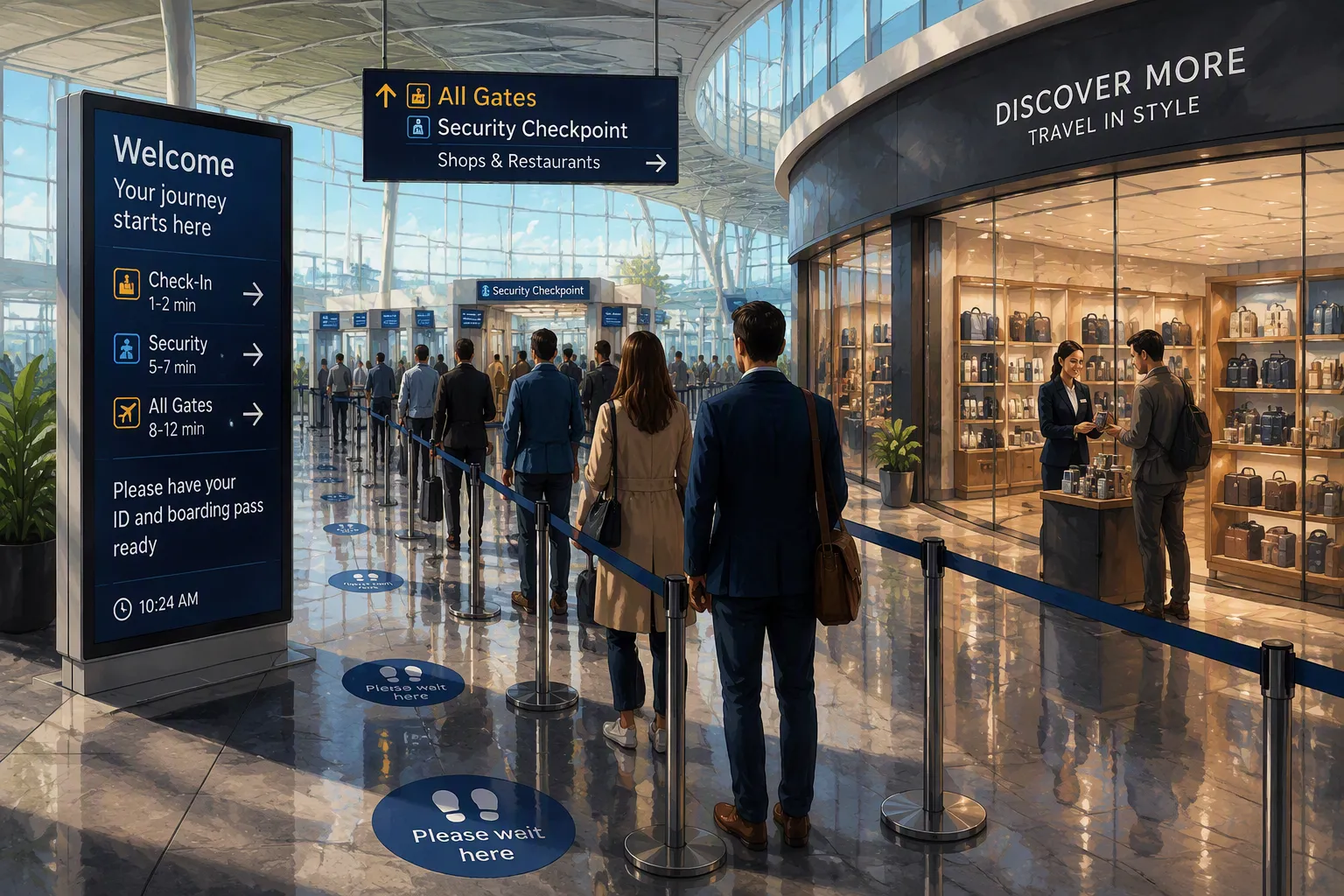
Picture this: you land with only 45 minutes before your next flight. You pass through security quickly. Then you see the duty-free line stretching past the perfume displays. Your shoulders drop. You check your watch. You skip the purchase and head straight to your gate.
This happens thousands of times every day. Long lines cost stores real money. They also upset passengers. Every minute of waiting makes shoppers more likely to give up. A passenger who waits too long remembers that frustration. They may avoid that store on their next trip.
Smart strategies for reducing queues change this outcome. You can design your space, train your staff, and use technology to keep lines moving. Shorter lines protect sales and build loyalty. This article shows you proven ways to turn your airport store into a smooth, profitable experience.
Key Takeaways
Long lines make over 30% of shoppers leave without buying, costing stores up to $500,000 each month.
Use winding lines and small items near checkout to make waiting feel shorter and increase sales.
Teach your team to watch the lines and use handheld payment devices to shorten waits during busy times.
Use virtual lines and self-service kiosks to boost how much shoppers buy by 10-30%.
Use live data and predictive analytics to move staff fast and cut down wait times.
The Cost of Waiting: How Wait Time Impacts Sales
Every minute a passenger spends in line costs you money. Research shows that more than 30% of customers abandon their purchases when they face long queues. For a small store, this means losing up to $20,000 each month. Large-format retail stores can lose as much as $500,000 monthly. These numbers reveal a clear truth: wait time directly destroys revenue.
The Psychology of Queues and Abandoned Carts
Customers judge a queue by its visibility. WordPerfect discovered that shoppers who abandon a visible queue do so at the very beginning. Those who decide to wait generally stay until they reach an agent. This finding changes how you should think about your checkout area.
Behavior in visible queue | Implication | |
|---|---|---|
Those who abandon | Do so at the beginning | Abandonment is an informed choice, not frustration-driven |
Those who wait | Stay until reaching an agent | Visibility reduces mid-queue frustration abandonment |
Perceived wait time matters more than actual wait time. The Houston airport moved arrival gates farther apart. Passengers walked longer but reported shorter waits. Occupied time feels shorter than unoccupied time. You can apply this principle by placing impulse items near your checkout line. Give customers something to browse while they wait.
Providing accurate wait time information also reduces anxiety. Uncertainty makes a queue feel longer. When customers know exactly how long they will wait, their frustration drops significantly. Managing wait time expectations becomes a powerful tool for your staff.
Customer Experience and Brand Loyalty
Long queues create a poor passenger experience. A frustrated shopper remembers the negative feeling long after leaving your store. They may choose a different store on their next trip through the airport. Poor queue management at your location sends customers to competitors.
The data shows clear improvements when you address this problem. Reducing actual wait times by 35-40% cuts customer frustration by 52%. Physical crowding drops by 67%. These changes transform how passengers view your brand. Shorter wait time directly correlates with higher satisfaction scores.
WordPerfect discovered that customers who abandon a visible queue do so at the beginning. Those who decide to wait generally do so until they reach an agent.
Effective queue management does more than speed up transactions. It builds loyalty. A passenger who enjoys a smooth shopping experience will return. They will also tell other travelers about their positive encounter.
Consider this scenario: a traveler with a tight connection at the airport sees a short, moving line. They decide to stop and shop. That single decision creates a sale you would have lost otherwise. Reducing queues protects your revenue and your reputation. Every improvement in wait time translates directly into stronger sales performance.
Designing for Flow: Physical Layout and Staffing
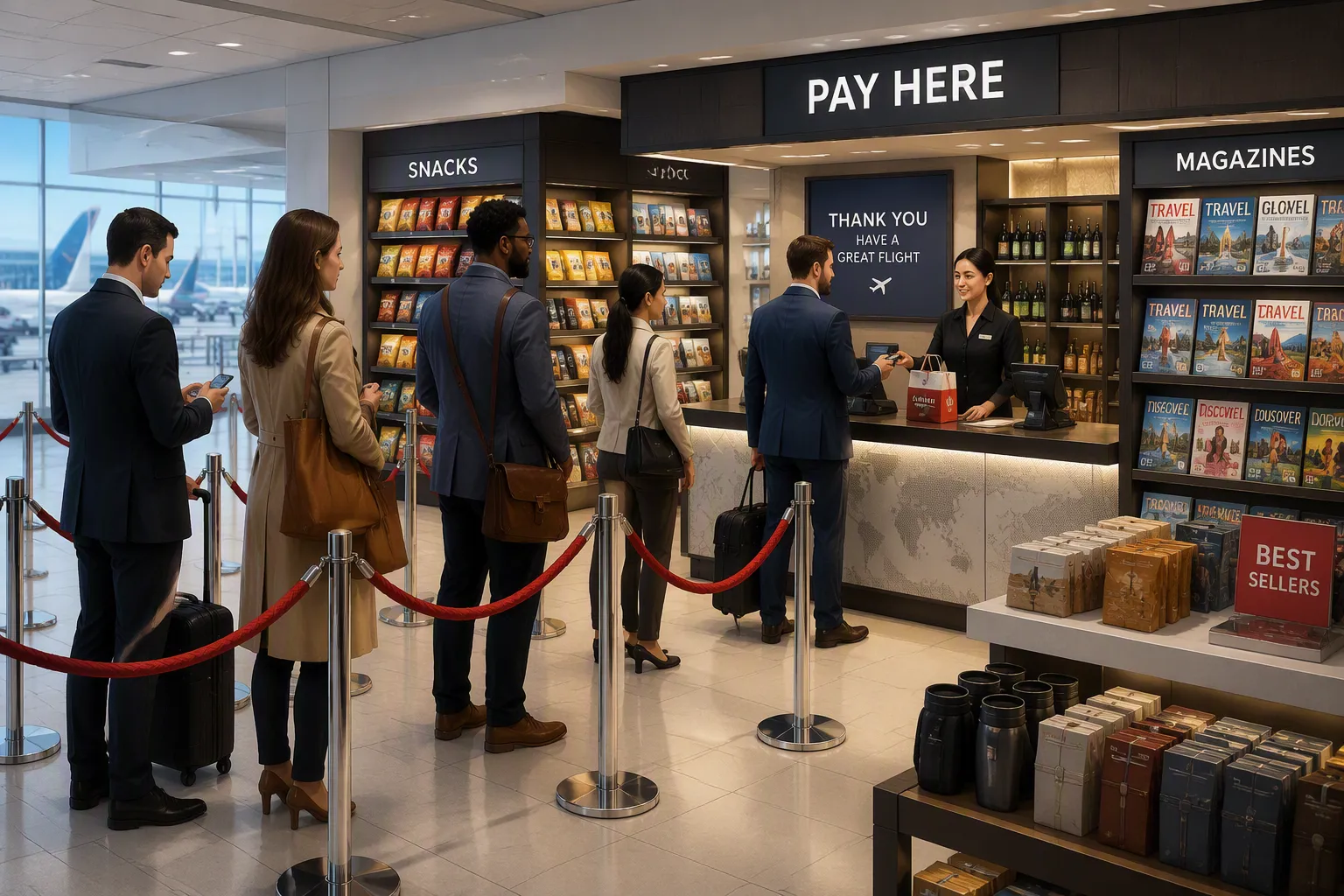
Your store layout shapes how passengers move and how long they wait. A thoughtful design reduces congestion before it starts. You can guide traffic, occupy attention, and speed up transactions through smart physical choices.
Optimizing Store Layout for Better Traffic Flow
Serpentine lines offer a powerful solution for busy checkout areas. These single-file queues wind back and forth through stanchions. They guarantee first-come-first-served fairness, which reduces customer frustration. Research shows this design can speed up customer flow by 30% and reduce walk-aways by 96%. Angled stanchions optimize your floor space by accommodating natural turning arcs. Passengers move more smoothly through the line without feeling crowded.
In-line merchandising with point-of-purchase products occupies customers while they wait.
Single-line serpentine queues ensure fairness and speed up customer flow.
Angled stanchions optimize space usage by accommodating natural turning arcs.
Providing information or entertainment to customers in line reduces perceived wait time.
You should also think carefully about what sits near your checkout. Research shows that shoppers in high-clutter environments experience decision fatigue. This fatigue reduces their tendency to make any purchase, impulse or otherwise. Curated displays near checkout avoid cognitive overload. Limit your impulse displays to 2–3 high-converting categories. This intentional approach leads to stronger basket performance than a cluttered assortment.
Self-purchasers demonstrate a higher tendency for impulse buying than other shopper segments (32% vs 25%). Retailers should strategically place high-margin indulgent products near checkout areas to increase conversion and basket size.
Traditional checkout yields an average basket size of 1–2 items per visit. Frictionless checkout raises that number to 3–5 items. Removing checkout friction increases basket size by 2–3x. This finding supports placing impulse items near a low-friction exit. Passengers grab a last-minute item because the process feels effortless.
Empowering Staff to Minimize Airport Wait Times
Your staff play a critical role in reducing queues. Training teaches them to watch lines, estimate wait times, and communicate expectations to travelers. This proactive approach helps fix problems quickly and makes shopping easier for everyone.
Well-trained staff can quickly address long lines by going to busy areas, using screens to show wait times, and helping shoppers plan their purchases. This proactive approach reduces frustration and delays, shortening wait time during peak travel periods.
Data-driven training helps staff adjust allocation based on real-time demand. They open more registers during busy periods to keep lines short.
Equipping staff with the necessary knowledge and skills to manage queues minimizes wait times and ensures a smooth flow of passengers. Training modules help airport personnel understand and implement efficient queue management techniques, including communication skills, empathy, and streamlining interactions.
Well-trained staff can quickly address long lines by going to busy areas, using screens to show wait times, and helping shoppers plan their purchases. This proactive approach reduces frustration and delays, shortening wait time during peak travel periods.
You need clear metrics to measure staff performance. Intelligent queue management technology enables you to monitor passenger arrival rates, measure peak times and seasonality, count the passengers in each queue, and assess average wait times. This data allows you to deploy additional staff to busy areas and schedule service agents when you anticipate heavy passenger flow.
Definition | Relevance to Staff Efficiency | |
|---|---|---|
Average Wait Time | How long customers wait before receiving service. | Directly measures the outcome of staff scheduling and queue management. |
Service Time | How long staff take to serve each customer. | Reflects individual staff efficiency and identifies training needs. |
Queue Length | How many customers are waiting at any given time. | Indicates capacity utilization and helps managers decide when to open more service points. |
Customer Abandonment Rate | How many customers leave before being served. | High rates signal that staff cannot meet demand, leading to lost revenue. |
Staff Utilization Rate | Percentage of time staff spend actively serving customers. | Rates above 85-90% suggest overwork; low rates indicate overstaffing. |
Peak Service Hours | Times when customer traffic is highest. | Enables proactive scheduling to align staff availability with demand. |
Use technology to ensure your key performance indicators stay on target. Address problems quickly as they arise. Monitor these metrics consistently. You will see which staffing strategies work and which need adjustment. This ongoing refinement keeps your checkout area moving smoothly and your sales growing.
Technology for Reducing Queues and Minimizing Airport Wait Times
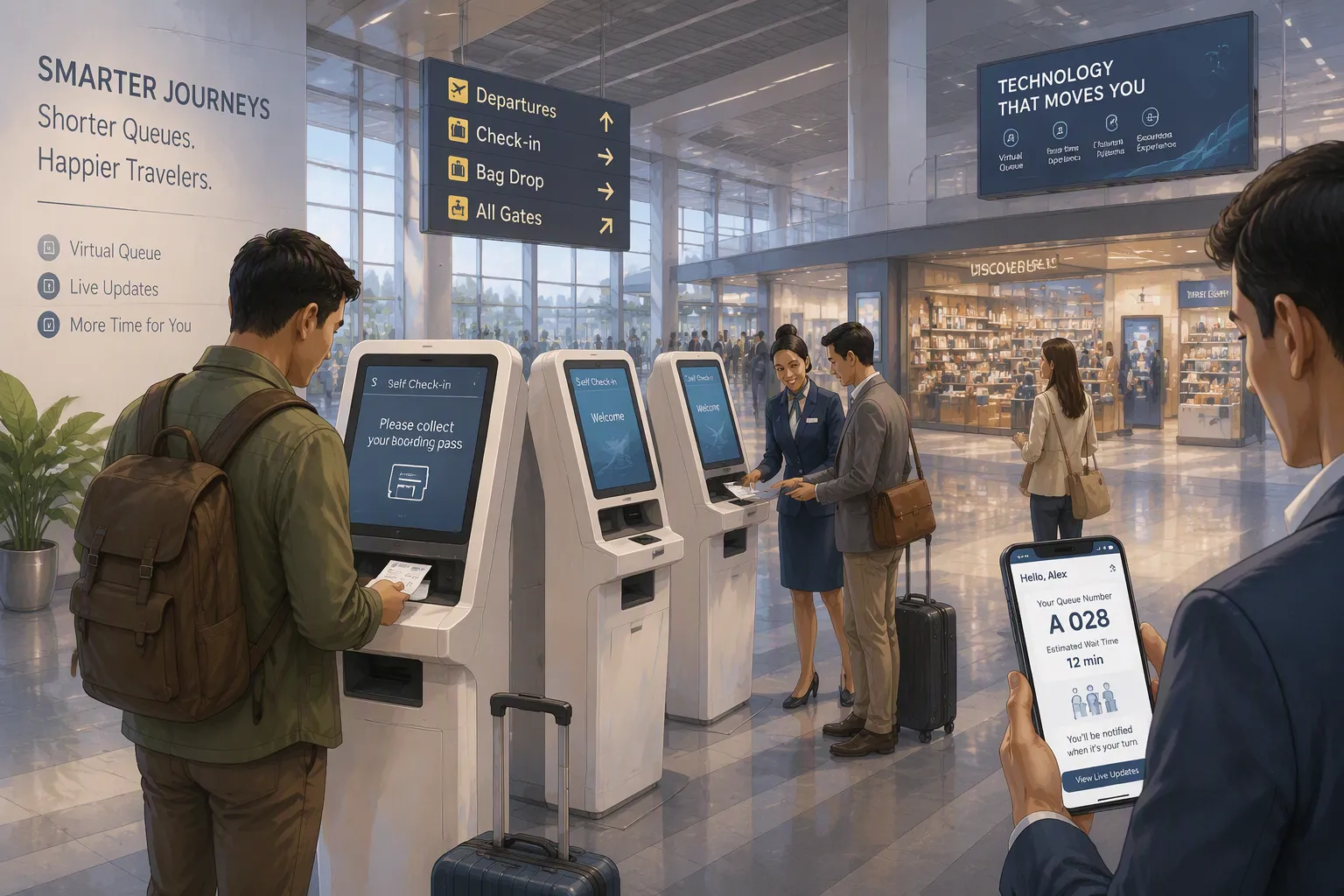
Technology is your best way to cut lines and shorten airport waits. Modern tools turn queue control from guessing into exact planning. You can now predict demand, guide travelers, and place staff where they are needed most. These tools make your checkout area run smoothly and efficiently.
Implementing Virtual Queuing and Self-Service Kiosks
Virtual queuing changes how passengers wait. Instead of standing in a physical line, travelers join a queue from anywhere in the terminal. They get a notification when their turn is near. This system removes the crowded, stressful area near your checkout. Passengers browse your shelves freely while they wait. They feel no need to leave without buying. Your physical space stays open and welcoming.
Self-service kiosks offer another strong benefit. These stations let passengers handle simple transactions without staff help. Travelers can print boarding passes, check flight details, or buy tickets on their own. This frees your employees for more important tasks.
Self-service kiosks in airports can greatly reduce queues and waiting times. Passengers can skip counter lines and use a self-service printing kiosk for simple ticket purchases or to find answers to common questions. This frees up staff for other activities and helps improve the flow of people through the railway station and on to their destinations.
The financial impact of kiosks impresses many operators. Self-service kiosks have been shown to increase average purchase value by 10-30%. During peak hours, you need fewer employees to manage customer orders. This efficiency allows a better use of your human resources. Kiosks operate 24/7 and handle high volumes of orders. You can optimize labor schedules and cut down on extra staffing during busy periods.
Self-service kiosks streamline the ordering process, decreasing wait times and improving throughput. Staff can focus on other tasks, leading to optimized labor use and significant financial savings.
Leveraging Real-Time Data and Predictive Analytics
Real-time data gives you a clear view of your store's activity. Digital queue management systems track queue lengths and wait times accurately. They alert you when thresholds exceed your targets. You see problems as they develop, not after they hurt your sales.
Predictive analytics takes this capability further. The system learns from historical patterns and current conditions. It forecasts demand before it arrives. You know when the next flight will bring a wave of passengers. You prepare your checkout lanes accordingly.
Real-time data on foot traffic and queue lengths is captured by digital queue management systems.
Algorithms analyze historical patterns and current conditions to predict demand and identify congestion points.
The system triggers real-time alerts when queues grow too long.
Supervisors use these alerts to deploy staff, open temporary lanes, or adjust staffing, making lines move faster and reducing wait times.
For example, Hartsfield-Jackson Atlanta International Airport implemented digital queue management that provides real-time wait time information, reducing anxiety and stress and improving the passenger experience.
Accurate, real-time tracking of queue lengths and wait times gives you dynamic alerting when thresholds are exceeded. You improve staff planning through live and historical insights. Every passenger who moves through your line quickly becomes a satisfied customer. Every satisfied customer becomes a repeat buyer. Technology turns your queue management from a reactive struggle into a proactive strategy. You protect your revenue and build a reputation for smooth, pleasant shopping experiences.
Long wait time directly reduces your sales. Every minute a passenger stands in line creates risk of abandonment. You now understand how design, staffing, and technology work together to solve this problem.
Reducing queues is not just about speed. You create a seamless shopping experience that encourages purchases. A passenger who moves through your store comfortably becomes a repeat customer. This scenario benefits everyone involved.
Investing in queue management delivers measurable returns. You protect revenue that would otherwise disappear. You build a reputation for efficiency at your airport location.
Start today. Audit your current queue processes. Pilot one solution from this article. Measure the impact on your sales. Your passenger experience will improve, and your bottom line will follow.
FAQ
Why do customers leave without buying in airport stores?
Long waits cause the biggest problem. Studies show that over 30% of shoppers give up when lines are long. How long a wait feels matters more than the real time. Time spent doing something feels shorter. You can fix this by putting small items near the checkout.
How does the store layout help people move better?
Single-file lines that snake back and forth make flow 30% better and cut people leaving by 96%. These lines are fair for everyone. Slanted barriers use space well. Putting 2-3 high-profit items near checkout gets more impulse buys without confusing shoppers.
What technology cuts wait times well?
Virtual queuing lets travelers join a line from anywhere in the terminal. They can look around while they wait. Self-service kiosks boost how much each person spends by 10-30%. Live data tells you when lines get too long. You can send staff right away to fix the problem.
How does staff training affect lines?
Your team is very important. Training teaches staff to watch lines, estimate wait times, and communicate expectations, which helps reduce perceived wait times and speed up the line.
See Also
Boosting Small Office Efficiency Through Intelligent Vending Systems
Modern Retail Advantages of AI-Integrated Combo Vending Machines
The Progression of Self-Service Checkout Technology
Walgreens Self-Checkout: Retail Convenience and Hurdles Examined
Transforming Online Store Management with AI E-Commerce Tools
